2019 Modern Warfare Symposium, Ft. Bragg, NC
2019 Modern Warfare Symposium
11/19/2019 through 11/22/2019
Fort Bragg, North Carolina, United States
https://www.globalsofsymposium.org/mws/Agenda
Friday, November 22, 2019 9:15 a.m. – 10:15 a.m. – Ballroom
Forum on Returning Foreign Fighters, Doha, Qatar
Forum on Returning Foreign Fighters
WORKSHOP SESSION
Co-hosted with
The United Nations Security Council Counter-Terrorism Committee Executive Directorate (CTED) & The Global Research Network
30 October 2018
1234
The Forum on Returning Foreign Fighters is a collaborative international effort to bring together key stakeholders working on the issue of foreign fighters. Governments are at the forefront of dealing with this challenge, and their citizens’ safety remains their number one concern. However, for progress to be sustainable, the response must be comprehensive and addressed by the whole of society.
Little about the trajectory of terrorism is predictable, especially in a world in flux. One certainty is that terrorism will continue to be amongst the most pressing international security challenges for years to come. The extent to which those who have left the conflicts in Iraq and Syria will wish to regroup, resurge, recruit and recreate what they have lost is yet to be determined. There is disagreement over the threat that returning foreign fighters may present to their countries of residence or origin, or to other countries they transit through or seek temporary refuge in. However, it is inevitable that those who wished to fight alongside or otherwise support terrorist groups, especially the…
so-called Islamic State (IS), will remain committed to the form of violent jihad that both al-Qaeda and the Islamic State have popularized, within and outside the Muslim world. The Forum on Returning Foreign Fighters provides an opportunity for researchers, public officials, policymakers, diplomats, academics, practitioners and top intelligence, military, and law enforcement professionals, to come together with governments in order to solidify the network of those working to address the foreign fighter phenomenon and its effects on vulnerable communities and global security.
Key objectives of the forum are to share information and best practices and set a robust research agenda to identify current shortcomings and fill critical knowledge gaps. Most importantly, as governments are struggling to create effective policies and work together collaboratively to implement responses designed by international bodies, the conference will serve as a platform to address the ways in which various efforts, notably UNSCR 2178 and UNSCR 2396, can be operationalized within and across nation states.
Key Speakers
KEYNOTE ADDRESS BY
His Excellency Sheikh Mohammed bin Abdulrahman Al-Thani
Deputy Prime Minister and Minister of Foreign Affairs
State of Qatar
Read Bio
FIRESIDE CHAT WITH
His Excellency Panos Kammenos
Minister of National Defence
Greece
With New York Times, Pulitzer Prize Winner Charlie Savage
Read Bio
Panelists & Moderators
Ian Acheson, FRSA
Ian Acheson, FRSA
Director of National Security Programmes
Sampson Hall
Read Bio
Fionnuala Ni Aolain
Fionnuala Ni Aolain
United Nations Special Rapporteur
Protection and Promotion of Human Rights while Countering Terrorism
Read Bio
Maj. Gen. Abdul Aziz al-Ansari
Maj. Gen. Abdul Aziz al-Ansari
Chairman of National Counter-Terrorism Committee
State of Qatar
Read Bio
Richard Barrett
Richard Barrett
CMG OBE
The Global Strategy Network
Read Bio
Peter Bergen
Peter Bergen
CNN National Security Analyst and Vice President Global Studies & Fellows
New America
Read Bio
Jason Blazakis
Jason Blazakis
Professor
Middlebury Institute of International Studies at Monterey
Read Bio
Mia Bloom
Mia Bloom
Professor of Communication
Georgia State University
Read Bio
Daniel Byman
Daniel Byman
Vice Dean and Professor, School of Foreign Service
Georgetown University
Read Bio
Fabrizio Carboni
Fabrizio Carboni
Director for Near and Middle East
International Committee of the Red Cross (ICRC)
Read Bio
Colin P. Clarke
Colin P. Clarke
Senior Research Fellow
The Soufan Center
Read Bio
Steve Clemons
Steve Clemons
Editor at Large
The Atlantic
Read Bio
Faisal Mohamed Al-Emadi
Faisal Mohamed Al-Emadi
Executive Director of Programs
Silatech
Read Bio
Joshua A. Geltzer
Joshua A. Geltzer
Former Senior Director for Counterterrorism and Deputy Legal Advisor
National Security Council
Read Bio
Bobby Ghosh
Bobby Ghosh
Journalist and Commentator
Bloomberg
Read Bio
Karen J. Greenberg
Karen J. Greenberg
Director, Center on National Security
Fordham Law
Read Bio
Dr. Rohan Gunaratna
Dr. Rohan Gunaratna
Professor of Security Studies
Nanyang Technology University
Read Bio
Dr. Elisabeth Kendall
Dr. Elisabeth Kendall
Senior Research Fellow in Arabic & Islamic Studies
Pembroke College, University of Oxford
Read Bio
Gilles de Kerchove
Gilles de Kerchove
EU Counter-Terrorism Coordinator
European Union
Read Bio
Matthew Levitt
Matthew Levitt
Fromer-Wexler Fellow & Director, Reinhard Program on Counterterrorism & Intelligence
The Washington Institute for Near East Policy
Read Bio
Francesca Mannocchi
Francesca Mannocchi
Journalist and Director
Read Bio
Magnus Ranstorp
Magnus Ranstorp
Research Director, Center for Asymmetric Threat Studies
Swedish Defence University
Read Bio
Nicholas J. Rasmussen
Nicholas J. Rasmussen
Senior Director for Counterterrorism Programs
McCain Institute for International Leadership
Read Bio
Colonel Sean Ryan, U.S. Army
Colonel Sean Ryan, U.S. Army
Spokesman
Combined Joint Task Force-Inherent Resolve (CJTF-OIR)
Read Bio
Linda Robinson
Linda Robinson
Senior International & Defense Researcher
RAND Corporation
Read Bio
Eric Rosand
Eric Rosand
Director
The Prevention Project
Read Bio
Charlie Savage
Charlie Savage
Washington Correspondent
The New York Times
Read Bio
Irfan Saeed
Irfan Saeed
Director, Office of Countering Violent Extremism Bureau of Counterterrorism
& Countering Violent Extremism (CT)
Read Bio
David Scharia
David Scharia
Chief of Branch
Counter-Terrorism Committee Executive Directive (CTED)
Read Bio
Lawrence Wright
Lawrence Wright
Staff Writer
The New Yorker
Read Bio
Tarik Yousef
Tarik Yousef
Director
Brookings Doha Center
Read Bio
Location
SHERATON GRAND DOHA
RESORT & CONVENTION HOTEL
Al Corniche Street, P.O. Box 6000, Doha, Qatar
For more information, please contact
events@thesoufancenter.org
©2018 Forum on Returning Foreign Fighters | Website by PeakXV
Chief Executives Org, DC
Jaipur Lit Festival, Jaipur, India
-
Peter Bergen, Shiv Shankar Menon and Steve Coll in conversation with Jon Lee Anderson Preferred Seatings for Delegates4:45 PM
-
Jon Lee Anderson, Navtej Sarna, Peter Bergen and Steve Coll in conversation with Katty Kay Presented by Aga Khan Foundation
SPEAKERS
AHDAF SOUEIF
Alexandar-McCall-Smith
ALEXANDER MCCALL SMITH
AMBI PARAMESWARAN
AMITABHA BAGCHI
AMITAVA KUMAR
ANDRÉ ACIMAN
ANDREW SEAN GREER
ANISH KAPOOR
ANITA NAIR
ANURADHA ROY
ARUNA ROY
ASHOK CHAKRADHAR
ASHWIN SANGHI
ÅSNE SEIERSTAD
CHITRA BANERJEE DIVAKARUNI
COLSON WHITEHEAD
DEVDUTT PATTANAIK
Germaine-Greer
GERMAINE GREER
Hari-Kunzru
HARI KUNZRU
JAMES CRABTREE
JAMES MALLINSON
JEREMY PAXMAN
JERRY PINTO
JON LEE ANDERSON
JUERGEN BOOS
KANISHK THAROOR
KIM A. WAGNER
KJ ALPHONS
MAKARAND R. PARANJAPE
MANISHA KOIRALA
MANORANJAN BYAPARI
MARC QUINN
MARKUS ZUSAK
MEGHNA GULZAR
MEGHNA PANT
MITRA PHUKAN
MOHAMMAD HASAN
MOHAN NARAYAN SAMANTH
MOHIT SATYANAND
MOIN MIR
MOLLY CRABAPPLE
MRIDULA RAMESH
N. KALYAN RAMAN
N.S. MADHAVAN
NAINA LAL KIDWAI
NAMITA BHANDARE
NAMITA DEVIDAYAL
NAMITA GOKHALE
NAMITA WAIKAR
NANDINI KRISHNAN
NARENDRA KOHLI
NASREEN MUNNI KABIR
NAVIN CHAWLA
NAVTEJ SARNA
NEELESH MISRA
NEERAJ GHEI
NIKESH SHUKLA
NIKHIL KUMAR
NOVIOLET BULAWAYO
OMAR EL AKKAD
OMAR ROBERT HAMILTON
ORNIT SHANI
PARO ANAND
PARVATI SHARMA
PATRICK FRENCH
PAUL MCVEIGH
PAVAN K. VARMA
PERUMAL MURUGAN
PETER BERGEN
PRADIP KRISHEN
PRAGYA TIWARI
PRASENJIT BASU
PRAVIN KUMAR
PRIYA SARUKKAI CHABRIA
PRIYA SETH
PRIYAMVADA NATARAJAN
PUSHPESH PANT
RACHEL JOHNSON
RAJDEEP SARDESAI
RAKHSHANDA JALIL
RAMESH PATANGE
RAMITA NAVAI
RANA DASGUPTA
RANA SAFVI
RAVI AGRAWAL
RAVI PUROHIT
RAVI SHANKAR ETTETH
RAVINDER SINGH
RENI EDDO-LODGE
RESHMA QURESHI
RHIANNON JENKINS TSANG
RIA SHARMA
RICHARD EVANS
RIMA HOOJA
RITWIJ SHANDILYA
ROBIN JEFFREY
ROBYN MONRO-MILLER
ROHINI CHOWDHURY
ROM WHITAKER
ROY STRONG
RUBY LAL
RUBY WAX
RUPERT EVERETT
RUTH PADEL
SADHNA SHANKER
SAKET SUMAN
SAM KILEY
SANCHAITA GAJAPATI
SANDEEP UNNITHAN
SANDIP ROY
SANJEEV SANYAL
SANJOY HAZARIKA
SANJOY K. ROY
SATYAJIT SARNA
SATYANAND NIRUPAM
SAURABH DWIVEDI
SEBASTIAN BARRY
SHABRI PRASAD SINGH
SHANTANU RAY CHAUDHURI
SHARMILA SEN
SHASHI THAROOR
SHEORAJ SINGH BECHAIN
SHIVSHANKAR MENON
SHOBHAA DE
SHUBHANGI SWARUP
SIDDHARTH DHANVANT SHANGHVI
SIDDHARTH SINGH
SIMAR SINGH
SIMON SEBAG MONTEFIORE
SOHAILA ABDULALI
SOMNATH BATABYAL
SR FARUQI
SREENIVASAN JAIN
STEVE COLL
STEWART GORDON
SUBODH GUPTA
SUCHITA MALIK
SUDESHNA CHATTERJEE
SUHASINI HAIDAR
SUNIL S. AMRITH
SUNITA TOOR
SVEN BECKERT
SY QURAISHI
TAM BAILLIE
TANIA JAMES
TANIA SINGH
TANWI NANDINI ISLAM
TARUN KHANNA
TAWFIQ-E-ELAHI CHOWDHURY
TCA RAGHAVAN
TIMMIE KUMAR
TISHANI DOSHI
TOBY WALSH
TOVA REICH
UDAY PRAKASH
ULRIKE ALMUT SANDIG
UPAMANYU CHATTERJEE
URVASHI BUTALIA
USHA UTHUP
VARUN SIVARAM
VEENA VENUGOPAL
VENKI RAMAKRISHNAN
VIDYA SHAH
VIKAS JHA
VIKRAM CHANDRA
VISHNU SOM
WILLIAM DALRYMPLE
WILLIAM SIEGHART
Copyright © 2008 Jaipur Literature Festival | All Rights Reserved | By Teamwork Arts
About The Festival
Described as the ‘greatest literary show on Earth’, the ZEE Jaipur Literature Festival is a sumptuous feast of ideas.
The past decade has seen it transform into a global literary phenomenon having hosted nearly 2000 speakers and welcoming over a million book lovers from across India and the globe.
The Festival’s core values remain unchanged; to serve as a democratic, non-aligned platform offering free and fair access.
Every year, the Festival brings together a diverse mix of the world’s greatest writers, thinkers, humanitarians, politicians, business leaders, sports people and entertainers on one stage to champion the freedom to express and engage in thoughtful debate and dialogue.
Writers and Festival Directors Namita Gokhale and William Dalrymple invite speakers to take part in the five-day programme set against the backdrop of Rajasthan’s stunning cultural heritage and the Diggi Palace in the state capital Jaipur.
A Range of Voices from India And Abroad
Past speakers have ranged from Nobel Laureates J.M. Coetzee, Orhan Pamuk and Wole Soyinka, Man Booker Prize winners Ian McEwan, Margaret Atwood and Paul Beatty, Sahitya Akademi winners Girish Karnad, Gulzar, Javed Akhtar, M.T. Vasudevan Nair as well as the late Mahasweta Devi and U.R. Ananthamurthy along with literary superstars including Amish Tripathi, Chimamanda Ngozi Adichie and Vikram Seth. An annual event that goes beyond literature, the Festival has also hosted Amartya Sen, Amitabh Bachchan, the late A.P.J. Abdul Kalam, His Holiness the 14th Dalai Lama, Oprah Winfrey, Stephen Fry and Thomas Piketty.
The ZEE Jaipur Literature Festival is a flagship event of Teamwork Arts, which produces it along with over 25 highly acclaimed performing arts, visual arts and literary festivals across more than 40 cities globally.
Directors and Producer
Sanjoy K. Roy
Festival Producer
Sanjoy K. Roy, an entrepreneur of the arts, is the Managing Director of Teamwork Arts, which produces over 25 highly acclaimed performing arts, visual arts and literary festivals across 40 cities in countries such as Australia, Canada, Egypt, France, Germany, Hong Kong, Italy, Israel, Korea, Singapore, South Africa, Spain, UK and USA, and includes the world’s largest free literary gathering — the annual ZEE Jaipur Literature Festival. Roy has received the National Award for Excellence and Best Director for the film Shahjahanabad: The Twilight Years. He is a founder trustee of Salaam Baalak Trust (SBT) working to provide support services for street and working children in the inner city of Delhi where over 55,000 children have benefitted from education, training and residential services. In 2011 the White House presented SBT the US President’s Committee of Arts and Humanities Award for an International Organisation.
Copyright © 2008 Jaipur Literature Festival | All Rights Reserved | By Teamwork Arts
The 1988 meeting that shaped the world we live in, CNN.com
The 1988 meeting that shaped the world we live in
Posted: Sep 10, 2018 7:47 AM EDT
Updated: Sep 10, 2018 12:17 PM EDT
By Peter Bergen, CNN National Security Analyst and David Sterman
Editor’s note: Peter Bergen is CNN’s national security analyst, a vice president at New America and a professor of practice at Arizona State University. He is the author of “United States of Jihad: Investigating America’s Homegrown Terrorists.” David Sterman is a policy analyst at New America’s International Security Program.
(CNN) — In August 1988, nine men met in Osama Bin Laden’s house in Peshawar, Pakistan, to start a group that would end up playing a dramatic role in shaping the United States of the early 21st century. They called the group al-Qaeda, which means “the base” in Arabic.
As a result of its terrorist activities, the US would see the most lethal attack ever on its homeland, would embark on a war that has already lasted for 17 years, would spend an estimated $2.8 trillion to protect itself from attack, according to a recent Stimson Center report, and would see its politics changed in fundamental ways that endure today.
In the wake of that founding meeting, al Qaeda records show, the “work of al-Qaeda commenced on September 10, 1988,” 30 years ago Monday.
Twenty years ago last month, al-Qaeda made its intent to wage global war on the United States unmistakable when it bombed the American embassies in Kenya and Tanzania killing 224 people.
Seventeen years ago on Tuesday, al-Qaeda killed 2,977 people in the United States.
Against the backdrop of this history of violence, what is the threat to the United States today from jihadist terrorists?
In a new report, New America finds that since the 9/11 attacks, the jihadist threat has changed substantially.
Avoiding further attacks
Al-Qaeda has not successfully directed a deadly attack inside the United States since that day 17 years ago. Nor has any other jihadist foreign terrorist organization.
That represents a major success for the United States’ counterterrorism effort since 9/11. Few analysts in the months and years after the attacks would have predicted that the United States would be so successful in avoiding attacks.
Thanks to the hard work of law enforcement and intelligence agencies and the military, as well as the public’s greater awareness, the threat to the homeland today is far more limited than it was on 9/11. This has certainly come at a price — trillions in spending, unprecedented security measures at airports and public venues, and roiling public debate over immigration and law enforcement.
Yet, the United States still faces a new and different jihadist threat: individuals motivated by jihadist ideology, but with no operational direction from a foreign terrorist organization. Such individuals have carried out 13 lethal attacks and killed 104 people in the United States since the 9/11 attacks, according to research by New America.
The rise of al-Qaeda’s breakaway faction, ISIS, took this threat to a new level. Three-quarters of the people killed by jihadist extremists in the United States since 9/11 have been killed since 2014, the year ISIS declared its caliphate. Eight of the 13 lethal attacks in the US since 9/11 occurred in that time period, and seven were motivated in part by ISIS’ propaganda. In 2015, an unprecedented 80 Americans were accused of jihadist-terrorism-related crimes, almost all inspired in some way by ISIS, according to New America’s research.
Yet even at its height of power in Iraq and Syria, ISIS did not direct a lethal attack inside the United States.
With the territorial collapse of ISIS in Syria and Iraq, the threat to the United States has waned further. The number of jihadist terrorism cases involving Americans has declined every year since its peak of the 80 cases in 2015. As of the end of August, only eight Americans had been charged with jihadist-terrorism-related crimes in 2018.
Foreign fighters
Despite much fear over the threat posed by “foreign fighters” — those Westerners who joined ISIS and other militant groups abroad — few Americans succeeded in joining ISIS. Fewer still returned. There is only one known case of an American who fought in Syria or Iraq plotting violence after returning to the United States, and no returnee has actually conducted an attack.
However, Americans should not expect the threat to disappear with the collapse of the territorial caliphate. This lesson was illustrated when Sayfullo Saipov, a 29-year-old US permanent resident from Uzbekistan, killed eight people in a truck attack on a Manhattan bike path in October 2017, the same month ISIS’ self-proclaimed capital of Raqqa was liberated by the American-backed Syrian Democratic Forces.
Indeed, the jihadist terrorism challenge the United States faces may not be entirely propelled by jihadist ideology. Many of the jihadist attackers had personal issues including histories of nonpolitical violence and mental health problems, and some appear to have been influenced by multiple ideologies and not just jihadism.
The United States also faces the threat of public violence motivated by ideologies other than jihadism including far-right violence, which has killed 73 people since 9/11.
What to do — and what not to do
So what should the United States do?
One thing it should not do is embrace the immigration-centric counterterrorism approach promoted by the Trump administration and encapsulated by the travel ban, which the President should end. The threat today is “homegrown” and not the result of foreign infiltration.
Nineteen foreign hijackers who entered the United States on non-immigrant visas, carried out the 9/11 attacks. That image of the threat has colored threat perceptions since. Yet since 9/11 just under half of 449 jihadist extremists charged in the US were born citizens and 84% are citizens or legal permanent residents. About three in 10 are converts to Islam.
The travel ban would not have prevented a single deadly attack since 9/11 nor would it have prevented the 9/11 attacks.
What the United States should do is take the respite provided by ISIS’ territorial collapse in Syria and Iraq to reassess and answer fundamental questions regarding its counterterrorism approach.
The Trump administration has not publicly released a strategy for countering terrorism, and the United States continues to wage war based on a now 17-year-old Authorization for the Use of Military Force (AUMF), whose relevance to ISIS, a group that split off from al-Qaeda and many of whose members were not born or were young children at the time of the 9/11 attacks, is questionable. The Trump administration should release a counterterrorism strategy, and Congress should pass an updated authorization for the use of military force.
The Trump administration has reportedly made substantial changes to policy regarding counterterrorism strikes, devolving authority to commanders and removing the requirement that targets pose an “imminent threat” to Americans. The administration should release its new guidance regarding strikes, as the Obama administration eventually did by releasing its Presidential Policy Guidance on counterterrorism strikes.
The United States has spent $2.8 trillion on counterterrorism efforts, including for the wars in Afghanistan, Iraq, and Syria, since 9/11 — almost 15% of the government’s discretionary spending over the same period — and has no unified accounting of its expenditures, as documented by the Stimson Center. The US should conduct an assessment and audit of the amount of money spent on counterterrorism efforts since the 9/11 attacks.
Addressing these fundamental issues will be essential as — despite its territorial losses — ISIS and even al-Qaeda demonstrate resiliency, in large part buoyed by persistent instability in the Middle East and North Africa.
ISIS managed to direct five attacks in Europe since 2014, killing more people in those five attacks than jihadists have killed in the US since 9/11.
Aviation remains a key target. ISIS killed 224 people when it snuck a bomb aboard a flight from Egypt to Russia in October 2015.
The increasing use of drones by terrorist groups and the effective adoption of vehicular ramming by a variety of groups point to the innovative potential of America’s terrorist adversaries.
More than a quarter of Americans are too young to remember the 9/11 attacks and one in five were not even born at the time, as the Washington Post reported, but the attacks continue to define much of how the US military, intelligence community and law enforcement do business. And they continue to influence American politics in fundamental ways.
TM & © 2018 Cable News Network, Inc., a Time Warner Company. All rights reserved.
IDEX conf, Abu Dhabi, UAE
Suli Forum, Sulaymaniyah, Iraq
“Al Qa’ida’s Contested Relationship With Iran: The View from Abottabad.” New America, DC
September 7, 2018
New America holds a discussion on a report titled “Al Qa’ida’s Contested Relationship With Iran: The View from Abottabad.”
SECTION: DISCUSSION; ||IRAN/SECURITY|| Foreign Affairs
LENGTH: 81 words
TIME: 12:15 p.m.
PARTICIPANTS: Nelly Lahoud, senior fellow at the New America International Security Program and author of “Iran and Al Qa’ida”; and Peter Bergen, vice president of New America and director of the New America International Security Program
LOCATION: New America, 740 15th Street NW, Suite 900, Washington, D.C.
It’s Trump’s war … and it’s not going well, CNN.com
It’s Trump’s war … and it’s not going well
Peter Bergen is CNN’s national security analyst, a vice president at New America, and a professor of practice at Arizona State University. He is writing a book about the Trump administration’s national security decision-making.
(CNN)One year ago, President Donald Trump announced what he said was his new strategy for the Afghan war.
He said he had become convinced that the only thing worse than staying in Afghanistan was pulling out.
In a rare admission that he had changed his mind, Trump said: “My original instinct was to pull out, and historically, I like following my instincts. But all my life I’ve heard that decisions are much different when you sit behind the desk in the Oval Office.”
Trump said he was making an indefinite commitment to remain in Afghanistan, and would not replicate what he said was the Obama administration’s mistake in prematurely pulling out of Iraq at the end of 2011, which helped create a vacuum that led to the rise of ISIS.
Trump also said he would not do what Obama had done in announcing withdrawal dates even as he surged troops into Afghanistan. “Conditions on the ground, not arbitrary timetables, will guide our strategy from now on,” Trump said.
This was the right call, but now the Afghan war is truly Trump’s war. It is not going well.
The US Special Investigator General for Afghanistan Reconstruction found that in early 2018 the Afghan government controlled more than half of the districts in the country, while the Taliban controlled around 15%.
The remaining third of Afghanistan was contested between government forces and the Taliban.
After 17 years of war, the fact that the Taliban controls or contests almost half of the districts in the country is sobering. This month the Taliban launched a large-scale attack on the strategically important city of Ghazni and held it for five days. Ghazni sits on the Kabul-to-Kandahar road, the most important highway in the country.
ISIS has also established itself in Afghanistan, and now routinely attacks the Shia minority, like the attack on a Shia educational facility in Kabul that killed 34 students on Wednesday.
A year ago Trump promised a tougher line against Pakistan, Afghanistan’s neighbor, which has long supported elements of the Taliban. He said, “No partnership can survive a country’s harboring of militants and terrorists who target US service members and officials.”
According to Shamila Chaudhary, a fellow at the think tank New America who worked as director for Pakistan on the National Security Council during the Obama administration, “The primary action Trump has taken in his effort to get tougher on Pakistan was to cut most US security assistance to Pakistan earlier this year. That being said, the levels of security assistance were going down anyway since the Obama administration.”
So far there hasn’t been much evidence that the US is really going to get tough on Pakistan, which would involve sanctioning specific Pakistani officials or even designating it as a state sponsor of terrorism.
The reason is pretty simple: Afghanistan is a landlocked country surrounded by countries that are not well-disposed to the US such as Iran, and some former Soviet republics that remain aligned with Russia, and China.
That leaves only Pakistan as a somewhat reliable ally, which means that resupplying the 15,000 American soldiers in Afghanistan requires Pakistani roads and airspace. If the American presence remains substantial in Afghanistan, Pakistan will always be a necessary partner. Michael Kugelman, a Pakistan expert at the Wilson Center, observes, “The main U.S. fear has been that Pakistan could shut down the NATO supply routes on its soil.”
The United States has sent some of its most capable military leaders to oversee the Afghan war, such as the generals Stanley McChrystal and David Petraeus. The commander of Joint Special Operation Command who oversees US commando operations, Lt. General Scott Miller, will soon take the helm in Afghanistan, replacing the equally capable John “Mick” Nicholson, who has arguably spent more time in Afghanistan than any other US military officer.
The Afghan war is unlikely to be won on the battlefield. The Taliban haven’t been defeated in 17 years despite enormous pressure, including Obama’s “surge” of troops into Afghanistan during his first term. There were around 100,000 US troops in the country in the early years of Obama first term and they didn’t defeat the Taliban. Today, there are some 15,000 troops.
As of July, the Trump administration is reportedly talking to the Taliban directly, seemingly because there is an understanding that decisive battlefield success will continue to be elusive. These talks happened without Afghan government representation, which has long been a Taliban demand: To speak directly with the American government.
There is little to lose by such talks; even if they yield nothing they allow the US to gather intelligence on the Taliban and perhaps even create splits in the movement between potential doves and hawks.
That said, expectations for these talks should be low; the Taliban are hardly going to put down their arms when they are doing relatively well on the battlefield, nor have they articulated a concrete vision of what they really want for Afghanistan, beyond the expulsion of foreign troops.
On Sunday Afghan President Ashraf Ghani announced a ceasefire to mark the Eid al-Adha Muslim holiday, a several-day truce that the Taliban have provisionally agreed to. The Ghani government hopes that the ceasefire might run for as long as three months.
Which brings us to politics. In 2019 there will be another Afghan presidential election. The past two such elections were fiascos with innumerable, credible accounts of fraud by all sides. This must not happen again, as a badly flawed presidential election damages the credibility of all Afghan institutions.
The Trump administration should be clear with all the key political players in Afghanistan that it will not tolerate another botched presidential election and such a result might end any American support to Afghanistan.
At the same time the US government and its NATO allies in Afghanistan must invest enormous effort in ensuring that the elections are free enough and fair enough to ensure a credible Afghan government emerges in 2019.
Without that, everything else that the US does in Afghanistan is mostly a waste of time.
Trump is picking on the wrong guy, CNN.com
Trump is picking on the wrong guy
Peter Bergen
By Peter Bergen, CNN National Security Analyst
Updated 12:21 PM ET, Thu August 16, 2018
“Peter Bergen, is CNN’s national security analyst, a vice president at New America, a professor of practice at Arizona State University, and the author of “Manhunt: The Ten-Year Search for bin Laden from 9/11 to Abbottabad.””
(CNN)President Trump is picking on the wrong guy if he thinks the revocation of John Brennan’s security clearances is going to intimidate or silence him. The man who is in many ways the architect of the war on militant jihadists is not going to be easily bullied.
Former CIA director Brennan is not just any critic of Trump: unlike many others, he doesn’t come from the left. In fact, Brennan is the engineer of some of the most aggressive American efforts to eliminate jihadist terrorists.
In person, Brennan, who grew up in a devout Catholic working class family in New Jersey, is serious, even stern, not big on small talk and intolerant of BS.
President Barack Obama trusted Brennan deeply on counterterrorism issues and Brennan played an important role in the decision to carry out the operation that killed Osama bin Laden in Abbottabad, Pakistan, in 2011.
Key Obama Cabinet officials, such as Secretary of Defense Robert Gates and Vice President Joe Biden, advocated against authorizing a US Navy SEAL raid in Pakistan because of all the risks involved in such an operation, which were compounded by only circumstantial evidence that bin Laden was living in Abbottabad.
By contrast, Brennan urged a go on the raid. He told the Obama that the CIA officials who had developed the intelligence on Abbottabad were, as he recalled in an interview with me later, “the people that have been following bin Laden for 15 years. This has been their life’s work, this has been their life’s journey, and they feel it very much in their gut that bin Laden is at that compound. I feel pretty good, if not certain, that bin Laden is at that compound.”
On the morning of April 29, 2011 at the White House Brennan again strongly recommended the SEAL operation, just before Obama gave the final order to authorize the raid.
A fluent Arabic speaker who was CIA station chief in Saudi Arabia before 9/11, Brennan was tapped in 2003 by George W. Bush to run the Terrorist Threat Integration Center (TTIC), which was the first post-9/11 effort to “connect the dots” of all American intelligence flows. TTIC was set up to avoid what happened on 9/11 when information about two of the hijackers that was known to the CIA was not shared with the FBI in a timely fashion.
This improved intelligence-sharing was a key recommendation of the 9/11 Commission.
In January 2009, Obama made Brennan his homeland security and counterterrorism adviser.
From a windowless office with low ceilings in the basement of the West Wing of the White House, Brennan oversaw a vast expansion of the covert US drone program, which put significant pressure on al Qaeda and its affiliates in Pakistan and Yemen.
In 2008, during President George W. Bush’s final year in office, there were 36 CIA drone strikes in Pakistan. In 2010, during Obama’s second year in office, there were 122 drone strikes in Pakistan, according to New America data.
During Bush’s two terms, there was only one CIA drone strike in Yemen, while in 2012, there were 56, according to the New America data.
Obama subsequently made Brennan director of the CIA in 2013, and he served for four years. Today, Brennan is back at Fordham as a senior fellow where he once studied as an undergraduate. (I am also a fellow at Fordham’s Center on National Security.)
Brennan is already firing back at Trump in the New York Times, writing, “Mr. Trump’s claims of no collusion [with the Russians] are, in a word, hogwash.” This is a serious charge coming from a former director of the CIA.
Trump just picked on the wrong guy.
FEATURED BOOK
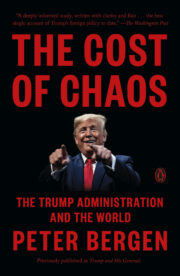
The Cost of Chaos: The Trump Administration and The World:
RECENT ARTICLES

RECENT FILM AND TV SERIES
GHOSTS OF BEIRUT: SHOWTIME
The Fall of Osama bin Laden, National Geographic
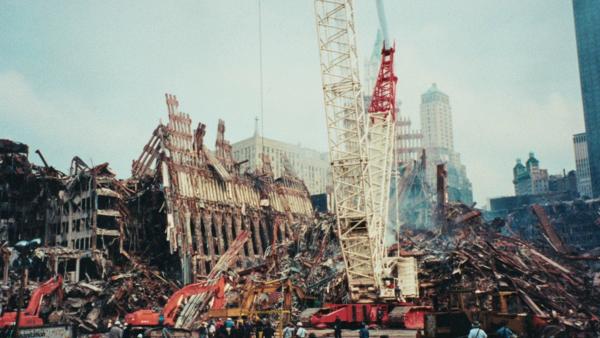
BIN LADEN'S HARD DRIVE, NATIONAL GEOGRAPHIC

