Modern Warfare Symposium, Global SOF, Ft. Bragg, N.C.
Speaker Graphic
The inaugural Global SOF Foundation (GSF) Modern Warfare Symposium and Expo will bring together the special operations forces (SOF) community on August 21-23, 2018 in Fort Bragg’s Iron Mike Conference Center.
Modern Warfare Symposium
Co-sponsored by the U.S. Army Special Operations Forces Command (USASOC), the purpose of this event is to convene subject matter experts, SOF, conventional units, and academia to both educate and connect through discussion about the future of modern warfare from a SOF perspective. Highlights include:
Attendees include subject matter experts, Army SOF, conventional units, industry, and academia
Previous GSF Symposia have brought together over 400 attendees from 25 countries
The third day of the Symposium will feature a SOF for Life Seminar, aimed at SOF and SOF support who are transitioning or recently transitioned from Active Duty
Modern Warfare Expo
This Exhibit-Hall focused event will take place in conjunction with the Symposium, and offers 20-30 exhibits from companies with capabilities that are needed by Army SOF. Don’t delay–space and Sponsorships will sell out quickly!
Register Save the Date Sponsorship Prospectus
Join Our Email List
Sign up below and receive updates about the 2018 Global SOF Modern Warfare Symposium & Expo.
Join our Email List
About the Global SOF Foundation
GSOF Foundation Logo
The Global SOF Foundation (GSF) is a 501(c)(3) non-profit organization that serves as the only professional association for the global special operations community with members from over 55 countries. Its mission is to build and grow an international SOF network of military, government, commercial, and educational stakeholders in order to advance SOF capabilities and partnerships.
Visit Website
Symposium Agenda
Jump To: Tuesday | Wednesday | Thursday | Back to Top
Tuesday Agenda August 21, 2018
7:30 a.m.-7:00 p.m.
Registration Desk Open
Foyer
8:00 a.m.-7:00 p.m.
Expo Open
Exhibit Hall
8:00 a.m.-9:00 a.m.
Morning Coffee
Exhibit Hall
9:00 a.m.-9:15 a.m.
Welcome Remarks
Dr. Keenan Yoho, Vice President, Global SOF Foundation (CONFIRMED)
Lafayette Ballroom
9:15 a.m.-10:00 a.m.
USASOC 2035 and Beyond
Lieutenant General Francis M. Beaudette, Commanding General, U.S. Army Special Operations Command (CONFIRMED)
Lafayette Ballroom
10:00 a.m.-11:15 a.m.
Multi-Domain Battle
Moderator: General (Retired) Daniel Allyn, Former Vice Chief of Staff, U.S. Army (CONFIRMED)
Major General John B. Morrison, Commanding General, U.S. Army Cyber Center of Excellence (Invited)
Brigadier General Allan M. Pepin, Commander, U.S. Army Special Operations Aviation Command (Invited)
Major General Kurt Sonntag, Commanding General, U.S. Army John F. Kennedy Special Warfare Center and School (CONFIRMED)
Major General Eric J. Wesley, Director, U.S. Army Capabilities Integration Center (Invited)
Lafayette Ballroom
11:15 a.m.-11:45 a.m.
Morning Networking Break
Exhibit Hall
11:45 a.m.-12:30 p.m.
Keynote Speech: TBD
General Robert B. “Abe” Abrams, Commanding General, U.S. Army Forces Command (CONFIRMED)
Lafayette Ballroom
12:30 p.m.-2:00 p.m.
Networking Lunch
Exhibit Hall
2:00 p.m.-2:30 p.m.
Introduction to Threatcasting
Cyndi Coon, Chief of Staff, Threatcasting Lab (CONFIRMED)
Natalie Vanatta, Senior Advisor to Threatcasting Lab, U.S. Army Cyber Institute (CONFIRMED)
Lafayette Ballroom
2:30 p.m.-3:45 p.m.
Countering Hybrid Threats and Tactics in the 21st Century
Moderator: Mr. Peter Bergen, Vice President, New America; National Security Correspondent, CNN (CONFIRMED)
General (Ret) John R. Allen, President, Brookings Institution (CONFIRMED)
Lieutenant General Austin Miller, Commander, U.S. Joint Special Operations Command (Invited)
Lieutenant General Michael Nagata, Director, Directorate of Strategic Operational Planning, U.S. National Counterterrorism Center (Invited)
Colonel Modestas Petrauskas, Commander, Special Operations Forces, Lithuania (CONFIRMED)
The Honorable Owen West, Assistant Secretary of Defense for Special Operations and Low-Intensity Conflict, U.S. Department of Defense (Invited)
Lafayette Ballroom
3:45 p.m.-4:15 p.m.
Afternoon Networking Break
Exhibit Hall
4:15 p.m.-5:00 p.m.
Senior Leader Conversation
Moderator: Mr. Michael Lumpkin, Vice President of Human Performance, Leidos (CONFIRMED)
Congressman Richard Hudson, Representative from the 8th District of North Carolina, U.S. House of Representatives (Invited)
Congressman Scott Peters, Co-Chair, SOF Caucus, U.S. House of Representatives (CONFIRMED)
Lafayette Ballroom
5:00 p.m.-7:00 p.m.
Networking Reception
Exhibit Hall
7:15 p.m.-10:00 p.m.
Night Vision Demo
Join the Excelitas-Qioptiq Team to see and use our latest advanced night vision systems. The live fire demonstration is open to all Symposium and Expo attendees and active duty U.S. Military and USG representatives. Following safety briefing and orientation, BBQ dinner will be served before moving to live fire points.
Bus transportation departs the Symposium at 1915 and will return from the range at 2130 and 2200.
This event will take place at The Range Complex, 2850 Tiger Swan Dr., Autreyville, NC 28318
www.therangecomplex.com
If you plan to attend, please respond to Sunie Davis at Excelitas Technologies, no later than 3 August 2018, to ensure we can provide transportation, food, and equipment for everyone.
Sunie Davis
sunie.davis@excelitas.com
937-353-2268
Jump To: Tuesday | Wednesday | Thursday | Back to Top
Wednesday Agenda August 22, 2018
8:00 a.m.-1:30 p.m.
Expo Open
Exhibit Hall
8:00 a.m.-9:00 a.m.
Morning Coffee
Exhibit Hall
8:00 a.m.-3:00 p.m.
Registration Desk Open
Foyer
9:00 a.m.-9:15 a.m.
Welcome Remarks
Dr. Keenan Yoho, Vice President, Global SOF Foundation (CONFIRMED)
Lafayette Ballroom
9:15 a.m.-10:00 a.m.
Keynote Speech: TBD
General Mark A. Milley, Chief of Staff, U.S. Army (Invited)
Lafayette Ballroom
10:00 a.m.-11:15 a.m.
Senior Leader Conversation: CF-SOF Operational Synergy
Moderator: Ms. Linda Robinson, Senior International Policy Analyst, Rand Corporation (CONFIRMED)
Major General James Kraft, Deputy Commanding General, U.S. Army Special Operations Command (Invited)
General Stephen Townsend, Commanding General, U.S. Army Training and Doctrine Command (Invited)
Lafayette Ballroom
11:15 a.m.-11:45 a.m.
Morning Networking Break
Exhibit Hall
11:45 a.m.-12:15 p.m.
Neuroscience and Neurotechnology and its Applications in National Intelligence and Defense
Captain (Ret) Richard Bremseth, Neuroethics Studies Program, Pellegrino Center for Clinical Bioethics, Georgetown University Medical Center (CONFIRMED)
Lafayette Ballroom
12:15 p.m.-1:30 p.m.
Networking Lunch & Exhibit Hall Closing
Exhibit Hall
1:30 p.m.-2:45 p.m.
Indigenous Approach in the 21st Century
Moderator: MG (Ret) Michael Repass, Chief Executive Officer, Able Global Solutions, LLC (CONFIRMED)
Major General Gary M. Brito, Commanding General, U.S. Army Maneuver Center of Excellence (CONFIRMED)
BG(P) Tony M. Fletcher, Commanding General, Special Operations Command South (CONFIRMED)
Major General Torgeir Gråtrud, Commander, Special Operations Command, Norway (Invited)
Major General James Linder, Chief of Staff, U.S. Special Operations Command (Invited)
Major General Mark C. Schwartz, Deputy Commander, Joint Special Operations Command (Invited)
Exhibit Hall
2:45 p.m.-3:00 p.m.
Closing Comments
Lieutenant General Francis M. Beaudette, Commanding General, U.S. Army Special Operations Command (CONFIRMED)
Lafayette Ballroom
5:00 p.m.-7:00 p.m.
No Host Social
The Mash House
Exhibit Hall
Jump To: Tuesday | Wednesday | Thursday | Back to Top
Thursday Agenda August 23, 2018
“SOF for Life” Transition Seminar
This is OPEN TO ACTIVE DUTY SOF AND THOSE WHO HAVE RETIRED OR SEPARATED LESS THAN TWO YEARS AGO (and their spouses).
SOF for Life Seminar Information
7:00 a.m.-1:00 p.m.
Registration Desk Open
Foyer
8:00 a.m.-12:00 p.m.
Phase 1: “Your Why”
Mr. Joe Musselman, Founder and CEO, The Honor Foundation (CONFIRMED)
Hodge 3-4
12:00 p.m.-1:00 p.m.
Lunch
Hodge 3-4
1:00 p.m.-3:00 p.m.
Phase 2: “Your Gear”
Mr. Joe Musselman, Founder and CEO, The Honor Foundation (CONFIRMED)
Hodge 3-4
3:00 p.m.-3:30 p.m.
Break
Foyer
3:30 p.m.-5:00 p.m.
Phase 3: “Your Workup”
Mr. Joe Musselman, Founder and CEO, The Honor Foundation (CONFIRMED)
Hodge 3-4
Back to top
Website Powered By eventPower
© Copyright 2011-2018
Privacy Policy
Global SOF Symposium, Madrid, Spain
2018 Global SOF Symposium – Europe
The 3rd Annual Global SOF Symposium – Europe will focus on the European, North African, and Latin American special operations communities and the shared issues they face.
Join us on September 25-27, 2018 in Madrid, Spain for this unique opportunity.
Symposium Highlights
A packed agenda that includes high-ranking speakers and extensive networking opportunities
The largest exhibit space at a GSF Symposium to date
Attendees include: active duty and retired military and police, government civilians, industry, academia, journalists, and non-governmental
organizations
Confirmed Countries
Australia
Belgium
Brazil
Bulgaria
Canada
Chile
Colombia
Croatia
Czech Republic
Estonia
France
Greece
Hungary
Iceland
Italy
Kuwait
Libya
Lithuania
The Netherlands
Norway
Poland
Portugal
Romania
Senegal
Serbia
Slovakia
Spain
Switzerland
Turkey
United Kingdom
United States
Event App
Get the Official Symposium App
[whova-logo]
Sponsored by
[whova-logo]
iOS Android
For Blackberry or Windows Phone, Click here
Attendee Infographic
Register Today!
Powered By Whova – Best Event App
Whova event and conference app
Join Our Email List
Sign up and receive updates about the 2018 Global SOF Symposium – Europe.
Join Our Email List
About the Global SOF Foundation
GSOF Foundation Logo
The Global SOF Foundation (GSF) is a 501(c)(3) non-profit organization that serves as the only professional association for the global special operations community with members from over 55 countries. Its mission is to build and grow an international SOF network of military, government, commercial, and educational stakeholders in order to advance SOF capabilities and partnerships.
Opening Remarks
Master of Ceremonies Mr. Robert Howe, President and Chief Operating Officer, System High Corporation
General Fernando Alejandre Martínez, Chief of Defense, Spain
0945-1100
Senior Leader Conversation
Moderator: Mr. Peter Bergen, Vice President, New America
Mr. Garry Reid, Director for Defense Intelligence (Intelligence and Security), Under Secretary of Defense for Intelligence
1100-1145
Coffee Break in Exhibit Area
Foyer
1145-1300
Media and SOF: Balancing Openness with Operational Security
Moderator: Colonel (Ret) Tim Nye, Former Public Affairs Officer, U.S. Special Operations Command
Mr. Jim Foster, Former SAS Sergeant Major, Independent Cameraman and Documentarian
Mr. Jeff Newton, Senior Producer, National Geographic
Captain Jason Salata, Director, Office of Communication, U.S. Special Operations Command
1300-1430
Networking Lunch
Sponsored by: Tampa Microwave LLC Logo
Foyer
Plenary Session
Londres/Bristol/Oxford
1430-1530
Hezbollah’s (Military Wing) Global Criminal Support Network
Mr. John Fernandez, Special Operations Division, Counter-Narco Terrorism Operations Center, U.S. Drug Enforcement Administration
1530-1600
SOF Slam: Electronic Warfare
Mr. Kelly Dunn, President, CTL-Systemware
1600-1630
Networking Break
Foyer
1630-1700
Keynote Speech: U.S. Operations in Africa
The Honorable Alexander M. Laskaris, Deputy to the Commander for Civil-Military Engagement, U.S. Africa Command
Networking Reception in the Exhibit Area
1700-1830
Foyer
Jump To: Tuesday | Wednesday | Thursday | Back to Top
Thursday Agenda September 27, 2018
0730-1600
Registration and Information Desk Open
Atrium 2
0800-1430
Exhibit Hall Open
Foyer
Government / Military Only
Estrasburgo
0800-0930
SOF Roundtable (Government Only)
Moderator: Dr. Keenan Yoho, Vice President, Global SOF Foundation
Major General Jaime Iñiguez Andrade, Commander, Joint Special Operations Command, Spain
Estrasburgo
Plenary Session
Londres/Bristol/Oxford
0930-0940
Welcome and Administrative Remarks
Master of Ceremonies Mr. Remi Eriksen, Chief Executive Officer, MAS Special Operations Training
0940-1015
Keynote Speech
The Honorable Maria Elena Gómez Castro, Director, General Directorate of Defense Policy
1015-1130
Illicit Networks Spanning Ibero-America, North Africa and Europe
Moderator: Mr. Peter Bergen, Vice President, New America
Dr. Carlos Echeverría de Jesús, Professor of International Relations, National Distance Learning University, Universidad Nacional de Educación a Distancia
Major General Daniel Grammatico, Director of Operations, Military Staff, European Union
His Excellency Gen Mamadou Sow, Ambassador, Embassy of Senegal, Madrid
1130-1200
Networking Break in the Exhibit Area
Foyer
Plenary Session
Londres/Bristol/Oxford
1200-1245
Keynote Speech: TBD
His Excellency Juan Carlos Pinzón, Former Minister of Defense, Colombia
1245-1400
Networking Lunch
Foyer
SOF Slam
Londres/Bristol/Oxford
1400-1430
SOF Slam: Explosive Ordnance Disposal (EOD) Integration into SOF
Mr. Robert Brush, Master Chief EOD, U.S. Navy (Ret.) and President, Point One USA
Plenary Session
Londres/Bristol/Oxford
1430-1545
What it takes to be a SOF Component Headquarters
Moderator: Mr. Stephen Wisotzki, Global Security and Investigations, JPMorgan Chase
Major General Jaime Iñiguez Andrade, Commander, Joint Special Operations Command, Spain
Vice Admiral Colin Kilrain, Commander, NATO Special Operations Headquarters
Air Brig Gen Philippe Morales, Deputy Commander, Special Operations, France
Colonel Riho Ühtegi, Commander, Special Operations, Estonia (Invited)
1545-1600
Closing Remarks
Major General Jaime Iñiguez Andrade, Commander, Joint Special Operations Command, Spain
NATO Parliamentary Assembly Briefing
1630-1730
Estrasburgo
This is a closed door session with NSHQ.
Evening Reception at Historic Casino Madrid
1830-1900
Bus Transportation to Reception at Casino Madrid
1900-2100
Reception
Back to top
Website Powered By eventPower
© Copyright 2011-2018
Privacy Policy
The Road Not Taken: Edward Lansdale and the Tragedy in Vietnam. Max Boot book event, New America DC
International Security Events The Road Not Taken: Edward Lansdale and the Tragedy in Vietnam
The Road Not Taken: Edward Lansdale and the Tragedy in Vietnam
RSVP
When
February 22, 2018
3:30 pm – 4:30 pm
Where
New America
740 15th St NW #900
Washington, D.C. 20005
Edward Lansdale, the man said to be the fictional model for Graham Greene’s The Quiet American, pioneered a “hearts and mind” strategy of counterinsurgency. In his new book, The Road Not Taken: Edward Lansdale and the American Tragedy in Vietnam, Max Boot chronicles the methods Lansdale promoted in the Philippines and then in Vietnam, arguing that his visionary policy was crushed by an American military bureaucracy more focused on napalm bombs than winning the trust of the people. Boot draws on dozens of interviews and new documents to shed light on this engaging figure.
Max Boot is a Senior Fellow at the Council on Foreign Relations and the author of numerous books in addition to The Road Not Taken, including Savage Wars of Peace and the New York Times bestseller Invisible Armies.
Participants:
Max Boot
Author, The Road Not Taken: Edward Lansdale and the American Tragedy in Vietnam
Senior Fellow, Council on Foreign Relations
Moderator:
Peter Bergen, @peterbergencnn
Vice President, New America
Director, International Security Program, New America
Email
Tweet
Share
New America® is a registered trademark
Contact Jobs Policies and Procedures Creative Commons
Facebook Twitter LinkedIn
DARPA D60 Symposium, Washington DC
About D60
D60 is a three-day Symposium hosted by DARPA in honor of its 60th Anniversary. The Symposium will highlight DARPA’s innovative approach to creating breakthrough technologies and capabilities from the Agency’s past, present, and future. DARPA’s mission requires a constant stream of novel ideas and contributions from innovators looking beyond what is possible now. D60 will provide attendees the opportunity to engage with up-and-coming innovators, along with some of today’s most creative and accomplished scientists and technologists, as they continue to provide these contributions. By sharing our record of innovative achievements over the past 60 years, DARPA aims to inspire attendees to explore future technologies, their potential application to tomorrow’s technical and societal challenges, and the dilemmas those applications may engender. D60 participants will have the opportunity to be a part of the new relationships, partnerships, and communities of interest that this event aims to foster, and advance dialogue on the pursuit of science in the national interest.
D60 will feature six Plenary Sessions focused on topics of broad import and interest as well as 30 themed Breakout Sessions that will enable participants to dive more deeply into particular topics of interest. An Exhibit Hall will feature displays from each of DARPA’s six technical offices, detailing a selection of programs that reflect the breadth of DARPA’s research portfolio as well as the range of its performer base. Visitors to the Exhibit Hall will also have the opportunity to view an extensive showcase of historical displays and artifacts with highlights from DARPA’s storied past.
Directorate S: America’s Secret Wars in Afghanistan and Pakistan, Steve Coll book event
Directorate S: America’s Secret Wars in Afghanistan and Pakistan
RSVP
When
February 9, 2018
3:30 pm – 5:00 pm
Where
New America
740 15th St NW #900
Washington, D.C. 20005
Prior to 9/11, the United States had carried out numerous covert operations in Afghanistan, ostensibly in cooperation, although often in direct opposition, with I.S.I., the Pakistani intelligence agency. Following the 9/11 attacks, the U.S. found itself on a slow-motion collision course with Pakistan.
In Directorate S: The CIA and America’s Secret Wars in Afghanistan, Pulitzer Prize-winning author Steve Coll provides a detailed telling of this clash, expanding upon his first book, Ghost Wars, to tell the story of the United States’ efforts in Afghanistan and Pakistan in the years that followed.
Steve Coll is the author of the Pulitzer Prize-winning Ghost Wars and the dean of the Graduate School of Journalism at Columbia University. He was also president of the New America Foundation from 2007 to 2013. He is a staff writer for The New Yorker, and previously worked for twenty years at The Washington Post, where he received a Pulitzer Prize for explanatory journalism in 1990. He is the author of seven other books, including On the Grand Trunk Road, The Bin Ladens, Private Empire, and Directorate S.
Participants:
Steve Coll
Author, Directorate S: The CIA and America’s Secret Wars in Afghanistan and Pakistan
Dean, Graduate School of Journalism at Columbia University
Moderator:
Peter Bergen, @peterbergencnn
Vice President, New America
Director, International Security Program, New America
Email
Tweet
Share
New America® is a registered trademark
Contact Jobs Policies and Procedures Creative Commons
Facebook Twitter LinkedIn
The Syrian Opposition in 2018, New America DC
The Syrian Opposition in 2018
RSVP
Photo: ART production / Shutterstock.com
When
January 19, 2018
12:15 pm – 1:45 pm
Where
New America
740 15th St NW #900
Washington, D.C. 20005
Ever since the Arab Spring protests broke out in Syria in 2011, the ensuing conflict between the government of Bashar al-Assad and Syrian opposition groups has gone through numerous shifts. With the fall of ISIS’ territorial holdings in the east of the country, advances by Syrian forces, and a new administration in the United States transforming the Syrian conflict, where does the Syrian opposition stand in 2018?
New America is pleased to welcome Osama Abu Zayd, a spokesman and representative of the Free Syrian Army to discuss these issues. Zayd has been a member of the Track 1 delegations at negotiations in Geneva and Astana, representing the Syrian opposition bilaterally and with transnational bodies such as the EU and UN.
Join the conversation online using #Syria2018 and following @NewAmericaISP.
Participants:
Osama Abu Zayd
Spokesman, Free Syrian Army
Moderator:
Peter Bergen, @peterbergencnn
Vice President, New America
Director, International Security Program, New America
Trump has scored some successes in foreign policy, CNN.com
Trump has scored some successes in foreign policy
By Peter Bergen, CNN National Security Analyst
Updated 9:28 AM ET, Wed December 27, 2017
Trump unveils national security plan
“Peter Bergen is CNN’s national security analyst, a vice president at New America and a professor of practice at Arizona State University. He is the author of “United States of Jihad: Investigating America’s Homegrown Terrorists.” ”
(CNN)Some of the most ferocious critics of President Trump’s foreign policy are leading Republican thinkers and writers such as military historians Max Boot and Eliot Cohen, along with Michael Gerson, who was President George W. Bush’s chief speechwriter.
In venues such as Foreign Policy, The Atlantic and The Washington Post they have described Trump as “utterly incompetent” (Boot) and as running a foreign policy defined by “blunder, inattention, miscomprehension or willfulness” (Cohen). They’ve also pointed to his “fundamental unfitness for high office” (Gerson).
And those are reviews of Trump’s foreign policy record by some of his fellow Republicans.
But what the critics don’t acknowledge is that Trump and his national security team have actually scored some real foreign policy wins in the past year that have been sometimes obscured by Trump’s penchant for bloviation, bluster and belligerence. (And I don’t mean self-described Trump wins, such as the “travel ban” whose effects on containing terrorism in the States will likely be negligible, as lethal terrorist attacks on American soil since 9/11 have invariably been the work of self-radicalized US citizens and legal residents.)
Red line
The first win is that Trump enforced a real “red line” against the use of nerve gas in Syria by the regime of Bashar al-Assad, something that Obama had failed to do. On April 4, 2017, the Syrian regime used sarin, a nerve gas, against civilian targets in the rebel-held town of Khan Sheikhoun, killing more than 80 people.
Trump called the attack an “affront to humanity” and said that it “crossed a lot of lines for me. When you kill innocent children, innocent babies … that crosses many, many lines — beyond a red line.”
Two days after the sarin attack, American warships launched 59 cruise missiles at a Syrian military airfield, the first direct military action that the United States has taken against Assad’s regime.
Assad hasn’t used chemical weapons against his own people since Trump ordered those cruise missile strikes in April. The enforcement of the important international prohibition against the use of nerve gas is certainly an achievement for the Trump administration.
A flurry of cruise missile strikes, of course, doesn’t make a Syria strategy, and the precise contours of Trump’s game plan for Syria going forward are not clear — at least not publicly.
What is clear is that ISIS is almost completely defeated in Syria and is largely eliminated from all of its havens in Iraq. The defeat of ISIS has been a long time coming, and most of the anti-ISIS campaign took place under the Obama administration. But the Trump national security team helped to hasten the defeat of ISIS in two ways.
First, Trump decided to equip the anti-ISIS Syrian Democratic Forces — a largely Kurdish militia — with mortars, anti-tank weapons, armored cars and machine guns. Those forces captured ISIS’s de facto Syrian capital, Raqqa, in October
Second, Trump allowed American ground commanders greater latitude to carry out operations in war zones such as Iraq and Syria without consulting higher up the chain of command. Pentagon brass had long chafed at what they considered to be the micromanagement of military operations by the Obama White House.
Greater stability in Iraq and Afghanistan
As a result of ISIS’s defeat in Iraq, the country is more stable than it has been for more than three years. I traveled to Iraq earlier this month and the Iraqis I spoke with were cautiously optimistic that the recent gains against ISIS might help to produce some kind of lasting peace.
In late August Trump announced a plan to bring some modicum of stability to Afghanistan, where the Taliban have asserted more control in the past year or so. In addition to sending a mini-surge of several thousand more troops to the country, Trump made it clear that the US commitment to Afghanistan is long term and “conditions-based.” Trump did not impose any timetable for withdrawing US forces from the country, which was the counterproductive approach that the Obama administration had taken.
The Afghan government has welcomed this long-term American commitment to Afghanistan.
The big bet
As important as they are, these successes don’t amount to a vindication of Trump’s overall foreign policy and there are still a great many open questions about his approach to the world.
In the Middle East, Trump has placed a big bet on Saudi Crown Prince Mohammed bin Salman, the 32-year-old future king of Saudi Arabia, whom the Trump administration has eagerly embraced.
MBS, as he is widely known, has launched “Vision 2030,” a wildly ambitious plan to wean the Saudi economy from its total dependence on oil and end the quasi-socialist Saudi state in which most Saudis work for the government and pay no taxes while getting free health care and education as well as subsidies for electricity and gas.
MBS is also liberalizing Saudi society. He has curbed the powers of the feared religious police, and has plans to allow women to drive and to open up once-banned movie theaters.
At the same time MBS has abandoned Saudi Arabia’s traditionally conservative foreign policy by launching a war in Yemen, which has turned into a fiasco, and blockading neighboring Qatar, which has devolved into a standoff with no end in sight.
MBS also deposed the previous Crown Prince, Mohamed bin Nayef, and has arrested hundreds of businessmen and royal family members who represent alternative power centers to his increasingly dictatorial rule, charging them with corruption.
It’s not clear how Trump’s big bet on MBS will ultimately play out, but the fact is that Trump embraced the young prince early in his administration. And over the past year MBS has amassed enormous amounts of power in a country that is a key American ally.
Similarities with Obama
Trump often underlines his many differences with Obama but in the realm of national security there are, in fact, some important continuities between the two administrations.
The Trump administration has continued the Obama doctrine of avoiding big, conventional wars in the Middle East. Instead, the Trump team has kept in place much of the counter-terrorism architecture that Obama developed, including his overall approach to the war against ISIS in Iraq and Syria and his reliance on Special Operations Forces and drones rather than on large-scale conventional forces to achieve American military goals.
In Pakistan, Somalia and Yemen, Trump continues the drone campaigns that were a signature of Obama’s administration.
Despite Trump’s sometimes-inflammatory rhetoric about NATO, Trump’s team has remained strong supporters of the alliance, which continues to play an important role in Afghanistan.
The Trump team has also called for NATO members to spend more on defense — the goal is 2% of each country’s GDP — which is exactly what the Obama administration also called for, albeit somewhat more diplomatically.
Trump himself may make nice with Russian President Vladimir Putin, but his national security team takes many of the same positions on Russia that Obama did.
Trump’s National Security Strategy, published on December 18, states that Russia is “using information tools in an attempt to undermine the legitimacy of democracies” and criticizes Russian aggression against its neighbors by saying, “With its invasions of Georgia and Ukraine, Russia demonstrated its willingness to violate the sovereignty of states in the region.”
And this strategy document reflects real policies. On Friday the Trump administration announced its plans to arm the government of Ukraine with anti-tank weapons to help it fight Russian-backed separatists.
North Korea, China and terrorism
Despite Trump’s bellicose rhetoric, the North Koreans are continuing their nuclear weapons program. The Trump administration, like the Obama administration, hopes that China will influence Kim Jong Un to behave responsibly while simultaneously ratcheting up sanctions on his regime.
Also, as the Obama administration before it, Trump’s National Security Strategy worries that China “is building the most capable and well-funded military in the world, after our own,” and warns that Chinese “land reclamation projects and militarization of the South China Seas flouts international law, threatens the free flow of trade, and undermines stability. China has mounted a rapid military modernization campaign designed to limit U.S. access to the region.”
Obama’s response to Chinese expansionism in Asia was the Trans-Pacific Partnership (TPP), a trade pact between a dozen nations that excluded China. Despite his national security team’s concerns about Chinese ambitions, Trump withdrew from the TPP, seeming to misunderstand it as simply a trade deal rather than also an effort to contain China.
Trump, like Obama, has not sent any additional prisoners to Guantanamo, instead relying on federal courts to try terrorists. Like Obama, he also has not pushed for coercive interrogations to resume.
The hyper-nationalists who once ran the show at the Trump White House — including Lt. Gen. Michael Flynn, Steve Bannon and Sebastian Gorka — are largely gone. As a result, the White House is no longer pushing the cartoonish view that Islam is the cause of terrorism.
Wins and losses
To be sure, the Trump administration has scored some self-inflicted foreign policy losses such as the withdrawal from the TPP and, most recently, the recognition of Jerusalem as the capital of Israel instead of Tel Aviv.
F
The Trump administration didn’t secure any kind of concession from the Israelis, such as obtaining a commitment to freeze the building of settlements in Palestinian areas of East Jerusalem, in exchange for this gift. The Jerusalem decision has also ensured that any efforts by the Trump administration to revive the moribund peace process will likely be ignored by the Palestinians going forward.
But the fact remains that the Trump administration has helped to speed the demise of ISIS, bringing a measure of stability to Iraq and also reducing the scope of the terrorist threat that the group poses. At the same time, Trump has initiated a plan in Afghanistan that reduces the possibility that the country could slip back into an anarchic state conducive to groups such as ISIS securing a large presence in the country.
And Trump’s national security team largely continues many of the policies they inherited from Obama, whether on Russia, the “war on terror” or North Korea.
Correction: An earlier version gave the wrong date for the chemical weapons attack against a rebel-held town in Syria.
Trump’s new strategy: Russia is an actual threat, CNN.com
By using this site, you agree to the Privacy Policy and Terms of Service.
Trump’s new strategy: Russia is an actual threat
Peter Bergen
By Peter Bergen, CNN National Security Analyst
Source: CNN
“Peter Bergen is CNN’s national security analyst, a vice president at New America and a professor of practice at Arizona State University. He is the author of “United States of Jihad: Investigating America’s Homegrown Terrorists.” ”
(CNN)On Monday President Donald Trump rolled out his national security strategy, a key planning document that every president since Ronald Reagan has published to warn about threats to American national security and how best to respond to them.
Trump’s plan is, unsurprisingly, an unabashedly “America First” strategy that, at just under 70 dense pages, is full of insights into how Trump’s national security advisers see the world.
While usual suspects such as Iran and North Korea are described as threats, and campaign promises about the need for a border wall with Mexico are acknowledged, what is most newsworthy about the document is the extent to which it portrays Russia and China, America’s traditional major state antagonists, as threatening. The document asserts that Russia and China “want to shape a world antithetical to U.S. values and interests,” which seems quite at odds with the President’s own enthusiastic embrace of Russia.
Overall, the new Trump strategy calls for a policy of “peace through strength” that emphasizes deterring these enemies by preparing US conventional forces for “major war” while also modernizing the country’s aging nuclear forces. This new approach is necessary because the strategy document states that, “after being dismissed as a phenomenon of an earlier century, great power competition returned. China and Russia began to reassert their influence regionally and globally.”
Russia is “using information tools in an attempt to undermine the legitimacy of democracies…The American public and private sectors must recognize the threat and work together to defend our way of life,” according to the strategy document. The document also describes Russian aggression against its neighbors: “With its invasions of Georgia and Ukraine, Russia demonstrated its willingness to violate the sovereignty of states in the region.”
The document goes on to link Russia’s “information operations” to a broader campaign to influence public opinion across the globe. Its influence campaigns blend covert intelligence operations and false online personas with state-funded media, third-party intermediaries and paid social media users, or “trolls.” This, of course, is similar to the US intelligence community’s conclusions that Russia meddled in the 2016 American presidential election.
The emphasis on Russian perfidy may, in part, be a reflection of the “lead pen” of the document, Nadia Schadlow, the senior director for strategy at the National Security Council who in the mid-1990s was the desk officer for Ukraine at the Pentagon.
The strategy also calls out China in a number of areas. It accuses the Chinese of stealing US intellectual property every year valued at “hundreds of billions of dollars” and calls for tightening of visa procedures to “reduce economic theft by non-traditional intelligence collectors,” which presumably could include the more than 300,000 Chinese students who attend US universities every year.
China “is building the most capable and well-funded military in the world, after our own,” including a “diversifying” nuclear arsenal, according to the document, which goes on to warn that Chinese “land reclamation projects and militarization of the South China Seas flouts international law, threatens the free flow of trade, and undermines stability. China has mounted a rapid military modernization campaign designed to limit U.S. access to the region.”
What’s missing: Climate change and ‘Islamic terrorism’
Where President Barack Obama’s 2015 national security strategy document had a significant emphasis on the problematic effects of climate change, the Trump strategy doesn’t have much to say about the topic other than to note that bringing down pollution should be a goal of the United States thorough “innovation” rather than “onerous regulation.”
Also missing from the new Trump strategy document is any discussion of “radical Islamic terrorism,” which is a great preoccupation of the Breitbartian wing of the Republican Party. The document eschews this description of the threat, which critics say conflates Islam and terrorism, settling instead for the uncontroversial and accurate phase “jihadist terrorists” to describe groups such as ISIS and al Qaeda.
This omission will likely provoke fulminations on Fox News by analysts such as Sebastian Gorka, who was forced out of his advisory role at the White House in August and who has made use of the phrase “radical Islamic terrorism” a touchstone for the only proper way to describe the threat.
When President Trump delivered a speech about the strategy at the Ronald Reagan Building and International Trade Center in Washington DC he did invoke the phrase “radical Islamic terrorism” despite the fact that the phrase doesn’t appear anywhere in the lengthy strategy document.
Regarding terrorism, the strategy has some quite harsh words for Pakistan, “since no partnership can survive a country’s support for militants and terrorists that targets a partner’s own service members and officials,” a reference to Pakistan’s support for elements of the Taliban that attack American targets in Afghanistan.
NATO continues to play an important role in Afghanistan and, despite Trump’s sometimes inflammatory rhetoric about the alliance, the strategy document describes NATO as “one of our great advantages over our competitors.” It also calls for European allies in NATO “to increase defense spending to two percent of gross domestic product by 2024,” which was also a goal of the Obama administration.
(Disclosure: I was one of the outside experts consulted by the Trump National Security Council as they formulated the strategy.
What’s promising (sort of): Technology and policy
The Trump strategy document includes considerable and welcome discussion of the intertwined roles of technology and policy. The strategy is clear about the threat to the United States posed by cyber intrusions — many of which emanate from the Russians and Chinese. The strategy calls for a defensible, modernized, federal information structure and also a “secure 5G Internet capability nationwide.”
The 2016 hack of the obscure US Office of Personnel Management underlined the necessity of radical change in the way that the federal government does business. In that hack, personal information such as the Social Security numbers of more than 20 million current and former US government employees and their families were stolen.
The document calls for further American investments in “data science, encryption, autonomous technologies, gene editing, new materials, nanotechnology, advanced computing technologies, and artificial intelligence” in order to grow the economy of tomorrow. At the same time, it advocates for increased US government understanding of worldwide science and technology trends and their impact on American strategies.
This, of course, is an excellent idea, but as CBS News reported last month, the White House Office of Science and Technology Policy is barely staffed and “has disintegrated into a shell of what it once was under President Obama.”
Bolstering the State Department, but how?
The strategy document calls for an enhanced State Department in no uncertain terms: “We must upgrade our diplomatic capabilities to compete in the current environment and to embrace a competitive mindset. Effective diplomacy requires the efficient use of limited resources, a professional diplomatic corps, modern and safe facilities, and secure methods to communicate and engage with local populations.”
And yet, this strategy comes at a time when the State Department is largely rudderless under the leadership of Secretary of State Rex Tillerson, who has failed to fill many of the key positions in his department and who has embraced a proposed cut of a third of State’s budget at the same time that the Pentagon is getting a 10% budget boost.
Follow CNN Opinion
Ultimately, the strategy document is the responsibility of the National Security Advisor, Lt. Gen H.R. McMaster, who early in his Army career published “Dereliction of Duty,” a blistering account of how the Pentagon brass during the Vietnam War only told President Lyndon Johnson: “What he wanted to hear…Bearers of bad news or those that expressed views counter to his priorities would hold little sway.”
It would be surprising if McMaster were to make the same mistake with this key document that lays out the national security strategy of the United States. That is why the strategy document is unequivocal about the threat to democracies posed by Russian influence operations, even if that is not a message that President Trump always wants to hear.
Editor’s note: This article has been updated to include further content from Trump’s Monday speech.
It wasn’t Trump but this general’s elite soldiers who defeated ISIS, CNN.com
Bergen: It wasn’t Trump but this general’s elite soldiers who defeated ISIS
Peter Bergen
By Peter Bergen, CNN National Security Analyst
U
“Peter Bergen is CNN’s national security analyst, a vice president at New America and a professor of practice at Arizona State University. He is the author of “United States of Jihad: Investigating America’s Homegrown Terrorists.” ”
Baghdad, Iraq (CNN)Lt. Gen. Abdul-Wahab al-Saadi is virtually unknown outside Iraq, but he is a hero in his own country. When the three-star general walks into the lobby of a guesthouse in Baghdad he is quickly surrounded by well-wishers who want to take selfies with him. Iraqis know that the taciturn general was key to the long, grinding campaign that defeated ISIS.
Last week the Iraqi military released a statement saying Iraq was “fully liberated” from ISIS’ reign of terror. Three years earlier, ISIS had controlled 40% of the country, according to Iraqi officials.
It was the storied “Golden Division” of Iraq’s Counter-Terrorism Service, the Iraqi version of US Special Operations Forces, that did much of the fighting and dying to defeat ISIS.
Saadi leads the Golden Division. A tall, thin man with deep, dark circles under his eyes that are a testament to his fight against ISIS for the past three years, Saadi, 54, was dressed in a black leather jacket, black shirt and black trousers when he sat down to discuss the campaign against ISIS over a cup of tea in Baghdad.
Saadi asserted that all that remains of ISIS in Iraq are “some sleeper cells.” Surviving ISIS cells have gone to ground in western Iraq, Syria and Turkey, he said.
Two months ago President Donald Trump was quick to take credit for the looming defeat of ISIS when Raqqa, ISIS’ de facto capital in Syria, fell to US-backed forces. Trump asserted that ISIS hadn’t been defeated earlier because “you didn’t have Trump as your president.”
Saadi seemed genuinely puzzled when asked if he had noticed any changes in American support during the more than two years that he had been leading the Iraqi fight against ISIS. Saadi said, “There was no difference between the support given by Obama and Trump.”
Why is it that the US-trained Golden Division and Counter-Terrorism Service played such a key role in the defeat of ISIS while the Iraqi army ignominiously fled from the ISIS militants that seized much of Iraq in 2014?
Saadi explained, “We have zero tolerance for sectarianism,” which has been the bane of Iraqi security services. Iraq’s minority Sunni population have long viewed the Iraqi security services as armed Shia groups with a deeply sectarian agenda.
The Counter-Terrorism Service, consisting of about 10,000 soldiers, also demands continuous training for its soldiers, unlike the Iraqi army, which only requires basic training.
The prestige of the Counter-Terrorism Service can be gauged by the fact that when the Iraqi government launched a recruitment drive in May, 300,000 men applied to be part of the force. An American military trainer said that only around 1,000 of those will likely end up being trained at a joint US-Iraqi training facility, according to a report in the Washington Post.
Saadi said American logistical and intelligence support and US airpower accounted for “50% of the success of the battle” against ISIS. American bombs inflicted heavy casualties on ISIS and were a morale booster for Saadi’s troops.
Saadi led the Golden Division into battle in key phases of the war against ISIS, liberating first Iraq’s key oil refineries in Baiji in June 2015, and then significant Iraqi cities such as Fallujah, Ramadi and Tikrmt.
When he was fighting to liberate Tikrit the general tore off the three stars on his epaulettes denoting his high rank, he told me, saying to himself, “I don’t deserve this rank if I don’t free my fellow citizens from the grasp of ISIS.”
The general leads from the front. “I have to be in the front line. Number one it is for the morale of my soldiers, and second I want to make sure no one mistreats civilians,” Saadi said. As a result, the general has narrowly escaped death repeatedly, showing this reporter a scar on his chin where he says a sniper’s bullet grazed him during the battle of Baiji.
It was above all his role in the fight for Iraq’s second city, Mosul, that cemented Saadi’s reputation among Iraqis.
The fight for Mosul was never going to be easy. A city of 2 million people, the old section of the city in western Mosul is a warren of narrow medieval-era streets and buildings.
The battle for Mosul lasted nine months — in part, Saadi said, because Iraqi forces didn’t want to level the city: “We were very careful to preserve the infrastructure and also the lives of innocents remaining in the city.”
The fight was also complicated in Mosul because ISIS deployed more than 1,000 “VBIEDs” –vehicle-borne improvised explosive devices — cars and trucks driven by suicide bombers. These VBIEDs were greatly feared by the Golden Division troops.
Also many of ISIS’ most competent fighters, numbering around 10,000, decided to make their last stand in Mosul where ISIS’ self-styled caliphate was first proclaimed in 2014 by Abu Bakr al-Baghdadi, the elusive leader of ISIS.
Mosul finally fell to Iraqi forces in July.
Reflecting on the anti-ISIS campaign, Ben Connable, a political scientist at the RAND think tank, who served in Iraq for three tours as a Marine Corps officer said, “I have never been more optimistic about Iraq than I am today. They finally feel like they own their security.”
The battle against ISIS in Iraq is over. The next challenge for the Iraqi government is to win the peace. To do that, it must now ensure that Iraq’s Sunni minority feels that they have some real stake in Iraqi politics so that they don’t actively or passively support groups like ISIS that claim — no matter how self-servingly — to stand up for the rights of the Sunni.
Amateur terrorists can kill, too, CNN.com
Bergen: Amateur terrorists can kill, too
Peter Bergen
By Peter Bergen, CNN National Security Analyst
Updated 3:23 PM ET, Mon December 11, 2017
Explosion at Port Authority Bus Terminal
“Peter Bergen is CNN’s national security analyst, a vice president at New America and a professor of practice at Arizona State University. He is the author of “United States of Jihad: Investigating America’s Homegrown Terrorists.” ”
Doha, Qatar (CNN)Monday’s botched terrorist attack at Manhattan’s Port Authority Bus Terminal was an amateur affair, according to law enforcement officials. The suspected bomber, Akayed Ullah, had a homemade device attached to his body with Velcro and zip ties and when it detonated, it injured him with lacerations and burns, while three bystanders suffered minor injuries.
New York Gov. Andrew Cuomo observed at a news conference on Monday, “Anyone can go on the internet and download garbage and vileness on how to put together an amateur-level explosive device, and that is the reality we live with.”
Indeed, it is. But we shouldn’t take too much comfort from the fact that Ullah’s alleged attack was the work of an amateur, because according to New America, every one of the 12 successful jihadist terrorist attacks since 9/11 in the United States has also been the work of amateurs who received no formal training from any foreign terrorist group.
Consider the Boston Marathon bombers who on April 15, 2013, killed three and injured more than 200 with explosive devices they modeled in part on the instructions they found in the English-language webzine Inspire, which was published by al Qaeda’s Yemen branch. Tamerlan and Dzhokhar Tsarnaev, the two brothers who carried out the Boston attack, hadn’t received any kind of training from a terrorist organization.
Or take Omar Mateen, who killed 49 at a gay nightclub in Orlando in 2016. As he carried out his attack, Mateen pledged an oath of allegiance to ISIS, but there is no evidence he was trained by the group or even had any contact with it.
And Sayfullo Habibullaevic Saipov is accused of driving a rented pickup truck into a crowded bicycle path near the World Trade Center in Manhattan, killing eight people on Halloween. A note near the truck said Saipov carried out the attack for ISIS, but like Mateen, Saipov had no training from the group.
Meanwhile, on Saturday, the Iraqi government released a statement saying it had “fully liberated” all Iraq’s territory from “ISIS terrorist gangs.”
This is indeed a significant milestone, but Monday’s botched terror attack in Manhattan reminds us that jihadist ideology continues to inspire a small number of disaffected Muslims in the United States. And simply because they are amateurs doesn’t mean they can’t also be deadly.
FEATURED BOOK
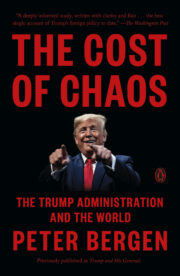
The Cost of Chaos: The Trump Administration and The World:
RECENT ARTICLES

RECENT FILM AND TV SERIES
GHOSTS OF BEIRUT: SHOWTIME
The Fall of Osama bin Laden, National Geographic
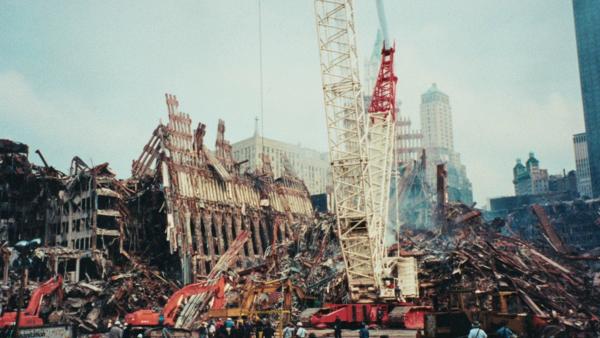
BIN LADEN'S HARD DRIVE, NATIONAL GEOGRAPHIC

