Combating Global Terrorism in a Post 9/11 World, Pittsburgh
Public Policy Discussion and Luncheon on the Occasion of the 82nd Annual Meeting
Learning from Abbottabad: Combating Global Terrorism in a Post 9/11 World
May 30, 2013
12:00 – 1:45 p.m.
The annual meeting will be held after the luncheon concludes.
Fairmont Hotel, 510 Market St, Pittsburgh, PA 15222
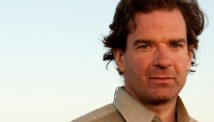
Peter Bergen
National Security Analyst for CNN
Director of the National Security Studies Program at the New America Foundation
Author of Manhunt: The Ten-Year Search for Bin Laden from 9/11 to Abbottabad
Since Bin Laden’s death, the manhunt for one the world’s most notorious terrorists has been a compelling story. From personal accounts of the Navy Seals who carried out the Abbottabad raid to the Oscar-nominated film, Zero Dark Thirty, there are many details that are difficult to grasp. Join the Council as a leading expert on national security and foreign policy examines the fact and fiction behind the hunt for Osama bin Laden.
House Committee on Foreign Affairs: “After the Withdrawal: The Way Forward in Afghanistan and Pakistan,” March 19, 2013.
“Drone Wars: The Constitutional and Counterterrorism Implications of Targeted Killing” Senate Committee on the Judiciary, Subcommittee on the Constitution, April 23, 2013
http://www.judiciary.senate.gov/pdf/04-23-13BergenTestimony.pdf
Agencies often miss warning signs of attacks, CNN.com
Agencies often miss warning signs of attacks
- Peter Bergen: Too often the warning signs of terrorism are missed
- He says before an attack, it’s difficult to sort out the signals from the noise
- Agencies often will fail to widely communicate information in time to prevent attacks, he says
- Bergen: Such failures became apparent after 9/11 attacks, Fort Hood shootings
Editor’s note: Peter Bergen is CNN’s national security analyst, the author of “Manhunt: The Ten-Year Search for bin Laden — From 9/11 to Abbottabad” and a director at the New America Foundation.
(CNN) — In her classic 1962 study, “Pearl Harbor: Warning and Decision,” Roberta Wohlstetter shows how the Japanese surprise attack on the U.S. naval base on December 7, 1941, should have been less surprising than it appeared at the time because there were warning signs known to the U.S. government that such an attack was possible.
Those warning signals, however, were not easy to understand before the Pearl Harbor attack and, in any case, they were not well communicated inside the U.S. military.
As Wohlstetter explains, “It is much easier after the event to sort the relevant signals from the irrelevant signals. After the event, of course, a signal is always crystal clear; we can now see what disaster it was signaling since the disaster has now occurred. But before the event it is obscure and pregnant with conflicting meanings. It comes to the observer embedded in an atmosphere of ‘noise’, i.e. in all sorts of information that is useless and irrelevant for predicting the disaster.”
While the bombings at the Boston Marathon certainly were not anywhere on the scale of the Pearl Harbor attack, they share some of the commonalities that often characterize the run-up to such surprising attacks: Missed warning signals and the bureaucratic “stove piping” of important information that if it was more widely shared and understood might have led to the attacks being averted.
As is now well known, the Russian security agency FSB told the FBI in 2010 that Tamerlan Tsarnaev, the older alleged Boston bomber, was becoming radicalized. The FBI investigated him but found nothing “derogatory.”
Yet, the FBI was unaware that a year after its investigation Tsarnaev returned from a trip to Dagestan and Chechnya in southern Russia–regions that are home to Islamist militants—after a six month trip, one that could have raised red flags, as by now he was on two federal watch lists.
(It’s also not clear why the Russians would warn the FBI about Tsarnaev’s radical interests and then, apparently, not have done more to keep tabs on him while he was on his lengthy trip to Russia.)
A U.S. Customs and Border Protection official on the FBI’s Boston joint terrorism task force was made aware of Tsarnaev’s return but because the FBI had closed its investigation into Tsarnaev, the information failed to arouse suspicion.
According to a report on CNN Tuesday, Republican Sen. Lindsey Graham expressed concern that “the homeland security shop had information about the travel to Russia, the FBI did not, and they’re not talking to each other and they’re going back to the pre-9/11 problems here.”
Indeed, these kind of bureaucratic snafus were supposed to have been resolved after 9/11.
That’s because while the CIA provided plenty of strategic warnings in the spring and summer of 2001 that al Qaeda was planning a spectacular attack, the CIA also spectacularly dropped the ball in the run-up to 9/11 when it failed to “watch list” two suspected men that CIA officials suspected were members of al Qaeda, Nawaf al Hazmi and Khalid al Mihdhar.
The failure to add to the watch list two al Qaeda suspects with the Department of State meant that they entered the United States under their true names with ease.
On January 15, 2000, Hazmi and Mihdhar flew into Los Angeles, but it was only in August 2001 as a result of questions raised by a CIA officer on assignment at the FBI that the two were added to the watch list and their names communicated to the FBI.
A month later Hamzi and Mihdhar were two of the “muscle” hijackers on the American Airlines jet that plunged into the Pentagon, killing 189 people.
There have been many fixes since 9/11 to ameliorate the problem of bureaucratic stove piping: far more communication, for instance, between the CIA and the FBI; the formation of dozens of Joint Terrorism Task Forces across the country that help to facilitate the sharing of information among multiple law enforcement agencies, as well as the creation of the National Counterterrorism Center, which coordinates terrorism policy across the intelligence and law enforcement communities.
But even with all of these reforms the counterterrorism system continues to miss the kind of warning signs that take on great significance in the wake of an attack.
Consider the case of Maj. Nidal Hasan, a military psychiatrist who killed 13 people at Ft. Hood, Texas, in 2009. Before this attack, intelligence agencies had intercepted multiple e-mails between Hasan and Anwar al-Awlaki, a U.S.-born cleric then based in Yemen who was well known for his virulent anti-American preaching and ties to militants. Counterterrorism investigators didn’t pursue this worrisome connection believing that the e-mails were consistent with Hasan’s work as a military psychiatrist.
Similarly, Carlos Bledsoe, a convert to Islam who shot up a Little Rock, Arkansas, recruiting office in 2009, fatally shooting a soldier, had recently travelled to Yemen and was under investigation by the FBI following his return to the United States.
Despite the fact that the FBI had had him under surveillance, Bledsoe was still able to acquire guns for his attack. When he was arrested, police found a rifle with a laser sight, a revolver, ammunition and material to make Molotov cocktails in his vehicle.
Plenty of warning signs also preceded Nigerian Umar Farouq Abdulmutallab’s attempt to blow up Northwest flight 253 over Detroit on Christmas Day 2009 with an underwear bomb made with PETN, a plastic explosive that was not detected by airport security. Luckily the bomb failed to detonate, although it set Abdulmutallab’s clothes on fire. Abdulmutallab had been recruited by Al Qaeda in the Arabian Peninsula (AQAP) for the Detroit mission.
The Northwest Airlines plot had been presaged a few months earlier. On August 28, 2009, the Saudi Arabian Prince Mohammed bin Nayef survived a bombing attack launched by AQAP. The would-be assassin concealed the bomb in his underwear, which was made of PETN.
Three months before the Christmas Day attempted bombing John Brennan, Obama’s top counterterrorism adviser, had been personally briefed by Prince Nayef about the assassination attempt, so information about the possible use of a hard-to-detect PETN bomb was known within the U.S. national security establishment.
The White House’s review of the Christmas Day plot also found that there was sufficient information known to the U.S. government to determine that Abdulmutallab was likely working for al Qaeda and that the group was looking to expand its attacks beyond Yemen and Saudi Arabia.
Yet the intelligence community “did not increase analytic resources working” on the threat that the group might pose to the West.
Additionally, a few weeks before the botched attack on the Northwest flight, Abdulmutallab’s father contacted the U.S. Embassy in Nigeria about concerns his son had “become radicalized” and might be planning something, but this information wasn’t further investigated.
As the inevitable congressional inquiries get under way that will focus on who knew what and when about the Boston bombers, we will surely deepen our understanding that there were plenty of warning signs about the increasing radicalization of Tamerlan Tsarnaev, some of which were likely known to the U.S. government.
The problem is that, as Roberta Wohlstetter pointed out half a century ago in her study of Pearl Harbor, separating out the really important signals from all the “noise” in the system is only easy to do after the fact, particularly when the U.S. government has now assembled a database of an astonishing number of 700,000 individuals it suspects of ties to terrorism.
“Osama’s Real Hunters.” Rave Review of MANHUNT HBO film in Wall Street Journal
Osama’s Real Hunters
By NANCY DEWOLF SMITH
“Manhunt” brings to television for the first time a riveting story of the hunt for Osama bin Laden that ended with his death on the night of May 1-2, 2011, when U.S. Special Forces raided his hideout in a compound in Abbottabad, Pakistan. Yet the raid is not the focus here.
What makes this documentary so fascinating are the narratives by many of the CIA analysts, operatives and others who worked in the shadows over almost two decades to lay the groundwork for identifying Islamic radicals and tracking terrorists. In interviews, and accompanied by often chilling archival film footage, they describe the passion, the anger, the regrets and the fearful determination that were their only companions in what may be the loneliest profession on earth.
Manhunt
Wednesday, 8 p.m., on HBO
“Manhunt” was directed by Greg Barker and is based on Peter Bergen’s 2012 book, “Manhunt: The Ten Year Search for Bin Laden from 9/11 to Abbottabad.” Fortunately for us, the film reaches back much further than 10 years, to a time in the early-to-mid-1990s when the CIA first assembled a team of analysts, chiefly women, that would be known as Alec Station.

The Soviet war against Afghanistan had ended, leaving at loose ends thousands of Arabs and other Muslims from outside the region who had been trained to fight in Afghanistan. Many, as we know now (though the film doesn’t say, Afghans were in fact warning Washington about this even in the 1980s) had been radicalized and prepped to become future warriors in a world-wide Islamic revolution.
It became the job of Alec Station to ascertain what they were up to. Early on the name of the Saudi financier Osama bin Laden came up, along with the first hints of an emerging force we now know as al Qaeda. Like the fictional analyst Connie Sachs in the Cold War thriller “Tinker, Tailor, Soldier, Spy,” some women of Alec Station were dressed down by superiors for obsessiveness—in this case for an alleged fixation on bin Laden.
But the women knew that passion and attention to detail were what their mission required. They shared bottles of Tums as they watched disturbingly violent Islamist videos on the Web, and patiently collected and cataloged names, places and intelligence tidbits whose relevance might not be known and useful until years later.
On the other side of the coin were the operatives, whose talent was spotting potential informants and spies in foreign countries, and developing these assets into reliable sources of information. Coming from the CIA’s Jose Rodriquez and former FBI agent Ali Soufan, for example, the descriptions of vital tradecraft—how to conduct an interrogation, how to build trust—would be mesmerizing even if the stakes weren’t still so high.
The CIA’s Marty Martin also knew how to undermine the propaganda value of a rabid terrorist like 9/11 planner Khalid Sheik Mohammed—by releasing a picture of him not in what Mr. Martin calls KSM’s “Arab yuppie” dress but in a dirty T-shirt that made him look like a low-level gangster after a long night.
In one sense, “Manhunt” functions as exoneration of CIA employees who were accused of, or felt blamed for, a failure to predict the 9/11 attacks in sufficient detail. Their regret and sorrow is palpable here. So is their frustration. In the words of one former analyst: “People say: ‘Why didn’t you connect the dots?’♠Well—because the whole page was black.”
Soon after 9/11, President George W. Bush asked the CIA for a war plan and the result was “The World Wide Attack Matrix.” The goal was to “disrupt and dismantle” al Qaeda. The list of strategies ranged from drone strikes to “coercive interrogation.” The balance of opinion offered here is that most people, including captives, became “compliant” or useful without the induced sensation of suffocation known as waterboarding.
For some, a moment of moral reckoning came after the introduction of a new approach called targeting. Some analysts were sent into the field to track a specific individual, following a trail of phone calls, plane tickets and informational crumbs about wives, habits and the like until a picture of the target emerged.
Then-analyst Nada Bakos (who likely is part of the amalgam that created the character of Maya in the movie “Zero Dark Thirty”) went to Iraq. Her subject was the head of al Qaeda there, Abu Musab al-Zarqawi, whom she describes as “pathological” and a “monster.” As part of her brief, however, Ms. Bakos had to go on raids with special U.S. military teams. She says she felt this was crossing a line for an analyst. We can surmise that it was also shattering to see brutal and sometimes lethal consequences of her work in intelligence gathering.
While Ms. Bakos and some others came to moral terms with their work as a result of soul searching, not everyone was always given to rumination. After 9/11, says Mr. Martin, ” We did things more aggressive. My job was to kill al Qaeda. Get with us—or get out of the way.”
As for bin Laden, an apt epitaph comes from the Saudi journalist Mustafa Ansari, who had access to the fugitive’s family. “Bin Laden’s ideology revolved around death and jihad,” Mr. Ansari says, but the ultimate sacrifice was always for others to make, not him. “He used to say that death for his causes was a beautiful thing. But he never sought death himself. He hung onto life for as long as he could. He did everything possible to stay alive.”
Nine Questions about the Boston Bombers, CNN.com
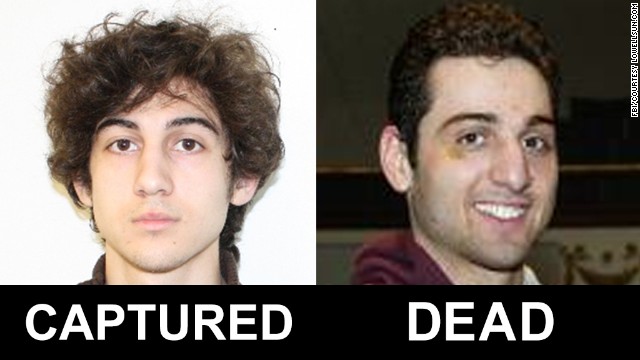 The FBI released photos and video of two men identified as Suspect 1 and Suspect 2 in the deadly bombings at the Boston Marathon. They have been identified as Dzhokhar Tsarnaev, 19, and Tamerlan Tsarnaev, 26. See all photography related to the Boston bombings.
- Peter Bergen: Many unresolved questions about how or why brothers carried out bombing
- He says experience of other terrorists in the West could shed some light
- Some who spent formative years in U.S. were radicalized over the Internet, he says
- Bergen: Three pairs of brothers were among 19 hijackers on September 11
Editor’s note: Peter Bergen is CNN’s national security analyst, the author of “Manhunt: The Ten-Year Search for bin Laden — From 9/11 to Abbottabad” and a director at the New America Foundation. Jennifer Rowland is a program associate at the New America Foundation.
Washington (CNN) — We don’t yet know how or why the Tsarnaev brothers, the alleged Boston Marathon bombers, decided to carry out their attacks, but a look at how their stories correlate with those of some other terrorists living in the West could provide some answers to the questions that many are now asking about them.
1. How could someone who grew up in the United States, as the younger brother did, become a terrorist?
Major Nidal Malik Hasan, who killed 13 people at Fort Hood Army Base in Texas in 2009, was born and raised in Virginia.
He self-radicalized, in part, over the Internet, which he used to reach out to the Yemen-based preacher Anwar al-Awlaki for advice about whether it is permissible for Muslim soldiers in the U.S. military to kill their comrades in the name of jihad.
Awlaki, a leader of al Qaeda’s affiliate in Yemen, was somewhat noncommittal in his responses but did not discourage the act.
Investigators will surely be combing through the e-mail traffic of the Tsarnaev brothers to see if they either reached out to militant Islamist clerics or downloaded lectures by such clerics. They will also examine the brothers’ Internet usage to see if they visited jihadist forums or downloaded propaganda from al Qaeda or other allied groups. And of course, it’s possible their decision to carry out the attacks was reached without any outside influence.
2. How do you square the multiple descriptions of the brothers as “good guys” with the fact that they plotted mass murder?
It’s worth recalling that Mohammed Sidique Khan, the leader of the suicide attackers who bombed the London transit system in 2005 killing 52 commuters, was a beloved teacher at a primary school in the northern city of Leeds who taught children with developmental problems, and the happily married 30-year-old father of a baby daughter. Colleagues and acquaintances described Khan as a gentle, kind man.
No surprise then that we are hearing some similar positive characterizations of the brothers Tsarnaev.
3. Did the brothers have any training or practice on explosives?
It seems quite unlikely that the perpetrators would have been able to successfully set off two deadly bombs within seconds of each other without some sort of training or practice.
Bomb-making recipes certainly exist on the Internet, but actually building effective bombs is generally a skill that requires some training or practice, and even then a successful detonation is not guaranteed.
Faizal Shahzad, for instance, received bomb-making training from the Pakistani Taliban before he constructed a bomb in an SUV that fizzled out rather than blowing up as he intended in Times Square on May 1, 2010.
The older Tsarnaev brother, Tamerlan, spent six months in Russia last year. What precisely he did there will surely be of intense interest to investigators. Could he have received some kind of bomb-training from Chechen militants who are experienced in making explosives?
Najibullah Zazi, a Pakistani-American who had also lived for many years in the United States, plotted to blow up bombs on the Manhattan subway around the eighth anniversary of 9/11. Zazi travelled to Pakistan a year before his planned attacks to learn bomb-making techniques from al Qaeda militants. Was this the kind of model that Tamerlan Tsarnaev followed?
Also, might the Tsarnaev brothers have done some kind of test runs of their explosive devices in the United States?
4. If the brothers’ motivation had something to do with their Chechen heritage, how might that have played out in this case?
In the years after 9/11, dozens of young Somali-American men traveled to fight in the civil war in Somalia. Just as the Tsarnaev brothers, these Somali-Americans were first-generation Americans.
For these new Americans, the politics of their homeland can sometimes become more meaningful and important than it was for their parents who fled the chaos of their native countries for the safety of the United States, and who now want to put those conflicts behind them.
What exactly prompted the FBI to interview Tamerlan Tsarnaev in 2011, following a tip from Russia that he was “a follower of radical Islam” and was contemplating leaving the United States to join a clandestine organization?
5. Did FBI officials make a mistake when they questioned Tamerlan, but didn’t seem to further monitor him?
Maybe. This is reminiscent of the case of Major Hasan whose emails to fellow militants came to the attention of the feds before he killed his fellow soldiers at Ft. Hood, but were not followed up on.
Carlos Bledsoe, a convert to Islam, shot up a military recruiting office Little Rock, Arkansas, killing a soldier in 2009. Bledsoe was also on the radar of the feds before he travelled to Yemen. It was only after this trip to Yemen, where he linked up with an al Qaeda affiliate, that Bledsoe carried out the shooting at the recruiting office.
6. Did the brothers intend to die during the attacks or their aftermath?
It seems shocking to many that the Tsarnaev brothers might have been wearing suicide vests during their gun battle with police on Thursday night, but in reality several U.S. citizens and residents have intended to die in terrorist attacks.
Three of the young Somali-American men who traveled from Minnesota to fight in civil war in Somalia later carried out suicide attacks there.
Major Hasan undoubtedly went into his attack on a military base full of armed U.S. soldiers believing that it would be the last thing he did before he died. (That prediction did not come true. He was wounded in the attack but not killed).
The Al Qaeda recruit Zazi, who plotted to bomb the Manhattan subway in the summer of 2009, planned to die in this attack but was arrested before he could pull it off.
7. Were the brothers really “lone wolves”?
Given all the mayhem the two brothers are allegedly responsible for — two bombings that caused three deaths and some two hundred injuries at the Boston Marathon as well as the subsequent murder of a policeman at MIT — did they have some kind of additional help?
According to Boston law enforcement officials, there is no evidence of such help and it’s worth recalling that Hasan was entirely a lone wolf who nonetheless managed to kill 13 on a U.S. military base with heavy security.
8. Did the older Tsarnaev radicalize his younger brother?
Perhaps. Where there is some kind of terrorist cell there is sometimes a leader who instigates action. We saw this in the case in Lackawanna, New York where a group of Yemeni-American men who trained with al Qaeda in Afghanistan before 9/11 were radicalized by Kamal Derwish, a Yemeni American who had spent many years living in Saudi Arabia. Derwish encouraged his fellow Yemeni-Americans to travel to Afghanistan for military training.
9. How unusual is it for brothers to carry out terrorist attacks together?
More frequent than you might think. The deadliest terrorist attack in U.S. history on 9/11 involved three pairs of brothers among the 19 hijackers: brothers Waleed and Wail al-Sheri, Hamza and Ahmed al-Ghamdi and Nawaf and Salem al-Hazmi.
TALIBANISTAN: AMERICA’S DECADE OF WAR, Chicago Council, Chicago
TALIBANISTAN: AMERICA’S DECADE OF WAR
Peter Bergen, National Security Analyst, CNN; Director, National Security Studies Program, New America Foundation
After more than a decade of American involvement in Afghanistan, a successful peace settlement remains notoriously elusive. The scheduled conclusion of the NATO combat mission in 2014 though, has put the pressure on western governments to act fast. What will happen when more than 100,000 US and NATO troops withdraw from the country? After decades of war, what is the future of (in)stability in the region? Join The Chicago Council and Peter Bergen for a discussion on a post-2014 Afghanistan and Pakistan, and the central strategic challenges facing the US today.
 Peter Bergen is CNN’s national security analyst, director of the National Security Studies Program at the New America Foundation, and a research fellow at New York University’s Center on Law and Security. He is a contributing editor at The New Republic, and has worked as a correspondent for National Geographic, Discovery, and CNN.com. In 2008, he was an adjunct lecturer at the Kennedy School of Government at Harvard University, and an adjunct professor at the School of Advanced International Studies at Johns Hopkins University. Bergen has reported for The New York Times, Foreign Affairs, The Washington Post, The Guardian, Wall Street Journal, TIME, and others. His books include Manhunt, The Longest War, and The Osama bin Laden I Know. Bergen holds an MA from Oxford University.
Bergen is the coeditor of Talibanistan: Negotiating the Borders Between Terror, Politics and Religion, and Manhunt: The Ten-Year Search for Bin Laden–from 9/11 to Abbottabad, which will be available for purchase and signing following the program.
The Chicago Club
81 East Van Buren Street
Chicago, IL 60605
Business attire is required.
11:45 a.m.
Registration
12:00 noon
Lunch, presentation, and
discussion
1:15 p.m.
Adjournment and book signing
Cost: $55
Advance registration is required.
This program is exclusively for
members of the Board of
Directors, Chairman’s Circle,
Corporate Principals, Directors’
Circle, and President’s Circle
– See more at: http://www.thechicagocouncil.org/files/Event/FY13/04_April_13/Talibanistan__America_s_Decade_of_War.aspx#sthash.v5uKMRBB.dpuf
Ricin: Almost never deadly, CNN.com
Ricin: Almost never deadly

CNN Explains: Ricin
- Since 9/11 terror attacks, eight have been arrested for attempted ricin attacks
- Peter Bergen: Only two people succeeded in producing or obtaining ricin
- Ricin needs to be injected or ingested to be deadly, Bergen says
Editor’s note: Peter Bergen is CNN’s national security analyst, the author of “Manhunt: The Ten-Year Search for bin Laden — From 9/11 to Abbottabad” and a director at the New America Foundation. Jennifer Rowland is a program associate at the New America Foundation.
(CNN) — In the years since the terrorist attacks of 9/11, eight people have been arrested in the United States for attempting to make the deadly poison ricin with the intent of using it for an act of politically motivated violence, according to terrorism data collected by the New America Foundation.
But only two of those individuals succeeded in actually producing or otherwise obtaining ricin, and the two ricin-dusted letters sent this week to President Barack Obama and Sen. Roger Wicker, R-Mississippi, bring the total number of attempted ricin attacks in this country since 9/11 to six.
Ricin is an attractive poison for terrorists because it can be made from the seeds of the castor oil plant, a readily available crop that is grown to produce castor oil, which is used to repel moles and voles from gardens.
Although the castor oil plant is easily accessible, extracting ricin from its seeds is a much more complex process. In 2011, Michael Crooker, a Boston-based right-wing extremist, pleaded guilty to possessing ricin and threatening a government employee. When authorities had searched his apartment seven years earlier, they found ingredients and lab equipment suitable for manufacturing ricin.
Crooker is the only known extremist to have successfully produced the toxin in the United States since the 9/11 attacks. It is not yet known how Kevin Curtis, who was arrested on Wednesday afternoon on suspicion of sending the two ricin-laden letters to Washington officials this week, was able to obtain ricin.
An effective, if rarely used, method of assassination, just a milligram of ricin, if injected or ingested, is enough to kill. In 1978, Bulgarian dissident Georgi Markov was walking across London’s Waterloo Bridge when he was famously attacked by an assassin wielding a poison-tipped umbrella. The weapon inserted a small pellet containing ricin into Markov’s leg. He died four days later.
Markov appears to be the only person to have been assassinated in a ricin attack in more than three decades. That’s because to succeed, such an attack requires ricin to be directly injected, or in some other way be to directly ingested, by the victim. That makes ricin a poor choice for a terrorist trying to inflict mass casualties.
The six attempted ricin attacks since 9/11 resulted in neither death nor sickness. Most also remain unsolved cases. On October 16, 2003, someone dropped a note off at a mail-sorting office at the Greenville-Spartanburg International Airport in South Carolina.
Addressed to the Department of Transportation and attached to a small metal vial, the note read “I’m a fleet owner of a tanker company. I have access to castor pulp. If my demand is dismissed, I am capable of making Ricin.” The white powder in the attached vial was soon confirmed to be the deadly substance.
Weeks later, in early November, a similar letter was discovered at a Washington mail facility that services the White House. Initial tests on an identical vial of white powder were negative for ricin, but subsequent tests at the mail facility found trace amounts of the toxin. Both letters had been signed “Fallen Angel” and demanded that the government not raise the minimum number of hours that truckers must spend at sleeper berths. “Fallen Angel” was never identified, and no personnel at either mail facility were sickened by the poison.
Three months after the “Fallen Angel” letters, ricin was also discovered on a mail-opening machine at the office of Sen. Bill Frist. Again, no one at the senator’s office showed any symptoms of ricin poisoning, but the third attempted attack in a matter of months dredged up uneasy memories on Capitol Hill of the 2001 anthrax attacks, which killed five people and sickened several others.Elvis impersonator arrested in ricin scare
Since the February 2004 incident at Frist’s office, only Kevin Curtis is alleged to have used ricin in an attack. But at least six other extremists have assembled the materials necessary to produce the toxin.
Around midnight on July 8, 2005, Denys Ray Hughes was pulled over in Arizona for traffic violations. In his car, a police officer found coolers full of bomb-making materials and instructions, and Hughes identified himself as a “survivalist/militiaman,” according to his criminal complaint.
During a search of his home in the ensuing investigation, police found that Hughes had cultivated thousands of castor beans from homegrown castor oil plants. He had piles of instructional material on making ricin and other poisons, but his plans for their use remained unknown.
And in 2012, four other right-wing extremists were arrested in Georgia for plotting attacks on the government and attempting to manufacture ricin. An FBI informant recorded the men discussing plans to spread the toxin across Atlanta, Washington and several other major American cities. “When it comes time to saving the Constitution, that means some people gotta die,” an arrest affidavit quoted one suspect as saying.
Also last year, Theodore Shulman, a self-described “pro-choice-terrorist” was arrested and was found to have cyanide and castor beans in his possession. Shulman had threatened to injure or kidnap anti-abortion advocates, authorities said.
Documents recovered by U.S. troops from al Qaeda safe houses in Afghanistan showed that Osama bin Laden’s terrorist group expressed interest in obtaining ricin. But no al Qaeda-affiliated or inspired extremist has been arrested in the United States for attempting to produce it.
Indeed, since 9/11, of the 207 indictments of al Qaeda-affiliated or inspired extremists for some kind of terrorist plot in the United States, not one of the cases involved individuals attempting to manufacture or deploy biological, chemical or radiological weapons.
Follow @CNNOpinion on Twitter.
Join us at Facebook/CNNOpinion.
Siete preguntas sobre los terroristas de Boston, CNN en Espanol
Siete preguntas sobre los terroristas de Boston
Nota del editor: Peter Bergen es analista de seguridad nacional de CNN, autor de “Manhunt: The Ten-Year Buscar bin Laden – Del 9/11 al Abbottabad” y director de la New America Foundation. Jennifer Rowland es asociada en la New America Foundation.
Washington (CNN) – Todavía no sabemos cómo ni por qué los hermanos Tsarnaev, los presuntos terroristas del Maratón de Boston, decidieron llevar a cabo sus ataques, pero un vistazo a cómo sus historias se relacionan con las de otros terroristas que viven en Occidente podría proporcionar algunas respuestas a las preguntas que muchos se hacen acerca de ellos.
1. ¿Cómo es posible que alguien criado en los Estados Unidos se convierta en terrorista?
El mayor Nidal Malik Hasan, que mató en 2009 a 13 personas en Fort Hood, una base militar en Texas, nació y se crió en Virginia. Se auto-radicalizó en parte a través de internet, que utilizó para contactar al predicador yemení Anwar al-Awlaki y pedirle consejo sobre si los soldados estadounidenses musulmanes pueden matar a sus compañeros en nombre de la Jihad.
Awlaki, líder de la filial de Al Qaeda en Yemen, no fue del todo claro en sus respuestas, pero no desalentó el acto.
Los investigadores seguramente estarán peinando el tráfico de correo electrónico de los hermanos Tsarnaev para ver si alguno de los dos se acercó a los clérigos islamistas más radicales, o si descargaban conferencias y textos de esos clérigos. También se examinará el uso de Internet de los hermanos para ver si visitaran foros yihadistas o si almacenaban propaganda de Al Qaeda u otros grupos aliados. Y, por supuesto, es posible que llegaran a la decisión de llevar a cabo los ataques sin ninguna influencia externa.
2. ¿Cómo cuadrar las múltiples descripciones de los hermanos como “chicos buenos” con el asesinato en masa?
Vale la pena recordar que Mohammed Sidique Khan, el líder de los atacantes suicidas que atentaron contra el sistema de transporte de Londres en 2005 matando a 52 personas, había sido antes un querido maestro en una escuela primaria en la ciudad norteña de Leeds que enseñaba a los niños con problemas de desarrollo, además de un alegre padre de 30 años con una hija recién nacida. Los colegas y conocidos describían a Khan como un hombre gentil y amable.
No sorprende entonces que estemos escuchando algunas frases igual de positivas en el caso de los hermanos Tsarnaev.
3. ¿Los hermanos tienen algún tipo de formación o prácticas en materia de explosivos?
Parece muy poco probable que los autores hayan sido capaces de hacer explotar con éxito dos bombas mortales en cuestión de segundos sin algún tipo de entrenamiento o práctica. Recetas para fabricar bombas existen en Internet, pero la construcción de bombas eficaces es una habilidad que requiere algún tipo de formación o práctica, y aún así una detonación exitosa no está del todo garantizada.
Faizal Shahzad, por ejemplo, recibió entrenamiento para la fabricación de bombas de los talibanes paquistaníes antes de poner una bomba en una camioneta que quedó sin explotar en Times Square, el 1 de mayo de 2010.
El hermano mayor Tsarnaev, Tamerlan, pasó seis meses en Rusia el año pasado. Lo que hizo exactamente allí será objeto de una intensa investigación. ¿Podría haber recibido algún tipo de formación de los militantes chechenos que tienen experiencia en la fabricación de explosivos?
Además, ¿habrían podido hacer los hermanos algún tipo de pruebas de funcionamiento de los artefactos explosivos en los Estados Unidos?
4. Si la motivación de los hermanos tenía algo que ver con su ascendencia chechena, ¿qué papel podría haber jugado en este caso?
En los años posteriores al 11 de septiembre, decenas de jóvenes somalíes-estadounidenses viajaron para luchar en la guerra civil en Somalia. Así como los hermanos Tsarnaev, estas somalí-americanos eran la primera generación de estadounidenses en sus familias.
Para estos nuevos estadounidenses, la política de sus países de origen puede ser más importante a veces de lo que era para sus padres que huyeron del caos de sus países de origen para cambiarlo por la seguridad de los Estados Unidos, y que quieren dejar atrás esos conflictos.
¿Qué es exactamente lo que llevó al FBI a entrevistar Tamerlan Tsarnaev en 2011, tras un aviso de un gobierno extranjero no identificado de que se trataba de “un seguidor del Islam radical”, y que estaba pensando en salir de los Estados Unidos para unirse a una organización clandestina? ¿Fue el gobierno ruso quien dio este aviso? Rusia lleva en guerra con Chechenia de forma intermitente desde el siglo XIX.
5. ¿Tenían los hermanos la intención de morir durante los ataques?
Resulta chocante que los hermanos Tsarnaev podrían haber portado chalecos explosivos durante su enfrentamiento con la policía el jueves por la noche, pero en realidad muchos ciudadanos y residentes de Estados Unidos han intentando morir en sus propios ataques terroristas.
Tres de los jóvenes somalíes-estadounidenses que viajaron de Minnesota para luchar en la guerra civil en Somalia llevaron a cabo después ataques suicidas allí.
Mayor Hasan fue a su ataque a una base militar llena de soldados estadounidenses armados creyendo que sería lo último que haría antes de morir. Esa predicción no se hizo realidad: resulto herido en el ataque, pero no murió.
El militante de Al Qaeda Najibullah Zazi, que conspiró para hacer explotar una bomba en el metro de Manhattan en el verano de 2009, tenía previsto morir en ese ataque, pero fue detenido antes de que pudiera llevarlo a cabo.
6. ¿Fueron los hermanos realmente “lobos solitarios”?
Teniendo en cuenta todo el caos del que los dos hermanos son presuntos responsables: dos atentados que causaron tres muertos y doscientos heridos en el maratón de Boston, así como el posterior asesinato de un policía en el MIT, ¿tuvieron algún tipo de ayuda adicional?
De acuerdo a los funcionarios encargados de hacer cumplir la ley en Boston, no hay ninguna evidencia de este tipo de ayuda y vale la pena recordar que Hasan fue totalmente un lobo solitario que, sin embargo, logró matar a 13 personas en una base militar de EE.UU. rodeada de fuertes medidas de seguridad.
7. ¿Cómo es de habitual que dos hermanos preparen juntos ataques terroristas?
Más frecuente de lo que puede parecer. En el ataque terrorista más mortífero en la historia de EE.UU. el del 11 de septiembre, había tres parejas de hermanos entre los 19 secuestradores: los hermanos Waleed y Wail al-Sheri, Hamza y Ahmed al-Ghamdi y Nawaf y Salem al-Hazmi.
Al Qaeda, Iran … and Canada plot? CNN.com
Al Qaeda, Iran … and Canada plot?
By Peter Bergen, CNN National Security Analyst
updated 11:35 AM EDT, Tue April 23, 2013
Watch this video
Police: Suspects had al Qaeda support
STORY HIGHLIGHTS
Two men in Canada accused of terror plot aided by al Qaeda elements in Iran, police say
Peter Bergen says case highlights unusual relationship between al Qaeda and Iran
He says Iran has sheltered al Qaeda members since U.S. war against Afghanistan
Bergen: Investigators will want to probe exact nature of relationship with Iran
Editor’s note: Peter Bergen is CNN’s national security analyst, the author of “Manhunt: The Ten-Year Search for bin Laden — From 9/11 to Abbottabad” and a director at the New America Foundation.
(CNN) — The news that Canadian law enforcement on Monday arrested two men accused of planning to derail a passenger train in the Toronto area has attracted much attention, in part, because the plotters are also charged with “receiving support from al Qaeda elements in Iran.”
If these allegations are true, it would appear to be the first time that al Qaeda elements based in Iran have directed some kind of plot in the West.
And it also underlines the perplexing relationship between the Shia theocratic state of Iran, which the Sunni ultra-fundamentalists who make up al Qaeda regard as heretical but with which they have had some kind of a marriage of convenience for many years.
While there isn’t evidence that al Qaeda and the Iranian government have ever cooperated on a terrorist attack, al Qaeda’s ties to Iran, surprising perhaps to some, stretch back more than a decade.
As recently as October, the U.S. Treasury named as terrorists six al Qaeda members living in Iran who it alleged were sending fighters and money to Syria to fight Bashar al-Assad’s regime and were also funding terrorism in Pakistan.
Al Qaeda’s Iranian presence began after the fall of the Taliban in Afghanistan during the winter of 2001 when some of Osama bin Laden’s family and his top lieutenants fled to neighboring Iran, where they lived under some form of house arrest.
They included Saif al-Adel, the Egyptian military commander of al Qaeda; Sulaiman Abu Ghaith, bin Laden’s son-in-law and spokesman; and Saad bin Laden, one of the al Qaeda leader’s older sons who has played a leadership role in his father’s organization.
Saad helped bin Laden’s oldest wife, Khairiah bin Laden, and a number of his father’s children to move to Iran in 2002. Bin Laden’s sons Ladin, Uthman and Muhammad and his daughter Fatima, who is married to Sulaiman Abu Ghaith, settled in Tehran, the Iranian capital.
According to Saudi officials, it was from al Qaeda’s leaders in Iran that al Qaeda’s Saudi affiliate received the go-ahead in 2003 for a number of terrorist attacks in Saudi Arabia that killed scores of Saudis and Westerners and targeted Saudi Arabia’s oil infrastructure.
Close-up look at disrupted terror plot
In 2008, al Qaeda kidnapped Heshmatollah Attarzadeh-Niyaki, an Iranian diplomat living in the Pakistani city of Peshawar.
According to a Pakistani intelligence official familiar with the deal, al Qaeda released the diplomat back to Iran in 2010 as part of a negotiation that allowed some of bin Laden’s family and al Qaeda members then living in Iran to leave.
By now, relations between al Qaeda and Iran were tense.
In a letter recovered from the Abbottabad, Pakistan, compound where bin Laden was killed by a U.S. Navy SEAL team two years ago, bin Laden urged caution when his family members traveled out of Iran “since the Iranians are not to be trusted.”
Bin Laden wrote that his family “should be warned about the importance of getting rid of everything they received from Iran like baggage or anything even as small as a needle, as there are eavesdropping chips that have been developed to be so small they can be put inside a medical syringe.”
Last month Sulaiman Abu Ghaith, bin Laden’s son-in-law and one-time al Qaeda spokesman, was brought to a Manhattan courtroom to face charges of conspiracy to kill Americans.
Abu Ghaith left the comparative safety of his longtime refuge in Iran for Turkey earlier this year. Turkey then deported him to his native Kuwait via Jordan, where he was detained by FBI agents who escorted him to New York.
Abu Ghaith and the two suspects just arrested in Canada, 30-year-old Chiheb Esseghaier of Montreal and 35-year-old Raed Jaser of Toronto, will obviously be the subject of much interest from U.S. and Canadian intelligence officials.
Those officials will surely be seeking answers to the precise nature of the Iranian government’s relationship with al Qaeda over the past decade.
Has it been passive acquiescence or more active complicity?
FEATURED BOOK

All the Presidents’ Wars:
RECENT ARTICLES

RECENT FILM AND TV SERIES
GHOSTS OF BEIRUT: SHOWTIME
The Fall of Osama bin Laden, National Geographic

BIN LADEN'S HARD DRIVE, NATIONAL GEOGRAPHIC

