How Women Became Central to the Central Intelligence Agency
Peter speaks with a former CIA officer who entered the CIA in 1968, another who got her start just before 9/11, and the author of The Sisterhood: The Secret History of Women at the CIA.
India’s Modi Will (Likely) Get the Most Votes in Human History. Why?
Prime Minister Narendra Modi of India is the most popular leader in the world — and he’s poised to win reelection to a third term. With his embrace of religious nationalism, is India’s secular democracy in peril? Or is Modi just giving the country’s 1.1 billion Hindus what they want?
The fanatical Hamas leader who calls the shots, CNN.com
Editor’s Note: Peter Bergen is CNN’s national security analyst, a vice president at New America, a professor of practice at Arizona State University and the host of the Audible podcast, “In the Room,” also on Apple and Spotify. He is the author of “The Rise and Fall of Osama bin Laden.” The views expressed in this commentary are his own.
In February, the Israeli Defense Forces released a grainy video showing the back of a man they identified as Yahya Sinwar, Hamas’ leader in Gaza. A dark figure seen only from behind was hurriedly making his way through one of the labyrinths of Hamas tunnels that wend their way deep underground in Gaza.
Since the video didn’t show Sinwar’s face, there was no independent confirmation that the shadowy figure was indeed the Hamas leader.
It’s an apt image for Sinwar, who seems to have vanished like a ghost following Hamas’ attack October 7 attack on Israel, during which some 1,200 people were killed and 250 abducted. The Israeli military quickly asserted that Sinwar was a “dead man walking.” Yet eight months later, Sinwar remains stubbornly alive.
Sinwar has lived much of his life mainly in the shadows, and relatively little is known about him even though he is arguably the most critical player in the Middle East today. Israel accuses Sinwar of being the “mastermind” of Hamas’ attack on October 7.
He is now also calling the shots for Hamas, including whether or not to agree to a ceasefire in Gaza in exchange for a release of Israeli hostages held by Hamas and a release of Palestinian prisoners held by Israel in a potential deal that was announced by President Joe Biden at the end of last month.
Meanwhile, Sinwar’s attack on Israel and the ensuing war in Gaza has brought attention to the Palestinian issue in a way that hasn’t been the case for many years.
‘Necessary sacrifices’
Sinwar characterizes the many Palestinians who have lost their lives in the war in Gaza as “necessary sacrifices,” according to The Wall Street Journal, which obtained leaked messages from Sinwar to fellow Hamas officials. “We have the Israelis right where we want them,” Sinwar reportedly said to members of his terrorist group involved in negotiating with the US and Israel.
So, who is Sinwar, aged 61, and what drives him? An answer to that question can be found in an illuminating profile in The New York Times of an Israeli prison official, Dr. Yuval Bitton, who got to know Sinwar during the more than two decades that the Hamas leader spent in Israeli prisons. Bitton, a dentist, once helped save Sinwar’s life when he ensured that Sinwar was rushed to a hospital after he became ill with what turned out to be a malignant brain tumor that was successfully operated on.
Following Sinwar’s recovery, Bitton and Sinwar spent many hours talking to each other; Bitton to better understand the mindset of Hamas and Sinwar to understand better the mindset of the Israelis, of whom he made a careful study, including becoming fluent in Hebrew while he was imprisoned.
Like Osama bin Laden before him, Sinwar is a zealot whose opposition to the state of Israel is not so much political as it is religious. Sinwar told Bitton that the land of Israel was, in fact, Muslim land and that Muslims had a religious right to take it back, and as a result, any kind of two-state solution was impossible.
Like Osama bin Laden before him, Sinwar is a zealot whose opposition to the state of Israel is not so much political as it is religious.
Sinwar also knows the Quran by heart, a prodigious feat of memory since the holy book contains more than 6,000 verses.
Sinwar was in prison for abducting and killing two Israeli soldiers, for which he received four life sentences, according to the US State Department’s 2015 designation of Sinwar as a terrorist.
While he was in prison, Sinwar admitted that he had killed several Palestinians who he believed were collaborating with the Israelis. According to a 1989 interrogation of Sinwar published by the Israel Hayom newspaper, Sinwar told Israeli interrogators that he strangled one of those collaborators with his bare hands and used a keffiyeh head scarf to suffocate another.
While he was in prison, Sinwar became the leader of his fellow Hamas inmates, according to The Washington Post.
Sinwar and the stalled ceasefire negotiations
The proposed ceasefire agreement that Biden publicly laid out at the end of last month has stalled, with US Secretary of State Antony Blinken blaming Hamas for the impasse on Tuesday, saying, “I don’t think anyone other than the Hamas leadership in Gaza actually is the ones who can make decisions.”
It is Sinwar who is central to those decisions, and Blinken even obliquely referred to Sinwar on Tuesday when he said, “We await the answer from Hamas, and that will speak volumes about what they want, what they’re looking for, who they’re looking after. Are they looking after one guy who may be pronounced safe, buried — I don’t know — ten stories underground somewhere in Gaza….”
While the details of the ceasefire negotiations are tightly held, there are any number of issues that Hamas and Israel might differ on, including the length of the first phase of the ceasefire, which Biden had said would last six weeks; the precise role of Israeli troops during that first phase of the ceasefire who Biden said would be withdrawn from Gaza’s population centers, and the exact numbers of Hamas-held hostages to be exchanged for Palestinian prisoners held in Israeli jails.
It must surely weigh heavily on the minds of Israeli negotiators that Sinwar himself was an Israeli prisoner and was released with more than 1,000 other prisoners in 2011 in exchange for Gilad Shalit, an Israeli soldier who was being held in Gaza.
Sinwar’s release from prison has since come with both a high cost for Israel and for the Gazans he purports to represent, some 37,000 of whom have died in the war, according to the Gaza Health Ministry.
All of that is to say that Sinwar is a brutal, calculating military leader driven by religious zeal that the Palestinian cause is a righteous one. Negotiating with such a leader will never be easy.
This deal can end the war in Gaza, CNN.com
Editor’s Note: Peter Bergen is CNN’s national security analyst, a vice president at New America, a professor of practice at Arizona State University and the host of the Audible podcast, “In the Room,” also on Apple and Spotify. He is the author of “The Rise and Fall of Osama bin Laden.” The views expressed in this commentary are his own.
It’s taken more than half a year, but, finally, President Joe Biden has publicly unveiled an Israeli plan that could end the bloodshed in Gaza.
Generally, there are two ways to make peace; one is the total capitulation of the enemy, which happened after the United States dropped atomic bombs on Hiroshima and Nagasaki and Japan surrendered, so ending World War II. The other is that the combatants recognize a “mutually hurting stalemate” as a prelude to making a deal, which is surely where we are in Gaza today.
But getting the two sides to actually agree to — and implement — the peace plan is far from a certainty. The fact that the terms of the deal were announced could even be a bad sign, since in sensitive negotiations terms are often kept secret until there is a firm deal.
Also, the military leader of Hamas, Yahya Sinwar, who is ultimately calling the shots on the Hamas side, and Israeli Prime Minister Benjamin Netanyahu both have their own reasons for possibly prolonging the conflict; Sinwar because every dead Gazan civilian chips aways at Israel’s standing in the world, while Netanyahu faces domestic political challenges that would likely only multiply the day after the guns fall silent.
Yet, the Israelis are unlikely ever to achieve Netanyahu’s goal of “total victory” over Hamas. US intelligence estimates that only about a third of Hamas fighters have been killed after seven months of war, according to Politico, while a total of some 36,000 Palestinians have already been killed in the war, according to the Gaza Health Ministry. (Other estimates have suggested that the number is at least 24,000 killed. In any event, the death toll has been large.)
For Netanyahu to achieve total victory would require fighting a seemingly endless war with untold more tens of thousands of dead Palestinians and Israel’s increasing isolation around the world—some 140 countries now recognize a Palestinian state, while the International Criminal Court is considering an arrest warrant for the Israeli prime minister.
As the Gaza war continues, Israel’s dreams of normalization with the Arab world will steadily erode. Crucially, the war is also steadily losing support with Israel’s most important ally, the United States. Support for the Gaza war among Americans has dropped from 50% at the beginning of the war in November to 36% in March, according to Gallup. (Facing a close election in November, Biden and his team are also surely well aware that the evaporating support for the Gaza war harms their chances in swing states like Michigan.)
The public criticism of Netanyahu in March by US Senate Majority Leader Senator Chuck Schumer, a Democrat, was a canary in this particular mine. The highest-ranking elected Jewish-American official in the history of the US, Schumer has long been an ironclad supporter of Israel.
Still, speaking on the Senate floor, Schumer condemned Netanyahu, saying he “has shown zero interest in doing the courageous and visionary work required to pave the way for peace, even before this present conflict.”
Schumer, in effect, was warning the Israelis that the bipartisan American coalition that had helped to sustain Israel since President Harry Truman first recognized the Jewish state was fracturing. In the long term, that would be very bad for Israel since the young Americans protesting the Gaza war today are tomorrow’s middle-aged voters.
Netanyahu also keeps fighting the Gaza war with no real plan for the “day after,” in short, without a strategy. Revenge is not a strategy and as Sun Tzu noted a long time ago; “Tactics without strategy is the noise before defeat.”
Meanwhile, Hamas can keep fighting the war and can help to turn Gaza into a Mad Max-style apocalypse, while the Gazans it’s purportedly fighting for are succumbing to spreading famine and dying in ever-larger numbers. To rework a quote from Tacitus, Hamas fighting on indefinitely only to turn Gaza back into a desert is not what anyone can call peace or victory.
So now comes Biden’s Friday unveiling of the Israeli peace plan. Crucially, that plan was announced in Washington, not in Tel Aviv, giving it the endorsement of Israel’s closest ally. Hamas has since issued a statement they view the plan positively.
Confusingly, on Saturday, the Israeli prime minister’s office released a statement that “the destruction of Hamas” had to take place “before a permanent ceasefire is put in place.” This could be explained by the fact that public statements for domestic consumption during sensitive negotiations may differ from private positions or it may indicate that Netanyahu really isn’t on board with the peace plan. Still, it’s hard to imagine that the President of the United States would announce an Israeli peace plan that hadn’t, you know, been cleared by the Israelis.
The time is ripe for such a peace plan because the Biden administration assesses that Hamas has been degraded to the point it can no longer carry out another operation like the attack on Israel that killed some 1,200 people on October 7th while its leaders are either dead or hiding deep underground in Gaza.
“I don’t think this offer would have been possible three months ago,” a senior Biden administration official said in a background press call on Friday.
The peace plan is well-constructed to achieve an immediate ceasefire and build on that for a lasting cessation of hostilities. The first phase of the plan would start with a six-week ceasefire and the release of an unspecified number of hostages — both those alive and the bodies of those who are dead — in exchange for the release of hundreds of Palestinian prisoners held by Israel and the withdrawal of Israeli soldiers from the populated areas of Gaza.
Importantly, the plan would also allow for the entry of 600 trucks of aid per day — exceeding the approximately 500 trucks a day that were entering Gaza before the war started. Aid to Gaza has slowed to a trickle of only 58 trucks a day on average in recent weeks, according to the UN.
The second phase of the plan would secure a final end to the fighting and the return of all the hostages, including the male Israeli soldiers who are held by Hamas, and the total withdrawal of Israeli soldiers from Gaza. The initial ceasefire can continue beyond the six-week phase if Hamas and Israel continue to negotiate through Qatar, Egypt and the US to finalize the permanent ceasefire, which would then lead to a third phase: the multiyear reconstruction of Gaza.
While there are clearly many “what ifs” in this plan, and it may not satisfy spoilers like the right-wingers in Netanyahu’s government or some of the hard core of Hamas, the enemy of the perfect deal is not the reasonably OK deal. And this is a sufficiently OK deal for both sides. Otherwise, the war will rage on without end with all that implies for the people of Gaza and, ultimately, for the state of Israel.
https://www.cnn.com/2024/06/01/opinions/this-deal-can-end-the-war-in-gaza-bergen/index.html
A Matter Of Trust: India-U.S. Relations from Truman to Trump, New America [ONLINE]
[ONLINE] A Matter Of Trust: India-U.S. Relations from Truman to Trump
EVENT
A Matter of Trust book cover
Better World Books
India, the world’s largest democracy, is holding general elections, which will wrap up in June. How will the election shape U.S.-India relations at a time when growing global tensions have put a spotlight on how India will navigate its international relationships and concerns about authoritarian trends in India have simultaneously grown. In her book A Matter of Trust: India-US Relations from Truman to Trump, Meenakshi Ahamed draws on a unique trove of presidential papers, newly declassified documents, memoirs and interviews with officials directly involved in events on both sides to put together an illuminating account of the U.S.-India relationship, and how it has been closely shaped by the personalities of key leaders. With India once again going to the polls, understanding the history of the U.S.-India relationship is essential for understanding how the elections will shape the future.
Join New America’s Future Security Program on May 30 (online) as they welcome Meenakshi Ahamed to discuss her book A Matter of Trust: India-US Relations From Truman to Trump and the U.S.-India relationship. The conversation will be moderated by New America Vice President and Arizona State University Professor of Practice Peter Bergen.
Join the conversation online using #MatterofTrust #NewAmericaEvents and following @NewAmericaISP.
Meenakshi Ahamed is a freelance journalist and has written on American foreign policy for publications such as The Atlantic, Foreign Policy, The New York Times, The Wall Street Journal, The Washington Post and Seminar. She was the London correspondent for NDTV from 1989-1996, and holds a post-graduate degree from the School of Advanced International Studies, Johns Hopkins University, in development economics and public health. She is based in Washington, DC and New York City.
Speaker:
Meenakshi Ahamed
Author, A Matter of Trust
Moderator:
Peter Bergen
Vice President, New America
Co-Director, Future Security
Professor of Practice, Arizona State University
The Man Who Led NATO Is Trying to Frighten You
How could the US lose a war with China? What happens if American political divisions keep getting more extreme? And what in the world will A.I, mean for national security? These are the questions that keep the former commander of NATO, retired Admiral James Stavridis and retired Marine Captain Elliot Ackerman up at night. But unlike a lot of people in their shoes, they haven’t been harrying policymakers with op-eds or whitepapers. Instead they teamed up to write a set of novels showing how badly things could go — and what the U.S. can do to avoid a nightmarish future.
The International Criminal Court’s threat to Netanyahu,CNN.com
Wed, 22 May 2024 at 4:20 am GMT-4·5-min read
Editor’s note: Peter Bergen is CNN’s national security analyst, a vice president at New America, a professor of practice at Arizona State University and the host of the Audible podcast “In the Room With Peter Bergen,” also on Apple and Spotify. The opinions expressed in this commentary are his own. View more opinion at CNN.
To a rogue’s gallery that has included the late Libyan dictator Moammar Gadhafi and Russian President Vladimir Putin, Israeli Prime Minister Benjamin Netanyahu could soon be added now that prosecutors for the International Criminal Court are seeking a warrant for his arrest.
The ICC is a criminal tribunal that prosecutes individuals, just as the Nuremberg trials did after World War II. Established in 2002, the ICC has only secured 10 convictions for war crimes. Even though the ICC’s wheels of justice grind slowly, grind they do.
The move to charge Netanyahu has the potential to greatly alter how the war in Gaza plays out.
This development is far more significant for Netanyahu personally than the allegations of genocide against Israel in the case that South Africa brought in December in the International Court of Justice, which considers cases against countries.
An interim judgment from that court found that the Palestinians have “plausible” rights to protection from genocide, Joan Donoghue, then ICJ president at the time of the ruling, told the BBC. Israel has fiercely denied it is committing genocide in Gaza in the ongoing case.
ICC prosecutor Karim Khan told CNN’s Christiane Amanpour that the tribunal’s charges against Netanyahu and Israeli Defense Minister Yoav Gallant include “causing extermination, causing starvation as a method of war, including the denial of humanitarian relief supplies, deliberately targeting civilians in conflict.” In response, Netanyahu blasted Khan as one of the “great antisemites in modern times.”
The ICC is also simultaneously seeking arrest warrants for three top leaders of Hamas, but as a practical matter doing so won’t have much effect on the Islamist group, which is already designated as a terrorist organization by many countries, including the United States and the member states of the European Union.
Meanwhile, one of those Hamas leaders, Yahya Sinwar, whom Israel has accused of being the mastermind of the October 7 attack on the Jewish state, is believed to be hiding underground in the tunnels under Gaza.
There are 124 countries that have signed on to the ICC, which doesn’t include the United States or Israel. Those 124 countries would be duty-bound to arrest Netanyahu were the court to issue an arrest warrant for him. A panel of ICC judges will decide on Khan’s application for the arrest warrants.
Many of Israel’s closest allies such as the United Kingdom and Germany are parties to the ICC and would be bound by the court’s decision if a warrant were to be issued. It would greatly complicate their relations with Netanyahu since he would effectively become an international pariah who would not be able to travel to most countries. Already France and Belgium have issued statements in support of the ICC‘s requests for Netanyahu’s arrest warrant.
If approved, the arrest warrant for Netanyahu would appear to put Israel, a sovereign state acting in self-defense — albeit leading to the deaths of more than 35,000 Palestinians, according to the Ministry of Health in Gaza — on the same plane as Hamas, the terrorist group that instigated the war with its October 7 attacks on Israel that killed about 1,200 people.
In the United States, there has been predictable pushback against the ICC move to try to issue an arrest warrant against Netanyahu. Republican Senate Minority Leader Mitch McConnell fulminated, “The ICC has succeeded only in discrediting itself even further as a rogue kangaroo court utterly untethered to morality or justice,” while US President Joe Biden said the call for an arrest warrant against Netanyahu was “outrageous.”
But you can’t have it both ways. When the ICC and its lead prosecutor, Khan, issued an arrest warrant for Putin over alleged war crimes in Ukraine in 2023, there were hosannas on both sides of the aisle.
Biden declared the ICC arrest warrant for Putin “makes a very strong point,” adding that “he’s clearly committed war crimes.” Republican Sen. Lindsey Graham of South Carolina praised the court’s decision, saying, “The decision by the ICC to issue an arrest warrant for Vladimir Putin is a giant step in the right direction for the international community. It is more than justified by the evidence.”
One effect of the possible arrest warrant for Netanyahu is that the Israeli public may become more aware of what is happening in Gaza. Because of self-censorship exercised by the Israeli media, Israelis are watching a very different war playing out in Gaza than what the rest of the world is seeing. Israeli media rarely shows images of the large-scale destruction and the many thousands of civilian casualties in Gaza, according to a report this month in The Wall Street Journal.
The possible ICC arrest warrants for both Israeli and Hamas leaders are also likely to complicate the already thorny issue of the negotiations for the return of hostages held by Hamas in exchange for Palestinian prisoners held by Israel and for a ceasefire.
I’m attending a security conference in Qatar, the Global Security Forum. As is well known, Qatar had been playing a crucial mediating role between the United States, Israel and Hamas’ political leadership based in Qatar to release the 100 or more hostages that are still captive in Gaza, including eight Americans, along with the bodies of around 30 more.
The consensus among the delegates to the conference, which includes security experts from around the world, is that those negotiations have largely stalled.
The ICC’s move to seek an arrest warrant for Netanyahu may only harden his resolve to continue the war in Gaza seemingly indefinitely. In an address to his nation on Monday, Netanyahu said the ICC would not prevent Israel from attaining “total victory” against Hamas in a translation of his remarks by The Times of Israel.
This article has been updated with the latest death toll from the Ministry of Health in Gaza.
The View From a Newsroom in the Middle East
In the Room with Peter Bergen
Mina Al-Oraibi is the editor of The National, an English-language newspaper headquartered in Abu Dhabi. She shares how the post-October 7th news landscape looks inside the Middle East.
1-on-1 with Robert F. Kennedy, Jr.
RFK, Jr.’s views on vaccines and his penchant for questioning official narratives have kept him on the fringes of American politics for years. But now, as a third-party presidential candidate he is polling around 10% — enough to affect the outcome of an election that is expected to be decided on a razor-thin margin. In this lengthy sit-down, first published in September, 2023, Peter probes Kennedy’s unrelenting skepticism about a wide range of issues, from the war in Ukraine to the fentanyl epidemic — and whether he buys the official narratives about 9/11 and the moon landing.
10th Annual Future Security Forum, September 9-10, 2024, New America/ASU, DC
More info here: www.newamerica.org/conference/future-security-forum-2024/
September 9–10 2024
Washington, D.C.
Global Security in the Next Decade
The Future Security Forum is the main annual event of the Future Security partnership connecting Arizona State University and New America. This year, we celebrate our 10th annual Forum, in collaboration with Security & Defence PLuS, on September 9 and 10, 2024. The forum will gather the top policymakers, government and military leaders, experts, and analysts at New America’s Washington, DC office for two days of discussions on what global security will look like over the next decade.
On September 9, Arizona State University and New America’s Future Security program will explore how global security has changed over the past decade and will change over the decade to come. Topics of discussion on September 9 will include how artificial intelligence will change warfare over the next decade, the state of the terrorist threat today, the future of U.S.-China relations, and more.
On September 10, Security & Defence PLuS, a partnership between Arizona State University, King’s College London, and the University of New South Wales, will gather experts and leaders from the three AUKUS nations and beyond to discuss advancing Indo-Pacific security over the next 10 years.
Speakers at the 2024 Future Security Forum will include:
Adm. Christopher W. Grady, Vice Chairman, Joint Chiefs of Staff
LTG. (ret.) H.R. McMaster, Former National Security Adviser; Arizona State University Distinguished University Fellow; Author, At War With Ourselves
HE the Hon Dr Kevin Rudd AC, Australia’s Ambassador to the United States
Sir Lawrence Freedman, Emeritus Professor of War Studies, King’s College; Author, Command and The Future of War: A History
Evelyn Farkas, Executive Director, The McCain Institute at Arizona State University; Former Deputy Assistant Secretary of Defense for Russia/Ukraine/Eurasia
Sir Simon Gass, Senior Advisor to SC Strategy, former senior British diplomat and subsequently Chair of the UK Joint Intelligence Committee
Vice Admiral Ann Rondeau (US Navy, Ret.), President, Naval Postgraduate School; former member of the ASU Flag Officer Advisory Council
…and more
About the Hosts
The Future Security Initiative
The Future Security Initiative is a partnership between Arizona State University, a top-ranked public research university defined not by who we exclude but who we include, and New America, a nimble nonpartisan DC-based think tank with a history of launching big ideas that impact policy. Together, we have assembled a growing team of academics, journalists, former military, and civil society experts as ASU faculty and New America fellows. We conduct ground-breaking research linking open-source investigations, field-based research, policy analysis and case studies to develop new approaches to pressing security issues. We also create unique educational programming, from an online professional MA in Global Security to certificates in competitive statecraft, irregular warfare, cybersecurity, and customizable programs linking cutting edge academic research with practical applications. We also present multiple public forums, live-streamed talks, podcasts, and high-impact publications that reach multiple audiences, including government officials, national thought leaders, students, and members of our local communities.
About Security & Defence PLuS
Security & Defence PLuS is the flagship program of PLuS Alliance, a global partnership which combines the strengths of three leading research universities on three continents – Arizona State University, King’s College London, and the University of New South Wales – to solve global challenges. Security & Defence PLuS deepens this partnership, advancing research, education, and policy to support statecraft in the spirit of the AUKUS trilateral agreement.
Schedule
09:00AM – 09:10AM
Welcome Remarks (Day 1)
09:10AM – 09:50AM
The Past and Future of American Foreign Policy (Day 1)
09:50AM – 10:30AM
What is the Future of Political and Other Violence in the U.S. and Around the World? (Day 1)
10:30AM – 11:00AM
Navigating the U.S.-China Relationship Over the Next Decade (Day 1)
11:00AM – 11:15AM
Coffee Break (Day 1)
11:15AM – 11:25AM
How Can We Protect Land and Housing Rights After Conflict? (Day 1)
11:25AM – 12:05PM
What is the Future of the War in Ukraine? (Day 1)
12:05PM – 12:50PM
Lunch (Day 1)
12:50PM – 01:10PM
How to Make Predictions About the Next Decade (Day 1)
01:10PM – 01:20PM
Civil Cyber Defense and the Law (Day 1)
01:20PM – 02:00PM
How Will Climate Change and Refugee Crises Shape Global Security?
02:00PM – 02:10PM
Coffee Break (Day 1)
02:10PM – 03:00PM
Preparing for the Future of Security (Day 1)
03:00PM – 03:25PM
What is the Future of Afghanistan and of the Afghan Diaspora? (Day 1)
03:25PM – 03:45PM
What Might a Future Democratic Foreign Policy Look Like? (Day 1)
03:45PM – 04:05PM
The Story of the Future: The Trends Most Challenging Security Leaders (Day 1)
04:05PM – 04:45PM
What is the State of America’s Hostage Recovery Enterprise? (Day 1)
04:45PM – 05:10PM
Are We Prepared for the Next Pandemic? (Day 1)
05:10PM – 05:20PM
U.S. Interventions in Central America and the Middle East: A War Reporter’s Journey (Day 1)
05:20PM – 06:00PM
What Lessons Do the Past Decade’s Wars Hold for the Future? (Day 1)
09:00AM – 09:15AM
Welcome Remarks (Day 2)
09:15AM – 10:20AM
Political Resiliency of AUKUS (Day 2)
11:00AM – 12:00PM
Intelligence Sharing Beyond Five Eyes in a Time of AUKUS (Day 2)
12:00PM – 01:00PM
Alliances and Diplomacy in a Shifting Global Order (Day 2)
01:00PM – 02:00PM
Lunch (Day 2)
02:00PM – 02:45PM
Keynote (Day 2)
02:45PM – 03:45PM
AUKUS Industry Challenges and Opportunities (Day 2)
03:45PM – 04:00PM
Coffee Break (Day 2)
04:00PM – 05:00PM
Regional Approaches to Indo-Pacific Security (Day 2)
05:00PM – 05:45PM
Closing Remarks (Day 2)
FEATURED BOOK
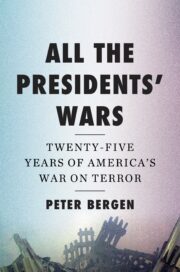
All the Presidents’ Wars:
RECENT ARTICLES

UPCOMING EVENTS
Wednesday, September, 09, 2026
GLOBAL SUMMIT ON TERRORISM AND POLITICAL VIOLENCE, NYC
Thursday, September, 10, 2026
Denver, CELL
Friday, September, 11, 2026
Duke University
Tuesday, September, 15, 2026
Lessons Learned: America’s Post-9/11 Wars, New America DC
Thursday, September, 17, 2026
Georgetown University
Tuesday, September, 22, 2026
International Spy Museum, DC. All the Presidents’ Wars, book event
Thursday, September, 24, 2026
Monterey World Affairs Council, Monterey, CA
Sunday, September, 27, 2026
ALL THE PRESIDENTS’ WARS: TWENTY-FIVE YEARS OF AMERICA’S WAR ON TERROR — AT CONN AVE, Politics & Prose, DC
Wednesday, September, 30, 2026
Gerald Ford School of Public Policy, “25 Years After 9/11: Reflections on the US War on Terror”, U. Michigan, Ann Arbor, MI
Thursday, October, 01, 2026
Arizona State Univ. , Tempe AZ
Monday, October, 05, 2026
Opal Group, DC
Thursday, October, 08, 2026
World Affairs Council of Connecticut, online 7p ET
Tuesday, October, 13, 2026
Arms Control book event, Amy Nelson, New America, DC
Monday, October, 19, 2026
Doha Security Forum, Qatar
Friday, November, 06, 2026
“American Valor,” Omni Shoreham, DC
RECENT FILM AND TV SERIES
GHOSTS OF BEIRUT: SHOWTIME
The Fall of Osama bin Laden, National Geographic
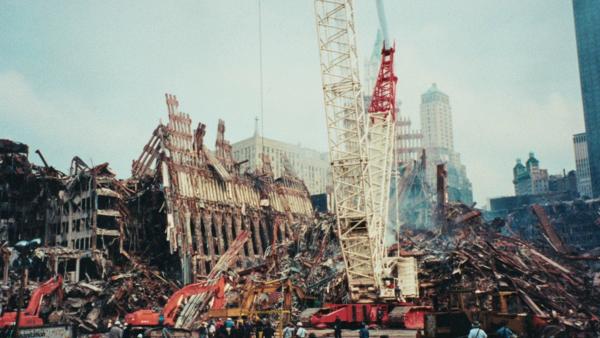
BIN LADEN'S HARD DRIVE, NATIONAL GEOGRAPHIC

