The Secretary: A Journey with Hillary Clinton from Beirut to the Heart of American Power, New America, Washington
The Secretary: A Journey with Hillary Clinton from Beirut to the Heart of American Power
Friday, March 22, 2013
12:15 – 1:45 p.m.
New America Foundation
1899 L St. NW Suite 400
Washington DC, 20036
In November 2008, Hillary Clinton agreed to work for her former rival. As President Barack Obama’s secretary of state, she set out to repair America’s image around the world – and her own. During the four years that followed, BBC foreign correspondent Kim Ghattas had unparalleled access to Clinton and her entourage. In The Secretary: A Journey with Hillary Clinton from Beirut to the Heart of American Power, the journalist weaves a fast-paced, gripping account of life on the road with Clinton.
Written from the Ghattas’s perspective as a half-Dutch, half-Lebanese citizen who grew up in the crossfire of the Lebanese civil war, The Secretary also traces the author’s own journey as she seeks to answer the questions that haunted her childhood: How powerful is America really? And, if the country’s dominance is in decline, who or what will replace it, and what will it mean for America and the world?
Please join us at the New America Foundation on March 22 for a conversation with Ghattas and National Security Studies Program Director Peter Bergen.
Copies of the book will be available for purchase.
Featured Speakers
Kim Ghattas
Foreign Correspondent, BBC
Author, The Secretary: A Journey with Hillary Clinton from Beirut to the Heart of American Power
Peter Bergen
Director, National Security Studies Program, New America Foundation
To RSVP for the event, click on the red button or go to the event page:
http://newamerica.net/events/2013/the_secretary_hillary_clinton
For questions, contact Stephanie Gunter at New America at (202) 596-3367 or gunter@newamerica.net.
www.NewAmerica.net
House Foreign Affairs Committe Hearing: The Way Forward in Afghanistan and Pakistan
Mar 15, 2013
| Washington, D.C. – Today, Rep. Ed Royce (R-CA), Chairman of the House Foreign Affairs Committee, announced the following upcoming Committee events:
Tuesday, March 19 1:00 p.m. on Tuesday, March 19 in 2172 Rayburn House Office Building Subcommittee on Asia and the Pacific Rep. Steve Chabot (R-OH), Chairman Subcommittee on the Middle East and North Africa Rep. Ileana Ros-Lehtinen (R-FL), Chairman Invited witnesses include: Seth G. Jones, Ph.D. Kimberly Kagan, Ph.D. Mr. Peter Bergen Daniel S. Markey, Ph.D. Chairman Chabot on the hearing: “U.S. national security interests in South Asia are both dire and immediate. The 2014 withdrawal plan from Afghanistan is strategically risky and threatens to plunge Afghanistan into a state in which terrorists will once again thrive. At the same time, the U.S. relationship with Pakistan has deteriorated dramatically and falters over Pakistan’s involvement with terrorist organizations and the drone war in the tribal bad lands. While Islamabad claims U.S. and Pakistani interests can be brought into alignment, we must remain skeptical of its internal divergent interests that risk undermining U.S. interests, the relationship with India, and the chance for a stable, peaceful, and independent Afghanistan. This hearing is an important opportunity to examine the President’s hasty withdrawal plan from Afghanistan and evaluate how events in Pakistan over the next year may affect U.S. national security interests throughout the entire region.” Chairman Ros-Lehtinen on the hearing: With President Obama’s announcement last month that the U.S. will draw down our forces in Afghanistan by the end of this year without a clear withdrawal plan, it is necessary to have a hearing that will examine the security implications of this decision and analyze the capacity of the Afghani and Pakistan government to address crime and corruption while ensuring secured territories in their countries. This is imperative particularly in light of recent inflammatory accusations made by Afghani leader Hamid Karzai which have further strained U.S. – Afghanistan relations and put our troops at greater risk. We must do everything we can to prevent al-Qaeda, the Taliban, and other extremist militants from taking over and undoing the efforts and sacrifices made by the U.S. and our allies for over a decade. |
Strange bedfellows — Iran and al Qaeda, CNN.com
Strange bedfellows — Iran and al Qaeda
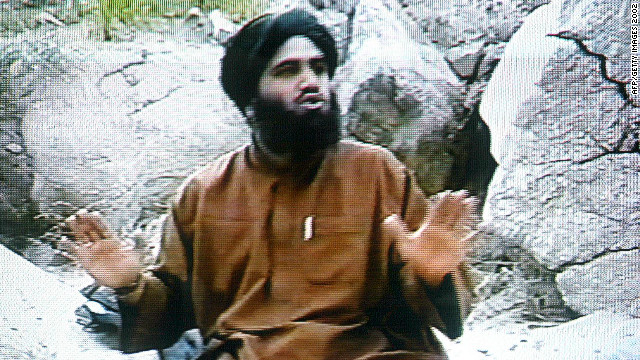
Osama bin Laden’s son-in-law captured
- Osama bin Laden’s son-in-law, now in custody, had spent time in Iran
- Peter Bergen says members of bin Laden’s inner circle lived for years in Iran
- He says it was an odd tie since religious differences separate Shiite Iran from Sunnis
- Bergen: Iran may have wanted to use al Qaeda members as a bargaining chip with U.S.
Trying Osama’s son-in-law in New York makes sense. CNN.com
March 8, 2013 Friday 12:55 PM EST
Trying Osama’s son-in-law in New York makes sense
BYLINE: By Peter Bergen, CNN National Security Analyst
LENGTH: 982 words
DATELINE: (CNN)
Editor’s note: Peter Bergen is CNN’s national security analyst, the author of “Manhunt: The Ten-Year Search for bin Laden — From 9/11 to Abbottabad” and a director at the New America Foundation.
(CNN) — George Venizelos, the FBI’s assistant director in charge, asserted Thursday in a written statement that the recently arrested “Sulaiman Abu Ghaith held a key position in al Qaeda, comparable to a consigliere in a mob family.”
This is overblown. Though he was Osama bin Laden’s son-in-law, Abu Ghaith is far from a big fish in al Qaeda.
Bin Laden had quite a number of sons-in-law, having sired some two dozen children with five wives.
On Friday, Abu Ghaith will appear in federal court in downtown Manhattan. But the significance of Abu Ghaith’s court appearance is not that he is a big player in al Qaeda. It’s that the Obama administration has shipped him to New York for trial rather than sending him to Guantanamo to face a military commission, as has been the case with other members of bin Laden’s inner circle.
Nothing in his past suggested Abu Ghaith was suited to play any operational role within al Qaeda. Before he joined al Qaeda a few months before 9/11, Abu Ghaith had been a high school teacher in his native Kuwait; he didn’t have any experience fighting in other holy wars as most of al Qaeda’s leaders had.
Abu Ghaith took on the role of spokesman of al Qaeda at the time of the 9/11 attacks, but that didn’t mean that he had any operational role in them or even knew they were going to happen.
In a private al Qaeda videotape that was discovered by U.S. forces in Afghanistan after the fall of the Taliban, bin Laden is seen gesturing at Abu Ghaith and observing that his spokesman was not clued in on the 9/11 plans.
Abu Ghaith appeared in another videotape that al Qaeda publicly released a month after 9/11, sitting next to his father-in-law as bin Laden gloated about the success of the attacks.
Around the same time, Abu Ghaith also released a tape that publicly warned “Muslims in the United States and Britain … not to travel by plane. We also advise them not to live in high-rise buildings and towers.”
A year later, Abu Ghaith fulminated “Al Qaeda has the right to kill four million Americans, including one million children, displace double that figure, and injure and cripple hundreds and thousands.”
But these are the words of a blowhard, not a man of action — something that is underlined in the indictment against Abu Ghaith that was unsealed on Thursday. It charges him with conspiring to help al Qaeda by making speeches and persuading others to join the group but makes no allegations whatsoever of involvement in any actual terror plots.
After the fall of the Taliban in Afghanistan in the winter of 2001, Abu Ghaith, along with much more serious players in al Qaeda such as Saif al-Adel, the military commander of the group, fled from Afghanistan to Iran, where they remained under some form of house arrest for around a decade.
Abu Ghaith’s decision to leave Iran to travel to Turkey led to the chain of events that resulted in him being taken in to custody by U.S. officials in the Middle East and then transferred to New York for trial there rather than incarceration at Guantanamo, Cuba.
This is a sound decision for several reasons:
First, the Obama administration’s stated goal is to close Guantanamo, not to add prisoners there.
Second, the conviction rate since 9/11 in these kinds of terrorism cases is 100% in New York courts when it comes to allegations of any kind of involvement in al Qaeda or its allied organizations.
The New America Foundation maintains a database of all the jihadist terrorism cases in the U.S. since 9/11. Of the 39 cases in New York State since 9/11, 20 defendants pleaded guilty and 15 were convicted, while four await trial.
By contrast, the military commission system in Guantanamo is largely untested. The operational commander of 9/11, Khalid Sheikh Mohammed, was arrested in Pakistan a decade ago but still has yet to face trial in Guantanamo. It’s quite possible that the process may take many more years before his trial even begins.
Indeed, of the 779 prisoners who have been held at Guantanamo, only six have been convicted according to a recently released study by the Congressional Research Service, which performs research on behalf of members of Congress.
In other words, while courts in New York have convicted alleged terrorists at a 100% rate, less than 1% have been successfully tried at Guantanamo.
In addition, the few convictions in Guantanamo have in some cases been overturned; for instance, that of Salim Hamden, who was bin Laden’s driver.
In other cases, the sentences handed down have been very short compared with those in civilian trials of alleged terrorists in the U.S.
David Hicks, an Australian detainee at Guantanamo, plea bargained his way out of the camp with time served and nine months in an Australian prison.
Perhaps because of his relatively minor role in al Qaeda, the announcement that Abu Ghaith will face trial in Manhattan has not produced so far any of the “not in my backyard” response we saw when the Obama administration announced in late 2009 that it was planning to put Sheikh Mohammed on trial in Manhattan.
The political storm this unleashed forced the Obama administration to backtrack and to announce two years later that Sheik Mohammed instead would be tried by a military tribunal at Guantanamo.
If Abu Ghaith’s case goes forward without a backlash in New York and a conviction is secured, as seems all but certain, we can be sure that he will not be the last alleged member of al Qaeda seized overseas who will be sent to the Southern District of New York to face trial — rather than go before a military tribunal at Guantanamo Bay and all the uncertainties that such trials have hitherto encountered.
Talking to Terrorists, New America Washington

Talking to Terrorists
 Tuesday, March 12, 2013
12:15 – 1:45 p.m.
New America Foundation
1899 L St. NW Suite 400
Washington DC, 20036
|

Since September 11, we have struggled to determine why individuals become radicalized by certain ideas and eventually engage in terrorism. Despite the amount of research into this issue, no one has identified a concrete explanation for this phenomenon of radicalization.
Dr. Anne Speckhard, Adjunct Associate Professor of Psychiatry at Georgetown University Medical School, spent over a year conducting research in the field and engaging terrorists in dialogue. She traveled through the West Bank and Gaza, into the prisons in Iraq, down the alleyways of the Casa Blanca slums, inside Chechnya, and into the radicalized neighborhoods of Belgium, the UK, France and the Netherlands.
Please join the New America Foundation’s National Security Studies Program for a conversation with Dr. Speckhard about her experiences and the conclusions she draws in her new book, Talking to Terrorists: Understanding the Psycho-Social Motivations of Militant Jihadi Terrorists, Mass Hostage Takers, Suicide Bombers and “Martyrs.”
Copies of the book will be available for purchase.
Featured Speakers
Anne Speckhard, PhD
Author, Talking to Terrorists: Understanding the Psycho-Social Motivations of Militant Jihadi Terrorists, Mass Hostage Takers, Suicide Bombers and “Martyrs”
Peter Bergen
Director, National Security Studies Program, New America Foundation
To RSVP for the event, click on the red button or go to the event page:
For questions, contact Stephanie Gunter at New America at (202) 596-3367 or gunter@newamerica.net.
Afghanistan: What Went Right? Foreign Policy
What Went Right?
Critics of the war are missing the big picture: Afghanistan is much better off today.
BY PETER BERGEN | MARCH/APRIL 2013
Quick question: Which Asian country has seen its life expectancy go up an astounding 18 years in just one decade, while turning from one of the world’s most rural countries into one of its fastest-urbanizing? Oh, and the country’s GDP increased tenfold in that same period.
No, this isn’t Japan in the 1960s, Singapore in the 1970s, South Korea in the 1980s, or India in the 1990s. It is Afghanistan since the fall of the Taliban.
What went wrong in Afghanistan since the American invasion is painfully clear, from the grotesque levels of official corruption to the worrisome rise of insider attacks against NATO forces by Afghan soldiers and police. Nobody is claiming all is coming up roses in a country devastated by decades of conflict. But not everything has gone wrong, either. So perhaps the more interesting question — and certainly a more underexplored one — is this: What went right?
Afghanistan just after the November 2001 fall of the Taliban resembled Germany after World War II: The country had been utterly destroyed, around a third of the population had fled, and more than one in 10 of its citizens had been killed in the previous two decades of war. Much of Kabul resembled postwar Dresden, so utter was the destruction of the capital.
When you flew into Kabul’s airport, you were greeted by the disquieting sight of teams of de-miners clearing the airfield. This scene was repeated all over Afghanistan, which was then one of the world’s most heavily mined countries. Those few visitors who traveled would find village after village empty. What were once houses now lay in fallen-down baked-mud ruins, like the remnants of some long-gone civilization. Many Afghans had fled for Pakistan and Iran during the 1980s and 1990s — some 6 million out of a population of 15 million.
As a result of the U.S.-led occupation of Afghanistan and the enterprising spirit of the Afghans themselves, Kabul is now rebuilt, the villagers are back, and the once-ubiquitous de-miners have all but disappeared. Furthermore, millions of Afghans have voted with their feet: Since the fall of the Taliban, more than 5 million have returned home. By way of contrast, some 2 million Iraqis left their country during the recent war there. Only a tiny fraction of those refugees has gone back.
The country to which those millions of Afghans have returned is in fundamental respects very different from the one it was before the 9/11 attacks. Let’s start with the most obvious point: The Taliban are removed from power. This was a movement that gave sanctuary not only to Osama bin Laden and al Qaeda, but also to pretty much every jihadi militant group from around the Muslim world.
Thanks to the U.S. invasion of Afghanistan, al Qaeda (“the base” in Arabic) lost the best base it ever had: a country in which it ran something of a parallel state, with training camps churning out thousands of recruits and from which bin Laden and his henchmen conducted their own foreign policy, attacking U.S. embassies and warships, and planned the deadliest mass murder in American history.
Al Qaeda has never recovered from the loss of its Afghan base. Its last successful strike in the West was the July 2005 series of suicide attacks on London’s transportation system. Meanwhile, the war against al Qaeda continues to be fought from Afghanistan. The SEAL team that killed bin Laden in 2011 took off in stealth helicopters from an airfield in Jalalabad, in eastern Afghanistan. And the drones that have inflicted heavy losses on other al Qaeda leaders continue to deploy from Afghan bases.
Forget what you hear from some of the more vocal critics of U.S. President Barack Obama’s drawdown plans — the chances of the Taliban coming back to run Afghanistan are now vanishingly small. Favorable views of the Taliban in polling across Afghanistan over the past several years are consistently no more than 10 percent. There is nothing like experiencing life under the Taliban to convince Afghans that the group cannot deliver on its promises of an Islamist utopia here on Earth. And if the Taliban have scant chance of returning to power, their al Qaeda buddies have even less chance of returning to Afghanistan in any meaningful way. Few Muslim countries harbor a more hostile view of al Qaeda and its Arab leaders than Afghanistan.
Afghans have good reasons to fear the Taliban. The group imprisoned half the population inside their homes, preventing women from having jobs and girls from attending school. Although Afghanistan today remains a deeply conservative Muslim society, proportionately more women are now serving in the Afghan parliament than in the U.S. Congress. And while only fewer than 1 million children, almost entirely boys, were in school under the Taliban, now more than 8 million children are in school, more than a third of whom are girls.
One of the most common questions pollsters ask is, “Is your country going in the right direction?” A poll by Rasmussen at the end of December found that 33 percent of American voters believed their country was going in the right direction. By contrast, a poll of some 6,000 Afghans conducted by the well-regarded Asia Foundation found that in 2012, 52 percent of Afghans thought their country was on the right track.
This finding isn’t so surprising when you consider what remained of the Afghan economy under the Taliban. There were just six commercial banks in the entire country, and, according to the IMF, they were “largely inactive.” There was virtually no phone system. Once-bustling Kabul was a city of ghosts, its population down to half a million. Businesses were shuttered, just a few cars drove on the streets, and the 9 p.m. curfew was rigorously enforced by young Taliban foot soldiers wearing distinctive black turbans, their eyes rimmed with black kohl eyeliner, which gave them a look that was both feline and fierce. Radio Voice of Sharia was one of the only sources of Afghan news, and it blared Taliban propaganda. Taliban cabinet ministers huddled around stoves in their offices during the bitter Afghan winters, lecturing visitors like myself about that great Muslim leader, Osama bin Laden.
When I visited Kabul in the winter of 1999, I was the sole guest at the Inter-Continental, the only hotel where the Taliban would allow foreigners to stay. What once passed for a glamorous hotel in 1970s Kabul was now not much more than a bombed-out shell. As the sole guest, I was lucky to get one of the few rooms with still-intact windows to ward off the frigid Afghan winter. The staff at the hotel besieged me with requests for money, which was understandable as the economy was then so bad that even doctors were earning only $6 a month.
Afghanistan’s GDP in 2001 was some $2 billion — about the size of Burkina Faso’s. In a decade, GDP has gone up to $20 billion (though much of it is attributable to foreign aid). Today, one in two Afghans has a cell phone, which they use for everything from getting their salaries wired to them to making utility payments. There are also now dozens of newspapers and TV channels. Where once Kabul’s streets were largely silent, they are now a bedlam of traffic and thriving small businesses.
Yes, a good deal of aid to Afghanistan has ended up lining the pockets of corrupt Afghan officials or gone back west in the form of large salaries and perks for expatriates. Less well known is that one of the world’s most successful aid programs has been implemented in Afghanistan, funded by organizations such as the U.S. Agency for International Development and the World Bank. Known as the National Solidarity Program, the cost-efficient and popular program gives modest grants to local self-elected village councils to do with as they will. Around 30,000 councils have been set up, and they have disbursed some $1 billion for some 60,000 specific projects since 2003. As a result, thousands of schools and countless irrigation networks have been built, positively affecting the lives of some two-thirds of the rural population.
Or consider this: At the time of the Taliban, only a tenth of the population had access to basic health care, a situation made more complicated by the Taliban’s medieval view of women. Now, almost all Afghans have access to more and better health care. As a result, in just one decade Afghan life expectancy has gone from 45 years to 62 years for men and 64 for women. This kind of dramatic increase in longevity took four decades to accomplish in the United States between 1900 and the beginning of World War II.
In the West, the general hopelessness of Afghan President Hamid Karzai is a staple of news stories that rightly decry his tolerance for his rapacious family and cronies who feed at the public trough. But let’s judge Karzai not against the mayor of a Scandinavian city, but rather the leaders in his immediate neighborhood. To Karzai’s west is the Holocaust-denying theocratic autocracy of Iran. To his north is the Soviet-style dictatorship of Islam Karimov in Uzbekistan, where dissidents have been boiled alive. To his east is Pakistan, where four military coups have taken place since the country’s independence six and a half decades ago.
Karzai should also be judged by his immediate predecessors. Let’s recall Taliban leader Mullah Omar, a dimwitted religious fanatic who turned his country into an international pariah; the warlords who preceded him; and before them Mohammad Najibullah, the communist puppet who replaced the Soviet occupiers when they retreated in 1989 and ended up being hanged from a Kabul lamppost seven years later.
By both regional and Afghan historical standards, Karzai is a reasonably competent leader who — despite his feckless image in the West and despite being in office for 11 years — retains considerable popular appeal. In the last Afghan presidential election, when the votes were finally correctly tallied, Karzai had received 49 percent of the vote against dozens of challengers. By contrast, Obama prevailed in the 2012 election against one challenger with 51 percent of the vote. And Britain’s David Cameron leads Britain despite his Conservative Party only receiving 36 percent of the vote in the 2010 election that made him prime minister.
Many Westerners have a skewed assessment of the scope of the war in Afghanistan, bracketing it with the war in Iraq. But the conflicts in the two countries are quite different. At the height of the Iraq war in 2006, 100 civilians were dying every day. Today in Afghanistan, around six civilians are dying daily in a war in a country that has a population roughly on par with Iraq’s. And who is causing most of those casualties? The Taliban. U.S. and other NATO forces have taken care to ensure that their soldiers do not contribute to the civilian death toll. Indeed, some American cities are today more violent than Afghanistan. In New Orleans, residents are now around six times more likely to be murdered than Afghan civilians are to be killed in the war.
That war is not going as badly as you think, either: In 2012, for instance, Taliban attacks dropped as much as a third compared with the year before. Is this just NATO cooking the books? Nope: These figures come from the Afghanistan NGO Safety Office (ANSO), an organization that has collected data about violence in Afghanistan for many years and is far from a cheerleader for the military. In a 2012 report, ANSO stated that the sharp drop in violence is “the first reliable indicator that the conflict may be entering a period of regression after years of sustained, and compounded, growth by all actors in the field.” In January, three U.S. soldiers died in Afghanistan — the lowest monthly American casualty count in four years. In short, the war is winding down, and the “surge” of 30,000 U.S. soldiers into Afghanistan that was completed in September has indeed blunted the Taliban’s momentum.
Could that momentum return? Some smart commentators on Afghanistan worry that the Afghan civil war will renew itself after the United States and other NATO countries withdraw combat troops at the end of 2014. In an influential July report in the New Yorker, veteran war correspondent Dexter Filkins described how Afghans are girding for another civil war, and he quoted a former U.S. official based in Kabul as saying, “A coup is one of the big possibilities — a coup or civil war.”
This is overwrought. A return to the kind of civil war in which hundreds of thousands died following the 1992 collapse of the Najibullah government is quite unlikely for many reasons, not least the fact that the United States is not going to collapse as the Soviet Union did, an implosion that precipitated the fall of the Najibullah government. When the Russian aid stopped flowing to Najibullah, he couldn’t maintain his military, which opened the way for his overthrow.
Today, the United States and Afghanistan have negotiated the Enduring Strategic Partnership Agreement, which ensures America will continue to play a supporting role there until 2024. The exact details of what that agreement means in practice are still being hammered out, but they are likely to include not only significant U.S. aid but also several thousand American soldiers stationed in Afghanistan for many years into the future as a guarantor for the country’s stability. Other countries are also likely to continue to work with the Afghans in areas like training the army and police well past the end of the NATO combat mission in December 2014. The Afghan National Army, which certainly needs to be further professionalized, is already the single most admired institution in the country. It will not collapse as Najibullah’s military did once the Russian money flow dried up, not least because the United States and other NATO countries will not allow it to do so.
Afghanistan is not hopeless. Forty years ago, it was a country at peace with itself and with its neighbors. Kabul, as Nancy Dupree’s classic travel guide to Afghanistan in the 1970s so evocatively put it, was “a fast-growing city where tall modern buildings nuzzle against bustling bazaars and wide avenues fill with brilliant flowing turbans, gaily striped chapans, mini-skirted schoolgirls, a multitude of handsome faces and streams of whizzing traffic.” A couple of hours to the east is Jalalabad, about which Dupree waxed lyrical as she recommended the annual spring poetry festival: “Orange blossoms scent the air, flowers bloom riotously, birds sing and the freshness of spring pervades the atmosphere.”
Maybe, not too long from now, a new generation of guidebooks will again be raving about the joys of springtime in the Hindu Kush. Nothing, not even a failed state, lasts forever.
Can We Call Iraq a Success? A Debate at New America Foundation, Washington DC
Can We Call Iraq a Success?
A Debate Between Two Leading Experts
As we approach the 10-year anniversary of the U.S. invasion of Iraq on March 20, 2003, news of that country has largely faded from American headlines. But a myriad of questions remain to be answered about the eight-year American involvement in the Iraq War. Specifically, what were the major decision points for the United States, and what directions did the conflict take after those decisions were made? What was gained from the deaths of many of tens of thousands of Iraqis and thousands of Americans, and hundreds of billions of dollars the war also consumed? And where is Iraq now in terms of security, economic strength, political stability, and alignment with U.S. regional interests?
Please join the New America Foundation’s National Security Studies Program for a debate over these questions and more between Douglas A. Ollivant, who was Director for Iraq at the National Security Council during both the Bush and Obama administrations, and Lt. Col. Joel Rayburn, who served on the staff of General David Petraeus in Baghdad in 2007 and 2008, where he focused on political-military issues.
Participants
Featured Speakers
Douglas A. Ollivant
Senior National Security Fellow, New America Foundation
Lt. Col. Joel Rayburn
U.S. Army Military Fellow, New America Foundation
Moderator
Peter Bergen
Director, National Security Studies Program, New America Foundation
Talibanistan: America’s Decade of War, Chicago Council on Global Affairs, Chicago
TALIBANISTAN: AMERICA’S DECADE OF WAR
Peter Bergen, National Security Analyst, CNN; Director, National Security Studies Program, New America Foundation
After more than a decade of American involvement in Afghanistan, a successful peace settlement remains notoriously elusive. The scheduled conclusion of the NATO combat mission in 2014 though, has put the pressure on western governments to act fast. What will happen when more than 100,000 US and NATO troops withdraw from the country? After decades of war, what is the future of (in)stability in the region? Join The Chicago Council and Peter Bergen for a discussion on a post-2014 Afghanistan and Pakistan, and the central strategic challenges facing the US today.
Peter Bergen is CNN’s national security analyst, director of the National Security Studies Program at the New America Foundation, and a research fellow at New York University’s Center on Law and Security. He is a contributing editor at The New Republic, and has worked as a correspondent for National Geographic, Discovery, and CNN.com. In 2008, he was an adjunct lecturer at the Kennedy School of Government at Harvard University, and an adjunct professor at the School of Advanced International Studies at Johns Hopkins University. Bergen has reported for The New York Times, Foreign Affairs, The Washington Post, The Guardian, Wall Street Journal, TIME, and others. His books include Manhunt, The Longest War, and The Osama bin Laden I Know. Bergen holds an MA from Oxford University.
Bergen is the coeditor of Talibanistan: Negotiating the Borders Between Terror, Politics and Religion, and Manhunt: The Ten-Year Search for Bin Laden–from 9/11 to Abbottabad, which will be available for purchase and signing following the program.
FRIDAY, APRIL 19, 2013
PRESIDENT’S CIRCLE LUNCH
The Chicago Club
81 East Van Buren Street
Chicago, IL 60605
Business attire is required.
11:45 a.m.
Registration
12:00 noon
Lunch, presentation, and
discussion
1:15 p.m.
Adjournment and book signing
Cost: $55
Advance registration is required.
This program is exclusively for
members of the Board of
Directors, Chairman’s Circle,
Corporate Principals, Directors’
Circle, and President’s Circle


Phone: 312.726.3860 Fax: 312.821.7555


The new story of the death of Osama bin Laden, CNN.com
February 12, 2013 Tuesday 3:15 PM EST
The new story of the death of Osama bin Laden
BYLINE: By Peter Bergen, CNN National Security Analyst
LENGTH: 919 words
DATELINE: (CNN)
Editor’s note: Peter Bergen is CNN’s national security analyst, the author of “Manhunt: The Ten-Year Search for bin Laden — From 9/11 to Abbottabad,” and a director at the New America Foundation.
(CNN) — On Monday Esquire magazine published a massive profile of the Navy SEAL who says he shot Osama bin Laden.
Weighing in at some 15,000 words, the story does not identify the killer of al Qaeda’s leader by his real name and refers to him only as “the Shooter.”
Clearly the Shooter wanted to maintain something of the code of silence that is pervasive among the covert warriors of SEAL Team 6, the unit that mounted the bin Laden operation.
What do we learn from the Shooter’s story? Most critically that the Shooter says he killed bin Laden with two shots at close range as he stood in his third floor bedroom in the compound in Abbottabad, Pakistan, where he had been hiding for more than five years.
This account differs in a crucial respect from the book “No Easy Day” by Mark Owen, a SEAL who also was on the bin Laden raid. (Mark Owen is a pseudonym; he was quickly revealed to be Matt Bissonnette.)
In “No Easy Day,” a runaway bestseller that has stayed on the New York Times bestseller list for the past 22 weeks, Bissonnette writes that the SEALs were 15 minutes into the Abbottabad mission when the point man spotted a male poking his head out of a third floor bedroom.
He wrote that the point man shot at the mysterious male, and when the SEALs went inside the third floor bedroom they found him lying on the floor in his death throes. Bissonnette and another SEAL quickly finished him off with several more rounds.
The dead man was bin Laden.
It’s a much less heroic story than that of the Shooter, who says he encountered bin Laden face-to-face in the bedroom. The Shooter says he saw that bin Laden’s gun was within easy reach, and it was only then that he fired the shots that killed him.
The Shooter’s version of bin Laden’s death matches closely the accounts by reporters who have written most authoritatively about it.
It also matches what I saw when I was the only outside observer allowed inside the Abbottabad compound before it was demolished in late February 2012.
Accompanied by Pakistani military officers, I examined the bedroom where bin Laden died. The officers showed me a large patch of dark, congealed blood on the low ceiling.
It is consistent with the Shooter’s account of firing two rounds at the head of a “surprisingly tall terrorist” while he was standing up. This evidence tends to undercut Bissonnette’s version of bin Laden’s death.
That said, it is worth noting that the night of bin Laden’s death was a very confusing one.
As soon as the operation in Abbottabad had started one of the two Black Hawk helicopters crashed. There was a brief but intense firefight with Abu Ahmed al-Kuwaiti, bin Laden’s courier. The SEALs also shot and killed the courier’s brother, sister-in-law and bin Laden’s son Khalid.
All this took place in less than 15 minutes on a night when there was no moon and the electricity in the compound and surrounding neighborhood had been turned off. The SEALs were wearing night vision goggles that bathed the compound in a murky, pixilated glow.
It was a confusing situation, and that helps explain why Bissonnette’s account differs from that of the Shooter.
In fact, Bissonnette’s account virtually eliminates what the Esquire profile asserts is the Shooter’s “central role in bin Laden’s death.”
“I don’t know why he’d do that,” the Shooter told Esquire.
We keep learning more about the hunt for and the death of Osama bin Laden, but it is a complex story, and, in common with many important historical events, the full facts will take many years to emerge.
The Shooter’s account in Esquire is important to help us understand what happened that night, as is Bissonnette’s account.
A good deal of the Esquire piece concerns the Shooter’s worries about his future now that he has left the military.
“When he leaves after sixteen years in the Navy, his body filled with scar tissue, arthritis, tendonitis, eye damage, and blown disks, here is what he gets from his employer and a grateful nation: Nothing. No pension, no health care, and no protection for himself or his family.”
In fact, pretty much any veteran who leaves before 20 years of service is not going to be eligible for a pension.
So should the Shooter be treated any differently? Indeed, should other members of key Special Operations units like SEAL Team 6 or the Army’s Delta Force who have been at war almost continuously since the 9/11 attacks be given greater benefits given the inordinate amount of combat they have seen?
It’s an idea that may be worth exploring for those who have seen extensive combat, but the fact is that once you start making such exceptions, the floodgates will open. After more than a decade of war, many veterans in conventional military units would also qualify for such preferential treatment.
In a time of budget crisis and large cuts at the Pentagon it is hard to make such a case. After all, what about the thousands of Marines who have also been fighting for many years in tough places like Anbar in western Iraq and Helmand in southern Afghanistan? Should they get a cushy early retirement deal, too?
If the Shooter had wanted to get the full benefits that follow 20 years of service he had a choice: Stay in for another four years to qualify for the pension he clearly deserves.
It’s a choice he didn’t make.
John Brennan, Obama’s counterterrorist. CNN.com
John Brennan, Obama’s counterterrorist
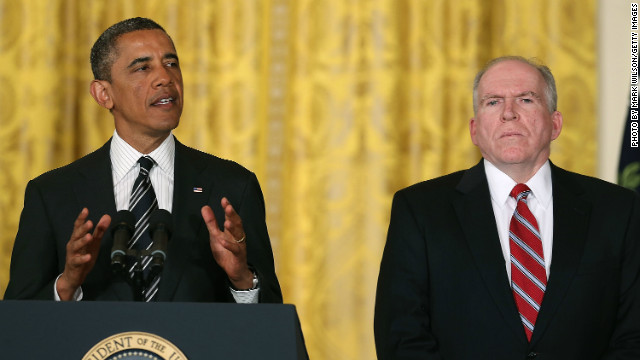
Who is John Brennan?
- John Brennan is up for a confirmation hearing before the Senate on Thursday
- The nominee for CIA director has been at the center of Obama’s counterterrorism policies
- Peter Bergen says Brennan’s been key in the drone program and in the bin Laden raid
- Bergen: Brennan supported the raid while Biden and Gates argued against it
Editor’s note: Peter Bergen is CNN’s national security analyst, the author of “Manhunt: The Ten-Year Search for bin Laden — From 9/11 to Abbottabad,” and a director at the New America Foundation.
(CNN) — When Vice President Joe Biden and Defense Secretary Robert Gates advised President Barack Obama in late April 2011 that sending a Navy SEAL team into Pakistan to capture or kill Osama bin Laden was not worth the various risks that this operation entailed, John Brennan, the president’s top counterterrorism adviser, urged the president to authorize the raid.
It’s that kind of call that has made Brennan the president’s go-to guy since the beginning of Obama’s first term on all matters related to terrorism and has also thrust him into a broader policymaking role in the Middle East and in South Asia.
From his windowless office deep in the bowels of the West Wing a few steps from the Situation Room, Brennan has been at the center of every important decision in the war against al Qaeda.
Brennan is a serious, taciturn man who grew up in New Jersey and attended Fordham University in New York, where at one point he contemplated becoming a priest. Instead, he joined the CIA and spent more than two decades in the shadows, rising to take on important positions such as Bill Clinton’s intelligence briefer and CIA station chief in Saudi Arabia.
Three years after 9/11, Brennan became the first director of the National Counterterrorism Center, which shapes overall strategy against al Qaeda and its allies across the 16 agencies of the U.S. intelligence community.
After he retired, Brennan went into the private sector, where he played an early role in advising the Obama campaign in the run-up to the 2008 election.
Stay up to date on the latest opinion, analysis and conversations through social media. Join us at Facebook/CNNOpinion and follow us @CNNOpinion on Twitter. We welcome your ideas and comments.
It’s this long history with Obama and his depth of experience in the intelligence community that have made Brennan the president’s pick to run the CIA.
Facing tough questions
On Thursday, Brennan will testify before the Senate Intelligence Committee, a milestone on the road to what is shaping up to be a contentious confirmation to be CIA director.
At his confirmation hearing, Brennan will be asked some tough questions about the administration’s policies on CIA drone strikes, policies that he has played a key role in formulating.
Taking even the most conservative estimate of casualties during Brennan’s time as Obama’s top counterterrorism adviser, CIA drone strikes in Pakistan have killed 1,577 people, 143 of whom were identified in credible news reports as civilians, according to a count by the New America Foundation.
Brennan will also likely be asked to discuss the still-classified Senate Intelligence Committee’s three-year investigation into the CIA detainee program and the extent to which coercive interrogations of some of those CIA-held prisoners elicited useful information.
The head of the committee, Sen. Dianne Feinstein, D-California, has said that coercive interrogations did not provide key leads in tracking down bin Laden, while a number of retired senior CIA officials have claimed that they did.
Undoubtedly, this discrepancy will be something that the committee will want to delve into with Brennan.
Role in the raid
Perhaps more than any other official, he played a key role in what has surely been the Obama administration’s greatest success overseas: tracking bin Laden to an obscure city in Pakistan and then formulating the overall plan that led to the death of al Qaeda’s leader.
In August 2010, CIA Director Leon Panetta went to the White House to brief the president and a handful of his top national security advisers, including Brennan, that the CIA had a promising lead that suggested bin Laden could be living in a compound in the northern city of Abbottabad.
The case that bin Laden was living there was entirely circumstantial and was based on the fact that residing at the Abbottabad compound was a longtime al Qaeda insider and that he and the other people living in the compound were taking elaborate measures to deceive their neighbors about their identities.
One of the mysterious residents at the compound was a man who never left the compound’s grounds and could be seen by U.S. satellites occasionally taking a quick walk in the garden. He would come to be nicknamed “the pacer.” However, the CIA could never get a photograph of the pacer’s face, nor was there any other definitive intelligence that bin Laden was living at the compound.
Brennan, who had spent almost all of his working life at the CIA, met regularly with the analysts working on the bin Laden case. According to senior White House officials, Brennan pushed the analysts to come up with intelligence that disproved the notion that bin Laden was living in the Abbottabad compound, explaining, “I’m tired of hearing why everything you say confirms your case. What we need to look for are the things that tell us what’s not right about our theory. So what’s not right about your inferences?”
The analysts working on the bin Laden hunt came back to the White House one day and started their intelligence update, saying, “Looks like there’s a dog on the compound.”
Denis McDonough, Obama’s then-deputy national security adviser, remembers thinking, “Oh, that’s a bummer. You know, no self-respecting Muslim’s gonna have a dog.” (Many Muslims believe dogs to be “unclean.”)
Brennan, who had spent much of his career focused on the Middle East and speaks Arabic, pointed out that bin Laden, in fact, did have dogs when he was living in Sudan in the mid-1990s. (Indeed, when al Qaeda’s leader was living in the capital of Khartoum, he had taken an interest in training police dogs.)
Creation of the “Red Team”
In addition to pushing the CIA to refine its analysis of the case that bin Laden was living in Abbottabad, two weeks before Obama made the final decision to launch the Navy SEAL raid, Brennan authorized the formation of a “Red Team.” It was made up of four intelligence analysts who had had no prior role in making the case that bin Laden was living in Abbottabad.
The role of the Red Team was to see if there were alternative explanations that could explain the “pattern of life” of the mysterious residents of the Abbottabad compound. For instance: Could they be the retinue of some drug lord who was keeping a low profile? Or might they be on the fringes of al Qaeda but unrelated to bin Laden himself?
On Thursday, April 28, 2011, during the final National Security Council meeting to discuss what to do in Abbottabad, the Red Team briefed the president and his top advisers.
One of the Red Team analysts put the odds that bin Laden was living in Abbottabad at 40%, which was discomfiting to some.
Brennan recalls: “Some of us thought, ‘Whoa! We thought the prospects were higher that he was in there.’ And the president recognized that when people were saying, ‘Well, there’s only 40% of a chance,’ that some people were going to get a little bit soft on this.”
Was it too risky?
The uncertainty that bin Laden was even living in Abbottabad contributed to the advice that Biden and Gates gave Obama during this final National Security Council meeting: Don’t authorize the SEAL team raid. It’s just too risky.
By now, Brennan had come to a very different conclusion.
He had already told the president privately the CIA officials who had developed the intelligence on Abbottabad were “the people that have been following bin Laden for 15 years. This has been their life’s work, this has been their life’s journey, and they feel it very much in their gut that bin Laden is at that compound. I feel pretty good, if not certain, that bin Laden is at that compound.”
Brennan urged a go on the raid.
As the SEAL raid unfolded in Abbottabad on May 1, 2011, Brennan was as anxious as anyone else in the White House Situation Room: “Might there be a quick reaction force that bin Laden may have had, security that we didn’t know about?” he recalled thinking.
The raid, of course, succeeded.
When photos of the dead Osama bin Laden were passed around the Situation Room, Brennan nodded and said, “It’s bin Laden.”
Follow us on Twitter @CNNOpinion.
Join us on Facebook/CNNOpinion.
FEATURED BOOK

All the Presidents’ Wars:
RECENT ARTICLES

RECENT FILM AND TV SERIES
GHOSTS OF BEIRUT: SHOWTIME
The Fall of Osama bin Laden, National Geographic

BIN LADEN'S HARD DRIVE, NATIONAL GEOGRAPHIC

