Omaha Town Hall Series, Omaha, Nebraska
Peter Bergen
CNN NATIONAL SECURITY ANALYST AND BEST-SELLING AUTHOR
WEDNESDAY, SEPTEMBER 25, 2013
15050 WEST MAPLE ROAD
ST. ANDREW’S UNITED METHODIST CHURCH
10:30 A.M. DOORS OPEN AT 9:30
ABOUT OUR SPEAKER
One of the few Westerners to interview Osama bin Laden face-to-face, Peter Bergen is a print and television journalist, documentary producer, and best selling author. His most recent book, Manhunt: The Ten Year Search for Osama bin Laden, from 9/11 to Abbottabad, is a gripping account of the decade-long hunt for the world’s most notorious terrorist. Previously, his 2011 New York Times bestseller, The Longest War: The Enduring Conflict Between America and Al-Qaeda, won the Gold Prize for best book on the Middle East of 2011 from the Washington Institute and was honored by Newsweek and the Guardian as one of the key books about terrorism of the past decade. His other works include The Osama bin Laden I Know: An Oral History of Al-Qaeda’s Leader (Free Press 2006) and the New York Times bestseller Holy War, Inc. Inside the Secret World of bin Laden (Free Press 2001.) In 1997, working for CNN, Bergen produced bin Laden’s first television interview in which the founder of Al-Qaeda declared war against the United States for the first time to a western audience. Bergen has reported on Al-Qaeda, Afghanistan, Pakistan, counterterrorism, homeland security and Middle East issues for a range of American newspapers and magazines, and has testified before numerous congressional committees about terrorism issues.
Peter Bergen was born in the United States, reared in England, and has a Masters in Modern History from New College, Oxford University. He is married to the documentarist, Tresha Mabile.
LUNCHEON RESERVATION INSTRUCTIONS
Reservations must be postmarked on or after September 4th and will be accepted until capacity is reached. Seating is assigned as reservations are received.
For group reservations (2 to 10), please submit only one check and in one name only. Make payable to OMAHA TOWN HALL LECTURE SERIES and send to:
Debbie Hedgecock 2331 Bretigne Drive Lincoln, NE 68512
Please include email and phone number on your check so we may reach you if a problem arises.
Pick up luncheon tickets on the day of the lecture at the luncheon reservations table at the lecture hall.
![page1image63592]()
![page1image63912]()
Omaha Town Hall Lecture Series is pleased to continue our collaboration with The Bookworm to offer book sales at our lectures and lun- cheons. A limited selection of signed books may be available. The Bookworm will contribute a percentage of sales back to OTH, and these funds will help us continue the tradition of providing outstanding speakers for our lecture series. Your support is greatly appreciated! The following title will be available at the September lecture
and luncheon:
Manhunt: The Ten Year Search for Osama bin Laden,
Peter Bergen
Sept. 25, 2013
This man who wears many hats—journalist, scholar, best-selling author, and television correspondent, producer and analyst—Peter Bergen began his remarkable journey on a cold December day in Minneapolis, 1962. His family soon thereafter moved to London, perhaps an early omen that Bergen would be traveling a lot throughout his life.
He attended Ampleforth College in North Yorkshire, then, in 1981, won an Open Scholarship to New College, Oxford, where he earned a Master of Arts degree in Modern History.
With freshly minted academic credentials in hand, Bergen and two friends ventured to Pakistan in 1983 to make a documentary about Afghan refugees fleeing the Soviet invasion of their country. The results were at least twofold: first, the documentary, “Refugees of Faith,” was made and aired in the UK; and, two, Bergen developed an enduring fascination with the people and the politics of the region.
After a stint with ABC News in New York, Bergen returned to Afghanistan to make the documentary “Kingdom of Cocaine�? for CNN. The film was nominated for an Emmy and won the Edward R. Murrow award for best foreign affairs documentary in 1994.
That same year he co-produced, again for CNN, the documentary “Terror Nation�? which traced the links between Afghanistan and the men responsible for the 1993 bombing of the World Trade Center. The documentary, which was shot in Afghanistan during its civil war, concluded presciently that the country would be the source of additional anti-Western terrorism.
In 1997 Bergen produced Osama bin Laden’s first television interview, which aired on CNN and in which the terrorist leader declared war against the United States for the first time to a Western audience.
Bin Laden was also the subject of Bergen’s first book, Holy War, Inc.: Inside the Secret World of Bin Laden, published in 2001 and written while the author was the Pew Journalist in Residence at The School of Advanced International Studies at Johns Hopkins University. A New York Times best-seller, the book became the basis for a National Geographic Television documentary that was nominated for an Emmy.
Also Emmy-nominated was the CNN documentary “In the Footsteps of bin Laden�? which was based on Bergen’s second book, The Osama bin Laden I Know: An Oral History of al Qaeda’s Leader. The book was named one of the best non-fiction books of 2006 by The Washington Post.
In 2011 Bergen published The Longest War: The Enduring Conflict between America and Al Qaeda. The book was described by New York Times book critic Michiko Kakutani as “that essential book�? for readers interested in a “highly informed, wide-angled, single-volume briefing on the war on terror so far.�? Both a commercial and critical success, The Longest War made the New York Times Best Seller list and was mentioned by both Newsweek and The Guardian as one of the key books about terrorism of the past decade, was picked by Amazon, Kirkus and Foreign Policy as one of the best books of 2011, and won the $30,000 Gold Prize for best book on the Middle East of 2011.
Manhunt: The Ten Year Search for bin Laden, from 9/11 to Abbottabad, was published in 2012 and repeated the popular and critical success enjoyed by The Longest War. HBO has produced a documentary to be released in theaters based upon it. The film, for which Bergen is the executive producer is entered in the Sundance Film 2013 competition.
In addition to writing books and producing documentary reports, Bergen has written articles and commentary for just about every major newspaper and news magazine in the United States as well as many in Europe, including the New York Times, the Times (of London), Der Spiegel, and el Mundo.
Currently, in addition to his post as national security analyst for CNN, Bergen is a contributing editor at The New Republic, writes a weekly column for CNN.com, is on the editorial board of Studies in Conflict and Terrorism, a leading scholarly journal, and is the editor of the AfPak Channel, a joint publication of Foreign Policy magazine and the New America Foundation [that can be found at www.foreignpolicy.com/afpak].
He is a member of the Homeland Security Project, a successor to the 9/11 Commission, and also of the Aspen Homeland Security Group.
He is married to the documentary director/producer Tresha Mabile.
Book review: ‘No Easy Day: The Firsthand Account of the Mission That Killed Osama bin Laden’ Washington Post
Book review: ‘No Easy Day: The Firsthand Account of the Mission That Killed Osama bin Laden’
By Peter Bergen, Published: August 29
Even before the book went on sale, the announcement by the publisher Dutton that the pseudonymous Mark Owen, one of the SEALs on the mission that killed Osama bin Laden, would be publishing an account of his role in the raid quickly propelled “No Easy Day” to the No. 1 slot on Amazon, displacing “Fifty Shades of Grey.”
It was inevitable that one of the men on the bin Laden mission would eventually write a book about it. After all, we live in an open society. Anyone involved in this history-making mission would want to set the record straight about what exactly happened — given some of the nonsense that has been written about it — and also make a little money on the side. (To his credit, Owen — whose real name has been revealed to be Matt Bissonnette — is donating most of the proceeds of his book to charities that help the families of fallen SEALs.)
Owen’s account of the raid fits almost exactly with my own understanding of the operation, based on being the only outside observer allowed inside the bin Laden compound before it was demolished and interviewing dozens of American officials familiar with the details of the operation, as well as interviews with Pakistani officials who investigated the aftermath of the raid.
The only surprising thing, perhaps, given the code of silence that exists among the men of SEAL Team 6 — a small, tightknit covert unit that prides itself on being the “quiet professionals” — is how soon this tell-all book was published. After all, it’s been only a little over a year since bin Laden’s body was dumped from the deck of the USS Carl Vinson as it cruised off the coast of Pakistan.
The title of Owen’s book comes from a piece of Navy SEAL lore that “the only easy day was yesterday.” “No Easy Day” joins a growing shelf of best-selling SEAL memoirs that detail just how true that piece of lore is. Last year in “The Heart and the Fist,” Eric Greitens, a Rhodes scholar and SEAL, eloquently outlined the notoriously tough training regime that every SEAL must go through. Marcus Luttrell’s 2007 book, “Lone Survivor,” gave a visceral account of how he barely escaped the debacle of Operation Redwing in Afghanistan two years earlier, when he was the only one of four SEALs to survive a brutal firefight with the Taliban. The ensuing rescue operation cost the lives of 16 other servicemen.
How does “No Easy Day” stack up with these other SEAL memoirs? Owen and his co-author, Kevin Maurer — who has written extensively on special operations — ably navigate the reader through the secretive world of the SEALs, as well as Owen’s graduation into SEAL Team 6, an elite group within the SEAL elite that, along with the Army’s Delta Force, is arguably the most effective fighting unit in the world.
Owen describes his life growing up in the Alaskan outback, where he learned to handle guns and hunt from a young age — valuable skills for his future line of work. And he does a nice job of detailing the grueling deployments and uncertainties of warfare in the streets of Baghdad and the mountains of eastern Afghanistan, where it is luck as much as skill that keeps you alive.
Sometimes the metaphors in “No Easy Day” get too down-home and obscure — heavy weapons strafing an Afghan ridgeline that looks like a “Bloomin’ Onion at Outback Steakhouse” will no doubt puzzle many readers. But generally the writing is fast-paced, and Owen and Maurer tell some good yarns in a conversational style. They also neatly capture the camaraderie, the pranks, the constant training and the evident love that the men of SEAL Team 6 have for their jobs.
Of course, the readers who are lining up to buy “No Easy Day” are not doing so to read just another SEAL memoir. They want to know exactly what happened the night bin Laden was killed and what it felt like to be on that mission.
Owen and Maurer do not disappoint. They take the reader on a roller-coaster ride, opening the book with Owen on the Black Hawk helicopter that crashed within the first seconds of the SEAL team’s arrival at bin Laden’s compound in Abbottabad, Pakistan.
Preparations
The heart of the book is the four weeks or so leading up to that moment and the 40 minutes that followed it as the SEALs recovered from what could have been a crippling blow to the mission.
Owen says that the plan was for one Black Hawk to hover over bin Laden’s third-floor bedroom at the compound. Some SEALs would then fast-rope onto the roof of the bedroom and surprise al-Qaeda’s leader while he slept. The SEALs practiced this on a replica of bin Laden’s residence made from plywood, shipping containers and chain-link fencing that was assembled in the pine forests of North Carolina, but they had no intelligence about what the interiors of the compound would look like.
At one point, the SEALs asked a lawyer who was attending the rehearsals if the bin Laden operation was an assassination mission. The lawyer replied that “if he is naked with his hands up, you’re not going to engage him. . . . You will detain him.”
Owen has, of course, only a grunt’s-eye view of the bin Laden operation. There is little in the book about the decision making at the White House as the president considered the multiple courses of action at bin Laden’s presumed hideout. Nor is there much about how the intelligence picture that indicated bin Laden might be living at the Abbottabad compound developed. But there is an intriguing cameo appearance by a CIA analyst, “Jen,” who had been recruited out of college and had been on the bin Laden “account” for the past five years. Despite the circumstantial nature of the intelligence case that bin Laden was living in Abbottabad, Jen told Owen she was “one hundred percent” certain that al-Qaeda’s leader was hiding there.
The kill shot
After landing in the compound in the controlled helicopter crash, the SEALs were 15 minutes into the mission and hadn’t yet found bin Laden. Then the “point man” spotted a man poking his head out a room on the third floor. He shot at him. The SEALs moved slowly toward this room and inside found a man lying on the floor in his death throes. Owen and another SEAL finished him off with a few more rounds.
This contradicts previous accounts that bin Laden was shot by the SEALs inside his bedroom. This version of events indicates that there was little real effort to capture bin Laden, despite the admonition of the lawyer to the SEALs that detaining bin Laden was definitely an option.
The raid commander “Jay” called his boss, Adm. William McRaven, on satellite radio, saying, “For God and country. I pass Geronimo. . . . Geronimo EKIA.”
“Geronimo” was the code name for bin Laden, and “EKIA” stands for “enemy killed in action.”
Owen found bin Laden’s guns in his bedroom, an AK-47 and a Makarov pistol. The chambers of both guns were empty. “He hadn’t even prepared a defense,” Owen reflects.
Finally, the SEAL team arrived back in Afghanistan, and Owen and some of his fellow SEALs who didn’t seem to be big fans of President Obama watched his news conference about the successful mission.
“We’d expected him to give away details,” he writes. “If he had, we could have talked some smack. But I didn’t think his speech was bad at all. If anything, it was kind of anticlimactic.”
Owen’s account, however, is devastating to that of Chuck Pfarrer, a SEAL who retired more than two decades ago and who published “SEAL Target Geronimo,” a New York Times bestseller, in November. In Pfarrer’s account of the raid, which he says was based on talking to the SEAL team members on the operation, they did fast-rope successfully onto the roof of bin Laden’s bedroom and within two minutes of the raid beginning they had killed him. The helicopter crash came much later in the raid in Pfarrer’s telling.
Special Operations Command, which almost never comments on operations, issued an unusual on-the-record statement that Pfarrer’s account was a “fabrication” and that he had never spoken to the SEALs on the raid.
Pfarrer’s book is being reissued on Sept. 11 in paperback. Don’t waste your money on it. Buy Owen’s book to find out what really happened that night in Abbottabad.
Bergen is the author of “Manhunt: The Ten-Year Search for Bin Laden From 9/11 to Abbottabad.”
Sense and nonsense about Obama and Osama, CNN

Sense and nonsense about Obama and Osama
By Peter Bergen, CNN National Security Analyst
updated 1:08 PM EDT, Thu August 30, 2012
The mission that killed Osama bin Laden is the subject of two new books.
STORY HIGHLIGHTS
- Two new books are focusing attention on the raid that killed Osama bin Laden
- Bergen: Book by a member of mission suggests there was no real effort to capture bin Laden
- He says another book by Richard Miniter claims Obama was indecisive, delayed raid
- Bergen: The book’s publisher is standing by Miniter’s book despite evidence
Editor’s note: Peter Bergen, CNN’s national security analyst, is a director at the New America Foundation, a Washington-based think tank that seeks innovative solutions across the ideological spectrum, and the author of the new book “Manhunt: The Ten-Year Search for Bin Laden — From 9/11 to Abbottabad.”
(CNN) — On Wednesday some media outlets, including CNN, obtained copies of the heavily embargoed book “No Easy Day” by Mark Owen, the pseudonym of one of the Navy SEALs who was part of the mission that killed Osama bin Laden.
The much-anticipated book, which is already No. 1 on Amazon, changes the way that the mission has been reported in one significant way. Owen says that one of his SEAL teammates shot bin Laden as soon as he poked his head out the door of his bedroom, not, as was previously reported, after the SEALs had entered the bedroom. This version of events indicates — if there was ever any real doubt about this issue — that there was little real effort made to capture bin Laden.
Owen explains that in early 2011 he was summoned to what was described as a training exercise in North Carolina with a group of some of the most experienced operators from SEAL Team Six. Owen thought, “It looked like some kind of dream team they were putting together.” He quickly learned that the dream team was assembled for one purpose: a mission to take out “UBL,” government shorthand for Usama bin Laden. And the mission, were it to get the green light from Washington, was going to happen in Abbottabad, Pakistan.
After the typical “hurry up and wait” of most military missions, finally the SEAL team and Owen are in Jalalabad, Afghanistan, and are loading on to the choppers that will take them on the 90-minute flight east to Abbottabad. And that is where things immediately start going wrong. As the chopper hovers above one of the courtyards of the Abbottabad compound, it starts dropping very quickly. Owen remembers, “When helicopters stop working they fall out of the sky like a rock.”
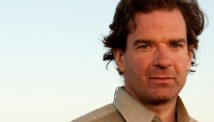
Peter Bergen
Owen grabs for something to hang on to inside the chopper as it starts going down and braces for what promises to be a dangerous impact. But the skilled Night Stalker pilot flying the careening chopper brings the bird into a controlled crash, and within seconds, Owen and his teammates roll out of the downed helicopter pretty much unscathed.
The second chopper on the mission abandons the initial plan to hover over the roof of bin Laden’s bedroom and drop SEALs there. Instead it lands on some open ground outside the compound walls, not wanting to run the risk of both choppers crashing, which would likely abort the mission. Owen writes that “it was the right call.”
Owen and his team quickly move to the a small annex on the compound, where bin Laden’s trusted courier, Abu Ahmed al-Kuwaiti, lived with his family. After a brief exchange of gunfire, they shoot the courier dead.
Then they move to the main house, where bin Laden is believed to be living. They blow through a metal door inside the house that prevents access to the second and third floor and quickly encounter Khalid, one of bin Laden’s older sons, and shoot him dead. He never gets to use his AK-47.
Fifteen minutes into that operation a SEAL shoots bin Laden when he spots him poking his head out of his third-floor bedroom. Owen and a teammate finish bin Laden off as his body twitches in its death throes.
Owen and other SEALs take photos and DNA samples from bin Laden’s body. “Will,” an Arabic-speaking SEAL, interrogates the women and children at the compound, and one of them confirms that the dead man is indeed bin Laden. And on the second floor where bin Laden kept much of his well-organized office, the SEALs find a trove of CDs, DVDs and memory cards that they sweep up for later intelligence exploitation.
Meanwhile, the helicopter crash has made the whole mission run longer than anticipated. The Pakistani military could now show up at any minute, and the working choppers are running low on fuel.
After around 40 minutes on the ground in Abbottabad, the SEALs get into the helicopters for the ride back to Afghanistan.
Owen’s eyewitness account of the bin Laden raid fits with much that is already on the public record, including a book that I have written about the hunt for bin Laden since 9/11, while another recently published book that also focuses on the operation does not.
Richard Miniter, the author of a number of books with a conservative slant about U.S. national security, has just released a new one about President Barack Obama whose title, “Leading From Behind: The Reluctant President and the Advisors who Decide for Him,” leaves you in little doubt about the overall theme of the book.
“Leading From Behind” examines key moments in Obama’s presidency, such as the passage of his health care plan and the budget negotiations with House Republicans as well as the raid that killed bin Laden.
It is Miniter’s account of the bin Laden operation that has garnered considerable media attention because of its sensational claims that:
• Top Obama aide Valerie Jarrett has a “Rasputin-like” hold over the president and persuaded him on three occasions in January, February and March 2011 not to launch the raid into Pakistan to take out bin Laden.
• It took the president almost two years of dithering to order the bin Laden operation, which was “reduced in scope, or otherwise delayed, often by the president himself.”
• Obama “stunned his staff with a string of dangerous delays and paralyzing indecision that threatened the mission’s timing and nearly compromised its success.”
• As a result of these delays, Gen. David Petraeus, then-commanding general in Afghanistan, during 2011 “debated acting on his own and ordering an airstrike on the bin Laden stronghold” in Pakistan.
• Obama left “critical decisions” about the bin Laden raid to Secretary of State Hillary Clinton fearing “taking responsibility for a risky raid that might go tragically wrong.” It was Clinton, in Miniter’s account, who pushed Obama into making the decision to authorize the raid.
These charges come at the same time that a group of retired military and intelligence officers have released a 22-minute documentary “Dishonorable Disclosures” asserting that Obama has taken too much credit for the bin Laden operation. That documentary has already been viewed more than 3 million times on YouTube.
In his new book Minter also asserts that:
• A colonel in Pakistan’s military intelligence agency, Inter-Services Intelligence, or ISI, provided “vital help” in finding bin Laden after he walked into the CIA station in Islamabad in August 2010.
• That, contrary to the assertions of multiple Obama administration officials, there are indications the administration gave Pakistan’s top military officer a heads-up in December 2010 about the impending bin Laden raid and sought an approval of the operation from the Pakistanis, gaining “their tacit consent for the mission.”
In the course of reporting a book about the hunt for bin Laden, I spoke to scores of White House, Pentagon and intelligence officials familiar with the hunt for al Qaeda’s leader, more than a dozen of whom had firsthand knowledge of Obama’s decision-making process about the operation to take out the terrorist leader. Many of those officials spoke to me on the record. I also traveled to Pakistan three times after bin Laden was killed to do my own investigation of the hunt for al Qaeda’s leader and spoke to a number of Pakistani military and intelligence officials who investigated the bin Laden raid and its aftermath.
Based on that reporting and also what is available on the public record, Miniter’s account of the intelligence that led to bin Laden and the decision-making surrounding the operation that killed him is a pile of poppycock served up with heaps of hogwash.
White House denials
Let’s start with the fact that Jarrett, along with the vast majority of White House staffers, only found out about the bin Laden raid after it had happened on May 1, 2011, according to an e-mail sent to CNN by Benjamin Rhodes, deputy national security adviser. Administration officials say that the only staffers at the White House who knew anything about the raid in advance were those with a “need to know” on the national security staff, of which Jarrett is not a part.
White House spokesman Josh Earnest terms Miniter’s claims about the bin Laden operation “an utter fabrication.” And in an e-mail to CNN, National Security Council spokesman Tommy Vietor wrote that Miniter’s claim that “Secretary Clinton had to talk the President into the raid is completely made up and wrong. The decision to take out Osama bin Laden was made by the President, as many of those involved have said on the record.
“For example, (former Defense) Secretary (Robert) Gates said ‘this is one of the most courageous calls — decisions — that I think I’ve ever seen a president make.’ (The raid commander) Admiral (William) McRaven said that ‘At the end of the day, make no mistake about it, it was the president of the United States that shouldered the burden for this operation, that made the hard decisions, that was instrumental in the planning process, because I pitched every plan to him.’ ”
Vietor added, “I look forward to when Miniter claims that Bo the dog actually made the decision to kill bin Laden.” Bo is the Obama family’s dog.
Also Jarrett could not have dissuaded Obama from launching an operation to take out bin Laden in January 2011, as Miniter writes, because the planning and rehearsals for such an operation had not begun then. It wasn’t until March 14, 2011, that Obama’s war Cabinet met to present him the various military options that ranged from a bombing run to a drone strike to a SEAL raid. And the SEALs only began rehearsing the raid in early April 2011. There was no mission to call off until then.
Obama’s orders
Rather than being indecisive about the raid, Obama ordered the operation against the advice of his defense secretary, who had started working for Nixon’s National Security Council when Obama was only 13, and against the advice of Vice President Joe Biden, who was elected to the Senate when Obama was 11. Also advocating a course of action other than the raid was Gen. James “Hoss” Cartwright, Obama’s then-No. 2 military adviser.
And rather than scaling back the scope of the bin Laden raid, in fact, it was Obama who ordered more choppers to go on the operation, according to Adm. Mike Mullen, then chairman of the Joint Chiefs of the Staff, who told me, “Obama is the one that put in the Chinook-47s. He is the one that said, ‘There is not enough backup.’ ”
Instead of dithering, Obama was deeply involved in a decision that, after all, had the potential to destroy his presidency if the operation had turned into a fiasco similar to the Iran hostage rescue debacle of 1980. The possibility of a similar debacle was a serious concern of Gates. And Obama was solely responsible for the decision to give the “go” for the operation despite the fact that there was no proof that bin Laden was living in Abbottabad, only a circumstantial case that he was.
According to Paula Broadwell’s recent, authoritative biography of Petraeus, “All In,” Petraeus found out about the Abbottabad raid only three days before it happened and had no role in its planning or execution. The idea that Petraeus considered ordering some kind of unilateral air raid on the bin Laden compound, which sits in the center of a city in the middle of Pakistan, is simply preposterous.
There is no evidence that an ISI colonel visited the CIA station in Islamabad to tip off the CIA about bin Laden. And by all accounts, there was no tacit approval from the Pakistani military brass for the bin Laden raid, nor were they given a heads-up about the operation. An ISI official e-mailed me to say that Miniter’s claims “are as absurd as they can get.”
In fact, the Pakistanis were completely taken by surprise by the raid and angered that they were not given any notice of the operation whatsoever, according to Cameron Munter, then the U.S. ambassador to Pakistan.
Miniter can’t even seem to get basic facts right about the bin Laden operation. Obama did not take almost two years of dithering to make the decision to go after bin Laden. The first intelligence that bin Laden might be living in Abbottabad only surfaced in August 2010, around nine months before Obama ordered the SEAL raid that killed him.
Miniter e-mailed CNN to say his account of all these events is accurate, explaining, “I wanted to bring forward details from the military and intelligence communities that have not been part of the official White House narrative. I believe that reporters have relied too much on White House officials and Pakistani government officials and marginalized those who were unavailable for or unwilling to comment in the hours and days after the operation, but who performed vital technical tasks that ensured its success.”
Part of a pattern
The apparent falsehoods in Miniter’s account of the bin Laden operation are part of a pattern with Miniter, who has written other books that have made other misleading statements about bin Laden. In his 2005 book, “Disinformation: 22 Media Myths That Undermine the War on Terror,” Miniter writes vividly of his reporting. “Whenever possible, I went to the scene. I retraced bin Laden’s last steps from a meeting hall in Jalalabad, Afghanistan, and then climbed into the cave complexes, bin Laden’s last known bolthole up in the White Mountains near Tora Bora.”
Except that Miniter never visited Tora Bora. Miniter explained in an e-mail to CNN, “The trip to Afghanistan, with a senior Afghan intelligence official and network camera crew, was cancelled due to circumstances entirely beyond my control. Thus the chapter that that sentence referred to was not presented for publication. The introduction, from which the sentence you cite was drawn, was submitted to the publisher more than one month earlier on the basis of a scheduled trip with a senior Afghan official. The introduction should have been changed to reflect the cancelled trip and despite my urging, it was not changed. The publisher cited publishing schedules as an overwhelming concern and didn’t want incur the costs involved in last-minute edits.”
In 2003 Miniter published “Losing Bin Laden: How Bill Clinton’s Failures Unleashed Global Terror,” the central point of which is that when bin Laden was living in Sudan in the mid-1990s the Sudanese offered to hand him over to the Clinton administration. The bipartisan 9/11 Commission found no evidence for this assertion.
Will St. Martin’s Press, Miniter’s publisher, look into the false claims and mistakes in Miniter’s new book? Don’t hold your breath because St. Martin’s Press is also the publisher of the 2011 book “SEAL Target Geronimo: The Inside Story of the Mission to Kill Osama bin Laden,” which is littered with apparent falsehoods and yet continues to be marketed as a work of nonfiction.
The author of “SEAL Target Geronimo,” Chuck Pfarrer — himself a former Navy SEAL who retired more than two decades ago and has since worked as a Hollywood screenwriter — says he spoke to SEALs who were part of the team that killed bin Laden and that the official version of what happened the night of the raid in Abbottabad is largely wrong.
A book’s credibility
In Pfarrer’s version of events, the SEAL operation against bin Laden went far more smoothly than what really happened that night in Abbottabad. Pfarrer writes that the SEALs killed bin Laden within a couple of minutes of their arrival at his compound after fast roping on to the roof of his bedroom. By contrast, the version of events I heard from dozens of officials involved in the operation was that one of the stealth Black Hawk helicopters on the raid crashed immediately after it had arrived at bin Laden’s compound and al Qaeda’s leader was killed some 15 minutes later.
Pfarrer also recites supposedly verbatim conversations about the planning for the bin Laden operation between the overall raid commander, McRaven, and the commanding officer of SEAL Team Six and a CIA officer in a “secure” conference room three stories underground at Joint Special Operations Command headquarters at Fort Bragg, North Carolina.
A military source told CNN’s Barbara Starr there is no such underground facility. And Special Operations Command, which rarely, if ever, comments about its operations, took the unprecedented step of issuing an on-the-record denial of Pfarrer’s account, saying it was “a fabrication” and that Pfarrer never spoke to the SEALs who were on the bin Laden operation.
Pfarrer’s credibility is not helped by the fact that he devotes a chapter in “SEAL Team Geronimo” to the notion that weapons of mass destruction, including nerve agents, were found in Iraq after the fall of Saddam Hussein and ended up in the hands of … al Qaeda. Pfarrer also claims that Ayman al-Zawahiri, then the No. 2 in al Qaeda, intentionally set up bin Laden to be killed by the Americans. There is, of course, no evidence for either of these assertions.
Despite this, Pfarrer continues to be booked on channels such as Fox and CNN, where he was asked about the statement that his account is a fabrication, and his book continues to be promoted by his publisher, St. Martin’s Press, as a nonfiction account of the bin Laden raid.
Publisher’s view
St. Martin’s Press has now published two accounts of the bin Laden operation that have resulted in statements that they are “fabrications,” in one case from the White House and in the other from Special Operations Command.
Does St. Martin’s Press plan to do anything about these books as a result? A St Martin’s editor e-mailed CNN that “(b)oth authors stand by their sources and their reporting of the events, and we stand by our authors,” and a spokesman for St. Martin’s told CNN that the Pfarrer book “continues to sell” and will be reissued in paperback in two weeks at the time of the 9/11 anniversary.
In the newspaper world fabrication gets you fired. Just recall New York Times reporter Jayson Blair who was forced to resign for making up stories and quotes in 2003. And in the TV news business if you get a really big story wrong you are also out of job. Recall the “Tailwind” story on CNN in 1998 that alleged the use of nerve gas by U.S. Special Forces during the Vietnam War, a story that was retracted by CNN and that resulted in some of the network’s employees losing their jobs. In 2004, CBS anchor Dan Rather reported on memos critical of President George W. Bush’s service in the Texas National Guard. The memos’ authenticity was called into question, and CBS retracted the story and fired the story’s producer.
Yet no such standard seems to pertain in much of the supposedly serious world of nonfiction publishing. The rare nonfiction writers who fabricate or get a story dramatically wrong often get away with it, and the publishing houses that publish their work continue to profit from their fabrications.
Some nonfiction publishers do take the truth seriously. In July, Houghton Mifflin Harcourt said it would pull all the copies of Jonah Lehrer’s best-selling “Imagine: How Creativity Works” after the former New Yorker writer admitted that he had made up Bob Dylan quotes in the book.
One possible fix for this problem in the future is that publishers of nonfiction books should specify in their contracts with writers that if they fabricate material or are found to have made significant, large-scale factual errors they would have to return their advances.
As the late Sen. Patrick Moynihan was fond of saying, “Everyone is entitled to their own opinions, but they are not entitled to their own facts.”
Follow @CNNOpinion on Twitter.
Join us at Facebook/CNNOpinion.
Sense and nonsense about Obama and Osama
By Peter Bergen, CNN National Security Analyst
updated 7:30 AM EDT, Thu August 30, 2012
The mission that killed Osama bin Laden is the subject of two new books.
STORY HIGHLIGHTS
- Two new books are focusing attention on the raid that killed Osama bin Laden
- Bergen: Book by a member of mission suggests there was no real effort to capture bin Laden
- He says another book by Richard Miniter claims Obama was indecisive, delayed raid
- Bergen: The book’s publisher is standing by Miniter’s book despite evidence
Editor’s note: Peter Bergen, CNN’s national security analyst, is a director at the New America Foundation, a Washington-based think tank that seeks innovative solutions across the ideological spectrum, and the author of the new book “Manhunt: The Ten-Year Search for Bin Laden — From 9/11 to Abbottabad.”
(CNN) — On Wednesday some media outlets obtained copies of the heavily embargoed book “No Easy Day” by Mark Owen, the pseudonym of one of the Navy SEALs who was part of the mission that killed Osama bin Laden.
The much-anticipated book, which is already No. 1 on Amazon, changes the way that the mission has been reported in one significant way. Owen says that one of his SEAL teammates shot bin Laden as soon as he poked his head out the door of his bedroom, not, as was previously reported, after the SEALs had entered the bedroom, according to The Huffington Post’s account of the contents of “No Easy Day.” This version of events indicates — if there was ever any real doubt about this issue — that there was little real effort made to capture bin Laden.
Owen’s eyewitness account of the bin Laden raid has the ring of truth in ways that another recently published book that also focuses on the operation does not.
Richard Miniter, the author of a number of books with a conservative slant about U.S. national security, has just released a new one about President Barack Obama whose title, “Leading From Behind: The Reluctant President and the Advisors who Decide for Him,” leaves you in little doubt about the overall theme of the book.
Peter Bergen
“Leading From Behind” examines key moments in Obama’s presidency, such as the passage of his health care plan and the budget negotiations with House Republicans as well as the raid that killed bin Laden.
It is Miniter’s account of the bin Laden operation that has garnered considerable media attention because of its sensational claims that:
• Top Obama aide Valerie Jarrett has a “Rasputin-like” hold over the president and persuaded him on three occasions in January, February and March 2011 not to launch the raid into Pakistan to take out bin Laden.
• It took the president almost two years of dithering to order the bin Laden operation, which was “reduced in scope, or otherwise delayed, often by the president himself.”
• Obama “stunned his staff with a string of dangerous delays and paralyzing indecision that threatened the mission’s timing and nearly compromised its success.”
 Navy SEAL tells all in unauthorized book
 Risks for Navy SEAL in bin Laden raid
 Ex-SEALs slam Obama over leaks
 New bin Laden movie trailer released
• As a result of these delays, Gen. David Petraeus, then-commanding general in Afghanistan, during 2011 “debated acting on his own and ordering an airstrike on the bin Laden stronghold” in Pakistan.
• Obama left “critical decisions” about the bin Laden raid to Secretary of State Hillary Clinton fearing “taking responsibility for a risky raid that might go tragically wrong.” It was Clinton, in Miniter’s account, who pushed Obama into making the decision to authorize the raid.
These charges come at the same time that a group of retired military and intelligence officers have released a 22-minute documentary “Dishonorable Disclosures” asserting that Obama has taken too much credit for the bin Laden operation. That documentary has already been viewed more than 3 million times on YouTube.
In his new book Minter also asserts that:
• A colonel in Pakistan’s military intelligence agency, Inter-Services Intelligence, or ISI, provided “vital help” in finding bin Laden after he walked into the CIA station in Islamabad in August 2010.
• That, contrary to the assertions of multiple Obama administration officials, there are indications the administration gave Pakistan’s top military officer a heads-up in December 2010 about the impending bin Laden raid and sought an approval of the operation from the Pakistanis, gaining “their tacit consent for the mission.”
In the course of reporting a book about the hunt for bin Laden, I spoke to scores of White House, Pentagon and intelligence officials familiar with the hunt for al Qaeda’s leader, more than a dozen of whom had firsthand knowledge of Obama’s decision-making process about the operation to take out the terrorist leader. Many of those officials spoke to me on the record. I also traveled to Pakistan three times after bin Laden was killed to do my own investigation of the hunt for al Qaeda’s leader and spoke to a number of Pakistani military and intelligence officials who investigated the bin Laden raid and its aftermath.
Based on that reporting and also what is available on the public record, Miniter’s account of the intelligence that led to bin Laden and the decision-making surrounding the operation that killed him is a pile of poppycock served up with heaps of hogwash.
White House denials
Let’s start with the fact that Jarrett, along with the vast majority of White House staffers, only found out about the bin Laden raid after it had happened on May 1, 2011, according to an e-mail sent to CNN by Benjamin Rhodes, deputy national security adviser. Administration officials say that the only staffers at the White House who knew anything about the raid in advance were those with a “need to know” on the national security staff, of which Jarrett is not a part.
White House spokesman Josh Earnest terms Miniter’s claims about the bin Laden operation “an utter fabrication.” And in an e-mail to CNN, National Security Council spokesman Tommy Vietor wrote that Miniter’s claim that “Secretary Clinton had to talk the President into the raid is completely made up and wrong. The decision to take out Osama bin Laden was made by the President, as many of those involved have said on the record.
“For example, (former Defense) Secretary (Robert) Gates said ‘this is one of the most courageous calls — decisions — that I think I’ve ever seen a president make.’ (The raid commander) Admiral (William) McRaven said that ‘At the end of the day, make no mistake about it, it was the president of the United States that shouldered the burden for this operation, that made the hard decisions, that was instrumental in the planning process, because I pitched every plan to him.’ ”
Vietor added, “I look forward to when Miniter claims that Bo the dog actually made the decision to kill bin Laden.” Bo is the Obama family’s dog.
Also Jarrett could not have dissuaded Obama from launching an operation to take out bin Laden in January 2011, as Miniter writes, because the planning and rehearsals for such an operation had not begun then. It wasn’t until March 14, 2011, that Obama’s war Cabinet met to present him the various military options that ranged from a bombing run to a drone strike to a SEAL raid. And the SEALs only began rehearsing the raid in early April 2011. There was no mission to call off until then.
Obama’s orders
Rather than being indecisive about the raid, Obama ordered the operation against the advice of his defense secretary, who had started working for Nixon’s National Security Council when Obama was only 13, and against the advice of Vice President Joe Biden, who was elected to the Senate when Obama was 11. Also advocating a course of action other than the raid was Gen. James “Hoss” Cartwright, Obama’s then-No. 2 military adviser.
And rather than scaling back the scope of the bin Laden raid, in fact, it was Obama who ordered more choppers to go on the operation, according to Adm. Mike Mullen, then chairman of the Joint Chiefs of the Staff, who told me, “Obama is the one that put in the Chinook-47s. He is the one that said, ‘There is not enough backup.’ ”
Instead of dithering, Obama was deeply involved in a decision that, after all, had the potential to destroy his presidency if the operation had turned into a fiasco similar to the Iran hostage rescue debacle of 1980. The possibility of a similar debacle was a serious concern of Gates. And Obama was solely responsible for the decision to give the “go” for the operation despite the fact that there was no proof that bin Laden was living in Abbottabad, only a circumstantial case that he was.
According to Paula Broadwell’s recent, authoritative biography of Petraeus, “All In,” Petraeus found out about the Abbottabad raid only three days before it happened and had no role in its planning or execution. The idea that Petraeus considered ordering some kind of unilateral air raid on the bin Laden compound, which sits in the center of a city in the middle of Pakistan, is simply preposterous.
There is no evidence that an ISI colonel visited the CIA station in Islamabad to tip off the CIA about bin Laden. And by all accounts, there was no tacit approval from the Pakistani military brass for the bin Laden raid, nor were they given a heads-up about the operation. An ISI official e-mailed me to say that Miniter’s claims “are as absurd as they can get.”
In fact, the Pakistanis were completely taken by surprise by the raid and angered that they were not given any notice of the operation whatsoever, according to Cameron Munter, then the U.S. ambassador to Pakistan.
Miniter can’t even seem to get basic facts right about the bin Laden operation. Obama did not take almost two years of dithering to make the decision to go after bin Laden. The first intelligence that bin Laden might be living in Abbottabad only surfaced in August 2010, around nine months before Obama ordered the SEAL raid that killed him.
Miniter e-mailed CNN to say his account of all these events is accurate, explaining, “I wanted to bring forward details from the military and intelligence communities that have not been part of the official White House narrative. I believe that reporters have relied too much on White House officials and Pakistani government officials and marginalized those who were unavailable for or unwilling to comment in the hours and days after the operation, but who performed vital technical tasks that ensured its success.”
Part of a pattern
The apparent falsehoods in Miniter’s account of the bin Laden operation are part of a pattern with Miniter, who has written other books that have made other misleading statements about bin Laden. In his 2005 book, “Disinformation: 22 Media Myths That Undermine the War on Terror,” Miniter writes vividly of his reporting. “Whenever possible, I went to the scene. I retraced bin Laden’s last steps from a meeting hall in Jalalabad, Afghanistan, and then climbed into the cave complexes, bin Laden’s last known bolthole up in the White Mountains near Tora Bora.”
Except that Miniter never visited Tora Bora. Miniter explained in an e-mail to CNN, “The trip to Afghanistan, with a senior Afghan intelligence official and network camera crew, was cancelled due to circumstances entirely beyond my control. Thus the chapter that that sentence referred to was not presented for publication. The introduction, from which the sentence you cite was drawn, was submitted to the publisher more than one month earlier on the basis of a scheduled trip with a senior Afghan official. The introduction should have been changed to reflect the cancelled trip and despite my urging, it was not changed. The publisher cited publishing schedules as an overwhelming concern and didn’t want incur the costs involved in last-minute edits.”
In 2003 Miniter published “Losing Bin Laden: How Bill Clinton’s Failures Unleashed Global Terror,” the central point of which is that when bin Laden was living in Sudan in the mid-1990s the Sudanese offered to hand him over to the Clinton administration. The bipartisan 9/11 Commission found no evidence for this assertion.
Will St. Martin’s Press, Miniter’s publisher, look into the false claims and mistakes in Miniter’s new book? Don’t hold your breath because St. Martin’s Press is also the publisher of the 2011 book “SEAL Target Geronimo: The Inside Story of the Mission to Kill Osama bin Laden,” which is littered with apparent falsehoods and yet continues to be marketed as a work of nonfiction.
The author of “SEAL Target Geronimo,” Chuck Pfarrer — himself a former Navy SEAL who retired more than two decades ago and has since worked as a Hollywood screenwriter — says he spoke to SEALs who were part of the team that killed bin Laden and that the official version of what happened the night of the raid in Abbottabad is largely wrong.
A book’s credibility
In Pfarrer’s version of events, the SEAL operation against bin Laden went far more smoothly than what really happened that night in Abbottabad. Pfarrer writes that the SEALs killed bin Laden within a couple of minutes of their arrival at his compound after fast roping on to the roof of his bedroom. By contrast, the version of events I heard from dozens of officials involved in the operation was that one of the stealth Black Hawk helicopters on the raid crashed immediately after it had arrived at bin Laden’s compound and al Qaeda’s leader was killed some 15 minutes later.
Pfarrer also recites supposedly verbatim conversations about the planning for the bin Laden operation between the overall raid commander, McRaven, and the commanding officer of SEAL Team Six and a CIA officer in a “secure” conference room three stories underground at Joint Special Operations Command headquarters at Fort Bragg, North Carolina.
A military source told CNN’s Barbara Starr there is no such underground facility. And Special Operations Command, which rarely, if ever, comments about its operations, took the unprecedented step of issuing an on-the-record denial of Pfarrer’s account, saying it was “a fabrication” and that Pfarrer never spoke to the SEALs who were on the bin Laden operation.
Pfarrer’s credibility is not helped by the fact that he devotes a chapter in “SEAL Team Geronimo” to the notion that weapons of mass destruction, including nerve agents, were found in Iraq after the fall of Saddam Hussein and ended up in the hands of … al Qaeda. Pfarrer also claims that Ayman al-Zawahiri, then the No. 2 in al Qaeda, intentionally set up bin Laden to be killed by the Americans. There is, of course, no evidence for either of these assertions.
Despite this, Pfarrer continues to be booked on channels such as Fox and CNN, where he was asked about the statement that his account is a fabrication, and his book continues to be promoted by his publisher, St. Martin’s Press, as a nonfiction account of the bin Laden raid.
Publisher’s view
St. Martin’s Press has now published two accounts of the bin Laden operation that have resulted in statements that they are “fabrications,” in one case from the White House and in the other from Special Operations Command.
Does St. Martin’s Press plan to do anything about these books as a result? A St Martin’s editor e-mailed CNN that “(b)oth authors stand by their sources and their reporting of the events, and we stand by our authors,” and a spokesman for St. Martin’s told CNN that the Pfarrer book “continues to sell” and will be reissued in paperback in two weeks at the time of the 9/11 anniversary.
In the newspaper world fabrication gets you fired. Just recall New York Times reporter Jayson Blair who was forced to resign for making up stories and quotes in 2003. And in the TV news business if you get a really big story wrong you are also out of job. Recall the “Tailwind” story on CNN in 1998 that alleged the use of nerve gas by U.S. Special Forces during the Vietnam War, a story that was retracted by CNN and that resulted in some of the network’s employees losing their jobs. In 2004, CBS anchor Dan Rather reported on memos critical of President George W. Bush’s service in the Texas National Guard. The memos’ authenticity was called into question, and CBS retracted the story and fired the story’s producer.
Yet no such standard seems to pertain in much of the supposedly serious world of nonfiction publishing. The rare nonfiction writers who fabricate or get a story dramatically wrong often get away with it, and the publishing houses that publish their work continue to profit from their fabrications.
Some nonfiction publishers do take the truth seriously. In July, Houghton Mifflin Harcourt said it would pull all the copies of Jonah Lehrer’s best-selling “Imagine: How Creativity Works” after the former New Yorker writer admitted that he had made up Bob Dylan quotes in the book.
One possible fix for this problem in the future is that publishers of nonfiction books should specify in their contracts with writers that if they fabricate material or are found to have made significant, large-scale factual errors they would have to return their advances.
As the late Sen. Patrick Moynihan was fond of saying, “Everyone is entitled to their own opinions, but they are not entitled to their own facts.”
Follow @CNNOpinion on Twitter.
Join us at Facebook/CNNOpinion.
Election 2012 and Honors Lecture Series: Peter Bergen, Phoenix, Arizona
On Wednesday, September 19, join the American Enterprise Institute, the Center for a New American Security, and the New America Foundation for a debate between top-level surrogates of the Obama and Romney presidential campaigns. Dov S. Zakheim, Special Adviser on Foreign Policy and National Security for the Romney campaign, will join Janine Davidson, Advisor on National Security Issues for the Obama Campaign, to discuss the defense and foreign policy agendas of the two candidates. The event will be hosted by Arizona State University.
This is the fifth in a series of events that continues a unique collaboration among these institutions during the U.S. presidential campaign season. Past conversations have covered the U.S. role in the world, the U.S. national security budget, and U.S. policy in East Asia and the Middle East.
6:00 – 7:30 p.m., September 19, 2012
Interdisciplinary Science and Technology Building
Arizona State University
781 E. Terrace Rd.
Tempe, AZ 85287
CNN will livestream this event on the Opinion page. On Twitter? Follow#natsecurity2012 for updates throughout the series.
About the Series:
This fall’s presidential election comes at a critical moment for the United States and the world. The demands for U.S. leadership are substantial–particularly in the dynamic Middle East and Asia-Pacific–yet fiscal challenges are forcing reductions in defense spending, sparking new thinking about American engagement with the world. In this important election season, many Americans will look to the next U.S. president to repair the economy, but he will nonetheless inherit complicated military and diplomatic engagements and govern as commander-in-chief of the globe’s most powerful nation. As a result, the discussion of national security issues must take a central role in the 2012 presidential election.
This event is the fifth in a series of campaign-season seminars on the critical issues of U.S. foreign and defense policy, sponsored by AEI, the Center for a New American Security and the New America Foundation.
PARTICIPANTS
Introductory Remarks
Michael Crow
President, Arizona State University
Featured Speakers
Janine Davidson
Advisor on National Security Issues, Obama Campaign
Dov S. Zakheim
Special Adviser on Foreign Policy and National Security, Romney campaign
Moderators
Thomas Donnelly
Resident Fellow and Co-Director of the Marilyn Ware Center for Security Studies, American Enterprise Institute
Richard Fontaine
President, Center for a New American Security
Peter Bergen
Director, National Security Studies Program
New America Foundation
AND
Honors Lecture Series: Peter Bergen
To register for this event, please use the online registration form.
“Manhunt: The Ten-Year Search for Bin Laden”
Peter Bergen
National security analyst, CNN
Director of the National Security Studies Program, New America Foundation
Research Fellow, Center on Law and Security, New York University
Author and journalist Peter Bergen recounts the pursuit of Osama bin Laden, the twilight of al-Qaeda, and a transformative decade in American history.
Roughly a decade after Sept. 11, 2001, Americans celebrated the news that the mastermind behind the terrorist attacks had been found and killed during a raid on his home in Pakistan. Now, one year after Osama bin Laden’s death, Peter Bergen describes the raid with riveting detail in his fourth book on bin Laden, MANHUNT: The Ten-Year Search for Bin Laden from 9/11 to Abbottabad.
But the killing of bin Laden is only one element of a decade-long story – Where did he hide after the 9/11 attacks, and how did he evade capture? How did the SEALs prepare for Operation Neptune Spear? Why did President Obama decide to proceed with the raid despite the recommendations of two of his top three advisors that he not do so?
Come hear Peter Bergen discuss bin Laden’s life and eventual death, as well as America’s decade-long hunt to bring him to justice.
“Talibanistan” Carnegie Council, New York
Upcoming Events at
Carnegie Council for Ethics in International Affairs
Talibanistan: Negotiating the Borders Between Terror, Politics, and Religion
Tuesday, December 4, 2012, 5:30 PM to 7:00 PM
170 East 64th Street
The longest war the United States has ever fought is the ongoing war in Afghanistan. But when we speak of “Afghanistan,” we really mean a conflict that straddles the border with Pakistan–and the reality of Islamic militancy on that border is enormously complicated. (Public Affairs Program)
Peter Bergen is director of the National Security Studies Program at the New America Foundation, a research fellow at New York University’s Center on Law and Security, and CNN’s national security analyst. In 1997, he produced the first television interview with Osama bin Laden, airing on CNN
Anand Gopal is a journalist covering Afghanistan, Egypt, and the Taliban. His articles have appeared in “The Wall Street Journal,” “The Christian Science Monitor,” “Harper’s,” “Foreign Policy,” and “Asia Times.”
US-Pakistan Relationship: A Critical Crossroad, World Affairs Councils of America, Washington DC
_____________________________________________________________________
US National Security: Six Top Issues for the President in 2013
Date: November 9, 2011
Location: Renaissance Mayflower Hotel
1127 Connecticut Avenue N.W.
Washington, D.C. 20036
Plenary 6: Afghanistan/Pakistan
Discussion: The US-Pakistan Relationship: A Critical Crossroad
Room: Colonial Ballroom
Time: 9:30-10:30
Moderator: Daniel Markey, Council on Foreign Relations
Peter Bergen, New America Foundation, CNN analyst
Ambassador Cameron Munter, former US Ambassador to Pakistan
Ambassador Shirin Tahir-Kheli, former Senior Advisor to the Secretary of State
Ambassador Said Jawad, former Afghan ambassador to the U.S.
The theme of the National Conference is US National Security: Six Top Issues for the President in 2013. For the second year now, the World Affairs Councils of America’s council leadership has been voting on the Six Top National Security issues that the network leadership believes are the top issues that the network should debate and discuss in the upcoming year. The National Conference launches that network wide discussion, which this year includes: US Economic Competitiveness, US Education-Competing Globally, Middle East, China, Afghanistan/Pakistan, and US Energy Policy. The security challenges presented by nuclear weapons cross cut many of these issues, including US policy in the Middle East, China, Afghanistan/Pakistan and US Energy Policy.
This Plenary is intended to be a discussion of the current state of US-Pakistani relations, the complex problems that are having an impact on that relationship, and the implications of both success and failure in that relationship for stability in the region and beyond, particularly in the aftermath of US withdrawal from Afghanistan in 2014.
To contact WACA during the national conference (Nov 7-9), please call Althea Georgantas at 508-851-0887
Event: 2012 National Conference – Washington – Nov 7-9
August 26, 2012
Note: This exceptional opportunity is posted on behalf of the World Affairs Councils of America the centerpiece of the network of grass roots organizations focused on global awareness education. The Tennessee World Affairs Council is an independent member of the network. The National Conference is an outstanding opportunity for TNWAC members and others to immerse themselves in the global issues that challenge America in a dynamic world. Your membership in TNWAC will earn you a substantial discount on the conference fee. Please respond directly to the World Affairs Councils of America as indicated in the announcement.
***
2012 National Conference

Click for Conference 2012 Flyer
The World Affairs Councils of America is proud to announce our Confirmed Speakers to date for the 2012 National Conference, U.S. National Security Policy: Six Top Issues for the President in 2013 (See list below). The conference commences at a very exciting time in Washington: one day after the election on Wednesday, November 7. Join us November 7-9, 2012 at the historic Mayflower Hotel in Washington, DC for the launch of our network-wide discussion and analysis of the issues the President of the United States will face in 2013.
Conference Flyer
Remember that in order to take advantage of early-bird registration rates, you must register by September 1 (see below). Register Now
As voted on by our World Affairs Councils leadership, the conference will focus on the Six Top Issues for 2013:
- U.S. Economic Competitiveness
- U.S. Education: Competing Globally
- Afghanistan/Pakistan
- U.S. Energy Policy
- The Middle East
- China
The National Conference, held annually for over two decades, gathers our regional leaders drawn from the business, civic, and education communities. Leading policymakers and national security experts lead the discussion on the critical national security challenges before us and help our council leaders plan their programming for their local communities in the coming year.
***
Registration
Take Advantage of Special Early-Bird Rates
$430 World Affairs Council CEO/Staff/Board Member
$455 World Affairs Council Member ($495 after September 1)
$545 Non-Member
Click Here to Register Now
***
Lodging at Mayflower Hotel
We have secured a special group rate at the Mayflower Hotel of $224/night. To book rooms at this rate, click here or call 1-877-212-5752 and let the booking agent know you are with the “World Affairs Councils of America.”
***
Tentative Agenda
Wednesday November 7
9:00 am – 5:00 pm: Fall Leadership Meeting for Council CEOs, regional and national Board Members and Staff/Annual Membership Meeting
6:30 pm – 8:30 pm: Opening Dinner
Thursday, November 8
9:00 am – 5:00 pm: Main Plenaries
5:30 pm – 8:00 pm: Embassy Receptions
Friday, November 9
7:30 am – 8:45 am: 1918 Society Breakfast
9:00 am – 3:00 pm: Main Plenaries
Conference concludes at 3:00 pm
***
Confirmed Speakers to Date

David Abney
Chief Operating Officer, UPS

Peter Bergen
Director, National Security Studies Program, New America Foundation; CNN National Security Analyst

Marcus Brauchli
Executive Editor of the Washington Post

Brandon Busteed
Executive Director, Gallup Education

Ashton B. Carter
Deputy Secretary of Defense
Jim Clifton
CEO, Gallup

P.J. Crowley
Former Assistant Secretary of State for Public Affairs

Ambassador Paula J. Dobriansky
Chair, WACA National Board of Directors; Distinguished National Security Chair, U.S. Naval Academy; former U.S. Special Envoy to Northern Ireland
Ambassador Marc Grossman
U.S. Special Envoy for Afghanistan and Pakistan

Stephen J. Hadley
Former National Security Advisor

Ambassador Robert M. Kimmitt
Senior International Counsel, WilmerHale; former U.S. Ambassador to Germany
Marc Lynch
Director, Institute for Middle East Studies, Elliot School of International Affairs, George Washington University; author of The Arab Uprising: The Unfinished Revolutions of the New Middle East

Daniel Markey
Senior Fellow for India, Pakistan, and South Asia, Council on Foreign Relations
Ambassador Ashok Kumar Mirpuri
Singapore’s Ambassador to the United States, Embassy of the Republic of Singapore

Ambassador Cameron Munter
Former U.S. Ambassador to Pakistan, 2010-2012
Terry Moran
Co-Anchor, ABC News Nightline

Daniel B. Poneman
Deputy Secretary of Energy
Steven Rattner
Chairman, Willet Advisors, LLC; Columnist, Financial Times; former Obama Administration “Car Czar”
Jen’nan Read
Associate Professor of Sociology and DISC Assistant Director, Special Initiatives of Duke Islamic Studies Center, Duke University
Ambassador Dennis Ross
Counselor, Washington Institute for Near East Policy; former U.S. Special Envoy to the Middle East

Ambassador J. Stapleton Roy
Director, Kissinger Institute on China and the United States, Woodrow Wilson Center for International Scholars; former U.S. Ambassador to China
Gerald F. Seib
Executive Washington Editor, Wall Street Journal
Samer Shehata
Assistant Professor of Arab Politics, Edmund A. Walsh School of Foreign Service, Georgetown University
Ambassador Shirin Tahir-Kheli
Former Senior Adviser for Women’s Empowerment to Secretary of State Condoleezza Rice; former Special Assistant toᅠthe President and Senior Director for Democracy, Human Rights, andᅠInternational Operations at the National Security Council
Shibley Telhami
Anwar Sadat Professor for Peace and Development at the University of Maryland, College Park; Nonresident Senior Fellow, Saban Center for Middle East Policy at the Brookings Institution
Ambassador João Vale de Almeida
Head of the Delegation of the European Union to the United States

Congressman Chris Van Hollen (D-MD)
Ranking Member, House Budget Committee; Member, Joint Select Committee on Deficit Reduction

Tony Wagner
Innovation Education Fellow, Technology and Entrepreneurship Center at Harvard University; author of Creating Innovators: The Making of Young People Who Will Change The World

Daniel Yergin
Chairman, IHS CERA; Pulizter Prize winning author of The Quest: Energy, Security, and the Remaking of the Modern World
Confirmed Embassy Receptions

Thank you to Our Sponsors

Tagged as: National Conference
“Emergency Preparedness Summit,” Albany, New York
Emergency summit: Gov. Cuomo to host international meeting on catastrophes
Experts from around the globe expected to attend October event on dealing with terrorism, massacres and hurricanes
BY GLENN BLAIN / NEW YORK DAILY NEWS
THURSDAY, AUGUST 23, 2012, 9:30 PM

PAUL BUCKOWSKI/ALBANY TIMES UNION
Jerome Hauer, commissioner of the state’s Division of Homeland Security and Emergency Services.
ALBANY — State officials are going international in an effort to school New York’s emergency service personnel on handling catastrophes like terrorism, massacres and hurricanes.
Former British Prime Minister Tony Blair is among more than a dozen terrorism experts and emergency service officials from around the globe who will take part in an emergency preparedness summit being hosted by Gov. Cuomo in October.
Also on tap will be the veterans who managed the aftermath of mass shootings in Norway and Auorora, Colo..
“We are doing a whole new focus on emergency response in this state,” said Jerome Hauer, commissioner of the state’s Division of Homeland Security and Emergency Services.
State officials expect thousands of cops, firefighters and emergency management officials from around the state to attend the Albany gathering.
Hauer said the state is putting a greater focus on preparing for catastrophic incidents such as Hurricane Irene and Tropical Storm Lee, which struck New York last year.
The two storms, which struck within a week of each other last year, caused $1.5 billion in damage, Cuomo administration officials revealed yesterday.
Emergency service officials from Joplin, Mo., which was ravaged by tornadoes last year, are also among those expected to attend the state’s preparedness summit.
Read more: http://www.nydailynews.com/news/crime/emergency-summit-gov-cuomo-host-international-meeting-catastrophes-article-1.1143273#ixzz24RmcHDkJ
Theme Speakers Series: War and Peace, Western Illinois University, Macomb, Illinois
February 19, 2013
- Peter Bergen – WIU Theme Speakers Series: War and Peace: From Personal Conflict to Global Resolution

- Time: 7:00 PM – 8:15 PM
- Location: Heritage Rooms on the Macomb Campus
- Description: One of the few Westerners to interview Osama bin Laden, journalist Peter Bergen is the foremost authority on foreign policy, national security, and the new generation of terrorism. In addition to serving as CNN’s terrorism analyst, he is the New York Times best-selling author of Holy War, Inc., which was translated into 18 languages. An expert in his field, Bergen serves as the director of the national security studies program at the New America Foundation in Washington D.C., where he leads the Foundation’s analysis of terrorism, counterinsurgency, South Asia’s geopolitics and other national security concerns. His latest book, Manhunt: The Ten Year Search for Osama bin Laden: From 9/11 to Abbottabad was released in May 2012.His New York Times best-seller, The Longest War: the Enduring Conflict between America and Al-Qaeda, won the Gold Prize in the 2011 Washington Institute for Near East Policy’s annual book awards, which aims to reward outstanding writing and stimulate new contributions to the field of Middle East affairs. Writes the prize jury: “Peter Bergen draws on years of meticulous reporting, to uncover the thinking of al-Qaeda’s top strategists and the pitched battles in Washington over US policy. The ten-year war against al-Qaeda, in Afghanistan and elsewhere, is now the longest in American history.
The event is free and open to the public.
- Contact Information:
Heather McIlvaine-Newsad
Phone: 309.298.1264
Email: h-mcilvaine-newsad@wiu.edu
- Source: University Theme
Phone: 309/298-1414 * E-mail info@wiu.edu
Calendar Administration: webstaff@wiu.edu
Kenan Lecture on the Middle East, Transylvania University, Lexington, Kentucky

2/20
Kenan Lecture Series: Peter Bergen, CNN
7:30 p.m.
Location: Haggin Auditorium, Mitchell Fine Arts Center
Peter Bergen, CNN correspondent, presents “The Awakening: How Revolutionaries, Barack Obama and Ordinary Muslims are Remaking the Middle East.” Free and open to the public.
CNN analyst giving Kenan Lecture on Middle East
Peter Bergen, journalist, bestselling author, and director of the national security studies program at the New America Foundation, will give a Kenan Lecture titled “The Awakening: How Revolutionaries, Barack Obama, and Ordinary Muslims Are Remaking the Middle East” Wednesday, February 20, at 7:30 p.m. in Haggin Auditorium.
Bergen will also sign his most recent book, Manhunt: The Ten-Year Search for bin Laden, from 9/11 to Abbottabad. The book is a New York Times bestseller and is being adapted into a theatrical release documentary by HBO.
Bergen has been a producer and analyst for CNN, and in 1997 he produced Osama bin Laden’s first television interview, in which bin Laden declared war against the United States for the first time to an American audience. He has reported on al-Qaeda, Afghanistan, Pakistan, counterterrorism, homeland security, and the Middle East for several publications, including the New York Times, Los Angeles Times, The Washington Post, Rolling Stone, TIME, and The Atlantic. He has been nominated for an Emmy and a National Magazine Award, and in 1994 he won the Overseas Press Club Edward R. Murrow award for best foreign affairs documentary.
He is the author of two other books, The Osama bin Laden I Know: An Oral History of al Qaeda’s Leader (2006) and Holy War, Inc.: Inside the Secret World of bin Laden (2001). He is a fellow at Fordham University’s Center on National Security and previously taught at the Kennedy School of Government at Harvard University and the School of Advanced International Studies at Johns Hopkins University.
The lecture is part of Transylvania’s William R. Kenan Jr. Lecture Series and is funded by a grant from the William R. Kenan Jr. Charitable Trust.
Are ‘Swift Boat’ attacks on Obama bogus? CNN
Are ‘Swift Boat’ attacks on Obama bogus?
By Peter Bergen, CNN National Security Analyst
updated 10:25 AM EDT, Fri August 17, 2012
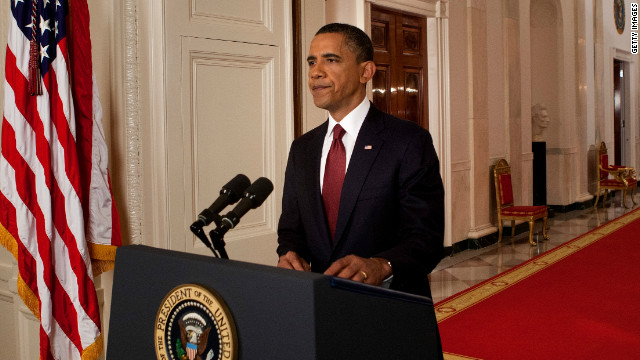
President Obama announces the killing of Osama bin Laden, in a broadcast from the White House May 1, 2011.
STORY HIGHLIGHTS
- Former U.S. officers accuse Obama of leaking classified information for political gain
- Peter Bergen says much of the information cited came from sources outside White House
- He says administration sought to keep details secret, but events led to disclosures
- Bergen says the idea that Obama doesn’t deserve credit for bin Laden raid is wrong
Editor’s note: Peter Bergen, CNN’s national security analyst, is a director at the New America Foundation, a Washington-based think tank that seeks innovative solutions across the ideological spectrum, and the author of the new book “Manhunt: The Ten-Year Search for Bin Laden — From 9/11 to Abbottabad.”
Kabul, Afghanistan (CNN) — A group of former U.S. military and intelligence officers, including retired Navy SEALs, appear in a 22-minute documentary that was released on Wednesday asserting that the Obama administration has leaked considerable classified intelligence about the raid that killed Osama bin Laden for political gain.
They also claim that the administration has given itself too much credit for this feat of American arms and intelligence gathering. The film even makes the dramatic charge that the Obama administration is “purposefully putting lives in jeopardy” because of its purported leaks about national security.
The charges bear some resemblance to the “Swift Boat” tactics used against Sen. John Kerry in the tight 2004 presidential election against President George W. Bush in which Kerry’s service in Vietnam, seemingly a strength of the candidate, was turned into a weakness.
The particulars of the indictment against Obama as laid out in thenew film, which is titled “Dishonorable Disclosures,” are:
Peter Bergen
— The president announced the bin Laden raid before intelligence picked up from bin Laden’s compound could be fully exploited.
— The use of hitherto covert “stealth” helicopters on the raid was publicized.
— The name of the secret unit that executed the raid –SEAL Team Six — was made public putting them and their families at risk.
— The name of the Pakistani doctor recruited by the CIA to help find bin Laden was leaked, jeopardizing him and the CIA’s ability to recruit spies in the future. The doctor is now serving 33 years in a Pakistani prison.
— Obama has taken way too much credit for killing al Qaeda’s leader. “Mr. President, you did not kill Osama bin Laden, America did. The work that the American military has done killed Osama bin Laden. You did not,” says a former Navy SEAL interviewed in the film.
Criticism of the way that the bin Laden raid has been discussed publicly by the Obama administration makes up the bulk of “Dishonorable Disclosures,” but the administration is also taken to task for supposedly leaking details of covert U.S. actions against the Iranian nuclear program to New York Times reporter David Sanger (who has said he was not the recipient of “deliberate leaks out of the White House”) and outlining to other journalists the personal involvement of Obama in selecting targets for the CIA drone program in Pakistan.
One former Navy SEAL featured in the film demands dramatically, “Tell the president to stop leaking information to the enemy.”
Ex-SEALs slam Obama over leaks
Is there any merit to these serious accusations?
In fact, Obama and his national security team made every effort — successfully — to keep the intelligence about bin Laden a closely held secret for almost a year, from the time they first identified what they believed might be the al Qaeda leader’s hideout in the city of Abbottabad, Pakistan, in August 2010 until May 1, 2011, when the raid was launched to kill him.
The raid itself was conducted as a covert operation under the overall direction of then-CIA Director Leon Panetta.
I have written a book about the hunt for bin Laden during the course of which I was the only journalist granted access by the Pakistanis inside the compound in Abbottabad where bin Laden was killed. I also spoke on the record about the hunt for bin Laden with a variety of current White House, Pentagon and intelligence officials, as well as former Defense Department and CIA officials familiar with aspects of the story.
None of them divulged classified information about the bin Laden operation. Indeed, they went to great pains to avoid doing so.
What precipitated the operation going public was not Obama’s announcement of the raid but the crash of one of the Black Hawk choppers used in the raid, which turned what had hitherto been a covert operation into a very public event.
Pakistani journalists started arriving at bin Laden’s Abbottabad compound soon after the helicopter crashed and started filing stories about the mysterious helicopter and its oddly shaped tail rotor. An Abbottabad resident even tweeted about the unusual sound of helicopters flying over the city in the middle of the night.
It wasn’t much of a leap for reporters to ascertain that these helicopters had particular features that had prevented them from being detected by Pakistani radar.
Soon after the SEALs had raided the Abbottabad command, Pakistani officials on the ground were interrogating bin Laden’s wives and children at the compound who told them that bin Laden had just been killed. None of this was going to stay secret for long.
Indeed, it was Gen. Ashfaq Parvez Kayani, Pakistan’s top military officer, who sped up the Obama administration’s announcement of the raid. A few hours after the raid, Kayani told his American counterpart, Adm. Mike Mullen, “Our people need to understand what happened here. We’re not going to be able to manage the Pakistani media without you confirming this. You can explain it to them. They need to understand that this was bin Laden and not just some ordinary U.S. operation.”
Mullen then told Obama and his national security team, “Kayani has asked for us to go public,” which swayed Obama to announce the raid sooner than was planned. (Obama wanted to wait for 100% DNA confirmation that it was bin Laden. At the time of the president’s announcement about the raid the confirmation was at 95%.)
During his speech to the nation and world, Obama did not divulge the name of SEAL Team Six, saying only that a “small team of Americans carried out the operation with extraordinary courage and capability.”
It quickly leaked that SEAL Team Six had executed the raid, but this was hardly surprising as the SEALs are the principal Special Operations Forces in the Afghanistan/Pakistan theater, something that has been discussed in multiple news stories over the past several years and in bestselling books such as “Lone Survivor” by former Navy SEAL Marcus Luttrell.
And the SEALs have hardly kept a low profile of late, cooperating in a movie “Act of Valor” that was released in theaters this year, which actually featured real SEALs playing the parts of the heroes of the movie.
Perhaps if you had absolutely no knowledge of the U.S. military, or indeed access to Wikipedia where SEAL Team Six has had an entry since 2004, it would be news to you that SEAL Team Six, along with the Army’s Delta Force, are America’s premier counterterrorism units. Obviously, a mission to take out bin Laden would not be entrusted to any other than these elite units.
So the notion that the public naming of the unit that killed bin Laden endangers the lives of its members and their families is overwrought. Members of SEAL Team Six are well able to take care of themselves and their families. And who first leaked the involvement of SEAL Team Six in the bin Laden operation remains unclear.
It is just plain wrong that anyone in the U.S. government leaked the name of the CIA asset in Pakistan, Dr Shakil Afridi, who was recruited by the agency in its quest to find bin Laden. This information first surfaced in a story in the Guardian newspaper in July 2011 after Afridi was arrested by the Pakistani intelligence service, ISI. It is obvious that this information was leaked not by the Americans but the Pakistanis who have done their own investigation of the bin Laden raid, which embarrassed them considerably.
As to the notion that Obama has taken too much credit for the bin Laden raid, well he is commander-in-chief, and it was entirely his decision to launch the risky raid on Abbottabad based on the only fragmentary intelligence that bin Laden might be there.
As Adm. William McRaven, who was the military commander of the bin Laden raid, told CNN’s Wolf Blitzer last month, “at the end of the day, make no mistake about it, it was the president of the United States that shouldered the burden for this operation, that made the hard decisions, that was instrumental in the planning process, because I pitched every plan to him.”
The raid decision was opposed by Vice President Joe Biden, who had run for the Democratic nomination for the presidency against Obama. If Biden had won the White House in 2008, Osama bin Laden might still be alive.
And the decision to do the raid was also opposed by Secretary of Defense Robert Gates, who had served every president going back to Richard Nixon. Gates was concerned about some kind of replay of the 1980 Iran hostage rescue debacle, which helped to turn President Jimmy Carter into a one-term president.
The notion that the decision to greenlight the risky raid was made by anyone other than Obama is just plain silly, and it was a decision he made against the advice of both his vice president and his secretary of defense.
The film “Dishonorable Disclosures” gets even sillier. At one point one of the former officers interviewed for the film charges that the Obama administration “divulged to the world we are using drone technology.” The fact that the United States uses drones in Pakistan is one of the world’s worst kept secrets. In fact, the New America Foundation where I work has maintained a public database of these attacks since early 2010.
Similarly, the claim that the Obama administration has recently leaked information about the Stuxnet virus attacks on the Iranian nuclear program to the New York Times is overblown, as this information has been reported since 2010, and the Iranians themselves publicly acknowledged that their nuclear program was under cyberattack two years ago. It is true that the U.S. role in the cyberattacks was disclosed in the New York Times.
And in June, Attorney General Eric Holder appointed two federal prosecutors to investigate leaks including the New York Times story about Obama ordering the cyberattacks against Iran with the Stuxnet virus.
There remains much that is unknown about the still-classified intelligence surrounding the bin Laden raid, including:
— How did the CIA find the real name of bin Laden’s courier who was the key to finding him?
— How was the courier’s cell phone first tracked down?
— How was he tracked to bin Laden’s compound in Abbottabad?
— How did the CIA establish a safe house in Abbottabad? And who staffed it?
None of this information has been leaked, and it remains classified for good reason as it gets into the CIA’s “sources and methods.”
Don’t expect to hear any of those details any time soon.
Follow @CNNOpinion on Twitter
Join us at Facebook/CNNOpinion