The Hunt for bin Laden: Sanibel Public Library, Sanibel, Florida
Sanibel Public Library’s Author Series 2012/2013
(1)Will Shortz – Thursday, December 6, 2012

Will Shortz has been the crossword puzzle editor of The New York Times since 1993. He is the puzzlemaster on NPR’s Weekend Edition Sunday and is founder and director of the annual American Crossword Puzzle Tournament. He is the only person in the world to hold a college degree in Enigmatology, the study of puzzles, which he earned from Indiana University in 1974. Shortz is the author or editor of more than 100 books.
(2) Robert K. Massie – Tuesday, Jan. 15, 2013

With over six million books sold worldwide, Robert K. Massie is widely regarded as the foremost expert on the Russian royal family, earning a Pulitzer Prize for his biography of Peter the Great; and a respected authority on World War I military history. His first book Nicholas and Alexandra, which remained on the New York Times Bestseller List for 46 weeks, was translated into 17 languages, and made into a film nominated for nine Academy Awards. His book, Peter the Great: His Life and World, won a Pulitzer Prize for Biography. Mr. Massie then went on to write Dreadnought: Britain, Germany and the Coming of the Great War, The Romanovs: The Final Chapter, and Castles of Steel: Britain, Germany and the Winning of the Great War at Sea. His most recent book is Catherine the Great: Portrait of a Woman, published in 2011, for which he won the first Carnegie Medal for Excellence in Nonfiction.
(3) Peter Bergen – Monday, February 11, 2013

Peter Bergen’s most recent book, Manhunt: The Ten-Year Search for Bin Laden–from 9/11 to Abbottabad was released in May 2012. One of the few Westerners to interview Osama bin Laden, journalist Peter Bergen is an authority on foreign policy, national security, and the new generation of terrorism. Bergen wrote the bestseller The Longest War: The Enduring Conflict between America and Al-Qaeda. He also wrote Holy War, Inc., which has been translated into 18 languages, and The Osama bin Laden I Know. Bergen has written prolifically on al Qaeda and terrorism for a variety of publications, including the New York Times, Los Angeles Times, The New Republic, and TIME.
(4) Judy Collins – Wednesday, March 6, 2013

The definition of a living legend, Judy Collins has had a major influence on culture for decades. Her books and music have inspired millions during her 50-year career as an artist. An innately creative individual, Collins is known for her songs, books, and watercolors. She wrote the bestseller Sanity and Grace, which focuses on suicide recovery and is based on her own experience with the tragic loss of her son’s life. In Morning Noon and Night: Living the Creative Life, she offered an enthralling look into her creative mind, carefully describing her approach to the creative process. Her newest book is the 2011 memoir Sweet Judy Blue Eyes, an evocative, deeply personal account of her life.
Click Here for ticket schedule and information or contact us at 239.472.2483 about the Author Series.
~~~
Award-winning Sanibel Public Library –
Sanibel Public Library has been named a 5-Star Library in the Library Journal annual America’s Star Libraries 2011 survey. The Library Journal Index of Public Service measures the service levels of 7,153 public libraries in the U.S., based on circulation, visits, Internet use, and program attendance. This is the second year Sanibel’s library has been honored as a Star Library, and the first year as a 5-Star Library, the highest rating. The Sanibel Public Library is the only Florida library to be named a Star Library.
The Sanibel Public Library has also been honored by Florida Weekly as SW Florida’s Best Library in 2012.
The Operation that Killed Osama bin Laden, Spy Museum, Washington DC
|
High-Stakes Intelligence Operations: From Catching Bin Laden to a Picture-Perfect Rescue in Iran
4-Session Daytime Course In Collaboration with the International Spy Museum
Wed., Feb. 6–27, 10:15 to 11:45 a.m.
|
Tickets
|
||||||||
 |
 |
 |
|
 |
|
|
 |
|
 |

Operations that hold human life in the balance are some of the most difficult that any intelligence service can undertake. Whether extracting a person from a site, snaring an enemy, or killing a target, the situations demand precise planning, complex technical support, and highly specialized personnel. In this series, espionage experts and former intelligence officers introduce you to some of the greatest of these intense operations.
Feb. 6 The Operation That Killed Osama bin Laden
Journalist and security analyst Peter Bergen’s book Manhunt: The Ten-Year Search for bin Laden—From 9/11 to Abbottabad focuses on the difficulty of finding the world’s most dangerous man. As he covers the missed opportunities, the lucky breaks, and dedication of the people who finally tracked him down, the journalist shares his professional connection to bin Laden, what it was like to actually “know” him, and his thoughts on the execution and results of Operation Neptune Spear.
Manhunt: The Ten-Year Search for Bin Laden, Alexandria, Virginia
Manhunt: The Ten-Year Search for Bin Laden–from 9/11 to Abbottabad
Thursday, Sept. 20, 7:30 p.m.
Sherwood Regional Library
2501 Sherwood Hall Lane
Alexandria
703-451-8055
Author and journalist Peter Bergen recounts the pursuit of Osama bin Laden, the twilight of al-Qaeda, and a transformative decade in American history. Books available for sale and signing. Adults.
Manhunt: The Ten-Year Search for Bin Laden – from 9/11 to Abbottabad
 Email a friend
 Notify me
 Print
 Download to calendar
 Event Type: Adult
Age Group(s): Adults
Date: 9/20/2012
Start Time: 7:30 PM
End Time: 9:00 PM
Library: Sherwood Regional Library Directions
Location: Sherwood Meeting Room
Link: All Fairfax Reads
Status: Openings
Sundance Film Festival 2013, premiere of the HBO film “Manhunt,” Park City, Utah

About the Director
Cast and Credits
Director: Greg Barker
Producers: John Battsek, Julie Goldman
Cinematographer: Frank Peter Lehmann
Editor: Joe Bini
Composer: Philip Sheppard
Contact: Julie Goldman / info@mottopictures.com / 718.414.2728 ext 10
Schedule
Related Content
2013 Sundance Film Festival Announces Films in U.S. and World …
Janson Media Looks Ahead to Sundance 2013
The 2013 Sundance Film Festival begins soon on January 17- 27 2013. This year 115 feature films were selected from a total of 4,044 submissions. The Sundance Institute chose movies coming from 32 countries and 50 first-time filmmakers. 99 of these features will be first-time screenings.
Janson Media is excited about the 2013 Sundance Film Festival and is looking forward to these films:
Perhaps this documentary’s release is very timely: 150 years after the Emancipation Proclamation and 50 years after the Civil Rights Act, Joe Brewster and Michele Stephenson examine the lives of middle class black families in America. American Promise focuses on the story of a black boys’ experiences in the contemporary education system. These children and their families navigate through a microcosm of America filled with stereotypes and subtle discriminations. This documentary provides a portrait on the status of race relations in modern America through the past 12 years as young men journey toward a high school diploma.
Twitter: @PromiseFilm
2) Dirty Wars: The World Is a Battlefield
 Richard Rowley follows Jeremy Scahill in an investigation of the U.S.’s “covert wars.” Scahill puts a spotlight on the Joint Special Operations Command (JSOC) which carries out the U.S.’s secretive and clandestine missions across the globe. This organization crosses names off of its “kill list” which may even include American citizens. However, JSOC is so furtive that its members technically do not exist in its records and will never be called before public Congressional hearings. Scahill brings these people and their victims on camera. Dirty Wars: The World Is a Battlefield may be a muckraking documentary that exposes secrets that the U.S. Armed Forces tries to bury.
Twitter: @DirtyWars
3) Manhunt
 The British filmmaker Greg Barker made this documentary for HBO. It was inspired by Peter L. Bergen’s book and is the story of the men and women who had been tracking Osama bin Laden even before he took responsibility for the infamous 9/11 attacks in New York City. Manhunt tells the tale of America’s pursuit of the world’s most wanted man includes the perspectives of the people closest to the matter.
Twitter: @gjbarker

Politics in America have been complicated with issues of immigration and drugs. Beyond that, politics in Latin American countries have issues with emigration and domestic drug wars. Shaul Shwarz, an award-winning Israeli photojournalist, created this picture to explore the culture and lifestyle of narcotrafficking on both sides of the Mexican-American border. Effectively, smuggling drugs provides an escape from poverty. But this comes with a price: a life of violence along with an addiction to money and drugs.
5) God Loves Uganda This documentary is about African religious leaders taking cues from America’s religious right. Roger Ross Williams directs this movie from his own perspective as the son of an American Baptist minister. He puts the camera on Ugandan evangelicals and American missionaries devoting themselves to saving the souls of Africans struggling through an environment of poverty and entropic social change. These stories may perplex an American audience that can hardly fathom the confusing state of modern African culture being pulled in so many different directions.
Twitter: @GodLovesUganda
Shootings by Afghan forces take growing toll on NATO troops, CNN
By Peter Bergen, CNN National Security Analyst, and Jennifer Rowland, Special to CNN

- NATO forces a target of shooters in Afghan security force uniforms, authors say
- They note that there have been five such attacks in the past week
- As NATO withdraws combat troops, advisers will be isolated while with Afghan forces
- Authors: Problem has grown as Afghans have increased the numbers of security officers
Editor’s note: Peter Bergen, CNN’s national security analyst, is a director at the New America Foundation, a Washington-based think tank that seeks innovative solutions across the ideological spectrum, and the author of the new book “Manhunt: The Ten-Year Search for Bin Laden — From 9/11 to Abbottabad.” Jennifer Rowland is a program associate at the New America Foundation.
Kabul, Afghanistan (CNN) — Before dawn on Friday, a man wearing an Afghan uniform shot and killed three U.S. soldiers during a meeting to discuss local security issues in the southern province of Helmand.
It was one of an unprecedented series of five attacks by people in Afghan security forces uniforms in the past week against NATO forces.
If the trend over the past few months continues, NATO troops in Afghanistan face a rapidly growing threat. It is compounded by the strategy of withdrawing all combat troops by the end of 2014, which will increasingly leave relatively isolated international military advisors embedded with Afghan soldiers.
Attacks believed to be connected to Afghan security forces have already killed 34 NATO service members this year, drawing close to the record 36 international soldiers killed in similar attacks in 2011, according to data compiled by the New America Foundation.
Nineteen of the 34 NATO troops killed this year were U.S. soldiers, while 15 American service members were killed in such attacks in 2011.
These attacks now constitute 8% of the total number of U.S. soldiers killed in Afghanistan this year. In 2011, this number was closer to 4%.
The targeting of U.S. and other NATO soldiers by members of the Afghan security forces first spiked in 2009, and the number of incidents has gone up each year since.
In Friday’s attack in Helmand, three U.S. Special Forces soldiers were killed. An Afghan official told reporters that a commander at a police checkpoint had invited them to a predawn meal and security discussion, where he opened fire on the Americans before fleeing to take refuge with Taliban militants.
“Now, he is with us,” a Taliban spokesman claimed, identifying the attacker as a police commander named Asadullah who had been helping U.S. forces train Afghan policemen.
If this version of events is correct, the attack was premeditated and carefully planned — likely with the help of the Taliban, who have claimed a role in about half of such attacks — known as “green-on-blue” incidents — since the beginning of the war.
A NATO military official tells CNN that, in fact, only 11% of such incidents can be definitively attributed to the Taliban.
The motivations of about half the attackers are difficult to classify because the perpetrator is either dead or has fled.
According to media accounts of such incidents, many of the “green-on-blue” attacks appear to have taken place after an argument between Afghan and international troops, or because of an Afghan soldier’s personal grievances.
A Department of Defense report in April explains “investigations have determined that a large majority of green-on-blue attacks are not attributable to insurgent infiltration of the ANSF [Afghan National Security Forces] but are due to isolated personal grievances against coalition personnel.”
In 2011, U.S. military behavioral scientist Dr. Jeffrey Bordin interviewed more than 600 Afghan soldiers and policemen and found they held overwhelmingly negative perceptions of Western soldiers.
The Afghan security forces aired grievances ranging from NATO soldiers’ supposedly indiscriminate fire that killed civilians to the public searching of Afghan soldiers outside NATO bases, as well as U.S. soldiers urinating in public or cursing at their Afghan counterparts.
Another likely cause of the increase in the number of green-on-blue incidents is straightforward: In the past two years the size of the Afghan army and police force has almost doubled from around 200,000 to around 350,000.
This may also have contributed to a recent spike in the number of Afghan security forces turning their guns on their own Afghan colleagues. According to the NATO military official who spoke with CNN, there were 39 such “green-on-green” incidents last year and already 31 this year.
To combat the green-on-blue problem, U.S. and Afghan officials have implemented tighter vetting for Afghan army and police recruits, and now designate one U.S. soldier — known as a “guardian angel” — in those U.S Army units working with Afghan security forces whose job is solely to guard against attacks while American forces eat, sleep or exercise, the Associated Press reported.
A senior NATO military official tells CNN that the coalition has also increased the number of counterintelligence officers in the field to ferret out Taliban double agents.
But once all NATO combat troops have left Afghanistan at the end of 2014 any advisors who will remain will rely entirely on Afghan forces for their security, leaving them acutely vulnerable to green-on-blue attacks.
Danish Institute for International Studies (DIIS) and Jyllands-Posten newspaper in Copenhagen, Denmark
The Danish Institute for International Studies (DIIS) and Jyllands-Posten have the pleasure of inviting you to a book launch and seminar with Peter L. Bergen on:
The Ten-Year Search for Bin Laden – From 9/11 to Abbottabad
Tuesday, 4 September 2012, 17.00-19.00
Danish Institute for International Studies
Main Auditorium
Strandgade 71, ground floor, 1401 Copenhagen K
Background
Al Qaeda expert and CNN national security analyst Peter L. Bergen is visiting Denmark in connection with the Danish publication of his resent book Manhunt: The Ten-Year Search for Bin Laden − From 9/11 to Abbottabad (Crown Publishing, 2012). In his book, he gives the reader a multi-dimensional picture of the hunt for Bin Laden, which gradually tightened the noose around the al Qaeda leader. The title gives an account of the operation which culminated dramatically on 1 May 2012, when American elite troops shot and killed Bin Laden in his Abbottabad home in Pakistan.
Peter L. Bergen paints a picture of the decade-long investigation. Among other things, he goes into depths with the CIA investigation; their methods of analysis; the cooperation with the Pakistani intelligence service; and Barack Obama’s consideration prior to the crucial attack on Bin Laden.
Thanks to his broad network, including central sources in the U.S. Army, the intelligence service, and the political top, Bergen brings the reader up close in every process of the search for Bin Laden. Among others, the book sees contributions from the former commander in charge of the U.S. forces in Afghanistan and now director of the CIA, General David Petraeus, along with Secretary of State Hillary Clinton.
The book Jagten på Osama – Ti år i hælene på Osama bin Laden (Jyllands-Postens Forlag, 2012) will be available for sale at the seminar for the special seminar price of 200 DKK (payment by cash and card).
Speakers
Peter L. Bergen, CNN Journalist and Author
Flemming Rose, Foreign Editor, Jyllands-Posten
Søren Hove, Postdoc, DIIS
Programme
More details about the speakers and the seminar are available on our website.
Practical Information
The seminar will be held in English.
Participation is free of charge, but registration is required. Please use our online registration form no later than Monday, 3 September 2012 at 12.00 noon.
Please await confirmation by e-mail from DIIS for participation.
Sincerely,
Danish Institute for International Studies (DIIS)
The Conference Section
Strandgade 56
DK-1401 Copenhagen K
Denmark
Ph. (+45) 32 69 87 51
Fax (+45) 32 69 87 00
E-mail: event@diis.dk
Web: www.diis.dk
Right-wing extremist terrorism as deadly a threat as al Qaeda? CNN
Right-wing extremist terrorism as deadly a threat as al Qaeda?

- FBI is investigating shootings at Sikh temple as act of domestic terrorism
- Authors: Al Qaeda gets more attention; right-wing extremist terrorists pose a deadly threat
- Since 9/11, U.S. has had more incidents of right-wing extremist terrorism than jihadi ones
- Authors: Right-wing, left-wing extremists more likely to obtain chemical, biological, radiological weapons
Editor’s note: Peter Bergen, CNN’s national security analyst, is a director at the New America Foundation, a Washington-based think tank that seeks innovative solutions across the ideological spectrum, and the author of the new book “Manhunt: The Ten-Year Search for Bin Laden — From 9/11 to Abbottabad.” Jennifer Rowland is a program associate at the New America Foundation.
Washington (CNN) — The word “terrorism” in the United States usually brings to mind plots linked in some way to al Qaeda, while the danger posed to the public by white supremacists, anti-abortion extremists and other right-wing militants is often overlooked.
Militants linked to al Qaeda or inspired by jihadist ideology have carried out four terrorist attacks in the United States since September 11, which have resulted in 17 deaths. Thirteen of them were in a shooting incident at Fort Hood, Texas, in November 2009.
By contrast, right-wing extremists have committed at least eight lethal terrorist attacks in the United States that have resulted in the deaths of nine people since 9/11, according to data compiled by the New America Foundation.
And if, after investigation, Sunday’s attack on the Sikh temple in Wisconsin is included in this count, the death toll from right-wing terrorism in the U.S. over the past decade rises to 15.
The shooting suspect, Wade Michael Page, posed with a Nazi flag on his Facebook page and has played a prominent role in “white power” music groups. The FBI is investigating the case as a “domestic terrorist-type incident.”
A particular concern for law enforcement is the Sovereign Citizens movement, whose adherents reject all U.S. laws as well as taxation and American currency. An FBI report published in 2011 said “lone-offender sovereign-citizen extremists have killed six law enforcement officers” since 2000.
The numbers in the New America Foundation database may well understate the toll of violence from right-wing extremists. Another FBI study reported that between January 1, 2007, and October 31, 2009, white supremacists were involved in 53 acts of violence, 40 of which were assaults directed primarily at African-Americans, seven of which were murders and the rest of which were threats, arson and intimidation. Most of these were treated as racially motivated crimes rather than political acts of violence, i.e. terrorism.
In the past year, the FBI has concluded investigations into a number of right-wing extremists, in some cases securing lengthy sentences for violent plots. In December, Kevin Harpham of Spokane, Washington, was sentenced to 32 years for planting a bomb at the site of a Martin Luther King Jr. parade. City workers found the bag containing the bomb an hour before the streets filled with parade-goers.
After 9/11, there was great concern that al Qaeda or an allied group would launch a terrorist attack involving chemical, biological, radiological or nuclear (CBRN) weapons. But in the past decade, there is no evidence that jihadist extremists in the United States have acquired or attempted to acquire material to construct CBRN weapons.
By contrast, 11 right-wing and left-wing extremists have managed to acquire CBRN material that they planned to use against the public, government employees or both.
Not included in those numbers were four elderly Georgia men who were arrested in November, accused of plotting to produce the deadly toxin ricin, which they wanted to throw out of a car window as they drove along a highways in the eastern and southern United States. The government says that one of the men, Frederick Thomas, was recorded by an informant as saying, “There is no way for us, as militiamen, to save this country, to save Georgia, without doing something that’s highly, highly illegal: murder.”
Right-wing extremist individuals over the past decade in the United States were as likely to use violence as a means to express their political or social beliefs as those motivated by Osama bin Laden’s ideology. Even more worryingly, during the same time period, right-wing and left-wing extremist groups and individuals have been far more likely to acquire toxins and to assemble the makings of radiological weapons than al Qaeda sympathizers.
ICCT, The Hague, the Netherlands
ICCT – The Hague and the House of Books would like to invite you to the upcoming book launch
Manhunt:
The 10 year search for Bin Laden from 9/11 – Abbotabad
by Peter L. Bergen
on Monday 10 September 2012, 18:00 – 20:00
at Koninklijke Schouwberg, The Hague.
ICCT – The Hague and publishing house, the House of Books, are pleased to welcome US author and CNN National Security Analyst, Peter L. Bergen to The Hague on Monday 10 September to celebrate the launch of the Dutch translation of his best-selling book, “Manhunt” (De jacht op Bin Laden). The book meticulously traces what has been deemed “the most intensive and expansive manhunt of all time”. He provides an in depth description and raises many new details of the hunt with a particularly comprehensive account of Bin Laden’s final days.
Peter Bergen is a print and television journalist and author who is a leading expert on al Qaeda and terrorism. Bergen has written several acclaimed books on al Qaeda, Osama bin Laden and the fight against terrorism, including The Longest War and The Osama Bin Laden I know. He is Director of the National Security Studies Program of the New America Foundation in Washington, Fellow at Fordham University’s Center on National Security and National Security Analyst for CNN. He has also taught at the Kennedy School of Government at Harvard and at the School of Advanced International Studies at John Hopkins University.
At this book launch he will give a presentation on his book and also speak about his wider research into al Qaeda and Bin Laden. The floor will then be opened up for a question and answer session, followed by a drinks reception.
Agenda:
17:45 – 18:00 : Doors open and tea and coffee provided
18:00 – 18:05 : Word of welcome by Mr. Peter Knoope (Director ICCT – The Hague)
18:05 – 18:40 : Presentation on the book by Mr. Peter Bergen
18.40 – 19:30 : Q&A Session
19:30 – 20:00 : Drinks Reception
To stay up to date with this event please visit www.icct.nl/events.php.
This is a public event, participation is free of charge. However, due to the limited number of places available, registration is necessary and will be dealt with on a first-come-first-served basis. RSVP to Ms. Orla Hennessy at events@icct.nl by Friday 31 August, mentioning full name and organisational affiliation.
Stay up to date with IC
What’s working in Pakistan CNN
What’s working in Pakistan

- Peter Bergen: The West looks at Pakistan as a country in dire straits
- Despite the politics, Bergen says Pakistan’s society is more stable than it first appears
- Civil society is stronger and Pakistan has agreed to trade pact with India, he points out
- Bergen: Pakistan’s military has acted to protect the nation from Taliban threat
Editor’s note: Peter Bergen, CNN’s national security analyst, is a director at the New America Foundation and the author of the new book “Manhunt: The Ten-Year Search for Bin Laden — From 9/11 to Abbottabad.”
(CNN) — Pakistan can’t get no respect.
In 2007, Newsweek published an influential cover story proclaiming it “the most dangerous country in the world.”
The bill of particulars for this indictment typically includes the inarguable facts that the Taliban is headquartered in Pakistan, as is what remains of al-Qaeda, as well as an alphabet soup of other jihadist terrorist groups.
And in 2011, it became embarrassingly clear that Pakistan had harbored Osama bin Laden for almost a decade, even if unwittingly, in a city not far from the capital, Islamabad.

Leading Pakistani liberals are routinely assassinated by militants. Two-time Prime Minister Benazir Bhutto was killed when she returned from exile in 2007.
Around three years later, the governor of Punjab was shot to death by one of his own bodyguards because he had the temerity to suggest, correctly, that Pakistan’s onerous blasphemy laws tend to penalize its tiny Christian minority. The governor’s assassin was feted as a hero by many Pakistanis.
Pakistani scientists have proliferated nuclear technology to the rogue state of North Korea. And Pakistan now has the fastest-growing nuclear weapons program in the world.
Pakistan is also routinely gripped by Sunni-Shia violence, has a serious secessionist movement in the vast gas-rich province of Baluchistan and its financial capital, Karachi, is one of the world’s most dangerous cities.
 A troubled political relationship
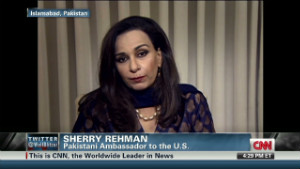 Pakistan satisfied with Clinton’s sorry
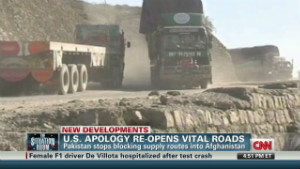 U.S. apology opens Afghan supply lines
Add to this toxic brew the fact that Pakistan operates like a tea party paradise; only about 2% of the population pays income taxes, as a result of which the government doesn’t do much of anything for anybody.
Lengthy power cuts are hollowing out Pakistan’s already weak economy, which, at its present 3% growth rate, cannot possibly sustain Pakistan’s youth bulge.
But there is another side to Pakistan that suggests some underlying strengths that don’t make quite as good copy as the Taliban marching towards Islamabad, as they did in 2009.
Those strengths are Pakistan’s maturing institutions.
Pakistan has a largely ineffectual state, but it has a vibrant civil society that picks up at least some of the government’s slack. The private Edhi Foundation, for instance, runs a fleet of 1,800 ambulances and a slew of other welfare services for the poor across Pakistan.
As a result of this strong civil society, Pakistan had its version of the Arab Spring long before the wave of demands for accountable governments emerged in the Middle East. It was, after all, a movement of thousands of lawyers taking to the streets protesting the sacking of the Supreme Court chief justice by the military dictator Pervez Musharraf in 2007 that helped to dislodge Musharraf from power.
Pakistan has a vibrant media. A decade ago, there was only Pakistan TV, which featured leaden government propaganda. Now there are dozens of news channels: many of them conspiracist and anti-American, but many of them also anti-Taliban and pro-democracy.
In the past year, the Supreme Court has taken on the ISI, Pakistan’s powerful military intelligence agency, successfully demanding that the organization produce prisoners who had disappeared for years.
In November, Pakistan agreed to a pact with long-time rival India granting India “most favored nation” trading status; something that would have been unimaginable a few years back. This important development was sanctioned by Pakistan’s powerful army, which is a significant player in the country’s economy and understands that one way out of Pakistan’s economic mess is to hitch itself to India’s much larger economy.
Even U.S.-Pakistani relations — which were at a nadir in 2011 because of a CIA contractor killing two Pakistanis, the bin Laden raid and the death of some two dozen Pakistani soldiers during a NATO airstrike — are gingerly improving. Pakistan has recently reopened the ground routes for NATO supplies to cross Pakistan into Afghanistan, which were closed for months to protest the deaths of the Pakistani soldiers during the NATO airstrike.
Tellingly, Pakistan has never even threatened to close the crucial air corridor across Pakistan that allows U.S. and NATO aircraft to fly into Afghanistan. One can get a sense of how important this air corridor is from the fact that Kandahar Air Field near the Pakistan border in southern Afghanistan is reported to have the busiest runway in the world with some 700 flights landing or taking off there every day.
The present government is the first civilian government in Pakistani history that is poised to complete its full term of office sometime this year or early next year — depending on when the next election is called — without being overturned by a military coup or dismissed in some back room deal. And the military, which has seized power four times in the past six and half decades, has shown no interest in doing so again for the foreseeable future.
The lengthy debate in Pakistan’s parliament that was completed in April about whether Pakistan should allow the United States to use armed CIA drones on its territory is a welcome intrusion of Pakistan’s civilian officials into the national security arena long monopolized by the military. The parliament called for the end of any U.S. drone strikes.
Despite the visibility of the hardline religious parties on the streets of Pakistan, in the voting booth, these parties have recently fared very poorly. A coalition of pro-Taliban religious parties known as the MMA secured control of two of Pakistan’s four provinces in an election in 2002 and 11% of the votes to the National Assembly. But the MMA garnered only a piddling 2% of the vote in the 2008 election.
And where Pakistan’s national interests are at stake, the military is aggressive against the Taliban.
As the Taliban marched three years ago as close as 60 miles to Islamabad, the army launched major military operations in the northern region of Swat and the western area of South Waziristan to end the Taliban’s control of these areas. Pakistani officials are swift to point out, correctly, that as a result, more Pakistani soldiers have died fighting the Taliban than the servicemen of the U.S. and other NATO countries combined.
Pakistan has a myriad of well-known problems, but it also has some residual strengths that often get obscured by rhetoric about the “world’s most dangerous country.”
Pakistan is no North Korea, and if Pakistanis really got a grip on their own problems, rather than too often resorting to blaming the United States or India for their ills, Pakistan might begin to look more like Turkey than Bangladesh.
One good start along this path would be for the government to privatize Pakistan International Airways and the country’s steel mills, which hemorrhage public money and perform quite poorly. But this would require real political leadership, something that is in short supply in Pakistan.
While Pakistan’s institutions are slowly maturing, its political class remains largely moribund.
Civilian casualties plummet in drone strikes CNN

Civilian casualties plummet in drone strikes
- Peter Bergen, Jennifer Rowland: Civilian toll of drone attacks has dropped sharply
- They say lower munitions, better targeting, more oversight has enabled more accurate strikes
- Civilian casualty rate using conventional warfare would arguably be higher, they say
- Authors: Rate of drone attacks has slowed considerably
Editor’s note: Peter Bergen, CNN’s national security analyst, is a director at the New America Foundation and the author of the new book “Manhunt: The Ten-Year Search for Bin Laden — From 9/11 to Abbottabad.” Jennifer Rowland is a program associate at the New America Foundation, a Washington-based think tank that seeks innovative solutions across the ideological spectrum.
(CNN) — Last week, a U.S. drone attack killed 19 suspected Taliban militants at a compound in North Waziristan on the Afghan border, according to Pakistani intelligence officials.
Dawn, a leading English-language Pakistani newspaper, later reported that the drone actually launched two separate strikes, the second of which occurred “when tribesmen were still carrying out rescue work,” and killed an additional three people.
It was unclear whether the three were civilians or militants. If they were civilians, the incident would run counter to a marked decline in reports of civilian deaths in Pakistan caused by CIA drone strikes.
The New America Foundation has been collecting data about the drone attacks systematically for the past three years from reputable news sources such as the New York Times and Reuters, as well as Pakistani media outlets such as the Express Tribune and Dawn.
According to the data generated by averaging the high and low casualty estimates of militant and civilian deaths published in a wide range of those outlets, the estimated civilian death rate in U.S. drone strikes in Pakistan has declined dramatically since 2008, when it was at its peak of almost 50%.
Today, for the first time, the estimated civilian death rate is at or close to zero.
Over the life of the drone program in Pakistan, which began with a relatively small number of strikes between 2004 and 2007, the estimated civilian death rate is 16%.
And in the Obama administration, between 1,507 and 2,438 people have been killed in drone strikes. Of those, 148 to 309, or between 10% and 12%, were civilians, according to the New America Foundation data.
The drop in the number of civilian casualties since 2008 came as a result of several developments, one of which was a directive issued from the White House just days after President Obama took office, to tighten up the way the CIA selected targets and carried out strikes. Specifically, Obama wanted to evaluate and sign off personally on any strike if the agency did not have a “near certainty” that it would result in zero civilian casualties.
The CIA began utilizing smaller munitions for more pinpoint strikes. And drones can now linger for longer periods of time over targets, ascertaining whether civilians are around the target area, than was the case several years ago.
The drone program has also come under increasing congressional oversight in the past couple of years, a layer of accountability that one former CIA official said was unheard-of when he left the agency in 2009.
Members of the Senate and House intelligence committees now hold monthly meetings at CIA headquarters to watch video recordings of specific drone strikes, as well as to review the intelligence upon which CIA agents on the ground in Pakistan based their target selection.
In a letter to the Los Angeles Times in May, the chairwoman of the Senate Intelligence Committee, Sen. Dianne Feinstein, D-California, wrote that “Committee staff has held 28 monthly in-depth oversight meetings to review strike records and question every aspect of the program including legality, effectiveness, precision, foreign policy implications and the care taken to minimize noncombatant casualties.”
And in 2012, there have been far fewer drone strikes: just 27 as of July 11, compared with 45 during the same period in 2010.
All these factors have contributed to the steep decline in civilian deaths in drone strikes in Pakistan.
According to a 2010 report by the Campaign for Innocent Victims in Conflict, a Washington-based advocacy group, which was based on field work in Pakistan’s tribal areas where all of the drone strikes occur, most residents of the tribal regions believed the strikes are largely accurate and primarily killed militants. However, the report said civilian casualties were higher than the U.S. government had claimed.
In February, The Associated Press conducted a rare on-the-ground investigation of 10 of the deadliest U.S. drone strikes carried out over the previous 18 months.
Reporters interviewed about 80 villagers from the areas affected by these 10 strikes and found that of the 194 people reported killed in the attacks, at least 138 — about 71% — were identified as militants.
The remaining 56 victims were either local tribesmen or police officers: about 29% of the total number, 38 of whom were reportedly killed in a single strike on March 17, 2011.
If that single attack is excluded, the civilian casualty rate for the 10 deadliest strikes of 2010 and 2011 was 9%, which is in the range of the New America Foundation estimate of 5% civilian casualties for all of the 141 strikes during that same time period.
The London-based Bureau of Investigative Journalism also maintains a count of drone casualties in Pakistan. It reports that between three and 24 civilians have been killed in 2012.
The Bureau of Investigative Journalism’s high estimate of 24 civilian deaths in 2012 came in part from reports provided by an unreliable Pakistani news outlet as well as the claims of a local Taliban commander, which contradicted all other reports. And even if the bureau’s estimates of between three to 24 civilian casualties are assumed to be correct, the civilian casualty rate for drone strikes in 2012 would still be between 1% and 10%.
That is far below the civilian death rate that the Pakistani government and other private research groups such as Pakistan Body Count have claimed. A report released by Pakistani authorities in 2010 estimated that for every militant killed in a drone strike in 2009, 140 Pakistani civilians also died, and that the civilian casualty rate for that year was more than 90%. And Pakistan Body Count’s ongoing tally estimates the civilian casualty rate over the life of the drone campaign to be between 75% and 80%.
Pakistani security officials acknowledged during background interviews with the Washington Post in mid-2010 that, in fact, better technology, a deeper network of informants on the ground and better coordination between U.S. and Pakistani intelligence officials had all contributed to a significant drop in civilian deaths in drone strikes.
And Maj. Gen. Ghayur Mahmood, a commander of Pakistani troops in North Waziristan, where the majority of drone attacks take place, last year conceded publicly that “Myths and rumors about U.S. Predator strikes and the casualty figures are many, but it’s a reality that many of those killed in these strikes are hardcore elements, a sizeable number of them foreigners.”
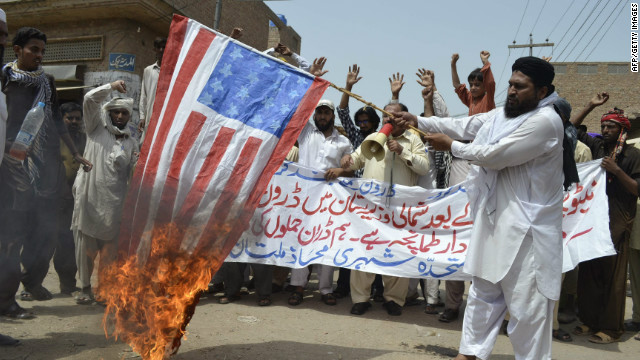
Pakistani officials now rarely base their criticism of U.S. drone strikes on the incidence of civilian casualties and instead point, quite reasonably, to another objection: the U.S. violation of Pakistan’s national sovereignty.
The Obama administration maintains that international law does not prohibit the use of lethal force against an active enemy “when the country involved consents or is unable or unwilling to take action against the threat.”
And many U.S. officials have argued that the unprecedented precision of drones makes them by far the most effective weapon for striking a target and for avoiding civilian casualties.
Conventional warfare against the Taliban and allied groups such as al Qaeda in Pakistan’s northwest would arguably result in far higher civilian death tolls.
Amnesty International reported in 2010 that 1,363 civilians died in fighting (PDF) between insurgents and Pakistani security forces in the tribal regions in 2009, compared with the estimated 103 to 223 civilians who were reported to have been killed in U.S. drone strikes in 2009, according to the data compiled by the New America Foundation.
The drone program persists, in part it seems, just because it can. The Pakistanis complain about the drones’ infringement of their national sovereignty and yet have never shot down the relatively slow-moving drones with their F-16 fighter jets.
Then-CIA Director Leon Panetta said a year ago that the U.S. is “within reach of strategically defeating al Qaeda.”
That point seems to have come, yet the drone strikes rumble on.
FEATURED BOOK

All the Presidents’ Wars:
RECENT ARTICLES

RECENT FILM AND TV SERIES
GHOSTS OF BEIRUT: SHOWTIME
The Fall of Osama bin Laden, National Geographic

BIN LADEN'S HARD DRIVE, NATIONAL GEOGRAPHIC

