Putin’s dream is headed toward an inglorious end, CNN.com
Editor’s Note: Peter Bergen is CNN’s national security analyst, a vice president at New America, and a professor of practice at Arizona State University. Bergen is the author of “The Cost of Chaos: The Trump Administration and the World.” The views expressed in this commentary are his own. View more opinion on CNN.
Russian President Vladimir Putin had a plan to seize Ukraine quickly. Those plans dissolved from the first days of the Russians’ invasion with their failure to capture Kyiv.
Putin’s problems have only deepened in recent days with the surging Ukrainian counteroffensive that has seized key pockets of Russian-controlled territory, such as the transportation hub city of Lyman.
The timing couldn’t have been worse. Putin lost Lyman just as he was publicly declaring that the Donetsk region – in which Lyman sits – was now annexed by Russia.
At home, Putin is also facing growing criticism from Russians on both the left and the right, who are taking considerable risks given the draconian penalties they can face for speaking out against his “special military operation” in Ukraine.
With even his allies expressing concern, and hundreds of thousands of citizens fleeing partial mobilization, an increasingly isolated Putin has once again taken to making rambling speeches offering his distorted view of history.
(Indeed, his revisionist account defines his rationale for the war in Ukraine, which he asserts has historically always been part of Russia – even though Ukraine declared its independence from the Soviet Union more than three decades ago.)
But Putin – a zealous student of Russian history – is surely aware that defeat in a foreign war has brought down some of his predecessors.
When the Soviets invaded Afghanistan in December 1979, they planned to install a puppet government and get out of the country as soon as it was feasible, as explained in a recent, authoritative book about the Soviet invasion of Afghanistan, “Afghan Crucible” by historian Elisabeth Leake.
Leake writes that the Soviets’ “intention was a quick regime change,” which was “not meant to be a drawn-out military encounter.”
That playbook didn’t work for the Soviets in Afghanistan during the 1980s any more than it is working for Putin in Ukraine today.
Beyond the battlefield
During the war against the Soviets in Afghanistan, the US was initially reluctant to escalate its support for the Afghan resistance, fearing a wider conflict with the Soviet Union. It took until 1986 for the CIA to arm the Afghans with highly effective anti-aircraft Stinger missiles, which ended the Soviets’ total air superiority, eventually forcing them to withdraw from Afghanistan three years later.
In 2022, American weapons are again playing a decisive role in Russian fortunes on the battlefield. At the beginning of the war in Ukraine, the US was also initially leery of deeper involvement, fearing a wider conflict with the Russians.
But the US put those fears to rest relatively quickly, and American-supplied anti-tank Javelin missiles and High Mobility Artillery Rocket Systems (HIMARS), GPS-guided missiles, have helped the Ukrainians to push back against the Russians.
Putin is also surely aware that the collapse of the Soviet Union in 1991 was hastened by the withdrawal of Soviet forces from Afghanistan two years earlier.
Looking further back into the history books, he must also know that the Russian loss in the Russo-Japanese war in 1905 weakened the Romanov monarchy. Czar Nicholas II’s feckless leadership during the First World War then precipitated the Russian Revolution in 1917. Subsequently, much of the Romanov family was killed by a Bolshevik firing squad.
Putin, understandably, doesn’t want to go the way of either the Soviets or the Romanovs. Which might explain his recent desperate moves: the mobilization of 300,000 additional troops – a measure that he had long sought to avoid – and his nuclear weapons saber-rattling.
The ‘genius’ myth unravels
On February 22 – just two days before Russia’s invasion – former US President Donald Trump, who has always fawned over Putin, publicly said that the Russian autocrat was “genius” and “savvy” for declaring two regions of eastern Ukraine independent and moving his troops there in a prelude to full-blown invasion.
Putin saw the war in Ukraine as a key to his dream to Make Russia Great Again. Instead, Russia can now no longer pretend to be a great power as it is unable to defeat an enemy on its own borders.
More than seven months into the war, the “genius” myth has unraveled. During the past two weeks, at least 200,000 Russian men have voted with their feet to flee Putin’s partial mobilization order. They understand – despite the Herculean efforts of Putin’s propagandists – that this war is a bloodbath Russia is losing.
Putin saw the war in Ukraine as key to his dream to Make Russia Great Again.
Peter Bergen
Lawrence Freedman, the emeritus professor of war studies at King’s College London explains in his just-published book “Command: The Politics of Military Operations from Korea to Ukraine” how Putin plunged his countrymen into the Ukrainian morass.
Freedman writes that Putin is “a tragic example of how the delusions and illusions of one individual can be allowed to shape events without any critical challenge. Autocrats who put their cronies into key positions, control the media to crowd out discordant voices … are able to command their subordinates to follow the most foolish orders.”
Putin’s gamble may lead to a third dissolution of the Russian empire, which happened first in 1917 as the First World War wound down, and again in 1991 after the fall of the Soviet Union.
It could unfold once more as Putin’s dream of seizing Ukraine seems to be coming to an inglorious end.
Making Russia weak, again.
Big Tech: Content Moderation, Terrorism, and Disinformation, New America online
[ONLINE] – Big Tech: Content Moderation, Terrorism, and Disinformation
EVENT
In recent years, technology and social media companies have taken on a growing role in moderating content on their platforms. That growing role has brought criticism from a number of vectors, and some states have moved to restrict moderation via legislation. Although much of the political debate around moderation policies is occurring elsewhere, the debates and legislation could shape companies’ efforts against terrorism on their platforms, an issue that has itself seen debate.
To discuss the intersection of content moderation, disinformation, and terrorism, New America welcomes Daveed Gartenstein-Ross, CEO of Valens Global and author of a recent report “Redrawing the Lines” examining how legislation regarding content moderation could affect counterterrorism efforts, and Karen J. Greenberg, Director of the Center on National Security at Fordham Law and a fellow with New America’s International Security program.
Join the conversation online using #TechandTerrorism and following @NewAmericaISP.
Participants:
Dr. Daveed Gartenstein-Ross, @DaveedGR
CEO, Valens Global
Dr. Karen J. Greenberg, @KarenGreenberg3
Director Center on National Security at Fordham Law,
Fellow, International Security Program, New America
Moderator:
Peter Bergen, @PeterBergenCNN
Vice President for Global Studies and Fellows, New America
Professor of Practice, ASU
Spies & Storytellers, Spyscape Museum, NYC
Spies & Storytellers
With Osama bin Laden’s interviewer and other top pros!
From recruiting sources and building trust to turning secret information into digestible narratives, spy skills and technologies have led to journalistic breakthroughs.
Peter Bergen (CNN National Security Analyst, journalist, author), Liza Mundy (NY Times Best-selling author, journalist), and Dan Hoffman (three-time CIA station chief, FOX News commentator) will compare the two professions in this fascinating discussion.
928 8TH AVE
NEW YORK, NY 10019, USA 8p
https://spyscape.com/festival
Bhutto dynasty has shaped Pakistan’s history while enduring tragedy, CNN.com
Opinion By Peter Bergen, CNN National Security Analyst
Published 4:10 PM EDT, Sun October 2, 2022
Editor’s Note: Peter Bergen is CNN’s national security analyst, a vice president at New America, and a professor of practice at Arizona State University. Bergen is the author of “The Rise and Fall of Osama bin Laden.” He has made more than a dozen reporting trips to Pakistan since 1983. The views expressed in this commentary are his own.
In a world that at times seems obsessed with the Windsor dynasty that occupies the British throne, a political dynasty with a history deeply entwined with one of the world’s most politically sensitive countries gets far less attention.
Pakistan, a country with nuclear weapons that neighbors Afghanistan, China, Iran and India, has been long dominated by its powerful military, which in recent years has put increasing pressure on independent media and dissenting voices.
Pakistan’s Bhutto family dynasty, in recent decades, championed a more liberal democratic approach to politics and has provided two of the country’s most important leaders – and today, its youngest foreign minister ever.
I met last week with Pakistani Foreign Minister Bilawal Bhutto Zardari, who was visiting Washington. He told me that the assassination of his mother, two-time Prime Minister Benazir Bhutto, was a turning point for him at 19 that pushed him into public service: “I didn’t choose this life. It chose me. The circumstances of her assassination and the events that followed led me down this path where I am today.”
Bhutto Zardari is also the chairman of the left-of-center Pakistan People’s Party, which was founded by his grandfather and is one of the largest political parties in the country.
During the Cold War, Pakistan became a key American ally after the Soviet Union invaded Pakistan’s neighbor Afghanistan in 1979. That invasion precipitated a tight alliance between the United States and the military regime of Pakistan’s President, Gen. Zia-ul-Haq. The CIA acted as the quartermaster to the Afghan rebels, funneling billions of dollars of weapons to the Pakistani military intelligence service, which in turn supported several of the Afghan groups fighting the Soviets.
In 1989, after being defeated in Afghanistan, the Soviets pulled out – a move that hastened the collapse of the Soviet regime. When the Soviets withdrew from Afghanistan, the United States closed its embassy in Kabul and washed its hands of the country.
That move would turn out to be a large blunder because Afghanistan then descended into a civil war, out of which emerged a shadowy group, the Taliban, which by 1996 had taken over almost the entire country. The Taliban also gave refuge to Osama bin Laden and his al Qaeda group, which planned the 9/11 attacks.
In the years before 9/11, Pakistan was one of only three countries that recognized the Taliban government in Afghanistan, seeing in them a force on its western border that would not ally with its main enemy, India.
After September 11, under intense US pressure, the Pakistanis switched allegiance and, at least initially, supported the US-led war against the Taliban and al Qaeda.
Deeply enmeshed in all this complex history is the Bhutto family, which, even more than the Kennedys in the United States, is a political dynasty that has shaped the history of their country while also enduring considerable personal tragedy.
Zulfikar Ali Bhutto, Bhutto Zardari’s grandfather, was the first democratically elected Prime Minister in Pakistan, but he was later deposed and then hanged by the regime of the Pakistani military dictator Zia in 1979.
A little under a decade later, Bhutto’s daughter Benazir Bhutto, then only 35, became the first female Prime Minister in Pakistan’s history and, indeed, the first female Prime Minister of any Muslim-majority country.
She was a graduate of Harvard and Oxford and orientated to the West, but nonetheless, during her prime ministership, Pakistan’s powerful military began supporting the Taliban as they rose to power in Afghanistan.
In February 1993, a militant from Pakistan, Ramzi Yousef, masterminded the bombing of the World Trade Center, killing six people. Yousef then went back to Pakistan and began plotting to kill Benazir Bhutto, who was then serving as Prime Minister for the second time. The plan failed when the bomb Yousef was building malfunctioned.
In 2000, I met with Benazir Bhutto, who explained to me that “the international Islamist movement saw Pakistan as its base. They saw my party as a liberal threat.” She became a fervent public critic of the Taliban and al Qaeda, and the fact that she was the first woman to lead Pakistan made her an even bigger target for Islamist militants.
Benazir Bhutto was assassinated in Pakistan in 2007 when she was campaigning to become Prime Minister for the third time. The Pakistani Taliban have claimed responsibility for her murder.
All this tangled history was going through my mind when I met with her son at the Pakistan Embassy in Washington. Bhutto Zardari was visiting the US capital as his country faces what is arguably the worst crisis since its founding in 1947; by late August, floods of biblical proportions had submerged a third of the country.
Bhutto Zardari told me, “One in seven people, 33 million, are affected. The World Health Organization has warned of a second catastrophe in the form of a health crisis with waterborne diseases. There will also be food insecurity because of the millions of acres of crops destroyed.”
The flooding over the summer has caused an estimated $30 billion in damage.
In addition to the immediate crisis, Bhutto Zardari said now was the time to implement a longer-term solution – “a Green Marshall Plan” for climate-stressed developing countries such as Pakistan that have only a small impact on global warming but are disproportionately suffering its costs.
Bhutto Zardari pointed out that while Pakistan contributes less than 1% of the world’s planet-warming gases, it is one of the countries most affected by climate change. A “Green Marshall Plan” would allow countries such as Pakistan to build infrastructure more resilient to its effects.
Asked about the Taliban, which now control Afghanistan, Bhutto Zardari surprised me when he advocated for greater engagement with them, even though the Afghan Taliban shelters elements of the Pakistani Taliban, the terrorist group that claimed responsibility for his mother’s murder. “They are our neighbors,” he said. “Our neighbors aren’t going away, and we need a peaceful, stable Afghanistan, so we don’t see an exodus of Afghan refugees into Pakistan, and we don’t see an exponential increase in terrorism.”
Bhutto Zardari explained that the dire economic situation in Afghanistan made dealing with the Taliban more important since predictions indicate that more than 90% of the Afghan population may soon fall below the poverty line. “History has shown us that theocratic, autocratic regimes, when faced with tough economic times, tend to contract rights rather than expand rights,” said Bhutto Zardari, who studied history at Oxford.
At the end of our interview, we returned to the subject of his mother, Benazir, whom I had met many times over the years, including the first time that she was Prime Minister during the late 1980s and had only recently given birth to him.
Benazir Bhutto was assassinated almost two decades later at age 54 when she was a politician at the height of her powers. She was very much an ally of the United States, an enemy of Islamist terrorists such as al Qaeda and the Taliban, and also an advocate for liberal democracy in Pakistan.
I asked her son, “Would Pakistan have had a very different trajectory if she had become Prime Minister for the third time”? The foreign minister replied, “Yes. I think that’s pretty safe to say.”
The British Empire: A legacy of violence? CNN.com
Peter Bergen is CNN’s national security analyst, a vice president at New America, an author and a professor of practice at Arizona State University. Raised in London, Bergen has a degree in modern history from Oxford University. The views expressed in this commentary are his own. View more opinion on CNN.
(CNN)Queen Elizabeth II was laid to rest last week at Windsor Castle, home to monarchs for the past thousand years. What was not laid to rest with the Queen’s internment was an important question: What does the future look like for countries of the Commonwealth, where the British monarch remains the head of state?
Charles III is the King today of 14 “realms” outside of the British Isles. In some of those realms, such as Australia, Canada and Jamaica, there are now calls to jettison the monarchy and instead install a republic, just as Barbados did last year.
A related question is also surfacing now: What is the legacy of the British Empire writ large? British schoolchildren have long been taught comforting fairy tales about the beneficence of the largest empire in history, but recent historical scholarship is painting a quite different picture.
Leading that charge is Harvard University historian Caroline Elkins, whose 2005 book, “Imperial Reckoning: The Untold Story of Britain’s Gulag in Kenya,” found that the British detained some 1.5 million Kenyans in detention camps or in barbed-wire villages during the Mau Mau uprising in that country in the 1950s, thousands of whom died and some of whom were tortured. The book was awarded the Pulitzer Prize for general nonfiction in 2006.
Some initially criticized Elkins’ findings as exaggerated, but they were vindicated years later after Kenyan torture victims sued the British government for damages. Senior British officials eventually conceded publicly in 2013 that British forces had indeed tortured Kenyans, and the UK government paid out a nearly 20 million-pound settlement to more than 5,000 elderly Kenyan victims.
In recent years, Elkins has broadened the scope of her inquiries beyond Kenya, publishing a new book in March called “Legacy of Violence: A History of the British Empire.” I spoke to Elkins last week about her work. Our conversation was edited for clarity.
Peter Bergen: When Queen Elizabeth died, what was running through your mind?
Caroline Elkins: First, what an extraordinary life. Seventy years as monarch. As a person, as an historian, how can one not marvel at that? Second, the differences in public reactions in Britain and in the former empire. Incredible national mourning and outpouring of grief in Britain, yet in the former empire and now current Commonwealth there were different reactions — that the Queen oversaw what was a violent and exploitative empire.
Bergen: King Charles III doesn’t elicit quite the same feelings as his mother did: How will this affect the Commonwealth?
Elkins: There are 56 nations in the Commonwealth, most of whom were former British colonies, and of those former British colonies, 14 are what we would call “Commonwealth realms.” That is, they’re not republics, and they still recognize the British monarch as their head of state. So, Charles III is also King of Canada and King of Australia, and it’s in these countries where there is a real push for referendums to change and to become republics.
And then there’s the question of, what is the purpose of the broader 56 nations in this Commonwealth? The Queen obsessed over the Commonwealth; it was the coda to empire. She oversaw in her reign the dissolution of much of the empire and the creation, with a kind of monarchical mythmaking, of the Commonwealth as being a force of good, a force of peace, a force of democracy in the contemporary modern world of which she remained the head.
So, King Charles III is in a tricky situation because, in some ways, the Commonwealth is a confidence trick. How much do these nations today believe that they are part of something that’s greater than themselves? When these nations joined the Commonwealth in the ’50s and ’60s, one could make that claim. But I suspect there are now a lot of Commonwealth nations looking at this and asking themselves, “What’s the point?” Britain’s economy is in bad shape; going it alone with Brexit was a mistake, and geopolitically it’s on the wane.
Bergen: Queen Elizabeth found out that she was the new monarch in Kenya in 1952 when she was on a safari there. Tell us about your research in Kenya and reflect on the fact that the newly minted Queen Elizabeth was in the country around the time that the anti-British Mau Mau rebellion was starting to get serious.
Elkins: There’s the famous story that Elizabeth, staying at Treetops Hotel in Aberdare National Park in Kenya, went up a tree as a princess and came down a queen. At the same time, just beyond where Queen Elizabeth was viewing game, the Kikuyu, the largest ethnic group in Kenya, were taking mass oaths to join a movement called Mau Mau, whose stated purpose was, to kick all Whites out of the country, which were the British settlers and the British colonial administration.
Almost from the get-go in 1952, there were whistleblowers in Kenya. Missionaries were saying that torture by the British was going on. Eventually, the Church Missionary Society published a pamphlet called “Kenya — Time for Action!” describing the kind of horrible things that were happening.
When I started researching the history of the Mau Mau uprising, there were difficulties in writing the book because at the time of decolonialization, Britain went through a very systematic process of destroying documentation about the empire. In the case of Kenya, I estimate that about 3 1/2 tons of documents were destroyed, and some other documents were repatriated back to Britain and kept under lock and key. So, what it meant for an historian like me is I had to try to piece this story back together again, and it took about 10 years to do that.
In my 2005 book, “Imperial Reckoning: The Untold Story of Britain’s Gulag in Kenya,” I concluded that while the British government said that they had detained 70,000 to 80,000 Kenyans, in fact my research revealed that 1.5 million Kenyans were detained either in detention camps or in barbed-wire villages. These detention camps and villages were not the sites of “hearts and minds” campaigns but instead sites of systematized violence condoned from the very top of the British government and executed in a routinized way, and that every effort was made to cover this up.
The book came out to “critical acclaim.” There was probably more emphasis on the “critical” and less on the “acclaim” in part because it was one of the first books that really challenged this narrative of British exceptionalism in the empire. At that time, in 2005, I was a young academic historian. It was a rather crushing reception.
And then I was asked to be an expert witness for a case involving Kenyans suing the British government for torture endured while they were detained during the Mau Mau uprising. During the discovery process for this case, the British government said for the first time, “We’ve just discovered boxes of previously undisclosed files that we found at Hanslope Park.” Hanslope Park is where all the very highly sensitive British government documents are kept. And alongside those boxes from Kenya, there were also 8,800 files from 36 other British colonies similarly packed up and spirited away at the end of empire.
Having this documentation was crucial to the case. I pulled together a group of Harvard students, and we worked 24/7 going through these documents, and what became clear is that we had thousands of pages of additional evidence supporting my research and claims about what had happened in Kenya, and at the end of the day, the British government settled the case that had been brought by the Kenyan victims.
Bergen: Was Kenya exceptional in the British Empire?
Elkins: That took me about 15 years to answer and over 800 pages in my new book, “Legacy of Violence.” Not only is Kenya not exceptional, it’s one moment in a longer period of time that shows how the British created systems and practices to enforce colonial control, such as forced labor, torture and murder throughout the British Empire.
During the Boer War from 1899 to 1902 was the first time in history where extensive concentration camps were used to confine one ethnic population, in this case, the white Afrikaners, who the British considered uncivilized, although Africans were also detained.
Britain undertook similar confinement policies for criminals, as well as plague and famine victims, in India beginning around 1857. One of the things I spent a lot of time doing was tracing how these policies evolved — these practices of concentrating populations as well as forcibly moving them.
Bergen: This reassessment of British Empire: You are leading the charge. And also, William Dalrymple’s “The Anarchy: The East India Company, Corporate Violence, and the Pillage of an Empire,” his history of the British East India Company is also part of this reassessment?
Elkins: There are many historians working on this. When you think about the kind of work that must take place for each colony, you have a lot of people who are real specialists in particular areas who might specialize in Cyprus or might specialize in India. Some of what I’m doing in this recent book, “Legacy of Violence,” is really drawing off this huge movement towards revisionism.
Bergen: Is all history revisionist history?
Elkins: Always. History is always being revised by folks like myself. I think in this case, it’s really a massive revision insofar as it really questions what continues to be a strongly held belief about British exceptionalism when it comes to empire.
Bergen: So, are the British in high school as they learn about British history being told a bunch of fairy tales?
Elkins: I think they’re being told a very particular official narrative that has been carefully cultivated, both by the British government and the monarchy. History is always used for national identity to galvanize a population, to imagine itself as something greater than any individual. And it’s important to remember that beginning in the 19th century, quite intentionally under Prime Minister Benjamin Disraeli, there was an entwinement of nation, monarchy and empire that was the bedrock of British national identity, a kind of British imperial national identity of which the monarchy is a part. And that continues down to the present day.
Should British school history textbooks be revised? There’s a struggle over this in Britain now. It will be a big moment when we start to see revisions within the textbooks of schoolchildren in Britain that reflect the kind of larger conversations that are happening now between historians and the broader public.
Bergen: “The Crown” on Netflix was a very well-executed TV drama. How does that contribute to the way Britain and the world in general sees all this history?
Elkins: I have to say, full disclosure, I watched all of “The Crown.” It’s very compelling, and I was writing this book, “Legacy of Violence,” while watching it. One of the few times that the Queen Elizabeth weighed in with her authority is around the issue of apartheid in South Africa.
Bergen: To say what?
Elkins: To basically disagree with then-Prime Minister Margaret Thatcher, to say that apartheid cannot continue, that Britain cannot be on the wrong side of history, and she used the Commonwealth as a vehicle to make that known.
The second of which that struck me was the death of her cousin Louis Mountbatten. Mountbatten was the last viceroy of India. He oversaw the partition of India and Pakistan in 1947 in which somewhere between 200,000 to 2 million people died from brutal sectarian violence, according to estimates.
The Irish Republican Army, or IRA, which was a paramilitary organization, formed in 1919 to end British rule in Ireland and create a republic, engaged in a long struggle to end Britain’s continued rule in Northern Ireland after 1922. There were many terrorist attacks, including the IRA planting a bomb on Mountbatten’s boat off the coast of Northern Ireland in 1979, killing him and three people on the boat. And that scene is in “The Crown.” Mountbatten was probably the closest confidant and mentor to Prince Charles, now King Charles III.
There is kind of a coda to this story when the Queen became the first British monarch in 100 years to go to Ireland in 2011 and (later) extended her hand to one of the former leaders in the IRA.
Four years later Prince Charles met with former IRA leader Gerry Adams and did a similar kind of thing. They had a private conversation. This shows you what the British monarchy can accomplish, the kind of moral authority that it does have, and instances of reaching out their hands to make reconciliation.
Bergen: Do the British pat themselves on the back because they were relatively early to abolish slavery, and that has colored their own self-conception as empire builders?
Elkins: Yes, I think it’s an important point. I think it’s often held up that Britain led the charge on the abolition movement in the trade of enslaved people (in 1807) and decades later in the use of enslaved labor (in 1833).
At the same time, I think it’s important to bear in mind that this is the same country that amassed the largest empire history has ever known, with a quarter of the world’s land mass and 700 million people at its height.
On the heels of the abolition of the trade in enslaved people and the use of enslaved labor, the British launched what is known as their “civilizing mission.” This idea was that, in fact, empire is not about national benefit and exploitation, but it’s really our duty, our “white man’s burden” to go and uplift and bring into the modern world the “backward populations.”
The interesting part to me is how is it that Britons in general can continue to work and rework their understanding of what the empire meant. What was the civilizing mission? How are they able to accommodate all this into this broader narrative of what is ultimately British imperial exceptionalism, that somehow or another — and it’s a narrative that endures to this present day — that Britain got empire right, particularly when compared to all the other European nations.
And so, to me that’s also wrapped up into how the Queen is being remembered today. By some, she’s being remembered as the matriarch of empire, an empire that was a force of good in the world, that really extended the notions of rule of law and free trade — all those things that we hold dear in liberal democracies — while others who say, no, that’s actually not what happened.
Look at all this violence in the empire. I think we’re in a particular moment because formerly colonized populations are demanding that there should be a reckoning, not just in terms of acknowledgement that certain things happened, but also how we write about and remember the past.
Bergen: The 1619 Project has reframed the history of the United States around the history of slavery in the country. Are there similarities between the 1619 Project and what you and other colleagues are doing in your reassessment of the British Empire?
Elkins: Yes, I do think so. If we look at the ways in which the struggle to understand who we are in the present day and what the future holds is also a struggle about the past. What gives us legitimacy? How did we come to be who we are today? In the United States, it’s often thought that the original sin is the period of enslavement, and we must contend with that if we’re going to move forward as a nation.
Now, the suggestion being made by many in the former empire is that the “original sin” on a global scale was empire. They’re asking: How do we contend with this, and how do you, Britain, address this in such a way that we can all move forward, both from a societal standpoint and an economic one? And it’s not just about reparations. It’s about looking at structural inequities on a global scale and how and why the world is the way it is today.
Look at Bangladesh, one of the poorest countries in the world today. In the mid-18th century, Eastern Bengal was one of the wealthiest parts of the world. What happens in between? A very long period of wealth extraction and decimation engendered by British colonial rule.
Look at Jamaica and imagine the fact that this nation was populated because its citizens were literally chained and shackled beneath ships and brought over. At first, this wasn’t even a self-reproducing population because it was more economical to work people to death than it was to allow them to self-reproduce.
And so these nations are born out of a similar kind of cauldron of violence that has dramatic societal and economic consequences, and I think this is coming to a head, just as the 1619 Project is really raising all these issues about the kind of structural inequities that we have in the United States today. We must understand the past and really have a comprehensive accounting of it. And I think that’s what we’re seeing in different kinds of ways with the history of the British Empire.
The Fall of Osama bin Laden, National Geographic
Peter Bergen was the correspondent and a producer.
“Bringing Americans Home 2022” Online New America/Foley Foundation
Tweet
[ONLINE] – Bringing Americans Home 2022
Assessing Hostage and Detainee Policy Reforms
Event
Having a son or daughter, husband or mother taken hostage or detained in a foreign land is one of the most frightening experiences imaginable. Recent years have brought a growing challenge of states wrongfully detaining Americans while the situation facing Americans held hostage by non-state groups has evolved.
To discuss the results of the Foley Foundation’s annual research report, “Bringing Americans Home” in this virtual event, New America in partnership with the James W. Foley Legacy Foundation welcomes a range of experts to discuss the current state of U.S. efforts to bring Americans held hostage abroad home.
Panel 1: The Hostage and Wrongful Detainee Landscape
Chris Costa
Executive Director, International Spy Museum
Former Special Assistant to the President & Senior Director for Counterterrorism at the National Security Council
Brian Jenkins, @BrianMJenkins
Senior Adviser to the President, RAND Corporation
Ali Soufan, @Ali_H_Soufan
Chairman and CEO, The Soufan Group
Former FBI Supervisory Agent
Cynthia Loertscher, @CindyLoertscher
Director of Research, Hostage Advocacy, and Legislative Affairs, James W. Foley Legacy Foundation
Peter Bergen, @peterbergencnn (moderator)
Vice President, New America
Panel 2: Recovering U.S. Hostages and Wrongful Detainees: Challenges and Urgency
Michael Bergman, @MickeyBergman
Vice President and Executive Director, The Richardson Center
Jared Genser, @JaredGenser
Managing Director of Perseus Strategies
Nizar Zakka, @ZakkaNA
President, Hostage Aid Worldwide
Diane Foley, @JamesFoleyFund
President and Founder, James W. Foley Legacy Foundation
Neda Sharghi, @NedaSharghi
Sister of Emad Shargi, a U.S. citizen wrongfully detained in Iran since 2018
Amna Nawaz, @IAmAmnaNawaz (moderator)
Chief Correspondent, PBS NewsHour
The one word that defined Elizabeth II, CNN.com
“Peter Bergen is CNN’s national security analyst, a vice president at New America, an author and a professor of practice at Arizona State University. The views expressed in this commentary are his own. View more opinion on CNN.”
(CNN) Duty is a rather old-fashioned concept today in a world rife with public figures who hunger only for power to be achieved by any means available.
But duty is the one word to best summarize the reign of Queen Elizabeth II, who died on Thursday at 96. The Queen selflessly gave of herself. Hers was a role that is ceremonial, but it is also deeply embedded in the oldest constitutional monarchy in the world and in a country that has given the world so many of the concepts and policies that we associate with democracy.
Seven years after the end of World War II, the Queen, aged only 25, ascended to the British throne. Harry Truman was the President of the United States, and Winston Churchill was Prime Minister of the United Kingdom.
Since then, the Queen reigned for 13 additional US presidencies: Dwight Eisenhower, John F. Kennedy, Lyndon Johnson, Richard Nixon, Gerald Ford, Jimmy Carter, Ronald Reagan, George H.W. Bush, Bill Clinton, George W. Bush, Barack Obama, Donald Trump and, now, Joe Biden.
In many ways the Queen symbolized the “special relationship” between the United Kingdom and the United States. A rite of passage for almost every one of the 14 US presidents since she took the throne was her hosting a state visit for the president in the UK, or her attending a formal state dinner put on by the president in Washington, DC. Most recently she met with President Joe Biden in June at Windsor Castle.
According to Robert Hardman, the dean of royal biographers, she was particularly close to Reagan who she found to be “the most charming.” They shared a love of the outdoors and of horses. It was a friendship that went on long after Reagan had stepped down as president, Hardman reported in his 2018 book “Queen of the World.” The Queen and Obama also enjoyed a close relationship, according to Hardman.
She had an extraordinary run; most British subjects can only remember one monarch. During her long reign, the Queen presided over the dissolution of great swaths of the British Empire, continuing a process that began under her father’s reign. She also officially installed three women as her prime ministers — Margaret Thatcher, Theresa May and, just on Tuesday, Liz Truss, who met with the Queen for her formal investiture as prime minister at Balmoral Castle in Scotland.
As Queen, she performed an astonishing 21,000 engagements and was patron of hundreds of organizations, including those dedicated to education and training, sports and recreation, faith, arts and culture, according to statistics released by the Royal Household in May when Britain celebrated the Queen’s 70 years on the throne.
The contrast is striking between who the Queen was and the former British Prime Minister Boris Johnson, who stepped down on Tuesday after being forced out of office. Johnson is a serial liar about matters both large and small, who attended private parties at his official residence at Downing Street during a rigorous Covid-19 lockdown that he himself had authorized. (He later apologized.)
The Queen also provided a stark contrast to Trump –whose personal attorney at the time of his 2016 campaign for president, Michael Cohen, paid off a porn actress who claimed to have had an affair with the candidate, and who is recorded to have made more than 30,000 false or misleading statements while he was president, according to the Washington Post.
The Queen led an exemplary personal life, and she also rarely spoke in public except at state occasions such as the annual opening of Parliament. Earlier this year she missed her first speech before Parliament for the first time since 1953, and it was delivered in her stead by her son and heir, Charles. It was a telling sign of her increasing frailty.
The contents of the Queen’s weekly meetings with the 15 British men and women who have served as her prime ministers have mostly remained tightly held secrets, but one can imagine that a monarch who met regularly for seven decades with an extraordinary range of prime ministers from Churchill to Thatcher had some sage advice for many of them.
The Queen also was part of a long tradition of strong British female leadership that dates to Queen Boudicia who led a rebellion against the Roman Empire. It was her namesake Elizabeth I who fought off the mighty Spanish Empire, while Queen Victoria ruled during the era that is named after her during which the British Empire became the largest empire in history.
It is not an accident, I don’t think, that during Elizabeth II’s reign the British had three female prime ministers. The British were used to having a female serve as head of state, after all, so having a female leader didn’t seem a stretch. Meantime, the United States still has not had one female president.
Of course, during her extraordinarily long reign, the Queen made missteps, the most well-known of which was her initial public silence when Princess Diana was killed in a car crash in Paris 25 years ago.
The stiff upper lip that had gotten the British thorough the London Blitz during World War II just wasn’t the right attitude for a population that was now much more willing to show their emotions publicly. The vast outpouring of public grief that followed Diana’s death caught the Queen wrong-footed. She remained in seclusion at Balmoral Castle and only lowered the Union Jack flying over Buckingham Palace after considerable public outrage that the royal family wasn’t doing enough publicly to show its grief.
But that dissatisfaction has long since dissipated. As she celebrated her Platinum Jubilee on the throne earlier this year, 86% of British citizens said they were satisfied with how the Queen was doing her job.
Charles inherits a monarchy that remains broadly popular with the British public. This year 68% of British citizens endorsed the continuation of the monarchy. It is one of Queen Elizabeth II’s key legacies and one more example of how she did her duty.
“The Future of Terrorism,” Rotary Club, Atlanta
October 3, at Loudermilk Center noon to 115pm
Peter Bergen, CNN’s National Security Analyst & VP at New America
Does the anti-Taliban resistance stand a chance? CNN.com
Editor’s Note: Peter Bergen is CNN’s national security analyst, a vice president at New America and a professor of practice at Arizona State University. Bergen is the author of “The Rise and Fall of Osama bin Laden.” The views expressed in this commentary are his own.
In August 2021, all US soldiers left Afghanistan, enabling the Taliban to take over the country. Since then, the Taliban have installed a theocracy that bans women from most jobs and bars girls over the age of 12 from attending school, while maintaining close relationships with terrorist groups, such as al Qaeda.
The Taliban today control more of Afghanistan than they did the last time they were in power before the 9/11 attacks. And they are better armed since they now possess American armored vehicles and M16 rifles left behind as the US military headed for the exits.
For the past year, a group known as the National Resistance Front has waged a guerrilla war against the Taliban. It is led by Ahmad Massoud, the son of legendary anti-Taliban mujahedeen commander Ahmad Shah Massoud, whom al Qaeda suicide bombers assassinated two days before the 9/11 attacks.
I spoke to the head of foreign relations for the National Resistance Front, Ali Maisam Nazary, to ask him if the resistance to the Taliban was really viable. Nazary said that this resistance has grown in the past year and that it is fighting in six of Afghanistan’s 34 provinces, largely in the north of the country with a force of 4,000 well-trained fighters. However, Nazary said no country is supporting the resistance movement with weapons or money.
Tajikistan, a country north of Afghanistan, is providing political support to the resistance movement. Nazary was in that former Soviet republic when he spoke to me by phone.
Our conversation has been edited for clarity.
Peter Bergen: What do you say to those who say your resistance movement doesn’t have much of a chance against the well-armed Taliban and without financial and military support from other countries?
Ali Maisam Nazary: Resistance throughout Afghanistan’s history has started and expanded without outside support. The late Cmdr. Massoud was able to build his resistance against the Soviets with a limited number of resources and successfully defeat the mighty Red Army. So international aid and support are not a requirement for us to be able to fight for our values and rights.
Our resistance in the past year has shown its potential to grow and successfully fight the Taliban. What is apparent to us is that a political solution to end the conflict in Afghanistan is not viable because of the Taliban’s position vis-à-vis women’s rights, human rights, democracy and terrorism. We can either liberate the country from the Taliban or force them to change and accept a peace process.
Bergen: The US withdrew from Afghanistan on August 30, 2021, and the National Resistance Front put up some resistance to the Taliban which then seemed to collapse. Now there seems to be resistance rising again. Walk us through the history of what happened over the last year.
Nazary: So, what happened is that from August 15, 2021, when the Taliban captured Kabul, until mid-September 2021, resistance started with thousands of former Afghan security forces in the Panjshir Valley in the Panjshir province of northern Afghanistan and Andarab Valley in the Baghlan province, adjacent to Panjshir. We fought a conventional war, with weapons and tanks, against the Taliban.
But we realized that without international support, it was difficult to continue the conventional war. Also, Panjshir and Andarab do not share any borders with a neighboring country, so that made it very difficult to bring in supplies.
So right before the second week of September, Ahmad Massoud convened all his commanders, and they discussed what to do because waging a conventional war was impossible. The Taliban had billions of dollars in weapons and equipment, and there was no regional or international support for the resistance. We pleaded everywhere, asked every single country to help us. Yet except for political and moral support from countries like Tajikistan, basically everyone else wanted to stay away. There was a fatigue when it came to Afghanistan.
We realized that for us to be able to survive, we had to change our strategy from a conventional war to an unconventional war, which was our approach back in the 1980s, when we were fighting the Soviets after they invaded Afghanistan in 1979.
And from September 5-15, 2021, our forces started withdrawing to remote valleys in Panjshir, which were also used as bases back in the 1980s.
During this past winter, we established a military presence in six provinces in northern Afghanistan: Panjshir, Kapisa, Baghlan, Badakhshan, Takhar and Parwan.
We also started seeing defections from the Taliban, such as Mawlawi Mahdi, the only Shia who played a prominent role in the Taliban. He defected and declared resistance in the Balkhab district of Sar-e Pol province in northern Afghanistan. (Mahdi was killed earlier this month.)
We were confident enough to start preparing for the spring offensive, and the first week of May was when the spring offensive started.
We want the Taliban to understand that they will face strategic defeat in the north. They cannot keep control of the north the way that they are doing right now, occupying it with an invading force that is not native to the north, a force that is oppressing the people. We have been able to keep our casualties very low because we have the high ground. We attack them, and then we go back to our positions. And the Taliban fighters who are coming from Kandahar and Helmand in southern Afghanistan are not trained to fight in mountains.
Bergen: What are the Taliban’s strengths?
Nazary: The Taliban strength right now is that they have unlimited weapons and munitions, resources that were left behind by the Americans.
They also have jihadist allies. They have partnered with regional and international terrorist groups. You have groups like Jamaat Ansarullah, the Islamic Movement of Uzbekistan, the Pakistani Taliban and al Qaeda in Afghanistan. They’ve allowed Afghanistan to become a sanctuary for terrorism.
For example, right now, they’ve armed and equipped the Jamaat Ansarullah terrorist group, which is made up of Tajik nationals from Tajikistan, and they’ve given this group US-made gear, weapons and munitions, and have allowed them to take control of the Tajik border.
Bergen: Can you give us a sense of the strengths of the National Resistance Front?
Nazary: First, we enjoy legitimacy and popular support. We see people accepting resistance as the only option right now for them to acquire their freedom again.
The second strength is having capable forces. The military wing of the National Resistance Front isn’t made up of ordinary citizens. It’s made up of the former Afghan military who were trained, advised and funded by the US and NATO for the past 20 years. They’re professional soldiers and officers who have fought against the Taliban for two decades. They know the mindset and mentality of the Taliban. Our numbers are around 4,000 right now.
And the other strength that we have is strong leadership. The Taliban have fractured into a few factions, and they’re competing against one another. Yet for us, all our forces are loyal to one individual. They pledge their allegiance to one individual.
Bergen: You’re speaking about Ahmad Massoud.
Nazary: Yes.
Bergen: What do you make of former Afghan President Ashraf Ghani’s leadership?
Nazary: Ghani was a weak leader. Ghani, from the time he became President, started the process of disintegration in Afghanistan. When he became President, he didn’t trust anyone. So he built a small circle of advisers around him and the presidential palace. He weakened the ministries. He brought all powers and authority into the presidential palace, started making military and political decisions all by himself, and he marginalized everyone from decision-making and policymaking. He micromanaged everything from 2014 onward.
Ghani also didn’t trust his own armed forces and started purging the army of capable officers. He brought in a few loyalists. It was those loyalists who surrendered to the Taliban.
Bergen: What was the effect of the Trump administration’s 2020 Doha peace agreement with the Taliban and then President Joe Biden announcing in April 2021 that he was going to go through with the total US withdrawal?
Nazary: When it comes to the Doha agreement, we believe it was a disaster. And this is something that we warned US officials about more than a year before the agreement was signed. We said that by signing the agreement with the Taliban and excluding the elected Afghan government from being part of the agreement, it would take legitimacy away from the Afghan government and would legitimize the Taliban. The Taliban would not negotiate with us after they signed an agreement with the United States.
Bergen: Right now, are you getting any outside help of any kind?
Nazary: Unfortunately, not. No country is willing to support the resistance. Our message has been that we are not fighting a civil war. The mentality that helping the National Resistance Front will fuel a civil war is false because what we’re fighting is the continuation of the global war on terror. We have regional and other international terrorist groups helping the Taliban, so how can we characterize this as a civil war? This has to be a regional and international effort to contain and eradicate terrorism. Ignoring Afghanistan and allowing terrorism to take root and find sanctuary in this country doesn’t only threaten our interests. It threatens regional countries and global security.
And the latest developments in Afghanistan, especially with the US drone strike last month in Kabul against al Qaeda leader, Ayman al-Zawahiri, shows the level of terror inside the country. Right now, the National Resistance Front is the last remaining anti-terrorist force in the country.
Bergen: And what is your vision of the future? The Taliban control more of the country than they did before 9/11. They’re better armed. They’ve been fighting for 20 years. So what’s the end goal here for you?
Nazary: One thing that is certain for us is that we are going to liberate the country. Afghanistan has seen oppressive regimes throughout its history, but these oppressive regimes have never lasted long. They were never permanent.
The vision that we have for Afghanistan’s future is a democratic, decentralized republic where every single citizen, regardless of their race, religion and gender, will enjoy equal rights. An Afghanistan where you have political and cultural pluralism. An Afghanistan where men and women are given the same opportunities. And an Afghanistan where power is distributed equally throughout the country.
Get our free weekly newsletter
One of the mistakes of the past 20 years was a political system where one individual, the President, enjoyed decision-making, while everyone else was left out. We saw how fragile the political system became on August 15, 2021. As soon as President Ghani fled the country, the whole political system collapsed like a house of cards. The reason it collapsed so quickly was because of the highly centralized political system.
As time passes, more political parties and forces realize that reconciliation with the Taliban is becoming impossible and that the Taliban had a year to absorb these political parties and other figures and form an inclusive government, which they failed to do. And so they believe that resistance is the only option right now.
Our criteria is we welcome anyone who accepts our vision, who shares our vision for Afghanistan’s future. If you are in favor of a democratic, decentralized republic where every single citizen will enjoy full rights and will enjoy their freedom, then you’re welcome to join us.
FEATURED BOOK
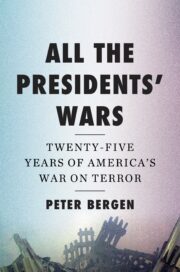
All the Presidents’ Wars:
RECENT ARTICLES

UPCOMING EVENTS
Wednesday, September, 09, 2026
GLOBAL SUMMIT ON TERRORISM AND POLITICAL VIOLENCE, NYC
Thursday, September, 10, 2026
Denver, CELL
Friday, September, 11, 2026
Duke University
Tuesday, September, 15, 2026
Lessons Learned: America’s Post-9/11 Wars, New America DC
Thursday, September, 17, 2026
Georgetown University
Tuesday, September, 22, 2026
International Spy Museum, DC. All the Presidents’ Wars, book event
Thursday, September, 24, 2026
Monterey World Affairs Council, Monterey, CA
Sunday, September, 27, 2026
ALL THE PRESIDENTS’ WARS: TWENTY-FIVE YEARS OF AMERICA’S WAR ON TERROR — AT CONN AVE, Politics & Prose, DC
Wednesday, September, 30, 2026
Gerald Ford School of Public Policy, “25 Years After 9/11: Reflections on the US War on Terror”, U. Michigan, Ann Arbor, MI
Thursday, October, 01, 2026
Arizona State Univ. , Tempe AZ
Monday, October, 05, 2026
Opal Group, DC
Thursday, October, 08, 2026
World Affairs Council of Connecticut, online 7p ET
Tuesday, October, 13, 2026
Arms Control book event, Amy Nelson, New America, DC
Monday, October, 19, 2026
Doha Security Forum, Qatar
Friday, November, 06, 2026
“American Valor,” Omni Shoreham, DC
RECENT FILM AND TV SERIES
GHOSTS OF BEIRUT: SHOWTIME
The Fall of Osama bin Laden, National Geographic
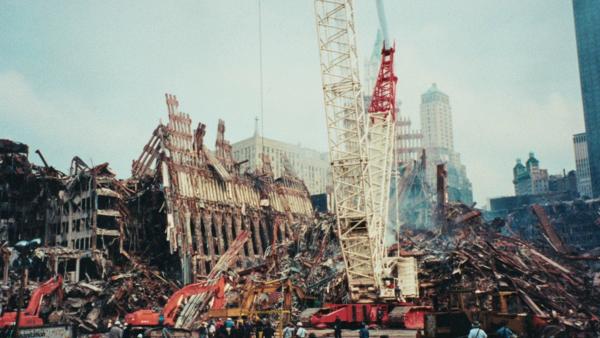
BIN LADEN'S HARD DRIVE, NATIONAL GEOGRAPHIC

