LEGION OF BROTHERS, CNN Films
Bergen was producer, premiered at Sundance and was broadcast on CNN. The film was nominated for an Emmy in 2018.
Jihadist Terrorism Sixteen Years After 9/11: A Threat Assessment
Statement to a Joint Hearing of the U.S. House Committee on Homeland Security and the House Committee on Foreign Affairs.
The Rise of Radicalism: Growing Terrorist Sanctuaries and the Threat to the U.S. Homeland.
US Senate Committee on Homeland Security, Permanent Subcommittee on Investigations.
ISIS Online: Countering Terrorist Radicalization & Recruitment on the Internet & Social Media
US House Committee on Homeland Security, Counterterrorism and Intelligence Subcommittee
The Future of Counterterrorism: Addressing the Evolving Threat to Domestic Security
Digital World War: Islamists, Extremists, and the Fight for Cyber Supremacy, New America DC
y
Digital World War: Islamists, Extremists, and the Fight for Cyber Supremacy
RSVP
When
December 1, 2017
1:30 pm – 3:00 pm
Where
New America
740 15th St NW #900
Washington, D.C. 20005
Social media has reshaped the way societies engage in politics and war across the Muslim world. From ISIS’ use of social media to recruit to its role in the Arab Spring the Internet has become a site of conflict. In his new book, Haroon Ullah examines the unprecedented impact of social media across the region addressing both its democratic revolutionary impact as well as how it has been co-opted by religious conservatives and extremists.
Dr. Haroon Ullah is Chief Strategy Officer for the Broadcasting Board of Governors. A former senior advisor to the U.S. Secretary of State, with a special portfolio on digital transmedia strategy and countering violent extremism, he is a Peabody TV Award recipient, an Adjunct Professor at Georgetown University, and a term member of the Council on Foreign Relations.
Follow the discussion online using #DigitalWorldWar and following @NewAmericaISP.
Participants:
Haroon Ullah, @haroonullah
Author, Digital World War: Islamists, Extremists, and the Fight for Cyber Supremacy (Yale University Press)
Moderator:
Peter Bergen, @peterbergencnn
Vice President, New America
Email
Tweet
Share
Understanding Proxy Violence in the Arab World and Beyond: Fordham, NYC
Understanding Proxy Violence in the Arab World and Beyond: The Role of State and Non-State Actors
Monday, November 20, 2017
7:00pm – 8:00pm
✚ gCal ✚ iCal
UNDERSTANDING PROXY VIOLENCE IN THE ARAB WORLD AND BEYOND: THE ROLE OF STATE AND NON-STATE ACTORS
A panel discussion moderated by Peter Bergen
Featuring Tricia Bacon, Ambassador Gerald Feierstein & Assaf Moghadam
Monday, November 20, 2017 7:00 p.m. – 8:00 p.m.
Light Refreshments Will Be Served
Fordham Law School, Costantino Room (2nd Floor)
150 West 62nd Street, New York, NY 10023
The program will serve as the launch event for an eighteen month project on Proxy Warfare CNS is working on with support from the Carnegie Corporation of New York.
RSVP
Peter Bergen is a print and television journalist, documentary producer, think tank executive, and the author of five books, three of which were New York Times bestsellers Bergen is Vice President, Director of the International Security, Future of War, and Fellows programs at New America; Professor of Practice at the School of Politics and Global Studies at Arizona State University; CNN’s national security analyst; and a Fellow at the Center on National Security at Fordham Law. Bergen is on the editorial board of Studies in Conflict & Terrorism, a leading scholarly journal in the field, and has testified before multiple congressional committees about Afghanistan, Pakistan, ISIS, al-Qaeda, drones and other national security issues. He is a member of the Homeland Security Project, a successor to the 9/11 Commission, and also of the Aspen Homeland Security Group. He is a contributing editor at Foreign Policy and writes a weekly column for CNN.com. Bergen’s newest book, United States of Jihad: Investigating America’s Homegrown Terrorists, was published in February of 2016. Director Greg Barker adapted the book for the HBO film Homegrown: The Counter-Terror Dilemma.
Tricia Bacon is an Assistant Professor at American University’s School of Public Affairs. She earned her PhD in International Relations at Georgetown University. Prior to her employment at American University, Dr. Bacon worked on counterterrorism for over ten years at the Department of State. Her work on counterterrorism in the intelligence community received numerous accolades, and she conducted research and analysis on counterterrorism in South Asia, North Africa, East Africa, Europe, and Southeast Asia.
Ambassador Gerald Feierstein is the director for Gulf affairs and government relations at the Middle East Institiure. He retired from the U.S. Foreign Service in May 2016 after a 41-year career with the personal rank of Career Minister. As a diplomat he served in nine overseas postings, including three tours of duty in Pakistan, as well as assignments in Saudi Arabia, Oman, Lebanon, Jerusalem, and Tunisia. In 2010, President Obama appointed Amb. Feierstein U.S. Ambassador to Yemen, where he served until 2013.
Assaf Moghadam is Associate Professor and Director of the MA Program in Government at the Interdisciplinary Center (IDC) Herzliya, Israel. He is Director of Academic Affairs at the International Institute for Counter-Terrorism (ICT); a fellow at the Combating Terrorism Center at West Point (CTC); an Adjunct Associate Professor at the Department of Political Science at Columbia University; and a Research Affiliate at the Consortium for the Study of Terrorism and Responses to Terrorism (START) at the University of Maryland. He is a Contributing Editor for the journal Studies in Conflict & Terrorism and the Book Review Editor for the journal Democracy & Security. He has authored or edited five books on terrorism and political violence.
Justice was served in the Bergdahl case, CNN.com
Justice was served in the Bergdahl case
Peter Bergen
By Peter Bergen, CNN National Security Analyst
Bowe Bergdahl avoids prison time 00:51
Story highlights
Peter Bergen says the sentence will not satisfy many in the military and it’s been attacked by President Trump
But given the mitigating factors that the judge had to consider, his decision was right, Bergen says
“Peter Bergen is CNN’s national security analyst, a vice president at New America, a professor of practice at Arizona State University and chairman of the Global Special Operations Foundation. He is the author of “United States of Jihad: Investigating America’s Homegrown Terrorists.” ”
(CNN)The case of Bowe Bergdahl, who deserted his US military outpost in eastern Afghanistan in 2009 and was then captured by the Taliban, stirs strong emotions.
For many in the military, the fact that Bergdahl deserted and subsequently endangered the lives and the limbs of a number of soldiers who went hunting for him meant that he should have faced a lengthy prison sentence.
At Berghdahl’s trial, prosecution witness Shannon Allen said her husband Mark was severely wounded on a mission to find Bergdahl and is today largely paralyzed and unable to care for himself.
The intensity of the anger directed at Bergdahl by some in the military is amplified by the fact that his freedom was gained by a 2014 prisoner swap for five mid- and high-level Taliban leaders who had been imprisoned at Guantanamo.
The prosecution in the case asked the judge, Army Col. Jeffery R. Nance, for 14 years of imprisonment. Nance opted for no prison time and a dishonorable discharge for Bergdahl.
Why? Col. Nance had to weigh a number of mitigating factors as he determined Bergdahl’s sentence. (Note: I have met with members of Bergdahl’s family.)
The first factor, of course, is the five years Bergdahl spent as a prisoner of the Taliban.
Bergdahl mounted a number of escape attempts after which he spent years confined in a cage suitable for an animal.
He was also tortured, beaten with thick rubber hoses and copper wire.
The second, is Bergdahl’s diagnosis of schizotypal personality disorder.
According to the Mayo Clinic, “People with schizotypal personality disorder are often described as odd or eccentric… the person with schizotypal personality disorder responds inappropriately to social cues and holds peculiar beliefs.”
Given this diagnosis, it’s not clear why Bergdahl was allowed into the military in the first place. Some evidence for Bergdahl’s strange mindset is provided by his observation to the podcast “Serial” after he was released by the Taliban that when he had left his base in Afghanistan he believed he was embarking on some kind of “Jason Bourne” mission. Moving around alone in Taliban areas in Afghanistan, Bergdahl proved an easy target for Taliban foot soldiers, not some kind of action hero.
A third factor that the judge likely weighed in his decision was that Bergdahl provided useful information about the Taliban to US intelligence agencies when he was debriefed.
Follow CNN Opinion
Finally, the judge said he would also weigh prejudicial statements made by President Trump about the case as a mitigating factor. The military is very sensitive to the issue of undue “command influence” in the military justice system.
When he was a candidate, Trump often called Bergdahl a traitor who should be executed, and just last month when he was asked about Bergdahl, the commander in chief said, “I think people have heard my comments in the past.”
Even though his own comments proved to be a factor in the judge giving Bergdahl leniency, Trump didn’t hold back in criticizing the decision Friday. On Twitter, Trump said the judge’s decision is “a complete disgrace to our Country and to our Military.”
Of course the sentence will not satisfy many in the military (as it hasn’t the commander in chief who is supposed to uphold the military justice system), but given the mitigating factors that the judge had to consider in the case, justice was served.
America’s unyielding plague of gun violence, CNN.com
America’s unyielding plague of gun violence
Peter Bergen
By Peter Bergen, CNN National Security Analyst
Story highlights
Peter Bergen: America is exceptional in many ways — including its rate of gun violence
But until Americans work to change lenient gun laws, tragedies like the ones in Texas and Las Vegas will remain a serious risk, writes Bergen
“Peter Bergen is CNN’s national security analyst, a vice president at New America and a professor of practice at Arizona State University. He is the author of “United States of Jihad: Investigating America’s Homegrown Terrorists.” This is an updated version of a story that appeared last month.”
(CNN)Americans often think of themselves as belonging to an exceptional nation, and in many ways they do. They belong to a tolerant, multicultural society that has led the world toward a more innovative and more inclusive future through new technologies and a unique embrace of diverse cultures.
But the United States also leads the world in other ways that don’t match the often complacent self-conception that many Americans have of their own country. The United States locks up more of its population proportionally than any other country in the world, including authoritarian regimes such as Russia and China, according to the International Centre for Prison Studies.
It also leads in another dubious statistic: More Americans are killed by fellow citizens armed with guns than in any other advanced country, according to the Small Arms Survey.
In 2011 alone, according to FBI statistics, more than 11,000 Americans were killed by firearms in the United States (a figure that excludes suicides).
Despite all the reasonable concerns in the United States about jihadist terrorism, in any given year Americans are almost 2,000 times more likely to be killed by a fellow American armed with a gun than by a jihadist terrorist. Since the 9/11 attacks, 103 people have been killed on US soil by jihadist terrorists, according to data collected by New America. Just last week, in fact, eight people were killed in a terrorist attack in lower Manhattan.
By contrast, in the United Kingdom, a country which is similar to the United States in terms of its laws and culture, Britain suffers around 50 to 60 gun deaths a year in a country where the population is around a fifth the size of the United States. In other words, you are about 40 times more likely to be killed by an assailant with a gun in the United States than you are in the United Kingdom.
To be sure there are occasional mass-casualty attacks in Europe by murderers armed with guns, such as the assaults by the neo-Nazi Anders Breivik, who killed 77 in Norway in 2011, and the attack in Dunblane, Scotland, at a school where 16 children were killed in 1996, but these are exceptions to the rule.
We still don’t know the motivations of Stephen Paddock, who last month carried out the worst mass shooting in modern American history, killing at least 59 and injuring more than 500 in Las Vegas, but what we do know, so far, is that he had 23 rifles in the room from which he launched his rampage.
I thought guns were fun. Then my loved ones became victims
I thought guns were fun. Then my loved ones became victims
Paddock also hailed from Nevada, a state that allows “open carry,” which enables its residents to openly display weapons in public. Which other civilized country allows its citizens to show up, say, at a Starbucks carrying semi-automatic guns?
Texas is another open carry state whose citizens can carry rifles and handguns openly. While many details are at this point unknown, at least 26 people were killed when a shooter opened fire on Sunday at a church in Sutherland Springs, Texas.
A man who lives near the church used his own rifle and shot at the gunman, said Freeman Martin, a Texas public safety official. “The suspect dropped his rifle, which was a Ruger AR assault-type rifle and fled from the church,” according to Martin.
The Second Amendment, of course, is the Second Amendment, so certainly American laws allow the possession of weapons by its citizens. But it’s unlikely that the Founders’ intention was to let troubled American citizens acquire arsenals to kill as many as their fellow citizens as possible.
With each new outrage — from the Sandy Hook massacre to the attack on the gay nightclub in Orlando — there follows a certain amount of soul-searching by the American public and policy makers about the distinctive American gun culture that has developed in recent years, where pretty much anyone can acquire an arsenal of weapons. But each time the moment of self-reflection seems to pass.
book
This is a tribute to the political muscle of the National Rifle Association which embraces a Second Amendment absolutism that allows even the dangerous number of less than 1,000 Americans who are on the “no fly” list to legally purchase semi-automatic weapons.
One can only hope that the tragic events in Las Vegas and Texas may change this. However, given that previous tragedies have not changed this deadly equation, there is really little reason for hope.
That resigns us to a dystopian future where Americans attending something as innocuous as an office holiday party in San Bernardino in 2015, or partying at a nightclub in Orlando the following year, or attending a country music concert last month in Las Vegas, or church on Sunday in Texas have to live with the lethal reality that they may become the innocent targets of their well-armed fellow citizens.
Correction: An earlier version of this article misstated the name of the shooter in Norway as Andres Breivik.
Making Sense in a World of Trouble, Leidos, Reston, VA
Leidos
Reston,
Speech to take place from 9:30am-10:30am 45 minute speech plus Q+A
Making Sense in a World of Trouble.
2017 Annual Security Conference
150 security professionals and Leidos employees
Leidos Office
11955 Freedom Drive Reston, VA 20190
FEATURED BOOK
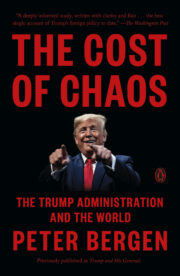
The Cost of Chaos: The Trump Administration and The World:
RECENT ARTICLES

UPCOMING EVENTS
Wednesday, March, 11, 2026
Reporting on the United States’ Long War Against Al-Qaeda, Georgetown University Library
Sunday, April, 12, 2026
2026 Global Security Forum, Doha
Monday, May, 04, 2026
“From Life Itself,” book event with author Suzy Hansen, NA/ASU online
Wednesday, September, 09, 2026
GLOBAL SUMMIT ON TERRORISM AND POLITICAL VIOLENCE, NYC
Thursday, September, 10, 2026
Denver, CELL
Friday, September, 11, 2026
Duke University
Tuesday, September, 22, 2026
Spy Museum, DC.
RECENT FILM AND TV SERIES
GHOSTS OF BEIRUT: SHOWTIME
The Fall of Osama bin Laden, National Geographic

BIN LADEN'S HARD DRIVE, NATIONAL GEOGRAPHIC

