Today’s terrorism didn’t start with 9/11 — it started with the ’90s, CNN.com
Today’s terrorism didn’t start with 9/11 — it started with the ’90s
Peter Bergen
By Peter Bergen, CNN National Security Analyst
Updated 1:35 PM ET, Wed August 2, 2017
Bergen: Most Americans see the era of jihadist terrorism as beginning with 9/11
But many features of terrorism as we know it today actually have roots in the ’90s
“Peter Bergen is CNN’s National Security Analyst. For CNN he produced Osama bin Laden’s first television interview. He is a vice president at New America and the author of “United States of Jihad: Who Are America’s Homegrown Terrorists and How Do We Stop Them?” The opinions expressed in this commentary are his.”
(CNN)In the remote mountains of the Hindu Kush in Taliban-controlled Afghanistan, CNN correspondent Peter Arnett asked Osama bin Laden, “What are your future plans?”
With the slightest smirk, bin Laden replied, “You’ll see them and hear about them in the media, God willing.”
That interview took place in March 1997. It was bin Laden’s first television interview, and it was the first time the al-Qaeda leader declared war on the United States to a Western audience.
But there’s another reason why this interview still stands out two decades later. It shows how much the features of terrorism that we live with today — from jihadist acts to eruptions of violence from the far right to the concept of the “lone wolf” — all had their roots in the 1990s.
For most Americans, the era of jihadist terrorism aimed at the United States began on September 11, 2001. But, as seen in CNN’s Original Series “The Nineties,” this terrorist campaign was actually intensifying in the decade prior.
Indeed, a group of jihadist terrorists attacked New York’s World Trade Center on February 26, 1993. The aim of the attack, which involved driving a bomb-laden truck into the basement of the complex, was to bring down both towers of the Trade Center.
That mission wasn’t accomplished, but the explosion did kill six people.
The mastermind of that 1993 attack was Ramzi Yousef, whose uncle Khalid Sheikh Mohammed, known as KSM, would go on to be the operational commander of the far more lethal terrorist attack at the World Trade Center on 9/11.
We would later learn that when bin Laden publicly announced his war against the US in 1997, four years after the first Trade Center bombing, he had already met with KSM to discuss large-scale terrorist plots designed to kill thousands of Americans.
It was in 1998, one year after the landmark CNN interview, that al-Qaeda suicide bombers drove truck bombs toward the US embassies in Kenya and Tanzania. More than two hundred people were killed in the simultaneous attacks.
This demonstrated that al-Qaeda could carry out gruesome acts of violence thousands of miles from its base in Afghanistan, and that it had no compunction in killing as many civilians as possible. Up until this point most terrorist groups had largely tried to avoid doing this, fearing that mass-casualty attacks might limit their appeal to their followers.
Al-Qaeda’s leaders simply didn’t care. In their minds, God was on their side so they could do no wrong.
The wave of far-right terrorism
Growing in parallel to this gathering storm of jihadist violence in the 1990s was the wave of far-right terrorism in the US.
Terrorism — which is commonly defined as politically motivated violence directed at civilians by entities other than a state — can and does come from all sides of the political spectrum. But in the decade before 9/11, it was violence motivated by right-wing ideologies that appeared to be the greatest threat to the American homeland.
The most well-known of the era’s far-right terror attacks is the Oklahoma City truck bombing on April, 19 1995, which destroyed the Murrah Federal Building and killed 168 people. At the time, it was the deadliest terror attack ever on American soil.
Timothy McVeigh, a Gulf War veteran in his late 20s who subscribed to a number of conspiracist views about the federal government and hung around far-right militia groups, was the mastermind behind the attack. McVeigh was quickly arrested and later executed.
The year after the Oklahoma City bombing, another far-right terrorist, Eric Rudolph, detonated bombs at Atlanta’s Centennial Park during the 1996 Olympics. He also targeted an Atlanta gay nightclub and abortion clinics in the South. Rudolph, a survivalist, spent five years on the lam and was arrested in Murphy, North Carolina. He is serving multiple life sentences at the Supermax prison in Colorado.
While the 9/11 attacks made jihadist terrorism the top concern of the public and law enforcement, the far-right strain of terrorism in the United States hasn’t disappeared in the years since al-Qaeda’s targeting of New York and Washington. New America, a non-partisan think tank that has tracked terrorist attacks in the US since 9/11, found that far-right terrorists have killed 67 people in the past decade and half.
The ‘lone wolf’
“The Nineties” also tells the story of “the Unabomber,” Ted Kaczynski, a hermit-like eccentric who lived in a small cabin in Montana. Between the late ’70s and the mid ’90s, Kaczynski, who subscribed to obscure neo-Luddite beliefs, mailed his targets more than a dozen bombs that killed three people and injured many others. Kaczynski did this entirely by himself without any help from an organization. He was a classic “lone wolf.”
Since Kaczynski we have seen more of these lone-actor terror attacks. One example is Omar Mateen’s attack at the gay nightclub in Orlando last year, in which he killed 49 people. Mateen was inspired by ISIS but had no formal connection to the group. He was killed by police who responded to the scene.
Similarly, Nidal Hasan, who killed 13 at Fort Hood, Texas in 2009, was inspired by al-Qaeda but was not part of the group, nor was he aided by it. Hasan was convicted in 2013 of 13 counts of murder and 32 counts of attempted murder.
We in the 21st century are often deluged with headlines about the prominence and reach of terror attacks. But when we look back to the ’90s, we realize it was really the last decade of the 20th century that saw the beginning of this wave.
For more on the 1990s, watch CNN’s Original Series on the decade Sunday nights at 9 p.m. ET/PT.
“Sixteen Years After 9/11: Assessing the Terrorist Threat.” New America DC
September 11, 2017
New America holds a discussion on “Sixteen Years After 9/11: Assessing the Terrorist Threat.”
SECTION: DISCUSSION; ||TRUMP/SECURITY/OUTLOOK|| Homeland Security
LENGTH: 94 words
TIME: 12:15 p.m.
PARTICIPANTS: Daveed Gartenstein-Ross, senior fellow at the Foundation for Defense of Democracies and CEO of Valens Global; Joshua Geltzer, fellow in the New America International Security Program; Nadia Oweidat, middle east fellow at New America; and Peter Bergen, vice president of New America
LOCATION: New America, 740 15th Street NW, Suite 900, Washington, D.C.
The general now in command at the White House faces ultimate test, CNN.com
The general now in command at the White House faces ultimate test
Peter Bergen
By Peter Bergen, CNN National Security Analyst
Updated 11:09 AM ET, Sun July 30, 2017
Peter Bergen: White House chief of staff was a no-nonsense leader at Homeland Security
Gen. John Kelly now faces the bigger challenge of taming White House chaos
“Peter Bergen is a CNN analyst, a vice president at New America and a professor of practice at Arizona State University. He is the author of “United States of Jihad: Investigating America’s Homegrown Terrorists.””
(CNN)In November, shortly after the election of Donald Trump, retired four-star Marine Gen. John Kelly was at home on a Saturday afternoon with his wife Karen watching college football when the phone rang.
On the phone was Reince Priebus — the man that Kelly would later supplant as White House chief of staff — who told Kelly, “Mr. Trump would like to have an opportunity to talk to you about maybe going into the administration.”
After serving 45 years in the Marine Corps, Kelly was only eight months into his retirement. Kelly consulted with his wife about the offer from the Trump team. Karen said, “If we’re nothing, the Kelly family is a family of service to the nation. If they think they need you, you can’t get out of it.” She added jokingly, “Besides, I’m really tired of this quality retired time we’re spending together.”
Kelly soon met with Trump who told him, “I’d like you to take the hardest, and what I consider to be the toughest job in the federal government.” Kelly says he panicked, briefly thinking that the offer was to run the State Department, but Trump said he was asking him to run Homeland Security.
Kelly says he was surprised by the offer: “I literally did not know Mr. Trump at all and I didn’t know anyone that knew Mr. Trump.” Kelly recounted how he made his way into the Trump Cabinet at the Aspen Security Forum earlier this month in a wide-ranging interview with Pete Williams of NBC News.
Running the Department of Homeland Security (DHS) is indeed one of the toughest jobs in the government. DHS is an ungainly giant of 22 different federal departments and agencies that merged together in the wake of 9/11 and is now made up of 240,000 employees who handle everything from hurricanes to cyber security to border security to terrorism.
As White House chief of staff, Kelly, 67, is taking on what is arguably an even harder job then running DHS. He will surely try to bring a general’s discipline to a chaotic group of presidential advisers.
In the past six months the White House has lost not only its first chief of staff but also other key officials such as a national security adviser, a deputy national security adviser, a communications director, a deputy chief of staff, a press secretary, and a top Middle East adviser.
Kelly certainly has leadership qualities in great abundance. In person, in Aspen, he came across as a no-nonsense, doesn’t-tolerate-fools-gladly kind of leader who also treats his staff with respect and listens carefully to what they have to say.
He will need all of his experience and hard-won leadership skills to help correct course at the White House which suffered this past week what historians will surely mark as Trump’s single biggest failure hitherto: his inability to push through any kind of repeal of Obamacare.
Kelly has earned Trump’s admiration for his aggressive efforts to enforce immigration laws and his support for the travel ban from half a dozen Muslim-majority countries.
These were, of course, among the key issues that Trump campaigned on and a large drop in illegal immigration is one of the few concrete wins that Trump can point to. Apprehensions of illegal immigrants at the southern border are down by more than half since last year, according to the US Customs and Border Patrol.
Illegal immigration is an issue with which Kelly is quite familiar as his last job in uniform was as the four star general in charge of Southern Command (SOUTHCOM) that is focused laser-like on Central and Latin America and protecting the southern border.
As DHS head, Kelly also deftly handled a significant threat to commercial aviation, which was the discovery in March that terrorists in the Middle East were manufacturing hard-to-detect bombs disguised in laptops.
DHS announced that eight Middle Eastern and African countries that have direct flights to the States could not allow passengers to carry on devices larger than a cellphone. By late July this ban had been lifted following the implementation of enhanced security procedures at airports in those eight countries.
In June DHS announced enhanced security measures at all 280 airports around the world that have direct flights into the States, including greater scrutiny of electronic devices and the use of more bomb-sniffing dogs.
Kelly also has the military credentials that Trump values as much as he does those who have made fortunes on Wall Street. The troika of Kelly, National Security Advisor, Lt. Gen. H.R. McMaster and Secretary of Defense, retired four-star Marine Gen. Jim Mattis, now hold the key levers of American power. Kelly, Mattis and the Chairman of the Joint Chiefs, Gen. Joseph Dunford, are also all Marines who have worked well together for decades.
Like Mattis, his fellow Marine and confidante, Kelly is blunt when he wants to make a point. When he was asked by a reporter in April 2003 as the Marines were closing in on Saddam Hussein’s regime in Baghdad if was he was worried about the strength of Saddam’s forces, in the distinctive accent of his native Boston, Kelly said, “Hell these are Marines. Men like them held Guadalcanal and took Iwo Jima. Baghdad ain’t s—.”
Follow CNN Opinion
The Kellys have also given much to the nation. In 2010 Kelly’s 29-year-old son Marine 1st Lt. Robert Kelly was killed by a landmine in Afghanistan. Kelly has another son who is an also Marine officer and a daughter who works for the FBI.
On Veteran’s Day, four days after his son’s death, in a speech in St. Louis, Kelly was clear that he sees the United States’ war against jihadist terrorists as a generational conflict. “The American military has handed our ruthless enemy defeat after defeat, but it will go on for years, if not decades, before this curse has been eradicated … We are at war and like it or not, that is a fact. It is not Bush’s war, and it is not Obama’s war, it is our war and we can’t run away from it.”
Is the fall of Mosul the fall of ISIS? CNN.com
Is the fall of Mosul the fall of ISIS?
Peter Bergen
By Peter Bergen, CNN National Security Analyst
Updated 12:33 PM ET, Tue July 11, 2017
Story highlights
Peter Bergen: The conditions that gave rise to ISIS in the Mideast are still very much present
They will produce other sources of terrorism, even if ISIS is ultimately eradicated, he says
“Peter Bergen is a CNN analyst, a vice president at New America and a professor of practice at Arizona State University. He is the author of “United States of Jihad: Investigating America’s Homegrown Terrorists.””
(CNN)The tidal wave of tens of thousands of “foreign fighters” that once flocked from around the Muslim world and beyond to ISIS’ black banners has slowed to a trickle. Estimates cited by The Washington Post suggest that the flow of foreign recruits to ISIS had dropped from a high of 2,000 a month to 50 a month by last fall.
Few foreign militants want to join the losing team.
On Monday, Iraqi Prime Minister Haider al-Abadi declared the defeat of ISIS in Mosul, the second-largest city in Iraq and the place where three years ago the terror group first announced its self-styled caliphate.
The loss of its Iraqi capital as well of much of its territory in Iraq and Syria dramatically undercuts ISIS’ claim that it is the caliphate because the caliphate has historically been both a substantial geographic entity such, as the Ottoman Empire, as well as a theological construct.
While the victory over ISIS at Mosul is certainly to be celebrated and its fighters are now more concerned about simple survival than plotting attacks in the West, it’s worth recalling that ISIS continues to hold the Iraqi towns of Tal Afar (population 100,000) and Hawija (population 115,000) and its de facto Syrian capital, Raqqa (population around 200,000).
The campaign to liberate Raqqa is now underway, but given the fact that it took around eight months to expel ISIS from Mosul we should expect a long battle for Raqqa.
Also, the one thing that really brought together the fractious sects and ethnic groups of Iraq — the Kurds, the Shia and most of the Sunnis — was their shared hatred of ISIS. With ISIS sharply declining in power, the tensions that have long existed in Iraq between these various groups will likely reassert themselves.
Which brings us to the bigger picture: ISIS was never the root problem in Iraq — even though it certainly created great misery among those it lorded over — but rather the group was the symptom of deeper problems that exist in the Middle East that are unlikely to disappear anytime soon.
ISIS, after all, is a branch of al Qaeda in Iraq, which was founded more than a decade ago. After suffering a near total defeat by US forces in Iraq between 2007 and 2010, al Qaeda regrouped in neighboring Syria as that country descended into a civil war beginning in 2011.
ISIS emerged in Syria because it was seen as one of the few Sunni groups truly capable of standing up to the brutal Shia Alawite regime of Syrian dictator Bashar al-Assad.
Similarly, ISIS did well in Iraq when it swept across the country in 2014, in part, because many Iraqi Sunnis were fed up with the deeply sectarian Shia government of then-Prime Minister Nuri al-Maliki.
The deep divisions between many Sunnis and Shia in both Iraq and Syria and also in countries such as Yemen, where Sunni Saudi Arabia and Shia Iran are fighting a proxy war, are likely to continue for many years. These are the conditions that will surely set the stage for the emergence of a son of ISIS (and even a grandson of ISIS).
At the same time, the collapse of governance in Arab countries such as Libya, Yemen and Syria has provided the breeding ground for groups such as ISIS and al Qaeda that thrive in countries where there is a leadership vacuum.
This is also compounded by the post-Arab Spring collapse of many Middle Eastern economies.
In turn, these factors have produced a massive and unprecedented wave of Muslim immigration into Europe. This influx has caused great political turbulence in Europe, enabling the rise of ultranationalist parties from France to Poland.
All of these factors have interacted to produce Sunni jihadists in the Middle East and to create fertile soil in Europe for the ideology of jihadism to take root among alienated, young Muslim men such as the ISIS recruits who carried out the deadly terrorist attacks in Paris, Brussels and Manchester, England, over the past two years.
That takes us to the unhappy conclusion that the war against the terrorists is far from over.
Paid Content
Save Some Time: Hire A Professional For Your Home Projects Save Some Time: Hire A Professional For Your Home Projects HomeAdvisor
Treat Yourself to a New Freezer or Ice Maker Treat Yourself to a New Freezer or Ice Maker Kenmore
13 Facts The “Sound Of Music” Producers Tried To Hide 13 Facts The “Sound Of Music” Producers Tried To Hide Hooch
F-15 No Longer King Of The Sky – Here’s Why F-15 No Longer King Of The Sky – Here’s Why HistoryInOrbit.com
The Kitchen Cabinet Company Big Box Retailers Don’t Want You To Know About The Kitchen Cabinet Company Big Box Retailers Don’t Want You To Know About CliqStudios
How To Fix Aging Skin (Do This Every Day) How To Fix Aging Skin (Do This Every Day) Health Headlines
Recommended by
Paid Content
Confessions of a Former Flight Attendant Travelwhip
50 Scariest Photos of the Vietnam War Standard News
When A Man Poured Molten Metal Into An Abandoned Ant Nest, What… Scribol
“Cheap Cable Trick” Internet Providers Are Trying to Hide From… Nation Home
More from CNN
Colin Kaepernick Has New Negative Leaks Emerge from 49ers over…
Prepare for AP 2.0: ‘He Is Still Going to Be in That Upper 1…
Former GOP congressman: Just ignore this President
Chris Christie at the beach is not the real problem
Recommended by
Learning from history, CNN.com
Peter Bergen
By Peter Bergen, CNN National Security Analyst
Updated 8:08 PM ET, Mon July 3, 2017
Story highlights
Peter Bergen: On July 4, it’s worth reflecting on the importance of studying our history
History allows us to understand our own fallibility, and if we heed its lessons, prevents us from repeating the same mistakes
“Peter Bergen is CNN’s national security analyst, a vice president at New America and a professor of practice at Arizona State University. He is the author of “United States of Jihad: Investigating America’s Homegrown Terrorists.””
(CNN) As Americans celebrate July Fourth, memorializing the birth of the United States almost two and half centuries ago, we should ask what we gain from the study of history.
It seems like a simple question with an even simpler answer: We don’t know where we are going if we don’t know where we’re from.
But there is a deeper reason, which is that history allows us to understand our own fallibility and hubris, helping us to approach our shortcomings with some degree of humility.
It also emphasizes that progress is not linear, nor is it irreversible. With every step forward, we can still take two steps back. But if we study history’s trajectory and learn from our mistakes, perhaps we can be better attuned to what President Abraham Lincoln called “the better angels of our nature” in his 1861 inaugural address.
History shows us our limits
History teaches us that the past is indeed a foreign country, so foreign that even a great scientist like Sir Isaac Newton believed in alchemy and thought that he might have discovered the Philosopher’s Stone, a substance that could purportedly turn iron into gold.
This, of course, was entirely false. But a visitor from the 24th century would likely find some of our most cherished beliefs to be as laughable as Newton’s embrace of alchemy is to us.
And just as Newton was both a scientist and an alchemist, the founding fathers declared “we are all created equal” while many of them owned slaves.
Were the founders simply hypocrites? Or were they largely prisoners of their own era? Or maybe a bit of both?
Trying to sort through these hard questions enables us to have empathy, or the ability to put ourselves in the shoes of our forebears.
And what about the American original sin — slavery? That Thomas Jefferson was also a slaveholder should remind us that the story of human progress is hardly the magnificent, linear journey toward the promised land of peace and justice that we often believe it to be.
President Barack Obama was fond of quoting Martin Luther King Jr.’s aphorism that “The arc of the moral universe is long, but it bends towards justice.”
Progress is fragile and reversible
That said, the case of Weimar Germany reminds us how fragile human progress is. In many ways, Weimar was one of the most liberal polities of the early 20th century, yet it birthed Nazism, which in turn led to the Holocaust.
The Holocaust shows us that one man can be both good and evil, depending on the circumstances he finds himself in. As the American historian Christopher Browning showed in his landmark 1998 study, “Ordinary Men: Reserve Police Battalion 101 and the Final Solution in Poland,” it was ordinary Germans who willingly participated in the Holocaust.
And who among us can honestly say that they would have been one of the few Germans who stood up to the Nazis. Almost all of those who did oppose the Nazis perished under ghastly tortures.
History reminds us that the forces of darkness are ever-present in the human soul and that few of us really have the capacity to be heroes.
The power of chance
History also teaches us about the power of chance. Nothing about Hitler’s ascent to power — from an obscure blowhard spouting crackpot racial theories in beer halls in 1920s Munich to becoming the master of much of Europe — was preordained.
Hitler benefited greatly from those in the German upper class who saw him as a former Army corporal they could manipulate to advance their own interests, while other European leaders such as Neville Chamberlain greatly underestimated Hitler’s will to power. The German upper class and leaders of Europe both passed up a number of chances to confront and undermine Hitler before he took control first of Germany and then of continental Europe.
Similarly, the American Revolution could easily have been derailed by General George Washington’s foolhardy decision in the spring of 1776 to keep much of his army in Manhattan as a great British fleet of 400 ships — one of the largest fleets hitherto assembled — surrounded the island.
The British commander General Sir William Howe’s much larger forces of soldiers could have finished off Washington’s army in New York, but instead the British general dithered — allowing Washington to organize a hasty retreat and survive to fight another day.
History isn’t a march to the promised land
Americans largely subscribe to the “Whig view” of history: the belief that our liberal values enshrined in the Constitution are powering us forward to an ever-freer and ever-richer future.
This belief is deeply rooted in a Judeo-Christian conception of history, one in which we are all trying to reach the Promised Land, which some have conflated with the United States itself.
President Ronald Reagan famously described the United States as a “shining city on a hill,” which echoed an important 1630 sermon by the Puritan John Winthrop, one of America’s first colonists who said “we shall be as a City upon a Hill.”
History warns us, however, that a steady march to the promised land is fallacious — as much as we all might want to believe in it.
In the summer of 1914, there was arguably no more peaceful, prosperous and well-connected world that had ever existed on earth. Countries were bound together by new trade routes, which were enabled by steam ships, trains and the telegraph. Important strides in public health such as the germ theory of disease and the discovery that cholera was spread by contaminated water had been made in the West. And for a century, since the defeat of Napoleon at Waterloo in 1815, there were no pan-European wars.
None of the great powers thought that the Great War would cause the collapse of the Turkish, Russian, German and Austro-Hungarian empires and would contribute to the eventual dissolution of the British empire. Yet all these monarchies and peoples went into the war with the firm belief that God was on their side. 17 million people died during World War I. The Spanish influenza at the end of that war killed tens of millions more.
It would be deeply ahistorical to believe that we might not face similar problems ourselves.
“History never repeats itself but it rhymes,” is an observation sometimes attributed to Mark Twain. The 20th century almost certainly was the peak of American power, but as Americans now face a rising China, history suggests that at some point both China and the United States will end up in some kind of war that will greatly damage both powers.
President Trump’s National Security Advisor, Lt. Gen H.R. McMaster, has frequently observed that “People fight today for the same fundamental reasons the Greek historian Thucydides identified nearly 2,500 years ago: fear, honor and interest.”
“Based on the current trajectory, war between the United States and China in the decades ahead is not just possible, but much more likely than recognized at the moment,” Harvard political scientist Graham Allison wrote in 2015. “Indeed, judging by the historical record, war is more likely than not.”
Just as the Spanish influenza killed 50 million in the wake of World War I, the fast rate of the warming climate and the rise of antibiotic-resistant super viruses may also trigger a massive pandemic that we will have scant resistance to.
Current advances in gene editing technologies may also allow states or terrorists to construct viruses that simply wipe out whole categories of humans whom they don’t regard as people. Does anyone doubt that if Osama bin Laden had had access to gene editing technologies, he would have used them against his enemies?
Getting it right
We also study the past to understand how great leaders come to grasp and master the currents of history more deeply than others.
British Prime Minister Winston Churchill understood the gathering threat posed by Nazi Germany long before his peers did. And Abraham Lincoln felt that slavery had to end before many of his colleagues did.
George Washington learned from his narrow escape from New York that fighting pitched battles with the British — the world’s then-superpower — was unlikely to win the war and that he would have to modify his tactics and fight a long war of attrition against them, which is why we can celebrate July Fourth in peace today.
Hopefully we can continue to do so. But history suggests that this is more of an aspiration than a certainty.
Terrorism in the age of polarization, CNN.com
Terrorism in the age of polarization
Peter Bergen
By Peter Bergen, CNN National Security Analyst
Updated 11:46 AM ET, Mon June 19, 2017
Story highlights
Bergen: Recent attacks demonstrate that our westernized perception of terrorism is far too narrow in scope
We must recognize that terrorism comes in many shapes and forms, he says
Peter Bergen is CNN’s national security analyst, a vice president at New America and a professor of practice at Arizona State University. He is the author of “United States of Jihad: Investigating America’s Homegrown Terrorists.”
(CNN)The attack early on Monday morning near a mosque in North London targeting Muslims who were celebrating the holy month of Ramadan reminds us that terrorism comes in many shapes and forms.
Because of the 9/11 attacks, the framing of terrorism by politicians, the media and the public too often in the past decade and a half has been that it is Islamist political violence that is the terrorism we need to be concerned about.
But a spate of recent attacks underline that this framing is too narrow in scope. The commonly accepted definition of terrorism is that it is politically motivated violence directed at civilians by entities other than a state. These kind of attacks can come from the far right, the far left, racists of every stripe, as well as jihadists.
Monday’s attack at the mosque in London, for instance, was clearly an act of anti-Muslim terrorism. A 48-year-old man was arrested after a van ploughed into worshippers near the mosque; one man was killed and 10 were hurt. British Prime Minister Theresa May called the attack “every bit as sickening” as the London Bridge and Manchester jihadist attacks. And London Mayor Sadiq Khan said anti-Muslim crimes have increased sharply since the London Bridge killings.
Last week 66-year-old James T. Hodgkinson III attacked congressional Republicans practicing baseball in Alexandria, Virginia, injuring five including House Majority Whip Steve Scalise. Hodgkinson was shot by police officers and died shortly after his attack.
Hodgkinson was a rabid critic of President Trump who posted on Facebook: “Trump is a Traitor. Trump Has Destroyed Our Democracy. It’s Time to Destroy Trump & Co.” Before he carried out his attack, Hodgkinson had asked two Republican congressmen who were at the baseball practice, Florida Rep. Ron DeSantis and South Carolina Rep. Jeff Duncan, if the players were Republicans or Democrats. Duncan said they were Republicans.
Hodgkinson’s attack was clearly an act of leftist terrorism.
Two months ago, on April 18, in Fresno, California, Kori Ali Muhammad stalked three white men with a revolver before shooting and killing them. On social media, Muhammad had called white people “devils” and posted about black separatism. Muhammad’s father told the Los Angeles Times that his son believed that he was part of conflict between blacks and whites and “a battle was about to take place.”
Muhammad’s attack clearly was a terrorist attack motivated by racism.
The reason that attacks by American terrorists who are not jihadist militants are sometimes not called “terrorism” is, in part, because in the United States terrorism is a crime which has to be in some way be associated with a “designated” terrorist group such as ISIS. These groups are designated by the U.S. State Department and are invariably foreign terrorist organizations.
Belonging to such a group is a crime in the United States, but because the First Amendment protects all kinds of hateful speech and ideas, neo-Nazi groups or other organizations based in the United States that espouse hateful views are not as a legal matter considered terrorist organizations, even if their adherents sometimes conduct acts that amount to terrorism.
It is perhaps not surprising that in an age of polarization where anti-immigrant sentiment is strong in some Western countries and where political emotions run high (be it over “Brexit “in the United Kingdom or over President Trump in the United States) we are seeing acts of political violence emanating both from the far left and the far right. They come in addition to the attacks by jihadist militants — which remain, of course, a very real concern.
Trump’s emerging plan on Afghanistan breaks with Obama, CNN.com
Peter Bergen says the Trump administration’s approach will stress an open-ended, long-term commitment of troops
This already is America’s longest war
“Peter Bergen is CNN’s national security analyst, a vice president at New America and a professor of practice at Arizona State University. He is the author of “United States of Jihad: Investigating America’s Homegrown Terrorists.” ”
(CNN)The elements of President Donald Trump’s approach to the Afghanistan war are emerging — and they’re markedly different from the stance President Barack Obama took. For one thing, Trump is committing US military forces to a long-term and open-ended deployment in Afghanistan, according to a senior US official.
Obama surged tens of thousands of additional US troops into Afghanistan, but when he gave a speech at West Point on December 1, 2009, announcing the new troops, he also simultaneously announced their withdrawal date.
For the Taliban, the Afghan government and Afghanistan’s neighbors such as Pakistan, the headline of Obama’s West Point speech was not the surge of new troops, but the withdrawal date. This had the counterproductive effect of encouraging the Taliban to wait out the Americans.
It also undermined confidence among Afghans and it affected the hedging strategy of Pakistan’s military intelligence service, ISI, which has long supported elements of the Taliban.
The Trump administration won’t replicate this mistake –there will be no announcements of withdrawal dates, according to the US official.
Getting the Afghanistan strategy right not only could determine the fate of America’s longest war, but also could have a powerful impact on America’s role in South Asia. But there are serious risks and working through all of them is extremely difficult, as the George W. Bush and Obama administrations discovered.
Troop levels
As to the number of additional American troops going to Afghanistan, last week President Trump delegated that decision to Defense Secretary James Mattis.
The US official put the number of new troops that is expected to deploy to Afghanistan at 3,800, adding to the 8,400 that are already there.
The delegation of authority to Secretary Mattis is another break with the Obama White House, which capped the number of troops that could be deployed.
The addition of the 3,800 troops will allow the Americans to train and assist Afghan forces at the tactical level on the ground, just as the US military is currently doing in Iraq with the Iraqi forces fighting against ISIS.
The addition of new troops is part of a broader South Asia strategy that the Trump administration is formulating that will include how to deal with Afghanistan’s neighbors such as Pakistan. The new South Asia strategy will be finished in the “coming weeks,” according to the senior US official, and it will focus as much on aid and diplomacy as it does on military strategy.
The senior US official said that the rush to add troops before the overall South Asia strategy was set was the result of the worsening security and political situation in Afghanistan that was particularly underlined by a massive truck bomb that blew up in Kabul’s diplomatic quarter on May 31, killing more than 150.
The bombing and other recent terrorist incidents has amplified major divisions in the government, which is led by both President Ashraf Ghani and CEO Abdullah Abdullah, according to the US official.
An awkward shotgun marriage between Ghani and Abdullah was engineered by the Obama administration after both of them contested the 2014 presidential election and accused each other — correctly — of benefiting from widespread electoral fraud.
Situation is ‘critical’
The Trump administration worries that if the Afghan government were to fracture so, too, would the Afghan army. Describing the situation as “critical,” the US official said that is why the addition of new troops could not wait for the completion of the overall South Asia strategy.
To skeptics who say that America’s longest war — now in its 16th year in Afghanistan — seems unlikely to be turned around by the addition of a relatively few number of troops that are being added by the Trump administration, compared to the tens of thousands of additional soldiers that President Obama deployed in 2009, the US official pointed to four factors that may produce a better result:
First, the long-term American commitment to Afghanistan by Trump gives time to stabilize the country so that the Afghan army can have the time and space to handle internal security.
Second, the Trump team believes it can convince the Pakistanis to better cooperate with the United States in terms of clamping down on terrorist groups who are using their territory as sanctuary, in particular the Haqqani Network, which is a component of the Taliban and has carried out many of the most lethal terrorist attacks in the Afghan capital, Kabul. However, the Obama administration also tried to get the Pakistanis to rein in the Haqqani Network, to little avail.
Third, successes on the battlefield against the Taliban may get them to the negotiating table, as a negotiated settlement is the only way to end the war.
Fourth, the Afghan National Army is a more professional military force than it was several years ago.
Haqqani Network and Pakistan.
A key element in all this is Pakistan, which “does have influence over the Haqqani leadership,” according the US official.
This is particularly important because the leader of the Haqqanis, Siraj Haqqani, is now the deputy leader of the Taliban and also runs its military operations.
An important factor in the strategic planning is that five Americans are being held hostage by the Haqqanis, including Caitlan Coleman and her two children under the age of 4 who were both born in captivity, as well as Kevin King, a teacher at the American University of Afghanistan in Kabul and author Paul Overby.
In addition, Canadian Joshua Boyle, the husband of Coleman and another American University of Afghanistan teacher, Timothy Weeks, an Australian citizen, also are being held by the Haqqanis.
According to the US official, the plight of the American hostages is “constantly discussed” with the Pakistanis and is raised “at the most senior levels.”
If the Pakistanis don’t do more to clamp down on the Haqqanis, the Trump administration could authorize additional drone strikes and also make public information about the links between them and the Pakistani military intelligence agency ISI, according to the US official.
There are risks, however, in amping up pressure on the Pakistanis, who have been told to “do more” about terrorist groups on their territory by successive American administrations over the past decade and a half.
The Pakistanis feel that they have already done quite enough. The India-based South Asia Terrorism Portal estimates that more than 6,700 Pakistani soldiers have died fighting the Taliban and over 21,000 Pakistani civilians have been killed in terrorist attacks over the past 14 years. Other estimates run even higher.
The Pakistanis also have important cards of their own to play if the Trump administration does amp up pressure on them — which is the fact that Afghanistan is a landlocked country and the easiest air and land routes into Afghanistan to resupply US soldiers are thorough Pakistan. Pakistan could make the flow of American supplies into Afghanistan more difficult in a number of different ways.
It’s a dilemma that the George W. Bush and Obama administration faced, which is that the United States needs the help of the Pakistanis in a number of ways and can only cajole or coerce them so far.
The Pakistanis are also closely allied to the Chinese, who are providing them with tens of billions of dollars of investments. It wouldn’t be smart to push them further into the arms of the United States’ nearest peer competitor, China.
The Trump administration has the benefit with the Pakistanis of being a newly installed administration, which gives them leverage, but the issue of how best to deal with Pakistan and the search for the optimal approach in Afghanistan has bedeviled three successive American administrations since 9/11.
The most promising approach in the Trump administration strategy is its long-term commitment to Afghanistan. As the Trump administration formulates its South Asia strategy and the public messaging around it, this is the key point that needs to be emphasized.
Domestic abuse can portend terror violence, CNN.com
Bergen: Domestic abuse can portend terror violence
By Peter Bergen and David Sterman, CNN
“Peter Bergen is CNN’s national security analyst, a vice president at New America and a professor of practice at Arizona State University. He is the author of “United States of Jihad: Investigating America’s Homegrown Terrorists.” David Sterman is a policy analyst at New America’s International Security Program.”
(CNN)James T. Hodgkinson, the man who carried out Wednesday’s shooting at a baseball practice by congressional Republicans, was a small-business owner from Illinois. He also was charged 11 years ago with domestic abuse.
In 2006 Hodgkinson was arrested on charges of domestic battery after, according to a police report, he went into a neighbor’s house to find his daughter, used bodily force to damage a door, grabbed his daughter by her hair, and when she escaped him and ran to a car, used a knife to cut her seat belt. He punched the neighbor, and brandished a shotgun, firing one round, the police report said.
The charges against Hodgkinson were later dismissed, but the allegations have a new resonance after Wednesday’s shooting attack. A history of association with domestic violence is relatively common among those who have committed political violence in the United States.
Of the 48 perpetrators of lethal political violence in the United States since 9/11 — whether they were motivated by jihadist, far right or black nationalist ideologies — 11, or almost a quarter, had allegations or convictions of domestic violence or sexual crimes in their past, according to an analysis of New America’s research.
While there are quite a number of domestic abusers and sexual predators in the United States — and there are, relatively speaking, few terrorists — it is striking how many domestic terrorists have had an earlier brush with domestic violence or sexual crimes before they have gone on to carry out significant terrorist acts.
Take Omar Mateen, who killed 49 people at the Pulse nightclub in Orlando on June 12, 2016 — the most deadly terrorist attack in the United States since 9/11. His first wife, Sitora Yusufiy, told reporters he had abused her.
Or Joshua Cummings, a former soldier and convert to Islam, accused of killing a transit guard in Denver in January, and who claimed to have done so for ISIS. Cummings reportedly was charged with domestic violence in 2010, though the case was eventually dropped.
Kori Allen Muhammad, charged with killing three people in an April attack reportedly motivated by black nationalist ideology, was also previously arrested for domestic violence.
Similar cases can be found among the far right. Robert Dear, for example, accused of killing three people in a 2015 attack on a Planned Parenthood clinic in Colorado, had a history of run-ins with police over domestic violence.
Terry Smith, an anti-government militant and so-called “Sovereign Citizen,” who was convicted for his role in the murder of two police officers in Louisiana during a shootout in 2012, was also convicted of the aggravated rape of a child relative.
Pelosi chokes up over congressional shooting
Domestic violence among perpetrators of deadly political violence should not be surprising: It is also common among perpetrators of mass violence more generally. According to the gun safety research group, Everytown, data analysis of FBI and media reports reveal that “the majority of mass shootings in the U.S. are related to domestic or family violence.”
More research remains to be done on the nature of the linkage between domestic violence and sexual crimes and acts of political violence. But the frequency of the association reveal this as quite a promising area of research — particularly as law enforcement officials try to understand how someone who is known to be radicalizing might eventually go on to commit a violent act in the name of whatever twisted radical ideology he or she has embraced.
The return of leftist terrorism? CNN.com
The return of leftist terrorism?
By Peter Bergen and David Sterman, CNN
Bergen and Sterman: Wednesday’s shootings are possible act of leftist terrorism
In the 1960s and 1970s, left-wing terrorism was a common occurrence in the United States
“Peter Bergen is CNN’s national security analyst, a vice president at New America and a professor of practice at Arizona State University. He is the author of “United States of Jihad: Investigating America’s Homegrown Terrorists.” David Sterman is a policy analyst at New America’s International Security Program.”
(CNN)On Wednesday morning, a gunman attacked congressional Republicans practicing baseball, injuring five people including House Majority Whip Steve Scalise. The man identified as the shooter, 66-year-old James T. Hodgkinson III, was taken into custody and later died.
Peter Bergen
While the incident remains under investigation, a review of Facebook pages belonging to Hodgkinson show he supported Sen. Bernie Sanders during the election and was fervently opposed to President Donald Trump. One Facebook post read: “Trump is a Traitor. Trump Has Destroyed Our Democracy. It’s Time to Destroy Trump & Co.” Sanders confirmed that Hodgkinson had volunteered for his presidential campaign and, in no uncertain terms, condemned his violent acts.
Two Republican congressmen who were at the baseball practice, Florida Rep. Ron DeSantis and South Carolina Rep. Jeff Duncan, also said that a man who looked like the shooter had asked them before the shooting if the players were Republicans or Democrats. Duncan replied they were Republicans.
Hodgkinson’s political leanings, his potential targeting of GOP victims and the symbolic importance of those victims raises the very strong possibility the shooting was an act of leftist terrorism.
Hodgkinson’s attack appears to fit the commonly accepted definition of terrorism, which is politically motivated violence against civilians by an entity other than a state, and once again reminds us that terrorism is the province of no single ideology.
In this age of political polarization, the United States must be prepared for violence from the left, the right, jihadists, and also those who subscribe to hard-to-categorize conspiracy theories. One such recent example of conspiracy-inspired violence occurred not far from Alexandria, when a man armed with a rifle fired shots inside a Washington DC pizza joint, while he was there to “investigate” an Internet-fueled hoax that the restaurant was a front for a child sex ring organized by Democratic Party officials.
In this undated file photo, James Hodgkinson holds a sign during a protest outside a United States Post Office in Belleville, Illinois.
In this undated file photo, James Hodgkinson holds a sign during a protest outside a United States Post Office in Belleville, Illinois.
While less prevalent in the national consciousness today, in the 1960s and 1970s, left-wing terrorism was a common occurrence in the United States, with many attacks perpetrated by radical groups such as the Black Panthers, the Weather Underground and other smaller, less-well-known groups. The 1960s and 1970s were also a time of great political polarization given the protests around the Vietnam War and the intensification of the civil rights movement.
The Weather Underground was an anti-Vietnam War organization that targeted the Pentagon, the US Capitol and banks. The group claimed credit for 25 bombings in 1975 alone, according to the University of Maryland’s Global Terrorism Database.
Anti-war militants also carried out major bombings at City Hall in Portland, Oregon, and the University of Wisconsin-Madison, while the Black Panthers mounted 24 bombings, hijackings and other assaults.
The golden age of terrorism
The golden age of terrorism
Since the 1970s, left wing terrorism has largely declined, with the exception of some more extreme animal rights groups and eco-terrorists. But these groups have largely targeted property rather than aiming to conduct lethal attacks.
In addition, there have been occasional instances of politically motivated violence from the left, including a 2013 shooting at the conservative Family Research Council motivated in part by its opposition to same-sex marriage. Fortunately no one was killed.
The necessary comparison of incidents of far-left and far-right terrorism raises important questions about political polarization and radical violence. Since 9/11, according to data collected by New America, far-right terrorists have conducted a much higher number of lethal attacks in the United States than leftist terrorists, killing a total of 53 people.
But in the past two years, amid the polarization of the election campaign and of Trump’s election victory, political violence seems to again be emerging on the left.
On July 7, 2016, Micah Xavier Johnson shot and killed five police officers at the conclusion of a Black Lives Matter protest in Dallas. Johnson was not connected to the protest, but his Facebook page revealed an interest in radical black groups like the New Black Panther Party, and the Dallas police chief said, “The suspect stated he wanted to kill white people, especially white officers.”
Two months ago, on April 18, Kori Ali Muhammad, a 39-year-old African-American man, was arrested and charged with killing three people in a shooting in Fresno, California. Police said they believed race was a factor in the murders and Muhammad’s social media presence included Black Nationalist posts. Muhammad’s father said his son believed he was part of a war between whites and blacks and that “a battle was about to take place.”
Although these two attacks motivated by black nationalist ideology share little in common with the politics of Hodgkinson, the three of them together summon echoes of the past, when the United States experienced domestic terrorism at the hands of leftists and black nationalists.
Afghanistan in Crisis: Where to Go From Here, New America DC
Afghanistan in Crisis: Where to Go From Here
RSVP
When
June 9, 2017
12:15 pm – 1:45 pm
Where
New America
740 15th St NW #900
Washington, D.C. 20005
The security situation in Afghanistan is deteriorating. The massive truck bomb in Kabul that killed dozens highlights the crisis just as the Trump administration considers what direction it should take U.S. policy regarding America’s longest war. What steps will the Trump administration take, and what policy should it adopt? How should the United States weigh the costs and benefits of the various options on the table.
To discuss these issues, New America welcomes Peter Bergen, Vice President of New America, John Dempsey, a fellow with New America’s International Security Program, and Ioannis Koskinas, a senior fellow with New America’s International Security Program who has been based in Afghanistan for the past seven years. Dempsey is the former senior advisor to Ambassador Richard C. Holbrooke and his successors in the State Department’s Office of the Special Representative for Afghanistan and Pakistan, where he oversaw U.S. government rule of law and elections policy in the region from 2009-2016. Koskinas focuses on foreign policy issues with an emphasis on Afghanistan, Pakistan, Iraq, and the Levant. He is the CEO of the Hoplite Group, a company focused on sustainable and innovative solutions to complex problems, in the most challenging environments and harshest conditions.
Participants:
Peter Bergen, @peterbergencnn
Vice President, New America
John Dempsey
Fellow, New America International Security Program
Ioannis Koskinas, @Gianni_in_Kabul
Senior Fellow, New America International Security Program
CEO, Hoplite Group
Moderator:
Awista Ayub
Deputy Director, New America Fellows Program
Author, Kabul Girls Soccer Club
FEATURED BOOK
The Cost of Chaos: The Trump Administration and The World:
RECENT ARTICLES

RECENT FILM AND TV SERIES
GHOSTS OF BEIRUT: SHOWTIME
The Fall of Osama bin Laden, National Geographic
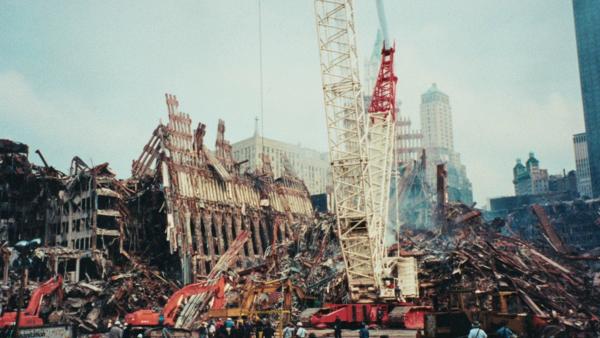
BIN LADEN'S HARD DRIVE, NATIONAL GEOGRAPHIC

