Doha Security Forum, Doha, Qatar
Global Security Forum 2025
The Impact of Non-State Actors on Global Security
April 28-30 2025
The 2025 Global Security Forum (GSF) will take place from April 28-30, 2025, in Doha, Qatar, hosted by The Soufan Center and the Qatar International Academy for Security Studies (QIASS). Under the auspices of His Excellency Sheikh Mohammed bin Abdulrahman Al-Thani, Prime Minister and Minister of Foreign Affairs of the State of Qatar, this year’s gathering will address the theme “The Impact of Non-State Actors on Global Security.” This pivotal theme will explore the evolving roles and influences of non-state actors—ranging from private military contractors and transnational terrorist groups to organized criminal networks and violent extremist organizations—on the global security landscape. Our website will be regularly updated with information about this year’s event.
60
Countries
5
Strategic Partners
43
Sessions
1400
Attendees
Future Security Forum, New America DC with Arizona State University
The worst thing LA could do as it recovers from fire disaster, CNN.com
Analysis by Peter Bergen, CNN
13 minute read
Published 6:00 AM EST, Sat January 18, 2025
CNN
—
Despite the finger-pointing about who is to blame for the spread of the Los Angeles fires, Jeff Goodell believes there’s no level of preparation that could have fundamentally changed the trajectory of this massive disaster, which was propelled by urban planning decisions made decades ago and more than a century of fossil fuel pollution that has made 2024 the hottest year on record.
LA — and much of the rest of the world — was built for a climate that no longer exists, said Goodell, a journalist and writer who has covered climate change and the environment for the past quarter century. We must reimagine how we build our world and the kinds of urban planning, water supplies, building insulation, and public transportation that are necessary to adapt to a hotter climate.
Jeff Goodell is a journalist and author. His most recent title is “The Heat Will Kill You First.”
Jeff Goodell is a journalist and author. His most recent title is “The Heat Will Kill You First.” Courtesy Jeff Goodell
In a conversation last weekend, Goodell and I also discussed how the Biden administration has presided over the most significant amount of gas and oil production in American history — a fact that the Biden team has been reticent to advertise and a trend that the incoming Trump administration will likely only amplify.
Goodell, who — full disclosure — was a fellow at New America, the research institution where I’m a vice president, also described the emergence of “attribution science,” which increasingly allows scientists to attribute the responsibility for certain extreme weather events to climate pollution. It’s a significant step forward in research that could ultimately enable those harmed most by climate change to hold fossil fuel companies accountable.
Our conversation was edited for clarity.
PETER BERGEN: Are you surprised by what’s unfolding in Los Angeles?
JEFF GOODELL: I wish I could say that I was, but I’m not, partly because I’m a fourth-generation Californian and I grew up seeing wildfires. And I know that fire is deeply a part of the California landscape. I’ve also been writing about climate change for 25 years. I know about the relationship between heat and fire, and as we build a hotter and hotter world, bigger and more intense fires are inevitable.
BERGEN: Southern California is prone to fires, and the Santa Ana winds are a recurring weather event. Are these LA fires different from anything we’ve seen before?
GOODELL: What’s different about these are the fires’ scale, speed and intensity. Another thing that’s very different is that it’s in January, which is not typically fire season in Southern California. And this elongation of the fire season is a hallmark of our changing climate. It used to be that in Southern California, there were five or six months a year of fire danger. And now it’s virtually year-round.
BERGEN: And what were those five or six months typically?
GOODELL: June through the end of October used to be the worst. I was just in New York at a conference with some of the best climate scientists in the world. The conversation was all about the Los Angeles fires and the changes in the hydrologic cycle. There was a lot of rain last spring and that caused a lot of brush and vegetation to grow up because there was so much water. And then you had an extreme dry cycle. So you had this excess vegetation, and then it gets dried out by these hotter summers and longer and longer dry seasons, which make it much more flammable.
BERGEN: There’s a lot of finger-pointing in LA right now. What do you make of it?
GOODELL: There’s always going to be finger-pointing after an event like this, and there’s obviously lots of things that could have been done better. But I think the blunt truth is that there’s no level of preparation that could have changed the trajectory of this in a fundamental way.
When you have 100 mph Santa Ana winds and you have this kind of dried-out vegetation and this kind of housing packed together in these inaccessible, difficult-to-reach hills, it’s just a recipe for this kind of terrible disaster. So, yes, if we would have thought differently about urban planning and restricted building in Pacific Palisades and 30 years ago required different building materials, and if the levels of CO2 in the atmosphere weren’t so high and the drought cycles and heat cycles weren’t so extreme, that could have been a different scenario.
There will be many lessons learned from this. But the biggest lesson that we need to learn is that we are just plain not prepared for the climate that we have created. Our world is not built for the climate that we live in, and the biggest change is going to require acknowledging that fact.
I’m scared that we’re going to rebuild LA more or less the same way, without using this as an opportunity to rethink how LA is built and reinvest in important public infrastructure like better water supply systems, as well as coming up with a strategy to force a retreat from building in the most risky areas.
This is an opportunity to reimagine the urban landscape and its relationship with nature in Southern California, and if history shows us anything, it’s not going to happen. We have to stop and think, “Okay, we have to do this differently now. We have to use this tragedy as an opportunity to really learn, really think this and rebuild in a way that acknowledges the dangers of the world that we live in right now.”
BERGEN: You begin your new book, “The Heat Will Kill You First,” in the Pacific Northwest, which generally has a temperate climate. What happened there?
GOODELL: The book’s opening describes the heat wave that hit in the summer of 2021 in the Pacific Northwest, where you saw a spike in temperatures in places like Oregon, Washington, and British Columbia, up to around 121 degrees. A “heat dome” settled over this region for five or six days. And it led to these temperatures, which were virtually unheard of. It was the heat equivalent of snow in the Sahara. And the reason it was important is because It was an example of this new extreme kind of climate that we are creating by continuing to burn fossil fuels and put CO2 in the atmosphere, where we’re seeing these kinds of climate extremes that go beyond what even climate models are able to predict.
A lot of the talk about climate change and global warming is about average temperatures, about things like whether we have passed the threshold of a 1.5 degrees Celsius warming from pre-industrial conditions. But within that general warming is this more extreme weather phenomenon, where we have these sudden heat spikes, dramatic precipitation events, and bigger and more intense hurricanes. So, I wanted to capture these extremes and their unpredictability.
The Palisades Fire ravaged the Pacific Palisades neighborhood of Los Angeles on January 8.
Related article
How do you clean up a fire disaster unlike any other in modern times? ‘It’s going to be an enormous undertaking’
BERGEN: How did you get into reporting on climate change?
GOODELL: It was in 2001, just after George W. Bush had been elected. The New York Times called me up and said that Bush and Dick Cheney were going to release the “Bush-Cheney Energy Plan,” and the editors said, “There’s going to be a big push in fossil fuels, and coal is going to be a big part of that. Why don’t you go down to West Virginia and write about the comeback of the coal industry?”
I had never written about climate or energy. I had no idea that, at that time, half our electricity came from burning coal. But I thought it was an interesting assignment and went down to West Virginia. Going into the coal fields opened my eyes to a lot of things, and one of the things that made me start to think about is, “Okay, what is the consequence of burning all this coal?” And that’s when I started to think about climate change, which then grew into a book called “Big Coal.” And that was my first real dive into climate science.
BERGEN: You have spent a quarter of a century writing about climate change and traveling around the world reporting on it. Whatever their views about the causes of climate change, many people need to see it with their own eyes to acknowledge that climate change is happening. Has that changed the way that your work is received?
GOODELL: There is a much more widespread understanding that something is happening; everybody is noticing it. I live in Austin, Texas. In the summer of 2023, we had 45 days above 100 degrees. If you’re a human being living on planet Earth, you see what’s going on. But a lot of people say, “Well, you know, there’s always been variability, and it was hotter in previous times, and this is just natural variability.” They understand that it’s changing, but what exactly is changing is still up for dispute among many people.
It’s not up for dispute at all among scientists. It hasn’t been up for dispute among scientists for 40 years. But in those 40 years, the fossil fuel industry has ramped up a campaign of misinformation and disinformation and has deliberately clouded the communication around the consequences of burning fossil fuels.
So, our understanding of the risks of climate change in the public sphere is still not an accepted relationship, the way it is among scientists. The straightforward relationship between higher levels of CO2 in the atmosphere, mostly from burning fossil fuels and these extreme weather events is as solid as the science of gravity.
Firefighters work from a deck as the Palisades Fire burns a beach front property Wednesday, Jan. 8, 2025 in Malibu, Calif. (AP Photo/Etienne Laurent)
Related article
LA fires were larger and more intense because of planet-warming pollution, study suggests
BERGEN: Something that the Biden administration hasn’t advertised is that more gas and oil were produced during the Biden administration than at any other time in US history. Which is somewhat ironic, given where the rest of the Democratic Party is generally speaking on the question of climate change.
The Biden administration has been pretty permissive in terms of gas and oil production. Trump, is likely going to ratchet that up considerably, right?
GOODELL: Correct. And there’s no question that the Biden administration continued on the path of fossil fuel production with natural gas exports and drilling in a way inconsistent with any kind of serious grappling with the risks of climate change.
I think one of the things this LA fire shows is that it’s essential to talk about reducing fossil fuels, because they are ultimately the main driver of climate change, and that is ultimately the way we’re going to slow down this rise of temperature and increase of extreme weather events.
The environment that LA was built for — a lot of the buildings constructed in the 1920s and 30s and 40s — that climate does not exist any more, and we are not going back to that. We have to reimagine how we build our world. And that means all kinds of things, from how we design buildings, the kind of fireproofing, urban planning, water supplies, building insulation and public transportation.
On that score, Biden has certainly been better. In the Inflation Reduction Act, there were a number of measures that helped along the path of climate change adaptation.
It’s also really important to say that the transition from fossil fuels to cleaner energy is happening. It is a done deal. The issue is how fast it will happen, and I think the Trump administration will try to slow that transition so that the oil and gas companies have another decade or however long of insane profitability.
I live in Texas. During the summer this year, depending on the day, roughly 70% of the power on our grid came from renewable energy, and that’s mind-blowing. And that’s not because Texans are tree huggers. It’s because renewable energy — wind, solar, and geothermal — are the cheapest ways to generate power now.
So, this transition is going to happen. It’s just a question of how fast it happens.
BERGEN: One of the things I learned from your book was something called “attribution science” when it comes to extreme weather events. What is it?
GOODELL: Attribution science is a really powerful development in the world of climate science, and it has big political, legal and economic implications.
The easiest way to think about it is a kind of forensic science that can look at an extreme weather event, for example, the 2021 heat wave in the Pacific Northwest. They took a lot of the data points of this heat wave and put them into a computer model. And then they run that same computer model without the present higher levels of CO2 in the atmosphere, with a much lower level of CO2 and they run these models thousands of times.
If they can’t replicate the extreme weather event in the models, they can say that this event could not have happened, or was highly unlikely, without the higher levels of CO2, And in the case of the Pacific Northwest heat dome, where some 600 people died, they were able to say this event would not have happened without higher levels of CO2 in the atmosphere.
To be able to make a statement like that is a huge scientific breakthrough.
With attribution science you can begin to say, “Okay, who was responsible for putting the higher levels of CO2 in the atmosphere?” And you can look at companies like ExxonMobil and Chevron, and you can say, “Well, they’ve known about these risks for decades, and they’ve continued to sell this product that they’ve known is dangerous.”
And in some cases, Big Oil starts to look a bit like Big Tobacco, and you can just play it out from there in the sense of litigation. This is why some 2,000 climate litigation cases worldwide are looking at these questions of responsibility.
Editor’s note: Since this interview took place, scientists at the University of California, Los Angeles, published a rapid analysis that suggests human-caused climate change was responsible for 25% of the LA fires’ fuel, making them larger and more intense than they would have been without fossil fuel pollution in the atmosphere.
A firefighting plane makes a drop on the Palisades fire in Pacific Palisades on January 7, 2024.
Related article
2024 was the hottest year on record, breaching a critical climate goal and capping 10 years of unprecedented heat
BERGEN: Your most recent book is “The Heat Will Kill You First,” which is a very arresting title. How did you come up with it, and why?
GOODELL: Well, I came up with the title in the kind of brainstorming that one does looking for titles, and at first some people at my publishing house worried that it was too scary, that nobody would ever buy the book.
But I said, “No, I really want this to be the title of the book.” I think that a lot of the conversation, the media coverage and everything about climate change has been too far off in the distance. And I wanted this book title to do basically what the LA fires doing, which is focus the reader’s imagination on the here and now. Climate change is not about what might happen to your grandchild in 50 years or about what’s happening to polar bears on ice fields somewhere. It is about your life and the risks to your life now in a very personal and direct way.
People always ask me, “After covering climate change for so long, why aren’t you living in your basement drinking a bottle of bourbon and scrolling on the wall with crayons about the lost future for your children?” And it’s because I actually find this story both tragic, but also incredibly inspiring because I spend a lot of time talking with people every day who are doing amazing things.
They are doctors who are trying to better understand what heat does to the human body; wildland firefighters who are thinking differently about their strategies to deal with fires, architects who are thinking differently about how we’re going to build; scientists who are trying to better understand the consequences of rising greenhouse gas emissions. There’s just this whole range of people who understand that our world is changing really fast, that it’s a very dangerous moment and that there’s a lot that they can do to help.
I really am convinced that the better we understand the sort of scope and scale of what we face, and the better we can begin to reimagine our world and build a better world. I’m not writing about this as an extinction event. I’m not a doomer.
I am a person who really thinks that what Los Angeles is going to look like in 50 years is not at all the way it looks today. And what Miami is going to look like in 50 years is not at all like what Miami looks like today and Phoenix and Austin.
It might be hellishly worse if we’re stupid, and it might be a lot better if we’re smart.
What Can You Expect From President Trump’s Foreign Policy?
Jan 14 2025
Financial Times columnist Ed Luce says President Donald Trump might love trade wars, but he’d rather not engage in military ones. While he acknowledges there’s a lot that’s unpredictable, Luce is cautiously optimistic that with unpredictability there can also be opportunity, including for peace deals. So, what might U.S. foreign policy look like over the next four years?
Trump Wants a Loyal FBI and Justice Department. Here’s How He Plans to Get it.
Narrated by: Peter L. Bergen
Jan 7 2025
Length: 31 mins
Podcast
In his first term, Donald Trump did more to politicize top U.S. law enforcement institutions than any U.S. President, according to journalist David Rohde. Through interviews with numerous people inside Trump’s term-one FBI and Justice Department, Rohde carefully documented the impact on the FBI and DOJ during Trump round one. Join us for a conversation about what he thinks is coming in round two.
Guantanamo at Twenty-Three: Explore the future of Guantánamo Bay Online event New America/ASU
Guantanamo at Twenty-Three
Explore the future of Guantánamo Bay as experts discuss its history, current challenges, and prospects for closure.
January 14, 2025
12 pm – 1 pm ET
Online
January 11, 2025, marked the 23rd anniversary of the opening of the military prison at Guantánamo Bay, which was established in the wake of the 9/11 attacks. When Biden took office, the prison held 40 people. As the days count down to the inauguration of President Elect Trump, the Biden administration has worked to reduce the population of the prison. On January 6th, the U.S. transferred 11 Yemeni detainees to Oman, dropping the prison’s population to 15 men. Among these men are three who the government has approved for transfer, three who have not been approved for transfer but also have not been charged with crimes, seven men currently facing charges, and two who were convicted. As Trump prepares to take office, the fate of the prison and the men who remain there is unclear. Trump previously halted efforts to close the prison, transferring only one prisoner, and even threatened to expand Guantanamo. What will happen to the prison and its detainees as the Biden administration’s first term comes to an end? Will the prison ever close?
Join New America’s Future Security Program as they welcome Karen Greenberg, Thomas B. Wilner, and Andy Worthington for a discussion about what is next for the prison. Karen Greenberg is Director of the Center on National Security at Fordham Law and a fellow with New America’s Future Security program and a research fellow with ASU’s Future Security Initiative. She is the author and editor of many books, including Subtle Tools: The Dismantling of American Democracy from the War on Terror to Donald Trump and The Least Worst Place: Guantanamo’s First One Hundred Days. Thomas B. Wilner is the co-founder of Close Guantanamo, Of Counsel at Shearman & Sterling LLP, and was counsel of record to the Guantanamo detainees in two Supreme Court cases confirming their right to seek review of their detention in U.S. courts. Andy Worthington is the co-founder of Close Guantanamo and author of The Guantanamo Files.
Join the conversation online using #GTMOat23 and following @NewAmericaISP.
Participants:
Karen Greenberg
Editor, Our Nation at Risk
Director, Center on National Security at Fordham Law
Fellow, New America Future Security program
Research Fellow, Future Security Initiative, Arizona State University
Thomas B. Wilner
Co-Founder, Close Guantanamo
Of Counsel, Shearman & Sterling, LLP
Andy Worthington, @GuantanamoAndy
Co-Founder, Close Guantanamo
Author, The Guantanamo Files: The Stories of the 774 Detainees in America’s Illegal Prison
Moderator:
Peter Bergen
Vice President, New America
Co-Director, Future Security
Professor of Practice, Arizona State University
Jimmy Carter’s foreign policy legacy is far more complex – and successful – than he gets credit for, CNN.com
Analysis by Peter Bergen, CNN
6 minute read
Published 5:00 AM EST, Sat January 4, 2025
Early in his presidency, in May 1977, then-President Jimmy Carter gave a commencement speech at the University of Notre Dame that outlined a new approach to America’s role in the world: Carter said human rights should be a “fundamental tenet of our foreign policy.”
This was a sharp break from the foreign policy practiced by Carter’s predecessor, President Richard Nixon, who, during the Vietnam War, stepped up the secret American bombings of Vietnam’s neighbors Cambodia and Laos, causing untold misery in those countries. Nixon’s secretary of state, Henry Kissinger, successfully pushed to overthrow the democratically elected socialist government of Salvador Allende in Chile in 1973. Three years later, Kissinger also secretly gave a green light to the military junta in Argentina to carry out what’s known as the “Dirty War” to kill between 10,000 to 30,000 of its political opponents.
Carter wanted to end such American support for dictators and to emphasize US support for human rights, while also trying to bring peace to the Middle East. His record largely reflects this effort – but the Iran hostage crisis has tended to obscure that Carter was otherwise a successful commander-in-chief on the foreign policy front.
Within weeks of taking office, Carter wrote a letter of support to Andrei Sakharov, the leading Soviet dissident. While this angered the Soviet regime, it helped to sustain the dissident movement in the Soviet Union, knowing that they had the US president firmly in their corner.
Carter’s approach to American foreign policy based on rights and justice also informed his decision to return the Panama Canal to the Panamanians. More than half a century earlier, President Teddy Roosevelt had supported Panama’s secession from Colombia, which resulted in the Americans building and owning the canal that traversed Panama, which enabled ships to avoid traveling an additional several thousand miles around Cape Horn at the bottom of South America.
But by the time Carter assumed office, the Panama Canal had become a symbol of US colonialism; Carter was determined to fix what he saw as a historical wrong, even if this was not an especially popular move politically in the US. Polling showed that half of Americans didn’t want to give up the canal, and an up-and-coming Republican politician named Ronald Reagan said of the plan: “I’m going to talk as long and as loud as I can against it.”
But in the end, Carter prevailed, getting the more-than-two-thirds vote in the US Senate necessary to ratify the Panama Canal treaties.
In recent weeks, President-elect Donald Trump has publicly mused about getting the Panama Canal back, but since the US Senate has ratified the Panama Canal treaties and the Panamanian government has said it has no interest in handing the canal back to the US, the possibility of this happening seems quite remote.
Peace between Israel and Egypt
Another success for Carter was the Camp David Accords between Israel and Egypt, which had fought three major wars against each other. Israel’s Prime Minister, Menachem Begin, and Egypt’s President, Anwar Sadat, were bitter enemies when Carter brought them together at the US presidential retreat at Camp David in Maryland for 13 days of intensive peace talks in September 1978.
At Camp David, Carter cajoled the Israeli and Egyptian leaders into continuing to negotiate even when the talks broke down, and he brought to bear his own encyclopedic knowledge of the issues in the Middle East.
James Fallows was Carter’s chief speechwriter and stayed at Camp David during the negotiations. Fallows says the peace agreement simply wouldn’t have happened without Carter, who brought considerable focus to the details of the talks. Carter sat down with Begin and Sadat to examine maps of the Sinai region, which lies between Egypt and Israel, and Carter would be “drawing lines and saying, ‘What about this? And does the road go here? And what about the water supply?’ So, he was able to out-detail anybody,” Fallows told me in an interview for the Audible podcast “In the Room.”
The resulting peace agreement endures today, almost half a century later.
It was Nixon who first traveled to China to begin the normalization process between the communist regime and the United States, but it was Carter who formally recognized China and established diplomatic relations between the two countries, which set the foundations for the largest trade partnership in history.
And despite his peacenik image, it was Carter who started arming the Afghan mujahideen fighting the Soviets who invaded Afghanistan in December 1979.
Hostage crisis mars Carter’s legacy
And yet what defined Carter’s record as commander-in-chief for most Americans was the Iran hostage crisis when Islamist revolutionaries seized the American embassy in Tehran along with more than 50 Americans.
What precipitated the embassy takeover was the US providing refuge to the Shah of Iran, who the Iranian revolutionaries hated. Ironically, Carter had initially fiercely opposed letting the Shah into the US, but he was persuaded by Kissinger and other supporters of the Shah that the Iranian monarch was close to death from cancer and urgently needed medical treatment that only the US could provide. (The Shah’s medical prognosis was, in fact, better than was presented at the time).
Carter authorized a rescue operation in April 1980 to free the American hostages in Tehran. Operation Eagle Claw, sometimes called Desert One, was doomed almost as soon as it started. Several of the rescue helicopters encountered a fierce sandstorm, and one of them collided with an American transport plane during a refueling in the Iranian desert, killing eight American servicemen.
A Pentagon investigation found many problems with Operation Eagle Claw: The Army, Air Force, Navy, and Marines all wanted to play a role in this important operation, even though they had never worked together before on this kind of mission. An overemphasis on operational security prevented the services from sharing critical information, and there was no full-scale plan rehearsal.
Something needed to be fixed. That fix was the creation in 1980 of the Joint Special Operations Command, which 31 years later would oversee the operation that killed Osama bin Laden in Abbottabad, Pakistan. However, the long-running hostage crisis that went on for 444 days and the failed rescue operation in Iran helped ensure that Carter was a one-term president.
At a press conference in 2015, Carter was asked what he wished he might have done differently when he was president. Carter replied, “I wish I’d sent one more helicopter to get the hostages, and we would have rescued them, and I would have been reelected.”
That seems like wishful thinking. The challenge of rescuing 52 American hostages held by fanatical revolutionaries inside the US embassy in downtown Tehran, a city of many millions of people, and then successfully getting them out of the country would have been formidable.
That said, Carter’s legacy as commander-in-chief cannot be judged solely by the US hostages held in Iran and the failed rescue effort.
Carter brokered a lasting peace between Egypt and Israel, opened US diplomatic relations with China, ended the colonial irritant of US control of the Panama Canal, and foregrounded human rights in American policy by, for instance, supporting Soviet dissidents while also taking a hardline when the Soviets invaded Afghanistan in 1979.
All in all, that’s a successful record for any commander-in-chief.
Was Jimmy Carter’s Foreign Policy Actually a Success?
Dec 31 2024
Length: 52 mins
The 39th president is remembered today with great affection. That hasn’t changed the popular perception of him as a failure while in office, weak and overwhelmed by events, and forever defined by the 444-day long debacle of the Iran hostage crisis. But is it time for another look—especially when it comes to the late president’s foreign policy record? Because with the passage of time, Jimmy Carter’s key initiatives abroad—from Central America to the Middle East, and with human rights at the center — are now looking more visionary by the day.
What does Trump’s pick to run the Pentagon believe? CNN.com
Analysis by Peter Bergen, CNN
6 minute read
Published 8:00 AM EST, Sun December 15, 2024
—
Pete Hegseth, President-elect Donald Trump’s pick to be secretary of defense, has an unconventional resume for the position, which in recent years has been held by retired four-star generals such as Jim Mattis and Lloyd Austin and by major Washington players like Leon Panetta and Robert Gates, both of whom had served as CIA directors.
While Hegseth served honorably in the US military, he retired as a major, and his most recent gig was as a Fox News anchor. Given Hegseth’s relative lack of relevant experience to manage the Pentagon, one of the globe’s biggest organizations and the most powerful military in the world, an important question to try to address is: Does Hesgeth’s understanding of the state of the American military correspond with reality?
A good place to delve into Hegseth’s core beliefs about this is his most recent book, “The War on Warriors: Behind the Betrayal of the Men Who Keep Us Free,” published in June.
Pete Hegseth, President-Elect Donald Trump’s pick for Secretary of Defense, speaks to reporters after meeting with Senate Minority Whip John Thune (R-SD) on Capitol Hill.
Hegseth’s book is an odd mix of slogans and unsupported assertions about the purportedly “Marxist” and “woke” US military. It is 228 pages long and has no footnotes and few facts to back up its claims, some of which are dubious at best.
Hegseth spends a chapter of his book dumping on the “trans” troops in the US military, whom he portrays as a key plank of the Pentagon’s purportedly “woke” agenda.
This is a sizable red herring. A 2016 study by RAND estimated there were between 1,320 and 6,630 transgender people on active duty and between 830 and 4,160 in the reserves. Let’s take the high-end estimates, and that’s 10,790 people. Around 2 million people serve on active duty and in the reserves, so even using the high-end estimate, roughly 0.5% service members are trans. So, for much of the US military, it is unlikely they will serve with someone who is trans.
Yet, Hegseth says that because of the “woke” and “Marxist” agenda underlined by the presence of trans soldiers in the US military, it’s been hard to attract recruits to serve in uniform. In fact, the real recruiting problem is not down to a small number of trans soldiers. It is impacted more by prosaic factors such as the declining number of qualified Americans of military age and the fact that amid low unemployment, the military is just one of many jobs young Americans can take.
A record number of Americans of military age — 77% — don’t qualify for the US military as they are obese, have taken drugs, have a criminal background or have medical problems, according to a 2020 study by the Pentagon. There are also fewer recruits because there are fewer people in the appropriate age cohort to serve in the US military, the result of falling American birth rates, which is why the United States is also seeing declining numbers of students applying to colleges.
All these factors have nothing to do with Hegseth’s claims that the US military is wokeness central and has embraced, in his words, “trans lunacy.”
Additionally, Hegseth says, “Lots of people need to be fired” at the Pentagon. A particular object of Hesgeth’s anger is the chairman of the Joint Chiefs of Staff, Gen. Charles “CQ” Brown, who is Black. Hegseth portrays Brown as a general officer obsessed with diversity, equity and inclusion, or DEI.
Because of the purportedly “woke Marxist” military, Hegseth cites an anonymous US Army officer who told him that “overall readiness is in serious crisis,” referring to the ability of US military units to deploy quickly for combat. In fact, the readiness rates are higher now than in years. “Currently, 60% of our active force is at the highest states of readiness and could deploy to combat in less than 30 days,” the then-chairman of the Joint Chiefs, Gen. Mark Milley, testified before a congressional committee last year.
CNN asked the Trump transition for comment on the claims made in Hegseth’s book.
In his book, Hegseth is very exercised about the role of women in combat because he says women are less effective fighters. It is certainly the case that few women have passed the “Q” course to become US Special Forces soldiers.
Yet, women play many key roles in the US military — just as they do in the Israeli army — something Hegseth seemed to publicly acknowledge Wednesday when he told reporters, “We support all women serving in our military today who do a fantastic job across the globe, in our Pentagon, and deliver critical aspects, all aspects, combat included, and they have … for quite some time.”
Like other Republicans, Hegseth wants answers to who is responsible for the shambolic US withdrawal from Afghanistan in the summer of 2021. Hegseth blames the US military when it was simply following orders issued by the Biden administration to withdraw all troops, and when it was, instead, the State Department that had no plan for an orderly evacuation until it was too late.
Hegseth also claims that “coastal elites” hold military service against those who serve. This is an odd claim when 18% of the 118th Congress are veterans, while the Census Bureau estimates 6% of the overall US population are veterans. It seems that military service is something that voters around the country appreciate.
Hegseth writes eloquently about his time serving in the Iraq War, which was a marked contrast to his previous job at Bear Stearns in New York City, crunching “numbers on an Excel spreadsheet for boring meetings with really rich bankers.” Hesgeth’s account of fighting in Iraq, when the war was at its height and where he earned the first of his two Bronze Stars, is the least polemical and the most interesting part of his book.
But a decade and a half later, his military career was over. Hegseth claims he was deemed to be a possible Christian nationalist extremist because of his tattoo of a Jerusalem cross and was prevented from serving in his National Guard unit in Washington, DC, protecting the January 2021 inauguration of President Joe Biden (which came only two weeks after the riot by Trump’s supporters at the US Capitol). Though, according to the Associated Press, it was a different tattoo, one reading “Deus Vult” (Latin for “God wills it” and an expression associated with the Crusades) that led military leaders to tell him to stay home.
Hegseth seems quite bitter about this experience, which resulted in him putting on his uniform for the last time a couple of months later.
Hegseth’s book is a diatribe against supposed wokeness in the US military and the spinelessness of military leaders like Gen. Brown who are purportedly implementing the woke agenda. Should Hegseth become secretary of defense, this may set up a fight between him and top American generals, particularly over the issue of transgender troops.
There could also be a battle over the question of “Who lost Afghanistan?” — which Hegseth squarely blames the generals for.
In his book, Hegseth is silent on the big issues that a future secretary of defense might have to face, such as the Chinese possibly invading Taiwan. The CIA’s chief assesses that Chinese leader Xi Jinping has told his military to be ready to take the island by 2027. For Hegseth’s views on those kinds of issues, we will likely have to wait for his confirmation hearing, which, for the moment, appears to be on track given Trump’s strong continued backing.
Snatching Mega-Yachts and Blacklisting Banks: Do Sanctions Actually Work?
Narrated by: Peter L. Bergen
Dec 10 2024
Length: 34 mins
American Presidents have been addicted to international sanctions for much of the modern era, as a way to influence the behavior of other countries. Russia, Iran, Venezuela, Syria – all have been subject to U.S. sanctions over the past four decades. But these regimes remain as defiant of U.S. geostrategic goals as ever. This week we explore Russian yacht snatching, the impact of sanctions on the Iranian people, and how a once-obscure office inside the Treasury Department ended up putting a chokehold on national economies all over the world.
FEATURED BOOK
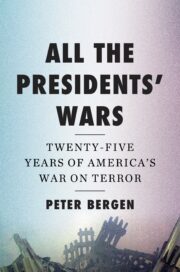
All the Presidents’ Wars:
RECENT ARTICLES

RECENT FILM AND TV SERIES
GHOSTS OF BEIRUT: SHOWTIME
The Fall of Osama bin Laden, National Geographic
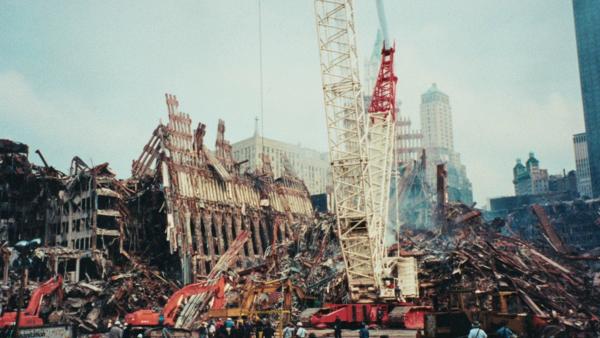
BIN LADEN'S HARD DRIVE, NATIONAL GEOGRAPHIC

