(CNN)Like the attack on Pearl Harbor, another hinge event in American history, 9/11 was a great tactical victory for America’s enemies. But in both these cases the tactical success of the attacks was not matched by strategic victories. Quite the reverse.
The Japanese scored an important victory at Pearl Harbor, but the attack pulled the United States into World War II and four years later Japan was in ruins, utterly defeated.
Similarly, al Qaeda’s attacks coming out of the azure-blue sky 15 years ago, on Tuesday morning September 11, 2001, were a great shock to Americans and, indeed, to much of the world: Almost 3,000 dead; many hundreds of billions of dollars of damage to the US economy, and the shock of the world’s only superpower being taken on by a relatively small terrorist group, al Qaeda. Not since the British had burned down the White House in 1814 almost two centuries earlier had America’s enemies succeeded in attacking the continental United States.
For so long the two great oceans of the Atlantic and the Pacific had protected America from its enemies, but no more.
Photos:Timeline of the September 11 attacks
Two men take cover as a dust cloud from the collapsed building envelops lower Manhattan.
Hide Caption
16 of 31
Photos:Timeline of the September 11 attacks
At 10:03 a.m., United Airlines Flight 93 — traveling from Newark, New Jersey, to San Francisco — crashed in a field near Shanksville, Pennsylvania. It is believed that the hijackers crashed the plane in that location, rather than their unknown target, after the passengers and crew tried to retake control of the flight deck.
Hide Caption
17 of 31
Yet, for all their tactical success the 9/11 attacks failed strategically and, in the end, achieved precisely the opposite of what Osama bin Laden had intended.
There are, of course, differences between the post-World War II era and the post 9/11 era. The long-term aftermath of Pearl Harbor was not only a decisive Allied victory in the war but also decades of American leadership and dominance.
After its initial success in Afghanistan following 9/11, victory was not decisive for the United States. Instead, American forces continued to be at war with a number of shadowy jihadist groups, most recently ISIS, and this now seems like a quasi-permanent state of affairs that could persist well beyond the next presidency.
When Congress passed the Authorization for the Use of Military Force immediately after the 9/11 attacks, no one could have imagined this authorization would continue to be the basis for American wars that persist a decade and a half later.
Bin Laden’s hope
Osama bin Laden fervently hoped that attacking the United States would create pressure on American leaders to reduce their support for Middle Eastern regimes. Bin Laden believed that without that American support the Arab regimes would collapse and would be replaced by Taliban-style rulers.
In particular, bin Laden wanted to put pressure on the United States to pull its troops out of Saudi Arabia. Indeed, bin Laden’s principal political goal was to overthrow the Saudi royal family.
On a video that was released four weeks after 9/11, bin Laden made his first public statement since the attacks on New York and Washington, saying “neither America nor the people who live in it will dream of security before we live it in Palestine, and not before all the infidel armies leave the land of Muhammad [Saudi Arabia].”
The video was poorly timed, as it came out on October 7, 2001, the same day the United States began its air campaign against Taliban and al Qaeda targets in Afghanistan.
Two months later the Taliban was completely routed from Afghanistan and within another couple of weeks those key members of al Qaeda who had survived the intense American airstrikes were fleeing to neighboring Pakistan and Iran.
Gambling on weakness
Bin Laden disastrously misjudged the likely American response to the 9/11 attacks because he labored under the delusion that the United States was weak. In his first television interview on CNN in 1997, bin Laden claimed the United States was a paper tiger, pointing to the American withdrawals from Vietnam in the early 1970s, Lebanon in the early 1980s and from Somalia in 1993 as evidence of the United States’ waning power. Bin Laden told CNN, “The US still thinks and brags that it has this kind of power even after all these successive defeats in Vietnam, Beirut … and Somalia.”
Bizarrely, bin Laden believed that al Qaeda’s attacks on New York and Washington would result in an American withdrawal from the Middle East. Instead, the United States quickly toppled the Taliban and al Qaeda — “the base” in Arabic — lost the best base it had ever had in Afghanistan.
In the years after the 9/11 attacks the United States not only did not reduce its influence in the Middle East, but it also established or added to massive bases in Bahrain, Kuwait, Qatar and the United Arab Emirates. And, of course, it also occupied both Afghanistan and Iraq. Bin Laden’s tactical victory on 9/11 turned out to be a spectacular strategic flop.
Since 9/11 the CIA has eliminated many dozens of al Qaeda’s leaders in drone strikes. The CIA also provided the leads that eventually led to the death of bin Laden, when US Navy SEALs raided his compound in Abbottabad, Pakistan.
Meanwhile, al Qaeda has not been able to strike the United States again after 9/11.
A letter written by an al Qaeda member nine months after 9/11 that was addressed to Khalid Sheikh Mohammed, the operational commander of the September 11 attacks, gives a sense of how much the attacks had backfired: “Consider all the fatal and successive disasters that have afflicted us during a period of no more than six months. … Today we are experiencing one setback after another and have gone from misfortune to disaster.”
Strategic disaster
In 2004 Abu Musab al Suri, a Syrian jihadist who had known bin Laden since the late 1980s, released on the Internet a history of the jihadist movement in which he described the strategic disaster that had engulfed the Taliban and al Qaeda after 9/11: “America destroyed the Islamic Emirate [of the Taliban] in Afghanistan, which had become the refuge for the mujahideen. …The jihad movement rose to glory in the 1960s, and continued through the ’70s and ’80s, and resulted in the rise of the Islamic Emirate of Afghanistan, but it was destroyed after 9/11.”
Despite the fact that after 9/11 it was obvious to al Qaeda insiders that their organization had taken a terrible beating, Saif al-Adel, one of the group’s military commanders, explained in a 2005 interview that the strikes on New York and Washington were, in fact, a devilishly clever scheme to provoke the United States into making mistakes: “Such strikes will force the person to carry out random acts and provoke him to make serious and sometimes fatal mistakes. …The first reaction was the invasion of Afghanistan.”
There is no evidence, however, that before 9/11 al Qaeda’s leaders made any plans for an American invasion of Afghanistan. They prepared instead only for possible US cruise missile attacks by evacuating their training camps.
Of course, making spectacular errors during a war is a prerogative that all sides enjoy. George W. Bush’s decision to invade Iraq in early 2003 will surely rank as one of the greatest foreign policy failures in American history and it’s hard to imagine that this misadventure could ever have been undertaken at any time other than in the aftermath of 9/11, when the American public was amenable to what the Bush administration was selling as a quick land war in the Middle East that would help curtail terrorism.
The rationales for the Iraq War that Saddam Hussein had weapons of mass destruction and that he was allied in some manner with al Qaeda were, of course total nonsense.
Rise of ISIS
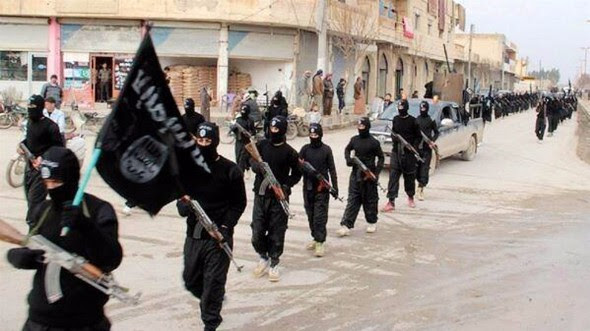
Worse, the invasion itself led to the creation of al Qaeda in Iraq in 2004, which is the parent organization of what is now ISIS.
When ISIS first gained significant ground in Iraq and Syria in 2014, it focused almost entirely on its actions there and encouraged its overseas followers to join the jihad in the Middle East.
In 2015, ISIS shifted its strategy, attacking on a large scale outside Iraq and Syria. The group claimed responsibility for the downing of the Russian Metrojet carrying 224 passengers and crew on October 31 in the Sinai in Egypt. Two weeks after the Metrojet bombing, a team of ISIS militants attacked multiple locations in Paris.
This marked a pronounced shift by ISIS to directing or inciting operations against the West, but it also underlined ISIS’ incoherent strategy.
ISIS’ main goal is to present itself as the Islamic State that it has named itself, the guardian of an expansive caliphate that is both a theological and a geographic entity. But by attacking Western targets ISIS has united a global coalition against it, which is in the process of thoroughly dismantling the ISIS caliphate.
After ISIS attacked France in November 2015, the French immediately increased their airstrikes on ISIS targets.
Following ISIS’ attacks at Istanbul airport in June 2016, the Turkish army attacked ISIS targets inside Syria, quickly taking the city of Jarablus.
ISIS’ attacks inside Turkey also resulted in a Turkish clampdown on the flow of many thousands of ISIS “foreign fighters,” almost all of whom transited Turkey on the way to join the group in Syria.
ISIS should have understood that provocative attacks against Western targets would only amplify the war against it. As early as summer 2014, following the murder by ISIS of the American journalist James Foley, the United States substantially increased the number of airstrikes against the group and mobilized a coalition of like-minded nations to join the anti-ISIS coalition.
According to U.S. Central Command (CENTCOM), nations that have conducted strikes against ISIS — in addition to the United States — are: Australia, Belgium, Canada, Denmark, France, Jordan, the Netherlands, the United Kingdom, Saudi Arabia, Turkey, and the United Arab Emirates.
ISIS’ terrorist attacks in the West are undermining its overall strategy, which is reminiscent of the mistake al Qaeda made on 9/11, which was to confuse tactical success with strategic victory.
Indeed, according to both Gen. David Petraeus, former US commanding general in Iraq, and Gen Joseph Votel, the commander of CENTCOM, it’s quite possible that Mosul, which is the key city that ISIS holds in Iraq, may fall to Iraqi forces by the end of President Barack Obama’s term in January 2017.
From a purely American perspective, by the time Obama was nearing the end of his second term, the threat from al Qaeda, ISIS and similar groups had receded significantly from its high point on 9/11.
In the past decade and a half since 9/11, 94 Americans have been killed in the United States by jihadist terrorists. Shocking and tragic as these attacks have been, they still pale in comparison to al Qaeda’s murder of almost 3,000 people on the morning of 9/11.
Trump’s half-baked plans to combat ISIS, CNN.com
Trump’s half-baked plans to combat ISIS
By Peter Bergen, CNN National Security Analyst
Updated 8:28 PM ET, Mon August 15, 2016
fallujah ISIS
Story highlights
Donald Trump spoke in Ohio on Monday about his vision for fighting Islamic extremism
Peter Bergen: Many of his ideas the Obama administration has long been doing, and the new policy ideas are poorly conceived
“Peter Bergen is CNN’s national security analyst, a vice president at New America and a professor of practice at Arizona State University. He is the author of “United States of Jihad: Investigating America’s Homegrown Terrorists.””
(CNN)At an Ohio campaign stop on Monday, Donald Trump delivered what was billed as his big policy speech on counterterrorism, in which he was supposed to explain his plans to defeat ISIS.
So what were Trump’s ideas?
After laying out a long laundry list of well-known terrorist outrages by ISIS, Trump said, “We cannot let this evil continue.” If elected president, he would, he said, do things very differently than the Obama administration.
However, the Obama administration has long been pursuing many of the policy ideas Trump laid out.
— Partnering with Jordan and Egypt? Check
— Working with NATO? Check
— Cutting off ISIS funding? Check
— Cyber warfare against ISIS? Check
— Decimating al Qaeda? Check
Trump also said, “The era of nation building will be brought to a very swift and decisive end.” This is a straw man, because no one is calling for nation building in the American body politic, including Hillary Clinton, who in her own campaign appearance in Scranton, Pennsylvania, specifically said that American ground troops were “off the table” in Syria.
Trump also called for an international conference to stop radical Islam and a domestic commission on the same subject. Yet holding future conferences and setting up future commissions are not policy ideas.
So what exactly were Trump’s new policy ideas?
First, he said he would work with Russia to defeat ISIS. Trump has long been a fan of Vladimir Putin, but seems to be unaware that Russia’s goal in Syria is simply the maintenance of its longtime ally President Bashar al-Assad in power. Indeed, Moscow has hitherto shown little appetite to focus on ISIS.
Second, Trump called for a new kind of ideological test on immigrants from areas where terrorism is a problem. This seems unworkable. For example, would anyone sitting for these tests volunteer that they had secret proclivities for jihadist terrorism?
Also, Trump didn’t specify what countries would be affected by this new test. But France has a serious domestic terrorism problem — would French citizens be subjected to this kind of test? Or is he concerned about Syrian refugees, which the United States has taken only 10,000 of the millions who have fled the civil war in their country (and only 2% of whom are single, military-age males, according to the U.S. State Department).
In short, Trump didn’t say who would be targeted for these ideological tests, saying only that he would consult the State Department about how to approach this issue. Yet this had once been one of Trump’s signature political ideas: the banning of Muslim immigration, which then became a temporary ban on Muslim immigration, which, in turn, became a ban on immigration from countries with a terrorism problem, and now in Monday’s speech has become a policy idea that is as murky as Trump’s tax returns.
The reality is that Trump’s focus on immigrants is to misconceive of the terrorist problem that exists in the United States. Every lethal terrorist attack in the United States since 9/11 has been carried out by an American citizen or a legal permanent resident, not by recent immigrants or by refugees. So tamping down immigration won’t fix the real issue, which is “homegrown” terrorism.
Further, the terrorist attacks and plots in the United States have in recent years been influenced by ISIS’s online propaganda, which clearly isn’t being brought into the country by immigrants, but instead can enter any American home via the internet.
Finally, Trump said that newly captured foreign terrorists would be tried in military tribunals at Guantanamo Bay. These tribunals, however, have been an abject failure. Look no farther than the case of 9/11 operational commander Khalid Sheikh Mohammed, who was captured by the United States in 2003.
For more than a decade, he has been at Guantanamo waiting for a military trial that may not happen for years to come. Military tribunals have been used to put eight suspected terrorists on trial. Meanwhile, in contrast, Human Rights First says U.S. civilian federal courts have tried and convicted more than 500 people on terrorism-related charges — and they do so in an expeditious manner and with due process.
Trump also claimed that Clinton lacks the “mental and physical stamina” to take on ISIS. Really? This seems not only like a thinly veiled sexist observation, but it also happens to be completely wrong. Remember, it was Clinton who was the most forward leaning of Obama’s Cabinet officials when it came to ordering the U.S. Navy SEAL operation that killed Osama bin Laden in 2011.
Trump’s Monday speech was the best foreign policy speech that he has ever given, but that’s only because the bar is so low. Yes, it did have quite a number of specific policy proposals, but many of them the Obama administration has long been doing, and the new policy ideas are poorly conceived.
Ultimately, Donald Trump’s speech is unlikely to sway undecided voters that he is their best option as their future commander in chief.
Suli Forum, American University of Iraq, Sulaimani, Iraq
No, Obama was not the ‘founder’ of ISIS, CNN.com
No, Obama was not the ‘founder’ of ISIS
Peter Bergen
By Peter Bergen, CNN National Security Analyst
Updated 4:38 PM ET, Thu August 11, 2016
Peter Bergen says Donald Trump is wrong: President Obama and Hillary Clinton are not the founders of ISIS.
Obama has been responsible for the serious reversals ISIS is suffering on the battlefield, Bergen says
Peter Bergen is CNN’s national security analyst, a vice president at New America and a professor of practice at Arizona State University. He is the author of “United States of Jihad: Investigating America’s Homegrown Terrorists.””
(CNN)At a rally in Florida on Wednesday, Donald Trump described President Obama as the “founder” of ISIS, going on to say the terrorist organization “is honoring President Obama.”
Really?
On Thursday on CNBC he amplified these comments, saying Hillary Clinton was the “co-founder” of ISIS.
Like so much else that Trump has said, these claims are false. The founder of ISIS is Abu Bakr al-Baghdadi, a shadowy Iraqi cleric who President Obama is doing everything in his power to kill.
Trump has claimed he knows more about ISIS than America’s leading generals. Clearly this is also total nonsense; he doesn’t seem to have done the slightest thing to educate himself about ISIS.
In June, Gen. David Petraeus, formerly the commander of all US forces in Iraq, predicted the largest city that ISIS now holds, the Iraqi city of Mosul, could fall to US-supported Iraqi forces before President Obama leaves office in January.
Petraeus characterized this as “a very big deal” and went on to say, “no question ISIS is a loser in Iraq and, increasingly, Syria,” in an interview with me at New America’s offices in Manhattan.
The facts on the ground bear this out. ISIS has lost just under half the territory it once controlled in Iraq and around a fifth of what it had controlled in Syria.
Just in the past few days ISIS lost the city of Manbij, in northern Syria, a significant victory because it controls key routes to ISIS’ de facto Syrian capital, Raqqa.
On Wednesday Lt. Gen. Sean MacFarland, who leads the anti-ISIS campaign, said 45,000 ISIS fighters have been killed so far by the US-led coalition. “We estimate that over the past 11 months, we’ve killed about 25,000 enemy fighters. When you add that to the 20,000 estimated killed (previously), that’s 45,000 enemy (fighters) taken off the battlefield.”
That’s an astonishing amount of attrition for a force MacFarland estimates has a remaining strength of 15,000 to 30,000 fighters now.
US intelligence estimates the US-led coalition has also killed at least 135 of ISIS leaders.
Meanwhile, the flow of Americans going to join ISIS or attempting to do so has slowed to a trickle from an average of six to one a month, according to US intelligence estimates.
The US military has also stepped up the air campaign against ISIS’ wealth, for instance, bombing a bank in Iraq in January in which ISIS had stored millions in cash.
US bombers have also repeatedly struck trucks carrying oil that ISIS has extracted from oil fields in the shrinking area it now controls, striking 83 tankers along the Syria-Iraq border as recently as Sunday.
These attacks on ISIS’ cash supply and revenue streams have had real effects on ISIS’ bottom line. ISIS has had to halve the salaries of its foot soldiers, according to documents that leaked from the terrorist army earlier this year.
Who is ultimately responsible for all the damage that has been done to ISIS? The supposed founder of ISIS, President Obama.
As to the charge that Clinton co-founded ISIS, she left the State Department in January 2013 and ISIS wasn’t founded until three months later.
Trump’s charge does raise an interesting question, which is how best to assign responsibility for the rise of ISIS, including the issue of how might the Obama administration’s exit from Iraq at the end of 2011 have helped smooth the path for ISIS?
The rise of ISIS starts with a Jordanian thug named Abu Musab al-Zarqawi who founded ISIS’ parent organization, al Qaeda in Iraq. What gave Zarqawi the opportunity to create al Qaeda in Iraq? It was, of course, George W. Bush’s decision to invade Iraq in 2003. Iraqi dictator Saddam Hussein brutally repressed all forms of opposition to his regime and before the Iraq War, al Qaeda had no presence in Iraq.
None of these factors can be easily ascribed to Obama or to Clinton, although certainly they did preside over the withdrawal of all US troops from Iraq at the end of 2011, a plan bequeathed to them by Bush.
Could the Obama administration have fought harder to retain a US troop presence in Iraq? Possibly.
Would the Iraqi government have allowed such a presence? Not likely as the Iraq government was by the time of the US withdrawal more aligned with Iran than with the United States.
Obama was also slow to recognize the threat posed by ISIS, famously referring to the Islamist terrorist group gaining ground in Syria and Iraq as a “JV” team in a January 2014 interview.
Could the Obama administration do more to counter ISIS? Yes. In northern Syria, a no-fly zone targeted at Assad’s air force and safe zones for refugees fleeing the fighting would help halt the massive flow of refugees out of Syria, many of whom are heading to Europe, and also help reduce whatever remains of ISIS’ appeal to the Sunni population of Syria, to whom it can pose as their defenders against the Syrian regime.
It is Hillary Clinton, not Donald Trump, who is advocating for this common sense measure, which is a policy that could actually help tamp down the violence and killing in which ISIS thrives. Of course, Trump has no real policy ideas about what to do about ISIS because he seems incapable of producing them, other than empty slogans like he would “bomb the s…t out of” ISIS.
As Petraeus acidly observed in June, “I think carpet bombing is an absolutely tremendous idea if the enemy accommodates you by laying himself out like a carpet in the middle of the desert, without any civilians or infrastructure around him. Sadly, the Islamic State has learned that that is a losing proposition and does not accommodate us in that way. In fact, the Islamic State is very much underground now in places like Mosul and Raqqa.”
Is ISIS Winning? McCain Institute debate, Naval Heritage Center Theater, 8th and Penn. NW Wash DC
INVITATION
Is ISIS Winning?
Since January 2015, ISIS has lost 22 percent of its territory inside Iraq and Syria. Iraqi forces are moving toward re-taking Mosul, ISIS’s key remaining stronghold inside Iraq. Several top commanders have been killed, and defections have increased. According to U.S. officials, the number of ISIS fighters is at its lowest level since 2014.
At the same time, ISIS is responsible for attacks in the United States, France, Belgium, Germany, Pakistan, Libya and dozens of other countries. More than 1,200 people outside of Iraq and Syria have been killed in attacks inspired or coordinated by the Islamic State. The number and pace of global attacks by ISIS seems to be growing.
Fifteen years after the September 11 attacks, are civilized societies winning or losing in the global war on terrorism? What does winning even look like? What strategies should we pursue? Join us in our next McCain Institute debate, as leading national experts debate the question: Is ISIS winning?
Once, war was a temporary state of affairs—a violent but brief interlude between times of peace. Today, America’s wars are everywhere and forever: our enemies change constantly and rarely wear uniforms, and virtually anything can become a weapon. As war expands, so does the role of the US military. Today, military personnel don’t just “kill people and break stuff.” Instead, they analyze computer code, train Afghan judges, build Ebola isolation wards, eavesdrop on electronic communications, develop soap operas, and patrol for pirates. You name it, the military does it. In her new book, How Everything Became War and the Military Became Everything, Rosa Brooks traces this seismic shift in how America wages war and its consequences.
Rosa Brooks is a senior fellow at New America and part of New America and Arizona State University’s Future of War project. A professor at Georgetown University Law Center, Ms. Brooks served as Counselor to the Under Secretary of Defense for Policy and as Special Coordinator for Rule of Law and Humanitarian Policy in the Pentagon from 2009-2011. During the Clinton Administration, she also served as a senior advisor at the US Department of State. Ms. Brooks spent four years as an opinion columnist for The Los Angeles Times, and currently writes a weekly column for Foreign Policy. She is a frequent contributor to other print and TV media outlets as well. Brooks received her A.B. from Harvard, a master’s degree from Oxford, and a J.D. from Yale Law School.
New America is pleased to welcome Ms. Brooks for a discussion of her book and how the expanding definition of war is changing our society.
Follow the discussion online using #FutureofWar and following @NewAmericaISP.
Copies of the book will be available for purchase.
Participants:
Rosa Brooks @brooks_rosa
Senior Fellow, New America International Security Program
Author, How Everything Became War and the Military Became Everything
Moderator:
Peter Bergen @peterbergencnn
Director, New America International Security Program
The Capitol region’s premiere holiday book event is back for the 39th year! The National Press Club Journalism Institute is once again partnering with landmark local book seller Politics & Prose for a night of pols, pundits and prose.
Authors will be on hand to talk to their fans and sign books at this most exciting literary event. Patrons can browse for books at the Club’s headquarters from 5:30 to 8:30 p.m. Tickets are $5 for NPC and Politics & Prose members; $10 public. Tickets will also be sold online and at the door.
The Book Fair is a fundraiser for The National Press Club Journalism Institute, a 501(c)3 charitable organization, which advances journalistic practice by equipping professionals with the skills and competence to innovate, leveraging emerging trends, recognizing leaders and innovators, and mentoring the next generation of journalism and communications professionals.
The Book Fair is partnering with The SEED Foundation, which helps under-served students prepare for college. The young scholars attend one of two public boarding schools in the District and Maryland. The students select books they believe would enrich their education and patrons can buy them at the fair to help develop the Baltimore SEED School library. A group of students from the SEED school attend the event each year, giving them a chance to meet with authors and attendees.
**Please note**: No outside books or other author & book paraphernalia are allowed into the Fair. All books must be purchased onsite.
For more information, visit: www.press.org/bookfair
9/11 Museum book event, NYC
Peter Bergen: Investigating America’s Homegrown Terrorists
Tue. November 15, 2016
7:00PM – 8:00PM
Museum Auditorium on the Atrium Terrace Level (Second Floor)
Google Map
Who are American jihadis and what motivates them to carry out acts of terrorism against their home country? New York Times best-selling author and CNN National Security Analyst Peter Bergen discusses his latest book, “United States of Jihad: Investigating America’s Homegrown Terrorists.”
A book sale and signing will follow this program.
***This event is fully booked. Members are welcome to add their names to a waiting list by contacting our membership department at (212) 857-0154 or membership@911memorial.org. You will be notified immediately if a ticket becomes available. If you are interested in becoming a member, please contact the membership department.
In early 2000, Adnan Syed was convicted and sentenced to life for the murder of his former girlfriend Hae Min Lee, a high school senior in Baltimore, Maryland. Syed maintained his innocence, and Rabia Chaudry, a family friend, believed him. By 2013, Rabia contacted Sarah Koenig, a producer at This American Life and in 2014, Koenig’s investigation turned into Serial, a Peabody Award-winning podcast with more than 500 million international listeners. But Serial did not tell the whole story.
In this compelling narrative, Rabia Chaudry presents new key evidence that she maintains dismantles the State’s case: a potential new suspect, forensics indicating Hae was killed and kept somewhere for almost half a day, and documentation withheld by the State that destroys the cell phone evidence—among many other points—and she shows how fans of Serial joined a crowd-sourced investigation into a case riddled with errors and strange twists. Adnan’s Story also shares Adnan’s life in prison, and weaves in his personal reflections, including never-before-seen letters.
Follow the discussion online using #AdnansStory and following @NewAmericaISP.
Copies of the book will be available for purchase by check or credit card.
Participant:
Rabia Chaudry, @rabiasquared
Author, Adnan’s Story: The Search for Truth and Justice After Serial
Jennings Randolph Senior Fellow, U.S. Institute of Peace
Moderator:
Peter Bergen, @peterbergencnn
Director, New America’s International Security Program
Adnan’s Story: The Search for Truth and Justice After Serial Wednesday, October 5, 2016 12:15 PM – 1:45 PM EST
740 15th Street NW, Suite 900
Washington, DC 20005
New America is dedicated to the renewal of American politics, prosperity, and purpose in the Digital Age. Our hallmarks are big ideas, impartial analysis, pragmatic policy solutions, technological innovation, next generation politics, and creative engagement with broad audiences.