Airports Council, Montreal Canada
August 9, 2016 Tuesday
AIRPORT INDUSTRY TO MEET IN MONTREAL FOR ANNUAL CONFERENCE
BYLINE: States News Service
LENGTH: 481 words
DATELINE: WASHINGTON
The following information was released by the Airports Council International – North America:
SUMMARY:
Airports Council International – North America (ACI-NA) and ACI World are co-hosting the 2016 ACI-NA/World Annual Conference/World Annual General Assembly September 25 28, 2016, in Montral. Members of the media are welcome to cover the conference, which will include airport executives from around the world, as well as gain access to the trade show floor featuring more than 250 exhibitors showcasing the latest products and innovations enhancing the airport experience. The “2016 ACI-NA/World Annual Conference/World Annual General Assembly is hosted by Aroports de Montreal.
WHO:
Confirmed speakers include:
Kevin M. Burke, President and CEO, ACI-NA
Angela Gittens, Director General, ACI World
Peter Bergen, CNN National Security Analyst/Author
Maureen Riley, Executive Director, Salt Lake City Department of Airports
James Cherry, President and CEO, Aroports de Montral
William R. Vanecek, Aviation Director, Niagara Frontier Transportation Authority
Arnaud Feist, Chief Executive Officer and Board Member, Brussels Airport Company
Scott Clements, President and CEO, Fort McMurray Airport Authority
Tan Sri Bashir Ahmad Bin Abdul Majid, Advisor, Malaysia Airports
Attendees, exhibitors and session presenters include:
Leadership from airports across the globe
Leading airport concessionaires, and airport technology and service providers
Representatives from international airlines, aircraft manufacturers, and regulatory agencies
View the full trade show floor map here.
United States of Jihad, Octavia Books, New Orleans
Peter Bergen – UNITED STATES OF JIHAD: Investigating America’s Homegrown Terrorists
 Peter Bergen, author of UNITED STATES OF JIHAD: Investigating America’s Homegrown Terrorists, discusses the impetus compelling some Americans at home and abroad to join militanat Islamic groups.
~A riveting, panoramic look at homegrown Islamist terrorism from 9/11 to the present~
Since 9/11, more than three hundred Americans born and raised in Minnesota, Alabama, New Jersey, and elsewhere have been indicted or convicted of terrorism charges. Some have taken the fight abroad: an American was among those who planned the attacks in Mumbai, and more than eighty U.S. citizens have been charged with ISIS-related crimes. Others have acted on American soil, as with the attacks at Fort Hood, the Boston Marathon, and in San Bernardino. What motivates them, how are they trained, and what do we sacrifice in our efforts to track them?
Paced like a detective story, United States of Jihad tells the entwined stories of the key actors on the American front. Among the perpetrators are Anwar al-Awlaki, the New Mexico-born radical cleric who became the first American citizen killed by a CIA drone and who mentored the Charlie Hebdo shooters; Samir Khan, whose “Inspire” webzine has rallied terrorists around the world, including the Tsarnaev brothers; and Omar Hammami, an Alabama native and hip hop fan who became a fixture in al Shabaab’s propaganda videos until fatally displeasing his superiors.
Drawing on his extensive network of intelligence contacts, from the National Counterterrorism Center and the FBI to the NYPD, Peter Bergen also offers an inside look at the controversial tactics of the agencies tracking potential terrorists from infiltrating mosques to massive surveillance; at the bias experienced by innocent observant Muslims at the hands of law enforcement; at the critics and defenders of U.S. policies on terrorism; and at how social media has revolutionized terrorism.
Lucid and rigorously researched, United States of Jihad is an essential new analysis of the Americans who have embraced militant Islam both here and abroad.
 Peter L. Bergen is a print, television, and web journalist; documentary producer; think tank director; and the author of four books about al-Qaeda, three of which were New York Times bestsellers and three of which were named among the nonfiction books of the year by the Washington Post. He is the director of the national security program at the New America Foundation in Washington, DC; a Fellow at Fordham University’s Center on National Security; and CNN’s national security analyst. (photo courtesy of CNN-Brent Stirton)
Event date:
Thursday, March 17, 2016 – 6:00pm
Event address:
Octavia Books, 513 Octavia Street, New Orleans, LA 70115
$28.00
ISBN: 9780804139540
Availability: On Our Shelves Now
Published: Crown Publishing Group (NY) – February 2nd, 2016
United States of Jihad, Dallas World Affairs Council, Dallas TX
– See more at: https://www.dfwworld.org/Events?cid=5&ceid=2556&cerid=0&cdt=3%2f29%2f2016#sthash.Btt1DPNT.dpuf
“United States of Jihad” Nixon Library, Yorba Linda, CA
Meet Peter Bergen
Mar 07, 2016@7:00 PM
LECTURE AND BOOK SIGNING
Author of United States of Jihad: Investigating America’s Homegrown Terrorists
A riveting look at “homegrown” Islamic terrorism, from 9/11 to now
CNN National Security Analyst and New York Times best selling author Peter Bergen examines the recent ISIS-inspired attacks in San Bernardino and Paris to provide fresh evidence that “homegrown” terrorism is a real and present danger.
Homegrown jihadists have carried out multiple deadly attacks in the last fifteen years, from the shooting at Fort Hood to the devastating Boston Marathon bombings to the recent attack at San Bernardino that took fourteen lives. Dozens of American citizens have sought to join these overseas terrorist groups including ISIS. Who are these individuals? What motivates them? And what can be done to stem the tide of extremism?
Bergen has been at the forefront of chronicling Islamist terrorism. He produced Osama bin Laden’s first Western television interview just four years before the 9/11 attacks and is one of a small handful who has come face-to-face with bin Laden in person.
REGISTER HERE
American Jewish University’s Whizin Center for Continuing Education. Los Angeles
Who do terrorists confide in? CNN.com
Who do terrorists confide in?
As part of its key mission of trying to stop the next terrorist attack, the law enforcement agency has mounted more than 30 plots that were, of course, sting operations in reality.
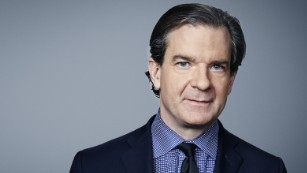
Peter Bergen
Despite the FBI’s efforts, some “homegrown” American terrorists still have managed to carry off lethal attacks in the States in recent years, in places such as San Bernardino, Boston and Fort Hood, Texas.
This has touched off political debate, particularly among Republican candidates, about how to safeguard Americans, including spurious solutions such as shutting off Muslim immigration (Donald Trump) and carpet-bombing ISIS (Sen. Ted Cruz). Neither approach is realistic, not least because lethal attacks by jihadist terrorists in the States since 9/11 have been conducted largely by American citizens, while ISIS is embedded in major cities in Iraq and Syria and so carpet-bombing would kill a great number of civilians.
In fact, the real lessons learned should come from the law enforcement agencies that have studied jihadist terrorists in depth. A very telling indicator of future violence by a terrorist, FBI behavioral analysts have found, is what they term “leakage.”
Leakage was first identified by the FBI in 1999 in the context of school shootings, emerging from the observation that a student who was going to do something violent had often intentionally or unintentionally revealed something significant about the impending act, anything from confiding in a friend to making ominous “they’ll be sorry” remarks.
Leakage is, in short, when a violent perpetrator signals to people in his circle that he is planning an act of violence.
What was true of school shootings turned out to be true for terrorist crimes as well.
In an ongoing study of some 80 terrorism cases in the States since 2009, which has not been previously reported, the FBI found that “leakage” happened more than 80% of the time.
Those to whom information was leaked, termed “bystanders,” were broken down by the FBI into peers, family members, authority figures and strangers.
FBI analysts found an average of three bystanders per case, and in one case as many as 14.
Some “bystanders” saw radicalization behavior. Others saw actual plotting and planning, such as the accumulation of weapons, self-educating about how to make explosives or preparations to travel overseas for terrorist training.
FBI analysts were dismayed by how common it was for bystanders to know that a radicalized individual was up to something yet failed to tip off the authorities.
Analysts graphed out the bystanders who were most likely to come forward with information versus those least likely to do so.
Peers were aware of the most concerning information, but they were the least likely to volunteer it. Family members were often aware of both radicalization and planning, but they came forward less often than authority figures such as college professors, supervisors, military commanders or clerics. These figures were reasonably likely to offer information but were more aware of a suspect’s radical sympathies than of any actual plotting.
Strangers were the most likely to come forward, which could be helpful. A tip from a clerk at a New Jersey Circuit City — who in 2006 was asked to make copies of a videotape on which he saw men shooting off weapons and shouting “Allahu Akbar!” — developed into the case in which a group of six men were convicted for plotting an attack to kill soldiers at the Fort Dix, New Jersey, army base.
However, strangers made up only 5% of the bystanders with useful information about a suspect, which raised an interesting problem for the “If You See Something, Say Something” counterterrorism campaign that is targeting that 5%, rather than the 95% of the peers, family members and authority figures who generally had the most useful information about a militant.
The “If You See Something, Say Something” campaign also generated quite a number of false positives from suspicions of, say, a Middle Eastern man taking a photo of a bridge.
The importance of the information that a peer can have was underlined by the terrorist attack in San Bernardino on December 2 in which 14 people were killed by the married couple, Syed Rizwan Farook and Tashfeen Malik. Farook’s friend, Enrique Marquez, allegedly provided the two semiautomatic rifles that Farook and his wife used in the massacre. Authorities have said Marquez allegedly also knew that Farook was planning to carry out some kind of terrorist attack as early as 2011. Marquez has been charged with a variety of federal crimes for his alleged role and has pleaded not guilty.
The prevalence of leakage in terrorism cases has opened up some potential investigative avenues for the FBI.
As one agent put it, “If you’re going to commit a significant act of terrorism, I don’t think it’s possible to do that without having some leakage someplace. In the future, perhaps we can pick that up either through behavioral study, through technical coverage or through some type of investigative technique.”
The lesson of the FBI study of terrorism cases is that the most useful information comes from peers and family members. That’s why community outreach to Muslim communities to enlist their help in detecting those who may be becoming militant is the most fruitful approach to dealing with the scourge of terrorism.
This is the opposite approach from painting all Muslim immigrants as potential terrorists.
Join us on Facebook.com/CNNOpinion.
Read CNNOpinion’s Flipboard magazine.
The Daily Show
-
Monday
Reshma Saujani
Founder and CEO of Girls Who Code
-
Tuesday
Peter Bergen
Journalist & Author
-
-
Future of War Conference New America/ASU in DC
Please note this event is by invitation only. Please contact events@newamerica.org if you are interested in attending.
The Future of War Conference brings together a collection of experts to address key issues and challenges arising from the changing nature of conflict and war. The conference is a part of initiative linking New America, a nonpartisan research public policy institute and civic enterprise, and Arizona State University, one of the nation’s largest public research universities.
The event will explore a variety of topics, including sessions on such topics as:
- What is the Future of Land Warfare? Air? Sea? Space and Cyberwarfare?
- Where will the innovation that shapes the future military come from?
- How will Human Performance Modification shape the future of war?
- What are the key lessons for war from the latest Social Science research?
- What is the future of Hybrid Warfare?
- How is Open Source Intelligence + Citizen Journalism shaping our understanding of war?
- What lessons does Syria have for how the wars of the future will begin and end?
- How will the integration of women in combat role shape the US military of 2025?
- How will war be reported in the future, and by whom?
The attendees will include military officers and government policymakers, as well as experts in fields that range from history and international affairs to human rights and law. The confirmed speakers include General Mark A. Milley, Chief of Staff of the U.S. Army; Admiral John M. Richardson, Chief of Naval Operations; Lieutenant General H. R. McMaster, Director, Army Capabilities Integration Center and Deputy Commanding General, Futures, U.S. Army Training and Doctrine Command; Anne-Marie Slaughter, President and CEO, New America and former Director of Policy Planning, U.S. State Department; Sir Lawrence Freedman, Emeritus Professor of War Studies, King’s College London; Peter W. Singer, New America Strategist and Senior Fellow and author, Ghost Fleet: A Novel of the Next World War; Sharon Burke, New America Fellow and former Assistant Secretary of Defense; Douglas Ollivant, ASU and New America Future of War Senior Fellow, former Director for Iraq at the National Security Council, and Partner, Mantid International; Janine di Giovanni, Middle East Editor, Newsweek; David Kilcullen, Founder and Chairman, Caerus Global Solutions and New America Future of War Senior Fellow; Tom Ricks, New America Senior Advisor for National Security and Contributing Editor, Foreign Policy; Stathis Kalyvas, Professor and Director of the Program on Order, Conflict, and Violence, Yale University; Michael Semple, former Deputy Director to the EU Special Representative for Afghanistan; Nir Rosen, Special Advisor, Centre for Humanitarian Dialogue and journalist; Peter Bergen, New America Vice President, Professor of Practice, Arizona State University, and author of the new book United States of Jihad; Sharon Weinberger, National Security Reporter, The Intercept; Vivian Salama, U.S. Political Editor and former Baghdad Bureau Chief, Associated Press; Major Joe Byerly, U.S. Army blogger, The Green Notebook and Founding Member, The Military Writers Guild; and T. Gibbons Neff, Staff Writer, Washington Post and former infantryman, U.S. Marine Corps.
Watch this page for further details in the weeks to come!
“The Butcher’s Trail” with Guardian Diplo. Editor Julian Borger, New America DC
|
New America
Please note our new address!
740 15th Street NW, Suite 900, Washington, DC 20005
February 1st, 2016 | 12:00 PM – 1:30 PM |
|
|
|
|
|

Following the Balkan wars of the 1990s, it initially appeared that the warlords responsible for genocide and other mass atrocities would get away with their crimes. They had been indicted by the International Criminal Tribunal for former Yugoslavia but western capitals did not want to take the risk of arresting them. The story of how that policy changed and the Hague Tribunal was saved from irrelevance is little known, but it was a turning point in international humanitarian law. By 2011, all 161 war crimes suspects on the Hague list had been accounted for, many of them tracked down by an adhoc coalition of special forces and intelligence agencies from the US, UK, Netherlands, Germany, and France. It ultimately became the most successful manhunt in modern times.
In his new book The Butcher’s Trail: How the Search for Balkan War Criminals Became the World’s Most Successful Manhunt, Julian Borger recounts the sleuthing and cat-and-mouse spy games of the pursuit, and asked whether the gains made against impunity for mass atrocities are now unravelling. The lessons are relevant today, as war crimes are committed daily in Syria, and American special forces hunt terrorists across the globe.
Julian Borger is the diplomatic editor of The Guardian. He covered the Bosnian War and the 1999 Kosovo conflict for the BBC and The Guardian. Borger was a member of the Guardian team that won the 2014 Pulitzer Prize for public service journalism for covering the Snowden files on mass surveillance, and which was also awarded the 2013 Investigative Reporters and Editors (IRE) medal and the Paul Foot Special Investigation Award in the UK.
New America is pleased to welcome Mr. Borger for a discussion of his book and the manhunts for Balkan war criminals.
Copies of Borger’s book will be available for purchase by cash, check, or credit card.
Join the conversation online using #ButchersTrial and following @NatSecNAF.
There will not be a live stream available for this event.
Participants:
Julian Borger
Diplomatic Editor for The Guardian
Author, The Butcher’s Trail: How the Search for Balkan War Criminals Became the World’s Most Successful Manhunt
Moderator:
Peter Bergen
Vice President, New America
Director, International Security Program, New America |
Can We Stop Homegrown Terrorists? Wall Street Journal
Can We Stop Homegrown Terrorists?
Law enforcement is making progress against ‘lone-wolf’ jihadists who want to harm other Americans, but the threat will persist—and remain relatively modest
By Peter Bergen
Jan. 22, 2016 2:44 p.m. ET
At 11 a.m. on Dec. 2, some 60 miles east of Los Angeles, Syed Rizwan Farook and his wife, Tashfeen Malik, stormed into a Christmas party for employees of the San Bernardino county public-health department, where Farook worked. Wearing military-style clothing and black masks, the couple unleashed a barrage of bullets. They killed 14 people, and minutes after the attack, Malik pledged an oath of allegiance to Islamic State on her Facebook page. It was the most lethal terrorist attack in the U.S. since 9/11.
Farooq and Malik were married parents and college graduates. They were solidly middle-class, without criminal records or documented mental-health issues. He was a native-born American, she had recently emigrated from Pakistan, and there was nothing in the basic details of their backgrounds to suggest that they were any special threat.
They were, in short, very much in the social mainstream of American life—and that, perhaps surprisingly, turns out to be typical of homegrown jihadists, whose numbers have been increasing in recent years. In 2015, the FBI investigated supporters of Islamic State in all 50 states, and more than 80 Americans were charged with some kind of jihadist crime, ranging from planning travel to Syria to plotting an attack in the U.S. It was the peak year since 2001 for law-enforcement activity against Americans who had chosen to join a group or accept an ideology whose goal is to kill fellow Americans.
Working with a research team, I have assembled an exhaustive data set of the roughly 300 jihadists indicted or convicted in the U.S. for some kind of terrorist crime since 9/11. Those crimes ranged from the relatively minor—sending small sums to a terrorist group—to murder.
These individuals represent just a tiny fraction of an American Muslim population estimated at more than 3 million, but 300 homegrown jihadists is still 300 too many. Is the U.S. intelligence and law-enforcement community any closer to knowing how to identify such would-be terrorists and stop them before they act? There has been definite progress, but the sobering truth is that the best efforts of agencies like the New York Police Department and the FBI still fall short—and we are likely to be dealing with this low-level terrorist threat for years to come.
Police caution tape around the Inland Regional Center Conference Center in San Bernardino, Calif., where 14 people were killed in December. ENLARGE
Police caution tape around the Inland Regional Center Conference Center in San Bernardino, Calif., where 14 people were killed in December. Photo: Zuma Press
We found that American jihadists are overwhelmingly male (only 7% are women), and their average age is 29. More than a third are married, and more than a third have children. A little more than one in 10 has served time in prison, similar to the rate of incarceration for all American males, and around 10% had some kind of mental-health issue, which is lower than the general population. In everything but their deadly ideology, they are ordinary Americans.
Advertisement
Today’s concerns about terrorism from inside the U.S. are rooted, ironically, in the success of efforts to thwart terrorist plots from abroad. The last foreigner who came close to a successful attack on the U.S. was the “underwear bomber” Umar Farouk Abdulmutallab, a Nigerian recruited by al Qaeda who tried to bring down a Detroit-bound American passenger jet on Christmas day in 2009.
Since 9/11, the U.S. government has done a great deal to prevent such a catastrophic attack from occurring again. An expanded “no-fly” list has made it much more difficult for terrorists to reach American soil, and an aggressive drone campaign in countries such as Pakistan and Yemen has eliminated many threats. Meanwhile, institutions created since 9/11, especially the National Counterterrorism Center, have brought together intelligence officials from across the government to “connect the dots” of impending terrorist plots.
All of this helps to explain a stark fact: Every lethal jihadist terrorist attack in the U.S. since 9/11 has been carried out by individuals with no formal connection to foreign terrorist groups. The threat today is so-called lone wolves. This is a smaller problem for U.S. law enforcement but in some ways a more vexing one. By definition, lone wolves don’t send emails or make calls that can be intercepted by the National Security Agency or attend meetings with co-conspirators that can be detected by the FBI.
In response, law-enforcement officials have focused on what they call counterradicalization. They want to figure out who becomes a radical and why, in the hope of understanding the process and intervening before an American commits jihadist violence.
The first such effort was undertaken by the New York Police Department in the years after 9/11. A 2007 NYPD report concluded that most homegrown jihadist terrorists were “unremarkable” male Muslims, aged 15 to 35. Generally well-educated and middle-class, many had grown up as nonobservant Muslims or had converted to Islam. Most had no formal links to terrorist organizations, but they had undergone some kind of personal crisis—the loss of a job, the death of a close relative, an encounter with racism, a rising sense of moral outrage over the way their fellow Muslims were suffering in foreign conflicts—that provided a “cognitive opening” for a turn to fundamentalist beliefs.
As their views became more extreme, the NYPD concluded, such individuals separated themselves from Western society, spending more time with others who had been radicalized. The report described a last stage that it labeled “jihadization,” just before a radical decided to perform an act of terrorism, often entailing travel abroad for training.
Because much of the NYPD analysis focused on the outward signs of radicalization—fundamentalist beliefs, traditional Islamic clothing, newly grown beards, radical views about U.S. foreign policy—the report was controversial when it was released. Many in the Muslim-American community argued that it supported widespread and unfair suspicions of Islam. As one formal response put it, the report had blurred “lines between mainstream Muslims and fringe elements by focusing on religious beliefs rather than indicia of violent acts of terrorism.”
The report’s analysis tracked in many respects the assumptions that, after 9/11, informed the work of the NYPD’s intelligence division, which secretly deployed plainclothes officers and informants to dozens of New York City mosques. In 2011, the Associated Press broke the news of this mass surveillance, causing much consternation in the Muslim community. New York City Mayor Bill de Blasio has now closed down the program.
Despite the controversy over the NYPD report, it neatly describes the trajectory of some notorious terrorists, like the Boston Marathon bomber Tamerlan Tsarnaev. A nonobservant Muslim for most of his life, he became a religious fanatic and traveled to Russia in 2012 in an unsuccessful bid to join Islamist militants there.
But other homegrown terrorists have defied this model. David Coleman Headley of Chicago, who played a key role in planning the 2008 attacks in Mumbai in which 166 people were killed, exhibited none of the markers of religiosity described by the NYPD. He partied with the Bollywood elite even as he was conspiring to commit his awful crimes.
A different approach to the problem of homegrown radicalization has been developed by the FBI. The bureau’s framework focuses not on ideology or religious radicalization but on behaviors that suggest an individual is on the “pathway to violence.”
The FBI’s approach is rooted in the work of psychologists and law-enforcement officials who have made a deep study of criminal behavior. One influential guide has been a 2009 primer called “Threat Assessment and Management Strategies” by the security experts Frederick Calhoun and Steven Weston. Drawing on a series of case studies, Mr. Calhoun and Mr. Weston identified a multistage process—grievance, self-justification, research, preparation—through which a “hunter” generally moves before committing an act of violence.
In 2013, the authors refined their theories by laying out a series of “inhibitors” that tend to keep people from going down the pathway to violence, such as “family ties, financial resources, holding down a good job, religious beliefs.” Sometimes, they wrote, these inhibitors “topple like dominoes, with one inhibitor knocking over the next in a sequence of decline.” The loss of a job, for instance, might trigger a divorce, which might trigger the loss of a house and so on.
The FBI found this a fruitful way to identify individuals who might commit a violent act. As one counterterrorism analyst with the bureau explained, “If we can look at your life and see you’re at the preparation phase—you’re shooting paintballs, you’re exercising daily, you’re preparing—that’s concerning to us. We look at the things in your life that will keep you from acting out versus the things that are encouraging that. And if it’s entirely lopsided, then you’re either much higher-risk or much lower-risk.”
The advantage of this approach is that it doesn’t try to get inside the heads of would-be terrorists to determine whether their worldview might be dangerous. In the words of the FBI analyst, “We don’t get as wrapped round the axle with philosophies…Our focus is more on behavior. What have they done? What can we observe?”
This behavioral lens has proved effective in trying to understand a number of jihadist attacks, but all too often, the FBI’s analysis has been applied too late, only after the fact. The bureau’s approach didn’t allow it to head off the Boston Marathon bombers or the San Bernardino attackers; nor did it raise a red flag about Nidal Hasan, a Virginia-born Army psychiatrist who killed 13 at Fort Hood, Texas, in 2009.
Elements of both approaches, by the NYPD and the FBI, should continue to be part of U.S. counterterrorism strategy against homegrown jihadists. A useful complement to both is the monitoring of social media. Online networks are often seen as a boon for would-be radicals, but in fact, many Americans attracted to Islamic State have triggered investigations because of their inveterate use of social media to proclaim their sympathies. They are seemingly oblivious to the fact that it is perfectly legal for the FBI to monitor public accounts on Twitter, Facebook and the like. A senior FBI official told me, “I think all the social media is more useful [to law enforcement] than not. If only they knew.” (The San Bernardino attackers were careful to restrict their public social-media profiles, which helps to explain why the couple wasn’t known to the FBI.)
Yet another crucial part of confronting the problem of lone-wolf attackers is expanded outreach to America’s large and overwhelmingly patriotic Muslim community.
In early 2013, a preacher at the Islamic Society of Boston gave a talk in which he called Martin Luther King Jr. a great man. Tamerlan Tsarnaev, just weeks away from his attack on the Boston Marathon, stood up and shouted that the preacher was a “nonbeliever.” Several elders from the mosque met with Tsarnaev and told him to stop interrupting prayer services. His public outbursts ended, but the intervention clearly didn’t turn the future bomber from the pathway to violence.
By contrast, Imam Mohamed Magid—who presides over one of the largest mosques in America, the All Dulles Area Muslim Society in northern Virginia—has had real success in talking members of his flock out of infatuations with Islamic State. In late 2014, Mr. Magid started hearing about young men in his community who were receptive to the group’s siren call. He spent long hours with them at his mosque, countering their arguments and discussing the many Islamic texts that teach against taking innocent lives. Erudite clerics such as Mr. Majid can talk to would-be militants in the theological terms to which they are most likely to respond.
One of America’s greatest counterterrorism assets is its own Muslim community, which is far better integrated than Muslim populations in Western Europe—and far less likely to turn to jihadism. We dare not squander this advantage by confirming the propaganda of Islamic State, which tries to rally young, disaffected Muslims by pointing to the U.S. as a hotbed of anti-Muslim bigotry. Populist fear-mongering about the whole Muslim-American community doesn’t help.
Efforts to counter jihadist tendencies within America’s Muslim community won’t always succeed, of course, but the fact is that none of the strategies available to us can bring an end to the threat of lone-wolf attacks in the U.S. The FBI says that in 2015, it mounted some 900 investigations into militants in the U.S. The bureau has a solid record of monitoring and arresting those Islamic State recruits who come to its attention, but would-be killers who conceal their behavior and lack any sort of incriminating record will continue to present a serious challenge.
Still, some perspective is in order about the nature and extent of the danger that the country now faces. It is very unlikely that Islamic State could mount a large-scale attack in the U.S., akin to the November attack in Paris. To date, a few dozen Americans at most have been trained by the terrorist group, and none of them appears to have returned to the U.S. That compares favorably to the thousands of Europeans who have been trained by Islamic State, many of whom have returned home. For the foreseeable future, the threat in the U.S. will come almost entirely in the form of homegrown, self-radicalizing lone wolves.
In its heyday, al Qaeda worked with trained operatives bent on mass-casualty attacks; today, Islamic State happily claims credit for any ranting malcontent who picks up a gun. This is a frightening prospect, to be sure, but there is a limit to the mayhem that these individual jihadists can accomplish without training and support from a terrorist organization.
Lone-wolf jihadists have killed a total of 45 Americans in the U.S. in the past decade and a half. Each of these deaths is a tragedy, but this isn’t remotely on the scale of the national catastrophe that unfolded on the morning of Sept. 11, 2001. Since then, the U.S. has worked hard to ensure that another such massive attack is highly unlikely. That leaves us all with a persistent low-level threat—and it will probably be many, many years before it withers and dies.
Mr. Bergen is CNN’s national security analyst, vice president of New America and a professor at Arizona State University. This essay is adapted from his latest book, “United States of Jihad: Investigating America’s Homegrown Terrorists,” out Feb. 2 from Crown.