Rochester Institute of Technology, Rochester NY
CNN’s Peter Bergen speaks at RIT’s Statesmanship Symposium
Two-day conference discusses terrorism, refugees and citizenship
CNN national security analyst Peter Bergen, one of the few journalists who interviewed Osama Bin Laden, is keynote speaker at Rochester Institute of Technology’s Center for Statesmanship, Law and Liberty Annual Symposium, April 20-21.
His talk, 8-9:30 p.m. April 20 in RIT’s Ingle Auditorium, is free and open to the public.
In its third year, the theme of the symposium is “Challenges to Statesmanship in a Global Era.”
Bergen, a vice president at New America think tank and professor of practice at Arizona State University, produced Bin Laden’s first television interview in 1997, when Bin Laden declared war against the United States for the first time to a Western audience.
“We are proud to have Peter Bergen as our keynote speaker,” said Joseph Fornieri, the center’s director and professor of political science at RIT. “The center seeks to promote civic discourse on issues related to statesmanship, and he adds invaluable expertise on this subject. What are the global challenges facing our next president? How should he or she best deal with them? And who among the candidates is best qualified to confront these challenges?”
Bergen has authored five books, three that have been on the New York Times bestseller’s list. His most recent ones are The United States of Jihad and Manhunt: The Ten Year Search for Bin Laden, from 9/11 to Abbottabad. Bergen will sign books in the Fireside Lounge after his talk.
On April 21, the symposium continues at 10 a.m. at RIT’s Center for Integrated Manufacturing Studies in Louise Slaughter Hall with discussion from experts on related topics that have dominated headlines such as the challenge of ISIS, domestic terrorism and American statesmanship.
Panelists include David Tucker, Earhart Senior Fellow at the Ashbrook Center in Ohio and associate director of the Masters of Arts in American History and Government there; and Benjamin Banta, assistant professor of political science at RIT.
The afternoon session, from 1:30-3 p.m., discusses “The Challenge of Russia, Refugees and Citizenship.” Panelists include Robert Goeckel, professor of political science and international relations at State University College at Geneseo; and Leah Bradshaw, professor of political theory at Brock University in St. Catharines, Ont.
Both Bergen’s talk and the next day’s symposium are free and open to the public, but registration is urged for the symposium. For more information or to register, visit the center’s website at https://www.rit.edu/cla/statesmanship.

CNN national security analyst Peter Bergen is keynote speaker at the Center for Statesmanship, Law and Liberty Annual Symposium, April 20-21.
Objective Troy: A Terrorist, a President, and the Rise of the Drone. New America DC
Thursday, October 1st at 12:15 pm: At the New America Foundation, New York Times reporter Scott Shane will discuss his new book on the life and eventual death of Anwar al Awlaki entitled Objective Troy: A Terrorist, a President, and the Rise of the Drone. Peter Bergen will moderate the event. RSVP.
New America annual conference, Washington DC
New America annual conference, Washington DC
Town Hall Speaker Series, North Platte, Nebraska
Neville Center – North Platte, NE Sponsor: Town Hall of North Platte / https://www.facebook.com/pages/North-Platte-Town-Hall-Lecture-Series/196838967015404 Event Description: Town Hall Speaker Series Audience: approximately 900 members of the local community and season ticket holders. Schedule of Events: 9:30 AM – Media Interview 10:30 AM – Speech 12:00 PM – Lunch plus Q&A Session Title of Presentation: “A World of […]
Eulogy for Sarah Bergen, delivered by Peter Bergen on September 15, 2015 at Holy Trinity Church in Georgetown, Washington DC.
Eulogy for Sarah Bergen, delivered by Peter Bergen on September 15, 2015 at Holy Trinity Church in Georgetown, Washington DC.
Sarah Elizabeth Lampert Bergen was born in Minnesota on April 24, 1936. Sarah was also known as “Sally” and in France she was known as “Sallie.” She was also both Mum and Grandma. Today I will refer to her as Sarah.
If I cry during this discussion of Sarah’s life, please understand they are tears of joy as much as they are tears of grief. Sarah was a person of great joy and she would expect us to be joyful today as we celebrate her life.
The great English architect, Christopher Wren, was the architect of St. Paul’s Cathedral in London. Wren is buried in St. Paul’s and on his grave it says: “Reader, if you seek his monument – look around you.”
If you seek Sarah Bergen’s monument, “look around you,” not at the church but at the people gathered here. Sarah built not a physical church, but a great metaphysical church of love and friendship. And that is why we are here today.
I’m here to try in a few short minutes to say something about her very rich 79 years and how she lived them. So I will answer one question and make a number of observations about her.
First, the question: Why Holy Trinity Church? Within a few blocks of this church happened many of things that were of great importance to her:
-This is where three of her beloved grandchildren Charlie, Bella and Brendan went to school, next door at Holy Trinity School.
-A couple of blocks away from here is where she went to graduate school at the Georgetown School of Foreign Service.
-Three blocks away is where her mother, Geraldine O’Shaughnessy Lampert, went to the Georgetown Visitation Convent for boarding school towards the end of World War 1. That is also where she taught French to Sister Mary Roberta every Sunday afternoon.
-It’s also a few blocks away from her favorite restaurant, 1789, named for the year that Georgetown was founded. Many happy family occasions were celebrated there.
And the year 1789 had a special resonance for her because that was the year of the French Revolution, which is celebrated every year on the anniversary of the mob storming the Bastille prison in the east of Paris. Every year she would celebrate with great élan the “Quatorze Juillet” as it combined two of her great passions: France and the celebration of holidays.
Holidays, birthdays and anniversaries were of particular significance to her:
–She started planning for Christmas in August.
-She was an ardent celebrant of the Feast of the Three Kings on the 6th of January as that meant you could do a mini-celebration of Christmas all over again and it meant you went to the French bakery to buy a galette cake as the French do, and for the kids that meant finding a little treat inside the cake.
-Valentine’s Day meant a flood of cards to everyone in the family.
-Easter was of great significance to her as a devout Catholic, in particular, the resurrection of the Lord on Easter Sunday. (She was a particular fan of the Easter egg hunt on Easter Sunday at the Cosmos Club in Washington and had the satisfaction of participating in that event with all five of her grandkids).
-She celebrated both Mother’s Day in the U.K. and Mother’s Day in the U.S. as they fall on different days and so she could get two bites at the apple. Father’s Day was big too.
-July 4th was, of course, huge and every year she lived in London she made sure to host a July 4th party.
-Thanksgiving; she didn’t cook but she loved to be with her family on that day.
-She kept track of many scores of birthdays and anniversaries and always called on the day. Her friend Patricia Larson in London knew something was wrong when she didn’t call on her birthday this year in August.
She was an ardent Francophile and taught French for many years of her life both in London and Washington. Occasionally she would speak in French in the imperfect subjunctive, which no one has done in France since Charles de Gaulle was alive.
-She loved the Louvre, the Tuileries Gardens, paintings by Monet, the Parc Ranelagh and the Bois du Bologne, castles in the Loire Valley, plays by Moliere and Racine, novels by Balzac, Boulevard Suchet in the Seizieme in Paris where she lived with her family for three years in the late 1960s, the Pol family and the Mezin family. Her godson, Jacques Mezin, is here today.
-Mademoiselle Six was her her husband’s secretary in the late 1960’s and she maintained a many-decades-long friendship with her.
-She was particularly happy that she could converse in French with my mother-in-law who is from the Cajun part of Louisiana and she always referred to my father-in-law by his full French name, Clebert.
-She loved conversing in French with anyone who she thought spoke French, including restaurant waiters from Greece or other non-Francophone countries who had no idea what she was talking about.
She was a great Anglophile and Britain is where she lived for almost three decades. She was more royalist than Charles I; the royal family could do no wrong and the Queen was her ideal woman. She also admired Margaret Thatcher.
-She loved the opera at Glyndebourne, Holland Park where her kids grew up, the schools and universities where her children went: Ampleforth, St. Mary’s Ascot, Oxford, Cambridge and Edinburgh.
-She loved the paintings of Constable and of Turner and the music of Handel.
–She loved her friendships with the Noels, de Lisles, McDonalds, Brenninkmeyers, Railings, Astors, Coughlins, and Larson families.
-She loved the Wallace collection, Harrods, Fortnum & Mason, teatime, Hampton Court, the National Gallery, and Sadler Wells theatre. No one ever saw her drinking beer.
-She was enormously fond of the McCann family in Ireland.
-It was a great satisfaction to her that Katherine and Con and Bella and Charlie organized her final trip to the U.K. in June where she saw all her old friends and went to all of her old haunts.
She loved Italy: Florence, the Uffizi gallery, Venice, Rome, the music of Verdi, Vivaldi, Rossini and Puccini, Lake Como, and in particular the hotel Villa Serbollini on Lake Como (where she celebrated her 70th birthday). She loved the paintings of Raphael and Botticelli and the terracotta of della Robbia.
She loved Minnesota where she grew up: She often talked about “the land of ten-thousand lakes;” the deep winters there; Lake Harriet where she was raised and Summit Avenue in St Paul where she lived her first years. She loved the cartoons of Charles Schultz and, in particular, Snoopy. She loved the friends she made teaching French at the University of Minnesota such as Virginia Schubert and Dolores Schaefer who are here today.
She was full of joy and always saw the best in people. If you had a hobby such as jogging soon she would upgrade you to an Olympic-level runner. Even when she was writing notes to herself she would write exclamation marks next to people’s achievements!
-Colleen Gabor, her friend at the Friendship Terrace retirement home who took her to hospital on August 2, wrote to say that “she was one of God’s angels on earth, so gentle and warm and free with her compliments. I didn’t realize how many assets I have until Sarah drew my attention to them. Actually, most I did know about, but had discounted them because they were shared by all my sisters and therefore not the least unique, but Sarah taught me to see them differently.”
-If you wrote for a magazine or newspaper she would deluge family members with your clippings. She would also send the writer multiple clippings of his or her own work. If you had a passing interest in a topic she soon would send you sheaves of clippings.
She also practiced the difficult art of forgiveness: With her husband, Tom, from whom she was divorced, she maintained a lasting and deep relationship that lasted longer than their 16 years of marriage. She looked after him in ways large and small when he moved to Washington DC in the final eight years of his life and she was at his bedside as he lay dying in 2009.
She was conservative with a small c. This was not the conservatism of the Republican right, but a deep conservatism about institutions that have been with us for many centuries.
-She loved the Pope and the papacy.
-She had a deep love of the Jesuit order studying at Georgetown when it was very much still a Jesuit-run institution and for many years she worshipped at Farm Street in Mayfair, a Jesuit church in London. Kevin Regan, a Jesuit, is officiating at this funeral mass.
-She had a deep love for the Order of St Benedict. I was sent to Ampleforth, a Benedictine monastery and boarding school. She taught at the Benedictine Abbey School of St. Anselm’s in Washingtion DC. Fr. Peter Wigand, a celebrant of this mass is a Benedictine.
-She loved the nuns of the Institute of the Blessed Virgin Mary and sent her daughters to St. Mary’s Ascot, outside of London.
-She had a deep love for the Sacred Heart order, attending Manhattanville for college. She also studied to be a nun, but she decided that life was not for her; for which her children and grandchildren are grateful! She also confided to friends that she couldn’t be a nun as the vow of silence would have been problematic.
-Several of her Manhattanville friends are here today: Sheila DeCosse, Robin Loughman, Emily Donahue and Cathy Lewis. She also had close friends at Georgetown Visitation, a Sacred Heart institution. Indeed her friend since the age of five, Sister Jacqueline “Sugar” Burke is here today. So is Sister Mary Roberta to whom she was teaching French every Sunday.
Things she didn’t like: Almost all art and music from the 1920s forward, except, very occasionally, Frank Sinatra as well as a small number of musicals.
She had very little interest in food (other than dessert) so she really loved eating and staying at clubs where food wasn’t really the point: She was a devotee of the Cosmos Club in Washington and the Sloane Club in London.
Things she did poorly: She was a terrible cook and she was a terrible driver. One day she asked innocently: “Why is that when I drive everybody is always honking at me?”
She was a micromanager and tended to try and boss people around. This extended even to this funeral service for which she left instructions that no one should wear black. We modified that to say that it was her wish that no one need feel obliged to wear black, since most people don’t like being micromanaged. (Sorry Mum!)
She had small vices: She would occasionally pilfer ashtrays if she was staying at a particularly grand hotel. This venial sin will likely earn her a few hours in Purgatory, but she was a woman of deep faith and many of those who know her have told us they believe she is with God in Heaven. Indeed an expert on the subject, Sister Burke, told us that this is the case.
Her life was filled with music: She loved the ballet (and had the good fortune to see Nureyev and Margot Fonteyn perform together many times in London). She also loved opera; operettas; The Sound of Music was her all time favorite film, followed by Mary Poppins. She loved the music of Bach, in particular the St Matthew’s Passion, which she used to go to hear at Easter every year that she could. Ditto for Handel’s Messiah.
Despite that fact that she was a conservative she was also a proto-feminist, a description she would not have embraced. She had three separate masters degrees: an M.A. in French from the University of Minnesota, an M. Phil. from the University of London in French literature and a masters in foreign service from Georgetown. She was one of the first women to graduate from the School of Foreign Service at Georgetown. She was contemplating doing her doctorate in the early 1970s, but at the time had three young children and after obtaining her M. Phil didn’t go further in her studies at the University of London.
She had a great talent for friendship. This involved a voluminous correspondence with many people. She kept three institutions alive: the US Post Office, ATT and Hallmark cards. She was the only person who could run out the tape back in the days when answering machines had tapes. She was also the only person who could fill up up your electronic voice mail with only one message during the present era. Most people learned not to listen to her messages as you could save a lot of time by just calling her back.
Her friend Woody who she met at her retirement home, Friendship Terrace, –and who she always called by his full name Sherwood and who died only 24 hours after her–wrote her a note while she was sick in hospital saying, “Like everyone at Friendship Terrace I think about you often and wish for your speedy return to us. I receive many inquiries about you everyday. In the short time that you have been here you have made more friends and admirers than many of us have done in years. Very fondly, Sherwood.”
She adopted people. When our Afghan friend Khalid Mafton, who I have known since the Taliban ruled Afghanistan, finally fulfilled his dream of attending college in the States on a Fulbright she befriended him and he called her “Grandma.” And it was a great source of satisfaction that Khalid landed a job at the Voice of America (VOA), with a little assist from David Ensor who then ran VOA who no doubt intuited that Sarah would harass him forever on the subject if Khalid wasn’t hired. Khalid moved his family here to DC and the last holiday Sarah celebrated was on July 4th this year and she had the pleasure of having dinner with Khalid and his wife and three kids and they watched the July 4th fireworks together.
She was very big on thank yous. So I want on her behalf to thank Fr. Peter Wigand for preaching the homily and also anointing her as she lay gravely ill in hospital. Fr. Peter is Sarah’s longtime friend and was the headmaster at St. Anselm’s Abbey School here in DC where she taught French for many happy years. Thank you also to Fr. Kevin Regan for saying this mass. Thanks to Holy Trinity and the music director here, Dr. Katherine Dejardin, for the music.
No one will be surprised to hear that Sarah left very elaborate and precise instructions about the music and order of service for her funeral. This turned out to be a real blessing as all we had to do was execute her wishes.
Thanks to all of you who came a long way on very short notice to attend this funeral mass: Andrea Brenninkmeyer from London, Bill and Diana Bergen from Arizona, Ritzy Weld from Connecticut, Dee Schaefer and Virginia Schubert from Minneapolis, Chris Theisen from Chicago, Robin Loughman from South Carolina, Sheila DeCosse and John Fielding from New York, my in-laws Alberta and CJ Mabile from Louisiana; Gerry Lampert who came from California, our Afghan friend Yusuf who never met Sarah but came down from Syracuse to express his respects, Sarah’s godson, Jacques Mezin, who came from Florida, and all of you here. Thank you from Sarah and all of her family.
She was a very involved Grandparent. She loved taking her grandkids to ballet lessons around the corner from this church and spent a great deal of time corresponding with a shop in London about precisely the right kind of ballet shoes to buy them.
-When Charlie went to Oxford to read History, she kvelled (a useful Yiddish word meaning to be seized with joy and pride.)
-When Bella was accepted into Bath University to study engineering she was enormously proud.
-When Brendan recently received an A in history she told everyone she knew and others she didn’t.
-She loved running after Pierre and she and Tresha had plans to begin teach him French so he could live up to his Cajun French name.
-And she has a special place in her heart for Grace because she knew that Grace had started life with problems and she had a deep sympathy for her. Grace was born deaf and Sarah would attend her sign language lessons. The first day she attended those lessons Sarah wore all black—which she had almost never done in her life—because when she had seen people signing on TV they had worn black clothes so that what they were wearing wasn’t distracting from their signing. Brenda, Graces’s sign language teacher, told us that she had never seen a grandparent who had taken such an interest in learning how to communicate with a deaf grandchild.
She had a rich life in Washington. She loved the cherry blossom season, the Kennedy Center, the National Gallery, the Philips Collection, the Washington Post, and CNN. Did I mention the Cosmos Club? And her two decades here at the end of her life were greatly enriched by the Carlisles, the Blacks, the Hamiltons, the Ausbrooks, the Shortells, the Debussmans, the Harwoods, the Ensors, and the extended families she found at the Westchester apartment building where she lived for many years and then at the Thomas Circle home and finally at Friendship Terrace, many of whom are here today.
She was a lady. I don’t think I need to say much more than that.
Finally, she was a woman of deep Catholic faith and she was prepared for death. In the past several years she spent countless hours planning her funeral and this service. She also gave away many of her things to her family.
Sometime during the 1920s, the headmaster of Ampleforth, Fr. Paul Nevill, was asked: “What are you preparing your boys for?” He replied, “I’m preparing them for death.” In today’s world this is quite a radical notion, but in an earlier era, to which Sarah belonged, this was a more common view and one she deeply believed in.
My wife Tresha and I and all of our family want to invite you to what Sarah would almost have certainly referred to as a “luncheon” at 4508, 17th Street NW. We were hoping that we would soon be celebrating her 80th birthday there, but instead we will still be celebrating someone who led a very rich life and had come to a great deal of peace and happiness in recent years.
ENTRAPMENT OR NECESSARY TOOL THE ROLE OF INFORMANTS, New America DC
ENTRAPMENT OR NECESSARY TOOL
THE ROLE OF INFORMANTS AND UNDERCOVER OFFICERS IN TERRORISM CASES
event |
September 25, 2015
ENTRAPMENT OR NECESSARY TOOL : THE ROLE OF INFORMANTS AND UNDERCOVER OFFICERS IN TERRORISM CASES
Friday, September 25, 2015
12:15 PM – 01:45 PM
1899 L Street NW
Suite 400
Washington, DC 20036
RSVP
Map it
Informants and undercover officers are a central part of American counterterrorism strategy. Almost half of the individuals accused of terrorism related crimes since 9/11 have been monitored by informants. Today, the FBI maintains 15,000 informants across the United States working cases on a variety of issues not just terrorism. Yet many investigations have come under criticism for entrapping vulnerable individuals who would not have engaged in terrorist activity if they had never crossed paths with law enforcement. What is the proper role of informants and undercover operations? Are they catching terrorists or manufacturing them?
Mubin Shaikh is a former Canadian counterterrorism operative, who has worked numerous undercover infiltration operations culminating in the prosecution of the so-called Toronto 18. Shaikh is also the co-author ofUndercover Jihadi: Inside the Toronto 18 – Al Qaeda Inspired, Homegrown Terrorism in the West an autobiographical look at his own journey away from extremism and his role in the Toronto 18 investigation.
Murtaza Hussain is a journalist and political commentator for The Intercept. His recent work includes “Christie’s Conspiracy: The Real Story Behind the Fort Dix Five Plot” on the role of informants in the Fort Dix case, one of the most cited terrorism prosecutions. Hussain’s reporting, which focuses on human rights, foreign policy, and cultural affairs also includes interviewing Fahim Ahmed, one of the men convicted in the Toronto 18 case.
Razan Ghalayini is a documentary filmmaker and producer. She is the co-author of “Christie’s Conspiracy: The Real Story Behind the Fort Dix Five Plot” and produced a short documentary on the case. Her last film, We Are The Giant, premiered at Sundance in 2014.
Copies of Mr. Shaikh’s book will be available for purchase by cash, check, or credit card.
Join the conversation online using #undercovertalk and following @NatSecNAF.
Participants:
Mubin Shaikh
Former Counterterrorism Operative, Canadian Forces
Co-Author, Undercover Jihadi: Inside the Toronto 18 – Al Qaeda Inspired, Homegrown Terrorism in the West
@Mr_Mubin_Shaikh
Murtaza Hussain
Journalist, The Intercept
Co-Author “Christie’s Conspiracy: The Real Story Behind the Fort Dix Five Plot”
@MazMHussain
Razan Ghalayini
Documentary Film Producer
Co-Author “Christie’s Conspiracy: The Real Story Behind the Fort Dix Five Plot”
@RazoonG
Moderator:
Peter Bergen
Vice President, New America
Director, International Security Program, New America
The man who wouldn’t hand over bin Laden to the U.S., CNN.com
The man who wouldn’t hand over bin Laden to the U.S.
By Peter Bergen, CNN National Security Analyst
Updated 6:38 PM ET, Wed July 29, 2015
Story highlights
- Bergen: The Taliban leader lost control of his country when he refused to turn over Osama bin Laden to the U.S.
- Mullah Omar had a narrow world view but grandiose pretensions to be a world leader of Muslims, Bergen says
Peter Bergen is CNN’s national security analyst, vice president at New America and a professor of practice at Arizona State University. He is the co-editor of “Talibanistan: Negotiating the Borders Between Terror, Politics, and Religion.”
(CNN)He is as mysterious in his reported death as he was mysterious in life. Mullah Omar, one of the world’s most wanted men, died in a hospital in Karachi, Pakistan, more than two years ago, according to Afghan government officials. U.S. officials say they believe thisto be a “credible” account.
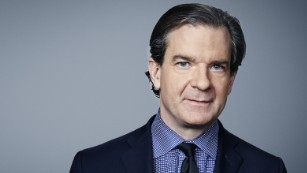
Peter Bergen
This is of a piece with Mullah Omar’s life. He rose from being an obscure village mullah to run the country of Afghanistan in the years before the 9/11 attacks, yet he rarely appeared in public and he was almost never photographed. (Indeed, CNN obtained one of the few photographs of Mullah Omar that exist, which was given to me by an Afghan contact shortly after 9/11).
Mullah Omar will likely be most remembered to history as the man who refused to hand over Osama bin Laden after the 9/11 attacks. Shortly after the attacks the Bush administration demanded the Taliban hand over bin Laden.
Ten days after 9/11, the Voice of America radio service interviewed Mullah Omar, asking him: “So you won’t give Osama bin Laden up?” Omar replied, “No. We cannot do that. If we did, it means we are not Muslims, that Islam is finished. If we were afraid of attack, we could have surrendered him the last time we were threatened.”
Mullah Omar explained to Taliban insiders: “Islam says that when a Muslim asks for shelter, give the shelter and never hand him over to enemy. And our Afghan tradition says that, even if your enemy asks for shelter, forgive him and give him shelter. Osama has helped the jihad in Afghanistan, he was with us in bad days and I am not going to give him to anyone.”
Rahimullah Yusufzai, one of Pakistan’s leading journalists, is one of the few to have interviewed Mullah Omar. Both before and after 9/11 the Taliban leader was adamant on the issue of handing bin Laden over to the Americans, telling Yusufzai, “I don’t want to go down in history as someone who betrayed his guest. I am willing to give my life, my regime. Since we have given him refuge I cannot throw him out now.”
Omar was also convinced that the threats coming from Washington that there would be serious consequences if bin Laden wasn’t handed over were mostly bluster. Abdul Salam Zaeef, the Taliban’s ambassador to Pakistan, said Mullah Omar naively believed the United States would not launch a military operation in Afghanistan. “In Mullah Omar’s mind there was a less than 10% chance that America would resort to anything beyond threats, and so an attack was unlikely.” Zaeef assured Mullah Omar “that America would definitely attack Afghanistan.”
Grandiose claims, limited world view
Mullah Omar’s lack of understanding about the likely American response to 9/11 can be partly explained by the fact that he seldom met with those outside his inner circle. His contacts with journalists before 9/11 were rare and shortly thereafter were nonexistent. He also rarely met with those he believed to be “infidels,” which consisted of pretty much any non-Muslim.
Despite his humble origins, Mullah Omar allowed himself to be declared in 1996 the Amīr al-Mu’minīn, “The Commander of the Faithful,” a rarely invoked religious title from the seventh century that suggested that he was not only the leader of the Taliban, but also of all Muslims everywhere.
To cement his status as a world historic Muslim leader, Mullah Omar wrapped himself literally and metaphorically in the “Cloak of the Prophet,” a religious relic purported to have been worn by the Prophet Mohammed that had been kept in the southern Afghan city of Kandahar for centuries and had almost never been displayed in public. Mullah Omar took the garment out of storage and, ascending on to the roof of a building, draped the cloak on himself before a crowd of hundreds of cheering Taliban.
Despite his grandiose claims to be the Commander of the Faithful, the Taliban leader was also determinedly provincial; in the five years that he controlled Afghanistan he rarely visited Kabul, his own capital, considering it to be a Sodom and Gomorrah.
Mullah Omar’s understanding of the outside world was virtually nonexistent and he was also a captive of religious orthodoxy. On a rare occasion when he met with a group of Chinese diplomats, they presented him with a small figurine of an animal as a gift. The Taliban leader reacted as if they had handed him a live hand grenade, so stern was his aversion to images of living beings.
Taliban’s totalitarianism
When the Taliban first emerged in Afghanistan under the leadership of Mullah Omar they enjoyed quite a high degree of popularity and legitimacy in their earlier years as they brought order and a measure of peace to a country that had suffered through a decade and a half of civil war.
Initially, the Taliban were also seen as incorruptible, and little interested in assuming power for themselves. However, the maxim that “power corrupts and absolute power corrupts absolutely” is an almost perfect description of how the Taliban regime evolved over the years. The Taliban increasingly turned their law and order government into something that aspired to be a truly totalitarian Islamic state.
They banned soccer, kite-flying, music, television and barred females from schools and jobs. Men were not allowed to shave or trim their beards. Women had to wear the all enveloping burqa and stay at home unless accompanied by a male relative. Behavior the Taliban deemed deviant was met with medieval punishments. Taliban religious scholars labored over the question of how to deal with homosexuals. Some said they should be buried alive, others preferred they be thrown from a high building.
The Taliban’s edicts were enforced by the religious police of the Ministry for the Promotion of Virtue and the Prevention of Vice, who raced around in pickup trucks looking for malefactors to beat with sticks or take to jail.
Vahid Mojdeh, a former Taliban official, said, “the Taliban were ruthless torturers, their most commonly used technique was beating people with electric cables.”
What’s next for Taliban?
A role model for ISIS
One and a half decades later the Taliban would serve as something as a role model for ISIS.
ISIS’ destruction of significant portions of the cultural patrimony of Iraq and Syria over the past several months was prefigured by how Mullah Omar dealt with the issue of the two massive Buddhas that had loomed over the snow-capped central Afghan valley of Bamiyan for more than 1,500 years. In May 2001 the Taliban used explosives and tank fire to destroy Afghanistan’s most famous tourist attraction.
Pretty much every country in the world, including many Muslim states, had pleaded with the Taliban not to engage in this epic act of cultural vandalism. Their pleas seemed to make Mullah Omar all the more determined to blow up the statues. He told a visiting delegation of Pakistani officials that over the centuries rainfall had formed large holes near the base of the statutes, which was God’s way of saying, “this is the place you should plant the dynamite” to destroy the idols.
After 9/11, U.S. officials quickly determined that it was a bin Laden operation and they knew he was in Afghanistan. On October 7, 2001, the day the American aerial bombardment of the Taliban began, Faraj Ismail, an Egyptian journalist, interviewed Mullah Omar in Kandahar. The cleric naively assured him that bin Laden had no role in the attacks, “I have control over Afghanistan. I’m sure he didn’t do it.”
The American invasion of Afghanistan overthrew the Taliban in a matter of weeks and on December 7, 2001 Mullah Omar abandoned the city of Kandahar over which he had ruled absolutely for seven years.
The last time Mullah Omar appears to have released an audio recording was a decade ago on July 25, 2005. Since then he has disappeared from public view, issuing written statements every year around the end of Ramadan, including one on July 15. Written statements are not, of course, a “proof of life.”
Who speaks for Taliban’s factions?
So what does the death of Mullah Omar mean? It certainly raises significant doubts about the prospects for ongoing peace negotiations between the Taliban and the Afghan government. After all, without their overall leader, who speaks for the many factions of the Taliban?
According to Barnett Rubin, one of the world leading experts on Afghanistan, “It intensifies doubts as to who, if anyone, can negotiate on behalf of the Taliban fighters on the ground.”
That view is seconded by Hassan Abbas, a leading authority on the Taliban who teaches at the National Defense University in Washington, who says “None of the second tier Afghan Taliban have the credibility or status to fill in the shoes of Mullah Omar.”
Also al-Qaeda’s leaders — both bin Laden and his successor Ayman al-Zawahiri — pledged allegiance to Mullah Omar as the spiritual leader of global jihad. With Omar gone, to whom will al-Zawahiri pledge his allegiance? Certainly not to the head of ISIS, Abu Bakr al-Baghdadi, whom Zawahiri has very publicly split with. Baghdadi was once part of al Qaeda but he split off to create ISIS.
Finally, Mullah Omar’s reported death in the southern Pakistani city of Karachi raises some interesting questions for the Pakistani government. Senior U.S. military officials told me in 2010 that it was their view that Mullah Omar was living at least some of the time in Karachi. How was one of the world’s most wanted men living in Pakistan for so many years with seeming impunity? Many people had the same question about Osama bin Laden.
Story highlights
- Bergen: The Taliban leader lost control of his country when he refused to turn over Osama bin Laden to the U.S.
- Mullah Omar had a narrow world view but grandiose pretensions to be a world leader of Muslims, Bergen says
Peter Bergen is CNN’s national security analyst, vice president at New America and a professor of practice at Arizona State University. He is the co-editor of “Talibanistan: Negotiating the Borders Between Terror, Politics, and Religion.”
(CNN)He is as mysterious in his reported death as he was mysterious in life. Mullah Omar, one of the world’s most wanted men, died in a hospital in Karachi, Pakistan, more than two years ago, according to Afghan government officials. U.S. officials say they believe thisto be a “credible” account.
This is of a piece with Mullah Omar’s life. He rose from being an obscure village mullah to run the country of Afghanistan in the years before the 9/11 attacks, yet he rarely appeared in public and he was almost never photographed. (Indeed, CNN obtained one of the few photographs of Mullah Omar that exist, which was given to me by an Afghan contact shortly after 9/11).
Mullah Omar will likely be most remembered to history as the man who refused to hand over Osama bin Laden after the 9/11 attacks. Shortly after the attacks the Bush administration demanded the Taliban hand over bin Laden.
Ten days after 9/11, the Voice of America radio service interviewed Mullah Omar, asking him: “So you won’t give Osama bin Laden up?” Omar replied, “No. We cannot do that. If we did, it means we are not Muslims, that Islam is finished. If we were afraid of attack, we could have surrendered him the last time we were threatened.”
Mullah Omar explained to Taliban insiders: “Islam says that when a Muslim asks for shelter, give the shelter and never hand him over to enemy. And our Afghan tradition says that, even if your enemy asks for shelter, forgive him and give him shelter. Osama has helped the jihad in Afghanistan, he was with us in bad days and I am not going to give him to anyone.”
Rahimullah Yusufzai, one of Pakistan’s leading journalists, is one of the few to have interviewed Mullah Omar. Both before and after 9/11 the Taliban leader was adamant on the issue of handing bin Laden over to the Americans, telling Yusufzai, “I don’t want to go down in history as someone who betrayed his guest. I am willing to give my life, my regime. Since we have given him refuge I cannot throw him out now.”
Omar was also convinced that the threats coming from Washington that there would be serious consequences if bin Laden wasn’t handed over were mostly bluster. Abdul Salam Zaeef, the Taliban’s ambassador to Pakistan, said Mullah Omar naively believed the United States would not launch a military operation in Afghanistan. “In Mullah Omar’s mind there was a less than 10% chance that America would resort to anything beyond threats, and so an attack was unlikely.” Zaeef assured Mullah Omar “that America would definitely attack Afghanistan.”
Grandiose claims, limited world view
Mullah Omar’s lack of understanding about the likely American response to 9/11 can be partly explained by the fact that he seldom met with those outside his inner circle. His contacts with journalists before 9/11 were rare and shortly thereafter were nonexistent. He also rarely met with those he believed to be “infidels,” which consisted of pretty much any non-Muslim.
Despite his humble origins, Mullah Omar allowed himself to be declared in 1996 the Amīr al-Mu’minīn, “The Commander of the Faithful,” a rarely invoked religious title from the seventh century that suggested that he was not only the leader of the Taliban, but also of all Muslims everywhere.
To cement his status as a world historic Muslim leader, Mullah Omar wrapped himself literally and metaphorically in the “Cloak of the Prophet,” a religious relic purported to have been worn by the Prophet Mohammed that had been kept in the southern Afghan city of Kandahar for centuries and had almost never been displayed in public. Mullah Omar took the garment out of storage and, ascending on to the roof of a building, draped the cloak on himself before a crowd of hundreds of cheering Taliban.
Despite his grandiose claims to be the Commander of the Faithful, the Taliban leader was also determinedly provincial; in the five years that he controlled Afghanistan he rarely visited Kabul, his own capital, considering it to be a Sodom and Gomorrah.
Mullah Omar’s understanding of the outside world was virtually nonexistent and he was also a captive of religious orthodoxy. On a rare occasion when he met with a group of Chinese diplomats, they presented him with a small figurine of an animal as a gift. The Taliban leader reacted as if they had handed him a live hand grenade, so stern was his aversion to images of living beings.
Taliban’s totalitarianism
When the Taliban first emerged in Afghanistan under the leadership of Mullah Omar they enjoyed quite a high degree of popularity and legitimacy in their earlier years as they brought order and a measure of peace to a country that had suffered through a decade and a half of civil war.
Initially, the Taliban were also seen as incorruptible, and little interested in assuming power for themselves. However, the maxim that “power corrupts and absolute power corrupts absolutely” is an almost perfect description of how the Taliban regime evolved over the years. The Taliban increasingly turned their law and order government into something that aspired to be a truly totalitarian Islamic state.
They banned soccer, kite-flying, music, television and barred females from schools and jobs. Men were not allowed to shave or trim their beards. Women had to wear the all enveloping burqa and stay at home unless accompanied by a male relative. Behavior the Taliban deemed deviant was met with medieval punishments. Taliban religious scholars labored over the question of how to deal with homosexuals. Some said they should be buried alive, others preferred they be thrown from a high building.
The Taliban’s edicts were enforced by the religious police of the Ministry for the Promotion of Virtue and the Prevention of Vice, who raced around in pickup trucks looking for malefactors to beat with sticks or take to jail.
Vahid Mojdeh, a former Taliban official, said, “the Taliban were ruthless torturers, their most commonly used technique was beating people with electric cables.”
What’s next for Taliban?
A role model for ISIS
One and a half decades later the Taliban would serve as something as a role model for ISIS.
ISIS’ destruction of significant portions of the cultural patrimony of Iraq and Syria over the past several months was prefigured by how Mullah Omar dealt with the issue of the two massive Buddhas that had loomed over the snow-capped central Afghan valley of Bamiyan for more than 1,500 years. In May 2001 the Taliban used explosives and tank fire to destroy Afghanistan’s most famous tourist attraction.
Pretty much every country in the world, including many Muslim states, had pleaded with the Taliban not to engage in this epic act of cultural vandalism. Their pleas seemed to make Mullah Omar all the more determined to blow up the statues. He told a visiting delegation of Pakistani officials that over the centuries rainfall had formed large holes near the base of the statutes, which was God’s way of saying, “this is the place you should plant the dynamite” to destroy the idols.
After 9/11, U.S. officials quickly determined that it was a bin Laden operation and they knew he was in Afghanistan. On October 7, 2001, the day the American aerial bombardment of the Taliban began, Faraj Ismail, an Egyptian journalist, interviewed Mullah Omar in Kandahar. The cleric naively assured him that bin Laden had no role in the attacks, “I have control over Afghanistan. I’m sure he didn’t do it.”
The American invasion of Afghanistan overthrew the Taliban in a matter of weeks and on December 7, 2001 Mullah Omar abandoned the city of Kandahar over which he had ruled absolutely for seven years.
The last time Mullah Omar appears to have released an audio recording was a decade ago on July 25, 2005. Since then he has disappeared from public view, issuing written statements every year around the end of Ramadan, including one on July 15. Written statements are not, of course, a “proof of life.”
Who speaks for Taliban’s factions?
So what does the death of Mullah Omar mean? It certainly raises significant doubts about the prospects for ongoing peace negotiations between the Taliban and the Afghan government. After all, without their overall leader, who speaks for the many factions of the Taliban?
According to Barnett Rubin, one of the world leading experts on Afghanistan, “It intensifies doubts as to who, if anyone, can negotiate on behalf of the Taliban fighters on the ground.”
That view is seconded by Hassan Abbas, a leading authority on the Taliban who teaches at the National Defense University in Washington, who says “None of the second tier Afghan Taliban have the credibility or status to fill in the shoes of Mullah Omar.”
Also al-Qaeda’s leaders — both bin Laden and his successor Ayman al-Zawahiri — pledged allegiance to Mullah Omar as the spiritual leader of global jihad. With Omar gone, to whom will al-Zawahiri pledge his allegiance? Certainly not to the head of ISIS, Abu Bakr al-Baghdadi, whom Zawahiri has very publicly split with. Baghdadi was once part of al Qaeda but he split off to create ISIS.
Finally, Mullah Omar’s reported death in the southern Pakistani city of Karachi raises some interesting questions for the Pakistani government. Senior U.S. military officials told me in 2010 that it was their view that Mullah Omar was living at least some of the time in Karachi. How was one of the world’s most wanted men living in Pakistan for so many years with seeming impunity? Many people had the same question about Osama bin Laden.
Taliban’s Mullah Omar died in 2013, Afghan government says, CNN.com
Taliban’s Mullah Omar died in 2013, Afghan government says
By Nick Paton Walsh, Peter Bergen and Jason Hanna, CNN
Story highlights
- Haseeb Sediqi, spokesman for Afghanistan’s intelligence service, confirms Omar’s death
- He says Omar died in a mysterious way in a hospital in Pakistan in 2013
(CNN)Taliban leader Mullah Mohammed Omar died in April 2013 in Pakistan, a spokesperson for Afghan President Ashraf Ghani said Wednesday in a news release, citing “credible information.”
Under Omar’s leadership, the Taliban offered safe haven to al Qaeda leader Osama bin Laden, precipitating the U.S. military action in Afghanistan after the terror attacks of September 11, 2001.
White House deputy press secretary Eric Schultz could not confirm the death but said the administration believes the reports are credible. Schultz says the intelligence community is looking into the reports.
Haseeb Sediqi, spokesman for Afghanistan’s intelligence service, said Omar died in a hospital in Karachi, Pakistan, in April 2013.
Sediqi said that intelligence service — the National Directorate of Security — was aware of Omar’s death long ago and had conveyed that to Afghanistan’s Parliament. He also said he mentioned it at least three times in his past press conferences.
Omar Samad, senior adviser to Afghan Chief Executive Abdullah Abdullah, said, “All odds and indications point to the fact that he has been dead for at least two years,”
A source with a strong decadeslong track record of contact with the Taliban told CNN that senior Afghan Taliban leadership have acknowledged Omar is dead. They met in Quetta, Pakistan, this past weekend and may take days or longer to acknowledge his passing publicly, the source said.
The source said there are at least two versions of the death: That Omar died at a Karachi hospital or in the Afghan village of his birth.
Omar’s apparent death is seen as enhancing the possibility of a positive outcome of talks between the Afghan government and the Taliban, the source said.
A former senior United States government official who worked on Afghanistan issues for many years weighed in on the significance of Omar’s death.
“I’ve tended to believe the rumors that he was dead since the serious splits started in the Taliban,” the official said. “If he were alive, he wouldn’t allow these rumors to continue to threaten the movement’s unity to this degree. He would risk some small exposure to invalidate the rumors, and he has not done that despite incredible internal demands that he do so.”
Samad said the reports of Omar’s death will complicate the Afghan government’s negotiations with the Taliban.
“There is a serious ongoing power struggle that will now become more apparent between his hard-line followers and those who are more amenable to current reconciliation initiatives facilitated by Pakistan,” he said, referring to peace talks between the Afghan government and the Taliban that were hosted in Pakistan this month.
In announcing Omar’s death, the spokesman for Ghani said the government is optimistic about the talks, “and thus calls on all armed opposition groups to seize the opportunity and join the peace process.”
What’s next for the Taliban?
Omar’s death will likely work to the advantage of ISIS, which is seeking to make inroads among the Afghan Taliban and the Pakistani Taliban.
“Some dissatisfied elements (of the Taliban) have already pledged allegiance to (ISIS),” said Samad. “With Omar out of the equation, more are likely to join (ISIS).”
“The bad news is that the hardline faction would then become relatively independent, perhaps even aligning with ISIS, which is a nightmare scenario for us,” the senior U.S. official said.
The BBC and the Wall Street Journal reported earlier Wednesday that unnamed sources in Afghanistan were saying Omar was dead. His death had long been rumored, yet always dismissed by the Taliban. Twice in 2011, the Taliban denied speculation that he had been killed.
Earlier this year, the Taliban published a “biography” of the reclusive Afghan leader, saying he was still in charge. The piece appeared on a Taliban website. The goal of the biography, experts said, was to dispel rumors that he died, possibly years ago.
Mullah Omar still leads Taliban, biography published in April 2015 says
And just two weeks ago, the Taliban released a statement attributed to Omar, saying he backed peace talks between the Taliban and the Afghan government.
Mullah Omar purportedly backs Afghan peace talks in July 2015
Omar, once a rural Islamic cleric, created the Taliban — the plural of the Pashto word for “student” — in the 1990s in the wake of the Soviet Union’s withdrawal from the country, aiming to impose Islamic law on Afghanistan and remove foreign influence from the country. The Taliban eventually swept across the nation.
With most of the country under Taliban control, he set himself the goal of transforming Afghanistan into the purest Islamic state in the world, declaring himself Amir-ul-Momineen, or head of the Muslims.
Bergen: The man who wouldn’t have over bin Laden
He was Afghanistan’s de facto leader from 1996 until late 2001, when a U.S.-led coalition invaded and booted the Taliban from power for refusing to hand over Osama bin Laden after the 9/11 terror attacks.
That led to a Taliban insurgency that continues to this day, even as U.S. and other NATO troops are drawing down their numbers in Afghanistan.
The U.S. combat mission in Afghanistan ended last year, leaving the Afghan military to lead the fight against the Taliban. The thousands of NATO troops that remain in Afghanistan are there in a training and support role.
The U.S. government offered a reward of up to $10 million for information leading to Omar’s capture.
CNN’s Ed Payne, Nic Robertson and journalist Masoud Popalzai contributed to this report.
The golden age of terrorism, CNN.com
The golden age of terrorism
By Peter Bergen, CNN National Security Analyst, and Courtney Schuster
Updated 8:40 AM ET, Tue July 28, 2015
Story highlights
- Peter Bergen: We think of the current, post-9/11 era as the heyday of terrorism
- In fact, terrorist incidents in the ’70s exceeded today’s level of activity — and took a higher toll, he says
Peter Bergen is CNN’s national security analyst, vice president at New America and a professor of practice at Arizona State University. He is the author of “Manhunt: The Ten-Year Search for bin Laden — From 9/11 to Abbottabad.” Courtney Schuster is a research associate at New America. Watch “The Seventies” episode on terrorism on CNN Thursday at 9 p.m. ET.
(CNN)Terrorists’ bombs going off frequently in New York, Washington, Chicago, and Los Angeles. More than a hundred hijackings of airplanes in the States.
These weren’t the acts of ISIS-inspired terrorists in recent times, but of terrorists in America during the 1970s.
Many Americans today are clearly convinced they are gravely threatened by terrorists. According to a January 2015 ABC News/Washington Post poll, 76% of Americans are worried about a “major” terrorist attack in the United States.
In fact, the real Golden Age of terrorism in the United States was during the ’70s, not in the post-9/11 world. Consider that terrorism in the United States was then a quite common feature of life: There were literally hundreds of terrorist bombings, shootings and hijackings in States during the 1970s. In the 14 years since 9/11 there have been by contrast only some two-dozen terrorist attacks in the United States perpetrated by a mix of jihadist terrorists, neo-Nazis, violent racists and anti-government militants, according to a count by New America.
During the decade of the 1970s terrorists killed 184 people in the States and injured more than 600 others. In the decade and a half since 9/11, terrorists have, by contrast, killed 74.
Between 1970 and 1979 nationalist and ethnic terrorists, religious zealots, and anti-war militants frequently attacked American targets. Terrorist attacks typically consisted of bombings of civilian targets in New York, Los Angeles, and Washington that were also interspersed with shooting sprees aimed at the police.
The Weather Underground, an anti-war organization that targeted the Pentagon, the U.S. Capitol and banks, claimed credit for 25 bombings in 1975 alone but could have been responsible for upward of 45, according to the University of Maryland’s Global Terrorism Database.
Other anti-war activists carried out major bombings at Fresno State College, the University of Wisconsin-Madison, and City Hall in Portland, Oregon.
On February 4, 1974, 19-year-old publishing heiress Patty Hearst was kidnapped in Berkeley, California, by the leftist revolutionary terrorist group the Symbionese Liberation Army, which demanded a vast ransom. In a famous case of Stockholm Syndrome, Hearst would later join the Symbionese Liberation Army, emerging with a new revolutionary persona as “Tania.” Despite her claim of brainwashing, Hearst was convicted of bank robbery; after two years in jail her sentence was commuted by Jimmy Carter and she was eventually pardoned by Bill Clinton.
The United States also saw a wave of religious terrorism during the 1970s. The Jewish Defense League, a right-wing religious organization, launched 44 bombings and assaults during the decade, half of which targeted perceived anti-Semitic targets in New York, Los Angeles and Chicago.
During the decade, ethnic and nationalist terrorist groups were frequent perpetrators of violent attacks in the States. The Black Panthers carried out 24 bombings, assaults and hijackings.
Fuerzas Armadas de Liberacion Nacional, a Puerto Rican separatist group, was responsible for 82 bombings, mostly in New York and Chicago and almost all of which targeted civilians.
The U.S. Department of Transportation found that between 1970 and 1979 there were 112 domestic plane hijackings. While those numbers didn’t differentiate between simple criminal hijackings and those committed for political purposes, hijackings were quite common during the 1970s, but since then they have virtually disappeared.
A watershed moment for American aviation security was the November 10, 1972, hijacking of a Southern Airways flight in Birmingham, Alabama, with 34 people on board. Three hijackers demanded $10 million or they would crash the plane into the nuclear reactors at Oak Ridge, Tennessee. For 30 hours, the three hijackers forced the plane to travel to Cleveland, Detroit, Lexington, Kentucky, Toronto, and ultimately to Havana, Cuba, where the hijackers were arrested by Cuban authorities.
As a result of this incident, the Federal Aviation Administration ordered in December 1972 that within a month all passengers be screened with metal detectors, all carry-on luggage be inspected, and armed guards be posted at boarding checkpoints.
Three years later, LaGuardia airport was targeted by terrorists. Investigators believe 25 sticks of dynamite were placed inside a locker near the TWA baggage claim, blasting shrapnel across the area, killing 11 and injuring 75.
At the time of the explosion, passengers from two incoming flights happened to have already cleared the area, leaving mostly airport employees as the victims. Although the bombing was never solved, Croatian nationalists — who were responsible for three hijackings in the States in the ’70s — were the suspected culprits.
The West writ large did not fare much better from terrorism than the United States during the 1970s. Terrorists in Europe frequently attacked embassies, trains, airports and cafes and an entire OPEC meeting was taken hostage (including 11 oil ministers) in Vienna, Austria. That incident ended after the plane provided to the terrorists landed in Algiers and the 63 hostages were released and their leader, Carlos the Jackal, escaped.
Most infamously, Palestinian terrorists kidnapped and killed a group of Israeli athletes at the 1972 Munich Olympics, an event that was covered live by most of the world’s TV networks that were gathered in Munich to cover the games.
Why were the 1970s the Golden Age of terror? A number of factors were influential: Opposition to the Vietnam War spawned violent leftist groups such as the Weather Underground. In the heady political atmosphere of the late ’60s other violent revolutionary groups also arose, such as the Black Panthers. During this period Palestinian terrorist groups started for the first time operating in the West led most notoriously by Carlos the Jackal who was the Osama bin Laden of his day.
During the ’70s there were also scant government resources directed at the terrorism threat. The first Joint Terrorism Task Force in the States was established in 1980 in New York, which was the first interagency law enforcement group specifically founded to investigate acts of terrorism.
Post-9/11 the United States became, for obvious reasons, a much less congenial environment for terrorist to operate in. On 9/11 there were 35 Joint Terrorism Task Forces. Today there are 104. On 9/11 there were 16 suspected terrorists on the “no fly” list; now there are 40,000. On 9/11 there was no Transportation Security Administration, no Department of Homeland Security and no National Counterterrorism Center, which brings together analysts from across the U.S. intelligence community to analyze terrorism threats and trends.
All these new measures and government agencies make the United States a much harder target for terrorists.




