Reporting in Pakistan: Protecting Journalists in One of the World’s Most Dangerous Countries, New America, Washington
Reporting in Pakistan

As Kati Marton, an author, journalist, and board member for both the Committee to Protect Journalists (CPJ) and the New America Foundation, notes in a recent blog post, Pakistan has long been one of the most dangerous countries in the world for members of the media. According to data collected by the CPJ, 54 journalists have been killed in Pakistan since 1992. At least one journalist and three media workers have been killed in 2014, and several others have been attacked.One such reporter is Raza Rumi, a senior Pakistani journalist. On March 28, Rumi was leaving the office when unidentified gunmen opened fire on his vehicle, killing his driver. Fearing for his life, Rumi left the country and is currently visiting the United States.
Days earlier, Marton and Joel Simon, the executive director of CPJ, met with Pakistani Prime Minister Nawaz Sharif to discuss ways the Pakistani government could better protect its journalists, and bring their attackers to justice. While they received several positive commitments from Sharif and his delegation, the subsequent attacks on Rumi and Hamid Mir, another prominent Pakistani journalist, show that much more work needs to be done.
The Committee to Protect Journalists and the New America Foundation are pleased to welcome Marton, Rumi, and Simon for a general discussion about reporting in Pakistan, as well as CPJ’s mission to protect Pakistan’s freedom of the press.
Join the conversation online using #Pakpress and following @NatSecNAF.
If you are unable to join us in person, please tune it to our live webcast. No sign up is required to view the streaming video, which will appear on this page on the day of the event.
PARTICIPANTS
Author and Journalist
Board, Committee to Protect Journalists
Board, New America Foundation
PANELISTS
Raza Rumi
Consulting Editor, The Friday Times
Analyst, Express News
Joel Simon
Executive Director, Committee to Protect Journalists
Moderator
Peter Bergen
Director, International Security Program, New America Foundation
Obama’s high-stakes drone war in Yemen, CNN.com
Obama’s high-stakes drone war in Yemen
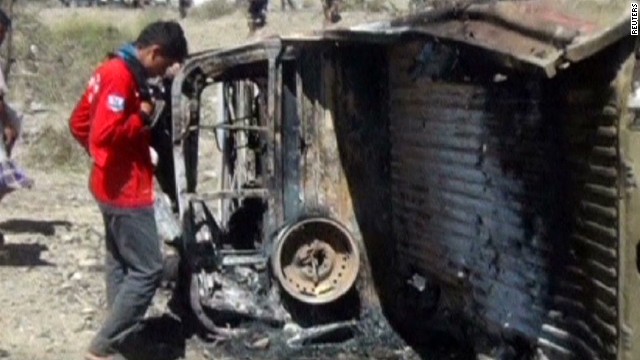
Second deadly air strike in Yemen
- Suspected U.S. drone strikes hit two different locations in Yemen
- Peter Bergen says strikes are part of an aggressive war by U.S. against militants
- Estimates are that up to 950 people have been killed, including more than 80 civilians
- Bergen: War is focusing on bomb-maker believed to have designed devices aimed at U.S.
Editor’s note: Peter Bergen is CNN’s national security analyst, a director at the New America Foundation and the author of “Manhunt: The Ten-Year Search for bin Laden — From 9/11 to Abbottabad.”
(CNN) — Over the weekend the United States launched drone strikesin two different locations in Yemen, killing at least 15 militants as well as three civilians. At the same time, Yemeni ground forces began what have been termed “unprecedented” operations against al Qaeda’s affiliate in Yemen, which may also involve additional U.S. drone strikes, although that isn’t clear right now.
The U.S. drone campaign in Yemen is very much President Obama’s war.
Unlike in Pakistan, where President George W. Bush significantly ramped up the CIA drone campaign while he was in office, there was only one drone strike in Yemen during Bush’s two terms in office. During Obama’s administration, there have been 92 drone attacks, as well as a further 15 U.S. strikes using other forms of weaponry such as cruise missiles, according to a count by the New America Foundation.
Indeed, Obama vastly accelerated the drone campaign in Yemen in 2011 and 2012, just as CIA drone strikes in Pakistan began to slow. Forty-seven strikes took place in Yemen in 2012, marking the first time the number of drone strikes in Yemen and Pakistan reached comparable levels.
One reason for this acceleration in drone strikes in Yemen may have been Obama’s authorization in April 2012 of the “signature” strikes that had been approved the previous year for use in Pakistan’s tribal regions.
Such strikes do not target known militants but rather people who are displaying the behaviors of suspected militants. Such signature strikes were reportedly governed by stricter rules in Yemen than in Pakistan, though, and were given a different name: TADS, or Terrorist Attack Disruption Strikes.
As of Monday, U.S. drone and air strikes have killed an estimated 753 to 965 people in Yemen, of whom the large majority were militants, but at least 81 were civilians,according to the New America Foundation study.
All but six of the many hundreds of victims of the strikes were killed under the Obama administration.
The drone program in Yemen began in earnest after a series of attempted terrorist attacks against the United States were traced back to al Qaeda’s Yemen-based affiliate, al Qaeda in the Arabian Peninsula.
AQAP claimed responsibility for the would-be “underwear bomb” attack on a Detroit-bound flight by Umar Farouk Abdulmutallab on Christmas Day 2009. Fortunately for the people on board Northwest Airlines Flight 253 that day, Abdulmutallab’s bomb was a dud, and he succeeded only in burning himself rather than destroying a commercial airliner. Had his bomb exploded as intended, it would have been the most devastating terrorist attack on the United States since 9/11.
Less than a year later, AQAP mailed two packages with bombs cleverly disguised inside HP LaserJet printer cartridges from a FedEx office and UPS facility in Yemen to the street addresses of two synagogues in Chicago. The toner in the printer cartridges had been replaced by the high explosive PETN. The bombs were almost impossible to detect as the explosives were odorless and the circuitry for the detonator looked like ordinary wiring.
Both devices were discovered on October 29, 2010, before they could detonate, one in Dubai and the other at a British airport.
They were discovered because of very specific information about the tracking numbers of both packages that was provided by the Saudis, who had managed to plant a spy in the ranks of AQAP.
The bomb-maker believed responsible for these cleverly designed bombs is Ibrahim al-Asiri.
According to a senior U.S. official, al-Asiri is proving hard to find, as he avoids any form of electronic communication and communicates only by courier.
Another senior U.S. official says al-Asiri has been experimenting with bombs that can be implanted in suicide bombers using surgical techniques.
Al-Asiri is the most important target in Yemen for U.S. intelligence, although senior American officials say he has also trained others in al Qaeda in advanced bomb-making, so his techniques may survive should he be killed in a drone strike.
During the Obama administration, U.S. drones have killed 35 key al Qaeda militants in Yemen, including the Yemeni-American cleric Anwar al-Awlaki, who directed AQAP’s operations against the United Sates before he was killed in 2011 drone strike.
Unlike in Pakistan, where political leaders have condemned the strikes, Yemeni President Abed Rabbo Mansour Hadi said during an interview with The Washington Post in 2012 that he personally signs off on all U.S. drone strikes in Yemen and that they hit their targets accurately, asserting, “The drone technologically is more advanced than the human brain.”
Yet some of the popular resentment toward the U.S. drone campaign that has long festered in Pakistan is beginning to emerge in Yemen.
On April 23, 2013, the Senate Judiciary Committee held the first public hearing dedicated to the legal issues surrounding the U.S. drone campaign. One of the six who testified was Farea al-Muslimi, a young Yemeni activist who spent his high school years in the United States.
Al-Muslimi told the committee that a drone strike had targeted his village of Wessab just six days earlier. “What radicals had previously failed to achieve in my village,” al-Muslimi told the senators, “one drone strike accomplished in an instant: There is now an intense anger and growing hatred of America.”
War! What Is It Good For?, New America, Washington
War! What Is It Good For?

In his provocative new book, War! What Is It Good For?: Conflict and the Progress of Civilization from Primates to Robots, historian Ian Morris turns Edwin Starr’s old song lyric on its head, arguing that war has actually been quite good for some things, namely the states that wage it. Indeed, he shows that, over time, wars have made governments and that governments have made peace, providing their citizens with relative safety, wealth, and larger, more organized societies.
By combining the four ways of looking at war — personal, military, technical, and evolutionary — Morris provides a new perspective on human conflict that is lost in most other histories. He notes, for example, that almost every documented society, going all the way back to the world’s first written records, has waged war. If war is really such a bad idea, why is it such an apparently permanent part of the human condition, and can anything alter that fact? Many experts suggest that by the 2040s, wealthy countries will be using fully robotic weapon systems, removing the need to risk human lives on the battlefield at all, in essence putting war “out of business.” But is the computerization of war making the world a safer place? Should a computer with humanlike intelligence be armed? Are we truly reaching an endgame, as Morris suggests, in which man has become less violent, and a burgeoning “globocop” will make wars unnecessary?
The New America Foundation is pleased to welcome Morris for a discussion about the findings in his book and whether war has actually made society safer and wealthier, and if the future of war will truly be peace.
Copies of Morris’ book will be available for purchase by cash, check, or credit card.
Join the conversation online using #WAR! and following @NatSecNAF.
PARTICIPANTS
Author, War! What Is It Good For?: Conflict and the Progress of Civilization from Primates to Robots
Jean and Rebecca Willard Professor of Classics and Professor of History, Stanford University
Peter Bergen
Director, International Security Program, New America
U.S. right wing extremists more deadly than jihadists, CNN.com
U.S. right wing extremists more deadly than jihadists
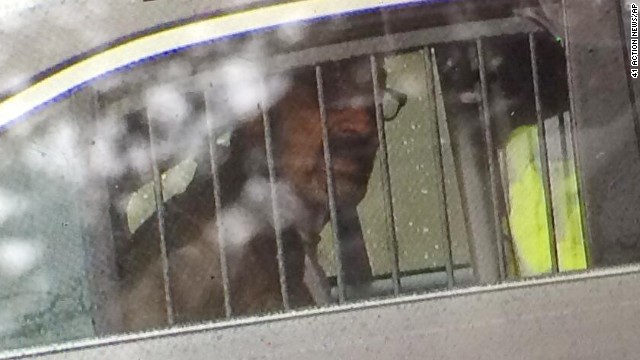 Frazier Glenn Cross, a 73-year-old Missouri man with a long history of spouting anti-Semitic rhetoric, is seen in a police car Sunday, April 13. He is suspected of fatally shooting three people: a boy and his grandfather outside a Jewish community center in Overland Park, Kansas, and a woman at a nearby assisted-living facility.
- Peter Bergen, David Sterman: Man killed three at Jewish centers in Kansas
- Suspect shouted “Heil Hitler;” if it had been “Allahu Akbar” media would cover it more, they say
- Since 9/11, right wing extremists have killed more in U.S. than those motivated by al Qaeda
- Writers: Given this, why do we not give more national security attention to right wing attacks?
Editor’s note: Peter Bergen is CNN’s national security analyst, a director at the New America Foundation and the author of “Manhunt: The Ten-Year Search for bin Laden — From 9/11 to Abbottabad.” David Sterman is a research assistant at the New America Foundation.
(CNN) — On Sunday, a man shot and killed a 14-year-old boy and his grandfather at the Jewish Community Center of Greater Kansas City and then drove to a nearby Jewish retirement community where he shot and killed a third person. Police arrested a suspect, Frazier Glenn Cross, who shouted “Heil Hitler” after he was taken into custody.
Cross, who also goes by Frazier Glenn Miller, is a well-known right wing extremist who founded the Carolina Knights of the Ku Klux Klan and the White Patriot Party, according to the Southern Poverty Law Center.
Now let’s do the thought experiment in which instead of shouting “Heil Hitler” after he was arrested, the suspect had shouted “Allahu Akbar.” Only two days before the first anniversary of the Boston Marathon bombings, this simple switch of words would surely have greatly increased the extent and type of coverage the incident received.

Yet the death toll in the shootings in Kansas is similar to that of last year’s Boston Marathon bombings, where three people were killed and the suspects later killed a police officer as they tried to evade capture. (Many more, of course, were also wounded in the Boston attacks; 16 men, women and children lost limbs.)
In fact, since 9/11 extremists affiliated with a variety of far-right wing ideologies, including white supremacists, anti-abortion extremists and anti-government militants, have killed more people in the United States than have extremists motivated by al Qaeda’s ideology. According to a count by the New America Foundation, right wing extremists have killed 34 people in the United States for political reasons since 9/11. (The total includes the latest shootings in Kansas, which are being classified as a hate crime).
By contrast, terrorists motivated by al Qaeda’s ideology have killed 21 people in the United States since 9/11.
(Although a variety of left wing militants and environmental extremists have carried out violent attacks for political reasons against property and individuals since 9/11, none have been linked to a lethal attack, according to research by the New America Foundation.)
Moreover, since 9/11 none of the more than 200 individuals indicted or convicted in the United States of some act of jihadist terrorism have acquired or used chemical or biological weapons or their precursor materials, while 13 individuals motivated by right wing extremist ideology, one individual motivated by left-wing extremist ideology, and two with idiosyncratic beliefs, used or acquired such weapons or their precursors.
Opinion: Why do racists and anti-Semites kill?
A similar attack to the one that Frazier Glenn Cross is accused of in Kansas occurred in August 2012 when Wade Michael Page killed six people in a shooting at a Sikh temple in Wisconsin. Page was a member of a white supremacist band and associated with the Hammerskins, a white supremacist group. Page committed suicide during the attack.
Page is not, of course, the only right wing extremist to have used lethal violence to achieve political ends. In 2009, for instance, Shawna Forde, Albert Gaxiola, and Jason Bush raided a house in Arizona, killing Raul Flores and his daughter Brisenia. The three attackers sought to use the burglary to finance their anti-immigration vigilante group, Minutemen American Defense. Forde and Bush wereconvicted and sentenced to death. Gaxiola was sentenced to life in prison.
Also in 2009, Scott Roeder murdered Dr. George Tiller, who ran an abortion clinic in Wichita, Kansas. In 2010 Roeder was convicted of first-degree murder. According to the Southern Poverty Law Center, Roeder not only had ties to the extreme anti-abortion movement, but he also had been pulled over while driving with a fake license plate bearing the markings of the Sovereign Citizens, a movement of individuals who deny that the government has authority over them.
Of course, the deadliest terrorist attack on American soil prior to 9/11 was the Oklahoma City bombing, which was masterminded by Timothy McVeigh, a man with deep ties to far-right militant circles. McVeigh killed 168 people when he bombed the Alfred P. Murrah federal building on April 19, 1995.
Despite this history of deadly violence by individuals motivated by political ideologies other than al Qaeda, it is jihadist violence that continues to dominate the news and the attention of policy makers.
Some of this is quite understandable. After all, on 9/11 al Qaeda’s 19 terrorists killed almost 3,000 people in the space of a morning. Since then al Qaeda’s branch in Yemen tried to bring down with a bomb secreted on a passenger an American commercial jet flying over Detroit on Christmas Day 2009 and al Qaeda’s branch in Pakistan tried to launch bombings on the New York subway system a few months earlier. Luckily those plots didn’t succeed, but certainly if they had the death toll would have been on a large scale.
Yet the disparity in media coverage between even failed jihadist terrorist attacks and this latest incident in Kansas is emblematic of a flawed division in the public’s mind between killing that is purportedly committed in the name of Allah and killing that is committed for other political ends, such as neo-Nazi beliefs about the need to kill Jews.
Part of the reason for this disconnect might be that when a Department of Homeland Security report warning of violent right wing extremism was leaked in 2009, it generated a substantial political controversy.
In a 2011 interview with the Southern Poverty Law Center, Daryl Johnson, the leader of the team that produced the report, argued that following the controversy, DHS’s examination of such threats suffered, stating “Since our report was leaked, DHS has not released a single report of its own on this topic. Not anything dealing with non-Islamic domestic extremism—whether it’s anti-abortion extremists, white supremacists, ‘sovereign citizens,’ eco-terrorists, the whole gamut.”
The threat from al Qaeda and its associated forces has changed significantly since 9/11. Today, almost 13 years after 9/11, al Qaeda has not successfully conducted another attack inside the United States. And since 2011, no individual charged with plotting to conduct an al Qaeda-inspired terrorist attack inside the United States has acted with more than one accomplice. This demonstrates the difficulties today of forming a jihadist group sufficiently large enough to conduct a complex attack anything on the scale of 9/11, and is a tribute to the success of law enforcement agencies in detecting and deterring jihadist terrorist activity.
Today in the United States, al Qaeda-type terrorism is the province of individuals with no real connection to foreign terrorists, aside from reading their propaganda online. Given this, it becomes harder to explain, in terms of American national security, why violence by homegrown right wing extremists receives substantially less attention than does violence by homegrown jihadist militants.
Tyler Hite contributed research support for this article.
The man who inspired the Boston bombings, CNN.com
The man who inspired the Boston bombings
 Police say the dead suspect,Tamerlan Tsarnaev, is the man the FBI identified as Suspect 1. He was killed during the shootout with police in Watertown, Massachusetts, early April 19. He is pictured here at the 2010 New England Golden Gloves.
- Peter Bergen says a terrorist killed in a U.S. drone strike continues to influence jihadists
- He says it was easier for U.S. to kill Anwar al-Awlaki than to eliminate support for his ideas
- Suspect in Boston bombings downloaded al-Awlaki’s articles and his magazine, Bergen says
- Bergen: Many other charges have been brought against followers of al-Awlaki
Editor’s note: Peter Bergen is CNN’s national security analyst, a director at the New America Foundation and the author of “Manhunt: The Ten-Year Search for bin Laden — From 9/11 to Abbottabad.” David Sterman is a research assistant at the New America Foundation.
(CNN) — One year after the Boston Marathon bombings and almost three years after his death in a CIA drone strike in Yemen, Anwar al-Awlaki, the New Mexico-born American cleric who was an operational leader of al Qaeda in the Arabian Peninsula, continues to be a major influence on violent jihadist extremists in the United States.
Even in death, al-Awlaki is the key cleric in the English-speaking world of radical Islam that militants are turning to for inspiration. His many lectures and interviews are still widely available on the Internet, and they are in colloquial English to boot. Al-Awlaki, for instance, influenced the suspects in the Boston Marathon bombings.
Al-Awlaki was born in 1971 in Las Cruces, New Mexico, where his father was studying agricultural economics at New Mexico State University as a Fulbright scholar. As an undergrad, al-Awlaki attended Colorado State University, studying engineering. In 1994 while living in Colorado, al-Awlaki married his first wife, a cousin from Yemen. A year later, al-Awlaki moved to San Diego, where he took up a job as a cleric at a local mosque.
By his own account, it was during this period that al-Awlaki began to develop a hatred for the United States, feelings he was quite adept at keeping to himself. This hatred was sparked by the first Gulf War, which followed Saddam Hussein’s invasion of Kuwait in August 1990. Six months later a massive American army based in Saudi Arabia expelled Hussein’s troops from Kuwait. After Hussein’s armies were ignominiously pushed out of Kuwait, a large-scale U.S. military presence in Saudi Arabia continued for many years. For politicized, fundamentalist Muslims such as al-Awlaki, the presence of thousands of “infidel” American troops on the holy land of Saudi Arabia was a deep irritant.
During his years living in San Diego and later in Virginia, al-Awlakimet with three of the 9/11 hijackers in the months before the attacks.
Almost a decade later he also gave the order to Umar Farouk AbdulMutallab, the “underwear bomber” to take down an American plane with a bomb. AbdulMutallab ignited his bomb on Northwest Flight 253 on Christmas Day 2009 as it flew over the suburbs of Detroit, but luckily the device failed to detonate properly.

As a result of the operational role al-Awlaki was playing in al Qaeda, President Barack Obama gave the authorization for his death, and on the morning of September 30, 2011, CIA drones locked on to the vehicle he was traveling in Yemen and fired missiles that killed the cleric.
Obama called the death of al-Awlaki a “major blow” to al-Qaeda in Yemen, which had now lost its “leader of external operations.” But it turns out that killing the militant cleric was easier than killing his ideas that linger on in the virtual world.
Dzhokhar Tsarnaev, the younger brother who survived a shootout with police shortly after the Boston Marathon bombings, had downloaded articles written by al-Awlaki, according to the indictmentagainst him. Tsarnaev also downloaded the first issue of Inspire magazine, al Qaeda in the Arabian Peninsula’s English-language webzine, which al-Awlaki helped to produce.
Law enforcement officials linked the pipe bombs allegedly used by the Tsarnaev brothers in the Boston Marathon bombings to step-by-step instructions for how to build similar pipe bombs that were printed in that first issue of Inspire.
The Tsarnaev brothers may not be the only individuals in the United States to have been influenced by al-Awlaki. According to a count by the New America Foundation, since 9/11, 52 American citizens or U.S. residents indicted in a jihadist terrorist-related crime or that have been killed have cited al-Awlaki as an influence, possessed his propaganda or were in communication or met with him.
Al-Awlaki was in e-mail communication, for instance, withMaj. Nidal Hasan, who killed 13 people in a shooting at Fort Hood, Texas, in 2009.
Nor are the Tsarnaevs the only Americans likely to be influenced by Inspire magazine. According to a count by the New America Foundation, at least 16 individuals indicted since the magazine’s first issue in 2010 have possessed or cited Inspire as an influence.
Even today, court documents continue to cite al-Awlaki and Inspire as influencing factors in terrorism cases. Eighteen individuals indicted in the United States since al-Awlaki’s death in 2011 have cited his influence or possessed his propaganda.
In June, for instance, Justin Kaliebe, an 18-year-old New Yorker, pleaded guilty to attempting to travel to Yemen to join al Qaeda in the Arabian Peninsula. According to his plea agreement, Kaliebe told an undercover officer, “My standard is Sheik Anwar Al-Awlaki and Sheik Osama (bin Laden), both who bore witness to the truth.”
In November, the government indicted Basit Sheikh, a 29-year-old living in North Carolina, and charged him with attempting to provide material support to al-Nusra Front, a Syrian al Qaeda affiliate. The criminal complaint alleges that Sheikh posted a link on Facebook to a propaganda video narrated by al-Awlaki.
In December, the government filed an indictment against Terry Loewen, a 58-year-old man from Wichita, Kansas, alleging he attempted to explode a car bomb at the Wichita Mid-Continent Airport. The criminal complaint alleges that Loewen told an undercover FBI informant, “Brothers like Osama bin Laden and Anwar al-Awlaki are a great inspiration to me,” and, “I have read Anwar Al-Awlaki’s 44 ways of Jihad, and like everything l’ve ever read of his, it’s very informative.”
In March, Nicholas Teausant, a 20-year-old from Acampo, California, was arrested and charged with attempting to travel to fight in Syria. The criminal complaint alleges that Teausant’s computer contained copies and excerpts of Inspire.
It is not just the U.S. government that continues to view al-Awlaki as maintaining, even in death, his power to influence. Al Qaeda in the Arabian Peninsula continues to publish Inspire. The latest issue appeared in March featuring a purported interview with al-Awlaki made before his death in which he urged attacks on Western civilians. Al Qaeda and individuals motivated by the group’s ideology continue to view al-Awlaki as an important voice so his writings, available on the Internet, will likely continue to crop up in terrorism cases for the foreseeable future.
What can be done to counter this? An implausible approach is a “takedown” effort. Trying to eliminate al-Awlaki’s writings on “holy war” on the Internet just won’t work. Eliminate them on some sites, and they will simply pop up on others.
Another more plausible approach would be for English-speaking Muslim clerics to contest publicly and widely al-Awlaki’s arguments for justified holy wars against non-Muslims. So far such efforts remain limited both in number and reach.
Four things we learned about the Boston bombing, CNN.com
Four things we learned about the Boston bombing
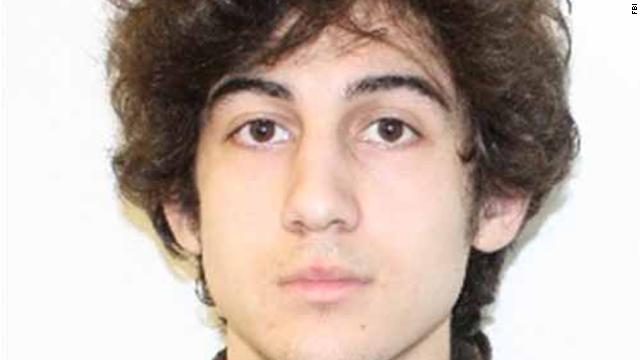 Dzhokhar Tsarnaev, identified as Suspect 2, was captured in a Boston suburb on April 19 after a manhunt that shut down the city.
- Authors: Much of what we thought we knew about Boston bombing was wrong
- No evidence Tamerlan Tsarnaev plotted the crime with overseas terrorists, they say
- The bombs apparently were homemade, based on information found online
Editor’s note: Peter Bergen is CNN’s national security analyst, a director at the New America Foundation and the author of “Manhunt: The Ten-Year Search for bin Laden — From 9/11 to Abbottabad.” Jennifer Rowland is a student in the masters program at the Kennedy School of Government at Harvard University.
(CNN) — A year ago on April 15, two brothers of Chechen heritage who were raised in Cambridge, Massachusetts, were alleged to have carried out a spectacular bombing at the Boston Marathon that killed three, wounded more than 200 and led to a massive manhunt that paralyzed the city and its suburbs for days.
The older brother, Tamerlan Tsarnaev, was killed in a shootout with police shortly after the bombing, while the younger brother, Dzhokhar, surrendered to authorities and is awaiting trial.
As is often the case with big news events, much of what we understood to be the case in the immediate aftermath of the event and what we now know about the bombing a year later are quite different.
Consider that shortly after the bombing, it was widely assumed Tamerlan Tsarnaev had traveled to Dagestan in southern Russia a year earlier to meet and train with some of the Islamist rebels there who are fighting the Russian army.
Many commentators, including us, thought it was quite unlikely that the brothers could have learned how to construct two effective bombs that blew up within seconds of each other at the Boston Marathon without some kind of specialized training such as what could be obtained from the rebels in Dagestan.
Also, at first blush, the Tsarnaev brothers appeared to be so-called “clean skins” who had no previous history of criminality, and therefore there was little reason that law enforcement should have been monitoring either of them. Similarly, both appeared to be regular guys with no history of mental disorders.
All of these assumptions have turned out to be wrong. Here are four things we’ve learned since then:
One: There is no evidence Tamerlan Tsarnaev had any contact with Islamist militants overseas.
In January 2012, Tamerlan left Massachusetts for a six-month trip to Dagestan. There he became close to members of an organization called the Union of the Just, a nonviolent group that is critical of the United States. He also began attending a mosque that was frequented by hardline Sunni Muslims. Russian security officials claim he met with Islamist extremists in Dagestan, but U.S. intelligence services have not been able to confirm those allegations.
Russian officials also found “frequent” electronic communication between Tamerlan and Russian-Canadian extremist William Plotnikov, but FBI officials in Moscow say it is unlikely the two made contact in person while Tamerlan was in Dagestan.
Media sources in the region have also alleged that Tamerlan met with Mahmoud Mansour Nidal, who was reportedly a recruiter for Islamist fighters in the region. Nidal was killed in a raid by Russian forces on May 19, 2012. Again, official American investigators have not unearthed any evidence that supports this claim.
And experts on the security climate in Dagestan say it is unlikely that Tamerlan could have met with known extremists and not have then been detained and questioned by the Russian security service on his way out of the country (which didn’t happen).
Two: The Tsarnaev brothers did not have any formal training in bomb building.
Instead, they apparently followed bomb-making instructions they found in an English-language al Qaeda webzine.
The House Homeland Security Committee released an extensive report last month on the Boston bombings that did not mention that either of the Tsarnaevs had received any professional training on how to build an explosive device.
Rather, they appear to have followed step-by-step instructions for how to build a bomb that were published in 2011 in Inspire, a webzine produced by al Qaeda in the Arabian Peninsula (AQAP) that is targeted at English-speaking Muslims.
Three: The FBI now alleges that Tamerlan was implicated in a triple homicide in Waltham, Massachusetts, in 2011.
On May 22, 2013, a month after the Boston bombings, Ibrahim Todashev was shot and killed by an FBI agent after Todashev attacked him with a pole while he was being interrogated at his apartment in Florida.
According to the FBI, Todashev was about to sign a written statement implicating himself and Tamerlan in the murders of Brendan Mess, Erik Weissman and Rafi Teken on September 11, 2011.
Investigators reported that the victims’ throats were slashed so viciously that they were almost decapitated, and their bodies were strewn with a pound and a half of high-quality marijuana. Another 8 and a half pounds of marijuana was left in jars and bags around the apartment, as well as about $5,000 in cash, and there was no sign of forced entry. Therefore, the murderers appeared to know the three victims.
Mess was one of Tamerlan’s best friends, but the law enforcement officials never questioned the elder Tsarnaev brother about the case, and it remained unsolved until after the Tsarnaevs were identified as the main suspects in the Boston bombings.
If the FBI allegations are correct, Tamerlan was a dangerous killer well before the Boston bombings and a more thorough investigation of the triple homicide in Waltham, Massachusetts could well have derailed the Boston Marathon plot.
Four: Tamerlan may have had mental health problems.
According to an excellent investigation of the Tsarnaev brothers by the The Boston Globe, Tamerlan told his mother, Zubeidat, “that he felt there were two people living inside of him,” according to Anna Nikaeva, a Chechen who knew the Tsarnaev parents.
Tamerlan also told Donald Larking, a friend at the mosque he attended, that he heard two angry voices inside his head telling him to do things.
Could some kind of intervention by a mental health professional have helped Tamerlan with his problems and averted the Boston Marathon plot?
This question cannot, of course, be answered, but what is clear is that the Boston bombings were not directed by al Qaeda or an allied group and are part of a trend in the United States over the past years in which fewer terrorist plots have any kind of a connection to an overseas terrorist organization. They are also part of a related trend in which plots no longer involve groups of conspirators but are carried out either by individuals or by pairs such as the Tsarnaev brothers.
In a sense, this reflects a victory for law enforcement efforts. Lone-wolf type attacks of the kind we saw in Boston, while undeniably tragic for the victims, are not a national catastrophe of the scale of 9/11, which was carried out by a large, well-organized terrorist group.
The Wrong Enemy, Carlotta Gall, New America Foundation, Washington
The Wrong Enemy

After nearly thirteen years, the war in Afghanistan is winding down for international troops, and retrospectives on the American adventure in the “graveyard of empires” are starting to appear. Some argue that the international community made a positive difference in the country, while others wonder if the fighting was even worth it. But to Carlotta Gall, a Pultizer Prize-winning journalist for the New York Times, the question policymakers should be asking themselves is: were we even fighting the right people?
Gall was one of the first Western reporters on the ground in northern Afghanistan after 9/11, and she remained in Afghanistan and Pakistan for the next ten years, living through and reporting on the conflict for the Times. In her new book, The Wrong Enemy: America in Afghanistan 2001-2014, she provides a sweeping history of Afghanistan and Pakistan and the political and religious leaders who charted each country’s course. At the heart of that history is a powerful and incisive argument that in waging war in Afghanistan, the United States was fighting the wrong enemy – that it is in Pakistan where the training and funding of the Taliban and the support of al Qaeda has occurred.
The New America Foundation is pleased to welcome Gall for a discussion about her book, her thoughts on Pakistan’s involvement in Afghanistan, and what the impending withdrawal of foreign troops will mean for the country’s future.
Copies of Gall’s book will be available for purchase by cash, check, or credit card.
Join the conversation online using #wrongenemy and following @NatSecNAF.
If you are unable to join us in person, please tune in to the live webcast. No sign up is required to view the streaming video, which will appear on this page the day of the event.
Participants
North Africa correspondent, New York Times
Author, The Wrong Enemy: America in Afghanistan 2001 – 2014
Peter Bergen
Director, National Security Program, New America Foundation
11 things to know about world’s biggest election, CNN.com
11 things to know about world’s biggest election

- World’s largest election has begun in India; lower house and next prime minister are at stake
- India’s slowing economy is the key issue, authors say; 1 in 3 of world’s poorest are in India
- BJP candidate Narendra Modi is considered to be the favorite for prime minister, they say
- Authors: Young voters and women may play a bigger role in this election than in the past
Editor’s note: Peter Bergen is CNN’s national security analyst, and Ana Swanson is an MA candidate at the School of Advanced International Studies at Johns Hopkins University. Both are editors of the South Asia Channel on foreignpolicy.com.
(CNN) — India’s general election, the largest democratic exercise in history, begins Monday. Voters will elect 543 members to the lower house of parliament, which will then select the country’s next prime minister. Here are 11 things you need to know about the world’s biggest election:
1. Its massive scale. More than 814 million voters are eligible to cast ballots over the next month to elect the lower house of parliament, or Lok Sabha, up from 713 million voters in 2009. The Indian voting pool is larger than the total populations of the United States and Western Europe combined.
Given the infrastructure in India, an election of this scale can’t be done in a day. Voting will take place in nine blocks over the next five weeks, to allow election authorities to tackle the daunting logistics of operating 930,000 polling stations. The vote counting will be carried out and concluded on May 16.
2. It’s the economy, stupid. India’s flagging economic performance is the election’s central issue. After registering Chinese-style growth rates of 8% to 10% in the 2000s, India’s economy slowed sharply in 2012. GDP growth now remains below 5%, coupled with persistently high inflation.
Indian politicians and academics remain divided over whether the country should focus its energy on first reigniting growth or on alleviating poverty. Even after a decade of rapid growth, India is still home to one in three of the world’s poorest people. Unlike other countries, India’s poor tend to vote in higher numbers than the rich.

3. The BJP and the “Modi wave.” India’s main opposition party, the strongly nationalist Bharatiya Janata Party, is positioned to win the most seats in the lower house of parliament, though it is not likely to win the outright majority necessary to form a government without coalition partners. The BJP’s prime ministerial candidate, Narendra Modi, has gathered momentum by positioning himself as an advocate for economic development and good governance. Many expect Modi’s business-friendly campaign to lead his party to its biggest victory ever.
4. Modi’s charisma and controversy. Modi has a strong record as chief minister of the state of Gujarat and a “strong man” reputation that many see as a welcome contrast to current Prime Minister Manmohan Singh. But Modi has also been criticized for his authoritarian bent and ties to right-wing Hindu organizations.
Although an investigation set up by India’s Supreme Court cleared him of wrongdoing in 2012, some voters remain suspicious of Modi’s role in the 2002 Gujarat riots, in which 1,000 people, mostly Muslims, were killed. The U.S. State Department denied Modi a visa in 2005 because of his alleged culpability, but it changed tack in March, saying it would welcome Modi to the United States if he wins the election.
Infographic: India’s vote by the numbers
5. The crisis of confidence in the Congress party. Anemic growth, persistent inflation and frequent corruption scandals have tried the public’s patience with the Indian National Congress, the country’s oldest party and the core of the ruling United Progressive Alliance over the past decade.
Rahul Gandhi, the heir to the Nehru-Gandhi dynasty and the party’s choice for prime minister, has been portrayed as a reluctant leader, and some believe the Congress will be reduced to its lowest number of seats in history. For its part, the Congress criticizes the BJP’s policies as exclusionary and emphasizes its social welfare programs, aimed at helping the poor.
6. Nepotism is here to stay. The competition between Gandhi and Modi has become something of a public referendum on India’s entrenched political elite.
Rahul Gandhi, who is the son and grandson of previous prime ministers, is depicted by critics as cosseted and out-of-touch, while Modi’s campaign emphasizes his humble origins working for his father’s tea stall as a child. But despite Modi’s popular appeal, research by Patrick French indicates nepotism remains alive and well in Indian politics. Nearly 30% of current members of parliament are from political families; for parliamentary members younger than 40, the figure rises to two-thirds.
7. Criminality among the Indian political class is endemic. An astonishing 30% of the current parliament faces criminal charges. Judging by the new crop of candidates, it isn’t going to be much better in the new parliament. According to research published last week, almost a fifth of the candidates face criminal charges.
By contrast, none of the sitting members of the U.S. Congress is facing criminal charges; in 2013, only two members — or less than half a percent — were convicted of a crime.
Put another way — and this may come as something of a surprise to those many American readers who hold the U.S. Congress in low regard — Indian parliamentarians are on average 60 times more likely to be charged with a crime than their U.S. counterparts.
Corruption and criminality may prove hard to shake in Indian politics, since the rising cost of campaigns means they are dominated by the wealthy. The Centre for Media Studies estimates that Indian politicians may spend around $5 billion campaigning, triple the sum for the last national poll in 2009. The figure is second only to the $7 billion spent in the 2012 U.S. presidential race, the world’s most expensive election.
8. The role of young voters and social media. First-time voters are expected to make up roughly 10% of those who will go to the polls this election. India’s population is very young: More than 65%, or nearly 800 billion people, are younger than 35, according to the latest census. This youth bulge is lending weight to candidates who prioritize economic development, as well as increasing the importance of social media in campaigns.
Young voters grew up after reforms to liberalize the Indian economy began in 1991, and thus have high expectations for leaders to reignite India’s growth. In large part because of the youth contingent, spending on social media advertising during the election may reach $83 million.
9. The rise of the Aam Aadmi Party. An offshoot of the anti-corruption protests in 2011-2012, the AAP galvanized support with its surprise showing in last year’s local elections for the Delhi Assembly.. The AAP won 28 of the legislature’s 70 seats and its leader, activist-turned-politician Arvind Kejriwal, was appointed as Delhi’s chief minister. But while the AAP has energized young voters and the middle class, it hasn’t yet shown it can transition from a protest movement to a governing force.
After failing to deliver on key election promises, Kejriwal quit his post in Delhi after only 49 days in office. The AAP is expected to take votes from more established parties in the election and could be instrumental in forming a governing coalition.
10. Women are raising their voices. Long expected to vote in line with the male members of their families, Indian women are becoming an electoral force in their own right.
Women account for 48.5% of the electorate, but in some recent polls, they have voted in higher numbers than men. Inflation and safety are likely to be among their most pressing concerns as women control most household budgets and violence against women is an emergent political issue. The gang rape and subsequent death of a 23-year-old woman in Delhi in December 2012 and numerous other cases have sparked widespread protests and precipitated a reckoning of the position and treatment of Indian women.
11. The key role of regional parties. No party has won an outright majority in India since 1989. This year’s results are likely to be the same, meaning India’s regional parties will likely be instrumental in helping the BJP or Congress form a government. Regional parties control five of India’s biggest states — Uttar Pradesh, Bihar, West Bengal, Tamil Nadu and Odisha, which together account for more than 200 Lok Sabha seats — and their wide variety of agendas and proclivities make determining India’s future policy direction difficult.
Whether elected officials can deliver the decisive governance that India needs will depend in large part on the character and strength of the governing coalition.
Get the government out of your phone records, CNN.com
Get the government out of your phone records
By Peter Bergen, CNN National Security Analyst
updated 5:01 PM EDT, Tue March 25, 2014
STORY HIGHLIGHTS
- President Barack Obama is proposing to end NSA bulk collection of phone records
- It would require a court order to obtain phone records of individual Americans
- Peter Bergen: Government would still be able to do legitimate terrorism investigations
- He cites study by New America Foundation that found phone records were of minimal use
Editor’s note: Peter Bergen is CNN’s national security analyst, a director at the New America Foundation and the author of “Manhunt: The Ten-Year Search for bin Laden — From 9/11 to Abbottabad.” This story is adapted, in part, from a New America Foundation policy paper and an earlier CNN.com piece.
(CNN) — The Obama administration is proposing to scrap the NSA’s bulk collection of all Americans’ phone call records.
The administration’s proposal is eminently sensible. It eliminates the government collecting five years of every Americans’ phone records and instead mandates that U.S. phone companies themselves keep those records for only the 18 months that they are required to do so by federal regulations.
And most importantly, it proposes that a court order would be necessary to obtain the phone records of individual Americans. This ensures that there is some kind of judicial review before the government can get hold of any American’s phone records, rather than leaving this up to the judgment of a small group of anonymous officials at the National Security Agency.
The new proposal, first reported in The New York Times, ensures that the NSA is no longer storing vast amounts of data about Americans’ calling habits while it still allows the government to access the phone records of terrorism suspects after a judge has reviewed the case.
This proposed fix to the system hardly seems onerous. After all, since 1979, judges have only turned down 0.3% of the requests they have received for warrants involving cases of suspected espionage or terrorism.
Such a move would, however, assure Americans that there was some sort of due process going on whenever their phone records are examined by the government. This is closer to the spirit of the Fourth Amendment, which guards against “unreasonable searches,” than does the present system in which the NSA sucks up vast amounts of phone record information.
The Obama administration proposal is particularly welcome in light of a New America Foundation study published in January. The study looked at the government’s claims about the role that NSA “bulk” surveillance of phone records had in keeping the United States safe from terrorism and found that these claims were overblown.
An in-depth analysis was conducted of 225 individuals recruited by al Qaeda or a like-minded group, or inspired by al Qaeda ideology and charged in the United States with an act of terrorism since 9/11. The analysis demonstrated that traditional investigative methods — such as the use of informants, tips from local communities and targeted intelligence operations — provided the initial impetus for investigations in the majority of cases while the contribution of NSA’s bulk surveillance of phone records to these cases was minimal.
Photos: NSA leaker Edward Snowden
(Click to go to a database of all these 225 individuals and additional details about them.)
So what has been the impact of NSA data collection?
The bulk collection of American telephone metadata — which includes the telephone numbers that originate and receive calls as well as the time of those calls but not their content (under Section 215 of the Patriot Act) — appeared to have played an identifiable role in, at most, 1.8% of these cases.
This finding corroborated that of the Obama-appointed White House review group, which had access to classified materials. That group concluded in December that “section 215 telephony metadata was not essential to preventing attacks.”
Furthermore, our examination of the role of the database of U.S. citizens’ telephone metadata in the single plot the government used to justify the importance of the program — that of Basaaly Moalin, a San Diego cabdriver who in 2007 and 2008 provided $8,500 to Al-Shabaab, al Qaeda’s affiliate in Somalia — calls into question the necessity of the Section 215 bulk collection program.
According to the government, the database of American phone metadata allows intelligence authorities to quickly circumvent the traditional burden of proof associated with criminal warrants, thus allowing them to “connect the dots” faster and prevent 9/11-scale attacks. Yet in the Moalin case, after using the NSA’s phone database to link a number in Somalia to Moalin, the FBI waited two months to begin an investigation and wiretap his phone.
This finding undercut the government’s theory that the NSA database of Americans’ telephone metadata was necessary to expedite the investigative process, since it clearly didn’t expedite the process in the single case the government used to extol its virtues.
The New America Foundation study concluded the surveillance of American phone metadata had no discernible impact on preventing acts of terrorism and only the most marginal of impacts on preventing terrorist-related activity, such as fundraising for a terrorist group.
That’s why the new Obama proposal to end the NSA sucking up of the phone records of Americans going back half a decade is especially welcome.
Follow us on Twitter @CNNOpinion.
What if the Afghan elections actually work? CNN.com
What if the Afghan elections actually work?
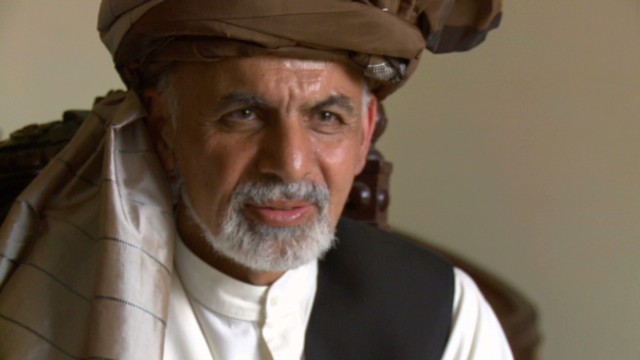
Meet Afghanistan’s next great hope for peace
- Americans are dubious about the Afghanistan war, questioning what it achieved
- Peter Bergen says attention should be paid to the robust election campaign
- Candidates seeking to succeed Hamid Karzai are debating, voters are listening, he says
- Bergen: Despite Taliban, Afghanistan could see its first democratic transfer of power
Editor’s note: Peter Bergen is CNN’s national security analyst, a director at the New America Foundation and the author of “Manhunt: The Ten-Year Search for bin Laden — From 9/11 to Abbottabad.”
(CNN) — Afghans will go to the polls on Saturday to elect their second president since the overthrow of the Taliban in the winter of 2001.
You might be wondering: Why bother? After all, doom and gloom are supposedly the order of the day in Afghanistan. A Pew/USA Today poll in January found that slightly more than half of Americans believe the United States has mostly failed to achieve its goals in Afghanistan.
A month earlier, a CNN poll found that the Afghan War might well be the most unpopular war in American history. An overwhelming 82% of Americans are now opposed to the war. (At the start of 2014, the United States had 38,000 troops in Afghanistan.)
Dire predictions of a civil war breaking out after the withdrawal of U.S. and other NATO combat troops from Afghanistan at the end of 2014 have been a staple in the American media for years, including in quite sensible publications such as the New Yorker.
But a surprisingly under-reported set of developments has been taking place over the past several weeks in Afghanistan ahead of Saturday’s presidential election. It shows that Afghans are not preparing for another civil war and instead a large majority of Afghans are planning to participate in the first democratic transition of power in Afghan history, while the presidential candidates are engaged in the kind of campaigning and deal-making that would gladden the heart of Bill Clinton.
Despite the entirely predictable efforts of the Taliban to disrupt the run up to the election, there is still likely to be a big turn out on Election Day. A suicide bomber wearing a military uniform, for instance, killed six police officers on Wednesday inside the Interior Ministry, which is both well protected and in the heart of downtown Kabul.
Even with the Taliban violence, recent polling by the Free and Fair Election Foundation of Afghanistan found that 75% of Afghans said they wanted to vote. That is essentially the same finding of a separate poll taken almost a year ago that found that 76% of Afghans planned to vote.
Even allowing for some drop-off on Election Day, most Afghan experts I have talked to believe the turnout will likely be in the 60% to 70% range. Turnout in the previous presidential election in 2009 was only around 30%.
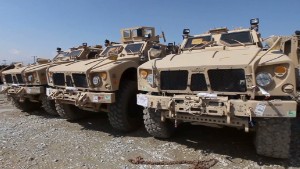 Packing up, shippping out of Afghanistan
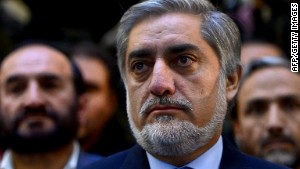 Abdullah Abdullah on Afghan future
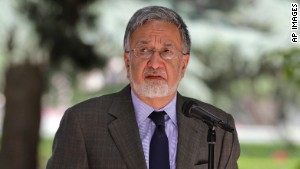 Afghan Pres candidate Rassoul speaks out
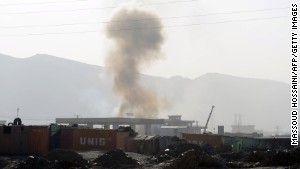 ‘Taliban is in a position to come back’
 Soldier’s bravery earns Medal of Honor
By contrast, the last time a U.S. presidential election had a 60% turnout was in 1968, and the last time it was above 70% was in 1900.
The high voter turnout estimates are based on the great excitement the Afghan elections have engendered. There have been substantive televised debates between the leading candidates, an astonishing development when you recall that under the Taliban it was only 13 years ago that television was banned entirely.
Indeed, under the Taliban there was no media to speak of beyond Radio Shariat, which dispensed grim Taliban propaganda. Afghanistan’s now-vibrant media — today there 75 television channels and 175 radio stations, as well as hundreds of print publications — is giving the presidential campaign wall-to-wall coverage.
Meanwhile, the presidential candidates are addressing vast rallies across the country.
There has also has been real Chicago-style political horse-trading during the campaign. Candidates with little public support, such as Qayum Karzai, President Hamid Karzai’s brother (and in another life, a restaurateur in Baltimore), recently ended his presidential bid and threw his support to another candidate, a former foreign minister, Zalmai Rassoul.
Despite much fretting that President Karzai would publicly endorse one of the eight candidates still in the running, he hasn’t done so and his supposedly preferred candidate, Rassoul, came in a distant third in a poll released over the weekend.
Most impressively, the two campaigns that are consistently leading in the several polls taken during the past weeks have crossed ethnic lines to form their tickets. Top presidential contender Ashraf Ghani, who earned his Ph.D. at Columbia, is from the Pashtun ethnic group and he is running with Abdul Rashid Dostum as his No. 2, a leader of the Uzbek ethnic group.
The other front-runner is Dr. Abdullah Abdullah who is identified with the Tajik ethnic group (despite the fact that his parents are Tajik and Pashtun). Abdullah is partnered with Mohammad Mohaqeq, a leader of the Hazara ethnic group, and he also has a Pashtun on the ticket, Mohammad Khan, who is affiliated with Hezb-i-Islami, a splinter group of the Taliban.
Importantly, neither of the front-runners is an old school warlord. Indeed, they are both impressive technocrats. Abdullah is an eye doctor by training who became Afghanistan’s most capable foreign minister under President Karzai. Ghani was the country’s most able finance minister, also under President Karzai. Both these candidates can credibly promise sorely needed good governance in Afghanistan should they assume the presidency.
Of course, there are caveats to all this. The 2009 presidential election was marred by massive fraud. Could this happen again? This is much less likely for several reasons: There is considerably more local media attention about this issue than was the case five years ago; there have been several nationwide polls in the run-up to this election that establish quite firmly that Ghani and Abdullah are the front-runners, so fraudulently fixing some other candidate to take the lead would be hard to accomplish, and all the major candidates will have their representatives at the thousands of polling stations across the country, according to a senior Afghan official.
Could Taliban violence keep voters away on Election Day? Maybe in some places, but U.S., NATO and Afghan forces have long planned for this day, so expect to see a comprehensive security plan in place. According to the senior Afghan official, Afghanistan’s borders with neighboring Pakistan will be sealed to the extent possible on polling day so as to prevent any Taliban insurgents or suicide bombers crossing over from Pakistan into Afghanistan. The official says Kabul International Airport will also be closed.
A wild card that could upset the election process would be violence against one of the well-guarded leading contenders. Abdullah’s motorcade was attacked by unknown assailants in February. He escaped unhurt.
Afghan election law requires the winning presidential candidate to obtain more than 50% of the votes to win. Given that there are eight candidates still in the field, such an outcome seems unlikely. That means the two top candidates from Saturday’s voting will go to a runoff election. According to the senior Afghan official, the runoff will likely take place on June 20.
All the major candidates have said they will sign the Bilateral Security Agreement, or BSA, with the United States that would allow American troops to be based in Afghanistan in an advisory capacity for many years after the withdrawal of U.S. combat troops at the end of 2014.
Peter Bergen
Karzai has famously refused to sign the agreement. Most Afghans want the BSA, because they see even a relatively small presence of U.S. soldiers and other NATO allies as a guarantor of the country’s stability.
As one senior Afghan official put it to me when discussing the hoped-for long-term presence of U.S. troops, “We can either be Somalia or we can be South Korea.” It’s obvious that most Afghans prefer the latter outcome. Under a U.S. security umbrella, over the past several decades South Korea went from being one of the poorest countries in the world to one of the richest.
Though Karzai has been criticized by President Obama and members of Congress for not signing the BSA, in fact he has actually done the long-term relationship between Afghanistan and the United States a distinct favor, because the BSA will now be signed by the winner of the presidential election, a politician who will have a substantial mandate from the Afghan people, rather than by Karzai, who is at this point the lamest of ducks.
What of the Taliban? Well, they regard elections as against Islam, so they will write themselves out of this historic event and will only be seen by most Afghans as spoilers who will try to interrupt the election.
And in a significant turn of events, the Pakistani military is preparing a large-scale military operation along the Afghan-Pakistan border into the Pakistani tribal area of North Waziristan, which has long been a sanctuary for the most virulent branch of the Taliban, the Haqqani Network. According to two U.S. officials who closely follow Pakistan, the Pakistani military is geared up for this operation in a manner that is unprecedented, and it is only the civilian political leadership that is dithering about whether to pull the trigger.
The United States made a fundamental error when it conceived that real peace in Afghanistan, which has been wracked by three decades of war, centered on doing some kind of deal with the Taliban. As a result, well-intentioned U.S. officials put a great deal of diplomatic effort into trying to negotiate some kind of peace deal with the Taliban. Absolutely nothing has come of this multiyear effort, which was always a pipe dream, as I predicted in this space three years ago.
The negotiations with the Taliban were known in Washington circles as “the reconciliation process.” In fact, the real reconciliation process is what you will see in Afghanistan on Saturday: Huge turnout by voters across the country voting across ethnic lines for seasoned politicians who have partnered with leaders of other ethnic groups.
This isn’t the predicted civil war; it’s more like a civics love fest. If only we could try to import some of this spirit into the U.S. Congress.
FEATURED BOOK

All the Presidents’ Wars:
RECENT ARTICLES

RECENT FILM AND TV SERIES
GHOSTS OF BEIRUT: SHOWTIME
The Fall of Osama bin Laden, National Geographic

BIN LADEN'S HARD DRIVE, NATIONAL GEOGRAPHIC

