USC event Los Angeles
Syracuse University
NSA and your phone records: What should Obama do? CNN.com
NSA and your phone records: What should Obama do?
By Peter Bergen
updated 8:32 AM EST, Wed January 15, 2014
Bergen: Benefit of NSA tactics overblown
STORY HIGHLIGHTS
Bergen: New America Foundation finds little value to mass surveillance program
He says hardly any terrorism cases were found out or wrapped up as result of phone metadata
President Obama is giving a speech about NSA surveillance Friday
Bergen: Ending the mass collection of phone data is a good solution
Editor’s note: Peter Bergen is CNN’s national security analyst, a director at the New America Foundation and the author of “Manhunt: The Ten-Year Search for bin Laden — From 9/11 to Abbottabad.” This story is adapted from a New America Foundation policy paper.
(CNN) — On Friday President Obama will address the nation about the NSA’s controversial surveillance programs. He is expected to announce some substantive changes to those programs which collect data about the phone calls of every American.
After the first leaks by former NSA contractor Edward Snowden were published in June, Obama defended the NSA’s surveillance programs during a visit to Berlin, saying: “We know of at least 50 threats that have been averted because of this information not just in the United States, but, in some cases, threats here in Germany. So lives have been saved.”
Similarly, Gen. Keith Alexander, the director of the NSA, testified before Congress that “the information gathered from these programs provided the U.S. government with critical leads to help prevent over 50 potential terrorist events in more than 20 countries around the world.”
Peter Bergen
Rep. Mike Rogers, R-Michigan, chairman of the House Permanent Select Committee on Intelligence, said on the House floor in July that 54 times the NSA programs “stopped and thwarted terrorist attacks both here and in Europe — saving real lives.”
However, a New America Foundation review of the government’s claims about the role that NSA “bulk” surveillance of phone and e-mail communications records has had in keeping the United States safe from terrorism found that these claims are overblown and even misleading.
An in-depth analysis of 225 individuals recruited by al Qaeda or a like-minded group, or inspired by al Qaeda ideology, and charged in the United States with an act of terrorism since 9/11, demonstrated that traditional investigative methods, such as the use of informants, tips from local communities, and targeted intelligence operations, provided the initial impetus for investigations in the majority of cases, while the contribution of NSA’s bulk surveillance programs to these cases was minimal.
(Click on the link to go to a database of all these 225 individuals and additional details about them and the government’s investigations of these cases. )
What’s the impact of NSA data collection?
The controversial bulk collection of American telephone metadata, which includes the telephone numbers that originate and receive calls, as well as the time of those calls but not their content, under Section 215 of the PATRIOT Act, appears to have played an identifiable role in, at most, 1.8% of these cases.
This finding corrobrated that of the Obama-appointed White House review group who had access to classified materials that concluded in December that “section 215 telephony meta-data was not essential to preventing attacks.”
Our study also found that NSA programs involving the surveillance of non-U.S. persons outside of the United States under Section 702 of the FISA Amendments Act played a role in 4.4 percent of the terrorism cases we examined, and NSA surveillance under an unidentified authority played a role in 1.3 percent of cases we examined.
In 27 percent of the cases we reviewed, court records and public reporting do not identify which specific methods initiated the investigation. These cases, involving 62 individuals, may have been initiated by an undercover informant, an undercover officer, a family member tip, other traditional law enforcement methods, CIA- or FBI-generated intelligence, NSA surveillance of some kind, or any number of other methods.
Furthermore, our examination of the role of the database of U.S. citizens’ telephone metadata in the single plot the government uses to justify the importance of the program — that of Basaaly Moalin, a San Diego cabdriver who in 2007 and 2008 provided $8,500 to Al-Shabaab, al Qaeda’s affiliate in Somalia — calls into question the necessity of the Section 215 bulk collection program.
According to the government, the database of American phone metadata allows intelligence authorities to quickly circumvent the traditional burden of proof associated with criminal warrants, thus allowing them to “connect the dots” faster and prevent future 9/11-scale attacks. Yet in the Moalin case, after using the NSA’s phone database to link a number in Somalia to Moalin, the FBI waited two months to begin an investigation and wiretap his phone.
This undercuts the government’s theory that the database of Americans’ telephone metadata is necessary to expedite the investigative process, since it clearly didn’t expedite the process in the single case the government uses to extol its virtues.
In sum, the surveillance of American phone metadata has had no discernible impact on preventing acts of terrorism and only the most marginal of impacts on preventing terrorist-related activity, such as fundraising for a terrorist group.
Given that, what should the Obama administration do about the NSA’s phone data collection program, which keeps the phone data of all Americans for five years?
President Obama has a number of potential choices. The first is to continue the program as is. Another is to give the phone collection program to some kind of private third party entity, and another is to mandate that the phone companies keep the data.
There are problems with all these approaches.
The status quo is open to legal challenges. Judge Richard J. Leon of the District of Columbia ruled in December that the program likely violates the Constitution. Another federal judge, in New York, ruled in favor of the program a week later, so its legal fate might have to be determined by higher courts.
Giving the data collection program to some kind of government-nominated private third party will likely be seen as just another way for the government to store the data. And the phone companies don’t want the costs and headaches of storing five years of data.
There is another approach that should be considered, which is to abandon the bulk phone data collection program entirely and go back to the tried and true approach of having the government get a court order to look at a suspect’s phone records, rather than leaving that decision to the discretion of a group of anonymous officials at NSA, as is now the case.
This hardly seems onerous. After all, since 1979 judges have only turned down 0.3% of the requests they have received for warrants involving cases of suspected espionage or terrorism. But such a move would assure Americans that there was some sort of due process going on whenever their phone records are examined by the government. And this seems closer to the spirit of the Fourth Amendment, which guards against “unreasonable searches,” than does the present system.
Thanks to David Sterman and Emily Schneider for their research help.
Al Qaeda controls more territory than ever in Middle East, CNN.com
Al Qaeda controls more territory than ever in Middle East
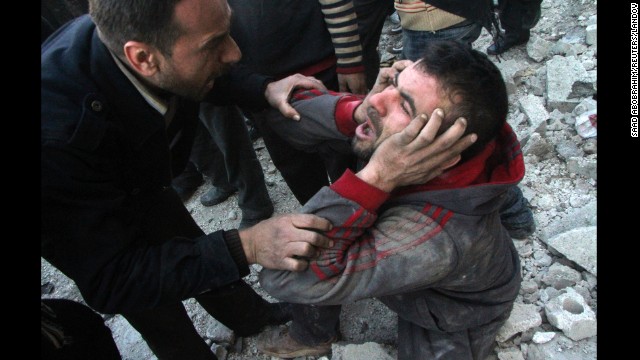 A man reacts after what activists said was an air raid by forces loyal to Syrian President Bashar al-Assad in the al-Marja district of Aleppo on Monday, December 23. The United Nations estimates more than 100,000 people have been killed since the Syrian conflict began in March 2011. Click through to see the most compelling images taken during the conflict, which is now a civil war:
- Al Qaeda affiliates made gains in Syria and Iraq in recent months
- Peter Bergen says al Qaeda appears to control more territory in Arab world than ever before
- He says the focus of al Qaeda leaders has always been regime change in Middle East
- Bergen: There is push back against al Qaeda from Maliki regime in Iraq and from Syrians
Editor’s note: Peter Bergen is CNN’s national security analyst, a director at the New America Foundation and the author of“Manhunt: The Ten-Year Search for bin Laden — From 9/11 to Abbottabad.” Jennifer Rowland is a graduate student at Harvard University’s Kennedy School.
(CNN) — From around Aleppo in western Syria to small areas of Falluja in central Iraq, al Qaeda now controls territory that stretches more than 400 miles across the heart of the Middle East, according to English and Arab language news accounts as well as accounts on jihadist websites.
Indeed, al Qaeda appears to control more territory in the Arab world than it has done at any time in its history.
The focus of al Qaeda’s leaders has always been regime change in the Arab world in order to install Taliban-style regimes. Al Qaeda’s leader Ayman al-Zawahiri acknowledged as much in his 2001 autobiography, “Knights Under the Banner of the Prophet,” when he explained that the most important strategic goal of al Qaeda was to seize control of a state, or part of a state, somewhere in the Muslim world, explaining that, “without achieving this goal our actions will mean nothing.”

Now al-Zawahiri is closer to his goal than he has ever been. On Friday al-Qaeda’s affiliate in Iraq seized controlof parts of the city of Falluja and parts of the city of Ramadi, both of which are located in Iraq’s restive Anbar Province.
Anbar is home to predominantly Sunni Muslims, who feel that that the Shiite-dominated Iraqi government of Prime Minister Nuri al-Maliki treats the Sunnis as second-class citizens.
Sectarian tensions in Anbar recently burst into several all-out revolts against the government, and the Islamic State of Iraq and Syria (ISIS), as the al-Qaeda affiliate there is known, quickly seized the opportunity to notch some battlefield victories.
Government forces increased their presence around Falluja in response and on Tuesday tribal leaders issued a statement urging people who had fled the city or stopped reporting to work to return.
 Iraq violence: Assessing U.S. role
 al Qaeda re-emerges in fight over Iraq
ISIS is also operating in Syria, where it has established a presence in many areas of the Aleppo and Idlib Governorates in the northwest. In August, ISIS launched a propaganda series on video highlighting their activities in Syria, which includes interviews with fighters; the “graduation” of a group of mujahedin “cubs” (aged about 7 to 10 years old) from training, and sermons at local mosques preaching al Qaeda’s interpretation of Islam.
The al-Nusra front has claimed to control parts of at least a dozen Syrian towns. Those include sections of the ancient city of the Aleppo in the northwest, where fighters have been filmed running a community fair and preaching al Qaeda’s values to crowds of children.
The group has also released videos on jihadist websites claiming that it is providing services to the people of several towns in the governorate of Idlib, which borders the Aleppo Governorate to the west. Al Nusra claims that it is a quasi-government and service-provider in the towns of Binnish, Taum, and Saraqib.
Al-Nusra fighters allied to al Qaeda function like a government in areas they control in Syria. The group provides daily deliveries of bread, free running water and electricity, a health clinic, and a strict justice system based on Sharia law in the eastern Syrian city of Ash Shaddadi, where it also took control of the city’s wheat silos and oil wells.
In September a CNN reporting team concluded, “Al Qaeda has swept to power with the aim of imposing a strict Islamist ideology on Syrians across large swathes of Syria’s rebel-held north.”
In sum, al Qaeda affiliates now control much of northern and northwestern Syria as well as some parts of eastern Syria, as well as much of Anbar province, which is around a third of Iraqi territory.
Al-Nusra is engaged in a protracted fight to maintain a foothold in the eastern city of Dayr al-Zur, where, as in Ash Shaddadi, the militants have their hands on an energy source, this time in the form of natural gas.
On Friday the group released a video on a jihadist website claiming it was grinding some 10 tons of wheat each day to provide bread for the residents of Dayr al-Zur. In the video, a bearded man who identifies himself as part of al-Nusra gives a National Geographic-esque tour of a wheat silo where bags of wheat are filled, weighed, and transported to a bread-making facility, where industrial mixers churn dough.
Similar videos released throughout the second half of 2013 depict al-Nusra fighters providing health care, legal services, electricity and food to civilians in the cities of Daraa, Homs, Hama, and even the suburbs of the capital Damascus, where the government still enjoys fairly secure authority.
Al Qaeda’s expansion in Syria will not continue unchecked, though. Many Syrians are unhappy about being ruled by the strict jihadist militants. Over the past several days fighting has broken outbetween ISIS and an alliance of various rebel factions in Syria, including al-Qaeda’s other affiliate in the country, the al-Nusra Front. This fighting has taken a toll on ISIS, which has been forcedto withdraw from a number of key Syrian towns as a result of attacks by the other rebel groups.
The infighting amongst Syrian rebels is not good news for the fate of the uprising against Syrian President Bashar al-Assad, but it could prompt the United States to increase its shipments of arms and supplies to “moderate” Syrian rebels in the FSA. However, even an increase in U.S. aid to the rebels would be unlikely to sway the conflict significantly, which means al-Assad will remain in power and the war will continue as it has over the past three years.
Secretary of State John Kerry said on Sunday that the United States will “do everything that is possible to help” the Iraqi government control al Qaeda’s expansion in Anbar, but stressed that no American troops would be sent back to the Middle Eastern nation .
Last month, the United States quietly sent Hellfire missiles and surveillance drones to the Iraqi government to support their fight against increasing al Qaeda-related violence.
This weaponry is unlikely to make a substantial difference to the mounting violence in Iraq where violence has returned to the levels it was in 2008, near the height of the Iraq war. Indeed, by any reasonable standard Iraq is now mired back in a civil war. Last year almost 8,000 Iraqi civilians were killed in the conflict, according to the UN.
For the United States the widening reach of al Qaeda in the Middle East doesn’t necessarily translate into an immediate threat at home. So far only a handful of Americans have fought in the Syrian conflict alongside al Qaeda’s affiliates there so concerns about some kind of “blowback” from the Syrian war in the U.S. are, at this point, unfounded,
European countries are rightly concerned, however. Many European countries have seen their citizens drawn to the Syrian war; more than a hundred from Britain and many dozens from countries like Norway, Denmark and the Netherlands, according to multiple European officials we have spoken to. These countries are concerned that the retuning veterans of the Syrian conflict might launch terrorist attacks in Europe.
In October for instance, British authorities arrested militants who were allegedly planning a terrorist attack. Two British officials who work on counterterrorism issues told us that that the militants had recently traveled to Syria.
The United States and its allies should therefore make a careful effort to track the foreign fighters who have joined jihadist groups fighting in Syria.
Follow us on Twitter @CNNOpinion.
Join us on Facebook/CNNOpinion.
Al Qaeda controla más territorios que nunca en Oriente Medio, CNN.es
Al Qaeda controla más territorios que nunca en Oriente Medio
Por Peter Bergen y Jennifer Rowland
Nota del Editor: Peter Bergen es analista de seguridad nacional de CNN, director de la New America Foundation y el autor de Manhunt: The Ten-Year Search for bin Laden – From 9/11 to Abbottabad (Cacería humana: La búsqueda de 10 años de bin Laden, desde el 11/9 hasta Abbottabad). Jennifer Rowland es estudiante graduada de la Escuela Kennedy de la Universidad de Harvard.
(CNN) – Desde los alrededores de Alepo en el oeste de Siria hasta las pequeñas áreas en Faluya en el centro de Iraq, Al Qaeda controla ahora el territorio que se extiende más de 400 millas (643,7 kilómetros) a través del corazón de Oriente Medio, de acuerdo con las noticias publicadas en versiones en inglés y árabe así como las publicadas en los sitios web yihadistas.
De hecho, Al Qaeda parece controlar más territorio en el mundo árabe de lo que ha hecho en cualquier otro momento de su historia.
Si estás viendo esta nota en tu móvil, mira aquí la galería.
El enfoque de los líderes de Al Qaeda ha sido siempre el cambio de régimen en el mundo árabe con el fin de instalar regímenes de estilo talibán. El líder de Al Qaeda, Ayman al Zawahiri, lo reconoció así en su autobiografía de 2001, Knights Under the Banner of the Prophet (Caballeros bajo la bandera del profeta), cuando explicó que el objetivo estratégico más importante de Al Qaeda era tomar el control de un estado, o parte de un estado, en algún lugar del mundo musulmán, y explicó que “si no alcanzamos este objetivo, nuestras acciones no significan nada”.
En la actualidad, al Zawahiri se encuentra más cerca de alcanzar este objetivo que nunca antes. El viernes, la afiliada de Al Qaeda en Iraq tomó el control de partes de la ciudad de Faluya y partes de la ciudad de Ramadi, las cuales se ubican en la inestable provincia iraquí de Ambar.
Ambar es el hogar de los musulmanes de mayoría suní, que sienten que el gobierno iraquí de predominancia chiíta del Primer Ministro Nuri al Maliki trata a los sunitas como ciudadanos de segunda categoría.
Las tensiones sectarias en Ambar recientemente resultaron en revueltas sin cuartel contra el gobierno, y el Estado Islámico de Iraq y el Levante (ISIS), como se conoce allí la filial de Al Qaeda, rápidamente se apoderó de la oportunidad de apuntarse algunas victorias en el campo de batalla.
Como respuesta, las fuerzas del gobierno incrementaron su presencia en Faluya y el martes los líderes tribales emitieron un comunicado instando a la gente que había huido de la ciudad o que había dejado de presentarse a trabajar a que volviera.
ISIS también opera en Siria, en donde ha establecido su presencia en muchas áreas de las gobernaciones de Alepo e Idlib en el noroeste. En agosto, ISIS lanzó una serie de propaganda en video en donde destacaba sus actividades en Siria, que incluía entrevistas a combatientes, la “graduación” de entrenamiento de un grupo de “cachorros” muyahidines (entre los 7 y los 10 años de edad) y sermones en las mezquitas locales que predican la interpretación de Al Qaeda del islam.
El frente de al Nusra ha reclamado tener el control de partes de por lo menos una docena de pueblos sirios. Estos incluyen secciones de la antigua ciudad de Alepo en el noroeste, en donde los combatientes han sido grabados dirigiendo una feria comunitaria y predicando los valores de Al Qaeda a multitudes de niños.
El grupo también ha publicado videos en sitios web yihadistas que afirma que está proporcionando servicios a los habitantes en varios pueblos en la gobernación de Idlib, que limita hacia el oeste con la gobernación de Alepo. Al Nusra afirma que es un cuasi gobierno y que proporciona servicios en las localidades de Binnish, Taum y Saraqib.
Los combatientes de al Nusra aliados con Al Qaeda funcionan como un gobierno en las áreas que se encuentran bajo su control en Siria. El grupo proporciona entregas diarias de pan, agua y electricidad gratuitas, una clínica sanitaria y un estricto sistema judicial basado en la ley sharia en la oriental ciudad de Ash Shadadi.
El año pasado, al Nusra se apoderó de la ciudad siria oriental de Ash Shadadi, en donde tomó el control de los silos de trigo y de los pozos de petróleo de la ciudad.
En septiembre, un equipo de noticias de CNN concluyó, “Al Qaeda ha tomado el poder con el fin de imponer una estricta ideología islamista en los sirios a través de grandes extensiones bajo su control en el norte del país”.
En resumen, las afiliadas a Al Qaeda controlan bastante en el norte y noroeste de Siria así como algunas partes en el este, y también buena parte de la provincia de Ambar, que es alrededor de una tercera parte de territorio iraquí.
Al Nusra está comprometida en una lucha prolongada para mantener una posición establecida en la ciudad oriental de Dayr al Zur, en donde, como en Ash Shadadi, los militantes tienen en sus manos una fuente de energía, esta vez en forma de gas natural.
Este viernes el grupo publicó un video en un sitio web yihadista en donde afirmaba que estaba moliendo unas 10 toneladas de trigo cada día para proporcionar pan para los residentes de Dayr al Zur. En el video, un hombre barbado que se identifica como miembro de al Nusra presenta un recorrido al estilo de National Geographic a un silo de trigo en donde se llenan, pesan y transportan sacos de trigo a una fábrica en pan, en donde batidoras industriales mezclan la masa.
Durante la segunda parte de 2013 se publicaron videos similares que representaban a combatientes de al Nusra proporcionando cuidados sanitarios, servicios legales, electricidad y alimentos a civiles en las ciudades de Daraa, Homs, Hama e incluso en los suburbios de la capital Damasco, en donde el gobierno todavía goza de una autoridad relativamente segura.
Sin embargo, la expansión de Al Qaeda en Siria no continuará sin control. Muchos civiles están descontentos por encontrarse gobernados por los estrictos militantes yihadistas. En los últimos días, los combates han estallado entre ISISy una alianza de varias facciones rebeldes en Siria, entre ellas otra afiliada a Al Qaeda en el país, el Frente al Nusra. Estos combates han hecho mella en ISIS, la cual se ha visto obligada a retirarse de varias ciudades sirias como resultado de los ataques de otros grupos rebeldes.
La lucha interna entre los rebeldes sirios no es algo bueno para el futuro de la rebelión en contra del Presidente Bachar al Asad, pero podría inducir a Estados Unidos a aumentar sus envíos de armas y suministros a los rebeldes “moderados” sirios en el FSA. Sin embargo, es poco probable que incluso el aumento de la ayuda estadounidense a los rebeldes tenga alguna influencia en el conflicto, lo que significa que al Asad permanecerá en el poder y la guerra continuará como lo ha hecho en los últimos tres años.
El Secretario de Estado, John Kerry, dijo el domingo que Estados Unidos “hará todo lo posible por ayudar” al gobierno iraquí a controlar la expansión de Al Qaeda en Ambar, pero enfatizó que no se enviarían nuevamente tropas estadounidenses al país en Oriente Medio.
El mes pasado, Estados Unidos envió discretamente misiles Hellfire y aviones no tripulados de vigilancia al gobierno iraquí para apoyar su lucha contra el aumento de la violencia relacionada con Al Qaeda.
Es poco probable que el armamento haga una diferencia sustancial a la creciente violencia en Iraq, en donde la violencia ha vuelto a los niveles que se encontraba en 2008, cerca del auge de la guerra de Iraq. De hecho, bajo cualquier estándar razonable, Iraq se encuentra envuelto ahora en una guerra civil. De acuerdo con N. U., el año pasado casi 8.000 civiles iraquíes murieron en el conflicto.
Para Estados Unidos el mayor alcance de Al Qaeda en Oriente Medio no significa necesariamente una amenaza inmediata en casa. Hasta ahora, únicamente unos pocos estadounidenses han combatido en el conflicto sirio junto a las filiales de Al Qaeda allí, de manera que las preocupaciones de algún tipo de “retroceso” de la guerra en Siria en los EE.UU. carecen, en este momento, de fundamento.
Sin embargo, los países europeos están preocupados con razón. De acuerdo con muchos funcionarios europeos con quienes hemos hablado, muchos países europeos han visto a sus ciudadanos arrastrados a la guerra de Siria; más de un ciento de Gran Bretaña y muchas docenas de países como Noruega, Dinamarca y Países Bajos. A estos países les preocupa que los veteranos que regresan de combatir en el conflicto en Siria pudieran lanzar ataques terroristas en Europa.
En octubre, por ejemplo, las autoridades británicas arrestaron a militantes que presuntamente planeaban un ataque terrorista. Dos funcionarios británicos que trabajan en cuestiones de antiterrorismo nos dijeron que los militantes habían viajado recientemente a Siria.
Estados Unidos y sus aliados deberían, por lo tanto, esforzarse para realizar un cuidadoso seguimiento de los combatientes extranjeros que se han unido a grupos yihadistas que combaten en Siria.
Battlefield Earth. New America, Washington DC
Battlefield Earth
In 2001, the U.S. Congress authorized the president to use “all necessary and appropriate force against those nations, organizations, or persons he determines planned, authorized, committed, or aided the terrorist attacks that occurred on September 11, 2001, or harbored such organizations or persons.” This Authorization for Use of Military Force (AUMF) set no limits on time, location, or target.
In just the last 12 months, the AUMF was invoked in support of the war in Afghanistan, but also unconventional operations in Pakistan, Yemen, Libya, Somalia and possibly elsewhere — operations such as targeted killings using drones, raids and captures by U.S. Special Forces, and, in all probability, cyber warfare.
As Heather Hurlburt writes in “Battlefield Earth” in Democracy: A Journal of Ideas’ Winter 2014 issue, out this month: “public debate over the use of force in Syria and the revelations concerning National Security Agency surveillance suggest that Americans are increasingly uncomfortable with actions being undertaken in their name. President Obama appeared to acknowledge this reality in May [2013] when he said he looked forward ‘to engaging Congress and the American people in efforts to refine, and ultimately repeal, the AUMF’s mandate.’”
With combat in Afghanistan winding down at the end of the year, does the AUMF continue to authorize force against any terror suspect linked to al-Qaeda, anywhere? Will Congress or the Administration move to “refine” or “repeal” it, and if so, how?
Join the New America Foundation’s National Security Program and Democracy for a panel discussion assessing the politics, legal alternatives, and policy implications of a 13-year-old piece of legislation that makes the planet an open-ended battlefield.
Join the conversation online using #battlefieldearth and following @NatSecNAF.
If you are unable to join us in person, please tune in to our live webcast of the event. No signup is required to view the streaming video.
PARTICIPANTS
Senior Advisor, National Security Network
Benjamin Wittes
Senior Fellow, Governance Studies, Brookings Institution
Co-founder and editor-in-chief, The Lawfare Blog
Micah Zenko
Douglas Dillon Fellow, Council on Foreign Relations
Vice Chair, World Economic Forum’s Global Agenda Council on Terrorism
Moderator
Peter Bergen
Director, National Security Program
Al Qaeda 3.0, Houston World Affairs Council, Houston, TX
Al Qaeda 3.0
EVENT DATE
1/7/2014 6:30 PM – 7:30 PM Please arrive early for registration
LOCATION
The Junior League
ADDRESS
The Junior League 1811 Briar Oak Lane Houston, Texas 77027
Peter Bergen CNN
Tuesday, January 7th
Registration: 6:00 p.m.
Program: 6:30 – 7:30 p.m.
Peter Bergen is CNN’s national security analyst, a fellow at Fordham University’s Center on National Security, and the director of the New America Foundation’s National Security Studies Program. He is a print and television journalist and the author of four books on al Qaeda and Osama bin Laden, three of which were New York Times bestsellers
Mr. Bergen has written for many publications including The New York Times, Washington Post, The Wall Street Journal, International Herald Tribune, The Atlantic, and Foreign Affairs. He was an adjunct lecturer at the Kennedy School of Government at Harvard University and he worked as an adjunct professor at the School of Advanced International Studies at Johns Hopkins University for several years.
Mr. Bergen will discuss Al Qaeda, replacing Bruce Hoffman who was previously scheduled to speak on January 7th. Your reservations for the Bruce Hoffman lecture will be held over for Peter Bergen’s lecture. There is no need to re-register.
Online Registration
Would NSA surveillance have stopped 9/11 plot? CNN.com
Would NSA surveillance have stopped 9/11 plot?
 One World Trade Center rises above the lower Manhattan skyline in New York. Twelve years after terrorists destroyed the old World Trade Center, the new World Trade Center is becoming a reality in 2013, with a museum commemorating the attacks and two office towers where thousands of people will work set to open within the next year.
- NSA and defenders say its bulk surveillance could prevent another 9/11
- Peter Bergen: True story of 9/11 wasn’t a failure to have enough intelligence data
- He says the Bush administration failed to connect the dots, but they were plentiful
- Bergen: U.S. officials often fail to properly interpret or share the data the government collects
Editor’s note: Peter Bergen is CNN’s national security analyst, a director at the New America Foundation and the author of“Manhunt: The Ten-Year Search for bin Laden — From 9/11 to Abbottabad” which this article draws upon.
(CNN) — The Obama administration has framed its defense of the controversial bulk collection of all American phone records as necessary to prevent a future 9/11.
During a House Intelligence Committee hearing on June 18, NSA director Gen. Keith Alexander said, “Let me start by saying that I would much rather be here today debating this point than trying to explain how we failed to prevent another 9/11.”
This closely mirrors talking points by the National Security Agency about how to defend the program.
In the talking points, NSA officials are encouraged to use “sound bites that resonate,” specifically, “I much prefer to be here today explain these programs, than explaining another 9/11 event that we were not able to prevent.”
On Friday in New York, Judge William H. Pauley III ruled that NSA’s bulk collection of American telephone records is lawful. He cited Alexander’s testimony and quoted him saying, “We couldn’t connect the dots because we didn’t have the dots.”
But is it really the case that the U.S. intelligence community didn’t have the dots in the lead up to 9/11? Hardly.
In fact, the intelligence community provided repeated strategic warning in the summer of 9/11 that al Qaeda was planning a large-scale attacks on American interests.
Here is a representative sampling of the CIA threat reporting that was distributed to Bush administration officials during the spring and summer of 2001:
— CIA, “Bin Ladin Planning Multiple Operations,” April 20
— CIA, “Bin Ladin Attacks May Be Imminent,” June 23
— CIA, “Planning for Bin Ladin Attacks Continues, Despite Delays,” July 2
— CIA, “Threat of Impending al Qaeda Attack to Continue Indefinitely,” August 3
 Federal judges at odds over NSA data collection
 Rep. King: Snowden is a disgrace
 Gellman: Snowden’s mission accomplished
 A surprise ruling for NSA
The failure to respond adequately to these warnings was a policy failure by the Bush administration, not anintelligence failure by the U.S. intelligence community.
A case of missed opportunities
The CIA itself also had its own spectacular failure in the run up to 9/11, which wasn’t a failure to collect intelligence, but a failure of information sharing. The CIA had quite a bit of information about two of the hijackers and their presence in the United States before 9/11, which the agency didn’t share with other government agencies until it was too late to do anything about it.
The government missed multiple opportunities to catch al Qaeda hijacker Khalid al-Mihdhar when he was living in San Diego for a year and a half in the run up to 9/11, not because it lacked access to all Americans phone records but because it didn’t share the information it already possessed about the soon-to-be hijacker within other branches of the government.
The missed opportunities in the al-Mihdhar case are well-documented. The CIA failed to “watch-list” al-Mihdhar and another suspected al Qaeda terrorist, Nawaf al-Hazmi, whom the agency had been tracking since they attended an al Qaeda summit in Malaysia on January 5, 2000.
The failure to put Mihdhar and Hamzi on a watch list meant that immigration and law enforcement authorities were not alerted to their presence when they entered the United States under their real names. Ten days after the meeting in Malaysia, on January 15, 2000, al-Hazmi and al-Mihdhar flew into Los Angeles.
The CIA also did not alert the FBI about the identities of the suspected terrorists so that the bureau could look for them once they were inside the United States.
An investigation by the CIA inspector general — published in unclassified form in 2007 — found that this was not the oversight of a couple of agency employees but rather that a large number of CIA officers and analysts had dropped the ball. Some 50 to 60 agency employees read cables about the two al Qaeda suspects without taking any action.
Some of those officers knew that one of the al Qaeda suspects had a visa for the United States, and by March 2001, some knew that the other suspect had flown to Los Angeles.
The soon-to-be hijackers would not have been difficult to find in California if their names had been known to law enforcement. Under their real names, they rented an apartment, got driver’s licenses, opened bank accounts, purchased a car and took flight lessons. Al-Mihdhar even listed his name in the local phone directory.
It was only on August 24, 2001, as a result of questions raised by a CIA officer on assignment at the FBI, that the two al Qaeda suspects were watch-listed and their names communicated to the bureau. Even then, the FBI sent out only a “routine” noticerequesting an investigation of al-Mihdhar. Nothing substantive came of this request.
A month later, al-Hamzi and al-Mihdhar were two of the hijackers on American Airlines Flight 77 that plunged into the Pentagon, killing 189 people.
The CIA inspector general’s report concluded that “informing the FBI and good operational follow-through by CIA and FBI might have resulted in surveillance of both al-Mihdhar and al-Hazmi. Surveillance, in turn, would have had the potential to yield information on flight training, financing, and links to others who were complicit in the 9/11 attacks.”
It’s about the sharing
These multiple missed opportunities challenge the administration’s claims that the NSA’s bulk phone data surveillance program could have prevented the 9/11 attacks. The key problem was one of information sharing, not the lack of information.
Obama administration officials who defend the NSA bulk collection of phone records program cite the failure to detect al-Mihdhar’s presence in San Diego before 9/11 as a reason to justify the program.
Then-FBI Director Robert Mueller argued before the House Judiciary Committee on June 13 that bulk collection of telephone records might have prevented 9/11.
“Before 9/11, there was an individual by the name of Khalid al-Mihdhar, who came to be one of the principal hijackers. He was being tracked by the intelligence agencies in the Far East. They lost track of him. At the same time, the intelligence agencies had identified an al Qaeda safe house in Yemen.
“They understood that that al Qaeda safe house had a telephone number, but they could not know who was calling into that particular safe house. We came to find out afterwards that the person who had called into that safe house was al-Mihdhar, who was in the United States in San Diego. If we had had this program in place at the time, we would have been able to identify that particular telephone number in San Diego.”
As documented above, however, the government missed multiple opportunities to catch al-Mihdhar, and the failure was one of information sharing inside the U.S. intelligence community. Since we can’t run history backward, all we can say with certainty is that it is an indisputable fact that the proper sharing of intelligence by the CIA with other agencies about al-Mihdhar may well have derailed the 9/11 plot. And it is merely an untestable hypothesis that if the NSA bulk phone collection program had been in place at the time that it might have helped to find the soon-to-be-hijackers in San Diego.
Indeed, the overall problem for U.S. counterterrorism officials is not that they don’t gather enough information from the bulk surveillance of American phone data but that they don’t sufficiently understand or widely share the information they already possess that is derived from conventional law enforcement and intelligence techniques.
An unfortunate pattern of cases
What was true of the two 9/11 hijackers living in San Diego and was also the unfortunate pattern we have seen in several other significant terrorism cases:
— Chicago resident David Coleman Headley was central to the planning of the 2008 terrorist attacks in Mumbai that killed 166 people. Yet, following the 9/11 attacks, U.S. authorities received plausible tips regarding Headley’s associations with militant groups at least five times from his family members, friends and acquaintances. These multiple tips were never followed up in an effective fashion.
— Maj. Nidal Hasan, a military psychiatrist, killed 13 people at Fort Hood, Texas, in 2009. Yet intelligence agencies had intercepted multiple e-mails between Hasan and Anwar al-Awlaki, a U.S.-born cleric living in Yemen who was notorious for his ties to militants. The e-mails included a discussion of the permissibility in Islam of killing U.S. soldiers. Counterterrorism investigators didn’t follow up on these e-mails, believing they were somehow consistent with Hasan’s job as a military psychiatrist.
— Carlos Bledsoe, a convert to Islam, fatally shot a soldier at a Little Rock, Arkansas, military recruiting office in 2009. Shortly before the attack, Bledsoe had traveled to Yemen. As a result, Bledsoe was under investigation by the FBI yet he was still able to buy the weapons he needed for his deadly attack when he was back in the United States.
— Nigerian Umar Farouk AbdulMutallab attempted to blow up Northwest Flight 253 over Detroit on Christmas Day 2009 with an “underwear bomb.” Luckily, the bomb failed to explode. Yet, a few weeks before the botched attack, AbdulMutallab’s father contacted the U.S. Embassy in Nigeria with concerns that his son had become radicalized and might be planning something. This informationwasn’t further investigated.
AbdulMutallab had been recruited by al Qaeda’s branch in Yemen for the mission
The White House’s review of the underwear bomb plot concluded that there was sufficient information known to the U.S. government to determine that AbdulMutallab was likely working for al Qaeda in Yemen and that the group was looking to expand its attacks beyond Yemen. Yet AbdulMutallab was allowed to board a plane bound for the United States without any question.
All of these serious terrorism cases argue not for the gathering of ever vaster troves of information but simply for a better understanding of the information the government has already collected and that are derived from conventional law enforcement and intelligence methods.
Is al Qaeda outdoing the U.S. on truth telling? CNN.com
Is al Qaeda outdoing the U.S. on truth telling?
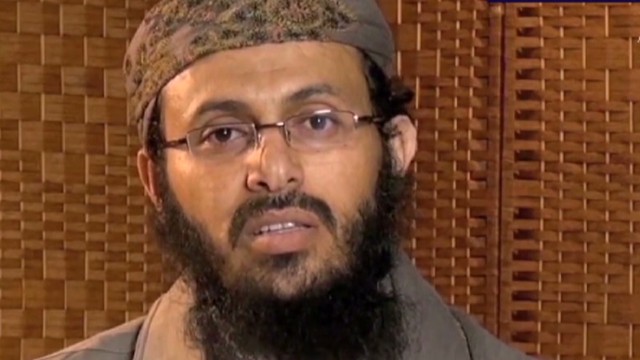
Al Qaeda apologizes for deadly attack
- An al Qaeda leader apologized for hospital attack; U.S. mum on drone that hit wedding party
- Peter Bergen says al Qaeda arguably is doing a better job of truth telling
- He says U.S. needs to make greater accountability a priority for drone program
- Bergen: Pace of drone strikes has slowed since Obama’s speech in May
Editor’s note: Peter Bergen is CNN’s national security analyst, a director at the New America Foundation and the author of“Manhunt: The Ten-Year Search for bin Laden — From 9/11 to Abbottabad.”
(CNN) — It has long been said that in war, “truth is the first casualty.”
It is generally accepted, however, that the United States, the world’s leading democracy, should try to make truth-telling a common practice when it goes to war.
When Gen. David Petraeus was U.S. commander in Afghanistan in 2010 he issued guidance to his troops, one of the key points of which was to “be first with the truth.” The guidance explained, “Avoid spinning, and don’t try to ‘dress up’ an ugly situation. Acknowledge setbacks and failures, including civilian casualties, and then state how we’ll respond and what we’ve learned.”
Yet, in Yemen where the U.S. has been fighting a small, undeclared war for the past four years, we have now arrived at the ironic point where America’s main enemy there, al Qaeda in the Arabian Peninsula, is doing a better job of truth telling than the U.S.
In a video message released on Sunday, a leader of al Qaeda in Yemen apologized for an attack on a hospital in the Yemeni capital of Sanaa earlier this month in which civilians were killed.
According to the al Qaeda leader, the attackers were targeting the Yemeni Ministry of Defense, but one fighter made a mistake and attacked a hospital inside the defense ministry: “We confess to this mistake and fault. We offer our apologies and condolences to the families of the victims,” said the al Qaeda leader.
While al Qaeda has publicly — and, no doubt, self-servingly — apologized for killing civilians at the Yemeni hospital during the attack in Sanaa on December 5, at the same time American officials have said nothing publicly about a U.S. drone strike that took place a week later on a suspected convoy of militants in western Yemen on December 12.
The target of this strike turned out to be a wedding party and at least a half dozen civilians are reliably reported to have died.
This gets to a key problem of the secretive American drone program. Its clandestine and unaccountable nature means that when the U.S. does make a mistake, as it inevitably will, instead of apologizing and making some kind of compensation to the civilian victims of a botched strike — a common practice when the U.S. military inadvertently kills civilians in wartime — American officials instead say … nothing.
Or worse, they make claims that the program is somehow perfect and never kills civilians as Obama’s then top counterterrorism adviser, John O. Brennan, improbably claimed of the drone program in June 2011 when he said that for almost a year, “there hasn’t been a single collateral death because of the exceptional proficiency, precision of the capabilities we’ve been able to develop.” Brennan is now the CIA director.
Seeking to redress some of the problems in the drone program, on May 23 President Barack Obama gave a major speech about his counterterrorism policies in Washington in which he said, “Before any strike is taken, there must be near-certainty that no civilians will be killed or injured — the highest standard we can set.”
Did Obama’s speech and the new policy it sought to inaugurate make any difference to the drone program? Short answer: Yes.
Since that speech the Obama administration has dramatically cut the number of CIA drone strikes in Pakistan and has slightly slowed the number of strikes in Yemen.
There were 14 drone strikes in Pakistan during the past seven months; an average of one strike every 15 days. In the year before Obama’s speech, drone strikes happened every eight days. And there have been no reliably reported civilian casualties in Pakistan from drone strikes since Obama’s May speech, according to an analysis of the drone program by the New America Foundation.
The pace of drone strikes fell in Yemen after Obama’s speech, too, but not as much as it did in Pakistan. Since May 23, there have been 16, an average of about one strike every 13 days. During the previous year, a strike occurred about once every 10 days.
It’s worth noting that the civilian death rate has fallen steadily overall in both Pakistan and Yemen over the past several years, but the strike on December 12 in Yemen and the civilian casualties it caused is a reminder that there is definitely room for improvement.
What can be done?
One idea to make the drone program as accountable as possible is to set up an internal U.S. government body that is independent of the CIA and Pentagon that would conduct reviews of the drone strikes after they have occurred.
One could imagine, for instance, that a small, nonpartisan group of experts on security and law, similar to the group that Obama appointed to analyze the activities of the NSA, could review the aftermath of drone strikes to examine whether the victims of the strikes were in fact militants who posed some kind of threat to the United States. Such additional oversight would make CIA targeters and drone operators all the more diligent to avoid mistakes.
Hezbollah: The Global Footprint of Lebanon’s Party of God, New America, Washington
- Hezbollah: The Global Footprint of Lebanon’s Party of God
|
Wednesday December 18, 2013 12:15 – 1:45 p.m.
New America Foundation 1899 L Street NW, Suite 400 Washington, DC 20036
|
Hezbollah — Lebanon’s “Party of God” — is a multifaceted organization: it is a powerful political party in Lebanon, a Shia Islam religious and social movement, Lebanon’s largest militia, a close ally of Iran, and a terrorist organization. Hezbollah and Iran both deny the existence of a Hezbollah terrorist apparatus, but intelligence services worldwide know it well. While some acts of terror, like the kidnappings in Lebanon in the 1980s and the 1992 and 1994 bombings in Buenos Aires, are generally known, Hezbollah’s global presence and terrorist activities go much farther.
In his latest book, “Hezbollah: The Global Footprint of Lebanon’s Party of God,” Matthew Levitt, a senior fellow at the Washington Institute for Near East Policy, draws on a wide range of sources — including recently declassified government documents, court records, and personal interviews with intelligence and law enforcement officials around the world — to examine the organization’s beginnings, its first violent forays in Lebanon, and its terrorist activities and criminal enterprises around the world. He also describes the Hezbollah unit dedicated to supporting Palestinian militant groups and Hezbollah’s involvement in training and supporting insurgents who fought U.S. troops in post-Saddam Iraq.
The New America Foundation is pleased to welcome Mr. Levitt for a discussion about the findings in his book, as well as Hezbollah’s integral, ongoing role in Iran’s shadow war with Israel and the West.
Copies of Levitt’s book will be available for purchase by cash, check, or credit card.
Join the conversation online using #HZFootprint and following @NatSecNAF.
If you are unable to join us in person, please tune in to our live webcast of the event. No signup is required to view the streaming video.
Featured Speakers
Matthew Levitt Author, Hezbollah: The Global Footprint of Lebanon’s Party of God Director, Washington Institute for Near East Policy’s Stein Program on Counterterrorism and Intelligence @Levitt_Matt
Peter Bergen
Director, National Security Program
To RSVP for the event, click on the red button or go to the event page:
http://newamerica.net/events/2013/hezbollah_footprint
For questions, contact Liana Simonds at New America at (202) 735-2829 or simonds@newamerica.org
FEATURED BOOK

All the Presidents’ Wars:
RECENT ARTICLES

RECENT FILM AND TV SERIES
GHOSTS OF BEIRUT: SHOWTIME
The Fall of Osama bin Laden, National Geographic

BIN LADEN'S HARD DRIVE, NATIONAL GEOGRAPHIC

