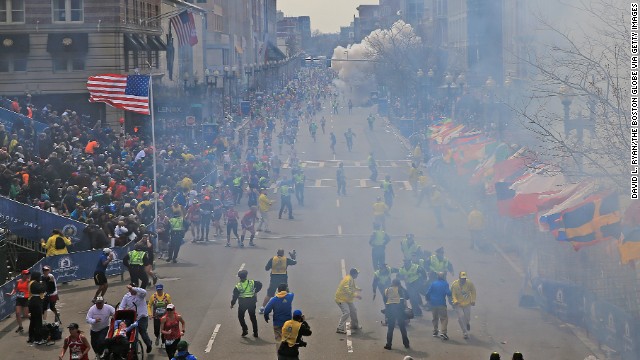
Jihadist Terrorism: A Threat Assessment, BPC
http://bipartisanpolicy.org/library/report/jihadist-terrorism-threat-assessment
Al-Shabaab backed by money from U.S., CNN.com
Al-Shabaab backed by money from U.S.
By Peter Bergen and David Sterman
updated 12:17 PM EDT, Sun September 29, 2013
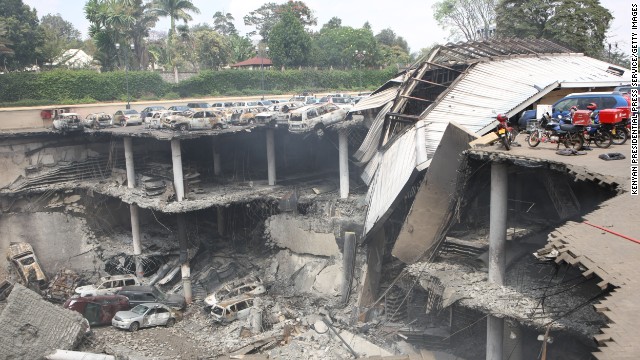 Images released by the Kenyan Presidential Press Service on Thursday, September 26, show scenes of destruction in the parking deck outside the Westgate mall after the four-day siege by militants.
STORY HIGHLIGHTS
- Bergen: Al-Shabaab bolstered not only by U.S. recruits but also by U.S. financial backers
- He says the terrorist group has received illegal funding from sympathizers in the U.S.
- U.S. authorities have succeeded in prosecuting Al-Shabaab supporters, Bergen says
Editor’s note: Peter Bergen is CNN’s national security analyst, a director at the New America Foundation and the author of“Manhunt: The Ten-Year Search for bin Laden — From 9/11 to Abbottabad.” David Sterman is a graduate student at Georgetown University’s Security Studies Program.
(CNN) — After the attack on the Westgate mall in Nairobi, Kenya, substantial attention was given to the some 40 Americans who have traveled to fight for Al-Shabaab in Somalia during the past several years.
But much less attention has focused on Al-Shabaab’s supporters in the United States who have helped to fund the terrorist group. Those supporters have funneled tens of thousands of dollars via money transfer businesses to the terrorist organization and have often maintained direct contact with Al-Shabaab leaders and fighters in Somalia.
After the 9/11 attacks, when it became clear to investigators that al Qaeda’s deadly assaults on New York and Washington had cost as much as $500,000 to mount, the U.S. government became far more aggressive about trying to block funds going to terrorist organizations.
Part of that process involved a determined effort to sort through which groups were terrorist organizations. On 9/11 there were only 26 terrorist groups on the State Department’s list of designated Foreign Terrorist Organizations. Today there are 51, among them Al-Shabaab, which was designated in March 2008.
The result of that designation was that it was now illegal for a person in the United States to knowingly provide Al-Shabaab with money, training, expertise, false documentation, communications equipment, weapons or explosives, or to join the group.
On that basis, a number of cases have emerged:
• In Rochester, Minnesota, two women from Somalia who had become naturalized U.S. citizens helped organize funding for Al-Shabaab. Hawo Hassan, a 64-year-old adult day care worker, and Amina Farah Ali, 35, set up a dedicated teleconference line to raise funds for Al-Shabaab.
Hundreds of interested individuals called in to these teleconferences, and after each one Hassan and Ali recorded pledges of funds from the callers. After a teleconference on October 26, 2008, the two women received pledges from 21 individuals totaling $2,100 in funds for Al-Shabaab.
These teleconferences often featured Al-Shabaab figures. In one teleconference, an Al-Shabaab female leader exhorted the listening audience to send funds. In another, Mahad Karate, the head of Al-Shabaab’s intelligence wing, told the members of the listening audience that jihad “is waged financially” and that their help was needed.
The two female Al-Shabaab fund-raisers also went door to door in Minnesota to raise contributions, often under false pretenses claiming contributions were for war orphans in Somalia. During a phone call with her Al-Shabaab financial contact, Ali stated, “I tell the people to collect money in the name of the poor. Nobody is aware of the money I send to you.”
Prosecutors said it was clear from the phone conversations that they monitored that the two women knew that they were raising money for Al-Shabaab, a group that had been designated a terrorist organization by the U.S. State Department. Both women were convicted of providing funds to Al-Shabaab and were sentenced to lengthy prison terms this year.
Opinion: Al-Shabaab’s American allies
• Similarly, Ahmed Hussein Mahamud, a 27-year-old man, raised money from the Minnesota Somali community under the pretense that the money was going to a local mosque or to help orphans in Somalia. Instead he transferred the funds to fellow conspirators who had traveled from Minnesota to fight in Somalia to help them buy weapons. He and his co-conspirators transferred $1,500 to help Al-Shabaab. Mahamud pleaded guilty last year.
• Nima Ali Yusuf, a 25-year-old San Diego woman, who pleaded guilty in December 2011 to sending $1,450 to help fund Al-Shabaab, was in telephone contact with some of the Somali-American men fighting in Somalia for Al-Shabaab.
• In 2007, Aden Hashi Ayrow, a Al-Shabaab leader, contacted Basaaly Saeed Moalin, a cabdriver in San Diego, asking him to fund his group. In January 2008, Ayrow told Moalin that he needed to know how much money was being sent monthly to his group, even if it was only $100, because even relatively small amounts of money could make a big difference in Somalia, which is one of the poorest countries in the world. To keep an Al-Shabaab foot soldier in the field only cost a dollar a day.
At Ayrow’s request, Moalin organized other members of the Somali-American community to help provide funding. Moalin recruited three others members of the Somali-American community and together they sent $8,500 to Al-Shabaab between 2007 and 2008. All four were later convicted of providing support to Al-Shabaab.
• Another Al-Shabaab supporter in St Louis, cabdriver Mohamud Abdi Yusuf, was part of a group of men that sent $21,000 to Kenya and Somalia for Al-Shabaab. Yusuf pleaded guilty to giving support to the terrorist group.
Opinion: Al-Shabaab ‘Lord of the Flies’ with guns
Since Al-Shabaab was designated as a terrorist organization, the U.S. Justice Department has mounted “Operation Rhino” to combat Al-Shabaab’s support network in the States and has convicted 12 individuals for providing funds to Al-Shabaab, according to a count by the New America Foundation.
This seems to have had a real deterrent effect. As a result of the publicity these cases have had in the Somali-American community, indictments for Al-Shabaab fund-raising have slowed considerably. And the last time a Somali-American was indicted for raising money for Al-Shabaab was 2011.
Follow us on Twitter @CNNOpinion.
Join us on Facebook/CNNOpinion.
Terrorists on Twitter, CNN.com
Are mass murderers using Twitter as a tool?
By Peter Bergen, CNN National Security Analyst
updated 3:58 PM EDT, Thu September 26, 2013
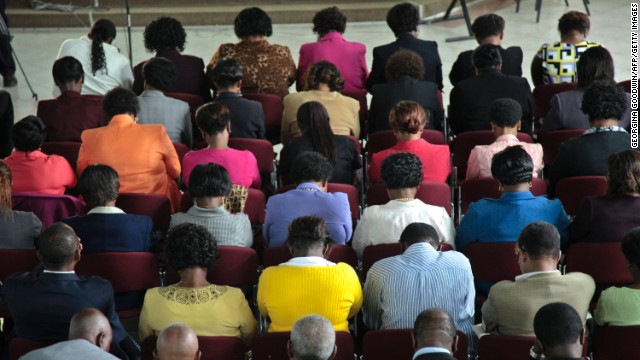 Kenyan mourners attend a prayer service held for Mbugua Mwangi, President Uhuru Kenyatta’s nephew, and his fiancee, Rosemary Wahito, at St. Andrews Church in Nairobi on September 26.
STORY HIGHLIGHTS
- Peter Bergen: Kenya was first major attack in which terrorists provided Twitter commentary
- Terrorism has always been about theater, but use of social media takes it further, he says
- Bergen says Al-Shabaab’s tweets were a way for the group to shape media coverage
Editor’s note: Peter Bergen is CNN’s national security analyst, a director at the New America Foundation and the author of “Manhunt: The Ten-Year Search for bin Laden — From 9/11 to Abbottabad.“
(CNN) — It was the first major terrorist attack in history in which the group that mounted the operation used Twitter to announce to the world it was responsible.
The group then quickly tweeted what its rationale was for the attack and also gave operational details of the assault — all in real time.
On Saturday a group of armed gunmen stormed the upscale Westgate Mall in Nairobi, Kenya, shooting at shoppers and mall staff with automatic weapons, killing at least 61 civilians.
Several hours into the assault a Twitter account used by the Somali terrorist group Al-Shabaab tweeted: “The Mujahideen (‘holy warriors’) entered Westgate mall today at around noon and they are still inside the mall, fighting the Kenyan kuffar (‘infidels’) inside their own turf.”
It was the first confirmation that the attack was the work of Al-Shabaab, and journalists around the world quickly reported this.
The terrorist group soon provided a tweeted explanation of its motives: “What Kenyans are witnessing at #Westgate is retributive justice for crimes committed by their military.” The Kenyan army is part of a larger U.N.-sanctioned peacekeeping operation that has recently been fighting Al-Shabaab with much success, for instance, a year ago expelling the group from one of its last strongholds, the Somali port city of Kismayo.
As the attack on the Nairobi mall unfolded, Al-Shabaab tweeted, “Since our last contact, the Mujahideen inside the mall confirmed to @HSM_Press that they killed over 100 Kenyan kuffar.” HSM_Press is the name that Al-Shabaab has used as its Twitter handle.
Crucially, Al-Shabaab then explained in a tweet that the mall attack was going to be a fight to the death in which there would be no negotiations for the lives of the hostages the gunmen had taken: “We’ll not negotiate with the Kenyan govt as long as its forces are invading our country, so reap the bitter fruits of your harvest #Westgate.” This key aspect of the assault on the mall was then reported around the globe.
A day into the Nairobi assault, Al-Shabaab tweeted that three Americans were involved in the attack. Since 2007 some 40 Americans have traveled to Somalia to fight with Al-Shabaab, including at least three who volunteered to become suicide bombers for the group, so this claim is not implausible and the FBI is looking into it.
Indeed, whoever was live tweeting the Nairobi attack for Al-Shabaab has a command of colloquial English with a sardonic edge that you might pick up somewhere such as London or Minneapolis.
During the massacre, for instance, Al-Shabaab tweeted, “Like it or loathe it! our mujahideen confirmed all executions were point blank range!” The group also wrote, “#Westgate: a 14-hour standoff relayed in 1400 rounds of bullets and 140 characters of vengeance and still ongoing. Good morning Kenya!”
At one point during the mall siege, responding to media speculation that British-born Samantha Lewthwaite — whom Kenyan authorities suspect of being a financier of jihadist militants in Kenya — was part of the operation, Al-Shabaab took to Twitter to deny that a woman had any role: “We have an adequate number of young men who are fully committed & we do not employ our sisters in such military operations #Westgate.”
(On Thursday, Interpol issued a red notice — an international wanted alert — for Lewthwaite.)
According to an authoritative study of Al-Shabaab’s use of social media by the London-based International Centre for the Study of Radicalisation and Political Violence, the group has been active on Twitter since December 2011, sending out a steady stream of tweets to at one point more than 15,000 followers that has included a good number of journalists and terrorism analysts.
Al-Shabaab’s Twitter account first used the handle @HSMPress, an acronym based on the group’s full official name, Harakat Al-Shabaab Al Mujahideen (Movement of the Holy Warrior Youth).
Since then Al-Shabaab has used other Twitter accounts with some slight variations on the same name such as @HSMPRESS1, @HSM_PressOffice, @HSM_PROffice and the current @HSM_PR.
Al-Shabaab seems to change the name of its Twitter account as it gets taken down, likely because the account is in violation ofTwitter’s terms of service, which explicitly explains that users cannot “publish or post direct, specific threats of violence against others.”
It’s impossible to tell definitively if all the tweets on Al-Shabaab’s purported accounts are really from the group, but the tone and content of the tweets have generally been consistent over the past two years, and information that the group has tweeted about the Nairobi mall attack, such as its responsibility for the assault and its unwillingness to negotiate for the release of hostages, has, unfortunately, proved to be accurate.
An analyst who has tracked Al-Shabaab’s Twitter feed carefully is J.M. Berger, the author of a book about Americans fighting overseas for groups such Al-Shabaab titled “Jihad Joe.” Berger has filed a number of reports with Twitter that Al-Shabaab is in violation of its terms of service.
Twitter doesn’t comment on why it suspends a particular account — a representative told CNN, “we don’t comment on individual Twitter accounts, for security and privacy reasons” — but clearly Al-Shabaab is egregiously violating those terms of service, and during the Nairobi attack the group had to use five different Twitter handles as its account kept getting taken down, presumably by Twitter employees.
Since Tuesday, Al-Shabaab has tweeted at its newest site and, as of this writing, it had more than 5,000 followers and had tweeted some 40 times.
Berger says that Al-Shabaab militants have also taken to Twitter in recent weeks during other smaller-scale operations: “They have also tweeted bombing attacks on Mogadishu and attempts to assassinate Somalia’s president within the last several weeks.”
On Wednesday Al-Shabaab posted via Twitter audio of a short speech by its leader Mukhtar Abu Zubayr, crowing over the attacks and congratulating the “holy warriors” who carried out the Nairobi operation. He gloated, “The attack has also glaringly illuminated the sheer vulnerability of the different sections of the Kenyan forces, be they police, intelligence or the military. … It’s a disaster for the Western politicians and their intelligence apparatuses who have miserably failed to save their own citizens. ”
Abu Zubayar also goes by the name Ahmed Abdi Godane, and a U.S. official has told CNN the belief is he ordered the Nairobi operation. The fact that on Wednesday Al-Shabaab posted to Twitter a speech by Abu Zubayar taking ownership of the operation would seem to confirm that belief.
In 1974 terrorism analyst Brian Jenkins wrote an influential paper for Rand in which he made a key observation in the then-fledgling field of terrorism studies. “Terrorism is theater,” Jenkins wrote, explaining that the real point of a terrorist attack is not the violence that is visited on its victims but the large number of people watching the event that serves to advertise the terrorists’ cause.
A decade later British Prime Minister Margaret Thatcher gave a speech in which she made a similar point, declaring that terrorists depend on “the oxygen of publicity.”
Nothing had underlined this better than the Munich Olympics in 1972 during which 11 Israeli athletes were taken hostage by Palestinian terrorists. All the Israelis were killed either by the hostage takers or during the course of a botched rescue operation.
The hostage-taking was covered by TV networks from around the world who came to cover the games but ended up providing coverage of a terrorist event that unfolded before the first truly global audience for such an attack. More than any other single event, it brought the Palestinian cause to the world’s attention.
On 9/11 untold hundreds of millions around the world watched the attacks as they happened in New York and near Washington on live television. Osama bin Laden himself listened to live coverage of the attacks on BBC Arabic radio in his hideout in Afghanistan.
The 9/11 attacks, which took place in the city that is many ways the capital of global media, thrust bin Laden and his terrorist group al Qaeda onto the world stage in a spectacular manner.
But in neither the Munich Olympics hostage-taking nor on 9/11 did the terrorists have actual control over the content of the coverage, which was instead determined by those media networks covering the event.
So what we saw unfold in the attack on the mall in Kenya is something quite new: a terrorist group shaping the media coverage of the event in real time through the medium of Twitter.
The next logical step will be for terrorists to cover their deadly operations using their own real-time live video feeds linked to sites such as Twitter, Facebook or YouTube.
If that happens, terrorist attacks will become a form of theater in which terrorists not only get to write the play but also act as the primary producers of the coverage of the event.
A dark glimpse of this brave new world could already be seen in Al-Shabaab’s assault on the Nairobi mall.
Follow us on Twitter @CNNOpinion.
Join us on Facebook/CNNOpinion.
Al-Shabaab’s American allies, CNN.com
Al-Shabaab’s American allies
By Peter Bergen, CNN national security analyst, and David Sterman, Special to CNN
updated 7:38 AM EDT, Tue September 24, 2013
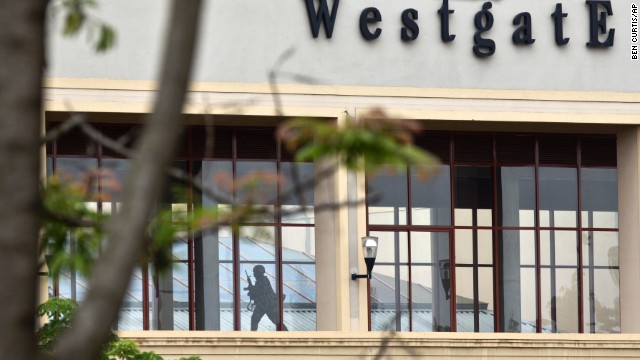 A Kenyan soldier runs through a corridor on an upper floor at the Westgate Shopping Mall in Nairobi, Kenya, on Tuesday, September 24, shortly before an explosion was heard. Sounds of heavy gunfire erupted from the mall Tuesday, even as authorities said they had the building under their control. But four days after Al-Shabaab terrorists stormed the swanky mall, several gunmen — including snipers — were still inside, two senior officials said.
STORY HIGHLIGHTS
- Peter Bergen: Of al Qaeda’s affiliates, Al-Shabaab has had deepest links to the U.S.
- He says 15 Americans have died fighting for Al-Shabaab, including suicide bombers
- Bergen: Ethiopian invasion of Somalia has played a role in stirring recruitment
- He says FBI, Justice Department have cracked down on American support
Editor’s note: Peter Bergen is CNN’s national security analyst, a director at the New America Foundation and the author of“Manhunt: The Ten-Year Search for bin Laden — From 9/11 to Abbottabad.” David Sterman is a graduate student at Georgetown University’s National Security Studies Program.
(CNN) — Of all al Qaeda’s affiliated groups, the Somali terrorist organization Al-Shabaab has over the past several years had the deepest links to the United States. Some 15 Americans have died fighting for Al-Shabaab, as many as four of them as suicide bombers in Somalia, and an American citizen even took up a leadership role in the group.
Al-Shabaab has also found supporters in places as diverse as Seattle, St. Louis, San Diego, Minnesota, Maryland, Ohio and Alabama.
Al-Shabaab had particular success recruiting Somali-Americans to its cause after the Ethiopian army invaded Somalia in 2006, which Al-Shabaab cast as Somalia being taken over by a “crusader” army. Ethiopia is a majority Christian nation.
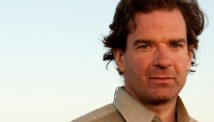
Peter Bergen
The largest group of American citizens and residents who have provided manpower and money to Al-Shabaab reside in Minnesota. According to a count by the New America Foundation, 22 residents of Minnesota have funded or fought with Al-Shabaab during the past four years.
Opinion: How Al-Shabaab picks its targets
Three of them provided funds to Al-Shabaab, and 19 have been indicted for traveling to fight in Somalia or have died in the war there.
The story of Minnesotan support for Al-Shabaab began in late 2007, when Cabdulaahi Ahmed Faarax, an American citizen of Somali descent in his early 30s, and several other men met at a Minnesota mosque and discussed traveling to Somalis to fight for Al-Shabaab.
Faarax told the group that he had “experienced true brotherhood” while fighting in Somalia and that “jihad would be fun” and they would “get to shoot guns,” according to the U.S. Justice Department.
That meeting resulted in seven men traveling from Minnesota to Somalia to fight for Al-Shabaab in late 2007.
One was Shirwa Ahmed, a 26-year-old naturalized American citizen. Ahmed became the first American to conduct a suicide attack when he drove a truck loaded with explosives toward a government compound in Puntland, northern Somalia, blowing himself up and killing 20 other people in October 29, 2008. He is buried in a cemetery in Burnsville, a suburb of Minneapolis.
Other American suicide attackers would follow. In early June 2011, Farah Mohamed Beledi, 27, of Minneapolis detonated a bomb, becoming one of two suicide attackers responsible for killing two African Union soldiers in Somalia, according to the FBI.
The third American to conduct a suicide attack was Abdisalan Hussein Ali, a 22-year-old from Minneapolis who took part in a strike on African Union troops in the Somali capital of Mogadishu on October 29, 2011.
There may even have been a fourth American suicide attacker in Somalia. On September 17, 2009, two stolen U.N. vehicles loaded with bombs blew up at the Mogadishu airport, killing more than a dozen peacekeepers of the African Union. The FBI suspectsthat 18-year-old Omar Mohamud of Seattle was one of the bombers.
For those Americans who have traveled to Somalia to fight for Al-Shabaab, it has often proved to be a one-way ticket. A 2011 report by the U.S. House of Representatives Committee on Homeland Security found that at least 15 Americans had died while fighting for Al-Shabaab (as well as three Canadians).
Opinion: What threat do foreign jihadists pose?
Some of the young men who volunteered to fight in Somalia had grown up in the Cedar-Riverside neighborhood of Minneapolis, which is one of the poorest places in the United States. In recent years, Somali-American family incomes there averaged less than $15,000 a year, and the unemployment rate was 17%.
Al-Shabaab’s American support network also extended well beyond Minnesota.
Basaaly Saeed Moalin, a cabdriver in San Diego who was in contact with an Al-Shabaab leader, was convicted of sending funds to the group along with three co-conspirators this year.
In St. Louis, Mohamud Abdi Yusuf pleaded guilty in 2012 of providing funds to Al-Shabaab.
A resident of Ohio, Ahmed Hussain Mahamud, was indicted in 2011 for funding Somali-Americans traveling to join Al-Shabaab.
Al-Shabaab’s support network in the United States has reached beyond the Somali-American community. Ruben Shumpert, an African-American convert to Islam from Seattle, was killed in Somalia in 2008.
A former U.S. soldier, Craig B. Baxam, 24, of Laurel, Maryland, was arrested by Kenyan authorities in December 2011 as he tried to make his way to Somalia to join Al-Shabaab, which he told FBI agents he considered to be a religious duty.
Omar Hammami of Daphne, Alabama, grew up Baptist andconverted to Islam when he was in his teens. In a lengthy autobiography that Hammami posted online last year entitled “The Story of an American Jihadi,” he explained his long journey from growing up Christian in a small town in Alabama to fighting on the front lines in Somalia with Al-Shabaab.
The journey began with a life-changing trip to Syria, the homeland of his father, when he was 15 that sparked his interest in Islam.Hammami wrote in his autobiography (PDF), “when I came back from that vacation, I had become a different person.”
Over the past several years, Hammami rose up the ranks in Al-Shabaab, becoming an important leader. Disputes with other Al-Shabaab leaders led him to split off from the group. He was killedthis month, probably by members of Al-Shabaab, according to Islamist websites.
In the wake of many of these developments, for the past three years, the Justice Department and the FBI have engaged in a serious effort to crack down on U.S. support for Al-Shabaab, in particular in Minnesota, in an effort codenamed Operation Rhino.
This seems to have had some success, as the number of Americans indicted for supporting Al-Shabaab on the front lines or with their wallets has dropped sharply since the launch of Operation Rhino.
Al-Shabaab breaks new ground with complex Nairobi attack
Over the weekend, Al-Shabaab issued a list of nine names it claimed were among the attackers who carried out its deadly assault on the upscale Westgate Mall in Nairobi, Kenya. Al-Shabaab alleged that three of the attackers were from the United States. The FBI is looking into whether these claims are true.
Whether or not any Americans played a role in the massacre in Nairobi that has claimed 62 lives, there is a deadly history of American support for Al-Shabaab.
How Al-Shabaab picks its targets, CNN.com
How Al-Shabaab picks its targets
By Peter Bergen, CNN National Security Analyst
updated 8:40 AM EDT, Sun September 22, 2013
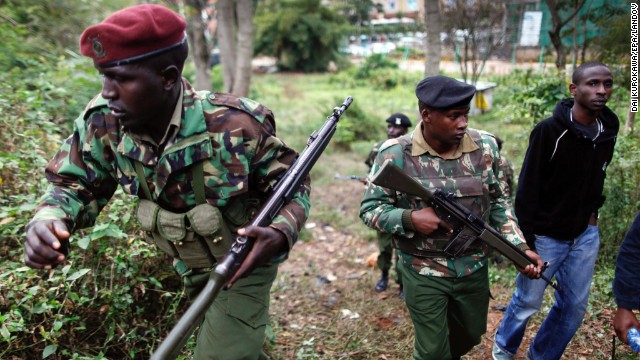 Kenyan paramilitary police officers patrol the area near the Westgate Mall in Nairobi, Kenya, where hostages are being held for the second day on Sunday, September 22. Gunmen burst into the mall and opened fire in a deadly attack on September 21. Kenyan government and Western diplomatic sources said Al-Shabaab militants were holding about 30 hostages inside the shopping center on Sunday. As grim-faced Kenyan soldiers warily searched the five-story building — and as Al-Shabaab maintained its defiant stance — the siege was no closer to a resolution.
STORY HIGHLIGHTS
- For Al-Shabaab, the mall was an attractive target because Westerners frequented it
- Also, it fits with the Somalia-based terrorist group’s enmity with Kenya
- The group has recruited around 40 American men and also dozens from Europe
- The attack on the Nairobi mall may be an attempt by Al-Shabaab to signal its continued relevance
Editor’s note: Peter Bergen is a director at the New America Foundation and the author of “Manhunt: The Ten-Year Search for bin Laden — From 9/11 to Abbottabad.”
(CNN) — Al-Shabaab, al-Qaeda’s brutal Somali affiliate, has claimed credit for the attack by multiple gunmen at an upscale shopping mall in Nairobi, Kenya that has already killed at least 59 people.
This should not be a surprise. For Al-Shabaab, the mall was an attractive target because Westerners, including Americans, frequented it. The mall is also in the capital of Kenya, a country that Al-Shabaab has good reason to dislike, as the Kenyan military played a major role in handing their forces a defeat last year when they liberated the key Somali port of Kismayo from their control.
Al-Shabaab (“the Youth”) tweeted Saturday that “all Muslims inside #Westgate” — referring to the mall that was attacked in Nairobi — “were escorted out by the Mujahideen before” the armed assault commenced.
Members of Al-Shabaab use Twitter frequently to communicate their messages to the world. The group has recruited around 40 young American men and also dozens from Europe and has shown that it is comfortable with Internet technology, despite the fact that Somalia is one of the poorest and most anarchic countries on the planet.
More than 10% of the Kenyan population is Muslim. So it is interesting that Shabaab took the precaution of evacuating Muslims from the Nairobi mall they were attacking, suggesting a greater sophistication in the tactics of this attack than the group has shown hitherto in Somalia, where they have killed large numbers of civilians indiscriminately in a country that is almost entirely Muslim.
Before he was killed by U.S. Navy SEALs two years ago, even Osama bin Laden had scolded members of Al-Shabaab, telling them to try to avoid killing Muslim civilians.
In a letter that was recovered in the house in Pakistan where bin Laden was killed, al-Qaeda’s leader warned Shabaab members that they were killing too many civilians in battles in and around the key Bakara market in the Somali capital, Mogadishu.
Saturday’s attack on the Nairobi mall seems to owe some of its tactics to Lashkar-e-Taiba, the Pakistani terrorist group that attacked upscale hotels catering to Westerners in Mumbai, India, in November 2008 over the course of more than three days, killing 166 people.
In both the Nairobi and Mumbai attacks, a group of armed gunmen shot at civilians indiscriminately and conducted the operation in a manner that would guarantee sustained media coverage over many hours and even days by taking a large number of hostages. In both assaults, the gunmen did not negotiate for the release of hostages but went into the operation seemingly prepared for a fight to the death.
Al-Shabaab has previously shown that it is capable of carrying out operations outside of Somalia, bombing two groups of fans watching the World Cup on television in Kampala, Uganda, on July 11, 2010, killing more than 70. The group seemed to have carried out that operation because Uganda had provided troops to a United Nations-authorized African Union mission then fighting Al-Shabaab in Somalia.
The group has also shown an interest in targets in the West. Eight months before the attack in Uganda, a 28-year-old Somali man armed with a knife and an ax had forced himself into the home of Kurt Westergaard — a Danish cartoonist who had depicted the Prophet Mohammed with a bomb in his turban — and tried unsuccessfully to break into the panic room where Westergaard was hiding. Danish intelligence officials said the suspect had links with Al-Shabaab.
Al-Shabaab has managed to plant al-Qaeda-like ideas into the heads of even its American recruits.
Shirwa Ahmed, an ethnic Somali, graduated from high school in Minneapolis in 2003, then worked pushing passengers in wheelchairs at the Minneapolis airport. During this period Ahmed was radicalized; the exact mechanisms of that radicalization are still murky, but in late 2007 he traveled to Somalia.
About a year later, on October 29, 2008, Ahmed drove a truck loaded with explosives toward a government compound inPuntland, northern Somalia, blowing himself up and killing about 20 people, including United Nations peacekeeping troops and international humanitarian assistance workers. The FBI matched Ahmed’s finger, recovered at the scene, to fingerprints already on file for him. Ahmed was the first American terrorist suicide attacker anywhere.
The attack on the Nairobi mall may be an attempt by Al-Shabaab to signal its continued relevance. Over the past three years, Al-Shabaab has lost substantial territory and influence in Somalia. Al-Shabaab controlled much of southern Somalia in 2010, but operations by African Union and Kenyan forces have ended its domination of southern Somalia.
In 2011, the U.N.-sanctioned African Union mission partnered with Somali troops to fight Al-Shabaab militants, and in August of that year, African Union and Somali government forces defeated Al-Shabaab forces in Mogadishu, forcing the militants from a stronghold they had controlled since 2009.
Although Al-Shabaab has long been regarded as a regional offshoot of al-Qaeda, its leaders only declared their formal ties to the international terror organization in February 2012.
While the group seems to have been interested in an alliance before then, in 2010, bin Laden instructed the group’s leaders to keep their association with al-Qaeda a secret, fearing that openly linking the groups would be bad for Al-Shabaab’s fundraising efforts.
By February 2012, however, bin Laden was dead and Al-Shabaab had suffered significant losses in its southern Somali safe haven.
Al-Qaeda’s new leader, Ayman al-Zawahiri, who had earlier petitioned bin Laden to reconsider his views about the proposed merger between Al-Shabaab and al-Qaeda, believed the time was right to announce formal ties between the two groups.
While there are a number of American citizens fighting for a variety of al-Qaeda-affiliated or -inspired organizations, Al-Shabaab seems to boast the most American fighters. According to a 2011 report by the House Committee on Homeland Security, an estimated 40 Americans have joined Al-Shabaab in the last few years, at least 24 of them coming from the Somali community in Minnesota.
Al-Shabaab has prominently featured these recruits in its propaganda operations, releasing three official videos that starred Abu Mansoor al-Amriki (“the father of Mansoor, the American”), who is actually Omar Hammami, in his late 20s from Alabama, who was raised as a Baptist and converted to Islam in high school.
One of the videos shows Hammami preparing an ambush and features English rap lyrics extolling jihad.
Hammami was reported to have been killed on September 12during the course of some kind of an internal conflict within the Al-Shabaab group.
The news of his death was confirmed on Hammami’s Twitter account four days later.
Follow us on Twitter @CNNOpinion.
Join us on Facebook/CNNOpinion.
Tackling the military’s insider threat, CNN.com
Tackling the military’s insider threat
By Peter Bergen, CNN National Security Analyst
updated 4:14 PM EDT, Thu September 19, 2013
 A police officer runs near the scene of the shooting rampage at the Washington Navy Yard on Monday, September 16. Authorities said at least 12 people — and the suspect — were killed in the shooting.
STORY HIGHLIGHTS
- Peter Bergen: The Washington Navy Yard shootings not an isolated case
- There has been a string of cases of veterans and service people attacking military targets
- Bergen says it’s good that Defense Department is reviewing flaws in security
- Bergen: One issue that slipped through the cracks was status of contractors
Editor’s note: Peter Bergen is CNN’s national security analyst, a director at the New America Foundation and the author of“Manhunt: The Ten-Year Search for bin Laden — From 9/11 to Abbottabad.”
(CNN) — Aaron Alexis, the troubled civilian contractor and Navyveteran who killed a dozen fellow workers this week at the Washington Navy Yard, is far from the only veteran or active-duty serviceman to plan or carry out mayhem directed at U.S. military targets during the past decade.
It’s a deadly combination: men who have military backgrounds — together with personal grievances, political agendas or mental problems — and who also have easy access to weapons and are trained to use them.
As a result of Alexis’ deadly rampage, U.S. Defense Secretary Chuck Hagel on Wednesday announced a review of access procedures at all U.S. military facilities and also the procedures for granting security clearances to Department of Defense employees, including civilian contractors such as Alexis.
Peter Bergen
Until Alexis’ attack Monday, Maj. Nidal Hasan, a Palestinian-American, was the most well-known case illustrating the “insider threat” at U.S. military facilities.
On November 5, 2009, Hasan, an Army psychiatrist, opened fire on soldiers at Fort Hood in Killeen, Texas, killing 13 and wounding many others.
Hasan had been communicating via e-mail with the militant Yemeni-American cleric Anwar al-Awlaki about the permissibility of killing fellow soldiers. He had specifically cited the case of Sgt. Hasan Akbar, who while he was deployed to Kuwait in 2003, threw grenades at fellow soldiers, killing two officers and wounding more than a dozen others.
Akbar had complained to his father about religious and racial harassment before the attack and had been diagnosed with some kind of mental illness when he was a teenager. Akbar was convictedand sentenced to death. The sentence is under appeal.
More than a year after Hasan’s massacre of his fellow soldiers, Army Pvt. Naser Jason Abdo also plotted to kill servicemen at Fort Hood. Abdo had applied for a conscientious objector status discharge because of his Muslim faith and cited Hasan’s 2009 attack as an influence on his own murderous plot.
Abdo’s plot was foiled in July 2011 after an employee at a local gun store tipped off authorities that Abdo was behaving suspiciously.
After the Fort Hood attack and a number of reviews examining the lessons learned from it, then-Defense Secretary Robert Gates issued a directive in 2010 ordering the implementation of 47 recommendations to improve “force protection” at military bases in the United States.
These recommendations included giving military personnel better guidance on the behavioral indicators of potentially violent servicemen, establishing a consolidated criminal investigation and law enforcement database for the Department of Defense, and re-evaluating background check policies.
All of these policies might have flagged Alexis as someone to watch given his long history of run-ins with law enforcement and obvious mental health issues.
However, the recommendations by Gates coming out of the Fort Hood shooting specifically did not address policies governing contractors such as Alexis.
This was a missed opportunity because civilian contractors now number around 900,000 at the Defense Department. That’s almost double the number of active-duty personnel in the entire Army.
In addition to Monday’s attack at the Navy yard, 2013 has seen other deadly incidents involving insiders at U.S. military facilities.
In March, Eusebio Lopez, a Marine sergeant, shot and killed two other Marines at the Marine base in Quantico, Virginia, and then committed suicide. The shootings may have been the result of a romantic dispute, according to a senior Pentagon official who spoke on background to The Washington Post.
In July, Tech. Sgt. Matthew Hullman, who worked at the Grand Forks Air Force Base in North Dakota, confronted security personnel while holding a handgun and was killed. The incident is still under investigation.
There may not be any one answer to the problem of preventing “insider” attacks targeting the military. But there’s hope that the review of base access procedures and security clearances just now ordered by Hagel will reduce the number of such violent incidents at U.S. military facilities in the future.
Follow us on Twitter @CNNOpinion.
Join us on Facebook/CNNOpinion.
Jihadist terrorism in America since 9/11, CNN.com
Jihadist terrorism in America since 9/11
By Peter Bergen and David Sterman, Special to CNN
updated 7:54 AM EDT, Tue September 10, 2013
STORY HIGHLIGHTS
- Authors: Since 9/11, al Qaeda hasn’t carried out a successful attack in the U.S.
- They say the threat has evolved into a danger of homegrown extremists launching attacks
- Study finds that the number of attempted attacks has been declining
- Authors: Could the Boston bombings have been prevented through better intelligence?
Editor’s note: Peter Bergen is CNN’s national security analyst and a director at the New America Foundation. David Sterman is a graduate student at Georgetown University’s National Security Studies Program. This article is adapted from “Jihadist Terrorism: A Threat Assessment,” a report for the Bipartisan Policy Center’s Homeland Security Project written by Peter Bergen with Bruce Hoffman, Michael Hurley and Erroll Southers.
(CNN) — We are about to mark the 12th anniversary of 9/11. Since then, al Qaeda and its affiliated groups haven’t launched a successful attack in the United States.
The Boston Marathon bombings in April, however, serve as a reminder that the United States still faces a terrorism threat from disaffected U.S. citizens and residents who are influenced by al Qaeda’s ideology.
So what is the status of this kind of threat?
Peter Bergen
The good news is that the number of “homegrown” jihadist extremists who have been indicted or convicted has steadily declined over the past few years, according to New America Foundation data. Where there were 41 cases in 2009, there have been six so far this year.
The number of individuals indicted for plotting actual attacks within the United States — as opposed to other terrorism-related crimes such as raising money for a terrorist group — also declined from 12 in 2011 to only three so far in 2013.
In recent years, extremists plotting attacks against the United States have also shown little, if any, connection to foreign groups. None of the 21 homegrown extremists involved in plots against the United States from 2011 to so far in 2013 is known to have received training abroad.
Of these extremists, only one, Tamerlan Tsarnaev, one of the alleged Boston bombers, is reported to have had contact with foreign militant operatives, but it remains unclear to what extent, if any, those contacts played a role in the Boston attack.
This lack of coordination between domestic extremists and overseas groups is likely the result of two factors. First, the ability of terrorist organizations to coordinate with extremists in the United States has been reduced by policing efforts inside the country and counterterrorism operations abroad.
 Is terrorism still a threat to U.S. families?
Second, Internet use among jihadist extremists enables them to come into contact with extremist communities abroad and be radicalized without face-to-face meetings.
Of the 45 “homegrown” jihadist extremists who were indicted, convicted or killed from 2011 to now, 18 are known to have communicated with other extremists over the Internet or posted materials related to their radicalization online.
The shift to plotting by individuals who lack ties to foreign groups poses a distinct type of threat — plots and attacks that are more difficult to detect but are also likely to be of a smaller scale. And because of the measures now in place to prevent the acquisition of precursor chemicals and materials suitable for making conventional explosives, homegrown extremists have also often struggled to produce effective bombs.
Before the Boston Marathon bombings, homegrown jihadists in the United States had shown little success at producing explosives. Joseph Jeffrey Brice — who has professed admiration for Osama bin laden and Oklahoma City bomber Timothy McVeigh — almost killed himself in April 2010 when a homemade bomb he was constructing exploded prematurely.
A month later, Faisal Shahzad’s car bomb failed to explode in Times Square, even though he had received explosives training in Pakistan.
If the Tsarnaev brothers built the bombs used in the Boston attack without guidance from jihadists abroad, it suggests that the difficulties other “homegrown” militants have had building or detonating explosives may have been overcome. On the other hand, the Tsarnaevs’ successful bombmaking could just as easily have been a fluke.
While the number of terrorism-related indictments fell between 2009 and 2013, the number of terrorist incidents has stayed about the same — about one per year — though not all of them have been lethal:
— In June 2009, Abdulhakim Mujahid Muhammad killed a soldieroutside a recruiting station in Little Rock, Arkansas.
— Five months later, Major Nidal Malik Hasan shot and killed 13 people at Fort Hood in Killeen, Texas.
— Shahzad’s 2010 attempt to bomb Times Square was foiled when his bomb did not ignite properly.
— Yonathan Melaku’s drive-by shooting of military facilities in Northern Virginia in 2011 produced no casualties.
— The Boston Marathon bombers killed four and wounded hundreds of others in April 2013.
The incidents carried out by homegrown extremists continue to be limited in their lethality, and major operations such as the 9/11 attacks are well beyond the skills of even the most capable domestic extremists.
Additionally, no homegrown jihadist militant in the United States is known to have acquired or used chemical, biological, radiological or nuclear (CBRN) weapons in the past twelve years. This point bears repeating, as there has been considerable overheated commentary on this subject over the past decade. Of the 221 individual cases of jihadist extremism since 9/11, not one case involved an allegation of CBRN acquisition, manufacture or use.
However, the fact that jihadist extremists in the United States have shown no interest in CBRN weapons does not eliminate the need for securing potential sources of chemical, biological and radiological agents.
According to a count by the New America Foundation, since 2001, 13 extremists motivated by right-wing ideologies, one left-wing militant and two individuals with idiosyncratic motives have deployed, acquired or tried to acquire chemical, biological or radiological weapons.
For example, William Krar and Judith Bruey, two anti-government extremists, possessed precursor chemicals for hydrogen cyanide gas, which they discussed deploying through a building’s ventilation system. They were arrested in 2003 and later pleaded guilty.
The threat from homegrown extremists to the U.S. homeland has been constrained in recent years by a variety of security measures. According to data collected by the New America Foundation, family members of extremists and members of the wider Muslim American community provided useful information in the investigations of about a third of the homegrown jihadist extremists indicted or killed since 9/11.
Noncommunity members provided useful reports of suspicious activity in another 9% of homegrown extremist cases, while an informant or undercover agent monitored almost half of all homegrown extremists.
The Boston Marathon bombing, however, demonstrate the potential for these security measures to fail when plotters have few, if any connections, to known terrorist groups.
Looking forward, a concern about the Boston attack is whether it represents an intelligence failure that could have been avoided through a better implementation of existing policies or a new trend where “lone wolf” extremism is largely undetectable with the existing systemic checks in place.
The threat from homegrown extremists has changed substantially in the past three years, becoming the province of fewer individuals who are less connected to foreign groups than was once the case.
Whether this remains the case will depend on law enforcement being able to successfully adapt to confront the threat from disaffected U.S.-based individuals motivated by al Qaeda’s ideology as well as whether the past few years’ counterterrorism successes against al Qaeda overseas can be maintained.
Obama llegó para acabar con las guerras, no para iniciarlas, CNN.es
Obama llegó para acabar con las guerras, no para iniciarlas
El presidente de EU ha mostrado una faceta pragmática pero valiente al involucrar al Congreso en la decisión sobre intervenir o no en Siria
Lo más importante
- Peter Bergen: la esperanza de Obama era terminar las guerras en el Medio Oriente
- Al enviar el tema al Congreso, Obama espera que sea más difícil lanzar una intervención, dice Bergen
- La estrategia de Obama es riesgosa, al igual que lo fue la decisión de lanzar la operación contra Osama bin Laden, dice Bergen
Nota del editor: Peter Bergen es analista de seguridad nacional de CNN, director de la New America Foundation y autor de “Manhunt: The Ten-Year Search for bin Laden-From 9/11 to Abbottabad“.
(CNN) — Barack Obama llegó a Washington para terminar con las guerras, no para empezarlas.
Eso era muy claro hasta hace tres meses, cuando Obama ofreció un discurso magistral el 23 de mayo en la National Defense University en Washington, en el que hizo un llamado para acabar con “la guerra sin límites contra el terror” y “el pie de guerra perpetuo” que ha existido en Estados Unidos desde el 9/11.
Obama enfocó parte de su discurso en la Autorización para el Uso de la Fuerza Militar que el Congreso aprobó días después del 9/11 y que le otorgó al presidente George W. Bush la autoridad para declararle la guerra a Afganistán.
Ningún miembro del Congreso que haya votado por esta resolución en ese momento se dio cuenta de que, de hecho, estaba autorizando lo que sería la guerra más larga de Estados Unidos.
Tampoco se dieron cuenta de que prácticamente estaban otorgando un cheque en blanco al presidente para librar guerras encubiertas en países como Pakistán y Yemen, donde, de acuerdo con datos recabados por la New American Foundation, han muerto miles de personas en ataques de la CIA con aeronaves no tripuladas casi sin la opinión del Congreso.
Durante su discurso de defensa, Obama prometió ayuda para terminar con la Autorización del Uso de la Fuerza Militar que puso en marcha una guerra aparentemente eterna que Estados Unidos ha librado desde 2001.
Este es el contexto de la decisión de Obama de acudir al Congreso para buscar la autorización para realizar un ataque militar en Siria. Obama quiere dejar la presidencia en 2016 siendo el presidente que hizo más difícil, no más fácil, para futuros presidentes, declarar la guerra de manera unilateral sin la participación del Congreso.
Al acudir al Congreso en busca de la autorización de cualquier operación militar en Siria, vemos al Obama exprofesor de legislación constitucional, pero también vemos al Obama pragmático.
La administración Obama siempre pudo haber argumentado en los últimos días que podía justificar el ataque al régimen de Bachar al Asad por cuestiones humanitarias para evitar futuras masacres de sirios con armas químicas, a pesar del hecho de no contar con la autorización internacional para atacar a Siria y de que no se ha dado una resolución en el Congreso sobre dicho ataque.
Sin embargo ese documento sería una novedad en materia de legislación internacional y no sería particularmente convincente en materia de política interna ante un público estadounidense que, en el mejor de los casos, tiene una opinión dividida sobre si Estados Unidos debe desplegar sus fuerzas en Siria.
Por supuesto, generalmente, las acciones militares unilaterales Estados Unidos no son controversiales después de ataques sobre blancos estadounidenses por parte de fuerzas o grupos extranjeros.
El presidente Clinton no buscó la aprobación del Congreso para lanzar misiles crucero sobre campos de entrenamiento de al Qaeda en Afganistán en 1988, después de los ataques del grupo terrorista sobre dos embajadas de Estados Unidos en África.
Tampoco lo hizo el presidente George H.W. Bush antes de la invasión a Panamá en 1989 que él mismo autorizó cuando un marino de Estados Unidos fue asesinado y se temía por la seguridad de decenas de miles de estadounidenses en ese país.
Siria no ha atacado blancos o ciudadanos estadounidenses, así que el argumento de que un ataque al régimen de al Asad está diseñado para proteger intereses o vidas estadounidenses es muy cuestionable.
Eso deja la administración de Obama con la opción obtener algún tipo de autorización por parte de cuerpos internacionales como las Naciones Unidas, la OTAN o la Liga Árabe.
Como es bien sabido, no existe la menor posibilidad de obtener una autorización de las Naciones Unidas, ya que Rusia y China han dejado claro que vetarían tal resolución.
También parece haber pocas posibilidades, por el momento, de que la OTAN autorice una misión “humanitaria” como lo hizo en Kosovo en 1999 para repeler la agresión serbia. Incluso si se diera tal autorización, ahora mismo de un importante miembro de la OTAN, el Reino Unido no podría participar debido a que el parlamento británico votó en contra de la misión.
De hecho, la OTAN dijo que busca una “respuesta internacional firme” ante el uso de armas químicas en Siria, pero que no tomará una acción militar por sí misma.
La Liga Árabe, que autorizó la opresión para derrocar a Muamar Gadafi en 2011 no ha dado señales hasta ahora de estar lista para autorizar la guerra contra Siria. La Liga dijo que la comunidad mundial debe tomar una acción contra los responsables del uso de armas químicas pero no especificó si apoyaría una acción militar por parte de Estados Unidos u otros países. Dicho eso, Arabia Saudita, que generalmente es muy cautelosa, exhortó públicamente el domingo a que hubiera una guerra.
Al acudir al Congreso para la autorización, vemos no solo al exprofesor de legislación constitucional sino al pragmático en Obama, así como al tomador de riesgos calculados.
En asuntos de importancia considerable en los que el beneficio potencial es grande, Obama ha mostrado que está dispuesto a tomar riesgos. No vayamos más lejos que su decisión de hace dos años de autorizar una redada de los Navy SEALS para capturar o matar a Osama bin Laden, operación que autorizó contra la opinión del vicepresidente Joe Biden y el entonces Secretario de Defensa Robert Gates. Si esa operación hubiera fracasado, como lo suponía una serie de altos funcionarios de seguridad de la administración, Obama estaría pasando el tiempo ahora mismo entre Chicago y Hawaii.
Para Obama, la autorización del Congreso sobre el uso de la fuerza en Siria sería de gran ayuda si necesitara autorizar acciones militares adicionales en ese país más adelante. También le ayudaría si se siente obligado a declarar la guerra a Irán. Por supuesto si no obtiene dicha autorización, tendrá que soportar el mismo tipo de humillación que el primer ministro británico David Cameron ha soportado recientemente.
Sin embargo, Obama calcula que los escépticos republicanos del Congreso tendrán que explicar al público estadounidense la razón por la que no autorizaron una acción militar en Siria después del uso de armas químicas a gran escala mientras continúan describiendo al aliado más importante de Siria, Irán y a su programa de armas nucleares (que todavía está por producir armas nucleares) como una seria amenaza para el mundo.
Podemos estar seguros de que en los próximos días, la administración argumentará que si no se castiga a Siria por el uso repetido de armas químicas a gran escala, puede olvidarse de cualquier oportunidad para frenar o acabar con el programa nuclear de Irán, asunto de gran importancia para gran parte del Partido Republicano.
Para los que se encuentran en la izquierda del Partido Demócrata en el Congreso, quienes generalmente son escépticos de las acciones militares de Estados Unidos, Obama puede preguntar, básicamente, “¿Si no es ahora, cuándo?”, ¿en qué punto intervendrán los autonombrados liberales para detener el uso de armas químicas que son tan viles que han sido prohibidas en el mundo civilizado durante casi un siglo?
Las opiniones recogidas en este texto pertenecen exclusivamente a Peter Bergen.
EU está entre la espada y la pared por Siria, problema ‘infernal’, CNN.es

OPINIÓN: EU está entre la espada y la pared por Siria, problema ‘infernal’
El gobierno estadounidense se enfrenta al difícil reto de buscar una justificación y el respaldo internacional para intervenir en Siria
Lo más importante
- Es probable que Estados Unidos ataque a Siria, pero carece de una base sólida en el derecho internacional, dice Bergen
- Bergen señala que la ONU no apoyará un ataque, pero la OTAN y la Liga Árabe sí podrían hacerlo
Temas relacionados
 |
Hay pocas probabilidades de que la ONU emita una resolución en la que se autorice la acción militar |
|
Peter Bergen |
 |
Nota del Editor: Peter Bergen es analista de seguridad nacional para CNN; es director de la Fundación New America y autor del libro Manhunt: The Ten-Year Search for bin Laden — From 9/11 to Abbottabad.
(CNN) — En el estudio más serio sobre la respuesta de Estados Unidos a los asesinatos en masa en todo el mundo —desde las masacres de armenios a manos de los turcos hace un siglo; el Holocausto; las más recientes atrocidades en contra de los musulmanes bosnios, y la limpieza étnica de los tutsis en Ruanda— se llegó a la conclusión de que todos compartían desafortunadas características en común:
“A pesar de la cobertura de los medios de comunicación gráfica, los políticos estadounidenses, los periodistas y los ciudadanos son muy lentos para reunir la imaginación necesaria para calcular el mal. Ante las matanzas, asumen que los actores racionales no ejercerán una violencia aparentemente gratuita. Ellos confían en las negociaciones de buena fe y en la diplomacia tradicional. Una vez que las masacres comienzan, dan por sentado que dejarán en paz a los civiles que no se resistan. Instan a negociar ceses al fuego y donan ayuda humanitaria”.
Esta es una descripción casi perfecta de cómo Estados Unidos ha actuado durante los dos últimos años, mientras ha intentado concebir alguna clase de política para poner fin a la brutal guerra que el régimen de al Assad emprendió en contra de su propio pueblo en Siria.
La autora de la feroz historia crítica sobre como Estados Unidos ha vacilado en general ante el genocidio y los asesinatos en masa ganó el premio Pulitzer en 2003 por su libro: A Problem from Hell: America and the Age of Genocide (Un problema infernal. Estados Unidos y la era del genocidio).
Una década después de ganar el Pulitzer, esa autora es ahora embajadora de Estados Unidos ante Naciones Unidas. Su nombre, por supuesto, es Samantha Power, veterana asesora del presidente de Estados Unidos, Barack Obama. Ella empezó a trabajar para Obama cuando él era un joven senador de Illinois prácticamente desconocido.
Power dio a su estudio sobre el genocidio de 610 páginas el título de A Problem from Hell porque así era como el entonces secretario de Estado de Estados Unidos, Warren Christopher, se refería a la guerra civil en Bosnia y a las opciones desagradables de las que Estados Unidos disponía a principios de 1990 para poner fin a las atrocidades cometidas por los serbios.
Uno de los funcionarios de Estados Unidos sobre los que Power trató en su libro es Susan Rice, quien, como alta funcionaria del departamento de Estado encargada de África, no hizo nada ante el genocidio que se desarrollaba en Ruanda en 1994.
En el libro se señala que Rice insinuó durante una teleconferencia entre agencias que sería poco prudente usar públicamente la palabra “genocidio” para describir la situación en Ruanda mientras no se hacía nada para evitarla, además de que podría afectar negativamente al Partido Demócrata en las siguientes elecciones al Congreso.
Más tarde, Rice dijo a Power que no recordaba haber hecho esta declaración pero reconoció que si la había hecho, había sido “completamente incorrecta además de irrelevante”.
Ahora, Rice es la asesora de seguridad nacional de Obama.
En 2012 y a petición de Power, Obama anunció la creación de una fuerza de trabajo interinstitucional que ayudaría a señalar las atrocidades en todas partes del mundo. La llamó Junta de Prevención de Atrocidades y Power la encabezó durante el primer año.
Mientras tanto, la cifra de víctimas mortales en Siria seguía creciendo.
Durante los últimos dos años, Obama no ha querido intervenir militarmente en Siria.
¿Quién querría hacerlo? El país se está desintegrando de facto en “emiratos” dirigidos por los yihadistas y en pequeños Estados alauíes. También es el escenario de una guerra de poder en la que se reúnen las filiales de Al Qaeda que cuentan con el apoyo de Qatar y Arabia Saudita en contra de Hezbolá, que cuenta con el respaldo de Irán.
Quien prevalezca en esta lucha difícilmente será aliado de Estados Unidos. Es un terrible desastre que hace que lo que ocurrió en Iraq en 2006 luzca bien.
En breve, es un problema infernal.
Power, Rice y Obama se enfrentan hoy a algunas de las decisiones más duras a las que se han enfrentado las autoridades de seguridad nacional de Estados Unidos mientras tratan de impedir masacres masivas en países distantes asolados por la guerra.
Pueden seguir haciendo poco mientras la guerra civil en Siria entra en su tercer año y la cifra de muertos rebasa las 100,000 personas. Las circunstancias están agravadas por el hecho de que el régimen de Bachar al Asad parece no solo haber cruzado “la línea roja” al usar armas químicas, sino que parece haber rebasado por mucho esa línea al matar a cientos de personas con neurotoxinas en un suburbio de Damasco, según el secretario de Estado de Estados Unidos, John Kerry.
Kerry calificó esos ataques como algo que “debería perturbar la consciencia del mundo. Desafía cualquier código moral”.
El no hacer nada no será bien recibido por los historiadores del futuro que escriban en el mismo tenor que Power.
El problema actual en Siria no estriba simplemente en que Al Asad esté masacrando a sus propios civiles a un ritmo industrial, sino que está desacatando flagrantemente una norma internacional bien establecida por medio del uso a gran escala de las neurotoxinas como armas en contra de los civiles. Parece inconcebible que Estados Unidos, como garante del orden internacional, no responda a esto de alguna forma.
¿Pero con qué autoridad? Hay pocas probabilidades de que la ONU emita una resolución en la que se autorice la acción militar. Cuando fue embajadora ante la ONU, Rice logró que pasara una resolución en el Consejo de Seguridad, con la que se autorizó la acción militar en Libia en 2011. Sin embargo, lo más probable es que Rusia y China veten cualquier resolución similar con respecto a Siria.
Rusia es uno de los pocos aliados de Siria; Rusia y China generalmente se oponen incondicionalmente a cualquier clase de intervención internacional en los asuntos de otros países, sin importar lo atroz que sea el comportamiento de dichos Estados. Eso deja la posibilidad de que Estados Unidos emprenda alguna clase de acción unilateral.
Estados Unidos infringe regularmente la soberanía de países como Pakistán y Yemen con ataques de naves robot no tripuladas (drones) con el nuevo argumento legal de que los terroristas que planean ataques contra Estados Unidos viven en esos países y esos países no están dispuestos o no pueden expulsar a los terroristas de su territorio, por lo que pueden infringir su soberanía con ataques con drones.
Sin embargo, el afirmar que el régimen sirio es una amenaza para Estados Unidos no es factible y por lo tanto, parece poco probable que Estados Unidos tome acciones unilaterales.
En 1986, el gobierno de Reagan lanzó ataques aéreos contra las casas del dictador libio, Muamar Gadafi, luego de que murieran dos elementos de las fuerzas armadas estadounidenses en el atentado contra una discoteca en Berlín por parte de agentes libios. En Siria no existe un casus belli semejante.
¿Qué opciones quedan en vista de que no parece haber probabilidades de que se emprenda una misión militar autorizada por la ONU ni un ataque unilateral estadounidense?
Una opción atractiva podría ser algo parecido al modelo de Kosovo. La Guerra de Kosovo, en 1999, fue una guerra totalmente aérea en la que no murieron soldados estadounidenses. La meta de la campaña aérea era expulsar a las fuerzas serbias de Kosovo. Rusia estaba aliado con los serbios, así que al igual que en el caso actual de Siria, no había probabilidades de que la ONU emitiera una resolución que permitiera el uso de la fuerza.
En cambio, la guerra se efectuó bajo la protección del grupo de seguridad colectiva de la OTAN. Kosovo está, desde luego, en Europa y la OTAN es una alianza dedicada a la seguridad, mientras que Siria se encuentra en Medio Oriente, en donde sería más problemático que la OTAN actuara.
(Una fuerza de la OTAN combate actualmente en Afganistán por la única razón de que Al Qaeda atacó desde Afganistán a uno de sus Estados miembros, Estados Unidos, en 2001, lo que provocó que entrara en vigor el Artículo 5 del estatuto de la OTAN, que consagra el derecho a la autodefensa colectiva de los miembros de la alianza).
Si se lanzara un ataque aéreo contra Siria, una probabilidad es que Turquía, miembro de la OTAN, invocara el Artículo 5 porque Siria ha abierto fuego contra su territorio regularmente.
Hasta ahora, Turquía se ha mostrado reticente a invocar el Artículo 5, aunque el supuesto uso a gran escala de armas químicas por parte del régimen de Al Asad podría cambiar la estrategia de los turcos.
Otra fuente de legitimidad para la acción militar podría ser alguna clase de autorización de la Liga Árabe. La Liga Árabe usualmente es una entidad inofensiva que al parecer sorprendió a todos —incluso a sí misma— hace dos años, cuando respaldó la acción militar en contra de Gadafi.
Ese respaldo le dio una legitimidad internacional considerable a la campaña aérea contra Gadafi que encabezaron Estados Unidos y otros países de la OTAN, como Francia.
Es difícil creer que en este momento no se lleve a cabo alguna clase de acción militar contra Siria, probablemente en la forma de ataques con misiles estadounidenses de largo alcance desde buques apostados en el Mediterráneo.
Tales ataques tienen el mérito de que no ponen en riesgo las aeronaves estadounidenses, que podrían encontrarse en dificultades con los sistemas de defensa antiaérea de Siria, que tienen fama de ser eficaces. Además, es probable que la operación cuente con la autorización combinada de la OTAN y la Liga Árabe, lo que al menos le daría una semblanza de legitimidad internacional.
Las opiniones recogidas en este texto pertenecen exclusivamente a Peter Bergen.
“Out of the Mountains” book discussion with David Kilcullen, New America Foundation, DC
![New NAF Logo]() Out of the Mountains
Wednesday, September 18, 2013
12:15 – 1:30 p.m.
New America Foundation
1899 L Street NW, Suite 400
Washington, DC 20036
![RSVP]()
|
Over the past 12 years, the NATO campaign in Afghanistan has been primarily defined by the guerrilla nature of the war and the challenges it has posed to more conventional military forces. But irregular warfare is not limited to Afghanistan or even to South Asia. In his latest book, Out of the Mountains: The Coming Age of the Urban Guerrilla, renowned counterinsurgency strategist Dr. David Kilcullen analyzes conflicts in cities like Benghazi, Libya; Kingston, Jamaica; and Mumbai, India to explain the evolving face of warfare.
Scrutinizing major environmental trends — population growth, coastal urbanization, and increasing digital connectivity — he projects a future of feral cities, urban systems under stress, and increasing overlaps between crime and war, internal and external threats, and the real and virtual worlds. Researching transnational drug networks, local street gangs, and the uprisings of the Arab Spring, he emphasizes that dealing with these conflicts will require greater local insight and expertise outside the military realm — from the fields of urban planning, systems engineering, alternative energy technology, conflict resolution, and mediation.
The New America Foundation is pleased to welcome Dr. Kilcullen for a discussion on Out of the Mountains and how countries can diffuse these social conflicts when they arise.
Copies of the book will be available for purchase.
Featured Speakers
David Kilcullen, PhD
Author, Out of the Mountains: The Coming Age of the Urban Guerrilla
President and CEO, Caerus Associates
Lt. Col., Australian Army (res.)
Peter Bergen
Director, National Security Studies Program, New America Foundation
To RSVP for the event, click on the red button or go to the event page:
For questions, contact Stephanie Gunter at New America at (202) 596-3367 or gunter@newamerica.net.
www.NewAmerica.net