Syria plunging Mideast into sectarian war? CNN.com
Syria plunging Mideast into sectarian war?
By Peter Bergen and Jennifer Rowland
updated 1:22 PM EDT, Wed September 4, 2013
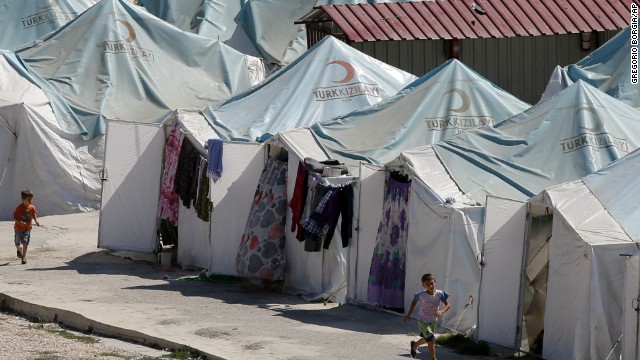 Children run past tents at a Syrian refugee camp in Yayladagi, Turkey, on Tuesday, September 3. The U.N. refugee agency said that the number of Syrians who have fled their war-ravaged country has risen to more than 2 million.
STORY HIGHLIGHTS
- Peter Bergen: Complicating the Syria picture is regionwide sectarian strife
- He says the historic Sunni-Shia split is a key dynamic and U.S. strike could worsen conflict
- Iraq’s death toll from sectarian struggles has been increasing
- Bergen: Al Qaeda-affiliated groups will seek to take advantage
Editor’s note: Peter Bergen is CNN’s national security analyst, a director at the New America Foundation and the author of “Manhunt: The Ten-Year Search for bin Laden — From 9/11 to Abbottabad.” Jennifer Rowland is a program associate at the New America Foundation.
(CNN) — As they contemplate military action against Syria, one of many considerations members of Congress and Obama administration officials have to weigh is how a U.S. strike against the regime of Bashar al-Assad might effect the already complicated, even poisonous, state of Sunni-Shia relations in the region.
Three of the leading Sunni states, Saudi Arabia, Turkey and the UAE, have already offered their military assets if a US strike happens.
Last week, Iranian President Hassan Rouhani said that the Shia government of Iran and close Syrian ally Russia would work in “extensive cooperation” to protect Syria.
Peter Bergen
An American-led war in Syria with the military backing of some powerful Sunni states against a de facto Shia alliance of Iran, Syria, Iraq and Lebanese Hezbollah would likely greatly exacerbate the already tense relations between Sunni and Shia across the region.
In Syria, a popular uprising against a repressive ruler in 2011 has morphed into what is now a largely sectarian civil war pitting the country’s Sunni Muslim majority against al-Assad’s minority Alawite sect, which is associated with Shia Islam.
The Syrian regime is propped up with weapons and funds from Iran’s Shia rulers and also benefits significantly from the support on the ground of battle-hardened fighters from Lebanese Hezbollah, an Iranian proxy.
As a possible U.S. strike looms in Syria, what had hitherto been a shadowy proxy war, with Sunni countries such as Saudi Arabia quietly supporting the Syrian rebels and Iran supporting al-Assad, could now devolve into a full-blown war that is openly supported by the most powerful Sunni and Shia states.
That is a real potential problem that needs to be weighed by Obama national security officials and representatives in Congress as they consider the options in Syria, because across the Muslim world from Lebanon to Pakistan, Sunnis and Shias are increasingly at each other’s throats.
A further intensification of the already brutal Syrian civil war might further destabilize Syria’s fragile neighbors; both Lebanon and Iraq could plunge back into civil wars.
Already in July, the United Nations recorded the highest death toll in Iraq since 2008, when the Iraq War was raging. In that month alone, more than 1,057 civilians and security personnel were killed. Many of those deaths were the result of bombings claimed by the Sunni terrorist group al-Qaeda in Iraq and were directed at Shia targets.
A splinter organization of al-Qaeda in Iraq is now fighting in Syria and is regarded as the most effective force fighting Assad, who it deems a heretic.
It’s a very old story. The two dominant sects of Islam, Sunni and Shia, first split over the issue of who was the rightful successor of the Prophet Muhammad following his death in 632.
The conflict between the two sects has waxed and waned over the many centuries since, but right now the Syrian conflict could exacerbate the regional split along sectarian lines that we have seen over the past few years.
In 2011 the Sunni monarchy of the Gulf state of Bahrain backed by more than a thousand soldiers from Saudi Arabia put down with harsh tactics an uprising by its disadvantaged Shia majority population. The Bahrain government hinted that the uprising was an Iranian plot.
The sectarian conflicts in Syria, Iraq and Bahrain have also spilled over into Lebanon and Egypt. On June 23, in Lebanon’s port city of Sidon, soldiers clashed with supporters of a hardline Sunni cleric, Sheikh Ahmed al-Assir, who had spoken out vehemently against the Syrian regime as well as the Shia Lebanese militant group, Hezbollah.
On the same day, four Egyptian Shia Muslims were stabbed, beaten, and dragged through the streets by members of a hardline Sunni group in the Giza neighborhood of Cairo.
The intensifying sectarian tensions in Egypt were partially the fault of the recently-ousted Muslim Brotherhood government. A week before the Giza attack, for example, President Mohamed Morsi had appeared on stage with hardline clerics who called Shias “filthy.” And in May, Salafist members of Egypt’s parliament denounced Shias as “a danger to Egypt’s national security.”
Beyond the Middle East, sectarian violence has also soared in South Asia over the past few years. More than 180 members of Pakistan’s minority Shi’a Hazara community were killed in two massive bombings in the first two months of 2013 alone.
In neighboring Afghanistan, violent attacks on Shia Muslims are less frequent, but in December 2011, two nearly simultaneous suicide bombs in Kabul and Mazar-i-Sharif killed more than 60 Shia civilians as they celebrated the annual religious festival of Ashura.
We can expect sectarian tensions to continue boiling across the Muslim world, as the Syrian conflict grinds on and political and social unrest persist in many countries in the region.
Al-Qaeda-affiliated groups will seek to exploit these sectarian divisions to garner support for their own violent agenda, and may well find greater room to operate because of it.
Saudi Arabia and Qatar have mobilized their deep coffers to support extremist Sunni groups in the past, and will continue to do so as long as it means they are able to counterbalance Iran and its support for Shia regimes and militant groups.
All of these factors must be weighed as the United States weighs military action. They are not an argument for doing nothing in the face of al-Assad’s large-scale use of chemical weapons but they are a reason to heed Machiavelli’s warning “Wars begin when you will, but they do not end when you please.”
Obama on war: A realist and risk taker, CNN.com
Obama on war: A realist and risk taker
By Peter Bergen, CNN National Security Analyst
updated 8:06 PM EDT, Mon September 2, 2013
STORY HIGHLIGHTS
Peter Bergen: Obama’s hope had been to end wars in Middle East
By sending issue to Congress, Obama seeks to make war harder to launch, Bergen says
Bergen: Obama lacked international support and legal standing to strike Syria
Obama’s move is a risk, as was decision to launch Osama bin Laden raid, Bergen says
Editor’s note: Peter Bergen is CNN’s national security analyst, a director at the New America Foundation and the author of “Manhunt: The Ten-Year Search for bin Laden — From 9/11 to Abbottabad.”
(CNN) — Barack Obama came to Washington to end wars. Not to start them.
That much was crystal clear only three months ago when Obama gave a keynote speech on May 23 at the National Defense University in Washington in which he called for an end to the “boundless war on terror” and “perpetual wartime footing” that has existed in the U.S. since 9/11.
Obama focused part of this speech on the Authorization for the Use of Military Force that Congress passed days after 9/11 and that gave President George W. Bush the authority to go to war in Afghanistan.
Obama looks to Congress to bolster legal case for Syria strike.
No one in Congress who voted for this resolution at the time realized that he or she was in effect authorizing in Afghanistan what would become America’s longest war.
Nor did they realize that they were giving a virtual blank check to the president to wage covert U.S. wars in countries such as Pakistan and Yemen where, according to data compiled by the New America Foundation, thousands have been killed in CIA drone strikes with almost no input from Congress.
During his defense speech, Obama vowed to help end the Authorization for the Use of Military Force that set in motion the seemingly endless war the U.S. has been fighting since 2001.
This is some of the context of Obama’s decision to go to Congress to seek authorization for a military strike on Syria. Obama has wanted to leave office in 2016 as the president who had made it harder, not easier, for future presidents to go to war unilaterally without the input of Congress.
In going to Congress for authorization of any military operation in Syria, we see Obama the former constitutional law professor at work, but we also see Obama the pragmatist.
The Obama administration could have always made the argument in the past few days that it could justify attacking the regime of Bashar al-Assad on humanitarian grounds to prevent further massacres of the Syrian people with chemical weapons despite the fact that there was no international authorization for attacking Syria and no congressional resolution sanctioning such an attack.
But that argument would be a novel one as a matter of international law, and it would not be particularly compelling as a matter of domestic politics when the American public seems, at best, split on whether the U.S. should deploy force in Syria.
Unilateral U.S. military actions are, of course, generally uncontroversial after an attack on American targets by a foreign power or group.
President Bill Clinton didn’t seek congressional approval for the cruise missiles he launched at al Qaeda training camps in Afghanistan in 1998 after the terrorist group’s attacks on two U.S. embassies in Africa.
Nor did President George H.W. Bush go to Congress to sign off on his invasion of Panama in 1989, which he authorized because a U.S, Marine had recently been killed there and tens of thousands of other Americans living in the country were purportedly at risk.
Syria hasn’t attacked any U.S. targets or citizens, so the argument that an attack on the Assad regime is designed to protect American interests or lives is moot.
That leaves the Obama administration with the option of extracting some kind of authorization for an attack from international bodies such as the United Nations, NATO or the Arab League.
As is now well-known, there isn’t a snowball’s chance in hell of getting a U.N. authorization since Russia and China have continuously made clear they would veto such a resolution.
There also seems little possibility, for the moment, that NATO will authorize a “humanitarian” mission as it did in Kosovo in 1999 to roll back Serbian aggression there. And even if there was such an authorization, right now a major NATO member, the United Kingdom, couldn’t participate because the British Parliament voted against such a mission on Thursday.
Indeed, NATO said Monday it wants a “firm international response” in response to the use of chemical weapons in Syria, but that it won’t take any military action itself.
The Arab League, which signed off on the operation to topple Moammar Gadhafi in 2011, has so far not signaled a readiness to authorize war against Syria. The League said the world community should take action against those responsible for the use of chemical weapons but did not specify if it would endorse military action by the U.S. or other parties. That said, the usually hypercautious Saudis publicly urged war on Sunday.
In going to Congress for the Syria authorization, we see not only the former constitutional law professor and pragmatist in Obama, but also the calculated risk taker.
On matters of considerable importance where the potential payoff is large, Obama has shown he is willing to take risks. Think no further than his decision two years ago to authorize a Navy SEAL raid to capture or kill Osama bin Laden in Pakistan, a raid he undertook against the advice of Vice President Joe Biden and then-Secretary of Defense Robert Gates. If that operation had gone poorly, as a number of Obama’s top national security officials believed it could, Obama might now be splitting his time between Chicago and Hawaii.
For Obama, a congressional authorization on the use of force in Syria would help him if he needs to authorize additional military actions down the road in Syria. It would also help him if he feels compelled to go to war with Iran. Of course, if he doesn’t get such an authorization, he will endure the same kind of humiliation that British Prime Minster David Cameron has just gone through in Parliament.
Obama has, however, no doubt tried to game out how this vote might play out.
He probably calculates that for Republican skeptics in Congress, they will have to explain to the American public why it is that they will not sanction military action on Syria after its large-scale use of chemical weapons while they continue to describe Syria’s closest ally, Iran, and its nuclear weapons program — which still has yet to produce any nuclear weapons– as a grave threat to the world.
We can be sure that in the next days, the administration will make the argument that if you let Syria take a pass on its large-scale and repeated use of chemical weapons, you can forget any chance of slowing or ending Iran’s nuclear program, something that is a matter of great importance for much of the Republican Party.
For those on the left of the Democratic Party in Congress who are generally skeptical of U.S. military actions, Obama can essentially ask, “If not now, when?” At what point will self-described liberals intervene to stop the use of weapons so vile that they have been banned by the civilized world for almost a century?
Al Qaeda’s potent force in Syria, CNN.com
Al Qaeda’s potent force in Syria
By Peter Bergen, CNN National Security Analyst
updated 6:28 AM EDT, Fri August 30, 2013
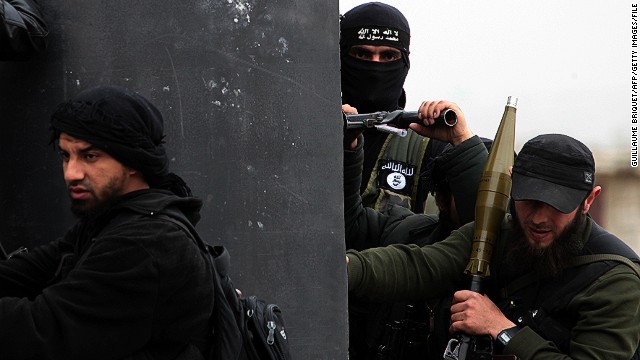
Turkish fighters with an al Qaeda-linked group hold positions in April in the Syrian village of Aziza outside Aleppo.
STORY HIGHLIGHTS
- Peter Bergen: U.S. may be reluctant on Syria due to role of al Qaeda-linked group
- He says group has emerged as most effective rebel force and helps fill social needs
- Bergen: Al Qaeda’s Syrian affiliate attracts the most foreign fighters in conflict
- He says group has shown ability to stage suicide bombings, threatens U.S interests
Editor’s note: Peter Bergen is CNN’s national security analyst, a director at the New America Foundation and the author of “Manhunt: The Ten-Year Search for bin Laden — From 9/11 to Abbottabad.”
(CNN) — Why has the Obama administration been so reluctant to intervene in Syria? There are a host of reasons — American fatigue with war, President Barack Obama’s disinclination to start another conflict in the Middle East, and the splintered, fractured opposition to Bashar al-Assad.
But one reason looms large: al Qaeda.
Al Qaeda’s affiliate in Syria, Jabhat al-Nusra, is generally acknowledged to be the most effective force fighting al-Assad.
Its fighters are willing to sacrifice themselves for the cause, are widely viewed as uncorrupt and are not involved in looting as other opposition forces are. A number of them are battle-hardened from other conflicts such as the Iraq War.
Al Qaeda’s Syrian affiliate is also well supplied as it benefits from the support of Sunni ultra-fundamentalists in the wealthy Gulf states such as Qatar and Saudi Arabia.
Jabhat al-Nusra, which means the “Victory Front,” was listed as a foreign terrorist organization by the U.S. State Department in December and is essentially a splinter organization of al Qaeda in Iraq.
Al-Nusra’s military prowess and close ties to al Qaeda make it a potentially serious threat to U.S. interests in the region, and the group has shown it has the ability to conduct massive suicide bombings.
In November, al-Nusra claimed responsibility for 45 attacks in the provinces of Damascus, Deraa, Hama and Homs that killed dozens of people, including one suicide bomb that reportedly resulted in 60 casualties.
It was the first insurgent organization in Syria to claim responsibility for attacks that caused civilian casualties.
Despite these civilian casualties, the group has been able to garner considerable support from Syria’s Sunni population, not only because it is the premier fighting force in the campaign to topple al-Assad but also because it is involved in providing critical services such as food, medical services and Sharia courts to the embattled population.
Also, for the moment, al-Nusra is not imposing Taliban-style rule in areas that it controls as al Qaeda did in Iraq’s massive Anbar province during the first years of the Iraq War. Al Qaeda’s harsh rule in Iraq precipitated the 2006 “Sunni Awakening” in which Iraq’s Sunni tribes rose up against the group.
Al-Nusra seems to have learned from this mistake and is operating in a Hezbollah-like manner as a large-scale provider of social services, and with the consent of the population in the areas it controls.
There is some confusion about how exactly al-Nusra fits into the larger al Qaeda network.
Al Qaeda in Iraq released a statement in April announcing its official merger with al-Nusra, proclaiming that their joint organization would be called the Islamic State of Iraq and the Levant. A leader of al-Nusra later rejected the merger but pledged the group’s support for al Qaeda’s overall leader, Ayman al-Zawahiri.
On June 9, Al Jazeera obtained a copy of a letter from al-Zawahiri annulling the merger.
But a week later, in an audio recording posted online, al Qaeda in Iraq rejected al-Zawahiri’s annulment of the merger, likely adding to the confusion of al Qaeda cadres.
Syria is a particularly agreeable environment for al Qaeda. During the Sunni insurgency in Iraq that began in 2003, it was a key base for training and supporting foreign fighters.
Al-Assad is also the perfect al Qaeda villain. He is an Shia Alawite and therefore a heretic in the eyes of the Sunni fundamentalists. He is a secularist and therefore an apostate in their view, and he is conducting a war without quarter against much of his Sunni population.
Some 2,000 to 5,500 foreign fighters are believed to have traveled to Syria since the beginning of the Syrian conflict to join the rebels who aim to topple the Assad regime.
Not all of them have necessarily joined jihadist factions of the rebel forces, but because most foreign fighters are drawn to the conflict because of a perceived religious responsibility, it is likely that these groups have drawn the lion’s share of the foreigners.
Even at high-end estimates, foreign fighters make up a small portion of the forces arrayed against the Assad regime: no more than 10%.
Al-Nusra is the opposition group in Syria that attracts the most foreign fighters. It is believed that there are about 100 foreign fighters from the United Kingdom fighting in Syria.
Experts say the number of Americans fighting in Syria is likely less than 10, and only a couple of instances of Americans fighting with al-Nusra have been confirmed.
Eric Harroun, a former American solider, was charged in 2013 with conspiring to use a rocket-propelled grenade in Syria, and he admitted to fighting with al-Nusra.
Politik Aus bin Ladens Schatten, FOCUS
FOCUS Magazin | Nr. 33 (2013)
Politik
Aus bin Ladens Schatten
Montag, 12.08.2013, 00:00 · von Peter Bergen

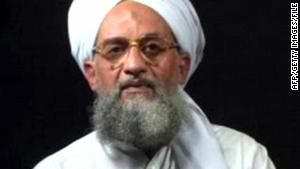
dpa Alarmstufe Rot: Aiman al-Zawahiri (hier 2004 bei einem Auftritt im arabischen Sender al-Dschasira) rief sein Terrornetzwerk zu Attacken auf. Die USA schlossen daraufhin zahlreiche Botschaften.
Wie mächtig ist der neue Fürst des Terrors? Der amerikanische Experte Peter Bergen analysiert für FOCUS die Karriere des Al-Qaida-Chefs Aiman al-Zawahiri
Die Botschaft des Al-Qaida-Chefs Aiman al-Zawahiri an den Kommandeur seiner Unterorganisation im Jemen war klar und einfach: „Tut etwas!“ Der amerikanische Geheimdienst fing die Nachricht ab. Es folgte eine beispiellose Schließung von rund zwei Dutzend US-Botschaften und -Konsulaten im Nahen Osten, Südasien und Afrika. Im Jemen schlossen auch Deutschland, Frankreich und Großbritannien ihre Vertretungen.
Osama bin Laden wurde vor zwei Jahren bei einer Operation der US Navy Seals im pakistanischen Abbottabad getötet. Bis dahin stand Zawahiri im Schatten seines charismatischen Vorgängers. Nun tritt der 62-Jährige als weltweit herrschender Terror-Boss ins Rampenlicht.
Humorloser religiöser Fanatiker
Zawahiri ist ein humorloser religiöser Fanatiker, auf dessen Stirn eine gut sichtbare dunkle Beule prangt. In Arabien ist sie als Zabiba (Rosine) bekannt – das Ergebnis von vielen Jahrzehnten Beten und Verneigen mit wiederholten Berührungen des Bodens. Viele Analysten – einschließlich meiner selbst – haben nicht erwartet, dass er sich als ein so fähiger Nachfolger bin Ladens erweisen würde.
Es fiel ihm leicht, sich die Gefolgschaft der alten Al-Qaida-Verbündeten im Irak, auf der Arabischen Halbinsel und in Nordafrika zu sichern. Im vergangenen Jahr erweiterte er sein Netzwerk um zwei weitere Verbündete: die militante Gruppe al-Schabaad aus Somalia und die Al-Nusra-Front (Siegesfront) in Syrien.
Auf seine neue Rolle hat sich Zawahiri sein Leben lang vorbereitet. Seine erste Dschihadisten-Zelle gründete er bereits mit 15 Jahren in seiner Heimatstadt Kairo. Wie viele Revolutionäre stammt er aus privilegierten Verhältnissen: aus einer bekannten ägyptischen Familie von Botschaftern, Rechtsanwälten und Geistlichen. Als Teenager glaubte er, dass die von Anwar al-Sadat geführte Regierung Ägyptens den Islam aufgegeben habe und deshalb gestürzt werden müsse. Im Jahr 1979 unterzeichnete al-Sadat den Friedensvertrag mit Israel – und damit im Prinzip sein eigenes Todesurteil. Im Jahr 1981 wurde Zawahiri, inzwischen als Chirurg ausgebildet, zusammen mit Hunderten anderen verhaftet, weil er an dem Attentat auf al-Sadat beteiligt gewesen sein soll. Ägyptische Sicherheitskräfte folterten ihn – eine Erfahrung, die ihn weiter radikalisierte.
Nachdem er Mitte der 1980er-Jahre freigelassen worden war, machte sich Zawahiri auf ins pakistanische Peschawar, wo damals Tausende von militanten Arabern zusammenkamen, um den afghanischen Dschihad gegen die Sowjetunion zu unterstützen. Hier traf er 1986 zum ersten Mal auf bin Laden, den damals schüchternen, wortkargen Sohn eines saudischen Milliardärs. Für bin Laden war der etwas ältere, nachdenkliche und politisch erfahrene Zawahiri eine faszinierende Persönlichkeit. Die beiden gingen eine Verbindung ein, die teuflische Konsequenzen haben sollte.
Zawahiri gewann bin Laden für seine Vorstellung des Dschihad
Zawahiri gewann bin Laden allmählich für seine Vorstellung des Dschihad. Er brachte ihn dazu, sich nicht mehr nur auf Afghanistan zu konzentrieren, sondern einen Machtwechsel in der arabischen Welt anzustreben. Bin Laden überzeugte seinerseits Zawahiri, einen „entfernten Feind“ zu bekämpfen. „Osama hat Zawahiri mit seiner Idee beeinflusst, die Amerikaner als den wahren Feind zu sehen“, erzählt Noman Benotman, ein libyscher Kämpfer, der beiden Männern nahestand.
FOCUS Magazin | Nr. 33 (2013)
Aus bin Ladens Schatten: Seite 2

dpa Nach Osama bin Ladens Tod (das Bild stammt aus dem Jahr 2000) übernahm Aiman al-Zawahiri das Terrornetzwerk Al-Qaida
Als Zawahiri im Jahr 1997 – nach sechs Monaten Haft in Russland – zum ersten Mal in das von den Taliban kontrollierte Afghanistan kam, war bin Laden auf dem Weg zu weltweiter Berühmtheit als Emir des Dschihad. Zawahiri dagegen war nur der mittellose Anführer einer kleinen ägyptischen Terroristengruppe. Bin Laden wahrte Distanz. Erst im Sommer 2001 verriet er dem Ägypter Details über die bevorstehenden Angriffe auf New York und Washington.
Damals hatte bin Laden nahezu die totale Kontrolle über al-Qaida. Die Mitglieder mussten einen religiösen Eid auf ihn persönlich schwören, um ihn ihrer blinden Loyalität zu versichern. Wie bin Ladens Sohn Omar berichtet, gewöhnten sich die al-Qaida-Männer an, um Erlaubnis zu bitten, wenn sie mit dem Anführer sprechen wollten. „Werter Prinz, darf ich sprechen?“, sei die übliche Frage gewesen. Auch Zawahiri habe sie gestellt.
Als neuer Chef von al-Qaida zeigt Zawahiri, dass er sich nicht mehr an die früheren Entscheidungen bin Ladens gebunden fühlt. Im Jahr 2010 befahl bin Laden der somalischen Militantengruppe al-Schabaad, ihre Verbindung mit al-Qaida geheim zu halten. Anfang 2012 gab Zawahiri selbst das Bündnis der beiden Gruppierungen bekannt.
Nach 9/11 schrieb Zawahiri in seiner Autobiografie „Ritter unter dem Banner des Propheten“, das wichtigste strategische Ziel von al-Qaida bestehe darin, die Kontrolle über einen Staat oder Teil eines Staates irgendwo in der islamischen Welt zu übernehmen. „Wenn wir dieses Ziel nicht erreichen, werden unsere Aktionen nichts bedeuten“, erklärte er. Sein Erfolg als Al-Qaida-Führer wird von seinen Mitkämpfern daran gemessen werden, ob es ihm gelingt, aus den chaotischen Zuständen in Ländern wie Ägypten, dem Jemen, Syrien, Irak und Libyen nach dem Arabischen Frühling Kapital zu schlagen, sichere Häfen für al-Qaida und Verbündete zu etablieren und von dort aus wirksame Schläge gegen westliche Ziele auszuführen.
Zawahiri versteckt sich in Pakistan
In Pakistan, wo sich Zawahiri weiterhin versteckt, und auch im Jemen haben CIA-Drohnenangriffe in den vergangenen Jahren Dutzende von Al-Qaida-Führern getötet. Einen Herrschaftsbereich in einem dieser Länder aufzubauen, erscheint fast unmöglich. Bessere Chancen dürfte es für den syrischen Partner al-Nusra geben. Mit einer Basis im Herzen der arabischen Welt und in direkter Nachbarschaft zu Israel wäre die Gruppe wohl in der Lage, den Westen anzugreifen. Die Al-Nusra-Front hat die Unterstützung von Teilen der sunnitischen Bevölkerung Syriens gewonnen. Sie ist die effektivste Kraft im Kampf gegen das Assad-Regime, und sie verteilt Lebensmittel, betreibt Krankenhäuser und organisiert Scharia-Gerichte. Noch konzentriert sich Jabhat al-Nusra allerdings auf den Sturz Assads, ein Projekt, das noch Jahre in Anspruch nehmen könnte.
Al-Qaida wurde vor 25 Jahren, im August 1988, an einem langen Wochenende in der glühenden Sommerhitze Pakistans in der Stadt Peschawar gegründet. Laut den Aufzeichnungen über das Treffen diskutierte bin Laden mit etwa einem Dutzend Männer, wie sich am besten eine Organisation schaffen ließe, die den „Heiligen Krieg“ in andere Länder trägt. Zawahiri war nicht dabei, und in den frühen Jahren der neuen Organisation spielte er in ihr keine zentrale Rolle. Heute ist er ihr Gesamtchef. Er steht vor der Aufgabe, ein Terrornetzwerk zu beleben, dessen letzte große Operation im Westen die Selbstmordattentate in der Londoner U-Bahn am 7. Juli 2005 waren. Um nach seinen eigenen Maßstäben erfolgreich zu sein, wird er sich mehr einfallen lassen müssen, als nur den Chef des Al-Qaida-Partners im Jemen aufzufordern, „etwas zu tun“.

CNN – Tim Hetherington Peter Bergen
Peter Bergen, 50, Bin-Laden-Biograf
Der britisch-amerikanische Journalist zählt zu den führenden Terrorismus-Experten in den USA und verfasste vier Bestseller über Osama bin Laden und die Jagd der Amerikaner auf den ehemaligen Al-Qaida-Anführer. Er leitet das National Security Studies Program, einen Think Tank in Washington, D. C. Bergen führte 1997 in Kabul ein TV-Interview mit Osama bin Laden.
For U.S., Syria is truly a problem from hell, CNN.com
For U.S., Syria is truly a problem from hell
By Peter Bergen, CNN National Security Analyst
updated 8:53 AM EDT, Tue August 27, 2013
STORY HIGHLIGHTS
Samantha Power’s Pulitzer-Prize winning study found U.S. very slow to fight evil regimes
Peter Bergen: Her work is a perfect description of U.S. dithering on the Syria crisis
U.S. is likely to strike Syria but lacks a strong basis in international law, he says
Bergen: U.N. won’t support a strike, but NATO and Arab League could back it
Editor’s note: Peter Bergen is CNN’s national security analyst, a director at the New America Foundation and the author of “Manhunt: The Ten-Year Search for bin Laden — From 9/11 to Abbottabad.”
(CNN) — What is widely recognized as the most authoritative study of the United States’ responses to mass killings around the world — from the massacres of Armenians by the Turks a century ago, to the Holocaust, to the more recent Serbian atrocities against Bosnian Muslims and the ethnic cleansing of the Tutsis in Rwanda — concluded that they all shared unfortunate commonalities:
“Despite graphic media coverage, American policymakers, journalists and citizens are extremely slow to muster the imagination needed to reckon with evil. Ahead of the killings, they assume rational actors will not inflict seemingly gratuitous violence. They trust in good-faith negotiations and traditional diplomacy. Once the killings start, they assume that civilians who keep their head down will be left alone. They urge cease-fires and donate humanitarian aid.”
This is an almost perfect description of how the United States has acted over the past two years as it has tried to come up with some kind of policy to end the Assad regime’s brutal war on its own people in Syria.
The author who wrote the scathingly critical history of how the United States has generally dithered in the face of genocide and mass killings went on to win a 2003 Pulitzer Prize for her book “A Problem from Hell: America and the Age of Genocide.”
A decade after winning the Pulitzer, that author is now the U.S. ambassador to the United Nations. Her name, of course, is Samantha Power, and she is a longtime, close aide to President Barack Obama. She started working for Obama when he was a largely unknown junior senator from Illinois.
Power called her 610-page study of genocide “A Problem from Hell” because that’s how then-U.S. Secretary of State Warren Christopher referred to the Bosnian civil war and the unpalatable options available to the U.S. in the early 1990s to halt the atrocities by the Serbs.
One of the U.S. officials that Power took to task in her book is Susan Rice who, as the senior State Department official responsible for Africa, did nothing in the face of the genocide unfolding in Rwanda in 1994.
Rice is quoted in the book as suggesting during an interagency conference call that the public use of the word “genocide” to describe what was then going on in Rwanda while doing nothing to prevent it would be unwise and might negatively affect the Democratic Party in upcoming congressional elections.
Missile strikes on Syria likely response to chemical attack
Rice later told Power she could not recall making this statement but also conceded that if she had made it, the statement was “completely inappropriate, as well as irrelevant.”
Rice is now Obama’s national security adviser.
In 2012, at Power’s urging, Obama announced the creation of an interagency task force to help stamp out atrocities around the world. Called the Atrocities Prevention Board, it was led by Power during its first year. Meanwhile, the body count in Syria kept spiraling upward.
For the past two years, Obama hasn’t wanted to intervene militarily in Syria.
Who would? The country is de facto breaking up into jihadist-run “emirates” and Alawite rump states. It is also the scene of a proxy war that pits al Qaeda affiliates backed by Qatar and Saudi Arabia against Hezbollah, backed by Iran.
U.S. military action in Syria expected Analysis: Next steps for U.S. in Syria What are Obama’s options for Syria? Response to Syria’s ‘moral obscenity’
Whoever ultimately prevails in this fight is hardly going to be an ally of the U.S. It’s an ungodly mess that makes even Iraq in 2006 look good.
It is, in short, a problem from hell.
Power, Rice and Obama today face some of the very same unpalatable choices that have confronted other U.S. national security officials as they tried to prevent mass killings in other distant, war-torn countries.
They can continue to do little as the Syrian civil war drags on into its third year with 100,000 dead and rising. It’s a state of affairs now compounded by the fact that the regime of President Bashar al-Assad appears not only to have crossed the “red line” with its use of chemical weapons but seems to have now sprinted past that line, killing hundreds with neurotoxins in a Damascus suburb, according to U.S. Secretary of State John Kerry. He’s blasted those attacks as something that “should shock the conscience of the world. It defies any code of morality.”
Doing nothing will not be treated kindly by future historians writing in the same vein as Power.
The issue now in Syria is not simply that al-Assad is massacring his own civilians at an industrial rate, but he is also flagrantly flouting a well-established international norm by this regime’s reported large-scale use of neurotoxins as weapons against civilians. It seems inconceivable that the United States as the guarantor of international order would not respond to this in some manner.
But on what authority? There is scant chance of a U.N. resolution authorizing military action. When she was U.N. ambassador, Rice skillfully ushered a resolution through the Security Council that authorized military action in Libya in 2011. But Russia and China will almost certainly veto any similar kind of resolution on Syria.
Russia is one of Syria’s few allies, and Russia and China are generally staunchly against any kind of international intervention in the affairs of other countries, no matter how egregious the behavior of those states might be.
That leaves the possibility of some kind of unilateral action by the United States.
The U.S. regularly infringes the sovereignty of countries such as Pakistan and Yemen with CIA drone strikes on the novel legal theory that terrorists planning strikes on the U.S. are living in those nations and those countries are either unable or unwilling to take out the terrorists on their territory — and therefore their sovereignty can be infringed by drone attacks.
But making a claim that the Syrian regime threatens the U.S. is implausible, and therefore some kind of unilateral American action seems quite unlikely.
In 1986, the Reagan administration launched air strikes at the homes of Libyan dictator Moammar Gadhafi, but only after an incident in which Libyan agents had bombed a disco in Berlin, killing two American servicemen. No such casus belli exists with Syria today.
Since neither a U.N. authorized military mission nor a unilateral American strike seem likely, what options are left?
One appealing option could be something along the lines of the Kosovo model. The Kosovo War in 1999 was entirely an air war in which no American soldiers were killed. The goal of the air campaign was to push Serbian forces out of Kosovo. Russia was allied with the Serbs so, as in the Syrian case today, there was no chance a U.N. resolution authorizing force would pass.
Instead, the war was conducted under the NATO collective security umbrella. Kosovo is, of course, in Europe, and NATO is a Europe-focused security alliance while Syria is the Middle East, so NATO action there would be much more problematic.
(A NATO force does fight in Afghanistan today, but that is only because one of its member states, the United States, was attacked on 9/11 from Afghanistan by al Qaeda, which triggered NATO’s Article 5, the right to collective self-defense of the members of the alliance.)
If an air war were to be launched against Syria, one scenario could be that Turkey, a member of NATO, could invoke Article 5 because Syria has fired into its territory on a regular basis.
So far, Turkey has proved reluctant to invoke Article 5 but the reported large-scale use of chemical weapons by the Assad regime might change the calculus of the Turks.
A further source of legitimacy for military action could be some kind of authorization by the Arab League. The Arab League is generally a toothless talking shop, which seemed to have surprised even itself two years back when it endorsed military action against Gadhafi.
That endorsement gave substantial international legitimacy to the subsequent air campaign against Gadhafi, led by the United States and other NATO countries such as France.
It is hard to believe that some kind of military action against Syria won’t now take place, likely in the form of U.S. cruise missile attacks from ships in the Mediterranean.
Such attacks have the merit that they won’t put U.S. aircraft at risk, which could well encounter problems with Syria’s well-regarded air defense systems. And the operation will likely have the blessing of some mix of NATO and Arab League authorizations, giving it at least some semblance of international legitimacy.
A post-Christian Middle East? CNN.com
A post-Christian Middle East?
By Peter Bergen and Jennifer Rowland
updated 5:57 PM EDT, Thu August 22, 2013
Christians targeted in Egypt
STORY HIGHLIGHTS
- Christians have been targeted in Egypt, Syria and Libya
- Bergen: Egypt’s Christians largely supported the coup that overturned Morsy regime
- In turn, Christians have been attacked by Islamists over the past week, he says
- Bergen: The region has become increasingly hostile to non-Muslims
Editor’s note: Peter Bergen is CNN’s national security analyst, a director at the New America Foundation and the author of “Manhunt: The Ten-Year Search for bin Laden — From 9/11 to Abbottabad.” Jennifer Rowland is a program associate at the New America Foundation.
(CNN) — There have been Christians in the Middle East since the time of, well, Christ.
Now that two millennium-long history could be in danger.
Islamist thugs have attacked dozens of churches across Egypt in the past few days, burning many of them down.
Peter Bergen
The attacks seemed to be protests against the brutal military government crackdown on the Muslim Brotherhood that killed many hundreds of Egyptian Islamists over the past week.
Pope Tawadros II, the leader of Egypt’s Christian Copts, met publicly with top military officers as they announced the coup that removed President Mohamed Morsy and his Muslim Brotherhood government from power in early July.
Christians, who make up 10% of the population, and other minorities had complained that a new constitution that had been passed by the Morsy government infringed on their rights.
For some Islamist militants, now it’s payback time. According to one report, 52 churches across Egypt were attacked in 24 hours last week. The Egyptian Initiative for Personal Rights has counted at least 30 churches attacked, along with other Christian facilities.
After Morsy was removed from power, a mob armed with axes hacked a Christian businessman to death near Luxor in southern Egypt and then continued their rampage in the village of Nagaa Hassan, burning dozens of Christian homes and killing three other Christians.
Today there are more than 10 million Christians in the Middle East and they make up an estimated 5% of the Middle East’s population.
A century ago they made up an estimated 20%.
Much of this fall can be attributed to factors such as emigration and the high birth rates of many Arab Muslims, but some of it is also attributable to the increasing marginalization and targeting of Christians; a worrying trend being seen not just in Egypt but also in other Arab countries.
Take Syria. Many Syrian Christians have tacitly supported the regime of President Bashar al-Assad, which draws much of its strength from the small Shia Alawite sect and therefore has historically favored and protected Syria’s other religious minorities.
As a result, the jihadists who have come to dominate a significant portion of the Syrian rebel movement have supplemented their war against the government with attacks that target Christians. On June 27, a suicide bombing in a Christian area of Damascus killed at least four people.
Al Qaeda-affiliated rebels are suspected of killing an Italian priest who had spent most of his life rehabilitating a monastery north of the Syrian capital of Damascus and who disappeared last month. The Rev. Paolo Dall’Oglio had reportedly been trying to secure the release of several hostages in the custody of an al Qaeda-aligned group.
Meanwhile, in March in Benghazi, Libya, where a militant attack on a U.S. government complex left four Americans dead in September 2012, around 60 Christians were rounded up by extremists and handed over to the government on suspicion of immigrating from Egypt illegally. The militants tortured several of their captives, killing one of them.
That bout of vigilantism followed the arrest in February of four Christians accused of proselytizing to Muslim Libyans.
The consequence of such attacks and harassment has been an exodus of Christians from the region.
Residents of northeastern Syria, where Christians have historically been concentrated, estimate that one-third of the Christians there have fled the country during the past two years.
Similarly in Iraq, since the fall of Saddam Hussein in 2003, the Christian Iraqi population may have dropped by as much as 50%, according to a CIA assessment.
And despite making up only about 3% of the Iraqi population, Christians accounted for half the Iraqis who fled the country in 2010, about 200,000 people.
Egypt’s religious tensions have a longer history than the recent clashes between Muslim Brotherhood supporters and Christians. Although then-President Hosni Mubarak kept a tight lid on the country’s Islamist extremists, clashes between Muslims and Christians erupted sporadically throughout the ’90s.
But since Mubarak’s fall, extremist violence against Christians has picked up in Egypt. In early October 2011, Egypt saw its worst instance of sectarian violence in 60 years, when two-dozen Christians died in clashes with the military.
As a result of these kinds of attacks, by one estimate, around 100,000 Christians left Egypt in 2011.
This kind of homogenization has happened before in the Middle East, which boasted a sizable Jewish population in the ’50s. But with the creation of the state of Israel and the rise of Arab nationalism and then Islamism, the region has become more hostile to non-Muslims.
Around World War II there were 100,000 Jews in Egypt, a community that had existed in Egypt since the time of the pharaohs.
Now, there are a handful of synagogues operating in Cairo. They are heavily guarded and generally empty as they cater only to the few dozen elderly Jews who are still left in Egypt.
One can only hope that this is not to be the fate of the Christians of the Middle East.
BPC release ‘Jihadist Terrorism: A Threat Assessment’ report
Monday, September 9, 2013
On Monday, September 9, the Bipartisan Policy Center (BPC) Homeland Security Project Co-chairs former Governor Thomas Kean and former Representative Lee Hamilton will preside over the release of the first in an annual series of threat assessment reports. The report will provide a comprehensive review of al-Qaeda and its affiliates, as well as other homegrown extremists who may target U.S. interests, and will provide recommendations to lawmakers and government officials on how best to counter the threat and protect the homeland.
Opening remarks by:
Jason Grumet
President, BPC
Featuring:
Peter Bergen
National Security Analyst, CNN
Panel Member, BPC Homeland Security Project
Hon. Lee H. Hamilton
Former Representative from Indiana
Co-chair, 9/11 Commission
Co-chair, BPC Homeland Security Project
Dr. Bruce Hoffman
Director of the Center for Security Studies, Georgetown University
Panel Member, BPC Homeland Security Project
Mike Hurley
Former Central Intelligence Agency Operative
President, Team 3i LLC
Consultant, BPC Homeland Security Project
Gov. Thomas H. Kean
Former Governor of New Jersey
Co-chair, 9/11 Commission
Co-chair, BPC Homeland Security Project
Carie Lemack, moderator
Director, BPC Homeland Security Project
When:
Monday, September 9, 2013
10:00AM-11:30AM
Where:
Bipartisan Policy Center
1225 Eye Street NW
Suite 1000
Washington, DC 20005
BPC release ‘Jihadist Terrorism: A Threat Assessment’ report
SECTION: NEWS; Reports & Surveys
LENGTH: 131 words
BPC Homeland Security Project Co-chairs former New Jersey Gov. Thomas Kean and former Rep. Lee Hamilton release ‘Jihadist Terrorism: A Threat Assessment’ report, a review of al-Qaida and its affiliates, as well as other homegrown extremists who may target U.S. interests. Report also provides recommendations to lawmakers and government officials on how best to counter the threat and protect the homeland. Other speakers incl CNN National Security Analyst Peter Bergen, Georgetown University Center for Peace and Security Studies Director Dr Bruce Hoffman, former CIA operative Mike Hurley, BPC President Jason Grumet and BPC Homeland Security Project Director Carie Lemack
Al Qaeda leader’s ‘I told you so’ on Egypt, CNN.com
Al Qaeda leader’s ‘I told you so’ on Egypt
By Peter Bergen, CNN National Security Analyst
updated 2:17 PM EDT, Thu August 15, 2013
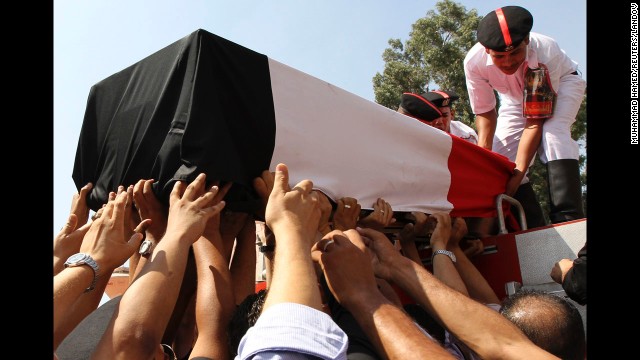 People reach for a coffin on Thursday, August 15, during a funeral for policemen killed during a crackdown at two protest camps in support of ousted President Mohamed Morsy yesterday in Cairo, Egypt. Ferocious clashes on Wednesday, August 14, reportedly left more 500 people dead across Egypt, and authorities have declared a monthlong state of emergency. The recent string of violence began when Egyptian security forces stormed two makeshift camps to clear out Morsy supporters. Look back at Egypt after the coup.
STORY HIGHLIGHTS
- Al Qaeda’s boss, Ayman al-Zawahiri, warned against Islamist parties participating in elections
- Peter Bergen says Zawahiri cites Egypt’s ouster of Muslim Brotherhood government
- He says Zawahiri is proving to be more effective in leading al Qaeda than predicted
- Bergen: Al Qaeda marking its 25th anniversary; Zawahiri may help determine if it survives
Editor’s note: Peter Bergen is CNN’s national security analyst, a director at the New America Foundation and the author of “Manhunt: The Ten-Year Search for bin Laden — From 9/11 to Abbottabad.”
(CNN) — Ayman al-Zawahiri, the Egyptian-born leader of al Qaeda, has seen this movie before: An Islamist party does well at the polling booth only to be overthrown by a military coup that then plunges the country into chaos.
This is what happened in Algeria in 1991. Tens of thousands died in the subsequent Algerian civil war that ripped the nation apart during the 1990s.
Peter Bergen
The lesson that Zawahiri drew from the Algerian war was that participating in democratic elections was strictly for suckers; far better to seize power through violence and then impose Taliban-style sharia law because “the crusaders” and their allies in the Arab world would never allow the emergence of a true Islamist state.
In 1991, the same year that the Algerian civil war began, Zawahiri released his first book, “The Bitter Harvest.” The book was a vicious diatribe against the Muslim Brotherhood and other similar Islamist parties for participating in “democracies, elections and parliaments.”
Now Zawahiri gets to say “I told you so.” Earlier this month Zawahiri posted a 15-minute recording on militant websites. In the recording Zawahiri explained that the military coup that deposed Egypt’s elected president, Muslim Brotherhood leader Mohamed Morsy, proved that democracy had failed.
Obama warns of further steps in Egypt
Until recently Zawahiri has been largely overshadowed by his charismatic former boss Osama bin Laden who was killed in a U.S. Navy SEAL raid in Abbottabad, Pakistan, two years ago.
Now the 62-year-old Zawahiri has dramatically stepped into the spotlight as the leader of al Qaeda and its several affiliated groups around the world.
The message traffic during the past weeks between Zawahiri and the commander of al Qaeda’s virulent Yemeni affiliate contained code words suggesting some kind of attack was potentially imminent.
Those messages were intercepted by American intelligence and led to the unprecedented closure last week of some two-dozen U.S. embassies and consulates across the Middle East, South Asia and Africa. Germany, France and Britain also closed their embassies in Yemen because of the threat.
Zawahiri’s success or failure as the head of al Qaeda will be crucial to how the terror network moves forward as it marks its first 25 years of existence this weekend.
A recent Harvard Kennedy School study of 131 terrorist groups that have gone out of business found that they averaged 14 years of existence.
Al Qaeda has already shown an ability to survive well beyond the life of an average terrorist group. The big question is whether Zawahiri can successfully lead the al Qaeda network so it can thrive in today’s chaotic conditions in the Middle East and can last another 25 years.
Zawahiri is a humorless religious fanatic whose forehead is marked with a prominent black scar known in Arabic as a zabiba or “raisin,” the result of the many decades he has spent touching his head repeatedly to the floor as he prostrated himself in prayer.
Despite his dour personality, Zawahiri has proven to be more capable as the leader of al Qaeda than many analysts — including myself — had initially thought.
In the past year Zawahiri has brought two new official affiliates into the al Qaeda network: Somalia’s militant al-Shabaab group and Syria’s Jabhat al-Nusra, which is widely regarded as the most effective force fighting the Assad regime.
Zawahiri also had no problem transferring already existing al Qaeda affiliates’ allegiances from bin Laden to himself. In the three months following bin Laden’s death, the leaders of al Qaeda in Iraq, the Yemeni-based al Qaeda in the Arabian Peninsula and the North African al Qaeda in the Islamic Maghreb all pledged their allegiance to Zawahiri as their new overall commander.
Zawahiri has been preparing for this moment all his life, first setting up a jihadist cell in his native Cairo when he was only 15. Like many revolutionaries before him Zawahiri is the son of privilege — he’s from a prominent Egyptian family of ambassadors, lawyers and clerics.
As a teenager Zawahiri believed that the Egyptian government led by Anwar Sadat had abandoned Islam and therefore had to be overthrown. Sadat signed Egypt’s ceasefire agreement with Israel in 1979, effectively signing his own death warrant.
In 1981, now trained as a surgeon, Zawahiri was arrested along with hundreds of others for his alleged role in Sadat’s assassination and was imprisoned and tortured by Egyptian authorities, an experience that further radicalized him.
Once he was out of jail in the mid-1980s, Zawahiri made his way to Peshawar, Pakistan, where thousands of militant Arabs were then gathering to support the Afghan jihad against the Soviet Union.
It was there in 1986 that Zawahiri first met bin Laden, at that time the shy, monosyllabic son of a Saudi billionaire. For bin Laden the slightly older, cerebral Zawahiri presented an intriguing figure, someone far more experienced politically than himself. For Zawahiri, bin Laden also presented an interesting opportunity: someone who was on his way to becoming a genuine war hero in the jihad against the Soviets and whose deep pockets were well known. They would go on to embark on a marriage of convenience that would have hellish consequences.
During the late 1980s Zawahiri gradually won over bin Laden to his more expansionist view of jihad. Faraj Ismail, an Egyptian journalist who covered the Afghan war against the Soviets, recalls that it was Zawahiri “who got Osama to focus not only on the Afghan jihad, but regime change in the Arab world.”
Opinion: Morsy holds key to Egypt’s future
Bin Laden then took the next step, urging Zawahiri to see that the root of the problem was not simply the Arab “near enemy” regimes, but the “far enemy,” the United States, which propped up the status quo in the Middle East, a shift in strategy that took place when al Qaeda was based in Sudan in the early 1990s. Bin Laden lectured to his followers there about the necessity of attacking the United States without which the “near enemy” regimes could not survive. Noman Benotman, a Libyan militant who was then close to bin Laden and Zawahiri, recalled that, “Osama influenced Zawahiri with his idea: Forget about the ‘near enemy;’ the main enemy is the Americans.”
When Zawahiri first arrived in Taliban-controlled Afghanistan in 1997, following a six-month spell in a Russian jail, his relations with bin Laden were on a quite different footing than they had been a decade earlier. Bin Laden was now the head of a fast-expanding terrorist organization while Zawahiri was the penniless leader of an obscure Egyptian terrorist group.
It was now bin Laden who took Zawahiri under his wing. And even then bin Laden kept Zawahiri at some distance. It was only in the summer of 2001 that al Qaeda’s leader told Zawahiri the details of the coming attacks on New York and Washington, and that was only after Zawahiri’s Egyptian Jihad Group had formally merged with al Qaeda in June.
Bin Laden exercised near-total control over al Qaeda, whose members had to swear a religious oath personally to bin Laden, so ensuring blind loyalty to him. Bin Laden’s son Omar recalls that the men who worked for al Qaeda had a habit of requesting permission before they spoke with their leader, saying, “Dear prince: May I speak?” Even Zawahiri would ask bin Laden to be permitted to speak.
But now that he is the new boss of al Qaeda, Zawahiri has shown that he no longer feels bound by bin Laden’s previous decisions. In 2010 bin Laden instructed the Somali militant group al-Shabaab to keep its association with al Qaeda a secret, fearing that openly linking the two organizations would hinder Shabaab’s fundraising efforts. Zawahiri, who had petitioned bin Laden to reconsider his views about the proposed merger between al-Shabaab and al Qaeda, announced formal ties between the two groups in early 2012.
Zawahiri, however, has also had some problems keeping control over the far-flung al Qaeda network. During the spring of 2013 Zawahiri personally intervened to settle a dispute between the Syrian militant group Jabhat al-Nusra and al Qaeda in Iraq. Zawahiri rejected al Qaeda in Iraq’s assertion of control over al-Nusra and declared the Syrian group to be under his direction.
However, in June 2013, Abu Bakr al-Baghdadi, the leader of al Qaeda in Iraq (AQI), posted an audio recording online rejecting the order from Zawahiri. This shows that AQI is willing to go public to dismiss the directives of al Qaeda’s leader, something that would have been unimaginable when bin Laden was in charge.
After 9/11, Zawahiri acknowledged in his autobiography “Knights Under the Banner of the Prophet” that the most important strategic goal of al Qaeda was to seize control of a state, or part of a state, somewhere in the Muslim world, explaining that, “without achieving this goal our actions will mean nothing.”
Indeed, the yardstick by which Zawahiri will be judged as an effective leader of al Qaeda by his fellow militants is the extent to which he can take advantage of the chaotic post-Arab spring conditions in countries such as Egypt, Yemen, Syria, Iraq and Libya to establish safe havens for al Qaeda and its affiliated groups and use those havens to then launch effective attacks against Western targets.
Why the bloodshed in Cairo?
In Pakistan where Zawahiri is generally believed to be hiding and also in Yemen, CIA drone shrikes have eliminated dozens of al Qaeda’s leaders over the past three years and establishing a viable safe haven in either country seems quite unlikely. However, a long-term safe haven for Jabhat al-Nusra, al Qaeda’s affiliate in Syria, in the heart of the Arab world could create an organization with the intent and capacity to attack the West.
Jabhat al-Nusra (“the Victory Front”) has been able to garner considerable support from Syria’s Sunni population, because it is the premier fighting force in the campaign to topple Assad, and because it is providing critical services, such as food, hospitals and sharia courts to the embattled population. For the moment, however, Jabhat al-Nusra is entirely focused on overthrowing the Assad regime, a project that may take years to achieve.
Al Qaeda was founded 25 years ago between August 18 and August 20, 1988 during the course of a series of meetings that took place over the course of three days in the sweltering heat of Pakistan’s summer in bin Laden’s house in the city of Peshawar.
According to the minutes of those meetings, bin Laden presided over discussions involving eight other men who deliberated about how best to establish a new organization that would take holy war to other countries. The minutes noted that “al Qaeda is basically an organized Islamic faction; its goal will be to lift the word of God, to make His religion victorious.”
Zawahiri was not at that founding meeting of al Qaeda and for much of the early history of the group he was not a central player in the organization. Today Zawahiri is al Qaeda’s overall boss, and he now has the difficult task of turning around an organization whose last successful attacks in the West were the multiple suicide bombings on London’s transportation system on July 7, 2005.
If he is to succeed, Zawahiri will have to come up with something more significant than just getting U.S. embassies and consulates to close for a week.
Wherever Zawahiri is right now he is surely watching the unrest unfolding in Egypt with considerable relish and as a real opportunity to exploit. Al Qaeda aligned groups already have footholds in the remote desert regions of Sinai in eastern Egypt and organizations such as Zawahiri’s own Jihad Group, which formally merged with al Qaeda in the summer of 2001, have a long history in Egypt.
World 50 Inc. Boston, MA
Sponsor: World 50 Inc.
Date: Monday, October 28, 2013
Venue: Boston, MA
What’s behind timing of terror threat, CNN.com
What’s behind timing of terror threat
By Peter Bergen, CNN National Security Analyst, and Bailey Cahall, Special to CNN
updated 4:54 PM EDT, Fri August 2, 2013
STORY HIGHLIGHTS
- Bergen, Cahall: U.S. issued global travel alert, 21 embassies, consulates close Aug. 4
- That day is Ramadan ‘Night of Power,’ also seen by al-Qaeda as good night for martyrdom
- They say night of power has brought earlier terror attacks; embassies a favored target
- Writers: Target may be Egypt, where earlier attack aimed; jailbreaks may also be factor
Editor’s note: Peter Bergen is CNN’s national security analyst, a director at the New America Foundation and the author of “Manhunt: The Ten-Year Search for bin Laden — From 9/11 to Abbottabad.” Bailey Cahall is a research associate at the New America Foundation.
(CNN) — On Friday the U.S. State Department issued a worldwide travel alert because of an unspecified al Qaeda threat. The location of that threat, the department said in a bulletin, is “particularly in the Middle East and North Africa, and possibly occurring in or emanating from the Arabian Peninsula.” As a result, an unprecedented 21 embassies and consulates in 17 countries in the Middle East, North Africa and South Asia will close on Sunday.
Sunday is also the 27th day of Ramadan and a particularly holy day for the world’s Muslims as it is the “Night of Power,” when the first verses of the Koran were revealed to the Prophet Mohammed.
It is also seen by al Qaeda’s would-be martyrs as a particularly auspicious day to die. It was the day Osama bin Laden signed his will in December 2001 as he feared death from American bombs falling during the battle of Tora Bora in eastern Afghanistan.
Peter Bergen during coverage of CNN’s Anderson Cooper 360 on location in Afghanistan
On the Night of Power in 2000, which that year fell on January 3, al Qaeda militants attempted to launch a suicide attack against the American warship USS The Sullivans off the coast of Yemen with a bomb-filled boat.
That attack failed, but the same group of militants then attacked the USS Cole 10 months later, again using the tactic of a bomb-laden boat, which exploded, killing 17 American sailors.
Al Qaeda and aligned organizations have a long history of attacking U.S. embassies and consulates, beginning in 1998 with the bombings of the embassies in Tanzania and Kenya, which killed more than 200, and including, most recently, the storming of the U.S. government facility in Benghazi, Libya, on the 11th anniversary of 9/11 last year.
For al Qaeda, these diplomatic compounds are attractive targets because they symbolize American power and because their locations are widely known. Indeed, several of the embassies and consulates that are being closed on Sunday have been attacked by al Qaeda and affiliated groups before.
In Saudi Arabia, al Qaeda terrorists stormed the U.S. embassy compound in Riyadh on May 12, 2003, killing 36 people. A year-and-a-half later, militants breached the outer wall of the U.S. consulate in Jeddah and opened fire on the staff, killing five.
The U.S. embassy in Sana’a, Yemen, was targeted by an al Qaeda affiliate two times in 2008, attacks that killed 21.
On September 13, 2011, the Haqqani network, a Taliban group closely associated with al Qaeda, attacked the U.S. Embassy in Kabul, killing five Afghan police officers and 11 civilians.
Though U.S. officials have not confirmed the targeting of a specific embassy, it is likely that the American compound in Cairo is a particular point of concern. In May, three men were arrested by Egyptian officials, who said the men were planning to attack the embassy. Officials said they discovered 22 pounds of aluminum nitrate, instructions on how to make bombs, and materials published by al Qaeda in the Islamic Maghreb, the network’s North African affiliate.
Another possible factor in the timing of the al Qaeda alert is that in the past two weeks, massive jailbreaks in Iraq and Libya have released more than a thousand prisoners, some with significant ties to al Qaeda. Very few of those inmates have been recaptured.
The U.S. embassies in Baghdad, Iraq, and Tripoli, Libya, are among the facilities that will be closed on Sunday.
Follow us on Twitter @CNNOpinion.
Join us on Facebook/CNNOpinion.