What U.S. learned from listening in on terror group calls, CNN.com
What U.S. learned from listening in on terror group calls
By Peter Bergen and David Sterman
updated 8:49 AM EDT, Wed June 19, 2013
NSA discloses foiled terror plots
STORY HIGHLIGHTS
- NSA chief offered information on yield from monitoring phone calls
- Peter Bergen says in two cases, NSA heard of plans to support terror groups overseas
- Bergen: Hearing offered little to show NSA has done much to stop terror attacks in U.S.
- Americans will have to decide whether giving up privacy rights is worth it, he says
Editor’s note: Peter Bergen is CNN’s national security analyst and a director at the New America Foundation. David Sterman is a graduate student at Georgetown University’s National Security Studies Program.
(CNN) — Sometime in late 2007, Basaaly Saeed Moalin, a cabdriver living in San Diego, began to have a series of phone conversations with Aden Hashi Ayrow, one of the leaders of Al-Shabaab, a notorious Somali terrorist group.
Moalin had no idea the National Security Agency was listening in.
In one of those phone calls Ayrow urged Moalin to send money to Al-Shabaab, telling him that he urgently needed several thousand dollars.
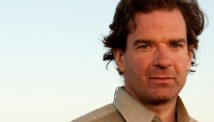
Peter Bergen
At one point Ayrow told Moalin that it was “time to finance the jihad” and at another, “You are running late with the stuff. Send some and something will happen.”
Over several months in 2008, Moalin transferred thousands of dollars to Al-Shabaab.
Moalin even told Ayrow that he could use his house in the Somali capital, Mogadishu, and “after you bury your stuff deep in the ground, you would, then, plant the trees on top.”
U.S. prosecutors later asserted that Moalin was offering his house to Al-Shabaab as a place to hide weapons.
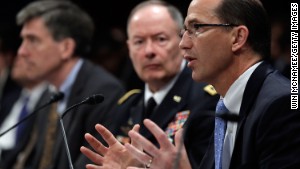 Skepticism over NSA claims
 Bush vs. Obama on surveillance
Earlier this year the San Diego cabbie was convicted of conspiracy to provide material support to Al-Shabaab and of money laundering for the terrorist organization.
In 2012, Al-Shabaab (“the Youth” in Arabic) formally announced its merger with al Qaeda. However, there is nothing on the public record to suggest Moalin was planning an attack in the United States.
Another financial supporter of a terrorist group who was detected by NSA surveillance was Khalid Ouazzani, a native of Morocco and a naturalized American living in Kansas City, Missouri.
Sometime in 2008, Ouazzani, who ran Truman Used Auto Parts in Kansas City, swore an oath of allegiance to al Qaeda and, until he was arrested two years later, he sent funds to the terrorist group, providing a total of some $23,000 to al Qaeda.
As revealed Tuesday at a House Intelligence Committee hearing about the NSA’s surveillance programs, Ouazzani also had some kind of a “nascent” plan to attack the New York Stock Exchange, according to FBI Deputy Director Sean Joyce. Ouazzani’s attorney told CNNMoney he had no part in such a plot, and court documents in his case do not mention any plan to attack the stock exchange.
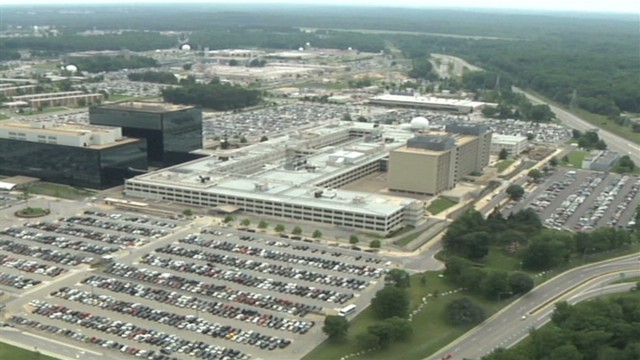
Al-Shabaab’s connection to San Diego and al Qaeda’s connection to Kansas City were two of the terrorist conspiracies that were uncovered by NSA surveillance that Joyce and other top national security officials, including the NSA’s director, Gen. Keith Alexander, pointed to at Tuesday’s hearing as examples of how NSA programs have worked to interrupt terrorist plotting.
These officials otherwise gave no new public information to substantiate the claim that Alexander had made last week that “dozens of terrorist events” had been averted by NSA surveillance, both in the United States and abroad.
On Tuesday, Alexander said he would provide members of the House Intelligence Committee additional information about some 50 other terrorists plots that had been averted in the United States and around the world, but this would be behind closed doors as the details of these plots remain classified.
The public record indicates that few of these are likely to have taken place in the United States. That’s because traditional law enforcement methods have overwhelmingly played the most significant role in foiling terrorist attacks, according to a survey of all the jihadist terrorist plots in the United States since 9/11 by the New America Foundation.
Jihadist extremists based in the United States have mounted 43 plots to conduct attacks within the United States since 2001. Of those plots, nine involved an actual terrorist act that was not prevented by any type of government action, such as the 2009 shooting spree by Maj. Nidal Hasan at Fort Hood, Texas, that killed 13.
Of the remaining 34 plots, the public record shows that at least 30 were uncovered by using standard policing practices such as informants, undercover officers and tips to law enforcement.
At Tuesday’s hearing, Joyce also pointed to two other plots averted by NSA’s programs; the 2009 plots by Najibullah Zazi to bomb the New York subway and by David Coleman Headley to attack a Danish newspaper that had printed cartoons of the Prophet Mohammed.
Alexander had previously cited the Zazi and Headley cases as examples of how the NSA surveillance programs have averted terrorist attacks.
Tuesday’s hearing did little to reassure the public that the NSA’s surveillance programs have done much to stop terrorist attacks at home, with the major exception of the plot by Zazi to attack the New York subway system around the eighth anniversary of the 9/11 attacks.
As the FBI’s Joyce explained at Tuesday’s hearing this was “the first core al Qaeda plot since 9/11” that was directed from Pakistan inside the United States.
There is no doubt that it was a serious plot, but if it was the only such serious plot on American soil that the government averted as a result of the NSA’s surveillance programs, the public will have to decide whether it justifies the large-scale government surveillance programs — no matter how carefully they are run so as to respect Americans’ civil liberties.
Did NSA snooping stop ‘dozens’ of terrorist attacks?, CNN.com
Did NSA snooping stop ‘dozens’ of terrorist attacks?
By Peter Bergen and David Sterman
updated 6:44 AM EDT, Tue June 18, 2013
 Former intelligence worker Edward Snowden, 29, revealed himself as the source of documents outlining a massive effort by the NSA to track cell phone calls and monitor the e-mail and Internet traffic of virtually all Americans. He says he just wanted the public to know what the government was doing. “Even if you’re not doing anything wrong, you’re being watched and recorded,” he said. While he has not been charged, the FBI is conducting an investigation into the leaks.
STORY HIGHLIGHTS
- National Security Agency chief says NSA has prevented “dozens of terrorist events”
- Peter Bergen says publicly available information minimizes value of NSA surveillance
- Bergen: Most effective weapons against terror are traditional law enforcement techniques
Editor’s note: Peter Bergen is CNN’s national security analyst and a director at the New America Foundation. David Sterman is a graduate student at Georgetown University’s National Security Studies Program.
(CNN) — Testifying before Congress on Wednesday, Gen. Keith Alexander, director of the National Security Agency, asserted that his agency’s massive acquisition of U.S. phone data and the contents of overseas Internet traffic that is provided by American tech companies has helped prevent “dozens of terrorist events.”
On Thursday, Sens. Ron Wyden and Mark Udall, Democrats who both serve on the Senate Select Committee on Intelligence and have access to the nation’s most sensitive secrets, released a statement contradicting this assertion. “Gen. Alexander’s testimony yesterday suggested that the NSA’s bulk phone records collection program helped thwart ‘dozens’ of terrorist attacks, but all of the plots that he mentioned appear to have been identified using other collection methods,” the two senators said.
Indeed, a survey of court documents and media accounts of all the jihadist terrorist plots in the United States since 9/11 by the New America Foundation shows that traditional law enforcement methods have overwhelmingly played the most significant role in foiling terrorist attacks.
Peter Bergen
This suggests that the NSA surveillance programs are wide-ranging fishing expeditions with little to show for them.
Alexander promised during his congressional testimony that during this coming week more information would be forthcoming about how the NSA surveillance programs have prevented many attacks.
A U.S. intelligence document provided to CNN by a congressional source over the weekend asserts that the dragnet of U.S. phone data and Internet information from overseas users “has contributed to the disruption of dozens of potential terrorist plots here in the homeland and in more than 20 countries around the world.”
The public record, which is quite rich when it comes to jihadist terrorism cases, suggests that the NSA surveillance yielded little of major value to prevent numerous attacks in the United States, but government officials may be able to point to a number of attacks that were averted overseas.
That may not do much to dampen down the political firestorm that has gathered around the NSA surveillance programs. After all, these have been justified because they have supposedly helped to keep Americans safe at home.
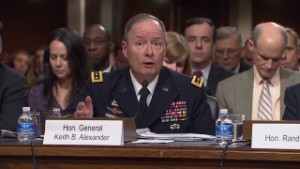 NSA director: ‘Dozens’ of plots thwarted
 Details on NSA-thwarted plots coming
 Edward Snowden: Hide and seek
 Is the NSA leaker a spy?
Homegrown jihadist extremists have mounted 42 plots to conduct attacks within the United States since 2001. Of those plots, nine involved an actual terrorist act that was not prevented by any type of government action, such as the failed attempt by Faisal Shahzad to blow up a car bomb in Times Square on May 1, 2010.
Of the remaining 33 plots, the public record shows that at least 29 were uncovered by traditional law enforcement methods, such as the use of informants, reliance on community tips about suspicious activity and other standard policing practices.
Informants have played a critical role in preventing more than half of the plots by homegrown jihadist extremists since the 9/11 attacks, according to New America Foundation data. For instance, a group of Muslims from the Balkans living in southern New Jersey who were virulently opposed to the Iraq War told a government informant in 2007 they were plotting to kill soldiers stationed at the nearby Fort Dix army base.
Other investigations have relied on tips to law enforcement. Saudi student Khalid Aldawsari’s plot to attack a variety of targets in Texas in 2011, including President George W. Bush’s home in Dallas, was foiled when a company reported his attempt to buy chemicals suitable for making explosives.
Standard police work has also stopped plots. Kevin Lamar James, a convert to Islam, formed a group dedicated to holy war while he was jailed in California’s Folsom Prison during the late 1990s. James’ crew planned to attack a U.S. military recruiting station in Los Angeles on the fourth anniversary of 9/11 as well as a synagogue a month later.
Members of James’ group financed their activities by sticking up gas stations, and their plans only came to light during the course of a routine investigation of a gas station robbery by local police in Torrance, California, who found documents that laid out the group’s plans for mayhem.
In defending the role of NSA surveillance in his congressional testimony, Alexander pointed to two plots averted by his agency’s programs; the plan by Denver resident Najibullah Zazi to bomb the New York subway system in 2009 and a plot the same year by Chicago resident David Coleman Headley to attack the offices of a Danish newspaper that had printed cartoons of the Prophet Mohammed that many Muslims deemed offensive.
In the Zazi case, testimony in a Brooklyn court shows that around the eighth anniversary of 9/11, U.S. officials found an e-mail address in Pakistan, believed to be connected to al Qaeda, that was in communication with njbzaz@yahoo.com, an e-mail address in the Denver area.
Officials found that Zazi was e-mailing from njbzaz@yahoo.com to get clarification from his handlers in Pakistan about how to mix ingredients for the bombs he was building in his Denver apartment. Zazi was arrested before he could carry out his plan to attack the New York subways.
This plot could well have been detected by the NSA’s PRISM program, which collects the e-mails and other records of computer users outside the United States from nine U.S. technology companies, including Yahoo. But the detection of the plot does not appear to have anything to do with the government’s collection of the phone records of tens of millions of Americans.
In the case of Headley, the government hasn’t clarified its claim that NSA surveillance led to his detection, but Sebastian Rotella of ProPublica, who has done the most authoritative reporting on the Headley case, says that Headley came to the attention of U.S. officials because he was in contact with al Qaeda operatives in the United Kingdom who were under surveillance by the British. In other words, Headley was not detected by NSA surveillance but because of a tip from a close ally.
Moreover, conventional law enforcement methods were available to detect Headley’s ties to terrorism, but they were ignored. Headley’s wife warned the FBI of his involvement with the Pakistani-based militant group Lashkar-e-Taiba years before his plot to attack the Danish newspaper.
Al Qaeda’s boss asserts himself, CNN.com
Al Qaeda’s boss asserts himself
By Peter Bergen, CNN National Security Analyst, and Jennifer Rowland, Special to CNN
updated 4:51 PM EDT, Tue June 11, 2013
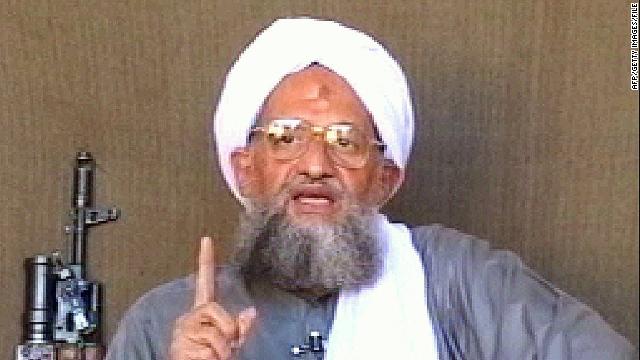
Al Qaeda leader Ayman al-Zawahiri is able to communicate with affiliates in Syria and Iraq.
STORY HIGHLIGHTS
- President Barack Obama said al Qaeda’s core is headed for defeat
- Peter Bergen: Terror group’s leader is still acting as if al Qaeda matters
- He says Ayman al-Zawahiri intervened to block merger of Iraqi and Syrian wings
- To avoid tracking, al-Zawahiri likely using a courier to deliver messages, Bergen says
Editor’s note: Peter Bergen is CNN’s national security analyst, a director at the New America Foundation and the author of “Manhunt: The Ten-Year Search for bin Laden — From 9/11 to Abbottabad.” Jennifer Rowland is a program associate at the New America Foundation.
(CNN) — In the most comprehensive speech he has delivered on terrorism, President Barack Obama declared last month that the “core of al Qaeda in Pakistan and Afghanistan is on a path to defeat.”
On May 23, the very same day that Obama delivered this keynote speech at the National Defense University in Washington, Ayman al-Zawahiri, the leader of the core of al Qaeda, fired off a lengthy memo to two al Qaeda affiliates in the Middle East.
This memo demonstrates Zawahiri considers himself and the al Qaeda core to be still relevant and very much in charge of the global jihadist movement.
Peter Bergen
The Zawahiri memo, which was published on Monday by the Al Jazeera news network in the original Arabic, is addressed to the leader of al Qaeda in Iraq and the leader of Syria’s Jabhat al-Nusra, which is a front organization for al Qaeda, according to the State Department.
In the memo, Zawahiri chastises the leader of al Qaeda in Iraq, in a tone that an irritated parent might use, for announcing in April the merger of the Iraqi and Syrian wings of al Qaeda “without asking permission or receiving advice from us and even without notifying us.”
Zawahiri also unloaded on Sheikh Abu Muhammad al-Joulani, the leader of the Syrian wing of al Qaeda, who at the same time had publicly announced his allegiance to Zawahiri and the core of al Qaeda. Zawahiri complained that the Syrian branch of al Qaeda had publicly outed itself as an al Qaeda affiliate “without having our permission.”
He instructed that the merger of the al Qaeda’s Iraqi and Syrian wings “be dissolved” and that the Syrian wing is “under the (al Qaeda) general command.”
Zawahiri said he made these decisions “after holding consultations with my brothers in Khorosan,” an ancient word for the region that today contains Afghanistan, which indicates that Zawahiri is able to communicate with, or perhaps even meet with, al Qaeda leaders along the Afghan-Pakistan border.
Why does this matter? It matters because “Al Qaeda Central” is now trying to assert control over two of its most virulent affiliates.
Al Qaeda in Iraq has mounted a series of spectacular attacks over the past year, which demonstrates that it is a force to be reckoned with again in Iraqi politics.
The Congressional Research Service reported this month that there were some dozen days in 2012 in which al Qaeda carried out multicity attacks that have killed hundreds of Iraqis.
And the al Qaeda affiliate in Syria is widely acknowledged to be the most effective fighting force that is now fighting the regime of Bashar al-Assad.
A long-term safe haven for this group in Syria, which is in the heart of the Arab world and next door to Israel and that is now directed by al Qaeda Central, could create an organization with the intention and capability to attack the West.
That Zawahiri continues to try to assert his control over al Qaeda-affiliated groups is not all that surprising considering that Osama bin Laden did the same thing while he was holed up in a compound in Abbottabad, Pakistan, for the last five years of his life before he was killed by a Navy SEAL team in early May 2011.
Documents found at the Abbottabad compound show that al Qaeda’s founder was deep in the weeds of key personnel decisions.
In a letter to the Yemen-based al Qaeda in the Arabian Peninsula, bin Laden was adamant that Yemeni-American cleric Anwar al-Awlaki not become that affiliate’s new leader. Awlaki never did get promoted and was killed in a U.S. drone strike in 2011.
The mere existence of the Zawahiri memo shows that he is able to communicate with relative ease with al Qaeda’s affiliates in the Middle East. Because of the now-well documented dangers of using any kind of electronic communication system, Zawahiri, like bin Laden before him, is almost certainly using a courier network to hand-deliver his letters.
In closing his letter to al Qaeda’s affiliates in Syria and Iraq, Zawahiri appointed a man named Abu Khalid al-Suri to resolve any future disputes that might arise between the two groups.
It isn’t clear to what extent al Qaeda’s affiliates in Syria and Iraq will actually pay attention to directives from Zawahiri but it is a fact that these affiliates have pledged their allegiance to him.
If the core of al Qaeda is indeed on the road to defeat as Obama asserted three weeks ago, Zawahiri clearly hasn’t gotten this message.
The Hunt For Bin Laden, John Jay College of Criminal Justice, NYC
The Hunt For Bin Laden
Friday, November 8, 2013, 3:00-5:00
John Jay College, Haaren Hall 899 10th Avenue, Room 630 (T-Building)
Peter Bergen currently serves as CNN’s national security analyst and produced Osama bin Laden’s first television interview during which he declared war against the United States in 1997. As the director of the National Security Studies Program at the New America Foundation in Washington, D.C., Bergen leads the nonprofit, non-partisan think tank’s research on terrorism, counterinsurgency, and South Asia’s geopolitics. The author of three New York Times best sellers, Bergen’s most recent book, Manhunt: The Ten Year Search for bin Laden, from 9/11 to Abbottabad, was adapted to the screen in an HBO documentary. Bergen served as the executive producer for the film, which was presented at the 2013 Sundance Film Festival. His book The Longest War: The Enduring Conflict Between America and Al-Qaeda (2011), was noted by The Guardian and Newsweek as one of the most indispensible books on terrorism in the past decade. He is a fellow at Fordham University’s Center on National Security and has previously held teaching positions at Harvard and Johns Hopkins Universities. He is on the editorial board of leading scholarly journal, Studies in Conflict & Terrorism, has written for a wide range of publications including the New York Times, Los Angeles Times, Foreign Affairs, The Washington Post and the Wall Street Journal, is a contributing editor at The New Republic and maintains a weekly column for CNN.com.
Terrorists target the military, CNN.com
Terrorists target the military
By Peter Bergen, CNN National Security Analyst, and Jennifer Rowland, Special to CNN
updated 10:02 AM EDT, Thu June 6, 2013
Terror attacks on home soil
<<
<
1
2
3
4
5
6
7
8
9
10
11
12
>
>>
STORY HIGHLIGHTS
- Major Nidal Malik Hasan says he killed U.S. soldiers to protect Taliban leaders
- Peter Bergen: Fort Hood massacre was part of a trend of terrorists targeting military
- It prompted new restrictions and security procedures at the base, he says
- Since 9/11, 21 people have plotted to attack U.S. soldiers or military installations
Editor’s note: Peter Bergen is CNN’s national security analyst, a director at the New America Foundation and the author of “Manhunt: The Ten-Year Search for bin Laden — From 9/11 to Abbottabad.” Jennifer Rowland is a program associate at the New America Foundation.
(CNN) — At a hearing on Tuesday, Maj. Nidal Malik Hasan, the Army psychiatrist accused of killing 13 people at Fort Hood, Texas, in 2009, for the first time publicly explained that he was motivated by a desire to protect the leadership of the Taliban — in particular, Mullah Mohammed Omar, the overall leader of the movement.
Prosecutors say that as Hasan opened fire on a room full of soldiers filling out paperwork for their upcoming deployments to Afghanistan and Iraq, he shouted “Allahu Akbar! (God is great!)”
Maj. Nidal Hasan can represent himself
The massacre at Fort Hood is part of a trend of “homegrown” al Qaeda-inspired terrorist attacks and plots against U.S. military targets.
Peter Bergen
For those individuals who buy in to the late Osama bin Laden’s key claim that the U.S. is at war with Islam, American soldiers who are fighting wars in Muslim countries make compelling targets. Indeed, more than a quarter of all the jihadist extremists who have carried out or plotted attacks inside the United States since the 9/11 attacks have targeted the U.S. military.
Since 9/11, 21 people have plotted to attack American soldiers or military installations, according to a count by the New America Foundation.
Before he went on his rampage at Fort Hood, Hasan had contacted the radical Yemeni-American preacher Anwar al-Awlaki over the Internet to ask whether it would be permissible for a U.S. soldier to kill his comrades in the name of Islam.
Al-Awlaki’s responses were noncommittal, and although the conversations were a red flag to some law enforcement officials who were monitoring these communications, those officials did not alert the military.
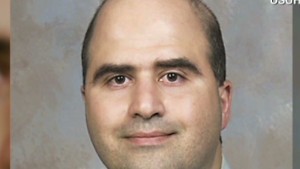 Toobin: Hasan wants suicide by judge
 Former jihadist calls attack ‘cowardly’
A Pentagon report released after Hasan’s attack found that the military’s official relations with the FBI’s Joint Terrorism Task Forces were “inadequate,” which might have contributed to the failures to communicate about the threat some law enforcement officials suspected Hasan might pose.
Here are some other examples of plots or actions that targeted the military:
• A few months before the Fort Hood attack, another jihadist extremist killed a U.S. soldier at a military recruitment center in Little Rock, Arkansas. Abdulhakim Mujahid Muhammad, a convert to Islam whose preconversion name was Carlos Bledsoe, had also attracted attention from federal law enforcement. Despite being questioned by the FBI about a suspicious trip he had recently taken to Yemen, Muhammad was able to obtain a semiautomatic rifle, a pistol and ammunition, as well as the ingredients for a Molotov cocktail.
• A month after Muhammad attacked the military recruitment center in Arkansas, a Muslim convert named Daniel Patrick Boyd was arrested along with six other men, accused of leading a terrorist cell that plotted to attack the Marine base at Quantico, Virginia, outside Washington. Boyd had a history of run-ins with the law, but his group still managed to amass weapons and conduct paramilitary training before they were discovered.
• A similar 2011 plan involved Walli Mujahidh, who plotted with Abu Khalid Abdul-Latif to use grenades and machine guns to attack military recruits at an office complex in south Seattle as revenge for purported atrocities by U.S. soldiers in Afghanistan.
• Four years earlier, a group of Muslims living in southern New Jersey who were virulently opposed to the Iraq War told a government informant they were plotting to kill soldiers stationed at the nearby Fort Dix army base.
In the wake of the attack there, Fort Hood tightened restrictions on who was allowed into the facility, posted more armed guards in strategic locations around the base and implemented the random searching of containers.
An extensive independent review to find the “lessons from Fort Hood” focused on identifying radicalization within the U.S. armed forces, a phenomenon that poses a particularly grave threat because of soldiers’ access to weapons and secure military facilities. The review also identified some of the procedural problems that led to the military’s failure to prevent the Fort Hood attack.
Following the review, then-Secretary of Defense Bob Gates issued a directive ordering the implementation of 47 recommendations to improve “force protection” at military bases in the U.S.
These included giving military personnel better guidance on identifying suspicious or radical behavior by their comrades, establishing better relations between the Pentagon and the FBI’s Joint Terrorism Task Forces and improving communication mechanisms for sharing real-time crisis information across military commands and installations.
But while establishing methods to identify extremists is a somewhat feasible goal in a regimented, closely monitored system such as the military, it is not as easy for authorities to do so in the broader community, particularly when the individuals seem to be “lone wolves” who are not part of a formal terrorist group.
Two attacks last month on soldiers living in the West fit this category.
On May 22, two men rammed a car into British soldier Lee Rigby as he was walking down a street in suburban London. They then hacked at him with a meat cleaver and left his body in the road while a bystander filmed one of the attackers. The slaying was justified as “an eye for an eye, a tooth for tooth … because Muslims are dying daily.”
The following weekend, in what might have been a copy-cat attack, a young Muslim convert who investigators believe “acted in the name of his religious ideology” stabbed a 25-year-old French soldier in a Paris suburb.
He was likely targeted because in recent years, French soldiers have served in Muslim countries such as Afghanistan and Mali.
The suspect, identified only as Alexandre D., first came to law enforcement’s attention when he was questioned briefly in 2009. French intelligence services reportedly became aware of the suspect’s increasing radicalization in February of this year.
Although there have been no successful attacks on U.S. military targets since the Fort Hood and Little Rock shootings in 2009, six of the 15 jihadist extremists who plotted to attack inside the United States in the past two years were targeting American soldiers or military installations.
The trial of Hasan serves as a reminder that American soldiers will remain squarely in the crosshairs of those few individuals in the United States who are motivated by al Qaeda’s ideology.
But in the wake of the Fort Hood massacre, the Pentagon has made a concerted effort to identify and address the government failures that allowed Hasan to carry out his attack, making another “insider” attack on a military facility in the United States significantly less likely than it was four years ago.
Follow @CNNOpinion on Twitter.
Join us at Facebook/CNNOpinion.
HBO’S Manhunt at the 2013 Aspen Security Forum
HBO’S Manhunt at the 2013 Aspen Security Forum
On May 2, 2011, Osama Bin Laden was killed during a covert operation in Abottabad, Pakistan. Now, two years after the death of one of the United States’ most feared adversaries, analysts, advisors, and leaders have begun to reflect on the individual and societal struggles that were overcome during the hunt for Bin Laden.
The 2013 Aspen Security Forum will proudly feature a screening of the HBO documentary Manhunt, an Official Selection of the 2013 Sundance Film Festival. Directed by Greg Barker and based on Peter Bergen’s Manhunt: The Ten Year Search for Bin Laden From 9/11 to Abbottabad, the documentary tells the riveting story of the CIA’s secret war against Osama Bin Laden and Al Qaeda.
Manhunt forgoes the glitz and glamour of Zero Dark Thirty to deliver a compelling story of the decade-long search for the United States’ most wanted man. Through interviews and collected news clips, Greg Barker captures the hearts and minds of the men and women who dedicated themselves to finding Bin Laden. While initially focused on “the sisterhood,” a team of female analysts who first began tracking Bin Laden in the early 1990’s, Manhunt expands to include field agents, directors, and military personnel to illustrate the evolution of interest in Bin Laden. The result is a documentary that is dense with emotionally-charged issues, including the moral battles fought over “enhanced interrogation” techniques in U.S. operated “black-sites.”
Following our screening of Manhunt, Director and Producer Greg Barker and Manhunt Author Peter Bergen will discuss how the war against Al Qaeda and other national security challenges are portrayed in the media with CBS News’ Dan Raviv.
We look forward to seeing you in Aspen,
The Aspen Homeland Security Program Team
Sun Valley Writers Conference, Sun Valley, Idaho, Aug. 22-26
SVWC is a festival of ideas and literature with some of the most extraordinary writers and thinkers in the world, the most generous audience one is ever likely to encounter – close to 1,000 people, a good number of whom wield considerable influence in business, politics, media, and entertainment circles, but all of whom love to read – in one of the most breathtakingly beautiful places in the American West. The conference started 18 years ago and is now considered by many to be the best literary festival in the U.S.
 |
“. . .Our expectations were high, but the reality was so much better — more gracious, more interesting — than we could have imagined.” JAMES FALLOWS, a national correspondent for The Atlantic Monthly and author of CHINA AIRBORNE. |
 |
“In my opinion, this year’s conference was one of the best times ever available to humankind. . .” NAOMI SHIHAB NYE, author of seven collections of poetry, including her most recent TRANSFER. |
Speakers/Participants

Liaquat Ahamed


Peter Bergen

Jeffrey Brown

Billy Collins

Neal Conan

Wade Davis

Peter Duchin

Firoozeh Dumas

David Eagleman

Gretel Ehrlich

Gillian Flynn

Amanda Foreman

Alex Gansa

Howard Gordon

Aleksandar Hemon

Craig Johnson

Bret Anthony Johnston

Eric Karpeles

General (RET.) Stanley McChrystal

W. S. Merwin

J. R. Moehringer

Kevin Powers

Austin Ratner

Jacob Rosenberg

Will Schwalbe

Maria Semple

Mona Simpson

Walter Stahr

Strobe Talbott

Simon Winchester

Jessica Yu
Bush’s war on terror is over, CNN.com
- Bush’s war on terror is over
By Peter Bergen, CNN National Security Analyst
updated 9:25 AM EDT, Fri May 24, 2013
Obama speaks on anti-terror strategy
STORY HIGHLIGHTS
Terrorism has been in the news with Boston bombing and killing of UK soldier in the street
Peter Bergen says despite recent acts, the enemy behind 9/11 has been defeated
He says President Obama signaled he wants Bush’s endless war on terror to end
Bergen: Key part of Obama speech was idea that America’s perpetual war footing should end
Editor’s note: Peter Bergen is CNN’s national security analyst, a director at the New America Foundation and the author of “Manhunt: The Ten-Year Search for bin Laden — From 9/11 to Abbottabad,” the basis for the HBO documentary “Manhunt” that will be shown on CNN at 9 p.m. today.
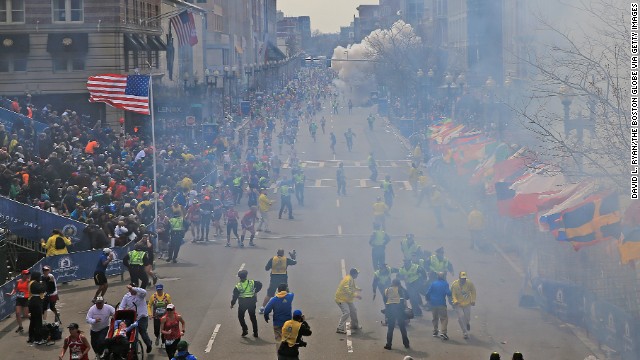
Washington (CNN) — In the past few weeks, we’ve seen a British soldier hacked to death with a meat cleaver on the streets of London and bombers blowing up spectators at the Boston Marathon.
On the surface, terrorism is alive and well.
So how should the United States react to these continuing threats?
For the first time on Thursday, President Obama laid out the full scope of his proposed counterterrorism strategy, and it boiled down to this: George W. Bush’s endless war on terror is over.
And that’s appropriate, since the enemy Bush went to war with after September 11 has largely been defeated.
Obama’s speech at the National Defense University in Washington was designed to lay the political groundwork to wind down America’s longest war, the war that began when al Qaeda destroyed the World Trade Center and a wing of the Pentagon 12 years ago.
Thursday’s speech was the first time Obama had delivered an overarching framework for how to conceptualize the conflict that has defined U.S. national security policy since 9/11.
Other speeches by Obama have focused on aspects of that conflict, such as Guantanamo and the Afghan war. But no speech has made such an expansive examination of the war against al Qaeda and its allies in all its manifestations, from drone strikes to detention policies to a clear-eyed assessment of the scope of the threats posed by al Qaeda and its affiliates, as well as by those “homegrown” extremists who attacked the Boston Marathon in April.
Much of the coverage of the speech has centered on the measures the president outlined to impose greater constraints on CIA drone strikes and to try to hasten the eventual closing of Guantanamo.
But the most significant aspect of the speech was the president’s case that the “perpetual wartime footing” and “boundless war on terror” that has permeated so much of American life since 9/11 should come to an end.
Obama argued that the time has come to redefine the kind of conflict that the United States is engaged in: “We must define the nature and scope of this struggle, or else it will define us.”
This is why the president focused part of his speech on a discussion of the seemingly arcane Authorization for the Use of Military Force that Congress passed days after 9/11 and that gave Bush the authority to go to war in Afghanistan against al Qaeda and its Taliban allies.
Few, if any, in Congress who voted for the authorization understood at the time that they were voting for a virtual blank check that has provided the legal basis for more than a decade of war. It is a war that has expanded in recent years to other countries in the Middle East and Africa, such as Yemen and Somalia, where the U.S. has engaged in covert military operations against al Qaeda-affiliated groups.
Theoretically, when U.S. combat troops finally withdraw from Afghanistan in December 2014, the authorization should simply expire, and the nation will no longer be at war. After all, once combat operations are over in Afghanistan, why would you want to keep in place an authorization for a permanent war?
However, there are now some in Congress who would like to expand the scope of the Authorization for the Use of Military Force beyond its present parameters to include military operations against terrorist groups that were not involved in the 9/11 attacks, which could prolong America’s wars indefinitely and add additional terrorist groups to the United States’ list of enemies it is at war with.
U.S. Sen. Bob Corker, R-Tennessee, ranking member of the influential Senate Foreign Relations Committee, for instance, last month called for an expansion of the scope of the authorization.
Obama made it quite clear in his Thursday speech that he would oppose such an expansion, saying he hopes instead to “ultimately repeal the AUMF’s mandate. And I will not sign laws designed to expand this mandate further.”
In short, Obama intends to end a seemingly endless war.
That’s because, according to Obama, “the core of al Qaeda in Afghanistan and Pakistan is on the path to defeat. Their remaining operatives spend more time thinking about their own safety than plotting against us.”
On Thursday, Obama asserted (in my view, correctly) that what remains of the terrorist threat, while significant and persistent, is nothing on the scale of the al Qaeda organization that launched the 9/11 operation and instead consists of “less capable al Qaeda affiliates, threats to diplomatic facilities and businesses abroad, homegrown extremists.”
These threats, the president further asserted, can be managed by carefully targeted drone strikes overseas and efforts to counter extremist ideology at home and do not require some kind of broader war.
Obama is also looking to his legacy and the presidents who will follow him and is trying to begin to create the public consensus and legal framework that will help to ensure that the United States isn’t “drawn into more wars we don’t need to fight, or continue to grant presidents unbound powers more suited for traditional armed conflicts between nation states.”
Obama clearly hopes to leave office in 2016 as the commander in chief who finally ended America’s longest war.
9 myths about drones and Guantanamo, CNN.com
9 myths about drones and Guantanamo
By Peter Bergen, CNN National Security Analyst, and Jennifer Rowland, Special to CNN
updated 8:42 AM EDT, Wed May 22, 2013
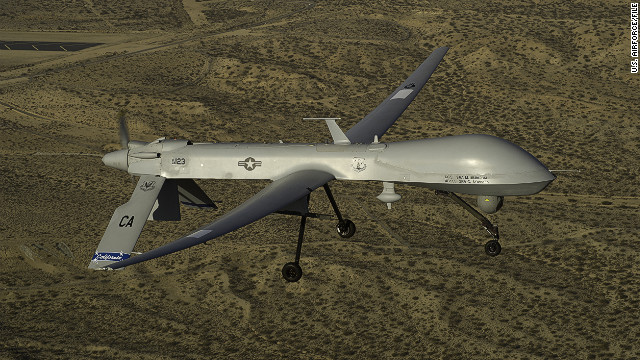
A U.S. Air Force MQ-1 Predator UAV flies over Victorville, California, on January 7.
STORY HIGHLIGHTS
- President Obama to speak Thursday on drone program, Guantanamo
- Peter Bergen says there are many misconceptions about both issues
- He says idea that drones target leaders of anti-U.S. terrorist groups is mostly not true
- Bergen: It’s a myth that all those at Guantanamo are too dangerous to release
Editor’s note: Peter Bergen is CNN’s national security analyst, a director at the New America Foundation and the author of “Manhunt: The Ten-Year Search for bin Laden — From 9/11 to Abbottabad,” the basis for the HBO documentary “Manhunt” that will be shown on CNN on May 24. Jennifer Rowland is a research associate at the New America Foundation.
(CNN) — On Thursday, President Barack Obama is scheduled to deliver a major speech in Washington about his administration’s counterterrorism policies, focusing on the rationale and legal framework for the controversial CIA drone program and his plans to wind down the prison camp at Guantanamo Bay.
So we thought it might be useful to examine some common myths about the drone program and the prison population at Guantanamo.
1. Drone strikes largely target the leaders of terrorist groups that threaten the United States.
In fact, of the thousands who have been killed in CIA drone strikes in Pakistan, only 37 were leaders of al Qaeda or affiliated organizations, according to a tally by the New America Foundation. And even if we add to that list the leaders of the Taliban who have been killed in drone strikes, only 2% of the victims of the CIA strikes in Pakistan have been militant leaders.
The drone program, which began more than a decade ago as a tool to kill leaders of terrorist groups, has evolved today into a counterinsurgency air force whose principal victims in Pakistan are lower-level members of the Taliban.
2. Drone strikes target specific terrorists who pose some kind of imminent threat to the U.S.
Obama’s top counterterrorism adviser and now CIA Director John Brennan said in a speech last year that “in order to prevent terrorist attacks on the United States and to save American lives — the United States government conducts targeted strikes against specific al Qaeda terrorists.”
That’s only partly true, because the CIA has also has occasionally conducted “signature strikes” against groups of men who display a particular behavioral “signature” that indicates they may be militants. In these cases, the targeter does not know the identity of the persons in the drone cross hairs.
3. Drone strikes kill a lot of civilians.
That was certainly once the case. Under President George W. Bush, the proportion of those killed by drones in Pakistan who were identified in reliable news reports as civilians or “unknowns” — people who were not identified definitively as either civilians or militants — was around 40%, according to data assembled by the New America Foundation.
But the civilian and “unknown” casualty rate from drone strikes has fallen steadily over the life of the program. Under Obama that number has fallen to 16%. And in 2012 it was around 11%.
In 2012, 2% of the drones’ victims were characterized as civilians in news reports and 9% were described in a manner that made it ambiguous whether they were militants or civilians.
And in 2013, civilian casualties are at their lowest ever. That is partly the result of a sharply reduced number of drone strikes in Pakistan — 12 so far in 2013, compared with a record 122 in 2010 — and also more precise targeting. According to data collected by the New America Foundation, three to five “unknown” individuals have been killed so far in drone strikes in 2013. Two other organizations that track the CIA drone program in Pakistan, the London-based Bureau of Investigative Journalism and the Long War Journal, report zero to four civilian deaths and 11 civilian deaths respectively.
4. The United States has no reason to worry about the legal framework governing drone strikes because it is so dominant in drone technology.
Only three countries currently are confirmed to possess armed drones — Israel, the United Kingdom and the U.S. But some 80 countries have drones, according to a count by the New America Foundation, and a number of them may already be able to arm them.
In February, a Chinese state-run newspaper reported that the Chinese government had contemplated deploying an armed drone in a remote, mountainous area to kill a drug lord, but decided instead to capture him.
Iran unveiled what it claimed was its first armed drone in 2010.
During a speech last week at the New America Foundation, the U.N. special rapporteur for counterterrorism and human rights, Ben Emmerson, estimated that “within a matter of certainly a year or two, other states will be deploying the technology, and within five years or so we will see a number of states and possibly nonstate actors deploying similar types of combat technology.”
Emmerson also pointed out that the rapid proliferation of drone technology means whatever legal framework the United States puts together to justify its targeted killing campaign “has to be a framework that we can live with if it is being used by Iran when it is deploying drones against Iranian dissidents hiding inside the territory of Syria or Turkey or Iraq.” A sobering and instructive thought.
5. The Pakistani government gives a wink and a nod to the drone program, providing tacit approval for its continuation.
It is true that Pakistan’s President Pervez Musharraf quietly agreed to allow the CIA’s targeted killing campaign to begin in 2004. But the program has become deeply controversial and unpopular in Pakistan because of the perception that it kills many civilians and that it erodes Pakistan’s national sovereignty.
In April 2012, the Pakistani parliament voted unanimously to rescind any previous permission that had been granted by the government for the CIA to conduct the targeted killing program.
During Ben Emmerson’s visit to Pakistan in March to discuss the CIA drone program with top officials, the point made to him “consistently, right across government, at the highest level and throughout, was that there is no continuing consent to the use of drones on Pakistani territory.”
The next Pakistani prime minister, Nawaz Sharif, who was elected on May 11 with a clear mandate, has urged an end to the drone strikes, telling reporters, “Drones indeed are challenging our sovereignty. Of course we have taken this matter up very seriously. I think this is a very serious issue, and our concern must be understood properly.”
6. Obama is soft on terrorists.
The CIA has conducted 355 drone strikes in Pakistan’s tribal regions since the targeted killing program began there in 2004. The vast majority of these — 307 to be precise — were carried out under Obama.
Even if you take the most conservative estimate of the numbers of people the Obama administration has killed in drone strikes in Pakistan, 1,600, that is around twice the total number of prisoners that Bush sent to Guantanamo.
7. Many of the Guantanamo detainees who have been released return to the battlefield.
The U.S. government claims that 27% of those released from Guantanamo are suspected or confirmed to have taken up arms. For security reasons the government hasn’t released the names of these men since 2009, but a review of the public record suggests that number is quite inflated.
According to a review by the New America Foundation of news articles, Pentagon reports, and other relevant documents, of the 603 detainees who have been released from the prison, only 17 individuals (2.8%) are confirmed to have engaged in terrorist or insurgent activities against the United States or its citizens, while 21 individuals (3.5%) are suspected of engaging in such activities.
8. The detainees still held at Guantanamo are too dangerous to release.
Some undoubtedly are, such as the operational commander of 9/11, Khalid Sheikh Mohammed. But contrary to the fulminations of officials such as Sen. Lindsey Graham, R-South Carolina — who said last year that Guantanamo detainees are “crazy bastards that want to kill us all” — half of the men still held at the prison camp were cleared for release three years ago by a task force of Department of Justice and Pentagon officials.
To be exact, 86 of the 166 men still imprisoned at Guantanamo were either found to be guilty of nothing, or were low-level fighters who could be repatriated subject to some continued monitoring by their home country’s government.
9. There are no benefits for the U.S. to release additional prisoners from Guantanamo.
Obama correctly said of Guantanamo in April, “It is expensive. It is inefficient. It hurts us in terms of our international standing. It lessens cooperation with our allies on counterterrorism efforts. It is a recruitment tool for extremists. It needs to be closed.”
The cost per year to keep one prisoner at Guantanamo is estimated to be $800,000, more than 30 times the cost of keeping a prisoner in a jail in the United States. And the Pentagon is asking Congress to approve a $200 million renovation plan for the prison.
The prisoners at Guantanamo have also featured frequently in jihadist propaganda, making it a recruitment tool for would-be al Qaeda members.
There is also a way forward through Guantanamo to obtaining some kind of peace deal with the Taliban. As a “confidence-building measure” for peace negotiations, theTaliban have agreed to release the only U.S. prisoner of war, Sgt. Bowe Bergdahl, in exchange for a handful of senior Taliban figures being held at Guantanamo, who would then be held under some form of house arrest in the Persian Gulf state of Qatar. This deal is a precondition for continuing serious peace talks with the Taliban.
The 27-year-old soldier has been in captivity since the Taliban seized him on June 30, 2009.
Jacksonville World Affairs Council, Jacksonville, Florida
Bob Woodward and foreign policy experts headline speaker series
Submitted by Wayne Ezell on May 17, 2013 – 8:19am From the editorial page
J
View this blog post on the All-Access Members site
An array of premier speakers, including journalist and author Bob Woodward, several foreign policy experts and a noted scientist. are scheduled for lectures by the Jacksonville World Affairs Council in the coming year.
Political scientist Peter W. Singer, best selling author of “Wired for War: The Robotics Revolution and Conflict in the 21st Century,” will kick off the series on Sept. 17. His book shows how science fiction has started to play a role on the battlefield with increasing use of robotics.
Ambassador Dennis Ross, who helped shape Middle East policy under four presidents and is a foreign affairs analyst for Fox News, will speak Oct. 29.
Theoretical physicist and best-selling author Dr. Michio Kaku, the co-founder of string field theory (a branch of string theory), will speak on Nov. 12. His book,”Physics of the Future: How Science Will Shape Human Destiny and Our Daily Lives by the Year 2100,” offers a stunning and provocative vision of the future, according to a World Affairs Council release.
Woodward, the Pulitzer Prize-winning journalist and associate editor of The Washington Post, will discuss “Presidential Leadership and the Price of Politics” on Jan. 21.
Michael Levi, senior fellow for energy and environment at the Council on Foreign Relations, will talk about “The Politics of Energy” on Feb.11.
James Fallows, national correspondent for The Atlantic, will discuss China’s transition to democracy and evolution as an economic power in a lecture titled “Postcards from Tomorrow Square: China’s Bumpy Transition to Democracy” on March 11.
Peter Bergen, director of the National Security Studies Program, New American Foundation, and CNN’s national security analyst, will lecture on “The Awakening: How Revolutionaries, Barack Obama and Ordinary Muslims are Remaking the Middle East” on April 8.
The lectures, which are free for attendees who reserve seats in advance, are held at the University of North Florida’s student center.
For more information, visit www.worldaffairscounciljax.org or call (904) 280-8162.