Syria rebel group’s dangerous tie to al Qaeda, CNN.com
Syria rebel group’s dangerous tie to al Qaeda
- Peter Bergen: The announcement of links between Syrian insurgents, al Qaeda is worrying
- He says it gives al Qaeda an opportunity to demonstrate that it is still relevant
- The insurgent group, al-Nusra, is the most effective of the rebel groups in Syria, he says
- Bergen: The Obama administration has been right to move deliberately on aid to rebels
Editor’s note: Peter Bergen is CNN’s national security analyst, the author of “Manhunt: The Ten-Year Search for bin Laden — From 9/11 to Abbottabad” and a director at the New America Foundation. Jennifer Rowland is a program associate at the New America Foundation.
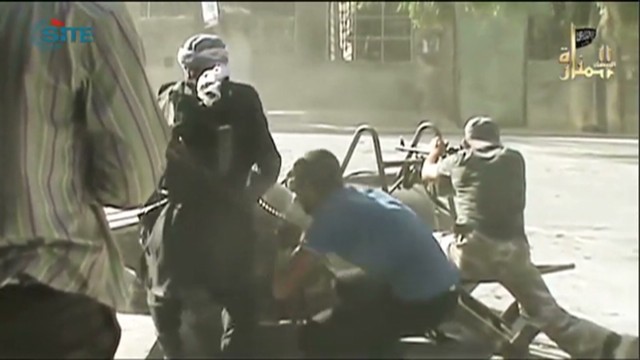
(CNN) — On Tuesday, al Qaeda’s affiliate in Iraq announced that it had merged with the Syrian opposition group Jabhat al-Nusra to form the “Islamic State of Iraq and the Levant.”
The announcement came in the form of an audio message from the leader of al Qaeda in Iraq, Sheikh Abu Bakr al-Baghdadi, that was distributed to key jihadist websites.
The merger was first reported by SITE, a Washington-based group that tracks jihadist material online. The authors were able to confirm the announcement by monitoring the jihadist site, Ansar al Mujahideen, which frequently posts material from al Qaeda, including Tuesday’s news of the merger of the Syrian and Iraqi wings of al Qaeda. Complicating matters, on Wednesday al Nusra claimed it wasn’t merging with al Qaeda’s affiliate in Iraq, but instead was pledging its allegiance to al Qaeda’s overall leadership.
The news that there is some kind of connection between al Qaeda in Iraq and the Syrian Jabhat al-Nusra (in English “the Victory Front”) is not entirely surprising. U.S. officials have long suspected that al-Nusra was really, in part, a front for Iraqi jihadists who had crossed the Syrian border to join the fight against Syrian President Bashar al-Assad. The State Department added Jabhat al-Nusra to its list of designated foreign terrorist organizations in December.
The fact that al-Nusra has publicly aligned itself with central al Qaeda is worrisome. A long-term safe haven for this group in Syria could be the prelude for the formation of an organization with the wherewithal to attack the West, just as al Qaeda’s sojourn in Afghanistan when it was controlled by the Taliban prepared the group for the 9/11 attacks.
Second, al-Nusra is widely regarded as the most effective fighting force in Syria, and its thousands of fighters are the most disciplined of the forces opposing Assad.
Al-Nusra is also the first al Qaeda affiliate to take a page out of Hezbollah’s book and operate not only as an effective fighting force but also as a large-scale provider of services, for instance, distributing enormous quantities of desperately needed bread in the areas of Syria that the group controls.
Finally, al-Nusra is the first jihadist group for many years that has chosen to merge with al Qaeda at a time when it is having significant success on the battlefield. Al Qaeda’s North African franchise, al Qaeda in the Islamic Maghreb, as well as the Yemen-based al Qaeda in the Arabian Peninsula, both announced their affiliation with al Qaeda only when they were struggling for resources and exposure.
While al-Nusra is enjoying real battlefield success in Syria, it is formally allying itself to al Qaeda at a time of great weakness for the global terrorist organization. The announcement of the merger with al-Nusra provides al Qaeda’s leaders, now headed by the Egyptian Dr. Ayman al-Zawahiri, the chance to prove they are still relevant
Sheikh al-Baghdadi, the leader of al Qaeda in Iraq, said that he had delayed the announcement of the formal merger with al-Nusra because he wanted to allow Syrians time to get to know al-Nusra on its own terms, without the inherent negative bias that would be caused by an early announcement of its ties to al Qaeda.
This was prudent. Had al-Nusra voiced its links to al Qaeda during the rebellion’s nascent stages, al-Assad would have had an easier time blaming the uprising on “terrorists” as he has done since violence first broke out in Syria in March 2011.
Syria is in its third year of a bitter civil war that has claimed the lives of more than 70,000 people, and wide swaths of the population support the opposition. In these circumstances, if al-Nusra continues to fight effectively against al-Assad, Syrians are not, at least for the moment, likely to care too much about what the group’s broader ideological leanings are.
For al-Nusra the gains of a public announcement of its alliance with al Qaeda are far from clear. In fact, it is likely to be quite counterproductive.
According to Leila Hilal, a Syrian-American who meets regularly with the Syrian opposition and is the head of the Middle East Task Force at the New America Foundation, the merger announcement may “confirm the suspicions of much of the Syrian public that al-Nusra is not fighting for a free Syria, but for the establishment of an ultra-fundamentalist state.”
That might explain why the head of al-Nusra, Abu Mohammed al-Jawlani, claimed in an audio message released on Wednesday that he wasn’t “consulted” on the announcement of the merger of the Syrian and Iraqi wings of al Qaeda. Jawlani then stepped on his effort at damage control by announcing his pledge of allegiance to Ayman al-Zawahiri, who is, of course, the overall head of al Qaeda worldwide.
For al Qaeda, the advantages of commanding an effective, large-scale fighting force in Syria, which is in the heart of the Arab world and borders on Israel, are all too obvious. The people of Syria, however, should have good reason to worry about this ominous development.
Finally, the announcement underlines that the Obama administration’s seeming dithering about how exactly to aid the Syrian opposition makes more sense than it has done hitherto. There clearly are unintended consequences and risks in supporting the Syrian opposition, which is fractured into hundreds of local groups, some elements of which are hardly supportive of the United States.
The Obama administration decision, reported by CNN Tuesday, to sign off on a new tranche of nonlethal aid to the rebels in Syria is best understood as an effort to bolster the Syrian opposition groups that are separate from al-Nusra and to give them a better fighting chance in what everyone agrees is likely a long Syrian war in which al-Assad is eventually removed from power — but only then, unfortunately, does the real fighting for lasting power begin.
¿Quién mató en realidad a Osama bin Laden en Pakistán? CNN Espanol
¿Quién mató en realidad a Osama bin Laden en Pakistán?
Por Peter Bergen, CNN
Nota del editor: Peter Bergen es analista de seguridad nacional de CNN, el autor de‘Manhunt: The Ten-Year Search for bin Laden-From 9/11 to Abbottabad’, y director de la New America Foundation.
(CNN) – En febrero, la revista Esquire publicó un extenso perfil de “El hombre que mató a Osama bin Laden”. La historia no identificó al hombre que lo mató con su nombre verdadero, refiriéndose a él únicamente como el Tirador.
El Tirador le dijo a Esquire que la noche en que bin Laden murió, él tuvo un encuentro cara a cara con el líder de al Qaeda, en el dormitorio del piso superior del complejo de Abbottabad, Pakistán, donde había estado oculto durante más de cinco años.
El Tirador explicó que cuando encontró a bin Laden en su dormitorio, el líder de al Qaeda estaba de pie y tenía un arma “a su alcance”, y fue solo entonces cuando le disparó en dos ocasiones a la frente, para matarlo.
Ese relato entró en conflicto con el de otra persona que participó en la redada, en un libro de gran éxito, No Easy Day.
Otro hombre que participó con el equipo secreto SEAL 6, que ejecutó a bin Laden, le dijo a CNN que la historia que presentó el Tirador a Esquire es falsa.
Los operadores del equipo SEAL 6 enfrentan restricciones para hablar con cualquier persona sobre el operativo contra bin Laden, y han sentido frustración al ver que la historia que apareció en Esquire es inexacta.
Phil Bronstein, que escribió la pieza de 15.000 palabras sobre el Tirador, para Esquire, ha sido abordado por CNN, Fox y otras cadenas de televisión.
Un grupo de 23 integrantes del equipo SEAL, y un intérprete, asaltaron el complejo de bin Laden poco después de la medianoche, el 2 de mayo, de 2011.
Ellos mataron con disparos a dos guardaespaldas de bin Laden, uno de sus hijos, y a la esposa de uno de los guardaespaldas, además de herir a otras dos mujeres.
Los primeros tres SEALs que llegaron al piso donde se creía que estaba bin Laden fueron el hombre clave, el Tirador del artículo de Esquire, y Matt Bissonette, el SEAL que escribió No Easy Day, con el seudónimo de Mark Owen.
Lo que en verdad pasó la noche del operativo, de acuerdo con el integrante del equipo 6 de SEAL que entrevisté, es que el hombre clave subió las escaleras hasta el piso superior y le disparó a bin Laden en la cabeza, cuando vio a alguien que se parecía a bin Laden asomar en su dormitorio.
El disparó hirió de gravedad al líder de al Qaeda.
Después de derribar a bin Laden, el hombre clave procedió a correr hacia dos mujeres que se encontraban en la habitación, rodeándolas con sus brazos para absorber la explosión en caso de que tuvieran explosivos, una preocupación para los que participaron en el operativo.
Otros dos integrantes de los SEAL entraron al dormitorio de bin Laden y, al ver que el líder de al Qaeda estaba moribundo en el piso, le dispararon otras dos ocasiones en el pecho.
Este relato de la muerte de bin Laden es considerablemente menos heroico al del Tirador que presentó Esquire, en la que él dice que disparó a bin Laden cuando estaba de pie, y solo cuando vio que el líder de al Qaeda tenía un arma a su alcance.
El integrante del equipo SEAL 6 que habló conmigo dijo que no hay forma en que el Tirador pudiera ver un arma al alcance de bin Laden, porque las dos armas que se encontraron en la habitación de bin Laden después de que lo asesinaran fueron ubicadas tras una búsqueda exhaustiva en la habitación, en un estante por encima de la puerta.
El operador SEAL también apunta que hubo una discusión antes del operativo, en la que el equipo de asalto recibió la instrucción de “no disparen al hombre (bin Laden) en la cara a menos que tengan que hacerlo”, porque la CIA tendría que analizar buenas imágenes de la cara de bin Laden, para que resultara efectivo el reconocimiento facial de los expertos.
Sin embargo el Tirador en la historia de Esquire dice que le disparó a propósito a bin Laden en la frente, en dos ocasiones.
El operador del equipo 6 de los SEAL también le dijo a CNN que el Tirador había sido expulsado del Escuadrón Rojo, el núcleo que llevó a cabo el operativo contra bin Laden, porque se jactaba de su papel en la redada, en bares de Virginia Beach, Virginia, donde está la base del equipo 6 de los SEAL.
En el artículo de Esquire, el Tirador se queja de que no recibe pensión, porque dejó a los militares cuatro años antes del mínimo de 20 que son requeridos para ser elegible.
CNN habló con Phil Bronstein, el escritor de Esquire, quien dijo que pasó las preguntas escritas de CNN sobre el papel del Tirador en el ataque a Bin Laden al personaje principal de su historia.
El Tirador no ha respondido a esas preguntas y Bronstein se negó a ofrecer una entrevista grabada, sobre su historia.
De acuerdo con integrantes actuales y anteriores del equipo 6 de SEAL, el hombre clave que efectuó el disparo que probablemente dejó herido de muerte a bin Laden no hablará ni en un “millón de años” sobre su papel en el operativo.
Todos alaban la valiente decisión del hombre puntero de lanzarse hacia las dos mujeres en la habitación de bin Laden.
Lo que parece irrefutable es que el hombre clave, el Tirador y Bissonnette fueron los primeros tres integrantes SEALs que entraron en la habitación de bin Laden.
Determinar exactamente cuál de ellos mató a bin Laden quizá nunca sea posible. Lo que es cierto es que se trató de un trabajo en equipo.
Book review: ‘The Way of the Knife: The CIA, a Secret Army, and a War at the Ends of the Earth’ By Mark Mazzetti, Washington Post
Book review: ‘The Way of the Knife: The CIA, a Secret Army, and a War at the Ends of the Earth’ By Mark Mazzetti
By Peter Bergen, Published: April 5
On May 1, 2011, CIA Director Leon Panetta was in command of the single most important U.S. military operation since the attacks of Sept. 11, 2001: the Navy SEAL Team 6 assault on a mysterious compound in Abbottabad, Pakistan, where Osama bin Laden was suspected to be hiding. The SEALs were sneaking into Pakistan without the permission of its government on a covert “deniable” mission in a country that was supposedly allied to the United States. Because U.S. law forbids the military to do this kind of work, the SEALs were turned over to the control of the CIA and were “sheep-dipped” to become, in effect, spies under Panetta’s nominal control.
Yet isn’t the CIA’s real job to steal other countries’ secrets, rather than to carry out targeted killings?
A few years before the bin Laden operation, Lt. Gen. Stanley A. McChrystal, then the head of Joint Special Operations Command, had turned the Army’s Delta Force and Navy SEAL Team 6 into a fighting machine in Iraq and Afghanistan that increasingly mounted operations to gather intelligence — what McChrystal termed “a fight for knowledge.”
Yet aren’t Special Operations forces the “door kickers” whom you send in to kill or capture terrorists rather than the guys who collect intelligence?
Since the 9/11 attacks, a dramatic shift has occurred in the way the United States deploys its military and intelligence forces. In his new book, “The Way of the Knife,” Mark Mazzetti documents the militarization of the CIA and the stepped-up intelligence focus of Special Operations forces. As Mazzetti observes in his deeply reported and crisply written account, over the past decade “the CIA’s top priority was no longer gathering intelligence on foreign governments and their countries, but man hunting.” The bin Laden operation was far from the only deadly mission that Panetta presided over.
Panetta’s tenure at CIA, Mazzetti writes, was known for its “aggressive — some would come to believe reckless — campaign of targeted killings.” He authorized 216 CIA drone strikes in Pakistan that killed at least 1,196 people, mostly militants, but also a smaller number of civilians, according to a count by the New America Foundation. Panetta, a devout Catholic, observed that he had “said more Hail Marys in the last two years than I have in my whole life.”Conversely, Defense Secretary Donald H. Rumsfeld was deeply irritated when the CIA rather than the military led the ground operation in late 2001 that ejected the Taliban from power in Afghanistan. He came to the conclusion that “the only answer was to make the Pentagon more like the CIA.”
The emergence of a “military-intelligence complex” has proved devastating to al-Qaeda and its affiliates. The CIA drone campaign in Pakistan has killed much of the terror network’s leaders and largely eliminated Pakistan’s tribal regions as the key training ground for the group; as a result, al-Qaeda hasn’t been able to mount a successful assault on the West since the suicide attacks on the London transportation system in 2005.
Meanwhile, the Joint Special Operations Command (JSOC) not only killed bin Laden, but also largely destroyed the vicious leadership of al-Qaeda’s Iraqi affiliate, which had precipitated the civil war in Iraq by its numerous attacks on the Shia community. JSOC’s campaign against al-Qaeda played a key role in tamping down the Iraqi civil war and helped enable a steady decline in violence in Iraq since 2007.
Until recently this history had not been well understood because units like SEAL Team 6 that make up Joint Special Operations Command aren’t even officially acknowledged. McChrystal’s recent authoritative memoir, “My Share of the Task,” has done much to illuminate this important chapter in the evolution of American military operations.
If there is an “Obama doctrine,” it is to fight the war against al-Qaeda and its allies with drone strikes in Pakistan and Yemen and with small numbers of clandestine Special Operations forces on the ground in countries such as Somalia. This new kind of fighting gives Mazzetti the title of his book, “The Way of the Knife.” It’s a form of warfare that avoids “messy, costly wars that topple governments and require years of American occupation.”
The benefits of the way of the knife are obvious: Few Americans are put at risk, and the costs are relatively low in a time of budgetary constraints. But as Mazzetti points out, this type of knife fighting is not as surgical as some of its proponents think, for it “creates enemies just as it has obliterated them.” It also has “lowered the bar for waging war, and it is now easier for the United States to carry out killing operations at the ends of the earth than at any other time in its history.”
CIA drone strikes are emblematic of this point. In Pakistan, a country with nuclear weapons, drone attacks are deeply unpopular, angering many of the 180 million Pakistanis. This is a high cost to pay. In 2010, a record 122 strikes occurred in Pakistan, yet few of the victims were leaders of al-Qaeda, suggesting that this tactic was being used without much thought for the larger strategic picture. The CIA drone program, which was conceived of as a way to kill the leaders of militant groups, had evolved into a counterinsurgency air force that killed mostly lower-level members of the Taliban in Pakistan.
But some big payoffs emerge from the blending of the roles of the military and the CIA that are well illustrated by the execution of the bin Laden raid. The first 15 minutes of the raid were consumed in killing bin Laden’s two bodyguards, his son and the al-Qaeda leader himself. But during the next 23 minutes, the SEALs picked up every computer, thumb drive and file they could lay their hands on in bin Laden’s compound. More than half of the time that the SEALs were on the ground in Pakistan they were performing what is known among intelligence professionals as SSE, or sensitive site exploitation.
As a result, the CIA was able to launch drone strikes — presided over by Panetta, not the military — that killed a number of al-Qaeda leaders, such as Atiyah Abd al-Rahman, who had appeared prominently in the documents the SEALs had recovered at the Abbottabad compound. The documents revealed that Rahman was not the middle-tier al-Qaeda official he had originally been pegged, but bin Laden’s chief of staff.
While the “The Way of the Knife” recounts the important shifts in the architecture of the U.S. military and intelligence communities, it also reveals the many eccentric characters who emerged during this era of shifting portfolios and illustrates another important theme of the book: the privatization of intelligence operations, which were traditionally a core government function.
In this new environment, ambitious individuals take on outsize roles. Consider Michele Ballarin, a former Republican candidate for Congress and socialite living on a 100-acre farm in Virginia’s horse country who became obsessed with Somalia at the same time that the CIA and JSOC were increasingly focusing on the rise of al-Shabaab, a Somali al-Qaeda affiliate that had taken control of much of the country. Simultaneously, al-Shabaab was recruiting dozens of U.S. citizens, predominately from the Somali diaspora in Minnesota.
Following a chance meeting with a group of Somali Americans, Ballarin became intrigued by their country and soon was traveling regularly to Somalia, outfitted in Gucci and toting Louis Vuitton bags, and so dazzling that the Somalis dubbed her “Amira,” Arabic for princess. Soon the Virginia socialite was embroiled in hostage negotiations with Somali pirates who had seized a ship carrying clandestine cargo of Russian tanks worth many millions. And Ballarin was put on the Pentagon’s payroll to provide intelligence about Somalia’s many armed groups, although it is unclear from Mazzetti’s account whether she discovered anything very useful.
Duane “Dewey” Clarridge, a CIA legend who had played a starring role during the Iran-contra scandal, also seized an opportunity in the new world of government-sponsored private intelligence collection. In 2009, the 77-year-old Clarridge, long retired and dismissive of the CIA as risk-averse, was running his own private spying operation along the Afghan-Pakistani border. He hatched a plan to dig up evidence that Afghan President Hamid Karzai was a heroin addict, a rumor that was floating around Kabul. Under the scheme, Clarridge would insert an agent into Karzai’s palace to collect his beard trimmings and then would run drug tests on them. He dropped the plan when it became obvious that the Obama administration had no intention of pushing Karzai from power.
Working the phones late at night from his home in the San Diego suburbs, Clarridge maintained a network of spies who were gathering information on Taliban groups such as the Haqqani network. Through a Pentagon contract overseen by Lockheed Martin, Clarridge and his team were paid $22 million for their work and filed “hundreds of intelligence reports to military commanders in Afghanistan.” The CIA had always been unhappy about Clarridge’s freelance spying operation, and his contract was not renewed in 2010. He was angry that his former employer “seemed to be the reason that the operation had been shut down.”
Mazzetti, a national security correspondent for the New York Times, asserts that the “war on terror” has damaged the CIA’S ability to understand the really important political developments in the Muslim world, such as the Arab Spring. As a senior Obama official explained, noting the agency’s emphasis on drone strikes and hunting down al-Qaeda leaders: “The CIA missed Tunisia. They missed Egypt. They missed Libya.”
The increasingly intelligence-driven mission of Special Operations forces is surely a net gain for U.S. national security interests, but balanced against this is the fact that these forces operate behind a screen of secrecy that makes them far less accountable than the conventional military is to Congress and the American public. As U.S. Supreme Court Justice Louis Brandeis warned a century ago, “Sunlight is the best disinfectant.”
John Brennan, the new director of the CIA, who oversaw the drone program during his four-year tenure at the White House as President Obama’s top counterterrorism adviser, can draw on his many decades of intelligence experience to help reinforce the CIA’s traditional role of learning the secrets of others. For instance, one question the CIA needs to answer is: What precisely is going on in Syria right now? That’s the kind of intelligence policymakers need as the Obama administration contemplates how to prepare for the country’s future without Bashar al-Assad.
Peter Bergen is the author of “Manhunt: The Ten-Year Search for bin Laden, from 9/11 to Abbottabad” and a director at the New America Foundation.
THE WAY OF THE KNIFE The CIA, a Secret Army, and a War at the Ends of the Earth By Mark Mazzetti Penguin Press. 381 pp. $29.95
Growing threat of extreme right-wing violence, CNN.com
Growing threat of extreme right-wing violence
- Authors: Last five years have seen more indicted in extremist violence
- They say the threats have grown from domestic sources, particularly the right wing
- Jihadist groups no longer make up the greater threat, they say
- Authors: It’s about time for politicians to notice the shifting threat
Editor’s note: Peter Bergen is CNN’s national security analyst, the author of “Manhunt: The Ten-Year Search for bin Laden — From 9/11 to Abbottabad” and a director at the New America Foundation. Jennifer Rowland is a program associate at the New America Foundation.
(CNN) — On the evening of March 19, Tom Clements, the director of Colorado’s prison system, was shot and killed when he answered the door of his home near Colorado Springs.
The slaying sparked a police chase that ended a few days later in Texas, with authorities finally killing the suspect, 28-year-old Evan Ebel, in a shootout. It was soon discovered that Ebel had been part of a violent white supremacist gang during the eight years he spent in Colorado prisons.
Clements was the latest victim of increasingly active violent right-wing extremists. While American politicians and the U.S. public continue to focus on the threat from jihadist extremists, there seems to be too little awareness that this domestic form of political violence is a growing problem at home.
From 2002 to 2007, only nine right-wing extremists were indicted for their roles in politically motivated murders and other types of ideologically motivated violent assaults. But between 2008 and 2012, the number mushroomed to 53, according to data collected by the New America Foundation. (Click on chart on the left for the data.)
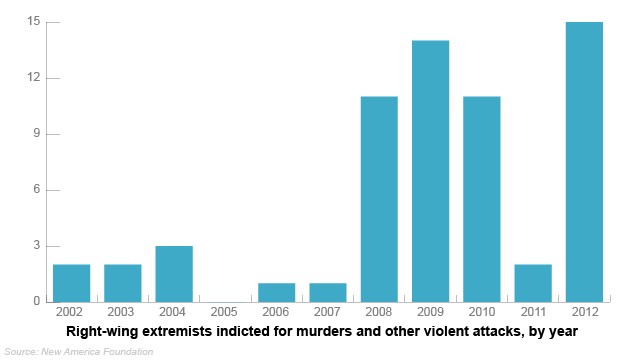
Fifteen right-wing extremists were indicted in 2012 — including six who were involved in a militia in Georgia that accumulated weapons, plotted attacks on the government and murdered a young U.S. Army soldier and his 17-year-old girlfriend, who they suspected were planning to rat out the group to authorities. Seven claimed membership in the anti-government Sovereign Citizens movement and allegedly murdered two policemen in Louisiana. And two had gone on a murderous rampage the previous year, killing four people before they were arrested in California, where they told police they were on their “way to Sacramento to kill more Jews.”
By comparison, in 2012, only six people who subscribed to al Qaeda’s ideology were indicted on terrorism-related charges in the United States, confirming the trend of the past four years, which is a sharp decline in such cases that has been documented by the authors in previous pieces for CNN.com.
It’s about time that politicians who are quick to talk about the threat posed by al Qaeda began paying attention to the shifting nature of the threats.
In comparing the two sources of domestic terrorism, it’s striking that the jihadists charged with crimes were much less likely to have actually carried out a violent attack before they were arrested.
According to data gathered by the New America Foundation, 207 people motivated by al Qaeda’s ideology of violence against American targets have been indicted in the U.S. on terrorism-related charges since 9/11. But only about 5% of those were indicted for their roles in violent incidents, whereas of the 139 right-wing militants indicted in the United States since 9/11, just under half had engaged in a violent attack before they were arrested.
The word “terrorism” is not often used in the charges leveled against these right-wing militants, simply because laws in the United States primarily define terrorism as the work of a designated foreign terrorist group.
But the New America data shows that domestic terrorists motivated by non-jihadist ideologies now pose a similar or even greater threat than those who admire al Qaeda. We define non-jihadist terrorists to be those who carry out or aspire to carry out acts of politically motivated violence, and who fall into the following categories: right-wing extremists who oppose the government, subscribe to a neo-Nazi ideology, or oppose homosexuality or abortion; left-wing extremists; violent animal rights activists; and violent environmental activists.
Over the past several years, acts or plots of non-jihadist terrorism have derived almost entirely from right-wing extremists like the soldiers’ militia in Georgia and the anti-government group in Louisiana. Of the 54 non-jihadist terrorists indicted between 2010 and 2012, 47 were right-wing extremists.
Seven were leftists or animal rights extremists. For instance, three were participants in Occupy Chicago, a leftist political movement, and were indicted on terrorism charges last June for plotting to throw Molotov cocktails at President Barack Obama and other officials during a NATO summit in Chicago. Their lawyers say an undercover government agent had urged them to plot the attacks and build the firebombs.
Since 9/11, at least 29 people living in the United States have been killed by right-wing extremists, while 17 have been killed by jihadist extremists, the majority of whom died in one incident: the 2009 massacre at Fort Hood, Texas. Of course, this story would be much different if al Qaeda recruit Umar Farouk AbdulMutallab had detonated a bomb hidden in his underwear aboard Northwest Flight 253 on Christmas Day 2009.
Stay up to date on the latest opinion, analysis and conversations through social media. Join us at Facebook/CNNOpinion and follow us @CNNOpinion on Twitter. We welcome your ideas and comments.
But it would also be much different if city workers hadn’t spotted a suspicious backpack left on the route of a Martin Luther King Jr. parade in Spokane, Washington, in January 2011, in which white supremacist Kevin Harpham had hidden a bomb packed with fishing weights coated in rat poison. Or if police hadn’t discovered a napalm bomb and several other live, wired explosives in the suburban Cleveland home of right-wing extremist Matthew Fairfield in April 2010.
And of all the people indicted on terrorism charges in the United States since 9/11, no jihadist suspect has ever acquired or attempted to acquire chemical, biological or radiological weapons, while at least 11 right- and left-wing terrorists either obtained such materials or made serious attempts to do so.
In 2003, federal agents discovered “nearly two pounds of a cyanide compound and other chemicals that could create enough poisonous gas to kill everyone inside a space as large as a big-chain bookstore or a small-town civic center” at the home of Judith Bruey and her husband, William Krar, according to an Associated Press report. Alongside the arsenal of chemical weapons were about 60 pipe bombs, several machine guns, remote-controlled bombs disguised as briefcases, and anti-Semitic, anti-black, and anti-government literature, the report said.
Although the feds had been tracking Bruey and Krar in the mid-90s, their case fell through the cracks when the events of 9/11 turned law enforcement’s attention to jihadist terrorism. The couple was only found out when Krar tried to mail a package of counterfeit birth certificates to an anti-government militia member in New Jersey, but got the address wrong. That mistake resulted in a tip to local police.
A report from the Combating Terrorism Center at West Point released in January found that, “In the last few years, and especially since 2007, there has been a dramatic rise in the number of attacks and violent plots originating from people and groups who self-identify with the far-right of American politics.”
In a report that was much criticized at the time, the Department of Homeland Security predicted in 2009 that the nation’s election the previous year of its first black president, along with a severe economic downturn that created disenchantment with the government among poorer populations, had the potential to radicalize greater numbers of right-wing terrorists. The same report warned that increasing numbers of returning military veterans as the wars in Iraq and Afghanistan wind down provided those on the far right with a vulnerable population to target for radicalization.
The New America Foundation data shows that about 20% of the right-wing extremists indicted since 9/11 had spent time in the military.
The New America data supports the Department of Homeland Security’s assessment of the growing threat of right-wing extremist groups. American politicians and the public should become more aware of the fact that while the threat from al Qaeda-inspired terrorists is much diminished at home, the threat from right-wing militants continues to rise.
Follow @CNNOpinion on Twitter.
Join us at Facebook/CNNOpinion.
David Sterman assisted with research for this report.
Takedown: Inside the Hunt for Al Qaeda, New America Foundation, Washington DC
Takedown: Inside the Hunt for Al Qaeda

On September 11, 2001, as Central Intelligence Agency analyst Philip Mudd rushed out of the Eisenhower Executive Office Building next to the White House, he could not anticipate how the terror unleashed that day would change the world of intelligence and his life as a CIA officer. Mudd, now a fellow with the New America Foundation’s National Security Studies Program, would later serve as deputy director of the CIA’s rapidly expanding Counterterrorist Center and then as senior intelligence adviser at the FBI.
Please join the New America Foundation’s National Security Studies for a conversation with Philip Mudd and Peter Bergen about Mudd’s new book, Takedown: Inside the Hunt for Al Qaeda, which provides a first-person account of his role in two organizations that changed dramatically after 9/11. The book also sheds light on the inner workings of the intelligence community during the global counterterror campaign.
Copies of the book will be available for purchase.
Participants
Philip Mudd
Senior Research Fellow, National Security Studies Program, New America Foundation
Author, Takedown: Inside the Hunt for Al Qaeda
Peter Bergen
Director, National Security Studies Program, New America Foundation
Tribal Societies & Counterterrorism in Pakistan, USIP, Washington DC
Tribal Societies & Counterterrorism in Pakistan
In recent months discussions around drone strikes have grown increasingly heated with claims and counter-claims around their legality, morality, and/or effectiveness as a counterterrorism weapon. Amid the heated disputes between diplomats, politicians, lawyers, and civil society activists, the views of those most directly affected by the drone strikes – those living in tribal communities in border regions – have yet to be heard.
Please join the U.S. Institute of Peace on Monday April 15, from 11:00am – 12:30pm for a panel discussion on America’s drone campaign, including their impact on tribal societies.
Speakers
Ambassador Akbar Ahmed, Keynote Address
Ibn Khaldun Chair of Islamic Studies, American University
Author, “The Thistle and the Drone: How America’s War on Terror Became a Global War on Tribal Islam”
Peter Bergen, Panelist
Director, National Security Studies Program, New America Foundation
Hamid Khan, Panelist
Senior Program Officer, Rule of Law Center, U.S. Institute of Peace
Marvin Weinbaum, Moderator
Scholar-in-Residence, Middle East Institute
Who really killed bin Laden? CNN.com
Who really killed bin Laden?
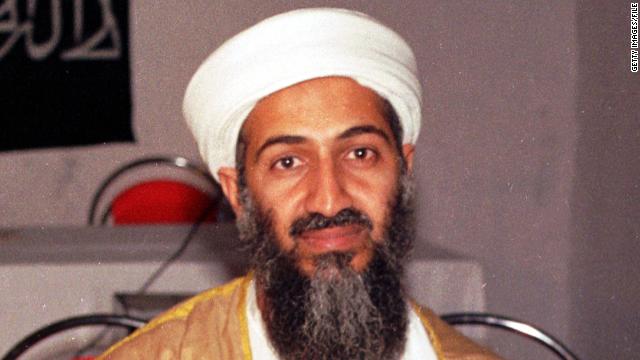 Osama bin Laden was killed by a team of U.S. SEALS on May 2, 2011, at a compound near Abbottabad, Pakistan. Click through to see images of the compound where he spent the last days of his life.
- Peter Bergen: Member of SEAL Team 6 disputes Esquire account of bin Laden raid
- He says there are doubts about the story the “shooter” told to Esquire
- Bergen: Killing was team effort, may not have been connected to bin Laden gun in the room
Editor’s note: Peter Bergen is CNN’s national security analyst, the author of “Manhunt: The Ten-Year Search for bin Laden — From 9/11 to Abbottabad” and a director at the New America Foundation.
The following is a CNN exclusive.
(CNN) — In February, Esquire magazine published a lengthy profile of “The Man Who Killed Osama bin Laden.” The story did not identify the killer by his real name, referring to him only as “the Shooter.”
The Shooter told Esquire that the night bin Laden was killed he had encountered al Qaeda’s leader face-to-face in the top-floor bedroom of the compound in Abbottabad, Pakistan, where bin Laden had been hiding for more than five years.
The Shooter explained that when he found bin Laden in his bedroom the al Qaeda leader was standing up and had a gun “within reach” and it was only then that the Shooter fired the two shots into bin Laden’s forehead that killed him. That account was in conflict with the account from another raid participant in a wildly successful book “No Easy Day.”
Now, another member of the secretive SEAL Team 6, which executed the bin Laden raid, tells CNN the story of the Shooter as presented in Esquire is false. According to this serving SEAL Team 6 operator, the story is “complete B-S.”
Watch more: Peter Bergen examines the differing accounts on “The Lead with Jake Tapper”
SEAL Team 6 operators are now in “serious lockdown” when it comes to “talking to anybody” about the bin Laden raid and say they have been frustrated to see what they consider to be the inaccurate story in Esquire receive considerable play without a response. Phil Bronstein, who wrote the 15,000-word piece about the Shooter for Esquire, was booked on CNN, Fox and many other TV networks after his story came out.
Twenty-three SEALs and their interpreter assaulted the bin Laden compound just after midnight on the morning of May 2, 2011. They shot and killed bin Laden’s two bodyguards, one of bin Laden’s sons and the wife of one of the bodyguards and they also wounded two other women.
The first three SEALs to make it to the top floor of bin Laden’s compound where he was believed to be living were “the point man,” “the Shooter” profiled by Esquire, and Matt Bissonette, the SEAL who wrote “No Easy Day” under the pseudonym Mark Owen.
What actually happened the night of the raid, according to the SEAL Team 6 operator who I interviewed, is that the “point man” ran up the stairs to the top floor and shot bin Laden in the head when he saw what looked like bin Laden poking his head out his bedroom door. The shot gravely wounded al Qaeda’s leader.
Having taken down bin Laden, the point man proceeded to rush two women he found in bin Laden’s bedroom, gathering them in his arms to absorb the explosion in case they were wearing suicide vests, something that was a real concern of those who planned the raid.
Two more SEALs then entered bin Laden’s bedroom and, seeing that al Qaeda’s leader was lying mortally wounded on the floor, finished him off with shots to the chest.
This account of bin Laden’s demise is considerably less heroic than how the Shooter is presented in Esquire, in which he says he shot bin Laden while he was standing up and only after he saw that al Qaeda’s leader had a gun within reach.
The SEAL Team 6 operator who spoke to me says there is no way the Shooter could have seen a gun in bin Laden’s reach because the two guns that were found in bin Laden’s bedroom after al Qaeda’s leader was killed were only found after a thorough search of the room and were sitting on a high shelf above the frame of the door that opened to bin Laden’s bedroom.
The SEAL operator also points out there was a discussion before the raid in which the assault team was told “don’t shoot the guy [bin Laden] in the face unless you have to” because the CIA would need to analyze good pictures of bin Laden’s face for its facial recognition experts to work effectively. Yet the Shooter in the Esquire story says he shot bin Laden on purpose twice in the forehead.
A U.S. official familiar with the details of the raid said what the SEAL Team 6 operator told me about how Bin Laden was killed is in line with what happened, and that account “has it right in my view.”
The SEAL Team 6 operator also tells CNN that the Shooter was “thrown off” of Red Squadron, the core of the SEAL Team 6 group that carried out the bin Laden raid, because he was bragging about his role in the raid in bars around Virginia Beach, Virginia, where SEAL Team 6 is based. In the Esquire article, the Shooter complains he is receiving no pension, since he left the military four years before the minimum 20 required to be eligible.
CNN spoke with Bronstein, the Esquire writer, who says he passed on CNN’s written questions about the Shooter’s role in the bin Laden raid to his story’s main character. The Shooter has not responded to those questions and Bronstein declined to be interviewed on-the-record for this story.
Stephanie Tuck, a spokeswoman for Esquire, said via e-mail, “The Esquire article, ‘The Shooter: The Man Who Killed Osama Bin Laden,’ in the March 2013 issue, is based on information from numerous sources, including members of SEAL Team 6 and the Shooter himself, as well as detailed descriptions of mission debriefs. We stand by our story.”
According to present and former members of SEAL Team 6, the “point man” who fired the shot that likely mortally wounded bin Laden will never “in a million years” speak publicly about his role in the raid. All laud the point man for his courageous decision to throw himself on the two women in bin Laden’s room.
The new account of the night of the bin Laden raid provided by the serving SEAL Team 6 operator is essentially the same as in Bissonnette’s “No Easy Day.” Bissonnette says he was one of the first to run into bin Laden’s bedroom and he saw that the point man’s shots had mortally wounded bin Laden, and Bissonette then shot the dying al Qaeda leader as he lay on the floor.
Present and former members of SEAL Team 6 say they regard Bissonnette as more credible than the Shooter.
In a previous CNN.com story about the Esquire profile, I noted that I was the only outside observer allowed to tour bin Laden’s Abbottabad compound before it was demolished in late February 2012.
During that tour I looked around the bedroom where bin Laden was killed. The Pakistani military officers who were guiding me pointed out a patch of dark, dried blood on the low ceiling of bin Laden’s bedroom. This patch of congealed blood seems to be consistent with the Shooter’s story that he fired two shots at the forehead of a “surprisingly tall terrorist” while he was standing up. At the time, the precise location of bin Laden when he was shot was not a matter of dispute.
But the blood patch could also be consistent with the account that it was the “point man” who first shot bin Laden. The point man is 5 feet 6 inches tall and was shooting upward at a tall man as he poked his head out of his bedroom.
The compound is, of course, now gone, so it is no longer possible to reconstruct what happened the night of the raid based on forensic evidence, although it is possible the Abbottabad Commission, a panel that was appointed by the Pakistani government to look into the raid, could shed some light on this question should its findings ever be publicly released.
Finally, by all accounts, it was a confusing situation the night of the bin Laden raid in Abbottabad. One of the SEAL team’s helicopters had crashed and there was then a firefight with one of bin Laden bodyguards. All the electricity in the bin Laden compound and indeed the surrounding neighborhood was off on a moonless night and the SEALs were all wearing night vision goggles that allowed them only quite limited vision.
What seems incontrovertible is that the point man, the Shooter and Bissonnette were the first three SEALs to assault bin Laden’s bedroom. But to determine exactly which of them killed bin Laden may never be possible.
What is certain is that it was a team effort.
Five days after the bin Laden raid, members of the SEAL team who killed al Qaeda’s leader briefed President Obama. According to those in the room, the SEAL team commander explained to the president, “If you took one person out of the puzzle, we wouldn’t have the competence to do the job we did; everybody’s vital. It’s not about the guy who pulled the trigger to kill bin Laden, it’s about what we all did together.”
CFR 4/16 NY Screening of HBO Documentary “Manhunt”
CFR 4/16 NY Screening of HBO Documentary “Manhunt”
COUNCIL ON FOREIGN RELATIONS
—————————————————–
NEW YORK OFFICE
58 EAST 68TH STREET
NEW YORK, NY 10065
Email: meetings@cfr.org
Meetings Response Line: 212.434.9600
Meetings Response Fax: 212.434.9804
New York Meetings Film Screening
CFR and HBO invite you to a screening and discussion of a new HBO Documentary film:
Manhunt
On May 2, 2011, Osama bin Laden was killed by Navy SEALs in a compound in Abbottabad, Pakistan. The raid lasted forty minutes, but the hunt for bin Laden took two decades. The search began with a team of mostly female CIA analysts, known in intelligence circles as the Sisterhood, who were trying to take down bin Laden before most even knew his name. Piecing together scraps of intelligence, they uncovered al-Qaeda and warned Washington of this new impending threat. Their warnings were repeatedly ignored until the 9/11 attacks, when all the rules changed.
Greg Barker
Director, Manhunt
Nada Bakos
Former Targeting Officer, Central Intelligence Agency
Peter Bergen
Author, Manhunt: The Ten-Year Search for Bin Laden – from 9/11 to Abbottabad
Fareed Zakaria
Host, CNN’s Fareed Zakaria GPS; Editor-at-Large, TIME Magazine
Presiding
Tuesday, April 16, 2013
5:45 to 6:30 p.m. Light Supper
6:30 to 8:15 p.m. Screening
8:15 to 9:00 p.m. Discussion
at
the Harold Pratt House
58 East 68th Street
New York, New York 10065
This meeting will be on the record. Please note special timing.
To attend, please use the one-click link that will automatically register you for this event: REGISTER
or respond to this email, fax the attached form to CFR New York Meetings at 212.434.9804, or call the Meetings Response Line at 212.434.9600.
This invitation is not transferable.
Council meetings are open only to members unless otherwise noted.
Hunting Osama bin Laden, Cosmos Club, Washington DC
|
Program Committee Dinner – Peter Bergen
|
Chicago event
FEATURED BOOK

All the Presidents’ Wars:
RECENT ARTICLES

UPCOMING EVENTS
Tuesday, December, 08, 2026
USC DC, All the Presidents’ Wars, book event
Tuesday, January, 12, 2027
NY Historical, All the Presidents’ Wars: 25 Years of America’s War on Terror Featuring: Peter Bergen, David M. Rubenstein (moderator), NYC
Wednesday, February, 10, 2027
Metropolitan Club, DC, All the Presidents’ Wars event
RECENT FILM AND TV SERIES
GHOSTS OF BEIRUT: SHOWTIME
The Fall of Osama bin Laden, National Geographic

BIN LADEN'S HARD DRIVE, NATIONAL GEOGRAPHIC

