Abandon Afghanistan? A dumb idea
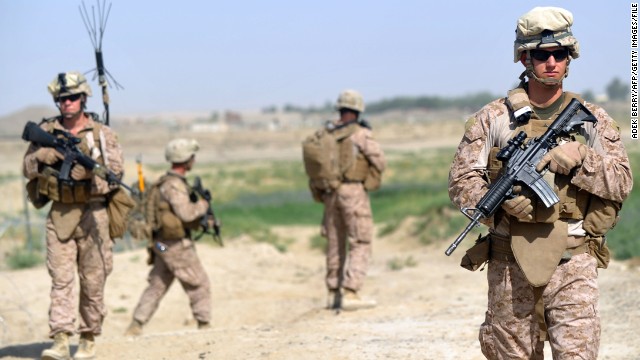
- White House aide suggested all U.S. troops could be withdrawn from Afghanistan
- Peter Bergen said the idea would be dangerous and send the wrong message
- He says U.S. has abandoned Afghanistan before and saw the rise of the Taliban
- Bergen: U.S. is seeking agreement that military will have immunity from prosecution
Editor’s note: Peter Bergen is CNN’s national security analyst and the author of “Manhunt: The Ten-Year Search for bin Laden, from 9/11 to Abbottabad.”
(CNN) — Afghan President Hamid Karzai will meet with President Barack Obama on Friday to discuss the post-2014 American presence in Afghanistan.
The U.S. military has already given Obama options under which as few as 6,000 or as many as 20,000 soldiers would remain in Afghanistan after 2014. Those forces would work as advisers to the Afghan army and mount special operations raids against the Taliban and al Qaeda.
But on Tuesday, Ben Rhodes, the White House’s deputy national security adviser, told reporters that the Obama administration is mulling the idea of removing all U.S. troops from Afghanistan after the NATO combat mission finishes at the end of 2014.
This may be a negotiating ploy by the Obama administration as it gets down to some hard bargaining with Karzai, who has long criticized many aspects of the U.S. military presence and who is likely to be reluctant to accede to a key American demand: That any U.S. soldiers who remain in Afghanistan after 2014 retain immunity from prosecution in the dysfunctional Afghan court system. It was this issue that led the U.S. to pull all its troops out of Iraq in December, 2011 after failing to negotiate an agreement with the Nuri al-Maliki government.
Or this may represent the real views of those in the Obama administration who have long called for a much-reduced U.S. presence in Afghanistan, and it is also in keeping with the emerging Obama doctrine of attacking al Qaeda and its allies with drones but no American boots on the ground. And it certainly aligns with the view of most Americans, only around a quarter of whom now support the war in Afghanistan, according to a poll taken in September.
In any case, zeroing out U.S. troop levels in the post-2014 Afghanistan is a bad idea on its face — and even raising this concept publicly is maladroit strategic messaging to Afghanistan and the region writ large.
Why so? Afghans well remember something that most Americans have forgotten.
After the Soviet Union withdrew from Afghanistan, something that was accomplished at the cost of more than a million Afghan lives and billions of dollars of U.S. aid, the United States closed its embassy in Afghanistan in 1989 during the George H. W. Bush administration and then zeroed out aid to one of the poorest countries in the world under the Clinton administration. It essentially turned its back on Afghans once they had served their purpose of dealing a deathblow to the Soviets.
As a result, the United States had virtually no understanding of the subsequent vacuum in Afghanistan into which eventually stepped the Taliban, who rose to power in the mid-1990s. The Taliban granted shelter to Osama bin Laden and his al Qaeda organization from 1996 onward.
After the overthrow of the Taliban, a form of this mistake was made again by the George W. Bush administration, which had an ideological disdain for nation building and was distracted by the Iraq War, so that in the first years after the fall of the Taliban, only a few thousand U.S. soldiers were stationed in Afghanistan.
The relatively small number of American boots on the ground in Afghanistan helped to create a vacuum of security in the country, which the Taliban would deftly exploit, so that by 2007, they once again posed a significant military threat in Afghanistan.
In 2009, Obama ordered a surge of 30,000 troops into Afghanistan to blunt the Taliban’s gathering momentum, which it has certainly accomplished.
But when Obama announced the new troops of the Afghan surge, most media accounts of the speech seized on the fact that the president also said that some of those troops would be coming home in July 2011.
This had the unintended effect of signaling to the Taliban that the U.S. was pulling out of Afghanistan reasonably soon and fit into the longstanding narrative that many Afghans have that the U.S. will abandon them again.
Similarly, the current public discussion of zero U.S. troop presence in Afghanistan after 2014 will encourage those hardliner elements of the Taliban who have no interest in a negotiated settlement and believe they can simply wait the Americans out.
It also discourages the many millions of Afghans who see a longtime U.S. presence as the best guarantor that the Taliban won’t come back in any meaningful way and also an important element in dissuading powerful neighbors such as Pakistan from interference in Afghanistan’s internal affairs.
Instead of publicly discussing the zero option on troops in Afghanistan after 2014, a much smarter American messaging strategy for the country and the region would be to emphasize that the Strategic Partnership Agreement that the United States has already negotiated with Afghanistan last year guarantees that the U.S. will have some form of partnership with the Afghans until 2024.
In this messaging strategy, the point should be made that the exact size of the American troop presence after 2014 is less important than the fact that U.S. soldiers will stay in the country for many years, with Afghan consent, as a guarantor of Afghanistan’s stability.
The United States continues to station thousands of troops in South Korea more than five decades after the end of the Korean War. Under this American security umbrella, South Korea has gone from being one of the poorest countries in the world to one of the richest.
It is this kind of model that most Afghans want and the U.S. needs to provide so Afghanistan doesn’t revert to the kind of chaos that beset it in the mid-1990s and from which the Taliban first emerged.
America’s Indefinitely Detained, New America Foundation, Washington DC

|
||||||||


Ecological Cooperation in South Asia: The Way Forward, New America Foundation, Washington DC
Ecological Cooperation in South Asia: The Way Forward
The greatest economic damage endured by South Asia since 2001 has not been due to terrorism, but rather due to environmental disasters such as the Indus floods of 2010, seasonal water shortages, and drought. Although events like these might not be preventable, their human impact can certainly be mitigated.
New America Foundation’s National Security Studies Program invites you to a conversation with Saleem H. Ali, author of a recemtly published New America paper on ecological cooperation in South Asia. Ali will join Peter Bergen to discuss the potential this regional approach has to encourage greater cooperation between Pakistan and India.
Participants
Featured Speakers
Saleem H. Ali
Professor of Politics and International Studies, University of Queensland, Australia
Peter Bergen
Director, National Security Studies Program, New America Foundation
Event Time and Location
Washington, DC 20036
John Brennan, Obama’s drone warrior, CNN.com
John Brennan, Obama’s drone warrior
BYLINE: By Peter Bergen, CNN National Security Analyst
LENGTH: 1272 words
DATELINE: (CNN)
Editor’s note: Peter Bergen is CNN’s national security analyst and the co-editor of the just-published book “Talibanistan: Negotiating the Borders between Terror, Politics and Religion.” Jennifer Rowland is a program associate at the New America Foundation, where Bergen is a director.
(CNN) — President Barack Obama has nominated his top counterterrorism adviser, John Brennan, to be the next director of the CIA.
If there is an emerging Obama doctrine to deal with the threat from al Qaeda and its allies, it is clearly a rejection of the use of conventional military forces and a growing reliance instead on the use of drones and U.S. Special Operations Forces — and Brennan has been central to Obama’s policy.
In an April 30 speech at the Woodrow Wilson Center in Washington, Brennan laid out the rationale for the drone policy in more detail than any administration official had done publicly hitherto. He asserted that the drone strikes are legal both under the Authorization for Use of Military Force passed by Congress after the September 11 attacks and because, “There is nothing in international law that bans the use of remotely piloted aircraft for this purpose or that prohibits us from using lethal force against our enemies outside of an active battlefield, at least when the country involved consents or is unable or unwilling to take action against the threat.”
This does not appear to be the view of Ben Emmerson, U.N. special rapporteur on counterterrorism and human rights, who announced plans at Harvard Law School in October to launch an investigation into U.S. drone attacks and the extent to which they cause civilian casualties.
One of Brennan’s most significant legacies in the four years he has been the president’s principal adviser on terrorism is the American drone campaign against al Qaeda and its allies in countries such as Pakistan and Yemen — one that has shifted focus significantly in the past year or so.
On Thursday, a CIA drone strike in the South Waziristan tribal region of Pakistan killed Mullah Nazir, a leading Taliban commander. That strike garnered considerable coverage in media outlets around the world and by U.S.-based news organizations such as The New York Times and CNN.
The same day a CIA drone killed three suspected Al Qaeda in the Arabian Peninsula militants near the town of Rada’a in Yemen. There was scant media coverage of this attack.
Yet Thursday’s dueling strikes in Pakistan and Yemen are emblematic of a quiet and largely unheralded shift in the way that the CIA conducts its operations.
The accompanying bar chart (click on it to enlarge) does a good job of representing this shift. The red bars are U.S. strikes in Pakistan and the gold bars are U.S. strikes in Yemen based on data collected from reliable news reports by the New America Foundation.
(Due to the difficulty of distinguishing between what may be a U.S. drone strike or an airstrike by the Yemeni air force, the true number of American drone attacks in Yemen could be even higher than is shown in this chart.)
One possible reason for the decline of drone strikes in Pakistan is that the CIA is simply running out of targets; at least 36 militant leaders have been reported killed by drones in Pakistan since Obama took office, according to the New America Foundation data.
The growing criticism of the drone program in Pakistan has also surely had some role in the Obama administration’s decision to scale back the intensity of the drone campaign there. In April the Pakistani Parliament formally voted for the first time to end any kind of approval for the CIA drone program.
Unlike in Pakistan where political leaders have almost universally — at least in public — condemned the strikes, Yemeni President Abed Rabbo Mansour Hadi said in September during a speech at the United Nations that he personally signs off on all U.S. drone strikes in Yemen, and that they hit their targets accurately, asserting, “The drone technologically is more advanced than the human brain.”
The steadily increasing rate of drone strikes in Yemen over the past two years shows that the CIA’s drone war — rather than declining — is shifting from one part of the world to another.
Brennan has been the key architect of this policy. The Arabic-speaking Brennan, who was once CIA station chief in Saudi Arabia, in a sense became the “case officer” for the Yemen “account,” traveling to Yemen seven times since al Qaeda in the Arabian Peninsula sent the so-called underwear bomber to try and bring down Northwest Flight 235 over Detroit on Christmas Day 2009.
How effective has the subsequent U.S. campaign against this group been? Al Qaeda in the Arabian Peninsula has not tried to launch an attack on a target in the West since its abortive attempt to bring down cargo planes bound for the United States more than two years ago, so the campaign does appear to have suppressed the group’s abilities to attack overseas.
According to a count by New America, at least 28 of the group’s leading members have been killed in drone strikes, including the notorious American-born cleric Anwar al-Awlaki, who played an operational role in al Qaeda in the Arabian Peninsula, for instance, offering instruction to the underwear bomber.
Balanced, against this is the fact that some of the popular resentment against the U.S, drone campaign that has long been the case in Pakistan is beginning to emerge in Yemen. On Friday, dozens of armed tribesmen took to the streets of Rada’a protesting the drone strike that had taken place a day earlier. One of the tribesman told Reuters that seven civilians had been killed in that drone strike.
And the drone program in Yemen is also stirring some of the same controversy internationally that the strikes in Pakistan have done for many years. Human rights groups in the United States are particularly aggrieved by the targeted killing of al-Awlaki, an American citizen who was killed by a drone along with his teenage son.
Gregory Johnsen, who has written an authoritative book about al Qaeda in the Arabian Peninsula, “The Last Refuge: Yemen, al-Qaeda, and America’s War in Arabia,” says the group has grown from around 200 fighters to more than 1,000 and that the drone campaign has helped it to recruit these new fighters.
Christopher Swift, a Georgetown University academic, conducted interviews of tribal leaders in Yemen in June 2012. Swift found that it wasn’t the drone campaign that had swelled the ranks of al Qaeda in the Arabian Peninsula but rather because the group was able to offer jobs to desperately poor young men. Yemen is the poorest country in the Arab world.
And drone strikes are now reportedly being considered by the Obama administration in the West African nation of Mali, where an al Qaeda affiliate has largely taken control of the north of the country, an area the size of France.
Brennan has been at the center of the decisions about the use of drones in Pakistan and Yemen and their possible use in Mali, and all of this surely will be a matter of discussion during his forthcoming nomination hearings.
A road map to what Brennan will likely say about drones in his nomination hearing is provided by his April speech at the Woodrow Wilson Center in which he explained that drone strikes are “ethical” because of “the unprecedented ability of remotely piloted aircraft to precisely target a military objective while minimizing collateral damage; one could argue that never before has there been a weapon that allows us to distinguish more effectively between an al Qaeda terrorist and innocent civilians.”
Follow @CNNOpinion on Twitter.
Join us at Facebook/CNNOpinion.
Oxford University
Senior senators slam ‘Zero Dark Thirty’ torture scenes, CNN.com
Senior senators slam ‘Zero Dark Thirty’ torture scenes

- Sens. Feinstein, McCain, Levin send letter calling new film “grossly inaccurate”
- Letter adds to controversy over depiction of torture as a key to finding bin Laden, Bergen says
- Senate committee has approved 6,000-page classified report on CIA interrogations program
- Bergen says as much as possible of that report should be released to the public
Editor’s note: Peter Bergen is a CNN national security analyst and author of “Manhunt: The Ten-Year Search for bin Laden, from 9/11 to Abbottabad.”
(CNN) — On Wednesday, three senior U.S. senators sent Michael Lynton, the CEO of Sony Pictures, a letter about “Zero Dark Thirty,” the much-discussed new movie about the hunt for Osama bin Laden, which described the film as “grossly inaccurate and misleading.”
In the letter, Senate Intelligence Committee Chairman Dianne Feinstein, D-California, Senate Armed Services Committee Chairman Carl Levin, D-Michigan, and Sen. John McCain, R-Arizona, expressed their “deep disappointment” in the movie’s depiction of CIA officers torturing prisoners, which “credits these detainees with providing critical lead information” about the courier who led the CIA to bin Laden’s hiding place in northern Pakistan.
The senators point out that the filmmakers of “Zero Dark Thirty” open the movie with the words that it is “based on first-hand accounts of actual events.” The film then goes on, the senators say, to give the clear implication “that the CIA’s coercive interrogation techniques were effective in eliciting important information related to a courier for Usama Bin Laden.”
The senators write that this is not supported by the facts: “We have reviewed CIA records and know that this is incorrect.”
Last week, the Senate Intelligence Committee voted to sign off on the findings of its three-year study of the CIA’s detention and interrogation program, during the course of which the committee’s staff reviewed more than 6 million pages of records about the program.
Based on the findings of that review, Sens. Feinstein and Levin had released a statement eight months ago that said, “The CIA did not first learn about the existence of the Usama Bin Laden courier from CIA detainees subjected to coercive interrogation techniques. Nor did the CIA discover the courier’s identity from detainees subjected to coercive techniques. … Instead, the CIA learned of the existence of the courier, his true name and location through means unrelated to the CIA detention and interrogation program.”
In their letter to Sony, the three senators write, “(W)ith the release of Zero Dark Thirty, the filmmakers and your production studio are perpetuating the myth that torture is effective. … We believe that you have an obligation to state that the role of torture in the hunt for Usama Bin Laden is not based on the facts.”
Requests from Sony Pictures for comment on the senators’ letter yielded a response referring to a statement that the film’s director Kathryn Bigelow and screenwriter Mark Boal had released last week:
“This was a 10-year intelligence operation brought to the screen in a two-and-a-half-hour film. We depicted a variety of controversial practices and intelligence methods that were used in the name of finding bin Laden. The film shows that no single method was necessarily responsible for solving the manhunt, nor can any single scene taken in isolation fairly capture the totality of efforts the film dramatizes. One thing is clear: the single greatest factor in finding the world’s most dangerous man was the hard work and dedication of the intelligence professionals who spent years working on this global effort. We encourage people to see the film before characterizing it.
“Zero Dark Thirty” does indeed show many scenes of the various forms of sleuthing at the CIA that were necessary to track down al Qaeda’s leader.
But the statement from the filmmakers does not address the fact that eight months ago, the chairman of the Senate Intelligence Committee had publicly said that based on an exhaustive investigation, there was no evidence that coercive interrogations helped lead to bin Laden’s courier — which is clearly what the film suggests, no matter what retrospective gloss the filmmakers now wish to apply to the issue.
Nor does the statement indicate if Sony plans to put a disclaimer at the beginning of “Zero Dark Thirty” explaining that the role of coercive interrogations in tracking down bin Laden that is shown in the film is not supported by the facts.
As I outlined in a piece on CNN.com 10 days ago assessing the role that coercive interrogations might have played in the hunt for bin Laden, about half an hour of the start of “Zero Dark Thirty” consists of scenes of a bloodied al Qaeda detainee strung to the ceiling with ropes who is beaten; forced to wear a dog collar while crawling around attached to a leash; stripped naked in the presence of a female CIA officer; blasted with heavy metal music so he is deprived of sleep; forced to endure multiple crude waterboardings; and locked into a coffin-like wooden crate.
These are the scenes that will linger with filmgoers, far more than the scene in the movie where two CIA analysts discuss what will prove to be a key lead to bin Laden that surfaces in an old file. Brutal interrogations, of course, make for a better movie than a discussion at the office.
It is only after systematic abuse by his CIA interrogators in “Zero Dark Thirty” that the al Qaeda detainee is tricked into believing that he has already given up key information, and he starts cooperating and tells them about a man known as Abu Ahmed al-Kuwaiti, who ultimately proves to be bin Laden’s courier.
“Zero Dark Thirty” opened Wednesday in New York and Los Angeles and will open nationwide in the second week in January.
Let’s hope that the attention that “Zero Dark Thirty” has directed to the issue of what kind of intelligence was derived from the CIA’s coercive interrogations will help to put pressure on the White House and the CIA to release to the public as much as possible of the presently classified 6,000-page report by the Senate Intelligence Committee that examines this issue.
_____________
Full disclosure: Along with other national security experts, as an unpaid adviser I screened an early cut of “Zero Dark Thirty.” We advised that al Qaeda detainees held at secret CIA prison sites overseas were certainly abused, but they were not beaten to a pulp, as was presented in this early cut. Screenwriter Mark Boal told CNN as a result of this critique, some of the bloodier scenes were “toned down” in the final cut. I also saw this final cut of the film. Finally, HBO is making a theatrical release documentary which will be out in 2013 based on my book about the hunt for bin Laden entitled “Manhunt.”
Gun violence is a national security issue, CNN.com
Gun violence is a national security issue

- Peter Bergen: Gun violence is sometimes called a public health issue in the U.S.
- He says it also amounts to a national security issue, taking much larger toll than terrorism
- Civilians are more likely to get killed in some U.S. cities than Afghan civilians are, he says
- Bergen: Medical techniques taken from Afghan war being used to save civilians in U.S.
Editor’s note: Peter Bergen is a CNN national security analyst and author of “Manhunt: The Ten-Year Search for bin Laden, from 9/11 to Abbottabad” and “The Longest War: America’s Enduring Conflict with al-Qaeda.”
(CNN) — The proliferation of semiautomatic weapons in the hands of Americans of the types that were used in the Newtown massacre is sometimes framed as a public health issue in the United States.
There is considerable merit to the notion of treating gun violence as a public health matter. After all, homicides — around 70% of which are accomplished with firearms in the United States according to an authoritative study by the United Nations — are the 15th leading cause of death for Americans.
But framing gun control as a public health issue doesn’t quite do justice to the problem. It’s probably more or less inevitable that most Americans will die of cancer or a heart attack, but why is it even plausible that so many Americans in elementary schools, colleges, movie theaters and places of worship should die at the hands of young men armed with semiautomatic weapons?
Americans generally regard themselves as belonging to an exceptional nation. And in terms of living in a religiously tolerant and enormously diverse country, Americans can certainly take some justified pride.
That tolerant pluralism was on display Sunday night at the interfaith memorial service for the 27 victims in Newtown, which featured priests from several Christian denominations, clerics of the Muslim and Baha’i faiths as well as a rabbi, a memorial that was led by the country’s first African American president. But there is another side to American exceptionalism that many Americans seem strangely unable to recognize: Americans kill each other with guns at rates that are unheard of in other advanced industrialized countries. Britain, with around a fifth of the population of the United States, had 41 gun murders in 2010 while the States had around 10,000.
The scale of this death toll really resembles a national security problem as much it does a public health issue.
Consider that jihadist terrorists have only been able to kill 17 Americans in the United States since 9/11. Meanwhile, some 88,000 Americans died in gun violence from 2003 and 2010, according to the U.N. study.
That means that in the past decade, an American residing in the United States was around 5,000 times more likely to be killed by a fellow citizen armed with a gun than by a terrorist inspired by Osama bin Laden.
Consider also that there are cities in the United States today that exact a higher death toll from violence than the civilian death toll in the war in Afghanistan.
Last year, some 3,000 Afghan civilians died in the Afghan War out of a population of 30 million, which makes the civilian death rate from the Afghan war 1 in 10,000.
Yet residents of New Orleans are being killed at a rate that is six times that of Afghan civilians killed in that war. New Orleans had 199 murders last year, or 6 for every 10,000 residents.
Washington, D.C., where I write this from, had 108 murders last year or 2 for every 10,000 residents, making it twice as deadly as the Afghan War is for civilians.
The numbers of Americans dying in homicidal gun violence would be even worse if it weren’t for the fact that some of the techniques the U.S. military has learned on the battlefields of Iraq and Afghanistan have been imported into American hospitals. So while the number of gun-related violent incidents has actually almost doubled in the past decade, you are more likely to survive a gun shot today than would have been the case even a few years ago, as the Wall Street Journal recently reported.
The number of deaths caused by semiautomatic pistols and assault rifles are not broken out in tabulations of the total deaths caused by guns in the U.S., but a recent study by the magazine Mother Jones found that in the 62 mass shootings in the United States carried out during the past three decades the vast majority were carried out with semiautomatic pistols or assault rifles, most of which had been obtained legally.
Legislation to control the spread of deadly semiautomatic weapons will not, of course, eliminate such violence. Critics of efforts to tighten gun laws can point to Norway, which has very tough gun control laws, and yet Anders Breivik was able to acquire semiautomatic weapons and kill dozens of people in and around Oslo last year.
But Breivik was, in fact, an exceptional case and the murder rate in Norway is still eight times lower than in the U.S.
The Second Amendment is, of course, very much part of the American fabric. But the intent of the founders was that the amendment protected the rights of citizens to bear arms in a militia for their collective self-defense.
Today, we are not likely to need to organize local militias for our defense now we have something called the Pentagon.
Semiautomatic handguns and semiautomatic assault rifles that fire many rounds in a minute were not envisaged by the founders nor do they do much more to enhance self-defense than an ordinary pistol or rifle.
Such semiautomatic weapons also are not much use for hunting deer and the like. But they are very good for killing lots of Americans quickly.
If the murder of 20 small children in Newtown is not an opportunity for the country to challenge the theological position of the gun lobby that the Second Amendment allows pretty much any American to possess military-style weaponry, when will that day ever come?
A feminist film epic and the real women of the CIA, CNN.com
A feminist film epic and the real women of the CIA
By Peter Bergen, CNN National Security Analyst
updated 5:49 PM EST, Thu December 13, 2012
STORY HIGHLIGHTS
The new film “Zero Dark Thirty” highlights the role of female CIA analysts
Peter Bergen says the film gets it right: Women played important role in bin Laden hunt
The head of the CIA bin Laden unit, formed in 1995, relied on female analysts
Bergen: The CIA has undergone a major cultural shift
Editor’s note: Peter Bergen is CNN’s National Security Analyst and author of “Manhunt: The Ten-Year Search for bin Laden, from 9/11 to Abbottabad,” which this story, in part, draws upon.
(CNN) — The star of the new film “Zero Dark Thirty” is a flame-haired female CIA analystMaya (played by Jessica Chastain) who is obsessed with finding Osama bin Laden.
Maya sits in on brutal interrogations of al Qaeda detainees without a qualm and is constantly berating her male bosses to do more to find the leader of al Qaeda. And Maya is there at the end of the movie, identifying bin Laden’s body shortly after a Navy SEAL team has killed him in Abbottabad in northern Pakistan.
Maya doesn’t have a significant other or even much of a social life to speak of. The only friend she has is another female CIA analyst, Jessica, a CIA official of a slightly older generation who is almost as obsessed as Maya is about hunting down the leaders of al Qaeda.
When men come into Maya’s life their only significance is to act as enablers to get what she wants: the head of Osama bin Laden. Or men are obstructions to that goal to be rolled over.
The CIA station chief in Pakistan won’t give Maya the agents on the ground to follow the man she believes is bin Laden’s courier, so she screams obscenities at him and threatens him with a congressional investigation. She gets what she wants.
During a meeting with CIA director Leon Panetta, Panetta’s top deputy tells his boss the chance of bin Laden being in Abbottabad is 60%. From the back of the room, Maya chimes in to say that the odds are actually 100%.
When Panetta, played with a sly charm by James Gandolfini, asks Maya whom exactly she is to make this assessment, she explains that she is the person who has found bin Laden, although she puts this in far more colorful language than can be reproduced here.
According to a Washington Post profile by Greg Miller, the CIA analyst who most resembles the real-life Maya is in her 30s and was in Pakistan as the hunt for bin Laden heated up in 2010. Just as Maya is portrayed in the film, she has sharp elbows and was singlemindedly focused on bringing the leader of al Qaeda to justice.
“Zero Dark Thirty’s” director, Kathryn Bigelow is, of course, the first woman to win an Oscar for best director, for the 2008 film “Hurt Locker.” Previously, the stars of Bigelow’s movies have been men playing roles that are quintessentially macho; U.S. Army bomb techs in Iraq in “Hurt Locker” or Soviet submariners during the Cold War in “K-19: The Widowmaker.”
Now that she has placed a woman at the center of “Zero Dark Thirty,” how faithfully does Bigelow’s reworking of the war on terror as a feminist epic reflect the historical record?
Real operative of ‘Zero Dark Thirty’ ‘Zero Dark Thirty’ torture controversy Kathryn Bigelow talks ‘Zero Dark Thirty’
In many ways, it fits it pretty well. The prominent role that women played in the hunt for bin Laden is reflective of the largest cultural shift at the CIA of the past two decades. The veteran CIA operative Glenn Carle, who is retired, recalls, “When I started, there were to my knowledge four senior operation officers who were females, and they had to be the toughest SOBs in the universe to survive. And the rest of the women were treated as sexual toys.”
Now popular culture is catching up with reality. Not only does “Zero Dark Thirty” star a female CIA officer as the person who finally found bin Laden, but the award-winning fictional television series “Homeland” is built around the character of Carrie Mathison, played by Claire Danes as a determined CIA officer with a gift for finding clues to the activities of a terrorist leader.
From the founding of the bin Laden unit at CIA in December 1995 onward, female analysts played a key role in the hunt for al Qaeda’s leaders.
The founder of that unit, Michael Scheuer, explains, “(Female analysts) seem to have an exceptional knack for detail, for seeing patterns and understanding relationships, and they also, quite frankly, spend a great deal less time telling war stories, chatting and going outside for cigarettes than the boys. If I could have put up a sign saying, ‘No boys need apply,’ I would’ve done it.”
When Scheuer set up the bin Laden unit, Carle remembers the reaction among his fellow operations officers was, “What’s his staff? It’s all female. It was just widely discussed at the time that it’s a bunch of chicks. So, the perspective was frankly condescending and dismissive. And Scheuer (and his staff) essentially were saying ‘You guys need to listen to us; this is really serious. This is a big deal, and people are going to die.’ And of course they were right.”
Jennifer Matthews, the CIA officer who provides something of a model for “Jessica” in “Zero Dark Thirty,” was one of Scheuer’s top deputies, focused on the all-important Afghanistan-Pakistan border region.
Matthews’ work was critical to the spring 2002 arrest of Abu Zubaydah, a key al Qaeda logistician, who provided the first information that it was Khalid Sheikh Mohammed who had masterminded the 9/11 attacks. This came as a complete surprise to the CIA, where Khalid Sheikh Mohammed had been largely seen as a peripheral figure in al Qaeda.
Like the Maya character in “Zero Dark Thirty,” Matthews sat in on coercive interrogation sessions in secret CIA prisons overseas. According to “The Triple Agent”, a deeply reported book by Washington Post reporter Joby Warrick, Matthews flew to Thailand for Abu Zubaydah’s interrogation and witnessed him being waterboarded.
Matthews graduated from Cedarville University, a small Christian college in Ohio, in 1986 with a degree in broadcast journalism and joined the CIA just as the Cold War was ending. In the mid-1990s she was one of the first CIA officers who started worrying about the plans of a man named “Osama bin Laden.”
A devout Christian and the mother of three children, Matthews knew Islamic history cold, and how al Qaeda believed it fit into that history, which made her a formidable interrogator of al Qaeda detainees, some of whom found the fact that she was a well-informed female particularly disconcerting.
Another female intelligence analyst who spotted the threat from al Qaeda long before anyone else is Gina Bennett, who in August 1993, while working at the Bureau of Intelligence and Research inside the State Department, wrote a paper that was the first strategic warning about Bin Laden.
When bin Laden was expelled to Afghanistan in May 1996 from the Sudanese capital of Khartoum, Bennett also wrote a prescient analysis, warning, “His prolonged stay in Afghanistan — where hundreds of ‘Arab Mujahidin’ receive terrorist training and key extremist leaders often congregate — could prove more dangerous to U.S. interests in the long run than his three-year liaison with Khartoum.”
In the years after the attacks on New York and Washington, Bennett helped draft key National Intelligence Estimates on the state of al Qaeda. Bennett is still at the CIA and has been publicly identified on a number of occasions, which is why her real name is used here.
After 9/11, women continued to play a key role in the hunt for bin Laden. In 2005, a CIA analyst named Rebecca (a pseudonym), who had worked the bin Laden “account” for years, wrote an important paper titled “Inroads” that would help guide the hunt in the years to come.
Given the absence of any real leads on bin Laden, how could you plausibly find him? she asked. Rebecca then came up with four “pillars” upon which the search had to be built. The first pillar was locating al Qaeda’s leader through his courier network. The second was locating him through his family members, either those who might be with him or anyone in his family who might try to get in touch with him. The third was communications that he might have with what the CIA termed AQSL (al Qaeda senior leadership). The final pillar was tracking bin Laden’s occasional outreach to the media.
These four pillars became the “grid” through which CIA analysts would from now on sift all the intelligence that had been gathered on al Qaeda that might be relevant to the hunt for bin Laden, and also helped to inform the collection of new intelligence.
An especially promising lead in the search for al Qaeda’s leadership came four years after Rebecca wrote her memo and it came in the form of Humam al-Balawi, a Jordanian pediatrician in his early 30s who had become radicalized by the Iraq war and had subsequently become an important voice on militant jihadist websites.
Balawi was arrested in early 2009 by Jordan’s General Intelligence Department, with which the CIA enjoyed exceptionally close relations. After offering the doctor the possibility of earning substantial sums of money, General Intelligence Department officials believed they had “turned” Balawi, who said he was willing to go to the tribal regions of Pakistan to spy on the Taliban and al Qaeda.
However, no one at the CIA had met Balawi, and pressure was mounting to get some agency eyes on him. That task fell to Jennifer Matthews, who had worked for the bin Laden unit almost from its inception. Matthews arranged for the Jordanian doctor to slip over the border from Pakistan’s tribal areas to meet with her and a considerable team from the CIA in Khost in eastern Afghanistan.
Determined that this first meeting with this golden source be warm and friendly, Matthews did not have Balawi searched when he entered the CIA section of Forward Operating Base Chapman in Khost on December 30, 2009. She had even arranged for a cake to be made for Balawi, whose birthday had been only five days earlier.
But there was to be no opportunity to celebrate. As he met with the CIA team, the Jordanian doctor began muttering to himself in Arabic, reached inside his coat, and then detonated a bomb that killed Matthews, 45, and six other CIA officers and contractors who had gathered to meet him.
Balawi also died in the attack. The doctor from Jordan had not been spying on al Qaeda’s leaders; he had, in fact, been recruited by them.
“Zero Dark Thirty” does a brilliant job of reconstructing this tragic episode.
In the movie, the death at the hands of al Qaeda of her friend Jessica, the character who is modeled to some degree on the real-life Jennifer Matthews, makes Maya all the more determined to track bin Laden down. She explains, “I believe I was spared so I could finish the job.”
“Zero Dark Thirty” is a movie and that meant screenplay writer Mark Boal and Bigelow had to make what Boal told CNN were “creative choices.” The key creative choice was to place a female CIA analyst at the center of the film. As we have seen from the historical record, it’s a very defensible choice.
That said, there were scores of other analysts and operators at the CIA of both sexes who played important roles in the hunt for bin Laden. The founder of the bin Laden unit at the CIA was Michael Scheuer, and before 9/11 he pushed obsessively for operations that would eliminate bin Laden. So great was his zeal that Scheuer would regularly arrive at work at 3 a.m.
After 9/11, John (a pseudonym), a CIA analyst with the tall, lanky physique of the avid basketball player he had been in both high school and college, played a critical role in the hunt for bin Laden.
John joined the CIA’s Counterterrorism Center in 2003 and stayed there, even though he could have taken promotions to go elsewhere, because he was fixated on finding bin Laden. He had pushed for more CIA drone strikes in the tribal regions of Pakistan in 2007, when he noticed that more Westerners were showing up there for terrorist training.
Like the Maya character in “Zero Dark Thirty,” John was consistently certain that bin Laden was living in Abbottabad, but he put the odds at around 90% rather than the 100% that Maya puts it in the movie. John and other male CIA analysts barely feature in the film.
In the book “No Easy Day” by “Mark Owen,” the Navy SEAL who went on the raid that killed bin Laden, he describes a CIA analyst he names “Jen” who corresponds to Maya. Like Maya, Jen is 100% sure bin Laden is living in Abbottabad.
In “Zero Dark Thirty,” when the SEALs return to base with bin Laden’s body, Maya calmly opens the body bag containing his remains and simply nods that it is, indeed, al Qaeda’s leader.
But in real life, when the SEALs returned to base after bin Laden’s death, they found “Jen” in the fetal position sobbing uncontrollably.
Sometimes the facts are even stranger and more interesting than the fictionalized version.
________
(Full disclosure: Along with other national security experts, as an unpaid adviser I screened an early cut of “Zero Dark Thirty.” We advised that the torture scenes were overwrought. Al Qaeda detainees held at secret CIA prison sites overseas were certainly abused, but they were not beaten to a pulp, as was presented in this early cut. Screenwriter Mark Boal told CNN that as a result of this critique, some of the bloodier scenes were “toned down” in the final cut of the film. I also saw this final version of the film. Finally, HBO is making a theatrical release documentary that will be out in 2013 based on my book about the hunt for bin Laden entitled “Manhunt.” This film features a number of the real-life female analysts and “targeters” at the CIA who hunted al Qaeda’s leaders.)
‘Zero Dark Thirty’: Did torture really net bin Laden?, CNN.com
‘Zero Dark Thirty’: Did torture really net bin Laden?

‘Zero Dark Thirty’ torture controversy
- Peter Bergen: Major new film depicts torture as a key to the hunt for Osama bin Laden
- He says “Zero Dark Thirty” may distort debate because of its heavy focus on torture
- Whether torture is appropriate in interrogations continues to be debated, he says
- Bergen: A three-year Senate investigation may yield some answers
Editor’s note: Peter Bergen is a CNN national security analyst and author of “Manhunt: The Ten-Year Search for bin Laden, from 9/11 to Abbottabad” and “The Longest War: America’s Enduring Conflict with al-Qaeda,” books that this story draws upon.
(CNN) — “Zero Dark Thirty” is a likely shoo-in, deservedly, for Oscar nominations for best director (Kathryn Bigelow) and best screenplay (Mark Boal) and perhaps a slew of other categories.
Jessica Chastain, who plays Maya, a CIA analyst who in the film is the key player in finding Osama bin Laden, is reminiscent of Cate Blanchett in both looks and talent. The movie is beautifully filmed, and the propulsive score moves the action forward effectively.
Leaving aside its obvious merits as a film, how well does Zero Dark Thirty tell the complex tale of the decade-long hunt for bin Laden after 9/11? It’s a valid question to ask since, after all, Bigelow told The New Yorker’s Dexter Filkins, “What we were attempting is almost a journalistic approach to film,” and Boal told the Los Angeles Times, “I wanted to approach the story as a screenwriter but do the homework as a reporter.”
Read more: Critics’ prizes confirm ‘Zero Dark Thirty’ as Oscar favorite
The compelling story told in the film captures a lot that is true about the search for al Qaeda’s leader but also distorts the story in ways that could give its likely audience of millions of Americans the misleading picture that coercive interrogation techniques used by the CIA on al Qaeda detainees — such as waterboarding, physical abuse and sleep deprivation — were essential to finding bin Laden.
This week, the U.S. Senate Intelligence Committee plans to vote on whether to approve the as-yet unreleased findings of a 6,000-page report about its three-year investigation into the secret CIA interrogation program that is depicted in “Zero Dark Thirty.”
Stay up to date on the latest opinion, analysis and conversations through social media. Join us at Facebook/CNNOpinion and follow us @CNNOpinion on Twitter. We welcome your ideas and comments.
This report promises to be the definitive assessment of the intelligence value of the CIA’s coercive interrogation techniques. After the examination of millions of pages of evidence, the chairmen of the Senate Intelligence Committee and the Senate Armed Services Committee have publicly stated that coercive interrogation techniques such as waterboarding did not provide the information that led to bin Laden.
Endorsing the view that waterboarding was key to finding bin Laden does not seem to have been the intention of “Zero Dark Thirty’s” filmmakers. Boal said that, in reality, a “whole array of tools” were used to find bin Laden and that the film “tried to be balanced.” And certainly, “Zero Dark Thirty” shows some of the Agatha Christie-like sleuthing at the CIA and high-tech surveillance techniques that were instrumental in tracking down al Qaeda’s leader.

But the fact is that about half an hour of the beginning of “Zero Dark Thirty” consists of scenes of an exhausted, bloodied al Qaeda detainee named Ammar who is strung to the ceiling with ropes; beaten; forced to wear a dog collar while crawling around attached to a leash; stripped naked in the presence of Maya, the female CIA analyst; blasted with heavy metal music so he is deprived of sleep; forced to endure crude waterboardings; and locked into a coffin-like wooden crate.
These visceral scenes are, of course, far more dramatic than the scene where a CIA analyst says she has dug up some information in an old file that will prove to be a key to finding bin Laden.
(Full disclosure: Along with other national security experts, as an unpaid adviser I screened an early cut of “Zero Dark Thirty.” We advised that the torture scenes were overwrought. Al Qaeda detainees held at secret CIA prison sites overseas were certainly abused, but they were not beaten to a pulp, as was presented in this early cut. Boal said that as a result of this critique, some of the bloodier scenes were “toned down” in the final cut of the film. I also saw this final version of the film. Finally, HBO is making a theatrical release documentary which will be out in 2013 based on my book about the hunt for bin Laden entitled “Manhunt.”)
Tricked into talking
After the detainee Ammar is systematically abused by his CIA captors in “Zero Dark Thirty,” he is tricked into believing that he has already inadvertently given up key information about al Qaeda as a result of all the abuse and sleep deprivation that he has undergone. At this point, Ammar starts cooperating with his CIA interrogators and tells them about a man known as “Abu Ahmed al Kuwaiti” who played some kind of important role in al Qaeda.
It is Abu Ahmed al Kuwaiti — which in Arabic means “the father of Ahmed from Kuwait” — who ultimately proves to be bin Laden’s courier and whose trail leads CIA officials to the compound in Abbottabad in northern Pakistan where they eventually come to believe that bin Laden himself is hiding.
How much does this correspond to what is now known about how the Kuwaiti was, in fact, found? In real life, the character known as Ammar in the film is quite similar to Mohammed al-Qahtani, a Saudi whom al Qaeda was grooming to be the 20th hijacker in the months before the 9/11 attacks. It was al-Qahtani who supplied the CIA with what may have been the first clue that Abu Ahmed al-Kuwaiti had some importance inside al Qaeda.
Read more: “Zero Dark Thirty” take on bin Laden raid courted controversy from start
Between November 23, 2002, and January 11, 2003, al-Qahtani was interrogated for 48 days at Guantanamo more or less continuously, kept awake for much of that time by loud music being blasted when he was falling asleep, doused with water and subjected to cold temperatures, kept naked and forced to perform tricks as if he were a dog. However, he wasn’t waterboarded or beaten.
From the secret summaries of al-Qahtani’s Guantanamo interrogations made public by WikiLeaks, at some point, it’s not exactly clear when, he told interrogators about a man known as Abu Ahmed al-Kuwaiti who was part of the inner circle of al Qaeda’s leaders.
Another al Qaeda member named Hassan Ghul who was also subjected to coercive interrogation techniques in a CIA secret prison told his interrogators at some point — when, it is also not clear — that the mysterious Abu Ahmed al-Kuwaiti was one of bin Laden’s couriers.
Balanced against this, harsh techniques including waterboarding were also used by the CIA on two of the most significant leaders of al Qaeda: Khalid Sheikh Mohammed, who was the operational commander of the 9/11 attacks, as well as his successor as No. 3 in al Qaeda, Abu Faraj al-Libi. Both these al Qaeda leaders gave up disinformation about the Kuwaiti to their interrogators. (“Zero Dark Thirty” shows al-Libi lying to his interrogators about the Kuwaiti.)
For the defenders of coercive interrogation techniques, the example of al-Qahtani and Ghul might seem to prove that these kinds of approaches actually worked, while for critics of such techniques, the cases of Mohammed and al-Libi show that coercion also produced false information.
The FBI’s role
Of course, “Zero Dark Thirty” can’t address in 2½ hours the whole complex tale of the CIA interrogation program, but an important strand of that tale is missing from the film.
FBI officials were adamantly opposed to the use of coercive techniques by the CIA on al Qaeda detainees because they deemed them both unethical and counterproductive. An FBI official noted that after his abusive interrogations by the CIA, al-Qahtani began “evidencing behavior consistent with extreme psychological trauma (talking to non-existent people, reporting hearing voices, crouching in a cell covered with a sheet for hours on end.)”
And the story of Abu Zubaydah, the first prisoner to be placed in a secret overseas CIA prison, is an instructive counterargument to the idea that coercive interrogations are the best way to get useful information out of terrorists and is a tale that does not appear in “Zero Dark Thirty.”
Abu Zubaydah was first interrogated by Ali Soufan, one of the few Arabic-speaking FBI agents. Soufan softened up Abu Zubaydah by calling him “Hani,” the childhood nickname his mother had used for him, a fact that the FBI agent had gathered from intelligence files. The approach started yielding quick results.
When Abu Zubaydah was shown a series of photos of al Qaeda members by Soufan, he identified one of them as the operational commander of 9/11, Khalid Sheikh Mohammed. Abu Zubaydah’s confirmation of Mohammed’s role in 9/11 was the single most important piece of information uncovered about al Qaeda after the attacks on the Trade Center and Pentagon, and it was discovered during the course of a standard interrogation, without recourse to any form of coercion. Soufan recalled that Abu Zubaydah gave up the information about a week or so into his interrogation.
Abu Zubaydah was later waterboarded 83 times by the CIA. This form of simulated drowning is generally considered torture, but none of it produced much in the way of useful information. In the end, the multiple waterboardings of Abu Zubaydah provided no specific leads on any plots, although clearly his role as an al Qaeda logistician did give him insights into the organization and its personnel.
Eight years more
And were interrogations of al Qaeda detainees anyway really the key to how bin Laden was ultimately found? After all, it still took another eight years after the interrogation of the 20th hijacker, al-Qahtani, to find bin Laden.
Indeed, there were a number of key breaks during those eight years that had nothing to do with the interrogations of al Qaeda detainees. A large break, according to U.S. counterterrorism officials, came in 2007, when a foreign intelligence service that they won’t identify told the CIA that the Kuwaiti’s real name was Ibrahim Saeed Ahmed.
This lead seems very likely to have come from the Pakistanis given the fact that “the Kuwaiti” was, in fact, a Pakistani whose family had settled in Kuwait and who from 2002 onward was back living in Pakistan. (In “Zero Dark Thirty,” the break about identifying the Kuwaiti’s real name is explained as coming from Morocco’s intelligence service.)
It would still take three more years for the CIA to find Ibrahim Saeed Ahmed in Pakistan, a country with a population of 180 million people. This involved painstaking work going through reams of phone conversations to try to locate him through his family and circle of associates.
In June 2010, the Kuwaiti and his brother both made changes in the way they communicated on cell phones that suddenly opened up the possibility of the “geolocation” of both their phones, according to U.S. counterterrorism officials.
Finally, sometime in the late summer of 2010, the Kuwaiti received a call from an old friend in the Gulf, a man whom U.S. intelligence officials were monitoring. “We’ve missed you. Where have you been?” asked the friend. The Kuwaiti responded elliptically. “I’m back with the people I was with before.” There was a tense pause in the conversation as the friend mulled over that response. Likely realizing that the Kuwaiti was back in bin Laden’s inner circle, the caller replied after some hesitation, “May God facilitate.”
The CIA took this call as a confirmation that the Kuwaiti was still working with al Qaeda, a matter that officials were still not entirely sure about.
The National Security Agency was listening to this exchange and through geolocation technologies was able to zero in on the Kuwaiti’s cell phone in northwestern Pakistan. But the Kuwaiti practiced rigorous operational security and was always careful to insert the battery in his phone and turn it on only when he was at least an hour’s drive away from the Abbottabad compound where he and bin Laden were living. To find out where the Kuwaiti lived by monitoring his cell phone would only go so far.
In August 2010, a Pakistani “asset” working for the CIA tracked the Kuwaiti to the crowded city of Peshawar, where bin Laden had founded al Qaeda more than two decades earlier. In the years when bin Laden was residing in the Abbottabad compound, the Kuwaiti would regularly transit though Peshawar, as it is the gateway to the Pakistani tribal regions where al Qaeda had regrouped in the years after 9/11.
Once the CIA asset had identified the Kuwaiti’s distinctive white Suzuki SUV with a spare tire on its back in Peshawar, the CIA was able to follow him as he drove home to Abbottabad, more than two hours drive to the east.
The large compound where the Kuwaiti finally alighted immediately drew interest at the agency because it didn’t have phone or Internet service, which implied its owners wanted to stay off the grid. Soon, some CIA officials would come to believe that bin Laden himself was living there.
Every form of intelligence-gathering
The sequence of events that led the CIA to bin Laden involved first interrogations that surfaced the alias of bin Laden’s courier. That was then followed by key information coming from a “liaison” relationship with a foreign intelligence service that supplied the real name of the courier, which was then followed by U.S. signals intelligence (known as SIGINT) that tracked the courier’s phone to a particular city in Pakistan and finally human intelligence (“HUMINT,” CIA spies on the ground) who tracked the courier to Abbottabad.
In short, the hunt for bin Laden could not have been accomplished without every form of American intelligence-gathering. And certainly, “Zero Dark Thirty” tries to make that point clear with gripping scenes of CIA officers using direction-finding technology to zero in on the courier’s cell phone in a crowded Pakistani city. But there is little doubt that the torture scenes in the movie will be the ones that linger with filmgoers.
Peter Bergen
“Zero Dark Thirty” will be released at a time when Americans are becoming more likely to embrace the idea that torturing prisoners suspected of terrorism is justified. In September, a YouGov poll indicated that 41% of Americans endorse this view. That is up 14% from a similar poll taken in 2007.
While “Zero Dark Thirty” was in production, some Republican politicians were harshly critical of the manner in which the Obama administration was granting access to its director and screenwriter. Rep. Peter King, R-New York, warned that the filmmakers had engaged in an “extremely close, unprecedented, and potentially dangerous collaboration with top officials at the CIA, DoD (the Pentagon), and the White House.”
In fact, the film, which will be released on December 19, barely mentions Obama, even though he did, after all, make the politically perilous decision to send the Navy SEALs deep into Pakistan to hunt down bin Laden.
The one time the president does appear in “Zero Dark Thirty” is in a clip from a “60 Minutes” interview in which he criticizes the use of “torture.” By this point in the film, the audience has already seen that the CIA has employed coercive interrogation techniques on an al Qaeda detainee that produced a key lead in the hunt for bin Laden. In the film, Obama’s opposition to torture comes off as wrongheaded and prissy.
Ironically, one of the most vocal supporters of the CIA’s use of coercive interrogation techniques is the same Republican politician who was the most critical of the way that the Obama administration granted access to the filmmakers of “Zero Dark Thirty.” King told Fox News shortly after bin Laden was killed, “for those who say that waterboarding doesn’t work, who say it should be stopped and never used again, we got vital information which directly led us to bin Laden.”
That is certainly not the considered view of the chairmen of the Senate Intelligence Committee and the Senate Armed Services Committee, who have spent the past three years investigating the CIA interrogation program. Sens. Dianne Feinstein, D-California, and Carl Levin, D-Michigan, released a statement in April that is completely at odds with the claims of King:
“CIA did not first learn about the existence of the UBL (bin Laden) courier from detainees subjected to coercive interrogation techniques. … Instead, the CIA learned of the existence of the courier, his true name and location through means unrelated to the CIA detention and interrogation program. … The CIA detainee who provided the most significant information about the courier provided the information prior to being subjected to coercive interrogation techniques.”
Let’s hope that the Senate Intelligence Committee report is largely declassified and made public. The American public has a right to know whether the coercive techniques that were used in its name actually worked or not.
“Zero Dark Thirty” is a great piece of filmmaking and does a valuable public service by raising difficult questions most Hollywood movies shy away from, but as of this writing, it seems that one of its central themes — that torture was instrumental to tracking down bin Laden — is not supported by the facts.
Follow @CNNOpinion on Twitter
Join us at Facebook/CNNOpinion
Yemen, Al-Qaeda, and America’s War in Arabia with Gregory Johnsen at New America, Washington
The Last Refuge: Yemen, Al-Qaeda, and America’s War in Arabia
 Wednesday, December 5, 2012 12:15 p.m. – 1:45 p.m.
New America Foundation
1899 L St. NW Suite 400
Washington DC, 20036
|
Please join the New America Foundation’s National Security Studies Program for a conversation with Gregory Johnsen about The Last Refuge and the future of U.S. efforts to counter the violent ideology espoused by al-Qaeda supporters in Yemen.
Featuring
Gregory Johnsen
Author, The Last Refuge: Yemen, Al-Qaeda, and America’s War in Arabia
Peter Bergen
Director, National Security Studies Program, New America Foundation
To RSVP for the event, click on the red button or go to the event page:
For questions, contact Stephanie Gunter at New America at (202) 596-3367 or gunter@newamerica.net.
FEATURED BOOK

All the Presidents’ Wars:
RECENT ARTICLES

UPCOMING EVENTS
Tuesday, December, 08, 2026
USC DC, All the Presidents’ Wars, book event
Tuesday, January, 12, 2027
NY Historical, All the Presidents’ Wars: 25 Years of America’s War on Terror Featuring: Peter Bergen, David M. Rubenstein (moderator), NYC
Wednesday, February, 10, 2027
Metropolitan Club, DC, All the Presidents’ Wars event
RECENT FILM AND TV SERIES
GHOSTS OF BEIRUT: SHOWTIME
The Fall of Osama bin Laden, National Geographic

BIN LADEN'S HARD DRIVE, NATIONAL GEOGRAPHIC

