Republican obsession with Benghazi makes no sense, CNN.com
Republican obsession with Benghazi makes no sense
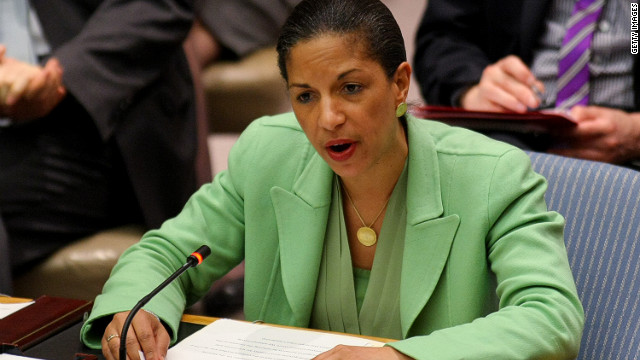
Rice meetings leave lawmakers uneasy
- Peter Bergen: Susan Rice’s trip to Capitol Hill wasn’t a success, senators said
- He says the GOP continues to bash Rice for her mistaken explanation for Benghazi attack
- Bergen says the argument that Obama administration deliberately lied doesn’t hold up
- The intelligence community decided not to initially reveal truth about attack, he says
Editor’s note: Peter Bergen is CNN’s national security analyst and the author of “Manhunt: The Ten-Year Search for bin Laden — From 9/11 to Abbottabad.”
(CNN) — Ambassador to the United Nations Susan Rice, a possible nominee to be the next secretary of state, came to Capitol Hill Tuesday to perform a private mea culpa to key Republican senators for her erroneous initial public statements about the perpetrators of the attack on the U.S. consulate in Benghazi in September in which four Americans were killed.
It didn’t work.
After Tuesday’s meeting with Rice, Sen. John McCain said, “It is clear that the information that she gave the American people was incorrect when she said that it was a spontaneous demonstration triggered by a hateful video.”
Sen. Lindsey Graham who also met with Rice observed, “Bottom line: I’m more disturbed now than I was before.”
What is the Republican theory of the case against Rice? It appears to boil down to the idea that leading Democrats covered up the involvement of terrorists in some way connected to al Qaeda in the Benghazi attack during the run-up to the close presidential election because President Obama and others in his administration had for some time said that al Qaeda was close to strategic defeat.
Stay up to date on the latest opinion, analysis and conversations through social media. Join us at Facebook/CNNOpinion and follow us @CNNOpinion on Twitter. We welcome your ideas and comments.
Does this case make sense? First, you would have to accept that Obama, Rice and Secretary of State Hillary Clinton all knowingly deceived the American public about what had happened at the Benghazi consulate.
When this notion was raised in October during the second presidential debate, Obama scolded Republican challenger Mitt Romney saying, “the suggestion that anybody in my team, whether the secretary of state, our U.N. ambassador — anybody on my team — would play politics or mislead when we’ve lost four of our own, Governor, is offensive.”
According to a CNN poll released Tuesday most Americans agree with the president and do not believe that anyone in his administration intentionally tried to mislead them about what happened in Benghazi
Second, it was the intelligence community, not officials at the White House or State Department, that eliminated from the talking points used by Rice after the Benghazi attack the suspected involvement of the Libyan jihadist group, Ansar al-Sharia.
According to accounts of former CIA director David Petraeus’ closed door testimony about Benghazi to congressional intelligence committees earlier this month, the intelligence community eliminated references to Ansar al-Sharia in the talking points so as not to tip off members of the terrorist group that the CIA believed that they were responsible for the attack.
The conspiracy therefore was not to mislead the American public but to mislead America’s enemies.
If Rice had gone beyond her unclassified talking points and said that Ansar al-Sharia was suspected to be behind the Benghazi attacks, no doubt she would now be being hounded for the unauthorized disclosure of classified information.
Third, it is worth recalling that whenever there is a news event in a chaotic country on the other side of the world, first accounts about the event are often wrong.
Remember the erroneous reports about another big news event last year; the death of Osama bin Laden. Initially, it was portrayed by the Obama administration that bin Laden had died during a firefight with U.S. forces in Pakistan and had used his wife as a human shield.
As more accurate information subsequently came in from the field, administration officials clarified that bin Laden put up no resistance and had not used his wife as a shield.
This is not conspiracy; this is the fog of war.
It is also worth recalling that the situation in Benghazi was so chaotic and dangerous that it took three weeks for the FBI to get in to the city to investigate what had happened at the consulate.
And it took even more time for the facts to emerge that the Benghazi mission wasn’t really a consulate in any conventional sense, but was more of a CIA listening station and that two of the four Americans who had died in the attack weren’t diplomats as initially portrayed but were, in fact, CIA contractors.
Stepping back from the whole debate about how Rice came to make inaccurate public statements about Benghazi, there is another premise of the Republican attacks upon her that deserves considerable skepticism.
We are supposed to believe that because Ansar al-Sharia — a group inspired by al Qaeda’s ideas, but having no links to the terrorist group that attacked the United States on 9/11 — was able to pull off a deadly attack in a Middle Eastern country ravaged by a recent war against a lightly defended U.S. mission, killing four, that al Qaeda is suddenly an important threat again to the United States.
If you buy that, I have a bridge in Benghazi I’d like to sell you.
Countering Online Radicalization in America, Bipartisan Policy Center, Washington
Countering Online Radicalization in America
A New Report by the Bipartisan Policy Center’s (BPC) Homeland Security Project
Tuesday, December 4, 2012
10:00AM – 11:00AM
Bipartisan Policy Center
1225 Eye Street NW, Suite 1000
Washington, DC
Featuring
Thomas Kean
Former Governor of New Jersey
Co-chair, 9/11 Commission
Co-chair, BPC Homeland Security Project
Lee Hamilton
Former Representative from Indiana
Co-chair, 9/11 Commission
Co-chair, BPC Homeland Security Project
Peter Bergen
National Security Analyst, CNN
Will McCants
Analyst, Center for Naval Analyses
Peter Neumann
Report Author
Professor of Security Studies, King’s College London
Director, International Center for the Study of Radicalization
Moderated by
Carie Lemack
Director, BPC Homeland Security Project
From Al Qaeda to white supremacists, the internet plays an increasingly important role in radicalizing homegrown and domestic terrorists. BPC’s Homeland Security Project will release its latest report, Countering Online Radicalization in America, which explains how online radicalization works and what needs to be done to counter it. Based on extensive research and dozens of interviews with experts and policymakers, it sets out a balanced and practical approach, which respects American values while protecting the homeland from terrorism. The co-chairs will outline their conclusions, and a panel discussion will follow.
Syracuse University
Date: Thursday, April 25, 2013
Sponsor: Syracuse University
Event location: Hendricks Chapel Syracuse, NY
Event description: International Security Office
Audience: High Ranking military Officers and Civilians
Schedule: 1:30 – 3:00 PM Speech with Q&A to follow
Inside Syria with Janine di Giovanni at New America, Washington
Inside Syria
Friday, November 30 2012
12:15 p.m. – 1:45 p.m.
New America Foundation
1899 L St. NW Suite 400
Washington DC, 20036
By some estimates, the violent conflict wracking Syria has taken almost 40,000 lives since it began in March 2011. The world has been able to experience a portion of the horror alongside Syrian civilians through the footage and images of the fighting that have poured out of the country, though few Western journalists have been able to cover the war first-hand.
Please join the New America Foundation’s National Security Studies Program for a discussion with award-winning war reporter Janine Di Giovanni about her experiences inside Syria. Di Giovanni, whose on-the-ground reporting on the war was recently featured in The New York Times, Granta and Newsweek, is a contributing editor at Vanity Fair, has won five major journalistic awards, was one of the only reporters to witness the fall of Grozny, Chechnya, and has written five books, the last of which recently won Memoir of the Year in Britain. She currently lives in Paris and served as the President of the Jury of the Prix Bayeux for War Reporters in 2010.
Featuring
Janine di Giovanni
Foreign Correspondent and Author
Peter Bergen
Director, National Security Studies Program, New America Foundation
To RSVP for the event, click on the red button or go to the event page:
http://newamerica.net/events/2012/inside_syria
For questions, contact Stephanie Gunter at New America at (202) 596-3367 or gunter@newamerica.net.
www.NewAmerica.net
“Fortress Israel” with Patrick Tyler at New America, Washington
Fortress Israel
Wednesday, November 28, 2012
12:15 p.m. – 1:45 p.m.
New America Foundation
1899 L St. NW Suite 400
Washington DC, 20036
As footage of rocket attacks in Israel and Gaza once again fill television screens around world, we are reminded of how flammable the Israeli/Palestinian issue remains today. Former New York Times Chief Correspondent Patrick Tyler argues in his new book, Fortress Israel, that the pervasive influence of Israel’s military establishment has overwhelmed every competing institution, especially those devoted to diplomacy and negotiation. As a result, political leaders find themselves with few diplomatic options in the long term struggle with the Arabs. Tyler laments that the handful of Israeli leaders who have set peace as a strategic objective have failed or, as in the case of Yitzhak Rabin, were killed by extremists.
On November 28, the New America Foundation will host Tyler for a conversation about Fortress Israel, and the Israeli military officials who have created and sustained their nation’s highly martial culture.
On Twitter? Follow @MidEastChannel for updates.
Featuring
Patrick Tyler
Author, Fortress Israel: The Inside Story of the Military Elite Who Run the Country-and Why They Can’t Make Peace
Peter Bergen
Director, National Security Studies Program, New America Foundation
To RSVP for the event, click on the red button or go to the event page:
http://newamerica.net/events/2012/fortress_israel
For questions, contact Stephanie Gunter at New America at (202) 596-3367 or gunter@newamerica.net.
www.NewAmerica.net
“Militancy and the Arab Spring.” New America, Washington DC
The New America Foundation (NAF) holds a discussion on “Militancy and the Arab Spring.”
TIME: 12:15 p.m.
LOCATION: New America Foundation, 1899 L Street NW, Suite 400, Washington, D.C.
CONTACT: Clara Hogan, 202-596-3369, hogan@newamerica.net; [Note: Register at http://newamerica.net/events/2012/militancy_and_the_arab_spring
PARTICIPANTS: Souad Mekhennet, fellow at Harvard University; Leila Hilal, director of the NAF Middle East Task Force; and Peter Bergen, director of the NAF National Security Studies Program
SUBJECT: ||MIDEAST/RIGHTS|| Foreign Affairs;
LOAD-DATE: November 12, 2012
LANGUAGE: ENGLISH
TYPE: Discussion
Cómo David Petraeus cambió a las fuerzas armadas de EU
Cómo David Petraeus cambió a las fuerzas armadas de EU
Su paso por la CIA fue fugaz, pero implementó la estrategia de contrainsurgencia que ayudó a reducir los niveles de violencia en Iraq
Domingo, 11 de noviembre de 2012 a las 15:32

Cuando Petraeus asumió el mando en Iraq, el país estaba sumido en una guerra civil tan violenta que al menos 90 civiles morían cada día (AFP).
- Peter Bergen: Petraeus será recordado como el mejor general de EU desde Eisenhower
- Dice que Petraeus se dio cuenta de que combatir una insurgencia no es como otras guerras
- Petraeus cambió la doctrina de las fuerzas armadas para centrarse en la seguridad de la población como una prioridad
- Bergen dice que el general contribuyó a llevar seguridad a Iraq, pero aún no se determina su papel en Afganistán
Nota del Editor: Peter Bergen, analista de seguridad nacional de CNN, es director del Programa de Estudios sobre Seguridad Nacional en la New American Foundation y autor de The Longest War: America’s Enduring Conflict with Al-Qaeda, del cual se tomó y adaptó parte para este ensayo sobre el general David Petraeus. El general Petraeus dimitió como director general de la CIA tras reconocer una relación extramarital.
(CNN)— Los historiadores probablemente juzgarán a David Petraeus como el comandante militar estadounidense más eficaz desde Dwight Eisenhower.
Después de todo y más que ningún otro, fue la persona que levantó a Iraq del borde del desastre absoluto luego de que asumió el mando de las fuerzas de Estados Unidos en ese país, en 2007.
Para entender esta gran tarea, recordemos que cuando Petraeus asumió el mando en Iraq, el país estaba sumido en una guerra civil tan violenta que al menos 90 civiles morían cada día, en promedio.
El mismo gobierno iraquí alimentaba la violencia, debido a que el Ministerio del Interior de ese país era hogar de varios escuadrones de la muerte chiitas.
Mientras tanto, la violenta filial iraquí de al Qaeda reclutaba cientos de atacantes suicidas de todo el Medio Oriente, quienes mataron a miles de personas en Iraq.
Como resultado de este caos, unos cinco millones de iraquíes (cerca de una quinta parte de la población) huyeron del país o fueron al exilio interno.
Después de un servicio en Iraq en 2003, donde Petraeus eficazmente pacificó el área dentro y alrededor de Mosul, en el norte, y de un segundo periodo menos fructífero en el que trató de reformar al disuelto ejército iraquí, fue asignado para dirigir el Centro de Armas Combinadas del Ejército de EU en Fort Leavenworth, Kansas, en 2006.
Esto fue visto como una especie de estancamiento para el general en ascenso, a quien Newsweek había consagrado dos años atrás con un artículo de portada titulado ¿Puede este hombre salvar a Iraq?
Pero Petraeus vio su periodo de servicio en Kansas como una oportunidad para renovar la doctrina de contrainsurgencia del Ejército, algo en las fuerzas armadas no habían puesto ningún esfuerzo verdadero desde la Guerra de Vietnam. Ahora, la milicia estadounidense en Iraq combatía a una compleja mezcla de grupos insurgentes sunitas y chiitas.
Así que Petraeus convirtió su época en Kansas en un ejercicio de un año para reescribir las estrategias y las tácticas de la guerra de Iraq.
Como ayuda, Petraeus reclutó al veterano de guerra de Iraq, John Nagl, quien tenía un doctorado en Oxford y que en 2002 publicó el libro Learning to Eat Soup with a Knife: Counterinsurgency Lessons from Malaya and Vietnam.
En noviembre de 2005, Petraeus pronunció un discurso durante una conferencia sobre contrainsurgencia en Washington. Nagl recuerda que Petraeus, su exprofesor de historia en West Point, “anunció que escribiría un manual de contrainsurgencia, y anunció que él sería el principal redactor; era la primera vez que oí hablar de ello”.
Nagl asumió el papel de jefe de redacción del manual y Petraeus reclutó a Conrad Crane, un historiador militar y excompañero de clase en West Point, para ser el escritor principal. Pero no había duda de quién estaba al mando. Nagl recuerda que Petraeus “era el conductor, era la visión, era el editor de textos, leyó dos veces todo, le daba la vuelta a los capítulos en 24 horas con una amplia edición y comentarios”.
Los escritos del soldado intelectual francés David Galula fueron muy influyentes en el grupo que trabajaba en el manual. Galula había combatido en Indochina y Argelia en la década de 1950 como oficial en el ejército francés cuando éste intentaba acabar con la insurgencia nacionalista en sus posesiones coloniales.
Casi una década después, Galula publicó Counterinsurgency Warfare: Theory and Practice, donde condensaba las lecciones de combatir y observar a las insurgencias en Medio Oriente y el sureste de Asia.
Galula estableció un principio general que es reconocido como el núcleo de una estrategia exitosa de contrainsurgencia: “La población se convierte en el objetivo del contrainsurgente como lo era para su enemigo”.
Esto significaba que tomar el territorio era algo mucho menos importante que en una guerra convencional; garantizar que la gente se sintiera lo suficientemente segura como para no sentirse obligada de apoyar a los insurgentes y que con el tiempo adquiriera también la confianza para proporcionar información sobre ellos se convertía en el premio.
Una vez que se completó el primer borrador del manual de contrainsurgencia, Petraeus y el escritor principal, Crane, decidieron convocar a un grupo de expertos externos para que aportaran sus críticas. Crane recuerda: “tuvimos una conferencia de escrutinio para revisar la doctrina y estuve de acuerdo con el general en que lo haríamos, y dije, ‘sí, traigamos a 30 personas inteligentes para hablar de ello’; trajo a 150. Fue todo un circo de tres pistas en Fort Leavenworth”.
Durante dos días, funcionarios de la CIA, del Departamento de Estado y destacados académicos y periodistas como Eliot Cohen, James Fallows y George Packer aportaron sus críticas, las cuales generaron cientos de páginas de nuevas ideas.
El Ejército y la Marina publicaron la versión final del Manual de campo de contrainsurgencia en diciembre de 2006.
Las doctrinas en este nuevo manual informaban a profundidad sobre cómo las fuerzas armadas de EU combatirían las guerras en Iraq y Afganistán.
El documento señalaba las prácticas fallidas de la contrainsurgencia, como poner demasiado énfasis en matar y capturar al enemigo en lugar de establecer condiciones de seguridad para la población; llevar a cabo operaciones a gran escala como norma, y concentrar fuerzas militares en grandes bases para la protección.
Esta fue, de hecho, una buena descripción de lo que las fuerzas armadas estadounidenses habían estado haciendo en Iraq durante los últimos tres años del conflicto y una explicación de por qué estaban perdiendo la guerra.
Las prácticas exitosas, enfatizaba el nuevo manual, se centraban en satisfacer las necesidades y garantizar la seguridad de la población.
En una sección titulada Paradojas, el manual hacía una serie de recomendaciones que difícilmente se encontraban en la doctrina militar estadounidense prevaleciente: “A veces hacer nada es la mejor reacción” y que “el país anfitrión haga algo razonablemente bien es por lo general mejor a que EU haga algo bien”.
Emma Sky, graduada de Oxford y conocedora de la lengua árabe, quien se convirtió en asesora política de Petraeus en Iraq, recordó que “el cambio más importante en la mentalidad fue que EU viera a los iraquíes no como el enemigo, sino que viera a los iraquíes como personas que necesitaban protección”.
En febrero de 2007, Petraeus fue nombrado por el presidente George W. Bush como el nuevo comandante de EU en Iraq, justo cuando 30,000 soldados de la “oleada” que Bush recientemente había ordenado comenzaron a llegar a Iraq.
Poco después de su llegada, Petraeus realizó un recorrido por barrios de Bagdad que conocía de sus anteriores despliegues. Petraeus me comentó después: “no lo podía creer … aquí, literalmente, pasa una bola de polvo rodando por la calle en lo que yo recordaba como un barrio de exoficiales militares muy próspero, de clase media alta, en el noroeste de Bagdad. Fue … ¡Wow!”
Ahora en Iraq, cada mes, había más de 200 atentados con coches bomba y ataques suicidas. Seis meses antes se registraba una cuarta parte de esa cifra. Iraq se encontraba simultáneamente en explosión e implosión.
El nuevo enfoque de contrainsurgencia de Petraeus sacó a los soldados estadounidenses de sus grandes bases en Iraq y los envió a los barrios iraquíes.
Petraeus explicó esta estrategia “centrada en la población” en una carta que envió a todos los soldados a su mando. “Vivir entre la gente es esencial para darles seguridad y derrotar a los insurgentes … patrullar a pie y relacionarse con la población. La conciencia del entorno solo puede garantizarse mediante la interacción cara a cara con la gente, no separados por un cristal balístico”.
Emma Sky dice que Petraeus jugó otro papel clave al comprar tiempo en Washington para que funcionara la estrategia, como el rostro público y defensor del nuevo enfoque en Iraq. “Jamás habríamos conseguido el tiempo sin sus comunicaciones estratégicas, sin la creencia de la gente en Petraeus”.
La mayor prueba de si existiría la voluntad política para continuar con el creciente esfuerzo en Iraq fueron las audiencias ante el Congreso llevadas a cabo en el sexto aniversario del 11-S.
El 11 de septiembre de 2007, Petraeus y Ryan Crocker, el veterano diplomático que fue embajador de EU en Iraq, fueron interrogados tanto por el Comité de Relaciones Exteriores del Senado como por el Comité de Servicios Armados. Había cinco senadores que aspiraban seriamente a la presidencia (Joe Biden, Christopher Dodd, Barack Obama, John McCain y Hillary Clinton), uno de los cuales se convertiría en presidente de Estados Unidos en poco más de un año.
Petraeus recuerda que la audiencia “fue más dura de lo pensado. Quiero decir, se podían sentir los reflectores del mundo en uno. Fue transmitida en vivo en Bagdad”.
Petraeus y Crocker intentaron presentar un panorama de los avances en Iraq, pero a los demócratas eso no les parecía. Clinton intervino en un punto: “Usted ha sido el vocero de facto de lo que muchos de nosotros creemos es una política fallida. A pesar de que veo extraordinarios esfuerzos en su testimonio… creo que los informes que nos proporciona realmente requieren la suspensión voluntaria de la incredulidad”.
Es Washington diciéndote que o bien estás equivocado o mintiendo.
Un día antes, el dúo también había testificado ante una audiencia conjunta de los comités de Servicios Armados y de Asuntos Exteriores de la Cámara de Representantes. Petraeus sabía que sería un día difícil cuando recibió el aviso de que el New York Times desplegaría un anuncio sobre él de toda una página, pagado por el grupo de izquierda de defensoría MoveOn.org.
Bajo el encabezado ¿GENERAL PETRAEUS O GENERAL TRAICIÓN A EU?, el general fue acusado de “amañarle las cuentas a la Casa Blanca”. El texto pagado indicó que “cada informe independiente sobre la situación en el terreno en Iraq muestra que la estrategia oleada ha fracasado… Y lo más importante, el general Petraeus no reconocerá lo que todos saben: Iraq está sumido en una guerra civil religiosa imposible de ganar”.
A pesar de estas críticas, el testimonio de Petraeus ante el Congreso, cautelosamente formulado, acerca del cambio de rumbo que empezaba a ver en Iraq resultó ser acertado.
La violencia en Iraq, que durante los primeros meses alcanzó máximos en casi todas las categorías, disminuyó de manera constante después de eso. Ese descenso fue cierta en la frontera, incluidos los ataques de los insurgentes, las muertes de civiles, las muertes de soldados estadounidenses, las muertes de las fuerzas de seguridad iraquíes, los ataques con coches bomba y las explosiones con artefactos explosivos improvisados.
En diciembre de 2006, el mapa militar estadounidense de violencia “etnosectaria” en Bagdad era principalmente de color amarillo, naranja y rojo, lo que indica de regular a mucha violencia. La mayoría del mismo mapa, dos años más tarde, era de color verde, lo que indicaba que la violencia sectaria en Bagdad había desaparecido en buena medida.
Por supuesto, no todo esto se debió a que Petraeus estuviera al mando. Otros factores importantes, como la rebelión tribal contra la filial iraquí de al Qaeda, operaron a su favor.
El movimiento Despertar Sunita había comenzado en 2006, antes de la llegada de Petraeus a Iraq, pero él y sus principales comandantes lo manejaron hábilmente.
Los combatientes tribales del movimiento Despertar terminaron en la nómina estadounidense dentro del programa Hijos de Iraq, el cual, para la primavera de 2009, había crecido a alrededor de 100,000 hombres. Muchos de ellos habían disparado alguna vez contra los estadounidenses; ahora disparaban contra al Qaeda.
Hoy en día, Iraq sigue siendo un lugar peligroso, pero no está inmerso en una guerra civil y las diferencias políticas son más propensas a ser dirimidas por las maniobras parlamentarias que por la violencia.
Ciertamente, Petraeus puede adjudicarse una parte importante en la consecución de ese resultado.
Más tarde, Petraeus fue requerido para tratar de virar el camino de otra guerra que no iba del todo bien; era la guerra en Afganistán y el llamado vino del presidente Obama, en 2010.
El jurado aún delibera sobre el éxito que alcanzó Petraeus durante su mandato como comandante de las tropas de EU y otras más de la OTAN en Afganistán.
Como resultado de las operaciones emanadas de la “oleada” de 30,000 soldados estadounidenses en Afganistán autorizados por Obama y dirigidos por Petraeus en sus últimas etapas, viejos refugios talibanes en las provincias sureñas afganas de Helmand y Kandahar han sido eliminados.
Las fuerzas de operaciones especiales también han diezmado las filas de los mandos medios de los talibanes, a tal grado que el promedio de edad de los comandantes talibanes durante el año pasado se redujo de 35 a 25 años, según fuentes militares estadounidenses.
Sin embargo, el aumento de la presión militar sobre los talibanes no los puso en la mesa de negociaciones, tal y como se esperaba. Y los talibanes aún controlan muchas zonas rurales del país.
Dar juicio alguno de la trayectoria de Petraeus en la CIA es complicado, por el hecho de que él estuvo ahí apenas por un año y, por supuesto, la mayor parte de las actividades de la CIA son secretas.
Se develará algo de la actividad reciente de la agencia cuando la próxima semana el director interino de la CIA, Michael Morell, rinda testimonio ante el Comité de Inteligencia del Senado sobre el ataque perpetrado en septiembre contra el consulado de Bengasi, el cual mató a cuatro estadounidenses, entre ellos el embajador de EU en Libia y dos hombres que hasta poco se reveló que eran empleados de la CIA.
Era Petraeus quien se suponía rendiría ese testimonio.
Tough choice for Obama on Petraeus’ successor, CNN.com
Tough choice for Obama on Petraeus’ successor
By Peter Bergen, CNN National Security Analyst
updated 11:39 AM EST, Tue November 13, 2012
Editor’s note: Peter Bergen is CNN’s national security analyst and the author of “Manhunt: The Ten-Year Search for bin Laden — From 9/11 to Abbottabad,” from which this article is, in part, adapted.
(CNN) — In choosing a new CIA director to replace David Petraeus, President Barack Obama has a range of well-qualified candidates to choose from, although some of the most qualified were in management roles at the CIA when controversial interrogation techniques were used by agency interrogators questioning al Qaeda prisoners and the CIA was maintaining secret prisons overseas to detain members of al Qaeda.
Michael Morell, a three-decade veteran of the CIA, is now the acting director of the agency and a leading contender to become the next director of central intelligence.
As a candidate for the permanent job, Morell has all the advantages and disadvantages of someone who has been instrumental in recent successes at the CIA such as tracking down Osama bin Laden. But he was also executive assistant to CIA Director George Tenet in the George W. Bush years when the agency waterboarded three detainees and also imprisoned a larger number in the secret prisons overseas where they were subjected to other coercive interrogation techniques.
Any confirmation hearing for Morell would run the risk of a public discussion of the efficacy and ethics of such controversial practices. And there would also be the risk that such a hearing might open up the Pandora’s box of the CIA’s many failures that led to the fiasco of the deeply flawed assessment that Saddam Hussein was building up his weapons of mass destruction program in the run-up to the Iraq War in 2003.
There is also the current controversy about why the intelligence committees in Congress were informed only on Friday about the FBI investigation into Petraeus. Morell and the FBI’s deputy director, Sean Joyce, are scheduled to meet with members of the intelligence committees Wednesday to discuss the matter.
In contrast to Morell, other potential candidates for the director’s job at CIA, such as former U.S. Rep. Jane Harman or Michael Vickers, the top intelligence official at the Pentagon, were not working at the CIA when coercive measures were used on al Qaeda detainees.
On the other hand, few have played such a key role in some of the most dramatic moments in the war against al Qaeda as Morell has.
From the day that Bush took office on January 20, 2001, every morning, six days a week, Morrell was the CIA official who briefed the president about what the intelligence community believed to be the most pressing national security issues.
On August 6, 2001, eight months after Bush was inaugurated, Morell met with the president at his vacation home in Texas to deliver the president’s daily brief.
The top-secret briefing that Morell delivered was titled “Bin Ladin Determined to Strike in U.S.”
A month later, on the morning of September 11, 2001, in Sarasota, Florida, Morell gave the daily briefing as usual to the president. There was nothing memorable in it.
Then Morell got into the president’s motorcade to head to the local elementary school where Bush planned to meet with some students. At the school, where Bush was reading a story to a group of second-graders, the news came on TV that a second jet had hit the World Trade Center.
Bush and a small group of other officials including Morell were hustled out of the school to head to Air Force One, which took off for Barksdale Air Force Base near Shreveport, Louisiana.
In Washington, news soon circulated that a Palestinian terrorist organization, the Democratic Front for the Liberation of Palestine, had claimed responsibility for the attacks.
Bush summoned Morell, asking, “What do you make of this?” Morrell replied, “The DFLP has a history of terrorism against Israel, but its capabilities are limited. It does not have the resources and reach to do this.”
In the early afternoon, Air Force One headed from Louisiana to Offutt Air Force Base near Omaha, Nebraska. Bush asked to see Morell again, and pushed him for his opinion about who was behind the attacks. “I don’t have any intelligence as yet, so what I am going to say is my personal view,” Morell said, “There are two terrorist states capable of conducting such a complex operation — Iran and Iraq — but neither have much to gain and everything to lose from attacking the U.S.”
Morell added, “The responsible party is almost certainly a nonstate actor and I have no doubt that the trail will lead to bin Laden and al Qaeda,” according to a U.S. intelligence official with knowledge of the conversation.
Five months later on January 4, 2002, again at Bush’s vacation ranch in Texas, Morell had the delicate task of informing the president that it was the CIA’s assessment bin Laden had fought at the Battle of Tora Bora in eastern Afghanistan during mid-December 2011, but he had survived and escaped.
Bush was incensed at this and became hostile, as if Morell himself were the culprit.
Flash forward to the summer of 2011: Morell, an unassuming, scholarly analyst in his mid-50s who speaks in terse, cogent paragraphs, was now the deputy director of the CIA. He was one of a small group of officials at the agency who knew there was a quite promising lead on the possible whereabouts of bin Laden that led to a large compound in the northern Pakistan city of Abbottabad.
Then-CIA Director Leon Panetta, together with Morell and some of the analysts working on the hunt for bin Laden, went to Obama and told him, “We think there is a strong possibility that bin Laden is in the Abbottabad compound.”
The analysts believed this with varying degrees of certainty, with most estimating the probability at 80%. The lead analyst was at around 90%, while Morell was at 60%.
“Why do people have different probabilities?” Obama asked.
“Intelligence is not an exact science,” Morell explained. “Even if we had a source inside the compound saying bin Laden was there, I’d only be at 80% because sources are of varying reliability. Those analysts who are at 80% to 90% have been tracking al Qaeda in recent years and have had great success stopping plots and undermining the organization. They are confident. The folks at the lower end of the range are those who lived through intelligence failures, particularly the Iraq WMD (weapons of mass destruction) issue.”
Of course, we now know that bin Laden was indeed hiding in the compound in Abbottabad, and the fact that Morell was the overall manager of the investigation that led to al Qaeda’s leader will surely weigh in his favor to be the nominee for the top job at CIA.
Given the personal problems that have faced Petraeus and now perhaps Gen. John Allen, the outgoing commander in Afghanistan, character issues will surely weigh heavily in Obama’s considerations.
There are others whom Obama might pick to run the CIA, such as John Brennan, his top counterterrorism adviser, who had a distinguished career at the agency, including a tour as station chief in Saudi Arabia and who also led both the Terrorist Threat Integration Center and its successor, the National Counterterrorism Center, following the 9/11 attacks.
Brennan, a no-nonsense graduate of Fordham who speaks Arabic, was Obama’s first pick for CIA director in 2008 but withdrew his name from consideration after it became clear that his nomination hearings would be complicated by some in Congress who would grill him about the waterboarding of detainees in CIA custody and the agency’s prisons overseas.
It’s also not clear why Brennan would want the CIA job given the fact that in his present position he gets to see the president far more often than any CIA director, and from his windowless office in the basement of the West Wing of the White House, he has dominated U.S. counterterrorism policy on issues such as drones, Pakistan, Yemen and the hunt for al Qaeda’s leaders, including bin Laden.
Another plausible candidate is Michael Vickers. He had a storied career at the CIA, where as a young man he was the agency’s principal military strategist on the Afghan “account” during the 1980s war against the Soviets. Vickers helped to funnel vast numbers of weapons through the Pakistanis to the various Afghan mujahedeen groups that defeated the Soviets.
Vickers’ doctorate in military history from Johns Hopkins and owlish exterior mask the fact that he is a risk taker, albeit in a calibrated, cerebral way. He left the CIA when he was only 32, having already played a key role in the most successful covert operation in the agency’s history — expelling the Soviets from Afghanistan — to get an MBA at Wharton. And he was a Special Forces officer in Central America.
Like both Morell and Brennan, Vickers also played a key role in the operation to find bin Laden. In his previous job at the Pentagon, he was the civilian overseer of Special Operations Forces and was intimately involved in the planning of the SEAL raid in Abbottabad. But unlike Morell and Brennan, Vickers wasn’t at the CIA when waterboarding and other coercive interrogation techniques were being employed by the agency.
Given all the consternation on Capitol Hill about the circumstances surrounding the attack on the U.S. Consulate in Benghazi, Libya, in September in which the U.S. ambassador was killed along with two CIA employees, the Obama administration could decide to tap someone who has deep experience on the Hill.
An obvious candidate would be Harman, who as a member of the House of Representatives from California between 1993 and 2011 served on all the major committees focused on national security: Armed Services, Intelligence and Homeland Security. Now running the Woodrow Wilson International Center for Scholars in Washington, Harman is regarded as one of the Democratic Party’s leading experts on national security.
If appointed and confirmed, Harman would be the first woman director of the CIA.
A further consideration: Another former nine-term Democratic congressman from California, Panetta, now the defense secretary, led the CIA for more than two years and is regarded as one of the most effective directors of the agency in recent decades.
How Petraeus changed the U.S. military, CNN.com
How Petraeus changed the U.S. military
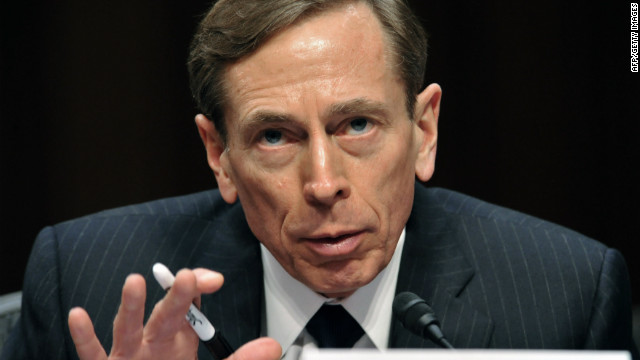
- Peter Bergen: Petraeus will be remembered as best U.S. general since Eisenhower
- He says Petraeus grasped that fighting an insurgency isn’t like other wars
- Petraeus changed military doctrine to focus on securing the population as top priority
- Bergen says the general helped bring security to Iraq, but jury is out on his Afghan work
Editor’s note: Peter Bergen, CNN’s national security analyst, is director of the National Security Studies Program at the New America Foundation and the author of “The Longest War: America’s Enduring Conflict with Al-Qaeda,” from which this essay about Gen. David Petraeus is, in part, adapted. Petraeus stepped down as director of the CIA on Friday after admitting to an extramarital affair.
(CNN) — Historians will likely judge David Petraeus to be the most effective American military commander since Eisenhower.
He was, after all, the person who, more than any other, brought Iraq back from the brink of total disaster after he assumed command of U.S. forces there in 2007.
To understand how daunting a task that was, recall that when Petraeus took over in Iraq, the country was embroiled in a civil war so vicious that civilians were dying at the rate of 90 a day.
Iraq’s government itself was fueling the violence because the Iraqi Ministry of the Interior was home to a number of Shia death squads.
Meanwhile, al Qaeda’s brutal Iraqi affiliate was recruiting hundreds of suicide attackers from around the Middle East who went on to kill thousands in Iraq.
After a 2003 tour in Iraq where Petraeus effectively pacified the area in and around Mosul in the north and a second tour where he had a less successful stint trying to reform the disbanded Iraqi army, he was assigned to run the U.S. Army’s Combined Arms Center at Fort Leavenworth, Kansas, in 2006.
This was seen as something of a backwater for the rising star general who Newsweek had anointed with a cover story two years earlier headlined “Can This Man Save Iraq?”
CIA chief Petraeus resigns over affair
But Petraeus saw his tour in Kansas as an opportunity to revamp the Army’s counterinsurgency doctrine, something the military hadn’t put any real thought into since the Vietnam War. And now it was a complex stew of Sunni and Shia insurgent groups that the U.S. military was fighting in Iraq.
So Petraeus turned his time in Kansas into a year-long exercise to rewrite the strategy and tactics of the Iraq War.
To help him, Petraeus recruited Iraq War veteran John Nagl, a Rhodes Scholar with a doctorate from Oxford who in 2002 published the book “Learning to Eat Soup with a Knife: Counterinsurgency Lessons from Malaya and Vietnam.”
In November 2005, Petraeus gave a lunchtime speech at a counterinsurgency conference in Washington. Nagl recalls that Petraeus, his former history professor at West Point, “announced that he was going to write a counterinsurgency manual, and he announced that I was going to be the lead pen, which was the first time I’d heard of it.”
Nagl assumed the role of managing editor of the manual and Petraeus recruited Conrad Crane, a military historian and a former West Point classmate, to be the lead writer. But there was no doubt who was in charge. Nagl recalls that Petraeus “was the driver, he was the vision, he was the copy editor, he read the whole thing twice, he turned around chapters in 24 hours with extensive edits and comments.”
The writings of the French soldier-intellectual David Galula were quite influential on the group working on the manual. Galula had fought in Indochina and Algeria in the 1950s as an officer in the French army as it was attempting to stamp out nationalist insurgencies in its colonial possessions.
Around a decade later Galula published “Counterinsurgency Warfare: Theory and Practice,” which distilled the lessons of fighting and observing insurgencies in the Middle East and Southeast Asia.
Galula laid down a general principle that is recognized as the core of a successful counterinsurgency strategy: “The population becomes the objective for the counterinsurgent as it was for his enemy.”
This meant that seizing territory became far less important than it was in a conventional war; ensuring that people felt secure enough so they were not forced to have to side with the insurgents and, eventually, even felt secure enough to provide intelligence about them, became the prize.
Once a first draft of the counterinsurgency manual was completed, Petraeus and the lead writer, Crane, decided to convene a group of outside experts to critique it. Crane recalls, “We had a vetting conference to go over the doctrine, and I agreed with the general that we would do it, and I said, ‘Yeah, let’s bring in 30 smart people to talk about it’; he brought in 150. It was quite a three-ring circus out at Fort Leavenworth.”
Over the course of two days officials from the CIA, State Department and leading academics and journalists such as Eliot Cohen, James Fallows and George Packer were instructed to give their critiques, which generated hundreds of pages of new ideas.
How Petraeus changed the U.S. military
The army and Marines published the final version of the Counterinsurgency Field Manual in December 2006.
The doctrines in this new manual deeply informed how the U.S. military would fight the wars in Iraq and Afghanistan.
The manual pointed to such unsuccessful counterinsurgency practices as overemphasizing killing and capturing the enemy rather than making conditions secure for the populace, conducting large-scale operations as the norm and concentrating military forces in large bases for protection.
This was, in fact, a good description of what the U.S. military had been doing in Iraq for the past three years of the conflict and an explanation of why it was now losing the war.
Successful practices, the new manual emphasized, focused on meeting the needs and ensuring the security of the population.
In a section titled “Paradoxes” the manual made a number of recommendations that were hardly typical of prevailing U.S. military doctrine: “Sometimes doing nothing is the best reaction” and “the host nation doing something tolerably is normally better than U.S. doing it well.”
Emma Sky, an Oxford graduate and Arabic speaker who became Petraeus’ political adviser in Iraq, recalled that, “The biggest mindset change was for the U.S. to look at Iraqis as not the enemy, but to look at the Iraqis as people who needed protecting.”
In February 2007 Petraeus was appointed by President George W. Bush as the new U.S. commander in Iraq just as 30,000 troops of “the surge” that Bush had recently ordered began arriving in Iraq.
Shortly after Petraeus’ arrival he took a tour of Baghdad neighborhoods he knew from his past deployments. Petraeus later told me, “I just couldn’t believe it…here’s literally tumbleweed rolling down the street of what I remembered as a very prosperous, upper-middle-class, former military officers’ neighborhood in northwest Baghdad. It was just. . .Wow!”
There were now well over 200 car bombings and suicide attacks every month in Iraq. Six months earlier there were around a quarter of that number. Iraq was simultaneously exploding and imploding.
Petraeus’ new counterinsurgency approach got American soldiers out of their massive bases in Iraq and into Iraqi neighborhoods.
Petraeus explained this “population-centric” strategy in a letter he sent to all of the soldiers he commanded. “You can’t commute to this fight…Living among the people is essential to securing them and defeating the insurgents…patrol on foot and engage the population. Situational awareness can only be guaranteed by interacting with people face-to-face, not separated by ballistic glass.”
Emma Sky says that Petraeus played another key role, which was buying time in Washington for the new strategy to work by being the public face and advocate of the new approach in Iraq. “Without his strategic communications, without people’s belief in Petraeus, we would never have got the time.”
The greatest test of whether the political will existed to continue with the ramped-up Iraq effort were the congressional hearings held on the sixth anniversary of 9/11.
On September 11, 2007, Petraeus and Ryan Crocker, the veteran diplomat who was U.S. ambassador to Iraq, were grilled by both the Senate Foreign Relations and Armed Services committees, on which happened to sit five senators all seriously vying for the presidency– Joe Biden, Christopher Dodd, Barack Obama, John McCain and Hillary Clinton— one of whom would become president of the United States in just over a year.
Petraeus recalls that the hearing “Was just charged beyond belief. I mean, you could just feel the spotlight of the world on you. It was carried live in Baghdad.”
Petraeus and Crocker gamely tried to present a picture of progress in Iraq, but the Democrats were having none of it. Clinton interjected at one point: “You have been made the de facto spokesman for what many of us believe to be a failed policy. Despite what I view as your rather extraordinary efforts in your testimony…I think that the reports that you provide to us really require the willing suspension of disbelief.”
This is Washington-speak for you are either wrong or lying.
The day before, the duo had also testified before a joint hearing of the House Armed Services and Foreign Affairs committees. Petraeus knew it was going to be a rough day when he received a heads up that the New York Times was running a full-page ad about him, paid for by the left- wing advocacy group MoveOn.org.
Under a banner headline GENERAL PETRAEUS OR GENERAL BETRAY US?” the general was accused of “Cooking the books for the White House.” The ad copy went on to assert, “Every independent report on the ground situation in Iraq shows that the surge strategy has failed…Most importantly, General Petraeus will not admit what everyone knows: Iraq is mired in an unwinnable religious civil war.”
Despite these criticisms, Petraeus’ cautiously worded congressional testimony about the turnaround that he was beginning to see in Iraq proved to be accurate.
The violence in Iraq, which was peaking in almost every category in the first months of 2007, steadily dropped after that. That decline was true across the board, including attacks by insurgents, civilian deaths, U.S. soldiers killed, Iraq security forces killed, car-bomb attacks and IED explosions.
Colleague calls resignation ‘the honorable thing to do’
In December 2006 the U.S. military map of “ethno-sectarian” violence in Baghdad was colored mostly yellow, orange and red, indicating medium to intense violence. The same map two years later was mostly colored green, indicating that the sectarian violence in Baghdad had largely subsided.
Of course, not all of this was due to the generalship of Petraeus. Other important factors such as the tribal revolt against al Qaeda’s Iraqi affiliate worked in Petraeus’ favor.
The Sunni Awakening movement had begun in 2006 before Petraeus arrived in Iraq, but he and his top commanders deftly managed it.
The tribal fighters of the Awakening movement ended up on the American payroll in the “Sons of Iraq” program, which by the spring of 2009 had grown to around 100,000 men. Many of those men had once been shooting at Americans; now they were shooting at al Qaeda.
Iraq today remains a dangerous place, but it is not in the grip of a civil war, and political differences are more likely to be decided by parliamentary maneuvers than by violence.
Certainly, Petraeus can claim a large share in the achievement of that outcome.
Petraeus was later tapped to try to turn around another war that wasn’t going well, this time it was the war in Afghanistan and the call came from President Obama in 2010.
The jury is still out on what level of success Petraeus achieved during his tenure as the commander of U.S. and other NATO troops in Afghanistan.
As a result of the operations resulting from the “surge” of 30,000 U.S. troops into Afghanistan authorized by Obama and led in its latter stages by Petraeus, longtime Taliban havens in the southern Afghan provinces of Helmand and Kandahar have now been eliminated.
Special operations forces also have decimated the ranks of mid-level Taliban commanders to such a degree that last year the average age of Taliban commanders dropped from 35 to 25, according to U.S. military sources.
That said, the increased military pressure on the Taliban did not bring them to the negotiating table in any meaningful way as had once been hoped. And the Taliban continue to control many rural areas of the country.
Arriving at any judgment of Petraeus’ record at the CIA is complicated by the fact that he was there for only around a year and, of course, most of the activities of the CIA are secret.
Some light will be shed on the agency’s recent activity when the acting director of the CIA, Michael Morell, testifies next week before the Senate Intelligence Committee about the attack on the Benghazi consulate in September that killed four Americans, including the U.S. ambassador to Libya and two men who were recently revealed to be CIA employees.
It was Petraeus who was supposed to be delivering that testimony.
Aspen Security Forum Wednesday, July 17 – Saturday, July 20, 2013 Aspen, CO
Aspen Security Forum
Wednesday, July 17 – Saturday, July 20, 2013
Aspen, CO
Please join us for the fourth annual Aspen Security Forum, presented by the Aspen Institute Homeland Security Program.
The Aspen Security Forum is an annual summer gathering at our signature “Aspen Meadows” campus in Colorado of top-level present and former government officials from all relevant national security agencies (the White House; Departments of Homeland Security, Defense, State, Justice, and Treasury; the intelligence community; and Congress); industry leaders (large and small defense-related companies, as well as private equity investors, merchant and investment bankers, and venture capitalists in this space); leading thinkers (in other think tanks and academe); nationally noted print and broadcast journalists; and concerned citizens. For three days, participants explore various aspects of cyber security; intelligence; counterterrorism strategy; aviation security; maritime security; border security; mass transit security; critical infrastructure protection; “soft targets” security; and more.
For those who are not familiar with the forum, among our notable speakers over the last three years have been:
- Secretary of Homeland Security Janet Napolitano
- Deputy Secretary of Homeland Security Jane Holl Lute
- TSA Administrator John Pistole
- Former Secretary of Homeland Security Michael Chertoff
- Former Chairman of the Joint Chiefs of Staff Admiral Mike Mullen
- Commander of U.S. Special Operations Command Admiral Bill McRaven
- Former Commander of U.S. Special Operations Command Admiral Eric Olson
- Former Commanding General, U.S. Army North, General Guy Swan
- Special Assistant to the President for Afghanistan and Pakistan Douglas Lute
- State Department Ambassadors at Large for Counterterrorism Daniel Benjamin, Hank Crumpton, and Cofer Black
- Former Directors of National Intelligence Admiral Dennis Blair and Ambassador John Negroponte
- NSA Director General Keith Alexander
- Former CIA and NSA Director General Michael Hayden
- Director of the National Counterterrorism Center Matt Olsen
- Former Director of the National Counterterrorism Center Michael Leiter
- Under Secretary of the Treasury for Terrorism Finance and Intelligence David Cohen
- Former White House Homeland Security Counterterrorism Adviser Fran Townsend
- New York City Police Commissioner Ray Kelly
- Former New York City Police Commissioner and Los Angeles Police Chief Bill Bratton
- The Ambassadors of Pakistan, Afghanistan, and Germany to the United States
- The UN’s top terror expert, Richard Barrett
- The European Union’s Counterterrorism Coordinator Gilles de Kerchove.
Each session is moderated by a noted print or broadcast journalist, and the range of journalists spans the ideological spectrum. Among our moderators have been CNN’s Wolf Blitzer; The New York Times’ David Sanger; The Washington Post‘s David Ignatius; The Wall Street Journal‘s Siobhan Gorman; The New Yorker‘s Ryan Lizza; The LA Times’ Ken Dilanian; The New Republic‘s Michelle Cottle; ABC News’ Terry Moran from “Nightline” and Martha Raddatz; NBC News’ Pete Williams and Mike Isikoff; CBS’ Steve Kroft and Lesley Stahl from “60 Minutes”; CNN’s Jeanne Meserve and Erin Burnett; Fox News’ Catherine Herridge; TIME Magazine‘s Massimo Calabresi; Newsweek‘s Dan Klaidman< /strong>; the AP’s Kimberly Dozier; and NPR’s Dina Temple-Raston. The New York Times and CNN’s Security Clearance Website are our media partners.
Confirmed speakers to date for the 2013 Aspen Security Forum include Hayden; Townsend; and CNN terrorism analyst Peter Bergen.
For more information about the Aspen Security Forum, including videos and photographs from last year’s forum, and to register, please visit www.aspensecurityforum.org.
FEATURED BOOK

All the Presidents’ Wars:
RECENT ARTICLES

UPCOMING EVENTS
Tuesday, December, 08, 2026
USC DC, All the Presidents’ Wars, book event
Tuesday, January, 12, 2027
NY Historical, All the Presidents’ Wars: 25 Years of America’s War on Terror Featuring: Peter Bergen, David M. Rubenstein (moderator), NYC
Wednesday, February, 10, 2027
Metropolitan Club, DC, All the Presidents’ Wars event
RECENT FILM AND TV SERIES
GHOSTS OF BEIRUT: SHOWTIME
The Fall of Osama bin Laden, National Geographic

BIN LADEN'S HARD DRIVE, NATIONAL GEOGRAPHIC

