Gen. David Petraeus: How the war in Ukraine will end, CNN.com
Editor’s Note: Editor’s Note: Peter Bergen is CNN’s national security analyst, a vice president at New America, and a professor of practice at Arizona State University. View more opinion on CNN.
The war in Ukraine is at a stalemate, but that doesn’t mean it’s not changing. General David Petraeus predicts the war will look different this year with significant offensives likely staged by the two sides. Overall, the war continues to demonstrate basic weaknesses in Russia’s military, which was once thought to be one of the most capable in the world.
Petraeus has spent decades studying warfare and practicing its application. He was the US and coalition commander of the wars in Afghanistan and Iraq and later served as director of the CIA. He earned his Ph.D. from Princeton with a dissertation on the Vietnam War and the lessons the American military took from it. Petraeus is also the co-author, with British historian Andrew Roberts, of the forthcoming book, “Conflict: The Evolution of Warfare from 1945 to Ukraine.”
As we approach the first anniversary of the Russian invasion of Ukraine on February 24, I asked Petraeus to reflect on the larger lessons of the war.
He says the Russians have lost many battles because of multiple failures of their military culture, doctrine, organizational structures, training and equipping. While Petraeus says this is in many ways the first open-source war, other aspects are being fought with Cold War tactics and weapons – albeit with upgraded capabilities, drones and precision munitions.
Petraeus, who criticized the Biden administration’s withdrawal of Afghanistan, strikes a different tone on Ukraine. He says the President’s team has done a very impressive job of leading NATO and the West to counter the Russian invasion, though there have been times he would have liked to have seen decisions to provide certain weapons systems (such as western tanks and longer-range precision munitions) made sooner than they were.
The enormous US and western support of Ukraine means, Petraeus observes, that while the Russians may be preparing to send hundreds of thousands of soldiers into Ukraine in a new offensive, they will face off in the coming months with better-trained and better-organized Ukrainian soldiers armed with American longer-range missiles, armored vehicles and a tremendous amount of ammunition. And Petraeus says his money is still on the Ukrainians.
Meanwhile, as Petraeus notes, though Russian President Vladimir Putin set out to Make Russia Great Again with his invasion of Ukraine, he has, instead, achieved exactly that with the NATO alliance.
We conducted the interview over email.
Bergen: Who’s winning the war?
Petraeus: It is not Russia. Russia has, after all, lost the Battles of Kyiv, Sumy, Chernihiv, and Kharkiv; failed to take the rest of Ukraine’s southern coast (not even getting through Mykolaiv, much less to the major port at Odesa).
It has lost what it had gained in Kharkiv province. And it has had to withdraw its only forces west of the Dnipro River in Kherson province because the Ukrainians made the vital bridge connections to those forces impassable, took out the headquarters and logistics sites supporting those forces, and isolated them from the rest of the Russian elements east of the river.
That said, the battle lines since the withdrawal of the forces west of the Dnipro last fall have been fairly static, although Russian forces have made grinding, incremental and very costly gains in villages around Bakhmut in southeast Ukraine. And the Ukrainians are having to commit additional forces to defend the areas under pressure.
So, the situation is essentially a stalemate at present, albeit with Russia making costly attacks in several areas, and with both sides building up forces for offensive operations expected in the late winter (likely the Russians) and spring/summer (the Ukrainians).
The side that generates the most capable, well-trained and well-equipped forces by then will make the most significant gains. And my bet is on Ukraine in that regard.
Bergen: What are the lessons of the Ukraine War for the future of warfare?
Petraeus: I think we should recognize that, with a few exceptions, Ukraine is not the future of warfare. In large measure, it is what we would have seen had the Cold War turned hot in the mid-1980s – with largely Cold War weapons systems (albeit with some modernization).
We are, however, seeing some glimpses and hints of what the future of warfare might look like. We see the Ukrainian use of drones (of only modest range and capability) as aerial observers identifying Russian headquarters and other targets for the precision munitions the US has provided (which will double in range from 70-80 kilometers to 150 kilometers when the just announced US precision munitions arrive in Ukraine).
We see the impact of sophisticated, western-provided fire-and-forget shoulder-launched anti-tank and anti-aircraft missiles. We have seen the impact of select use of medium-range anti-ship missiles. And we have seen use of offensive cyber capabilities, though not with enormous success, by the Russians.
Perhaps most notably, of course, we see a war taking place, for the first time, in a context that includes the widespread presence of smart phones, internet connectivity, and social media and other internet sites.
But, again, these are just hints of what the future of war between advanced powers would be. In such a conflict, the intelligence, surveillance and reconnaissance systems would be incomparably more capable; precision munitions would have vastly greater range, speed and explosive power.
And there would incomparably greater numbers of vastly more capable unmanned systems (some remotely piloted, others operating according to algorithms) in every domain – not just in the air, but also at sea, sub-sea, on the ground, in outer space, and in cyberspace, and operating in swarms, not just individually!
And every intelligence and strike capability will be integrated and connected by advanced command, control, communications and computer systems.
I recall an adage back in the Cold War days that stated, “If it can be seen, it can be hit; if it can be hit, it can be killed.” In truth, we didn’t have the surveillance assets, precision munitions and other capabilities needed to truly “operationalize” that adage in those days. In the future, however, just about everything – certainly every platform, base and headquarters – will be seen and thus be susceptible to being hit and destroyed (unless there are substantial defenses and hardening of those assets).
Imagining all this underscores, of course, that we must take innumerable actions to transform our forces and systems. We must deter future conflict by ensuring that there are no questions about our capabilities or our willingness to employ them – and also by doing everything possible to ensure that competition among great powers does not turn into conflict among them.
Bergen: Several years back, some people were calling NATO obsolete. Is it?
Petraeus: This question gets at one of the ironies of the situation. Putin set out to “Make Russia Great Again.” However, what he has done is make NATO great again – with two very capable, historically neutral powers (Finland and Sweden) seeking NATO membership; with substantially increased defense spending by NATO members, most notably Germany; with augmentation of NATO forces in the Baltic states and eastern Europe; and with the greatest unity among NATO members since the end of the Cold War.
Thanks to Putin, the description of NATO as suffering from “brain death” by French President Macron in late 2019 has turned out to be more than a bit premature.
Bergen: Is the Russian military’s performance in Ukraine surprising to you?
Petraeus: Not completely. In an interview with The Atlantic published shortly before the Russian invasion, I explained the considerable difficulties I expected Russia would encounter and noted that an invasion force of some 190,000 was much less than what likely would be required, especially if the Ukrainians proved to be as determined as I thought they would be (and they have been even more so).
Beyond that, though, even I didn’t foresee how miserably the Russians would perform.
Bergen: Is Russia failing because of failures of intelligence? Failures of its conscripts? Failures of Russian military culture? All the above?
Petraeus: All of the above and more. The list is long, including poor campaign design; wholly inadequate training (what were they doing for all those months they were deployed on the northern, eastern, and southern borders of Ukraine?); poor command, control, and communications; inadequate discipline (and a culture that condones war crimes and abuse of local populations); poor equipment (exemplified by turrets blowing off of tanks when fires ignite in them); insufficient logistic capabilities; inability to achieve combined arms effects (to employ all ground and air capabilities effectively together); inadequate organizational architecture; lack of a professional noncommissioned officer corps; a top-down command system that does not promote initiative at lower levels and pervasive corruption that undermines every aspect of their military – and the supporting military-industrial complex.
Bergen: So, do we not have to worry about Russia as a “great power” anymore?
Petraeus: Not at all. Russia still has enormous military capacity and is certainly still a nuclear superpower, as well as a country with enormous energy, mineral and agricultural blessings. It also has a population (about 145 million) that is nearly double that of the next largest European countries (Germany and Turkey, each just more than 80 million).
And it is still led by a kleptocratic dictator who embraces innumerable grievances and extreme revanchist views that severely undermine his decision-making.
Bergen: You know the observation sometimes attributed to Stalin: “Quantity has a quality all its own.” Russia has a far bigger population than Ukraine: Will that make a critical difference to the Ukraine war over the long term?
Petraeus: It could if Putin mobilized all of Russia successfully. However, to date, the mobilizations have been partial, as Putin seems to fear how the country might respond to total mobilization. In fact, reportedly, more Russian men left the country than reported to the mobilization stations in response to the latest partial call-up of reserves.
Nonetheless, it is estimated that as many as 300,000 new recruits and mobilized reservists are being sent to the frontlines, with up to 100,000-150,000 more on the way. And that is not trivial – because quantity does, indeed, matter.
Bergen: But is Napoleon correct in this case: “In war, the moral is to the physical as three is to one” – and Ukrainian morale seems to be higher.
Petraeus: That is a huge factor. Ukrainians sees the ongoing conflict as their War of Independence, and they have responded accordingly. President Volodomyr Zelensky has been positively Churchillian in rallying all Ukrainians to the service of their country as it fights for its national survival.
Thus, Ukrainians know what they are fighting for, while it is not clear that the same is true of many of the Russian soldiers, a disproportionate number of whom are from ethnic and sectarian minorities in the Russian Federation.
Moreover, Ukraine has, to date, done a better job than Russia of recruiting, training, equipping, organizing and employing additional forces – enabled by the extraordinary support provided by the US (more than $26 billion in arms, ammunition, and other security assistance since the beginning of the latest invasion) and other NATO and western countries. And I think we will see further evidence of this when Ukraine launches its counter-offensive in the spring or summer.
Bergen: What technologies have proven key to Ukrainian successes in this war? Several newish technologies seem to have proven important: Elon Musk’s Starlink mobile satellite systems kept communications open for the Ukrainians after the Russians had partially destroyed the phone system and jammed it. US-supplied HIMARS precision rockets have decimated Russian targets. Clearview AI, a controversial facial recognition technology used by some US police departments, has enabled the Ukrainians to identify Russian soldiers on the battlefield. TB2 Turkish armed drones have proven devastating to Russian targets and cheap commercial drones have helped the Ukrainians find targets.
Petraeus: All of those technologies have proven very important, and the Ukrainians have demonstrated enormous skill in adapting various technologies and commercial applications to enable intelligence gathering, targeting and other military tasks.
In fact, the Ukrainians have also shown exceptional abilities to “McGyver” solutions for a variety of problems – whether adapting Western missiles for use on MiG-29 fighter aircraft, repairing battle-damaged armored vehicles left on the battlefield by the Russians (remember the Ukrainians’ “tractor army”), or jamming Russian communications.
And the Ukrainians also have demonstrated a very impressive ability to learn how to employ new weapons systems and vehicles much more rapidly than anyone anticipated, as they want to master new capabilities as quickly as is possible and get back to the fight.
Bergen: How would you grade the Biden administration’s approach to the Ukraine war?
Petraeus: I think the Biden Administration has led NATO and the rest of the western world very impressively in responding to the Russian invasion – providing enormous quantities of arms, ammunition, and other material and economic assistance. And also guiding the effort to impose economic, financial and personal sanctions and export controls on Russia. (And I offer this, noting that I am not a member of a political party and was very critical of the decision to withdraw from Afghanistan and the way the withdrawal was conducted.)
To be sure, there have been times when I have felt that we should have decided to provide various capabilities (e.g., HIMARS, longer-range precision munitions, tanks, etc.) sooner than we have.
However, having sat around the Situation Room table in the West Wing of the White House, I know that it is far easier to second-guess from the outside than it is to make tough calls in office. But there are some additional capabilities (advanced drones, even longer-range precision munitions, fighter aircraft, and additional air defense and counter-drone capabilities) that I would like to see us provide sooner rather than later.
Eventually, for example, Ukraine is going to have to transition from eastern bloc aircraft (e.g., MiG-29s) to western ones (e.g., F-16s). There just aren’t any more MiGs to provide to them, and they reportedly have more pilots than aircraft at this point.
So, we might as well begin the process of transition, noting that it will take a number of months, regardless, to train pilots and maintenance personnel. All that said, again, I think the Administration has done a very impressive job and proven to be the indispensable nation in this particular situation – with important ramifications for other situations around the world.
Bergen: How would you grade Putin in this campaign? Has he got anything right?
Petraeus: Putin has earned a failing grade to date. Let’s recall that the first and most important task of a strategic leader is to “get the big ideas right” – that is, to get the overall strategy and fundamental decisions right. Putin clearly has failed abysmally in that task, resulting in a war that has made him and his country a pariah, set back the Russian economy by a decade or more (losing many of Russia’s best and brightest, and prompting over 1,200 western companies to leave Russia or reduce operations there), done catastrophic damage to the Russian military and its reputation and put his legacy in serious jeopardy.
That said, we should not underestimate Putin. He still believes that Russia can “out-suffer” the Ukrainians, Europeans, and Americans in the same way that Russians out-suffered Napoleon’s army and Hitler’s Nazis. And the US and our NATO and western allies and partners need to do all that we can, as quickly as we can, to enable Ukraine and prove Putin wrong.
Bergen: The quasi-private Wagner Group is the force that Putin sends into the meat grinder of the toughest battles. Any thoughts on using mercenaries, many of whom are convicts, as a tactic?
Petraeus: What Russia has done with what are, in essence, mercenaries, as you note, is somewhat innovative – but also essentially inhumane, as it entails throwing soldiers (many of them former convicts) into battle as cannon fodder, and with little, if any, concern for their survival.
These are not the tactics or practices that, at the end of the day, foster development of well-trained, disciplined, capable, and cohesive units that have trust in their leaders and soldiers on their left and right.
Bergen: What are the lessons of Ukraine for the Chinese if they were to stage an invasion of Taiwan, which would not be over a neighboring land border but over a 100-mile body of water? Does the sinking of the Moskva, the flagship of Russia’s Black Sea navy, reshape how the Chinese might think about this question?
Petraeus: As a general observation, I think the developments in Ukraine have to be a cautionary tale for any country around the world contemplating a very challenging military operation – especially if that country’s forces have not engaged in major (or any) combat operations in many decades.
And especially if the target of such an operation has a population willing to fight fiercely for its survival and be supported by major powers – not just militarily but with substantial economic, financial, and personal sanctions and export controls.
Bergen: Putin has hinted at using tactical nuclear weapons in Ukraine: Is that plausible? What would/should the US response be were that to happen?
Petraeus: It is certainly possible that Putin could order Russian use of tactical nuclear weapons in Ukraine, Peter, and we should be concerned about that possibility. However, that would be an incredibly bad decision on his part, as use of such weapons would result in Russia being in a worse situation than it was before their use, rather than a better situation.
And it is critical that the leaders of the US and other western nations – and of China and India, as well – convey clearly and repeatedly to Putin that the consequences of the use of nuclear weapons for Russia would, indeed, be “catastrophic,” to quote US National Security Advisor Jake Sullivan.
Bergen: Is this the first truly open-source war? The war in Ukraine is being fought in part on social media by Zelensky; commercial overhead satellites capture Russian battle groups moving around in real-time, and the social media accounts of Russian mercenaries in the Wagner Group document what they are doing.
Petraeus: Yes, I believe it is. This is the first war in which smartphones and social media have been so widely available and also so widely employed. The result is unprecedented transparency and an extraordinary amount of information available – all through so-called “open sources.”
Bergen: What does Putin want?
Petraeus: In the long term, Putin still wants to deny Ukraine its sovereignty and make it part of the Russian Federation. In Putin’s grievance-filled, revisionist version of history, Ukraine does not have a right to exist as an independent country.
That said, in the short term, having failed to take control of Kyiv and replace President Zelensky with a pro-Russian figure, Putin is seeking to expand the area of Ukraine controlled by Russian forces. Particularly in the southeastern part of Russia, and to solidify Russian control over the provinces that connect Russia with Crimea in the so-called land bridge, so that Russia does not have to rely solely on the Kerch Strait Bridge for connection with Crimea.
Bergen: Does Putin have a plan? Or is he just improvising?
Petraeus: Well, Putin recently made General Valery Gerasimov, chief of the general staff, the commander of the war in Ukraine, presumably to ensure that the Russian Military and Ministry of Defense are doing all that they can to generate additional forces for the battlefield in Ukraine. And Russia has been seeking additional arms, ammunition, and weapons systems from other countries – such as Iran and North Korea – to make up for the shortfalls in production of Russia’s military industries that are constrained by export controls.
Beyond that, it appears that Russia is massing replacement soldiers and additional units to launch an offensive to take the portions of Donetsk and Luhansk provinces in the southeast, that they do not control – while also establishing defensive positions in depth in other areas that they control in the south.
That said, there does not seem to be a particularly innovative new plan, given the limitations of the professional capabilities of the Russian forces and their demonstrated inability to generate “combined arms effect” – to integrate the actions of tanks with infantry, artillery/mortars, engineers, explosive ordnance disposal, electronic warfare, fixed and rotary wing close air support, air defenses, effective command and control, drones, etc.
In the absence of that, we will likely see more of what we have seen in the past – Russian commanders throwing recently mobilized, inadequately trained, and poorly equipped soldiers into tough fights. And supported by massive artillery and rocket fires (assuming they can maintain the supply of artillery rounds and rockets), to achieve grinding, costly, incremental gains – with, perhaps, an occasional limited breakthrough.
And all of this will be happening while we await the Ukrainian offensive that will be launched in the spring or summer, with much better trained, better equipped and more capable Ukrainian forces.
Bergen: How will the next stage of the war be different from the first year?
Petraeus: There will be several new features this year, most significantly the additional capabilities on the Ukrainian side: Western tanks and infantry fighting vehicles; longer-range and larger precision munitions for the US-provided HIMARS (high mobility artillery rocket systems) that will enable precise strikes out to 150 kilometers (twice the range of the current precision munition); additional air defense systems of various types; augmented air defenses and additional wheeled armored vehicles, as well as enormous quantities of additional ammunition of all types.
=
Beyond that, I believe we will see Ukrainian forces that are much more capable than the Russians at achieving the kind of combined arms effects that I described earlier and that thus enable much more effective offensive operations and can unhinge some of the Russian defenses. We may not see all this, however, until the spring or even summer, given the amount of time required for Ukrainian forces to receive and train on the new western tanks and other systems.
Meanwhile, in addition to the Russian offensive I mentioned earlier, I fear we will also see additional Russian attacks on Ukrainian infrastructure with Russian missiles and rockets, as well as with Iranian-provided drones – which underscores the importance of doing all that we can to further constrain the Russian arms industries and also those of Iran.
Bergen: In 2003, at the beginning of the Iraq War, you famously asked a rhetorical question: “Tell me how this ends?” For the war in Ukraine: How does this end?
Petraeus: I think it ends in a negotiated resolution, when Putin recognizes that the war is unsustainable on both the battlefield (where Russia has in the first year likely taken many times the losses that the USSR took in nearly a decade in Afghanistan) and on the home front (which has been heavily impacted by economic, financial, economic, and personal sanctions and export controls).
Also when Ukraine reaches the limits of its ability to withstand missile and drone strikes, getting a Marshall-like plan (developed by the US and G7) to help rebuild the country, and gaining an ironclad security guarantee (either NATO membership or, if that is not possible, a US-led coalition guarantee).
A security guarantee will be critical to enabling the success of the reconstruction effort and attracting outside investment.
The strange objects in US airspace may be an even bigger problem than we thought, CNN.com
Editor’s Note: Editor’s Note: Peter Bergen is CNN’s national security analyst, a vice president at New America, and a professor of practice at Arizona State University. The views expressed in this commentary are his own.
Last month, the US Office of the Director of National Intelligence released a report about “Unidentified Aerial Phenomena” — in plain English, unidentified flying objects or UFOs.
The US military on February 4 shot down a Chinese spy balloon (which Beijing said was a weather balloon), followed by the downing of two unidentified flying objects on Friday and Saturday in US and Canadian airspace, which Senate Majority Leader Chuck Schumer told ABC were likely also balloons.
Then on Sunday, the US military shot down a fourth flying object, this time over Lake Huron in Michigan.
In the wake of those actions, the report by America’s intelligence community is worth examining since it may shed some light on what is happening here.
January’s UFO report had a striking finding: The number of UFO sightings significantly increased between March 2021 and August 2022, during which time 247 new sightings were reported, mostly by US Navy and Air Force pilots and personnel. That’s almost double the 144 UFO sightings reported in the 17-year period between 2004 to 2021.
The report suggested that the increase may be because there is less “stigma” associated with reporting UFO sightings, now that the Pentagon is actively pushing service personnel to report any “anomalies” seen in the sky.
Indeed, in July, the Pentagon established a new entity, the All-domain Anomaly Resolution Office, to investigate credible sightings of UFOs by the US military and intelligence community.
This is part of a relatively new push by Congress and the Pentagon to make sense of more than 500 credible UFO sightings over the past couple of decades.
The report by the US intelligence community found that a large number of those sightings, 163, were balloons or “balloon-like entities,” while 26 were unmanned aircraft systems, i.e., drones. An unspecified number of sightings were “attributable to sensor irregularities or variances, such as operator or equipment error.”
There were 171 unidentified object sightings, however, for which no explanation was found, and some of those objects “demonstrated unusual flight characteristics or performance capabilities.”
The report also noted that UFO sightings “continue to occur in restricted or sensitive airspace, highlighting possible concerns for safety of flight.” It added that the sightings could point to “adversary collection activity,” suggesting that UFOs found around sensitive US military installations could be a foreign power spying on them.
There is undoubtedly much more to learn about those 171 UFO sightings, which still have no good explanations. Are they the work of a foreign power probing US air defenses? Are they relatively innocuous, such as errant balloons?
Congress should convene hearings to get to the bottom of this. The public has a right to understand why objects are flying around in American airspace that the Pentagon and the US intelligence community can’t identify.
The long, strange history of spy balloons, CNN.com
Opinion by Peter Bergen, CNN
Published 7:57 PM EST, Tue February 7, 2023
Editor’s Note: Peter Bergen is CNN’s national security analyst, a vice president at New America and a professor of practice at Arizona State University. Bergen is the author of “The Cost of Chaos: The Trump Administration and the World.” The views expressed in this commentary are his own. View more opinion on CNN.
Shooting down China’s balloon was akin to my 11-year-old son finally popping the toy balloon he had been batting around the house all week.
And it reminded me that when my father, Tom Bergen, was a lieutenant in the US Air Force in the mid-1950s, he worked on a program to help send balloons into Soviet airspace.
In 1954 he was assigned to Headquarters Air Material Command at Wright-Patterson Air Force Base near Dayton, Ohio. There he worked on the “Grand Union” project, which deployed balloons that carried cameras over the then-Soviet Union. Those spy balloons were launched from Turkey.
Spy balloons are some really old technology, folks. Using them is like bringing a well-sharpened ax to the Afghan War; maybe it could have done something, but a 2,000-pound bomb would likely have a larger effect on the enemy. (China has denied the balloon was used for spying.)
Indeed, balloons have been used as spying devices since the late 18th century. Some of Napoleon’s soldiers used them for reconnaissance in 1794. In the US Civil War, Union forces used balloons to track Confederate armies; there was even a Union Balloon Corps.
Now the United States and its rivals have these new-fangled gizmos called “spy satellites,” which can take photos! They can do full-motion video! They can take thermal imagery that detects individuals moving around at night! When the skies are clear, they can spy on pretty much anything, with a resolution of centimeters.
Indeed, commercial satellite imagery is now getting so inexpensive that you can go out and buy your own close-up images of, say, a Russian battle group in Ukraine. Just ask Maxar Technologies; they have built up a rather profitable business on this model, which was just acquired two months ago for $6 billion by a private equity firm.
In other words, the overflight of US territory by China’s balloon is not a national security catastrophe as a bunch of hyperventilating Republican politicians from former President Donald Trump on downward have implied.
But it may help explain, at least in part, an element of a little-noticed report published by the US Office of Director of National Intelligence last month.
The report examined more than 500 reports of unidentified objects in the sky over the past two decades, many of them reported by US Navy and US Air Force personnel and pilots. These reports were assessed by the Pentagon’s All-Domain Anomaly Resolution Office, a fancy name for the office that tries to examine UFO sightings.
The report noted that many of those sightings, 163, were balloons or “balloon-like entities.”
Now comes the news that three other balloons from China were in American air space during the Trump administration but did not become widely known then.
This raises some interesting questions about the work of the Pentagon’s All-Domain Anomaly Resolution Office: Could some of the balloons they identified be from China? And could some of the 171 “unexplained sightings” of UFOs that they also assessed be Chinese balloons?
Republicans have called for congressional hearings into the balloon affair, and surely these questions will get a good airing.
Spy balloons do offer some advantages over satellites; they are relatively inexpensive and can be more maneuverable. So it’s obviously worthwhile for the US military to continue to scan the skies looking for strange objects that might be Chinese balloons or spy drones.
But China has arguably done much worse. US officials have accused it of benefiting from the work of hackers who stole design data about the F-35 fighter aircraft as China builds its own new generation of fighters – and of sucking up much of the personal information of more than 20 million Americans who were current or former members of the US government when they reportedly got inside the computers of the US Office of Personnel Management (OPM) in 2015. China called the F-35 theft report “baseless” and denied responsibility for the OPM hacking.
Pumping up the balloon story may make for good politics, but it doesn’t make for a great assessment of the actual threats posed by China.
How to Rebuild Ukraine, New America ONLINE
Mike Pompeo takes a blowtorch to ‘the establishment’, CNN.com
Opinion: Mike Pompeo takes a blowtorch to ‘the establishment’
Peter Bergen
Opinion by Peter Bergen, CNN
Published 1:15 PM EST, Wed February 1, 2023
Editor’s Note: Peter Bergen is CNN’s national security analyst, a vice president at New America and a professor of practice at Arizona State University. Bergen is the author of “The Cost of Chaos: The Trump Administration and the World.” The views expressed in this commentary are his own. View more opinion on CNN.
CNN
—
Former Secretary of State Mike Pompeo’s new book, “Never Give an Inch: Fighting for the America I Love,” combines two well-known genres of the Washington memoir. The first is a gauzy recounting of how a gifted politician rose to power, a figure so heroic that he/she could perhaps be the next commander in chief by virtue of his/her brilliance, humility and a general willingness to serve.
The second is the bitter, score-settling accounts of Washington insiders who position themselves as much smarter than many of their peers.
The first category typically ends up in the bargain bin at bookstores. The second category can be considerably more revealing and interesting – for instance, “The Room Where It Happened,” John Bolton’s blistering takedown of former President Donald Trump based on his time serving as Trump’s third national security adviser.
“Never Give an Inch” combines Pompeo’s case that he would be a terrific US president with considerable elements of the score-settling memoir. It is already #5 on the Amazon chart this week, so it’s selling quite well.
If you have seen Pompeo on television of late, he is almost unrecognizable because he has lost so much weight. Pompeo told the New York Post he lost 90 pounds through a diet and exercise regimen, and laughed at the idea it was motivated by politics, saying, “I want to be there for my family and hopefully lots of grandchildren.”
But Pompeo also told CBS News last week that he would make up his mind about a 2024 presidential run in the “next handful of months.”
Based on a close reading of his book, I bet he will take the plunge. Pompeo could be looking to benefit as Trump loses altitude among some Republicans, and at 59, Pompeo is a spring chicken compared with President Joe Biden and Trump, so if it doesn’t work out well this time around, he sets himself up for other runs down the road.
Working for a mercurial boss
As head of the CIA and then Secretary of State, Pompeo had a difficult job working for such a mercurial boss. Consider that Trump went from tweeting that “my nuclear button” is “much bigger & more powerful” to Kim Jong Un to sending the North Korean leader self-described “love letters.” Trump also publicly fulminated that he could end the war in Afghanistan in a week, but he didn’t want to “kill 10 million people.” Then he ordered Pompeo to get a peace deal done with the Taliban.
As part of those negotiations, Pompeo’s chief negotiator, Zalmay Khalilzad, strongarmed the elected Afghan government to release 5,000 Taliban prisoners, many of whom promptly returned to the battlefield, according to Afghan officials.
This episode goes oddly unmentioned in Pompeo’s 438-page memoir, which rejoices in the splendidly tendentious title, “Never Give an Inch.”
“Let’s Just Give Away the Store” might have been a more apt title for how Pompeo’s team dealt with the Taliban. Even H.R. McMaster, Trump’s second national security adviser, publicly described the peace deal that Pompeo agreed to with the Taliban as a “surrender agreement.”
Another whiplash moment came as the fight against ISIS in Syria was winding down in December 2018, and Trump ordered all US troops out of Syria. Within two months, Trump reversed himself, and American troops remained in Syria to try to prevent ISIS from reforming.
More confusion resulted when Trump authorized an airstrike against the Iranians in June 2019 and then called it off just as the planes were in the air on the way to their targets.
Six months later, Trump authorized the assassination of Iranian military leader Maj. Gen. Qasem Soleimani, an episode Pompeo covers in interesting detail in his memoir. (Pompeo reportedly has round-the-clock diplomatic security protection due to his role in planning Trump’s campaign against Iran.)
Team of vipers
In addition to Trump’s sudden reversals, Pompeo also had to navigate the Borgia-level backstabbing that characterized the administration. He loathed Bolton, who, according to Pompeo, was “constantly scheming to win for himself and no one else.”
Pompeo writes that Bolton should be criminally prosecuted for publishing his critical memoir that came out while Trump was still in office, accusing him of treason. Pompeo adds that he would happily be a witness for the prosecution. Ouch.
In Pompeo’s telling, Nikki Haley, Trump’s US ambassador to the United Nations, was allegedly plotting with Ivanka Trump and Jared Kushner to oust then-Vice President Mike Pence and appoint herself in the role. However, he offers no substantiation for this claim, and Haley said it didn’t happen.
The fact that Haley is planning her own presidential 2024 campaign makes the inclusion of this alleged incident in Pompeo’s book…interesting.
Pompeo takes Trump’s first defense secretary, Jim Mattis, to task for his opposition to “America First” policies. For instance, he says Mattis didn’t want to take military action against Iranian targets that Pompeo thought was merited.
Pompeo acknowledges it was something of a miracle that he was the only member of Trump’s “core national security team” who didn’t resign or get fired during the four years he was in the administration.
This may partly be because he was a “heat-seeking missile for Trump’s ass,” as a former US ambassador memorably described Pompeo to The New Yorker’s Susan Glasser. Pompeo also shared many of Trump’s same policy goals on issues such as Afghanistan, China and Iran. And he bonded with his boss on bucking “the establishment” and blasting the media.
Pompeo vs. ‘the establishment’
Pompeo says that during his time as both Trump’s CIA director and secretary of state, he was confounded at every turn by “the establishment.” It’s an odd claim for someone who was first in his class at the US Military Academy at West Point, then an editor of the Harvard Law Review and later a US congressman from Kansas. But it’s, of course, the same conceit that Trump often uses, claiming he isn’t part of the establishment when, in fact, Trump wasn’t just born with a silver spoon in his mouth but a silver dinnerware set.
For Pompeo, the establishment includes the Foreign Service Officer Corps that he oversaw as secretary of state. He improbably describes it as “overwhelmingly hard left,” as if members of Antifa populated the staid halls of the State Department.
Then there is the press corps.
Pompeo describes The New York Times and The Washington Post as “bed-wetters who didn’t have a grip on reality” because of their purportedly overwrought reactions to the 2018 murder of Washington Post contributor Jamal Khashoggi by Saudi officials close to the inner circle of Crown Prince Mohammed bin Salman, widely known as MBS. (MBS denied involvement in the murder.)
Khashoggi was dismembered with an electric saw inside the Saudi Consulate in Istanbul. The fact that The Washington Post strenuously objected to his grisly murder hardly seems like bed-wetting.
Pompeo goes on to note that there is “nearly zero evidence that directly links MBS to ordering the murder.” The word “directly” does a lot of work in this sentence, considering that in 2021 the US Office of the Director of National Intelligence declassified its assessment that the Crown Prince “approved an operation in Istanbul, Turkey to capture or kill Saudi journalist Jamal Khashoggi.”
Foreign policy failures
In Pompeo’s view, Trump’s long flirtations with North Korea’s Kim averted a nuclear crisis. Pompeo recounts how when he was CIA director, he secretly flew to North Korea to start laying the groundwork for Trump and Kim’s later summits.
Those summits produced well-publicized grip-and-grins between Kim and Trump, photo-ops that the media covered obsessively, but bupkis in the way of long-term gains.
While Trump was in office, the North Koreans continued producing fissile material and tested short-range ballistic missiles. In short, Trump achieved nothing to end the North Korean nuclear program.
Similarly, in Pompeo’s telling, the US-led campaign of sanctions and “maximum pressure” against Iran, combined with pulling the United States out of the Iranian nuclear deal in 2018, also made the world safer.
Yet, according to Trump’s own US intelligence agencies, the Iran nuclear deal was working to stop the Iranians from enriching uranium anywhere close to the levels needed for a weapon. And pulling out of the nuclear deal has now brought the Iranians much closer to having nuclear weapons. As of this month, the Iranians have enough fissile material for “several nuclear devices,” according to the International Atomic Energy Agency.
Foreign policy wins
To be fair, the Trump administration did score some real foreign policy wins. The Trump team destroyed much of the ISIS geographical “caliphate,” a campaign that had begun under then-President Barack Obama and that was largely completed during the time that Pompeo was CIA director.
The Trump team also brokered the Abraham Accords. While not of the same importance as the 1978 peace deal between Israel and Egypt which President Jimmy Carter negotiated – that was between two countries that had been at war for decades – the Abraham Accords did get Arab states such as Bahrain, Morocco and the United Arab Emirates to recognize Israel for the first time.
The big foreign policy issue that the Trump national security team got right was taking the real measure of China. There had long been a bipartisan American delusion that as China got richer, it would also liberalize. That delusion most definitely ended with the Trump administration.
Pompeo gives the usual laundry list of complaints against China: its theft of intellectual property and the uneven playing field American companies face when they work in China versus how Chinese companies can work in the United States. Pompeo describes the Chinese Communist Party as “our most dangerous adversary.”
Pompeo explains how the Trump administration sought to undercut the influence of Chinese telecom giant Huawei. The Trump team saw Huawei as a threat because by sitting on 5G networks around the world, it could gather massive amounts of personal, commercial and national security data.
Pompeo set up a State Department task force to counter Huawei, which he says resulted in 60 countries agreeing not to do business with it. As a result, the US government “crushed Huawei’s global telecom business,” according to Pompeo.
Pompeo’s faith
A theme that Pompeo returns to often in his memoir is his religious faith. He recounts how a chance encounter with a Bible study group when he was at West Point turned him into a fervent Christian. As a result, Pompeo’s account of supporting religious freedom worldwide is credible.
He is rightly exercised about the treatment of the Muslim Uyghur minority in China. The US government and UN estimated that up to two million Uyghurs and other ethnic minorities were detained in a giant network of internment camps despite Chinese denials of human rights violations. Pompeo is proud that the State Department officially pronounced what was happening to the Uyghurs a genocide, a measure he took on his penultimate day in office. The Biden administration has since formalized Pompeo’s genocide label on China’s treatment of the Uyghurs.
Biden has also kept in place Trump-era measures designed to penalize China, such as significant tariffs on Chinese goods, while continuing US Navy “freedom of navigation” operations in the South China Sea to prevent it from becoming a Chinese lake.
Biden and Ukraine
Speaking of Biden, Pompeo inhabits a parallel universe where the 46th President’s “weakness is the gift to (Vladimir) Putin that keeps on giving.” That’s a truly bonkers assertion given that the Biden administration has authorized $48 billion of humanitarian and military aid to Ukraine, including highly accurate HIMARS missiles and soon M1 Abrams tanks.
As a result, Russia is being pushed back on many fronts during the largest land war in Europe since World War II. The US-led NATO alliance may also expand to include formerly nonaligned Finland and Sweden. All this demonstrates real leadership coming from Biden and Pompeo’s successor as secretary of state, Antony Blinken.
Red meat for Republican voters
The January 6, 2021, assault on Congress is almost completely absent in Pompeo’s memoir. He mentions the insurrection briefly only in the context of denying reports that he ever had a discussion with a fellow Cabinet member to invoke the 25th Amendment to remove Trump from office after the attack.
Pompeo’s tweet on the day of the insurrection goes unmentioned in his memoir. “The storming of the U.S. Capitol today is unacceptable. Lawlessness and rioting — here or around the world — is always unacceptable.”
Pompeo surely knows that if he is to do well in a Republican presidential primary, the base takes it as an article of faith that the election was “stolen,” and so dwelling on the insurrection doesn’t help his cause.
However, he has plenty to say about the “Russia hoax,” which he discusses on a dozen pages. It’s a way to throw red meat to the Republican base, which, after all, seems to be at least half the point of Pompeo’s new book.
Spy Museum, Washington DC with Chris Costa and Gina Bennet
Spy Museum Program
When Thu May 18, 2023 5pm – 8pm (EDT)
Where International Spy Museum (700 Lenfant Plz SW, Washington, DC 20024, United States)
Who Chris Costa, Gina Bennett, Spy Programs, Ursula Oaks, Amanda Ohlke*
Without Borders: The Haqqani Network and the Road to Kabul, New America ONLINE
[ONLINE] – Without Borders: The Haqqani Network and the Road to Kabul
EVENT
With the U.S. withdrawal from Afghanistan and the collapse of the Afghan government, the Haqqani Network’s influence and importance have risen to new heights. However, the story of the network’s rise and development goes back decades. In his new book Without Borders: The Haqqani Network and the Road to Kabul, Jere Van Dyk tells the story of the origins, political awakening, and rise of what the United States and its allies call the Haqqani Network, and what the Haqqani family calls the Haqqani Mujahideen. Van Dyk lived with the Haqqanis as a young reporter for the New York Times in the 1980s, in the mountains of eastern Afghanistan, when they were America’s allies in the Afghan-Soviet war. After 9/11, the network became America’s enemy. Van Dyk traces that development and the global far-reaching aspects of the story of what came next.
Join New America’s International Security Program as it welcomes Jere Van Dyk to discuss his book Without Borders: The Haqqani Network and the Road to Kabul. Jere Van Dyk is a journalist and author who has focused much of his writing on far-away, mostly dangerous places, particularly Afghanistan and Pakistan. In the early 1980s, he lived as a correspondent for the New York Times in Afghanistan. After 9/11, he returned to Afghanistan for CBS News to report on the U.S.-led war. In late 2007, on a contract with Times Books, he hiked into the Tribal Areas of Pakistan, off-limits to foreigners. In 2008, he was captured by the Taliban, and taken up into the mountains and held for 45 days. He is also the author of Captive: My Time as a Prisoner of the Taliban, which details that experience and The Trade: My Journey into the Labyrinth of Political Kidnapping.
Join the conversation online using #WithoutBorders and following @NewAmericaISP.
PARTICIPANTS
Jere Van Dyk
Author, Without Borders: The Haqqani Network and the Road to Kabul
MODERATOR
Peter Bergen, @peterbergencnn
Vice President, New America
Leadership and Succession in Terrorist Organizations, New America ONLINE
[ONLINE] – Terror in Transition
Leadership and Succession in Terrorist Organizations
EVENT
What is the role of founding leaders in shaping terrorist organizations? What follows the loss of a formative leader? Following the killing of al Qaeda leader Ayman al-Zawahiri in Afghanistan, who himself took over after the killing of al Qaeda’s founding leader, Osama Bin Laden, these questions are taking on renewed importance. In their book Terror in Transition: Leadership and Succession in Terrorist Organizations, Tricia L. Bacon and Elizabeth Grimm examine how religious terrorist groups manage and adapt to major shifts in leadership. Bacon and Grimm highlight similarities between Islamic terrorist groups abroad and Christian white nationalist groups such as the 1920s Ku Klux Klan.
Join New America’s International Security Program as it welcomes the co-authors of Terror in Transition for a discussion of the issues surrounding transitions in terrorist group leadership. Tricia L. Bacon is associate professor in the School of Public Affairs at American University and director of the Policy Anti-Terrorism Hub. In addition to Terror in Transition, she is the author of Why Terrorist Groups Form International Alliances (2018) and previously spent ten years working on counterterrorism at the U.S. Department of State. Elizabeth Grimm is an associate professor of teaching in the Security Studies Program at the Edmund A. Walsh School of Foreign Service at Georgetown University. She is also the author of How the Gloves Came Off: Lawyers, Policy Makers, and Norms in the Debate on Torture (2017).
Join the conversation online using #TerrorinTransition and following @NewAmericaISP.
PARTICIPANTS
Tricia L. Bacon, @tricbacon
Co-Author, Terror in Transition
Associate Professor, American University
Elizabeth Grimm, @ProfLizGrimm
Co-Author, Terror in Transition
Associate Professor, Security Studies Program, Georgetown University
MODERATOR
Peter Bergen, @peterbergencnn
Vice President, New America
Co-Director, Center on the Future of War, ASU
The Pentagon’s long hunt for UFOs, CNN.com
Opinion:
Peter Bergen
Opinion by Erik German and Peter Bergen
Updated 8:08 AM EST, Wed January 18, 2023
Editor’s Note: Erik German is a producer and writer whose work has been published by The New York Times, Time, Frontline, and other publications. Peter Bergen is CNN’s national security analyst, a vice president at New America and a professor of practice at Arizona State University. The views expressed in this commentary are their own. View more opinion on CNN.
CNN
—
On Thursday, the US Office of the Director of National Intelligence released a congressionally mandated report about “Unidentified Aerial Phenomena,” the preferred Pentagon nomenclature for what most folks call “UFOs.”
This report is part of a relatively new push by the US intelligence community and the Pentagon to try and make sense of more than 500 UFO sightings over the past couple of decades that have mostly been made by US service personnel.
As part of that push, in July the Pentagon established a new office with the wonderfully opaque name of the All-Domain Anomaly Resolution Office.
In plain English, this office attempts to figure out what’s behind UFO sightings made by Department of Defense personnel or members of the US intelligence community.
There is a sound national security reason for this office that has nothing to do with aliens or little green men. If there are unidentified objects flying around in US airspace, could these be evidence of American adversaries like Russia or China deploying new kinds of exotic weapons? And whatever these UFOs might be, they could represent a risk to US Air Force planes and commercial aircraft.
The creation of this office is also part of a pattern since the late 1940s when the US Department of Defense has bolstered the case for UFOs – in some cases to disguise top secret new aircraft that the Air Force was developing –while at the same assuring the general public that what some might believe are alien aircraft are explained by more prosaic phenomena such as weather events, or balloons, or airborne debris or good old human error.
Thursday’s new UFO report had some striking findings: The number of UFO sightings dramatically increased between March 2021 and August 2022, during which 247 new sightings were reported. Most of those reports came from pilots or others working for the US Navy and US Air Force.
The report suggests that these increased sightings may be the result of less stigma associated in reporting such sightings and also more guidance from the Pentagon to report “anomalies” in the sky. In other words, if you are instructed to look for something odd, you likely will find it.
For UFO believers, new report may provide some solace
According to a Gallup poll from 2021, around 40% of Americans believe that unidentified flying objects that are sometimes seen in the sky are, in fact, alien spacecraft.
For UFO true believers, the new report doesn’t provide information that would buttress their beliefs, but it leaves open a number of unexplained sightings that UFO believers will surely seize upon.
In some of the cases that the Pentagon investigated, an unspecified number of UFO sightings were “attributable to sensor irregularities or variances, such as operator or equipment error.”
The Pentagon also found that a very large number of the sightings, 163, were actually balloons or “balloon-like entities,” while 26 were unmanned aircraft systems, otherwise known as drones, and six were attributable to airborne “clutter,” such as plastic bags or birds.
Still, there are 171 unidentified object sightings that the Pentagon hasn’t attributed to anything yet, and some of those objects “demonstrated unusual flight characteristics.”
The Pentagon’s long, complex history with UFOs
This is not the first time the Pentagon has investigated UFOs and provided information that, in some cases, has helped to fuel the UFO believer movement.
In July 1952, following months of sightings across the US, pilots and ground personnel at Andrews Air Force Base said they spotted unaccountably fast, maneuverable objects flying over Washington, DC. Multiple military witnesses said they’d caught the objects on radar and at least one pilot reported seeing them with the naked eye.
As a result, the officer in charge of US Air Force intelligence, Major General John Samford, held a televised press conference. One US Air Force captain investigating the incident called Samford’s press conference “the largest and longest the Air Force had held since World War II.”
Seated soberly behind several microphones, Samford told reporters “the great bulk” of UFO sightings could be dismissed as hoaxes, friendly aircraft or aberrations of weather and light. Nevertheless, he said, there remained a certain percentage of reports that have been made by “credible observers of relatively incredible things.”
These relatively incredible possibilities of course inflamed UFO enthusiasts.
Newspapers across the country carried headlines like “Saucers Swarm Over Capitol,” and “Jets Chase DC Sky Ghosts.” One Air Force investigator in 1952 counted more than 16,000 newspaper stories on UFOs that year.
But less than a year after Samford’s press conference, a government panel of scientists, military and intelligence officials convened to study evidence and testimony from more than 20 purported UFO sightings. It concluded that UFOs did indeed pose a strategic threat to the US – but not because of aliens, but rather because America’s civil air defense could be overwhelmed by reports of UFOs.
This worry, writes aerospace historian Curtis Peebles, “was not really about flying saucers, it was about Pearl Harbor.” At the height of the Cold War, “the US was haunted by the specter of a surprise Soviet nuclear attack.”
The panel suggested a policy of “debunking” reports and recommended officials take “immediate steps to strip the Unidentified Flying Objects of the special status they have been given and the aura of mystery they have unfortunately acquired.”
The US Air Force tasked a small office called Project Blue Book with doing just that. Until the 1970s, Blue Book officers followed up on UFO reports, interviewed witnesses, collected evidence and consistently put a narrative into the press stressing that most sightings could be attributable to normal aircraft, hoaxers or weather phenomena.
Then, as now, the vast majority of UFO reports easily submitted to conventional explanation.
But there remained a small group of American UFO-watchers who could not be talked down. And they kept watching the skies, reporting on craft that seemed able to fly higher and faster than any known planes.
In some cases, they were spotting real and very secret US assets. CIA historian Gerald Haines estimated that as many as half of the reports investigated by Project Blue Book were actually sightings of the CIA’s U-2 and the Air Force’s SR-71 Blackbird spy planes.
The need to protect these and later stealth projects spawned a new approach from some corners of the US counterintelligence community.
“The US Air Force and the CIA had their own working UFO to hide,” writes Mark Pilkington in his book “Mirage Men,” an extensive history of purported UFO sightings. “The finer, fleshier details had been filled in by the imaginations of the people on the ground, encouraged and embellished by…the CIA and others in the alphabet soup of intelligence organizations.”
Pilkington documented cases in the early 1980s of Air Force counterintelligence agents making contact with UFO investigators and egging them on – even leaking faked evidence of secret contact between the US government and alien visitors. Stories like these inevitably spread. And any useful intelligence about top secret, real life aircraft became lost in increasingly outlandish noise about UFOs.
Pilkington described the Pentagon’s communication strategy as “a two-channel system” – one for debunking and calming down the general public when it came to reports of UFOs, the other for hiding potential leaks about top secret US technology.
So where does that leave us today? Perhaps, with the Cold War behind us, the Pentagon’s new UFO office signals a new chapter of sensible transparency surrounding aerial unknowns that could pose a threat to our security. But with the Pentagon’s long history of whipsawing between stoking and stifling public fascination, it doesn’t seem likely that UFO true believers will give up on the mystery any time soon.
An Assessment of National Processes of Designating Terrorist Groups
FEATURED BOOK
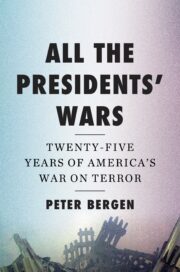
All the Presidents’ Wars:
RECENT ARTICLES

UPCOMING EVENTS
Wednesday, September, 09, 2026
GLOBAL SUMMIT ON TERRORISM AND POLITICAL VIOLENCE, NYC
Thursday, September, 10, 2026
Denver, CELL
Friday, September, 11, 2026
Duke University
Tuesday, September, 15, 2026
Lessons Learned: America’s Post-9/11 Wars, New America DC
Thursday, September, 17, 2026
Georgetown University
Tuesday, September, 22, 2026
International Spy Museum, DC. All the Presidents’ Wars, book event
Thursday, September, 24, 2026
Monterey World Affairs Council, Monterey, CA
Sunday, September, 27, 2026
ALL THE PRESIDENTS’ WARS: TWENTY-FIVE YEARS OF AMERICA’S WAR ON TERROR — AT CONN AVE, Politics & Prose, DC
Tuesday, September, 29, 2026
U Mich Gerald Ford School of Public Policy
Thursday, October, 01, 2026
Arizona State Univ. , Tempe AZ
Monday, October, 05, 2026
Opal Group, DC
Thursday, October, 08, 2026
World Affairs Council of Connecticut, online 7p ET
Tuesday, October, 13, 2026
Arms Control book event, Amy Nelson, New America, DC
Monday, October, 19, 2026
Doha Security Forum, Qatar
Friday, November, 06, 2026
“American Valor,” Omni Shoreham, DC
RECENT FILM AND TV SERIES
GHOSTS OF BEIRUT: SHOWTIME
The Fall of Osama bin Laden, National Geographic

BIN LADEN'S HARD DRIVE, NATIONAL GEOGRAPHIC

