Jared Kushner’s excellent internship, CNN.com
Peter Bergen is CNN’s national security analyst, a vice president at New America and a professor of practice at Arizona State University. Bergen’ is “The Cost of Chaos: The Trump Administration and the World.” The views expressed in this commentary are his own. View more opinion on CNN.
(CNN)In the Trump White House, Jared and Ivanka Kushner were famously referred to as “the interns.” Now, Jared Kushner has written a book about his internship, modestly titled “Breaking History,” in which he casts himself as a diplomatic genius — a latter-day Metternich with a solid dose of Henry Kissinger thrown in.
Describing his time in government, he writes: “Humbled by the complexity of the task, I orchestrated some of the most significant breakthroughs in diplomacy in the last fifty years.” And that’s just in the preface. The nearly 500 pages that follow are rife with this kind of self-congratulatory puffery.
To be fair, Kushner was arguably the most important person in the Trump administration after his mercurial father-in-law. But that was less about his abilities and more because he was one of the very few people — along with his wife and Olympic-level sycophant Vice President Mike Pence — who had seemingly guaranteed job security in an administration known for its rapidly revolving door.
At the Trump White House, Kushner was allowed to dabble in pretty much anything he wanted, while never officially taking responsibility for many of those roles — an enviable position to be in when things didn’t go well. He took over the portfolios of China, Mexico, the Middle East and NAFTA. When the coronavirus hit, he became one of the de facto Covid-19 leaders as well.
By Kushner’s own account, he performed brilliantly in all of these gigs, a fact that, in his view, would be more widely recognized if only other senior administration officials hadn’t been so incapable of appreciating his inestimable talents.
Kushner recounts an episode in which Trump’s chief strategist, Steve Bannon, and Trump’s chief of staff, Reince Priebus, supposedly drafted a resignation letter for Kushner to sign. Kushner takes the opportunity to settle some scores with a number of those top officials, including Bannon, former Trump chief of staff John Kelly, former Secretary of State Rex Tillerson and Dr. Anthony Fauci, the director of the National Institute of Allergy and Infectious Diseases.
Kushner’s real-world experience before entering the White House was running his family real estate company. In that role, he presided over what was arguably the worst real estate deal in Manhattan’s history: Buying 666 Fifth Avenue for a record $1.8 billion in 2007, which became a financial albatross when the recession hit a short time later.
Kushner also purchased the New York Observer, which he reportedly used to attempt to undermine his rivals and suppress unflattering stories about his cronies. The Observer went entirely digital in 2016, and CNN reported at the time that its influence had “diminished” since Kushner had taken it over.
Never mind those failures: When Trump took the White House, Kushner became the go-to guy on an ever-widening set of portfolios. On NAFTA, which Trump called “the worst trade deal ever,” Kushner inserted himself into the re-negotiations around the trade accord.
But, in the end, the deal that he struck, which was rebranded as the United States Mexico Canada Agreement (USMCA),was a lot like the old NAFTA.
The new deal included relatively minor changes, such as opening up the Canadian market to US dairy farmers and requiring automobiles to have a higher percentage (75% instead of 62.5%) of their components manufactured in the three countries in order to qualify for zero tariffs.
Kushner presented the USMCA as momentous (“I helped renegotiate the largest trade deal in history”) despite the fact that the changes between NATFA and USMCA were “mostly cosmetic,” according to a Brookings Institution analysis of the new deal.
The Abraham Accords
Kushner can certainly count the “Abraham Accords” as an achievement, given that two small Gulf monarchies, the United Arab Emirates (UAE) and Bahrain, signed deals recognizing the state of Israel for the first time during the Trump administration. Kosovo, Morocco and Sudan all forged ties with Israel as well.
But the Abraham Accords hardly compare with the 1978 Camp David Accords that then-President Jimmy Carter brokered between Egypt and Israel, two countries that had been at war for decades.
The UAE and Bahrain, meanwhile, had never fought a war with Israel, and the fact that they normalized relations with the Jewish state was more about creating a coalition against their common enemy Iran than Kushner’s brilliant negotiations. Yet, Kushner recounts his role with blustering bravado: “Getting this deal done was like trying to land a plane on an aircraft carrier in the middle of a storm.” Alrighty.
A key part of Kushner’s plan to bring peace to the Palestinian territories was to secure $50 billion of investment for Palestinian projects. But both the Palestinians and the Israelis boycotted the much-ballyhooed Palestinian investment conference that Kushner hosted in Bahrain in June 2019.
And there doesn’t seem to be evidence that Kushner’s investment plans ever came to fruition.
Kushner also seems to have forgotten the original purpose of why he took up the “peace process.” It was purportedly to bring about a two-state solution between Israel and the Palestinians.
Kushner seemed to be operating on the theory that normalizing relations between Israel and the Arab states would cause the Arab countries to push the Palestinians to agree to a two-state solution.
Providing significant Arab investment in the Palestinian territories would also help sweeten the deal. But none of that worked and by the end of the Trump administration, the two-state solution seemed more a mirage than ever.
Meanwhile, the Trump administration gave then Israeli Prime Minister Benjamin Netanyahu — an old family friend of the Kushners — pretty much everything he wanted: pulling out of the Iranian nuclear deal, reversing American policy and declaring that it did not consider Israeli settlements in the West Bank a violation of international law and withdrawing US support for the United Nations Relief and Works Agency (UNRWA), which among other things, educated hundreds of thousands of displaced Palestinian kids living as refugees in countries around the Middle East.
The Crown Prince
Trump’s first overseas visit was to Saudi Arabia, a trip that Kushner had pushed hard for. Shortly after the trip, the Saudis imposed a blockade on Qatar, which had long found their enormously wealthy neighbor to be an irritant. The Saudis knew that with President Barack Obama in the White House, a blockade of Qatar likely wouldn’t fly, but the Trump-Kushner team was another matter.
It’s unclear whether Trump and Kushner were either unaware or simply didn’t care that Qatar sits on some of the largest natural gas reserves in the world and is also home to the largest US military base in the Middle East.
The two Trump cabinet officials who knew the most about Qatar, Tillerson, who was previously the chairman and CEO of Exxon, and then-Secretary of Defense James Mattis, who had commanded CENTCOM, were both angered by the blockade. But Kushner sidelined them both on the Qatar issue.
Saudi Crown Prince Mohammed bin Salman, known as MBS, knew that the one person who really counted in all this was Kushner, who had his back. The absolute Gulf monarchies who run their fiefdoms as family businesses had a shrewd understanding of where the power really resided in the Trump administration.
Kushner’s relationship with MBS, who the CIA concluded ordered the murder of Washington Post columnist Jamal Khashoggi, has certainly proven lucrative. Against the advice of its own board of advisers, a Saudi sovereign wealth fund led by MBS reportedly invested $2 billion in Kushner’s newly formed private equity firm just six months after Trump left office. This extraordinarily cushy deal goes unmentioned in Kushner’s very long book.
Prison Reform
In fairness to Kushner, he certainly did get some things right. One of most important events in his adult life was, inarguably, the imprisonment of his father Charles Kushner, who was convicted of witness tampering and several other charges after he hired a prostitute to seduce his brother-in-law in a New Jersey hotel room while a hidden camera rolled.
As part of the revenge plot, he then sent the tape to his own sister, who along with her husband, had been cooperating with the feds in an investigation into Charles Kushner’s campaign contributions. He was sentenced to two years, and his son movingly describes visiting his father every weekend at the Alabama prison where he was incarcerated.
Given this personal experience, Kushner campaigned for prison reform during his time in the Trump White House and helped create a coalition with Sen. Dick Durbin of Illinois and CNN commentator Van Jones, among others, to move this bipartisan measure through Congress. The resulting reforms helped address some of the disparities in sentencing between crack cocaine convictions and powder cocaine offenses that tended to penalize Black offenders.
It also lowered mandatory minimum sentences for non-violent crimes and gave judges the leeway to dole out more lenient sentences to those who deserved them.
Covid-19
Kushner also deserves credit for helping orchestrate the Trump administration’s vaccination program, known as “Operation Warp Speed,” during the pandemic. The government invested $1 billion in Moderna, which produced a testable vaccine in just a matter of months and placed another $1.5 billion order for 100 million doses of the vaccine.
And while Pfizer didn’t directly take US government money in the research phase, the administration did strike an advance-purchase deal with the company to obtain more than 100 million doses for $1.95 billion.
Yet, Kushner never grapples with his father-in-law’s role as a one-man super-spreader of lies and disinformation. This surely contributed to many unnecessary deaths during the pandemic, given Trump’s influence on his supporters and the key role that the president’s bully pulpit plays in American life.
Early on, Trump repeatedly downplayed the severity of the pandemic, saying the virus would “go away” or “disappear.” Trump also denigrated mask-wearing and almost invariably refused to wear a mask himself at a time when vaccines were not yet available and masks were one of the most effective ways to curb the spread of the virus.
Dr. Deborah Birx, Trump’s coronavirus response coordinator, told a House select subcommittee that that the Trump administration’s botched response to Covid-19 proved lethal for many tens of thousands of Americans. If the administration had followed the science and implemented more mitigation measures, she testified, “We probably could have decreased fatalities into the 30-percent-less to 40-percent-less range.”
Kushner also gives his father-in-law a free pass on spreading falsehoods about the 2020 election being stolen from him. At one point, Kushner writes that “2020 was full of electoral anomalies” without saying exactly what they were. He also credits Trump’s personal lawyer Rudy Giuliani with efforts to overturn the election, while Kushner himself remained focused on Operation Warp Speed and his Middle East peace efforts.
Of course, Kushner also fails to acknowledge his father-in-law’s role in fomenting the attack on the US Capitol on January 6, 2021, and he makes the now debunked claim that “no one at the White House expected violence that day.” In fact, Cassidy Hutchinson, a top aide to the White House’s chief of staff, testified publicly under oath in June that Trump’s national security adviser and the deputy chief of staff for operations had raised the issue of potential violence in the days before January 6.
For readers looking for a robust defense of the Trump administration that makes no pretense to being an impartial account, Kushner’s “Breaking History” is the book for you. For those who are looking for a more wide-ranging and balanced accounting of Trump’s four years in office, I’m looking forward to Peter Baker and Susan Glasser’s book, which is scheduled for release next month, as well as Maggie Haberman’s, which will be out in October.
New America, Arizona State University, 2022 Future Security Forum, Co-sponsors, Joint Special Operations University, Strategic Studies Institute of the U.S. Army War College ONLINE event
New America and Arizona State University invite you to the 2022 Future Security Forum, to be held online on September 13, 2022.
Monday, September 13, 2022 | 12:30 p.m. – 5:00 p.m. EDT
REGISTER
Forum sessions will assess the state of global affairs, from revisiting the security situation in Afghanistan one year after the Taliban takeover, analyzing the rise of domestic extremism, and planning for future cybersecurity threats. Future Security Forum 2022 will feature remarks from:
Joshua A. Geltzer, PhD
Deputy Assistant to the President & Deputy Homeland Security Advisor, National Security Council
Jen Easterly
Director of the Cybersecurity and Infrastructure Security Agency (CISA),
Department of Homeland Security
For more information, please visit the conference website where you can find a detailed agenda.
The Forum is the premier annual event of New America and Arizona State University’s Future Security project—a research, education, and policy partnership that develops new paradigms for understanding and addressing new and emerging global challenges. Co-sponsors for the 2022 Future Security Forum are Joint Special Operations University and the Strategic Studies Institute of the U.S. Army War College.
Biden’s Afghanistan exit decision looks even worse a year later, CNN.com
Editor’s Note: Peter Bergen is CNN’s national security analyst, a vice president at New America and a professor of practice at Arizona State University. Bergen’s new paperback is “The Rise and fall of Osama bin Laden.” from which this article is, in part, adapted. The views expressed in this commentary are his own. View more opinion on CNN.
CNN —
In 1961, after a CIA-backed invasion of Cuba failed spectacularly, President John F. Kennedy said of the Bay of Pigs fiasco, “Victory has 100 fathers and defeat is an orphan.”
Last week, President Joe Biden took a victory lap when he announced that the US had tracked down and killed its most wanted terrorist, al Qaeda leader Ayman al-Zawahiri, who was living in a house in Kabul, Afghanistan. Don’t expect a similar celebration on August 30, the first anniversary of the US troop withdrawal from Afghanistan, which ended the longest war in American history. Any realistic assessment of that action shows that it will long be seen as a defeat rather than a victory – and it’s likely no one will own up to the responsibility for the decision.
The US launched a war against Afghanistan in 2001 after the Taliban regime harbored Osama bin Laden, giving him the ability to plot and carry out the 9/11 terrorist attacks which killed almost 3,000 Americans.
As US and NATO troops battled Taliban and al Qaeda forces, the new US-backed government in Kabul also presided over two decades of progress in Afghanistan. To be sure, Afghanistan wasn’t Norway, but it was becoming a somewhat functional, democratizing Central Asian state that saw striking progress in reducing child mortality and increasing life expectancy, one that provided jobs for women and education for millions of girls; it nurtured scores of independent media outlets, and held regular, if flawed, presidential elections.
All of that changed when the US began withdrawing and the Taliban took over the entire country on August 15, 2021. Women’s rights evaporated. They have no right to work, except in a narrow set of female-related jobs such as cleaning women’s toilets in Kabul; when they travel distances of more than 45 miles they must be accompanied by a male relative, and the Taliban have ordered women to stay at home and to cover themselves completely should they ever venture out. Their male relatives will be punished by the Taliban if women don’t follow these directives. Girls do not have the right to be educated after the age of 12.
On the Taliban’s management of Afghanistan, one data point suffices to underline the group’s gross incompetence: Around half of the Afghan population are today “facing acute hunger,” according to the UN.
On the Taliban’s respect for other ethnic Afghan groups: There is no evidence that the Taliban are creating an “inclusive” government as their leaders claimed they would. Pashtuns make up almost all the leadership of the Taliban, while other ethnic groups in Afghanistan such as the Hazaras, Tajiks and Uzbeks are almost entirely excluded from leadership roles.
On their respect for democracy: The Taliban, conveniently, don’t believe in elections. Instead, they are a theocracy; their leader is known as the “Commander of the Faithful,” a title that claims he is the leader of all Muslims. In the past year under Taliban rule, 40% of Afghanistan’s independent media outlets have closed.
On the Taliban’s alliance with al Qaeda: Well, last week’s news made clear the relationship is thriving. The fact that the leader of al Qaeda, Ayman al-Zawahiri was living in downtown Kabul for months – with what the Biden administration describes as the awareness of some Taliban officials – speaks for itself. Zawahiri was killed late last month in a US drone strike.
After the news broke that Zawahiri had been hiding in Kabul, Lisa Curtis, the top official at the White House for Afghanistan during the Trump administration, tweeted “#Taliban basically asserting Doha agreement allows them to shelter #AlQaeda. Proves it was the worst agreement in US history. Not worth the paper on which it’s written.” This was a particularly damning assessment coming from a senior American official who was working on Afghanistan while the Doha agreement between the US and the Taliban was being negotiated.
One of the most powerful men in Afghanistan today is the acting Minister of Interior, Sirajuddin Haqqani, who has ties to al Qaeda, according to a United Nations report that said he is “assessed to be a member of the wider Al-Qaida leadership, but not of the Al-Qaida core leadership.”
A February 2020 opinion piece in The New York Times with Haqqani’s byline blandly identified him only as “the deputy leader of the Taliban.” What the Times didn’t tell its readers is that Haqqani was also on the FBI’s most wanted list and that his men had kidnapped a reporter for … The New York Times.
This op-ed featured ludicrous lies including, “We together will find a way to build an Islamic system in which all Afghans have equal rights, where the rights of women that are granted by Islam – from the right to education to the right to work – are protected” and “reports about foreign [terrorist] groups in Afghanistan are politically motivated exaggerations by the warmongering players on all sides of the war.”
How it happened
The US pullout from Afghanistan a year ago was orchestrated by a successive series of decisions by former President Donald Trump, President Joe Biden and the chief US negotiator with the Taliban, Ambassador Zalmay Khalilzad. None of these men are ever likely to fully acknowledge their paternity of the debacle that unfolded in Afghanistan, which followed the worst diplomatic agreement in US history that enabled the Taliban to win at the negotiating table in Doha, Qatar what they could never win on the battlefield.
Khalilzad has defended the deal saying, “The negotiation was a result of–based on the judgment that we weren’t winning the war and therefore time was not on our side and better to make a deal sooner than later.”
By the end of the Trump administration, the fledgling Afghan state was supported by only some 2,500 US troops, a tiny fraction of the more than two million men and women in the active-duty US military, reserves, and National Guard units. Assisted by 9,000 allied, mostly NATO troops and 18,000 contractors this small US force was enough to enable the Afghan military to fend off the Taliban, which was never able to capture and hold any of Afghanistan’s 34 provincial capitals before Biden announced the total American withdrawal in April 2021.
Why Biden went through with the withdrawal plan that he had inherited from Trump is still something of a puzzle since there was no large, vocal constituency in the Democratic Party that was demanding a total US pullout from Afghanistan, and Biden’s top military advisers had clearly warned him of the risks of doing so.
In public testimony before the US Senate Armed Services Committee, US Chairman of the Joint Chiefs of Staff Gen. Mark Milley and US CENTCOM commander Gen. Kenneth McKenzie, said they had advised the Biden administration that unless the US kept around 2,500 troops in Afghanistan, the Afghan military would collapse. Collapse it did.
The “Taliban 2.0” delusion
The publication of Haqqani’s op-ed in The New York Times was emblematic of the wishful thinking about the Taliban in the US that had persisted for years. In this view the Taliban were just a bunch of misunderstood backwoodsmen who would eventually do what was only sensible: break with al Qaeda and abandon much of their misogynistic ideology as a quid pro quo for their recognition on the world stage.
This was a classic case of mirror imaging; the belief that the Taliban would do the rational things some gullible Americans expected them to do, as opposed to implementing the quasi-mediaeval ideology that has been at the core of their armed movement since they first emerged almost three decades ago. It was like imagining the Khmer Rouge would “mature” once they had taken power in Cambodia
A key proponent of the view that the Taliban would change if the right carrots were dangled in front of them was Barnett Rubin of NYU, an expert on Afghanistan, who claimed in a paper that he published with the United States Institute of Peace in March 2021 that the US had “underestimated the leverage that the Taliban’s quest for sanctions relief, recognition and international assistance provides.”
Turns out that it was Rubin who overestimated how much the Taliban cared about sanctions relief and international assistance, while he had also vastly underestimated their desire to banish women from jobs and education and maintain their warm relations with their old buddies in al Qaeda. This shouldn’t have come as much of a surprise, since that was exactly how the Taliban had ruled the last time that they were in power in the years before 9/11. The Taliban hadn’t fought the US and Afghan militaries for two decades only to install a quasi-democracy when they came to power for the second time.
The “moderate” Taliban 2.0 that was supposedly emerging in recent years was a profound delusion that gripped US policymakers.
A month after Biden had announced the impending withdrawal of all US troops from Afghanistan, the US negotiator with the Taliban, Khalilzad, testified to the US House Foreign Affairs Committee on May 16, 2021, that those who thought the Taliban would quickly take over the country as the US pulled out were “mistaken.” Khalilzad also asserted that the Taliban would opt for a political settlement over a military victory, testifying, “They say they seek normalcy in terms of relations — acceptability, removal from sanctions, not to remain a pariah.”
Just months later the distinctive white flags of the Taliban were fluttering over the capital, Kabul, and the Taliban began implementing their theocratic state. In a symbolic move the Taliban’s feared religious police soon commandeered what had formerly been the ministry for women’s affairs. Obviously, that ministry would no longer be needed, but the “Vice and Virtue” police would have to be properly accommodated.
The United Nations released a report in May in which it observed that an astonishing 41 members of the Taliban serving in the cabinet or other senior-level government positions in Afghanistan are on UN sanctions lists.
Taliban 2.0 was a mirage, and the Taliban today is Taliban 1.0 with one major difference; they are far better armed than the Taliban that ruled over most of Afghanistan from 1996 to 2001. Now they ride into battle with American armored vehicles and M-16 rifles that were left behind as the US military rushed for the exits last summer. The Taliban today also face a far weaker opposition movement in Afghanistan than was the case for the pre-9/11 Taliban.
Signaling weakness to Russia and China
When Biden spoke to the American people on Aug. 31, 2021, as the last US soldiers departed Afghanistan, he framed the withdrawal as a way of positioning the US to compete better against great-power rivals, saying, “We’re engaged in a serious competition with China. We’re dealing with the challenges on multiple fronts with Russia…And there’s nothing China or Russia would rather have, would want more in this competition than the United States to be bogged down another decade in Afghanistan.”
This was an absurd rationale: For years both China and Russia had hoped to push American forces out of Afghanistan because the country borders both China and the republics of the former Soviet Union. Russia had covertly supported the Taliban, according to the US military, while the Chinese had drawn closer to the Taliban in recent years.
As they pulled out of Afghanistan, the Americans abandoned the vast Bagram Air Base which could house up to 10,000 troops; a more ideal site from which to engage in competition with either China or Russia is hard to imagine.
You could practically hear the high fives in the Kremlin as the US ignominiously retreated from Afghanistan, which seemed to herald an era of the US pulling back from the world.
It hardly seems accidental that three months later Russian President Vladimir Putin moved an army to the border with Ukraine as a prelude to his invasion of the country.
A predictable fiasco
In June 2021, I wrote for CNN, “We could see in Afghanistan a remix of the disastrous US pullout from Saigon in 1975 and the summer of 2014 in Iraq when ISIS took over much of the country following the US pullout from the country.”
That prediction, unfortunately, proved to be accurate; the American pullout from Saigon looked like a dignified retreat compared to the scenes of thousands of desperate Afghans trying to get on planes leaving Kabul airport last August. Some Afghans were so desperate to leave that they clung to the fuselage of a plane that was taking off – and two plunged to their deaths. On Aug. 25, 2021, 13 US soldiers and at least 170 Afghans were killed at the airport by a suicide bomber dispatched by the Afghan branch of ISIS. And the Taliban took over the entire country even before the last US soldiers had left Afghanistan.
Compounding Biden’s disastrous policy decision to completely pull out of Afghanistan was the botched handling of the withdrawal. According to a report about that withdrawal released in February by Republican senators sitting on the Senate Foreign Relations Committee, the first White House meeting to discuss evacuating Americans and Afghans from Afghanistan took place on Aug. 14, only one day before the Taliban seized Kabul and five months after Biden had first publicly announced the total US withdrawal from the country.
Biden patted himself on the back that the US military subsequently extracted 124,000 Afghans from Afghanistan, calling the operation an “extraordinary success,” which was like an arsonist praising himself for helping to try to put out a fire that he had started.
But even accepting the most self-congratulatory view of the Biden administration’s handling of the withdrawal, the vast majority of the Afghans who had worked with the US were abandoned. The Association of Wartime Allies, an advocacy group for Afghans who had worked for the US, estimated in March that only about 3% of the 81,000 Afghans who had worked for the US government and had applied for special visas had made it out of Afghanistan, leaving 78,000 behind.
Four months after the Taliban took over Afghanistan, the Biden administration convened the “Summit for Democracy” in Washington consisting of the world’s democracies. Five months earlier Afghanistan would have warranted an invitation to this summit, but Biden had enabled the Taliban to take over the country, which ended almost every shred of a liberal democracy that had once existed there.
Following the Afghan debacle, Biden’s favorable ratings dropped to the lowest level of his presidency to that point to 46%. They have never recovered.
The Biden administration now faces a policy dilemma of its own making. Since so many millions of Afghans are on the brink of starvation, Biden officials cannot completely turn their backs on Afghanistan. And yet, it’s hard to help Afghans without propping up the Taliban in some manner. The Biden administration has tried to ensure that all US aid to Afghanistan is administered in a way that it doesn’t end up in the hands of the Taliban, but realistically any help that the US sends to Afghanistan tends to help the Taliban remain in power.
This is surely one of the most spectacular own goals the US has ever scored.
Charisma-free al-Zawahiri was running al-Qaeda into the ground, CNN.com
https://edition.cnn.com/2022/08/02/opinions/al-zawahiri-al-qaeda-death-osama-bin-laden-bergen
“Peter Bergen is CNN’s national security analyst, a vice president at New America and a professor of practice at Arizona State University. Bergen’s new paperback is “The Rise and fall of Osama bin Laden.” from which this article is, in part, adapted. The views expressed in this commentary are his own. View more opinion on CNN.”
(CNN)The airstrike that killed al Qaeda leader Ayman al-Zawahiri over the weekend in Afghanistan is part of the long and justified campaign by the United States to bring all the heads of the terror group to justice.
Let’s be clear about who Zawahiri really was. In remarks at the White House on Monday, President Joe Biden described Zawahiri as a terrorist mastermind “deeply involved in the planning of 9/11,” as well as the bombings of the USS Cole in Yemen in 2000 and two US embassies in Africa in 1998 that killed more than 200 people.
But in my two-and-a-half decades of intensive reporting on al Qaeda, and based on discussions with key CIA and FBI officials tracking both Zawahiri and Osama bin Laden, as well as militants who knew both men, I have found little or no evidence for those assertions.
As for Zawahiri’s role in recent years as al Qaeda leader, he was unable to resuscitate the terrorist group, which hasn’t carried out a major attack in the West since al Qaeda-trained suicide bombers killed 52 commuters in London in 2005.
Zawahiri was not a charismatic leader of al Qaeda in the mold of Osama bin Laden. Instead, he had all the charisma of a boring uncle given to long, arcane monologues, someone that you would best avoid sitting next to at Thanksgiving dinner.
This is not to undercut the significance of killing bin Laden’s successor. But let’s be realistic about Zawahiri’s importance historically in the hierarchy of al Qaeda and his role in the organization in more recent years.
While Zawahiri was influential in the very early years of al Qaeda in turning bin Laden against the regimes in the Middle East, he wasn’t involved in bin Laden’s most important strategic decisions — that is, turning him against the US and planning 9/11. And Zawahiri proved to be an incompetent leader of al Qaeda when he took over the group more than a decade ago.
Looking ahead, might there be a plausible successor to Zawahiri waiting in the wings who could revive the group’s flagging fortunes?
The strike against Zawahiri indicates that his successor will likely have substantial freedom of movement to operate in Taliban-controlled Afghanistan. Indeed Zawahiri was living in downtown Kabul, a fact that was well known to some leaders of the Taliban, according to senior US government officials.
Zawahiri’s marginal role in al Qaeda before 9/11
Before 9/11, Zawahiri was a relatively marginal player in al-Qaeda, despite his role as one of the public faces of the organization.
In 1986, bin Laden first met Zawahiri, an Egyptian surgeon, at a hospital in Peshawar, Pakistan where bin Laden was giving a lecture. Bin Laden was intrigued by the older, more politically experienced Zawahiri, who had joined a jihadist group at 15 and had served three years in prison in Egypt. The two became close and Zawahiri encouraged bin Laden to imagine the possibilities of overthrowing the regimes in Arab countries such as Egypt.
As a result, during the late 1980s Zawahiri influenced bin Laden’s thinking about the need to fight the “near-enemy” Arab regimes such as Egypt. But by the time bin Laden had taken up residence in Taliban-controlled Afghanistan in 1996 the two men’s relative importance on the “field of jihad” had changed quite dramatically. Zawahiri was a penniless refugee with virtually no followers whereas bin Laden was a well-known jihadist hero the Taliban had appointed to be responsible for all the Arabs living in Afghanistan.
But bin Laden found a way to use Zawahiri for his own purposes — to advance his goals instead of those of this fellow jihadist whose focus was not on the US but on Egypt. Bin Laden released a statement on behalf of the “World Islamic Front,” a joint declaration made by himself, Zawahiri, and other militant leaders from Bangladesh, Egypt and Pakistan on February 22, 1998. The declaration claimed it was now a religious duty for any Muslim to kill American civilians anywhere in the world.
This declaration of war made no mention of Zawahiri’s lifelong goal of overthrowing the “near-enemy” Egyptian regime and instead was focused on bin Laden’s “far-enemy” goal of attacking America. Bin Laden had co-opted Zawahiri to be part of his holy war against the US, not the other way around, which was the dominant narrative in the years after the 9/11 attacks.
There is no evidence that bin Laden’s decision to target the US had any input from Zawahiri, despite later claims that Zawahiri was really the “brains” behind bin Laden.
The troika who founded and ran al-Qaeda was bin Laden at the apex and his two key lieutenants, the Egyptian military commanders, Abu Ubaidah and Abu Hafs al-Masri (whose real name was Mohammed Atef), both of whom had been on bin Laden’s payroll since the beginning of 1987. They were bin Laden’s men, not Zawahiri’s.
Like other reporters, I had inflated Zawahiri’s importance to bin Laden’s thinking in my 2001 book, “Holy War, Inc.: Inside the Secret World of Osama Bin Laden.” After examining all the evidence, I have since concluded that Zawahiri was a marginal figure when it came to influencing bin Laden’s views, and that he played only a small role in the actions of al-Qaeda in the years leading up the 9/11 attacks.
This view is also shared by Michael Scheuer, who led the bin Laden unit at CIA from 1996 to 1999, by Daniel Coleman, the most knowledgeable FBI agent investigating bin Laden in the years before 9/11 and by Montasser al-Zayyat, who spent years in prison in Egypt with Zawahiri.
Noman Benotman, a leader of the Libyan Islamic Fighting Group, who knew both men, also said it was bin Laden who told Zawahiri, “Forget about the ‘near enemy’ [the Egyptian government]. The main enemy is the Americans because they dominate the whole area and they’re supporting these Arab regimes.”
According to the 9/11 Commission, it was bin Laden, Abu Hafs al-Masri, and Khalid Sheikh Mohammed, an operational planner of 9/11, who discussed what American targets to hit. They selected the US Capitol, the Pentagon and the World Trade Center. Zawahiri was not involved in deciding to attack these targets, according to the Commission.
Bin Laden formally merged Zawahiri’s own Egyptian Jihad Group into al-Qaeda in June 2001. Feroz Ali Abbasi, a Ugandan Briton who was then training at an al-Qaeda camp, described the merger as “more like the assimilation” of Zawahiri’s group. At this point, Zawahiri’s group consisted of only ten men, according to Abu Walid al-Misri, who edited the Taliban’s Arabic-language newspaper. Abu Jandal, one of bin Laden’s key bodyguards, put the number of Zawahiri’s followers at seven Egyptians.
It was only in the summer of 2001 that bin Laden told Zawahiri the details of the upcoming attacks on New York and Washington.
Months after the 9/11 attacks, Abu Hafs al-Masri was killed in a US airstrike and Zawahiri succeeded him as bin Laden’s deputy. For the next decade bin Laden and Zawahiri both disappeared until bin Laden was tracked down by the CIA to the Pakistani city of Abbottabad, where he was killed in a US Navy SEAL operation in early May 2011.
Zawahiri takes over al Qaeda
Even though Zawahiri had been bin Laden’s deputy since 2001, it took more than six weeks for the group to announce Zawahiri’s ascension to the top spot. Saif al-Adel, an Egyptian former Special Forces officer was appointed “caretaker” leader of al Qaeda in the wake of bin Laden’s death, according to CNN. Adel had long played a prominent role in the terrorist group.
Eventually Zawahiri was appointed to the top job but proved so incompetent in the job that al-Qaeda and its most successful affiliate, ISIS, formally split in 2014. It was the first time in its history that al-Qaeda had officially rejected one of its affiliates, and this was not a sign of strength since ISIS was now the most lethal terrorist group in the world.
During Zawahiri’s time as leader of al Qaeda, the terrorist group was never able to launch an attack in the US, nor against American interests around the world. (An al Qaeda affiliate in Yemen was in communication with a Saudi military officer who killed three US sailors at Naval Air Station Pensacola in 2019, but the central al Qaeda organization led by Zawahiri seems to have had no role in that attack.)
A possible successor?
The Taliban takeover of Afghanistan has given al Qaeda “increased freedom of action” in Afghanistan according to a report by the United Nations released in May. Zawahiri apparently felt comfortable at his safehouse in Kabul where he produced video messages, according to senior US officials.
According to the UN, Zawahiri “issued more frequent recorded messages after the Taliban took over Afghanistan last August,” appearing in eight videos. And al Qaeda also renewed its pledge of allegiance to the leader of the Taliban, according to the UN.
The most likely successor to Zawahiri is Saif al Adel — the former al Qaeda caretaker when bin Laden was killed — who lived in Iran for years after 9/11 and could already be back in Afghanistan.
Adel fought the Soviets in Afghanistan during the 1980s, which is how he became part of al Qaeda during its earliest days. According to senior Saudi counterterrorism officials, from Iran, Adel authorized al Qaeda’s branch in Saudi Arabia to launch a campaign of terrorist attacks in the Saudi kingdom that began in May 2003, a campaign that killed scores of people.
If it is Adel who is tapped for the top job in al Qaeda, he will likely do a far better job of resuscitating al Qaeda than Zawahiri did, which, admittedly, is a low bar.
Opinion: The January 6 hearing witness who should make Trump nervous, CNN.com
“Peter Bergen is CNN’s national security analyst, a vice president at New America and a professor of practice at Arizona State University. Bergen’s new paperback is “The Cost of Chaos: The Trump Administration and the World.” The views expressed in this commentary are his own. View more opinion on CNN.”
(CNN)Matthew Pottinger is one of the very few senior officials to have served for almost the entirety of the Trump administration. He only submitted his resignation on the day of the US Capitol riot — January 6, 2021.
Pottinger is expected to be a star witness at Thursday’s climactic final summer public hearing of the House select committee investigating the attack on the US Capitol. As the deputy national security adviser when the insurrection happened, Pottinger is the most senior Trump administration official to testify before the committee publicly.
His words are likely to carry a lot of weight. Throughout each step of his career, Pottinger, now in his late 40s, has shown a marked streak of independence and fortitude. It will be difficult for Team Trump to paint Pottinger as a junior official who wasn’t “in the room” for the events that he will testify about, or that he is part of the purported “deep state” — since he was appointed to the administration by Trump’s first national security adviser, retired Lt. General Michael Flynn, who has since been at the forefront of the efforts to overturn President Joe Biden’s electoral victory.
Pottinger’s long service in the upper echelons of the Trump administration is why committee members saved him for what they must be hoping will be a dramatic prime time moment on Thursday. (Disclosure: I was interviewed by staff members of the committee who were interested in discussing the history of right-wing terrorism).
Pottinger is also far from a typical Trump apparatchik, nor is he a typical civil servant. He has had a very varied career from working as a reporter in China for the Wall Street Journal; to serving as an officer in the US Marines in Afghanistan; to working at an investment fund in New York before he served as a top national security official at the White House.
Pottinger’s father, John Stanley Pottinger, was a lawyer in the civil rights division of the Richard Nixon and Gerald Ford administrations. He was educated at the Massachusetts prep school Milton Academy and then at the University of Massachusetts where he studied Chinese. Pottinger is now married to the medical researcher and virologist Yen Pottinger, who fled Vietnam as an infant.
As a reporter in China, Pottinger faced down threats from the Chinese security services, as he recounted in a 2005 essay in the Wall Street Journal. “I’ve been arrested and forced to flush my notes down a toilet to keep the police from getting them, and I’ve been punched in the face in a Beijing Starbucks by a government goon who was trying to keep me from investigating a Chinese company’s sale of nuclear fuel to other countries,” he wrote.
After his posting in China, Pottinger took the unusual step for a journalist of joining the US Marines in 2005 at the relatively late age of 32. The Marines then deployed him to Afghanistan and Iraq.
It was in Afghanistan that he crossed paths with then-Major General Michael Flynn. Together they co-authored an influential paper “Fixing Intel,” which made the case that US intelligence agencies officials had to do a better job of getting out among the Afghan population if they really wanted to understand what was going on in Afghanistan. The paper’s publication in 2010 caused a stir, as it was published outside of regular government channels by a Washington DC-based think tank.
In 2017, after Flynn was appointed Trump’s first national security adviser, he tapped Pottinger to be the top official on Asia policy at the White House. Pottinger’s years working as a reporter in China proved to be quite consequential for the Trump administration, as his experiences there deeply informed his skeptical attitude to the Chinese and were subsequently reflected in the Trump administration’s policies on China. Those experiences also colored Pottinger’s perception of the threat posed by a mysterious new disease originating in China known as Covid-19.
Flynn served only three weeks as national security adviser before he was fired because he had lied to then-Vice President Mike Pence about the content of his discussions with the Russian ambassador to the United States.
r
Flynn’s successor as national security adviser, Lt. General H.R. McMaster, relied on the Mandarin-speaking Pottinger and his deep expertise on China. In McMaster’s book “Battlegrounds,” which recounts his work at the Trump White House, he describes Pottinger as “my ‘professor'” on China.
The fruits of McMaster and Pottinger’s work on China could be seen in the Trump administration’s national security strategy, released in 2017, which took a far more skeptical and hardline approach to China than previous administrations had. The Trump strategy accused the Chinese of stealing US intellectual property every year valued at “hundreds of billions of dollars” and warned that China “is building the most capable and well-funded military in the world, after our own.”
When Covid-19 first emerged as a public health issue in early 2020, Pottinger — who had covered the SARS outbreak in China when he was a reporter — took the possibility of the emergence of a pandemic far more seriously than most Trump officials did. Trump himself was largely dismissive of the threat and denigrated mask-wearing, which was one of the only effective public health measures before vaccines against Covid-19 became available.
According to Pulitzer Prize-winner Lawrence Wright’s authoritative book about the Trump administration’s response to Covid-19, “The Plague Year,” Pottinger bucked the prevailing winds at the Trump White House, wearing a mask to meetings beginning in March 2020 when no other Trump officials were wearing masks. He was also instrumental in persuading Trump to close down most travel from China to the US in the early days of the pandemic, according to Wright.
Pottinger persuaded leading American public health expert, Dr. Deborah Birx, to come to the White House to coordinate the coronavirus task force that was overseeing the response to the virus, according to Birx in her memoir “Silent Invasion.”
On Thursday, Pottinger, who has stayed largely out of the spotlight during his career, will step forward into what will surely be the most well-publicized role of his life, as a witness to what his commander-in-chief was doing during the assault on the US Capitol. That role will be informed by Pottinger’s career as a journalist reporting under difficult circumstances in China, as a US Marine officer serving at the height of the Afghan War and as an official who survived almost four years in the tempestuous Trump White House.
It will be the role of a lifetime. And I anticipate his testimony will be both highly credible and quite damaging to Trump and his gross dereliction of duty while his supporters swarmed and attacked the Capitol.
The global jihadist movement is down — but not out, CNN.com
“Peter Bergen is CNN’s national security analyst, a vice president at New America and a professor of practice at Arizona State University. Bergen’s new paperback is “The Cost of Chaos: The Trump Administration and the World.” The views expressed in this commentary are his own. View more opinion on CNN.”
(CNN)ISIS and al Qaeda have largely receded from the headlines. It’s been three years since ISIS lost the last vestiges of the vast geographical “caliphate” that it had once lorded over in Iraq and Syria, while al Qaeda has found it hard to regroup after the death of its founder Osama bin Laden more than a decade ago.
Yet ISIS is far from defeated in its heartland. The United Nations points to the continued presence of ISIS fighters in Iraq and Syria, estimating their total strength to be between 6,000 and 10,000 fighters, according to a report published on Tuesday.
That strength was underlined by a dramatic prison break in January at a prison in Hasakah in northeastern Syria, where more than 3,000 ISIS fighters reportedly were held. ISIS fighters and US-allied Kurdish forces fought a 10-day battle at the prison, during which 100 to 300 ISIS fighters escaped, according to the UN report.
As a result of this resilience, the US continues a campaign of special operations forces ground raids and airstrikes against ISIS leaders. In February, Abu Ibrahim al-Hashimi al-Qurayshi, the group’s leader, died in a US ground operation, while earlier this month, a US airstrike killed another militant who was part of the group’s leadership, according to US Central Command.
But these military operations will not achieve much in the long term if the thousands of ISIS fighters and tens of thousands of displaced women and children from multiple countries remain unrepatriated in lightly secured and unsafe prisons and camps in northeastern Syria, creating what could be a whole new generation of ISIS recruits.
The solution is for the many countries that have their nationals in prisons and camps in northeastern Syria to take back their ISIS fighters for prosecution in cases where it’s merited. As for women and children living in the camps, they should be reintegrated back into their home societies and entered into deradicalization programs if that should prove necessary.
Senior US government officials, speaking Wednesday at a conference at the Middle East Institute in Washington, stressed that ISIS is far from defeated. Joshua Geltzer, US deputy homeland security adviser, told me in a discussion at the institute that ISIS remains “a threat to countries where it continues to have a presence, which is about 30 countries worldwide. It is still a threat to the region, Iraq, Syria and neighbors. And it is still a threat to the United States and our allies and partners.”
Of particular concern are more than 10,000 ISIS fighters and around 60,000 mostly women and children who are being held by America’s Kurdish allies, the Syrian Democratic Forces, in prisons and camps in northeastern Syria. The United Nations estimates that 30,000 of those held in the camps are under the age of 12 and are “at risk of radicalization” by ISIS ideologues.
Few countries will take back their nationals who are living in the squalid camps, fearing that they may be importing an ISIS problem. In the past three years, Iraq has taken back more than 600 fighters and nearly 2,500 “displaced Iraqi nationals,” according to Timothy Betts, the acting US special envoy for the Global Coalition to Defeat ISIS. This month, France took back 51 women and children, while 39 Americans have been returned to the United States, according to Betts.
Yet that number is less than 5% of the mostly 60,000 women and children — the majority from Iraq and Syria — and the more than 10,000 ISIS fighters who are being held in northeastern Syria.
At the current slow rate of repatriation, the ISIS fighters and tens of thousands of women and children might take decades to return to their home countries. By that time, even the youngest children in the camps could be adults in their 30s and will have spent almost their entire lives living in the filthy, disease-infested camps, which are ripe for ISIS indoctrination.
A wild card causing considerable consternation among US national security officials is the saber rattling by Turkey in recent weeks that it plans to send its military into neighboring northeastern Syria to annex territory controlled by the US-allied Kurdish groups fighting ISIS and running the facilities where the ISIS fighters and the women and children are being held. Turkey considers those Kurdish groups to be terrorists.
Dana Stroul, deputy assistant secretary of defense for the Middle East, warned last week, “The United States opposes any Turkish operation in northern Syria. Such an operation puts at risk US forces, the coalition’s campaign against ISIS, and will introduce more violence into Syria. It would effectively end a ceasefire that has been in place for years at a time when violence is at its lowest levels since the onset of the conflict.”
Also concerning is that the Taliban’s return to power in Afghanistan almost a year ago because of President Joe Biden’s foolhardy decision to pull out all US troops from the country has given both al Qaeda and ISIS greater room to maneuver there, according to Tuesday’s UN report. Biden’s move was bad policy, and the US pullout was terribly executed, allowing the Taliban to maintain their alliance with al Qaeda and to bar women from jobs and teenage girls from education.
The UN report noted that Ayman al-Zawahiri, who replaced bin Laden as al Qaeda’s leader, is issuing “regular video messages that provided almost current proof of life” and “Zawahiri’s apparent increased comfort and ability to communicate has coincided with the Taliban’s takeover of Afghanistan. …”
In Afghanistan, both ISIS and al Qaeda have acquired “night vision equipment, thermal imagers, and steel-penetrating bullets,” according to the UN report.
The United Nations assessed, however, that — for the moment — al Qaeda does not pose an “immediate international threat from its safe haven in Afghanistan … and does not currently wish to cause the Taliban international difficulty or embarrassment.”
That’s the good news. But the bad news, according to the UN, is that al Qaeda now has key allies within the Taliban’s de facto government in Afghanistan, which will doubtless give al Qaeda more resources to regroup. Meanwhile, the local branch of ISIS in Afghanistan is now one of the “most vigorous” of ISIS’ regional networks globally, according to the UN.
The global jihadist movement, whether in Afghanistan, Iraq or Syria, and whether part of ISIS or al Qaeda, is down but not out. And these groups will continue to take advantage of ungoverned or lightly governed spaces in the Muslim world, where they will remain a threat to the governments and populations of Muslim-majority countries — and to the West — for the foreseeable future.
Mr. Biden goes to Riyadh (hat in hand), CNN.com
“Peter Bergen is CNN’s national security analyst, a vice president at New America and a professor of practice at Arizona State University. He has made multiple reporting trips to Saudi Arabia since 2005. Bergen’s new paperback is “The Cost of Chaos: The Trump Administration and the World.” The views expressed in this commentary are his own. View more opinion on CNN.”
(CNN)A cynic is rarely disappointed by the actions of his fellow human beings, and President Joe Biden’s trip to Saudi Arabia this week won’t disappoint many cynics because it is so entirely
Sure, Biden as a presidential candidate may have said that Saudi Crown Prince Mohammed bin Salman’s kingdom was a “pariah” for sending operatives to Turkey who murdered the US-based journalist Jamal Khashoggi, dismembering him in the Saudi Consulate in Istanbul in 2018, according to a US intelligence report. (The Saudi Foreign Ministry reacted to that report, saying it “completely rejects the negative, false and unacceptable assessment … pertaining to the Kingdom’s leadership, and notes that the report contained inaccurate information and conclusions.”)
MBS, as he is widely known, also was the prime driver in the Saudis’ military intervention in Yemen’s civil war in 2015, helping to precipitate what the United Nations warned could be the worst humanitarian crisis in the world.
Not only that, MBS’ feckless intervention spectacularly backfired; instead of ridding Yemen of Shia Houthi rebels, they are now even more entrenched in the country and are today aligned with Iran, which supplies them with missiles and drones that have repeatedly targeted Saudi Arabia as well as its close ally the United Arab Emirates.
MBS has also imprisoned pretty much anyone in Saudi Arabia who might threaten his absolute power, from former Crown Prince Mohammed bin Nayef to Saudi women who had simply demonstrated for the right to drive.
He arrested scores of Saudi Arabia’s top businessmen, accusing them of corruption. They were detained in the Ritz-Carlton hotel in Riyadh, and after more than $100 billion reportedly was obtained in settlements from them, the majority of them were released in what must be the most expensive hotel tab in history.
In March, the regime carried out a mass execution of 81 men, Saudi authorities said, Reuters reported. According to Human Rights Watch, 41 of the men belonged to the kingdom’s Shia minority group who are sometimes imprisoned or executed simply for taking part in protests. (Saudi Arabia denies accusations of human rights abuses, according to the Reuters report.)
But now high gas prices are contributing to the worst inflation in the United States in four decades. So, Biden will go to Riyadh and meet with MBS. The Crown Prince will no doubt ensure that there are well-publicized images of his meeting with the US President.
Every US president since Franklin Delano Roosevelt has made similar calculations of the kind that Biden is making about the House of Saud. Sure, the Saudi monarchs may be despots — slavery was only officially abolished in the kingdom in 1962, and MBS granted women the right to drive four years ago — but Saudi Arabia is one of the world’s top oil producers and has around a sixth of the world’s proven oil reserves, which means that the Saudis can open up the taps and let the price of oil fall, or they can close the taps and the price of oil will rise.
Relations between nations are based on shared interests, and the US-Saudi relationship is bound up not only with ensuring a steady supply of reasonably priced oil but also with counterterrorism initiatives and efforts to try and contain Iranian influence in the region. For successive American governments, these interests have tended to trump any concerns about the Saudis’ generally dismal human rights record.
This calculus about the Saudis was well-described by then-President Barack Obama, who told CNN in 2015, “Sometimes we have to balance our need to speak to them about human rights issues with immediate concerns that we have in terms of countering terrorism or dealing with regional stability.”
As long as the US economy remains deeply tethered to hydrocarbons — aircraft, for instance, won’t be flying on electric batteries anytime soon — and as long as the Saudis sit on an ocean of oil, this calculus will surely continue. And MBS is 36 so he could rule over Saudi Arabia for decades to come.
To be sure Biden is not embracing the Crown Prince in the same obsequious manner that former President Donald Trump did. Trump made his first overseas visit as President to the kingdom and strongly endorsed the subsequent Saudi blockade of its neighbor Qatar, even though Qatar houses the largest US military base in the Middle East, which was then playing a key role in the wars against ISIS and the Taliban.
Trump also pulled out of the Iranian nuclear deal, a key Saudi foreign policy goal, even though that deal was working, according to international inspectors and US intelligence agencies.
Trump’s son-in-law, Jared Kushner, who was effectively the President’s shadow secretary of state, led the administration’s campaign to cozy up to MBS, whom he texted with regularly on WhatsApp.
Kushner’s cultivation of the Crown Prince would eventually provide a handsome payday. Six months after the Trump administration left office, against the advice of its advisers, Saudi Arabia’s sovereign wealth fund, which is led by MBS, invested $2 billion in Kushner’s equity fund, according to The New York Times.
Unlike Trump/Kushner, however, Biden is not a complete patsy for Saudi interests. When Biden came into office, his administration ended the Trump White House’s designation of the Houthis as a terrorist organization, which was complicating aid efforts to the Yemenis, hundreds of thousands of whom have died of disease or malnutrition because of the civil war.
On his trip to Riyadh, Biden will surely also have his requests of the Saudis, such as maintaining a recently negotiated fragile truce in Yemen, which is now more than three months old. Another ask will be encouraging closer ties with Israel, which would likely fall far short of any formal recognition of the Jewish state but could involve confidence-building measures such as allowing planes flying to and from Israel overflight rights in Saudi airspace.
And, of course, Biden’s main goal will be getting the Saudis to help bring down oil prices, which they already began to do in a modest manner in May.
But MBS will also get what he wants, which is a well-publicized meeting with the US President, demonstrating to the world that his kingdom is no pariah.
Biden Admin’s Counter-ISIS Strategy, Middle East Institute, DC
At 1545-1615, a Fireside Chat on the #Biden Administration’s Counter-#ISIS Strategy in the Middle East, with:
– Joshua Geltzer (@jgeltzer
Deputy Assistant to the President & Deputy Homeland Security Advisor, @WHNSC
Peter Bergen, @NewAmerica & @CNN
Former journalist Peter Jouvenal among five UK nationals to be released in Afghanistan, CNN.com
By Peter Bergen, Zahid Mahmood, Masoud Popalzai and Aliza Kassim, CNN
Businessman and former cameraman Peter Jouvenal is among five British nationals to be released in Afghanistan, his wife Hassina Syed told CNN.
“We are thrilled Peter is coming home. Thanks to the Afghan administration for releasing him,” Syed said on Monday.
Jouvenal was detained by the Taliban in mid-December. He was visiting Afghanistan on business, according to his wife. Along with the four other British citizens, he had been held for six months by the Taliban.
Jouvenal previously owned the Gandamack Lodge, a hotel in Afghanistan’s capital Kabul popular with journalists, aid workers and diplomats, which opened in 2002 after the Taliban was toppled by US forces. It closed in 2014.
Peter Jouvenal, pictured in 2004, has been detained by the Taliban.
At least 6 British citizens and 1 American are being held by the Taliban in Afghanistan
Jouvenal filmed CNN’s interview with Osama bin Laden in 1997. He had covered the wars in Afghanistan since the Soviet occupation of Afghanistan during the 1980s.
Earlier on Monday, the UK’s Foreign Secretary, Liz Truss, announced the government had secured the release of five British nationals detained in Afghanistan.
“They will soon be reunited with their families. I am grateful for the hard work of British diplomats to secure this outcome,” she said.
However, the UK Foreign, Commonwealth and Development Office (FCDO) made no reference to the British nationals’ identity in its statement.
Earlier on Monday, the FCDO said in a statement that the British nationals’ travel to Afghanistan was a “mistake,” adding that they had gone there against government advice and apologized for any breach of Afghan culture or laws.
Safiullah Rauf
“The UK government regrets this episode,” the FCDO said.
Taliban spokesman Zabiullah Mujahid confirmed the release of the five British nationals on Monday.
“A number of British nationals who had been involved in activities that were against the laws and traditions of Afghan people were detained around six months back,” Mujahid wrote on his official Twitter account.
“After repeated talks and meetings between the Islamic Emirate of Afghanistan and the British side, yesterday they were released and handed over to their country, according to an agreement.”
The detained nationals have “pledged to adhere to the laws of Afghanistan, the traditions and culture of the people and won’t violate them again,” said Mujahid, who also said that Afghanistan was a safe place.
“Afghanistan is safe for all, anyone can come to Afghanistan for charity works and tourism,” he said.
Forensic psychologist largely dismisses common talking point that mass shootings are caused by individuals with mental disorders, CNN.com
Editor’s Note: Peter Bergen is CNN’s national security analyst, a vice president at New America and a professor of practice at Arizona State University. His new paperback is “The Cost of Chaos: The Trump Administration and the World.” View more opinion on CNN.
CNN —
Last month, the massacre at a supermarket in a Black neighborhood in Buffalo, New York, that left 10 people dead was followed just days later by another massacre at an elementary school in Uvalde, Texas, in which 21 people – 19 of whom were young children – were murdered. This string of violence has many Americans wondering: Can mass murderers be stopped?
Reid Meloy, a forensic psychologist and a former professor of psychiatry at the University of California, San Diego, has been researching this question since the 1980s, when he started examining stalkers who sometimes carried out violent attacks. Meloy published “The Psychopathic Mind,” a key text about aggressive behavior, in 1988. After the 9/11 attacks, Meloy expanded his research to examine terrorists who share some characteristics with other kinds of mass murderers and started working with the Behavioral Analysis Unit of the FBI.
I spoke to Meloy earlier this week. Our conversation was edited for clarity.
BERGEN: What are the most ridiculous things people tend to say after a school shooting or a terrorist attack?
MELOY: When people claim that it is all about mental disorder, that sets my teeth on edge. If you say it’s about mental disorder, how do you then account for the millions of people in the United States who struggle with mental disorders and are not violent?
Our first studies of murderers began to be published in the mid-to-late 1990s. We see a small proportion of these individuals having a diagnosed mental disorder, but it’s typically not the majority of cases. And it also became apparent that murderers did not, as the public then believed, simply “snap” – which was also a term that was widely used at the time by the media – but that these individuals had spent considerable time planning their targeted attacks.
BERGEN: Are there commonalities between a terrorist and a school shooter?
MELOY: Typically, what we see in these cases, whether they’re terrorism-driven or whether they’re not ideological, is that there will be planning and preparation. Typically, research precedes that. It will go on for weeks, if not months – this is what we term being on a “pathway to violence.”
Another characteristic that’s shared is that even when you peel away the ideology motivating some of these individuals, you will oftentimes find in both groups a personal grievance, and the grievance typically is a major loss that may be cumulative, or it may be one event that has happened to them. The loss could be the loss of a job. It could be the loss of an important relationship. Typically, it is a loss that heavily impacts their day-to-day life.
There is first the loss, and then there’s humiliation, anger and blame, and then what follows is the person deciding that there is only one solution to this grievance, and that is to carry out a violent act. That element is very important because everyone has had a personal grievance at various times in their lives, often multiple grievances, but they don’t typically choose violence as a solution to their problems.
BERGEN: Can you walk us down the “pathway to violence”? What’s the process?
MELOY: The stages are as follows. The first one is a personal grievance. Secondly, there’s what’s called ideation or violent ideation. In other words, a person decides that violence is the only solution to this particular issue or problem, and they then make the decision to intend to be violent. Thirdly, they start to research how they could carry out an attack on what their targets might be. Fourthly, they begin to plan and prepare for the attack, and that typically tends to be much more of a tactical and specific focus because you’ve decided whom you’re going to attack and the means by which you’re going to attack. The next stage is typically a probing or breaching of the security surrounding the target. Lastly is carrying out the attack.
BERGEN: What are some interventions that might work to stop an individual from going down the pathway to violence and carrying out an attack?
MELOY: We think of interventions in three ways. One is way upstream on the pathway to violence, by trying to change the motivation of the individual to carry out an attack. It could be getting a depressed and angry student in high school into psychotherapy. The paradox here is if you make that intervention successfully, you never can know for sure whether he would have attacked if you hadn’t done anything. So way up on the pathway, the interventions tend to focus on trying to effect motivation.
In the midrange of the pathway to violence that’s where, for instance, gun safety and gun control becomes very important. You’re going to try to inhibit and prevent an angry 18-year-old from getting an AR-15 semi-automatic rifle. So you’re trying to inhibit at the level of means.
Opinion: The Senate’s framework on guns isn’t politics as usual. It’s a sea change
And then way down on the pathway just before an attack, the focus is on the opportunity. How do you harden the target so the person cannot access the target?
The movement along the pathway to violence with its different stages is typically the same, whether it’s a terrorist or a school shooter, and along the way, one of the most fascinating things is these individuals will engage in “leakage,” which is communication to a third party of the intent to attack. And in one study, we saw that more than half of the time, the individual told a third party what they were planning to do.
What frustrates me is that there is a continuous failure of many individuals to take “leakage” seriously and report it to some authority. They often hear a person articulating their violent intent, and they minimize it or deny that they actually heard what they heard, and then they don’t report it. And then a horrible event unfolds. That for me is always very difficult to see repeated again and again as these attacks unfold and to see events such as those in Buffalo and Uvalde, where these killers were troubled and made a number of warning behaviors prior to their attacks, and there was little or nothing done to try to stop them from doing what they were about to do.
However, there are also people who engage in “leakage” who don’t carry out an attack. So you’ve got this paradox that is sometimes very difficult for the public to understand. I worry about complacency, and that even affects people like me who are looking at these cases all the time. You might think: “Well, here’s another case of leakage where there was actually no intent to carry out the attack.” But you just don’t know that. What that means operationally is you have to investigate every case of leakage.
BERGEN: What are typical warning behaviors that should be concerning, and why do people not report them?
MELOY: I want to highlight three warning behaviors. The first one is what we call “pathway,” and pathway is where the individual is engaging in very specific tactical planning and preparation for their act of violence. This could be doing specific research about how to build a bomb, trying to secure materials to do so, and some people are aware that something suspicious is going on and they don’t report it.
It could also involve an individual accumulating firearms or accelerating their frequency of practicing with those firearms and then making comments to people about their intent to attack. We call that “pathway warning behavior” when we start to see those markers of tactical planning.
FILE – This June 29, 2016, file photo shows guns on display at a gun store in Miami. Support for tougher gun control laws is soaring in the United States, according to a new poll that found a majority of gun owners and half of Republicans favor new laws to address gun violence in the weeks after a Florida school shooting left 17 dead and sparked nationwide protests. (AP Photo/Alan Diaz, File)
Opinion: Here’s the reason people tell me they want to buy an AR-15. And it’s simply ludicrous
A second warning behavior its what we call “identification,” which is where an individual identifies oftentimes with previous shooters and they make statements on social media. They put out information to other individuals in their social circle, and much of this now is being done on the internet through various chat rooms or it may be more private direct messaging.
It could be posting on a Facebook page, where the individual will post photos or images or make statements about admiring a particular attacker or a school shooter. The best example of that is the attacker at the high school in Parkland, Florida, where 17 people were killed in 2018. A few months before he carried out the massacre there, he had posted on a YouTube channel this statement: “I’m going to be a professional school shooter.” That kind of statement is a statement of self-identity or identification, where you want to become an attacker.
We see this also in the terrorism realm. Would-be terrorists might show, for instance, a preoccupation with ISIS, and then they post on their social media. They may make admiring statements about certain terrorist groups or certain individual terrorists, and then one day, they post this statement, “I am a soldier for ISIS.” What they’ve done is they’ve shifted from a preoccupation with ISIS to identification with ISIS, shifting from what they’re thinking about all the time to who they want to become.
The third warning behavior is what we call “last-resort behavior.” What that means is that the person decides in their mind, “I must act, and I must act now.” So we’re always looking for last-resort statements that the individual is making, and a lot of times, this information will be posted on social media accounts, but the attackers are becoming smarter, and, typically, they’re not posting this material until an hour or two before the attack because they know that these statements might also play a role in whether or not they’re going to be stopped.
BERGEN: Many Americans are unaware of this “pathway to violence” framework, and they aren’t aware of the emerging discipline of “threat management” to try and prevent individuals from going down that path. When did work on this start?
MELOY: The work in this area began in earnest in the mid-to-late 1980s. Traditionally, law enforcement understood acts of violence as individuals getting very angry, and they’d lose control and be violent toward another person. But what emerged out of this work was the understanding that there was another mode of violence called “predatory violence,” which differs from simply getting angry and becoming violent in that it’s premeditated. And this predatory violence and its understanding became a core aspect of targeted attacks and how these individuals moved forward and carried out attacks.
As a result of the better understanding of the “pathway to violence” in the first decade of the 21st century, you did see a rapid growth in threat assessment and threat management teams at the secondary school level, and you began seeing a federal push to establish threat management teams. Threat management teams are now very embedded in various entities within the federal government, ranging from the Department of Defense and the FBI to the Capitol Police and the US Marshals Service.
BERGEN: Seeking some kind of fame seems to be an important driver for a number of mass shooters. Is a solution to that not naming the perpetrator in media accounts, whether they’re a terrorist or a school shooter?
MELOY: I’m very happy that the responsible media has taken that approach where typically they’re not publicizing the photograph of the shooter, particularly in tactical gear, which used to happen all the time. Secondly, the suspect’s name is not being publicized to the degree that it used to be, and I think that does tend to dampen down one of the dark ripple effects of these events, which is other individuals will follow prior shooters and want to learn as much about them as possible so they can do two things: They can imitate them, and they can also try to kill more people than them.
BERGEN: In the what-can-be-done category, we’ve talked about the media, not inadvertently lionizing some of these perpetrators. What else do you recommend?
MELOY: I think the approach we have to take is the public health approach. There are two main levels to this: There’s primary prevention like we saw with Covid-19 vaccines. You don’t know who’s going to get Covid-19, but what you do is you try to get as many people vaccinated as possible.
Now, the translation of that into the threat management of potential mass shooters is the better regulation of firearms in the United States, and that is the primary prevention approach that you see being carried out at the federal level in a very weak form.
What we need is universal registration of firearms and much closer regulation of individuals purchasing firearms. And that’s primary prevention, because you don’t know which one of those individuals is going to want to carry out an attack and try to access a firearm amid the millions of very responsible gun owners all over the country. So you protect the Second Amendment, but none of our freedoms are absolute: You typically have certain conditions and measures of responsibility for exercising your rights.
A secondary prevention is the identification of symptomatic individuals. So in a medical scenario, if an individual started to experience symptoms, you would intervene medically. So secondary prevention in the case of those who might be on the pathway to violence is to identify symptomatic individuals and then intervene to try to divert them from that pathway.
Some states now mandate threat assessment management teams in their secondary school systems. Way upstream on the pathway to violence, that may mean more publicly available mental health care. Way downstream close to an attack, it becomes oftentimes law enforcement intervention. So you tailor the intervention to where you see this individual, where they are on the pathway to violence, how fast are they moving, and what kind of intervention can be done to try to mitigate the risk.
An earlier version of this article had an outdated biographical line. Reid Meloy is a former professor at the University of California, San Diego.
FEATURED BOOK
All the Presidents’ Wars:
RECENT ARTICLES

UPCOMING EVENTS
Wednesday, September, 09, 2026
GLOBAL SUMMIT ON TERRORISM AND POLITICAL VIOLENCE, NYC
Thursday, September, 10, 2026
Denver, CELL
Friday, September, 11, 2026
Duke University
Tuesday, September, 15, 2026
Lessons Learned: America’s Post-9/11 Wars, New America DC
Thursday, September, 17, 2026
Georgetown University
Tuesday, September, 22, 2026
International Spy Museum, DC. All the Presidents’ Wars, book event
Thursday, September, 24, 2026
Monterey World Affairs Council, Monterey, CA
Sunday, September, 27, 2026
ALL THE PRESIDENTS’ WARS: TWENTY-FIVE YEARS OF AMERICA’S WAR ON TERROR — AT CONN AVE, Politics & Prose, DC
Wednesday, September, 30, 2026
Gerald Ford School of Public Policy, “25 Years After 9/11: Reflections on the US War on Terror”, U. Michigan, Ann Arbor, MI
Thursday, October, 01, 2026
Arizona State Univ. , Tempe AZ
Monday, October, 05, 2026
Opal Group, DC
Thursday, October, 08, 2026
World Affairs Council of Connecticut, online 7p ET
Tuesday, October, 13, 2026
Arms Control book event, Amy Nelson, New America, DC
Monday, October, 19, 2026
Doha Security Forum, Qatar
Friday, November, 06, 2026
“American Valor,” Omni Shoreham, DC
RECENT FILM AND TV SERIES
GHOSTS OF BEIRUT: SHOWTIME
The Fall of Osama bin Laden, National Geographic
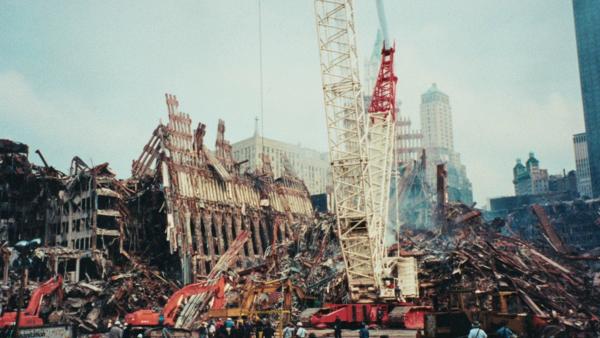
BIN LADEN'S HARD DRIVE, NATIONAL GEOGRAPHIC

