In terror attacks, the Fumbling Bureau of Investigation?, CNN.com
In terror attacks, the Fumbling Bureau of Investigation?
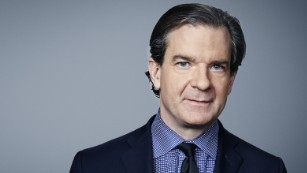
Peter Bergen
By Peter Bergen, CNN National Security Analyst
Updated 7:23 PM ET, Fri June 17, 2016
FBI: Shooter had been investigated
FBI: Shooter had been investigated 02:42
Story highlights
Peter Bergen: Critics say FBI dropped ball after investigating Orlando shooter Omar Mateen in 2013 and 2014
He says FBI fumbled similarly in several other terror cases
Bergen: Key solution is preventing those we suspect of terrorism from getting easy access to lethal weapons
“Peter Bergen is CNN’s national security analyst, a vice president at New America and a professor of practice at Arizona State University. He is the author of the new book “United States of Jihad: Investigating America’s Homegrown Terrorists.””
(CNN)The news that the FBI had investigated the Orlando terrorist, Omar Mateen, in 2013 and 2014 after he made inflammatory comments to coworkers and because he had possible connection to fellow Floridian Moner Abu-Salha — an al Qaeda recruit who later became the first known American suicide bomber in Syria — has generated considerable criticism of the bureau. Critics charge that it should have done more to stop Mateen.
The Mateen case is, unfortunately, far from an exception. In a number of the lethal terrorist attacks in the United States since 9/11, the FBI has investigated the perpetrator before the attack, but closed the case because there wasn’t sufficient evidence (what the law enforcement community calls “derogatory information”) found to continue the investigation.
So is the FBI failing at its most important job? Not necessarily, as the FBI quite properly has to work within guidelines set by the U.S. attorney general about how long an inquiry can remain open in the absence of the kind of derogatory information that would lead to a full-blown investigation.
Indeed, the FBI is often critiqued, quite properly on occasion, not for its laxity but its over-zealousness — routinely using sting operations to ensnare would-be terrorists, for instance.
The solution is not to give the FBI greater leeway in terrorism investigations, but it is to look for other common threads linking together domestic terrorists who were previously known to the FBI — namely, the fact that three of the most notorious among them were able to purchase legally and without restraint the kinds of lethal weapons that could maximize the violent impact of their murderous intentions.
Take Carlos Bledsoe, a convert to Islam from Memphis, Tennessee, who killed a U.S soldier at a military recruiting center in Little Rock, Arkansas, in 2009. Bledsoe first attracted the FBI’s attention after Yemeni authorities arrested him in November 2008. When he was detained, Bledsoe had in his possession a fake Somali identification card and manuals about how to make bombs and gun silencers. His cell phone contained contacts for militants who were wanted in Saudi Arabia.
Some weeks into Bledsoe’s imprisonment, an FBI special agent traveled to Yemen to interrogate him. The FBI had opened an “assessment” of Bledsoe, which, while not a full-scale investigation, showed that he was on its radar. Though Bledsoe insisted that he had gone to Yemen only to teach English and learn Arabic, the FBI agent informed him that he would be deported to the United States.
Following the FBI’s instructions to report to them when he was back in Tennessee, Bledsoe met again with an FBI official, who tried to recruit him as an informant. When Bledsoe refused, the FBI stopped tracking him.
This decision is hard to reconcile with the information the FBI had at the time. Bledsoe had been arrested in Yemen with incriminating materials. Perhaps this information was not properly communicated to the FBI at the time by the Yemeni intelligence service, but even so, Bledsoe’s arrest should have been enough to raise concern about what he might do next to keep him in their sights.
Michael Leiter, the then-director of the U.S. National Counterterrorism Center, believes that the FBI erred by not sharing their information about Bledsoe with the rest of the intelligence community. “There should have been broad dissemination on this,” he later said.
Even Bledsoe expected that the Bureau would follow him after his interviews. To test whether he was under FBI surveillance, Bledsoe bought a semiautomatic rifle over-the-counter at a Wal-Mart. He figured if anyone was watching, they would have stopped him.
A few months after Bledsoe opened fire at the recruiting center in Little Rock — killing Pvt. William Long and wounding Pvt. Quinton Ezeagwula — U.S. Army Maj. Nidal Hasan killed 12 soldiers and a civilian at Fort Hood, Texas. Nidal, too, had been a subject of interest at the FBI.
Hasan sent Anwar Awlaki, an American cleric in Yemen who would take on an important leadership position in al Qaeda, a series of emails beginning in December 2008, asking his advice about “Muslims in the US military.” In particular, he was interested in the question of whether an American Muslim soldier who turned his gun on fellow U.S. soldiers “in the name of Islam” would be fighting a “true jihad.” And if he died in such an assault, would he be considered a shaheed, or a martyr for Islam?
In one lengthy e-mail on May 31, 2009, Hasan suggested that suicide attacks might be “permissible” particularly in cases where the aim was “to kill enemy soldiers,” even in instances where there was collateral damage to innocent bystanders.
Taken together, the 18 emails Hasan exchanged with Awlaki reveal a chillingly persistent line of inquiry: Hasan was seeking an Islamic justification for the killing of fellow American soldiers in a suicide mission that might also kill civilians.
Astonishingly, the FBI knew about the entire correspondence. After Hasan sent his first message to Awlaki in 2008, a member of the Joint Terrorism Task Force in the San Diego office of the FBI reviewed it and wrote to colleagues: “Here’s another e-mail sent to Aulaqi by a guy who appears to be interested in the military. The header information suggests that his name is ‘Nidal Hasan,’ but that might not be true. The IP address resolves to Reston, VA. Can we check to see if this guy is a military member?”
After some digging around, the agent in San Diego found a Nidal Hasan assigned to the Walter Reed military hospital in Washington, D.C. Concerned by this discovery, in FBI parlance he “set a lead” to the FBI’s Washington Field Office (WFO), which has handled many prominent terrorism cases. The WFO did its own investigation and responded, “Given the context of his military/medical research and the content of his, to date, unanswered messages, WFO does not currently assess Hasan to be involved in terrorist activities.”
Agents in the FBI San Diego field office found the response puzzling. The Washington office had examined only Hasan’s personnel files, which were completely innocuous. A far more useful approach would have been to talk to some of Hasan’s superiors, or even to Hasan himself, which they did not do.
The San Diego agents, confused, emailed back, asking if perhaps Hasan was a “friend,” or informant, for the WFO. They wrote: “The response looks a little slim, i.e. limited probing into this individual’s background, no contact w/ command and no interview of Hasan. We were wondering if we were missing something, i.e. we need to read between the lines (Hasan is a friend of WFO)?”
The WFO wrote back that Hasan was not “‘a friend of WFO.’ If you have additional information regarding HASAN’s links to terrorism or request any specific action, please share and we will re-assess.”
One of the San Diego agents called the FBI office in Washington to explore the issue further and was told, “This is not San Diego, it’s DC and we don’t go out and interview every Muslim guy who visits extremist websites. Besides, this guy has legitimate work-related reasons to be going to these sites and engaging these extremists in dialogue.”
After this, the FBI dropped all investigation of Hasan. It was then and remains now an astonishing choice by the FBI Washington Field Office to dismiss Hasan as a serious threat. After all, a militant Islamist with constant access to U.S. military bases was in a position to do considerable damage. And there was no shortage of red flags in the e-mails themselves.
Hasan subsequently legally purchased the two guns that he used in his November 5, 2009, assault at Fort Hood that left 13 people dead and 32 others injured.
And of course, we all know by now about the bloody effects of Omar Mateen’s legally-purchased AR-15.
Omar Mateen, Carlos Bledsoe and Nidal Hasan — three of the most prominent domestic terrorists since 9/11 — were FBI subjects of interest. Yet all legally purchased semi-automatic weapons as a prelude to their murderous rampages. In the future, such purchases of weapons must, at a minimum, be flagged to law enforcement or, even better, simply barred altogether.
So as we rightly ask questions about what the FBI knew or should have done to prevent the attack in Orlando, the FBI and other law enforcement entities must also put procedures in place going forward to prevent the subjects of terrorism inquiries from having easy access to the tools to create mass violence.
Trump’s fatuous terrorism plan, CNN.com
Trump’s fatuous terrorism plan
By Peter Bergen, CNN National Security Analyst
Updated 6:34 PM ET, Tue June 14, 2016
Story highlights
Peter Bergen: Trump’s recent speech was long on invective but short on policy specifics
Trump’s claims are erroneous, and his plan to suspend immigration won’t work, Bergen says
Peter Bergen is CNN’s national security analyst, a vice president at New America and a professor of practice at Arizona State University. He is the author of the new book “United States of Jihad: Investigating America’s Homegrown Terrorists.”
(CNN)To paraphrase an observation made by the American writer H.L. Mencken: For every complex problem, there is a solution that is simple, neat and wrong.
Peter Bergen
Donald Trump’s Monday speech in New Hampshire was billed as his big statement on terrorism. Coming a day after the deadliest terrorist attack on U.S. soil since 9/11, the speech was his opportunity to lay out one of his campaign’s signature claims in considerable detail: that he will be really tough on terrorists, including torturing them and killing their families.
Instead, Trump’s speech was an oversimplification of Mencken-like proportions. It was long on invective against Hillary Clinton — such as “Clinton wants to allow radical Islamic terrorists to pour into our country” — but short on policy specifics. The speech did briefly flesh out Trump’s one big counterterrorism idea. In his words, “I will suspend immigration from areas of the world where there is a proven history of terrorism against the United States, Europe or our allies.”
Trump failed to elaborate or specify which countries would be affected, but presumably this ban would apply to countries such as Afghanistan, Iraq, Libya, Pakistan, Syria and Yemen, all of which have significant ISIS or al Qaeda presences within their borders. The ban could also include countries such as Indonesia and Saudi Arabia — longtime American allies that are, respectively, the world’s largest and richest Muslim countries — that also have been sites of terrorist attacks against Western and American targets.
Here’s the critical question. Would this vague plan to suspend immigration solve the problem of terrorism in the States? Hardly. Since 9/11, every lethal jihadist terrorist attack in this country has been carried out by an American citizen or legal resident.
Take Carlos Bledsoe of Memphis, Tennessee, whose family members have served in the U.S. military since the Civil War. He was a convert to Islam who killed an American soldier in Little Rock, Arkansas, in 2009.
Or Nidal Hasan, born in Arlington, Virginia, 4½ decades ago, a U.S. Army major who killed 13 people at Fort Hood, Texas, in 2009.
And Syed Rizwan Farook, who was born in Chicago in 1987. Together with his wife, Tashfeen Malik, a legal U.S. resident by virtue of her marriage to her American husband, he killed 14 in San Bernardino, California, in 2015.
Now Omar Mateen, who was born in New York in 1986: He killed 49 people early Sunday at an Orlando nightclub. (In his Monday speech, Trump claimed that Mateen was Afghan but failed to mention the two of them were both born in Queens.)
For Trump’s plan to work, you would somehow have to wind the clock back a half-century and ban immigration from all Muslim countries until now. Since even Trump doesn’t claim he can reverse time, his proposal for a temporary ban is fatuous.
It’s the sort of idea that your opinionated and tiresome uncle who always has the “easy” answer to every difficult problem trots out at Thanksgiving dinner and everyone ignores because it’s clearly just dumb. But instead of holding your tongue or rolling your eyes until someone changes the subject, in this case your uncle could become the 45th president of the United States.
Not only would the ban be useless to efforts to combat lethal acts of terrorism in the United States, but by imposing what looks like a religious test on immigrants it would also be open to serious legal challenges. Not to mention that it’s a fundamentally un-American idea. The United States didn’t ban Italian immigration in the 1920s because a small minority of Italians became members of the Mafia, and the country is a richer place for it.
In his speech, Trump went on to make other vague, unsubstantiated or outright erroneous claims. For instance, that President Barack Obama is not letting law enforcement “do their job.” Really? The FBI said it’s investigating some 900 terrorism cases in all 50 states. Sounds like it is not being hindered by Obama.
Trump also claimed that the Obama administration, with support from Hillary Clinton, is “restraining our intelligence gathering.” Tell that to Osama bin Laden, who is dead as a result of a CIA operation and SEAL raid authorized by Obama and whose most prominent supporter was Clinton. Or to the 1,000 ISIS fighters a month who have died in U.S. airstrikes since the summer of 2014.
He railed against the “tremendous flow of Syrian refuges into the United States.” The war in Syria has generated the largest number of refugees since World War II, a total of 14 million between those displaced internally and those who have left the country. Yet the United States has only taken so far less than 4,000 Syrian refugees — a paltry figure that future historians will bracket with the failure of the Roosevelt administration to take in more Jews fleeing the Nazis.
Perhaps most irresponsibly, Trump demanded, “Muslims have to work with us.” News flash: They are. Around a third of all the terrorism cases investigated since 9/11 originated with a tip from a member of the Muslim community or a family member, according to research by New America. In quiet ways far too complex to hold Trump’s interest, Muslims in the United States and around the world are helping every day to prevent massacres such as Orlando from happening.
Mencken’s words were more prescient than even he knew. He might as well have been writing about Trump’s counterterrorism plans, which may be simple but have no hope of being effective.
Peter Bergen is CNN’s national security analyst, a vice president at New America and a professor of practice at Arizona State University. He is the author of the new book “United States of Jihad: Investigating America’s Homegrown Terrorists.”
Why Do Terrorists Commit Terrorism? New York Times
WASHINGTON — AFTER a terrorist attack like the one in Florida on Sunday, one of the first questions people always ask is: Why? Why would someone take the lives of innocent civilians who are total strangers? That is a question to which I have long sought an answer. But my search has led me instead to another question: Is an answer even possible?
To try to figure out why terrorists do what they do, researchers at the think tank New America and I reviewed court records in more than 300 cases of people charged with jihadist terrorism in the United States since Sept. 11, 2001, ranging from relatively trivial cases, like sending small sums of money to a foreign terrorist organization, to very serious ones, like murder. I have also spoken to terrorists’ families and friends and even, in some cases, to the terrorists themselves.
The easy explanation — that jihadist terrorists in the United States are “mad” or “bad” — proved simply wrong. Around one in 10 had mental health problems, below the incidence in the general population. Nor were they typically career criminals: Twelve percent had served time in prison, compared with about 11 percent of the American male population.
I found that the perpetrators were generally motivated by a mix of factors, including militant Islamist ideology; dislike of American foreign policy in the Muslim world; a need to attach themselves to an ideology or organization that gave them a sense of purpose; and a “cognitive opening” to militant Islam that often was precipitated by personal disappointment, like the death of a parent. For many, joining a jihadist group or carrying out an attack allowed them to become heroes of their own story.
But in each case, the proportion of the motivations varied. For instance, Tamerlan Tsarnaev, the older of the two brothers who carried out the Boston Marathon bombing in 2013, was a nonpracticing Muslim who became an Islamist militant once his dreams of becoming an Olympic boxer faded. At the time of the attack, he was unemployed. For him, bombing the marathon seemed to allow him to become the heroic figure that he believed himself to be.
On the other hand, his younger brother, Dzhokhar, never seemed to embrace militant Islam. He smoked marijuana, drank and chased girls — hardly the actions of a Muslim fundamentalist. Dzhokhar Tsarnaev’s motivations for the bombings were instead largely molded by his older brother, whom he admired and feared, and by his own half-baked opposition to American foreign policy.
Nidal Hasan, the Army major who killed 13 people at Fort Hood, Tex., in 2009, seemed to be a more classic jihadist. He was a highly observant Muslim who objected to American foreign policy. But according to Nader Hasan, a first cousin who had grown up with him, the massacre at Fort Hood was also motivated by Nidal Hasan’s personal problems. He was unmarried, both his parents were dead, he had no real friends and a dreaded deployment to Afghanistan loomed. “He went postal,” Nader Hasan told me, “and he called it Islam.”
David C. Headley of Chicago, who did much of the planning for the 2008 attacks in Mumbai, India, in which more than 160 people were killed, was not an observant Muslim. He juggled multiple wives and girlfriends. He was motivated more by a passionate hatred of India — and his enjoyment in playing the role of a jihadi James Bond, hanging out with Bollywood stars for cover while secretly planning one of the most spectacular and deadly terrorist assaults since Sept. 11, 2001.
These stories underline how hard it is to satisfactorily answer the question of why terrorists commit heinous crimes. Human motivations are complex. As the philosopher Immanuel Kant observed, “From the crooked timber of humanity not a straight thing was ever made.” It’s a useful reminder to journalists and politicians alike that human beings often defy neat categorization.
Given this, how should law enforcement respond? F.B.I. behavioral analysts use a smart framework. They focus on behaviors that show that someone is on what they call the “pathway to violence.” The ideology enabling this pathway is a secondary concern; whether they are dealing with neo-Nazis or jihadists, F.B.I. analysts use actions, not ideas, to determine whether someone might carry out an attack. This approach is agnostic about the “Why?” and focuses on the “What?”: what a suspect of any ideological stripe might be doing along the pathway to violence, like scoping targets or acquiring weapons.
Of course, this is imperfect. Omar Mateen, the Orlando gunman, had been investigated by the F.B.I. twice. But at the time he didn’t appear to be far down the pathway to violence. According to reports, he began scoping out the Orlando nightclub, assembling weapons and trying to buy military-grade body armor only in the weeks before his attack.
We are learning bits and pieces about Mr. Mateen’s possible motivations. Relatives say he expressed homophobic views. He pledged allegiance to the Islamic State during the attack. Co-workers say he also praised Al Qaeda and Hezbollah. His former wife says he was abusive and couldn’t control his temper. There have also been suggestions that he might have been gay.
No doubt we will learn more in coming days. But it’s unlikely that anything will ever really explain why he did what he did. Perhaps that says something about the nature of evil, — that it is ultimately not fully explicable. Even the perpetrators themselves can never really articulate “Why?” in any meaningful way.
The real terror threat in America is homegrown, CNN.com
(CNN)The mass killing in Orlando this weekend fits a grim pattern: Every lethal terrorist attack in the United States in the past decade and a half has been carried out by American citizens or legal permanent residents, operating either as lone wolves or in pairs, who have no formal connections or training from terrorist organizations such as al Qaeda or ISIS.
Because 9/11 was carried out by 19 Arab foreign-born terrorists, many Americans may think that terrorist attacks in the United States are carried out by foreigners, rather than by U.S. citizens.
But Omar Mateen, who on Sunday carried out the deadliest terrorist attack in the United States since 9/11, is an American citizen who was born in New York to parents who immigrated to the United States from Afghanistan.
In fact, since 9/11, a plot which was directed by al Qaeda from Afghanistan and involved only foreign operatives, the real terror threat in the United States has been American citizens or legal permanent residents such as the Tsarnaev brothers, who carried out the Boston Marathon bombings in 2013, and Nidal Hasan, the U.S. Army major who killed 13 at Fort Hood, Texas, four years earlier.
In other ways, Mateen is also typical of jihadist terrorists in the States. He was on the radar of the FBI as a possible militant, just as Tamerlan Tsarnaev, who was investigated by the bureau because of a tip from the Russian government in 2011 that he might be a militant.
Similarly, Nidal Hasan came to the attention of the FBI a year before he carried out the massacre at Fort Hood because he was in frequent email contact with a militant cleric in Yemen.
Mateen was investigated by the FBI in 2013 for inflammatory comments he made to co-workers and a year later because of his connections to Moner Abu Salha, an al Qaeda recruit who grew up in Vero Beach, Florida, and who died in a suicide attack in Syria in 2014 on behalf of the Nusra Front, al Qaeda’s Syrian affiliate.
But in the end, the FBI didn’t pursue cases against Mateen, Tsarnaev or Hasan.
Although, according to a U.S. official, Mateen pledged allegiance to ISIS in a 911 call around the time that he was carrying out his assault at the Orlando nightclub, no evidence has emerged that he received training from ISIS in Syria, unlike the terrorists who killed 130 in Paris in November and 32 in Brussels in March.
Based on what we know now, Mateen appears similar to other jihadist terrorists in the States since 9/11. There have been more than 300 jihadist terrorism cases in the United States since the 2001 attacks on the World Trade Center and Pentagon. The perpetrators are not the young hotheads of popular imagination. The individuals in these cases have an average age 28, a third are married and a third have children. Mateen was 29 when he carried out the attack, has been married twice and has a three-year-old son.
The homegrown terror threat poses a knotty problem for U.S. law enforcement, as lone wolves are not communicating via email or on the phone with foreign terrorist organizations, the type of communications that can be intercepted by the U.S. intelligence community. Nor do they have meetings with co-conspirators of the type that can be monitored by the FBI.
The FBI has said that it is mounting 900 investigations of suspected Islamist militants in all 50 states. Complicating the difficulty of detecting a mass killer like Mateen is the fact that he worked for a global security firm and was a licensed security officer in Florida, which may have made him — like Maj. Nidal Hasan — less suspicious to law enforcement.
The attack in Orlando reminds us that despite all these FBI investigations, sometimes American terrorists will still succeed in carrying out an attack.
The Aspen Security Forum 2016, Aspen, CO
The Aspen Security Forum 2016
Wednesday, July 27, 2016 – Saturday, July 30, 2016
The Aspen Security Forum is an annual summer gathering of top-level present and former government officials from all relevant national security agencies; industry leaders; leading thinkers; nationally noted print and broadcast journalists; and concerned citizens. For more information, please visit www.aspensecurityforum.org.
Wednesday, July 27, 2016 – Saturday, July 30, 2016
Aspen, CO
What kind of commander in chief would Hillary Clinton be? CNN.com
What kind of commander in chief would Hillary Clinton be?
BYLINE: By Peter Bergen, CNN National Security Analyst
SECTION: OPINIONS
LENGTH: 2081 words
In what may have been the most forceful speech of her career, Hillary Clinton said in San Diego on Thursday that electing Donald Trump as commander in chief would be “an historic mistake” because of his “dangerously incoherent” foreign policy ideas and his “temperament.”
This raises the question: If Clinton were to become president, what kind of commander in chief would she be, and how might her approach differ from Trump’s?
Clinton, unlike Trump, has an extensive foreign policy record to examine based on her four-year tenure as secretary of state, which can help us understand how she might operate as commander in chief.
As secretary of state, for example, she presided over the effort in 2010 to significantly tighten sanctions on Iran, which helped to bring the Iranians, eventually, to the negotiating table on their nuclear program. This diplomatic effort resulted in a 12 to 2 vote in the U.N. Security Council to enhance sanctions against Iran, “one of her major achievements as secretary of state” according to New York Times’ reporter Mark Landler in his excellent new book “Alter Egos.”
This move highlights what could perhaps be most distinctive about Hillary Clinton as president: her refusal to be typecast as either hawk or dove. Instead, she has long been resolutely both, advocating for military interventions in Iraq, Libya, Afghanistan and Syria while also being unafraid to express her support — as in one noteworthy 2011 episode in which she and then-CIA director Leon Panetta got into a shouting match over CIA drone strikes in Pakistani territory — for critiques of the use of force.
It is this record as both hawk and dove that suggests some of the contours of what a Clinton foreign policy would look like.
Yet what is also very clear from her record is that Hillary Clinton is now and presumably would continue to be as president a hawk who is also willing to negotiate. When it comes to foreign policy, these are the qualities we should most associate with effective commanders in chief.
America’s two big foreign policy ideas
As president, either Clinton or Trump will have to navigate the two big ideas in American foreign policy: isolationism and interventionism. As was memorably defined by U.S. Secretary of State John Quincy Adams in 1821, isolationism means: “America does not go abroad in search of monsters to destroy. She is the well wisher to freedom and independence of all. She is the champion and vindicator only of her own.” In other words, the United States will not become embroiled in foreign conflicts over ideals like “freedom” and “democracy” and will instead concentrate on strengthening itself at home.
By contrast, interventionism stipulates that the United States needs to uphold — and even enforce — global order and liberty not only because it’s the right thing to do, but also because it’s very much in America’s own interests, a view best expressed by John F. Kennedy in his 1961 inaugural address at the height of the Cold War when he said, “We shall pay any price, bear any burden, meet any hardship, support any friend, oppose any foe to assure the survival and the success of liberty.”
Over the past century the United States has swung back and forth between periods of isolationism and interventionism. Isolationism kept America out of World War I until the end of the conflict and it was relatively late to send troops to join the alliance fighting the Axis powers during World War II. After that war, America emerged as the dominant world force of interventionism, spearheading the global architecture of NATO, the United Nations, the World Bank and the International Monetary Fund that has helped to sustain America’s position as the world’s only superpower.
Then the George W. Bush administration came into office promising a period of relative isolationism and opposition to “nation building.” Condoleezza Rice, Bush’s national security adviser, had famously opined, “We really don’t need the 82nd Airborne escorting kids to kindergarten.”
9/11, of course, changed all that. The Bush administration engaged in long and protracted multi-trillion-dollar nation-building efforts in Afghanistan and Iraq.
So how do Clinton and Trump fit into this long history of American isolationism and interventionism?
To the extent that Trump has laid out his vision of foreign policy, he is a neo-isolationist. He has famously called for a temporary ban on Muslim immigration, proposed building a wall along the Mexican border, and suggested a rethinking of the NATO alliance, which he described as “obsolete” to The New York Times in April. He also explained to the Times, “We cannot be the policeman of the world.”
Trump is also an “America first” populist who has said he would torture terrorism suspects, kill their families and “bomb the s…t out of ISIS,” in so doing indiscriminately bombing the cities in Iraq and Syria into which ISIS fighters have burrowed themselves. These kinds of actions are deemed to be war crimes by, among many others, the U.S. military.
Clinton, on the other hand, is very much part of the American foreign policy establishment, which for the past several decades has viewed the United States as an “exceptional country,” a phrase that Clinton used in her San Diego speech on Thursday. This view of the United States’ proper role in the world also comes freighted with responsibilities to act around the globe to promote both American values and interests.
In Clinton’s 2014 book “Hard Choices,” about her time as secretary of state, she recounted the attacks two years earlier on the U.S. diplomatic outpost and CIA facility in Benghazi, Libya, in which four Americans were killed. Clinton concluded that despite the tragic losses of life, “Retreat is not the answer; it won’t make the world a safer place, and it’s just not in our country’s DNA.”
Hillary the hawk
Clinton’s record at the State Department demonstrates that she is an interventionist who is quite comfortable with the use of American military power, but at the same time she is willing to pursue negotiations with traditional American rivals such as Iran and the Taliban whenever the right kind of openings seem to present themselves.
Clinton’s vote for the Iraq War in 2003 when she was a senator is, of course, Exhibit A in any discussion of her record on national security. In “Hard Choices” she stated clearly, “I wasn’t alone in getting it wrong. But I still got it wrong. Plain and simple.”
Her vote on the Iraq War, however, did not make Clinton skeptical of the efficacy of American military power when the occasion seemed to merit it.
The first big national security decision the Obama administration faced in early 2009 was what to do about the worsening situation in Afghanistan, where the Taliban were gaining ground. The U.S. military advocated a substantial surge of troops to blunt the Taliban’s momentum.
Clinton sided with the generals arguing for a well-resourced counterinsurgency campaign (over the objections of Vice President Joe Biden) and endorsed a surge of 40,000 troops.
In the end, Obama authorized 30,000 troops, but also ordered their withdrawal after 18 months, disclosing a timetable that Clinton says she was uncomfortable with. As she put it in “Hard Choices,” “I thought there was a benefit in playing our cards closer to our chests.”
Clinton’s embrace of the generals’ plans for Afghanistan underlines her warm — and, to some, surprising — relations with some of the more hawkish officers in the U.S military, chief among them retired Gen. Jack Keane, a Fox News analyst, who played an important role in helping lay the groundwork for George W. Bush’s surge of troops into Iraq in 2007 and who, according to Times reporter Landler, is “perhaps the greatest single influence on the way Hillary Clinton thinks about military issues.”
Clinton also took a hawkish position when Libyan dictator Moammar Gadhafi threatened to exterminate swaths of his population in 2011, playing the lead role in cobbling together an unusual coalition of NATO and Arab states that ended up removing Gadhafi from power.
This would turn out to be the Obama administration’s largest unforced error overseas, because — just as was the case in Iraq in 2003 during the overthrow of Saddam Hussein — there was not enough consideration given to what “the day after” would look like. Libya today is mired in a nasty civil war in which ISIS has gained a significant foothold.
Clinton was unafraid to promote hawkish positions even to a reluctant President Obama. Early on in their fight against the Syrian dictator, Bashar al-Assad, in 2012 Clinton urged the arming of “moderate” Syrian rebels. At the time, Obama nixed this idea but later he would come to embrace it. Another substantive difference with Obama is Clinton’s advocacy of a “no-fly” zone in northern Syria to protect Syrian citizens from Assad’s air force, which enjoys total air superiority and has killed untold thousands in indiscriminate airstrikes on civilian areas.
Most memorably, Clinton was the most senior official in Obama’s Cabinet urging that U.S. Navy SEALS be deployed to capture or kill Osama bin Laden. On April 28, 2011, Obama’s war Cabinet gathered in the Situation Room for the final meeting to consider the potential bin Laden raid. Obama asked his senior advisers for their views. Secretary of Defense Robert Gates urged caution and advised against the SEAL raid. So, too, did Vice President Biden. Clinton said the raid was the best option on the table.
Hillary the dove
Yet Clinton is far from merely a hawk. Clinton’s director of policy planning at the State Department, Jake Sullivan, played a key role in secret back-channel negotiations with the Iranians beginning in 2011 that were facilitated by the Sultan of Oman. These negotiations eventually bore fruit four years later with Iran’s agreement to suspend its nuclear weapons program.
Less successful were similar back-channel peace negotiations with the Taliban overseen by veteran U.S. diplomat Richard Holbrooke, whose office at the State Department opened up secret talks with representatives of Taliban’s leader Mullah Omar that largely fizzled.
And it was Clinton who oversaw the rapprochement with the pro-Chinese military junta ruling what they termed Myanmar and the rest of the world knows better as Burma. That rapprochement, beginning in 2011, set the condition for elections four years later that brought to power in a landslide the Nobel Prize winner Aung San Suu Kyi, who had spent a decade and a half under house arrest and with whom Clinton enjoys a particularly warm relationship.
What the future could look like
With these experiences to draw upon, what would a President Clinton’s foreign policy look like?
To a degree, she would probably be somewhat more interventionist than the Obama administration has been. On Afghanistan, where the Taliban is again taking territory, she would likely not follow what has (until recently) been the Obama administration’s policy, which is a withdrawal of U.S. forces.
On ISIS and Syria, she would not send in a large American Army. “I do not believe that we should again have a hundred-thousand American troops in combat in the Middle East,” she said in November. She would, as she explained in her San Diego speech, “step up the air campaign” against ISIS, while also continuing the Obama administration’s policy of strangling the sources of ISIS finances, its propaganda arm in cyberspace, and its flow of foreign recruits.
On China, Clinton has very nuanced views. In “Hard Choices” she wrote, “This isn’t a relationship that fits neatly into categories like friend or rival, and it may never.” She therefore would likely continue to shore up American alliances with China’s neighbors such as Burma, but she would also not needlessly antagonize the Chinese. They are, after all, effectively America’s bankers since the United States owes Chinese banks more than a trillion dollars.
Would a President Clinton invoke some kind of “red line” with Russian President Vladimir Putin, such as incursions by Russian proxy forces into any of the Baltic states? It’s not clear from her public pronouncements, but her San Diego speech left no doubt of her lack of patience for Trump’s tendency to “praise dictators like Vladimir Putin and pick fights with our friends — including the British prime minister, the mayor of London, the German chancellor, the President of Mexico and the Pope.”
The Invention of Russia From Gorbachev’s Freedom to Putin’s War, New America DC
The end of communism and breakup of the Soviet Union was a time of euphoria around the world, but Russia today is violently anti-American and dangerously nationalistic. How did we go from the promise of the end of the cold war to the autocratic police state of Putin’s new Russia? In The Invention of Russia, a finalist for the prestigious Orwell Prize, Arkady Ostrovsky tells the story of Russia’s stealthy counter-revolution over the past 25 years, introducing us to the propagandists, oligarchs, and fixers who have set the country’s course since the collapse of the Soviet Union.
Arkady Ostrovsky is the Russia and Eastern Europe correspondent for The Economist. He joined the paper in March 2007 after 10 years with the Financial Times, where he was one of the first journalists to warn of the resurgence of the KGB. As the FT‘s Moscow correspondent he covered Russian politics and business, including the Yukos Affair and how Putin’s seized control of the country’s top TV channels. At The Economist, he has written perceptively about Russia’s war with Ukraine, its seizure of Crimea and strong armed tactics in Georgia and other former Soviet republics, its bombing of Syria and strategic decision to declare victory and withdraw. He holds a doctorate degree from the University of Cambridge, and his translations of Tom Stoppard’s Coast of Utopia was a long-standing fixture of the Moscow state.
New America is pleased to welcome Dr. Ostrovsky for a discussion of his book and Russia’s trajectory since the end of the Cold War.
Follow the discussion online using #InventionofRussia and following @NewAmericaISP.
Copies of the book will be available for purchase by check or credit card.PARTICIPANT
Dr. Arkady Ostrovsky
Author, The Invention of Russia: From Gorbachev’s Freedom to Putin’s War Russia and Eastern Europe Correspondent, The Economist @ArkadyOstrovsky
MODERATOR
Peter Bergen Director, International Security Program @peterbergencnn
Big security decision facing the next president, CNN.com
Big security decision facing the next president
Peter Bergen
By Peter Bergen, CNN National Security Analyst
Updated 2:19 PM ET, Sun May 22, 2016
Peter Bergen: Obama’s Afghanistan policy has spread confusion and helped the Taliban
Reported strike on Taliban leader is a sign peace talks are going nowhere, Bergen says
“Peter Bergen is CNN’s national security analyst, a vice president at New America and the co-editor of “Talibanistan: Negotiating the Borders Between Terror, Politics, and Religion.” ”
(CNN)Generally, if you are in negotiations with a group and you expect to reach a deal, you don’t kill that group’s leader.
The fact that President Barack Obama authorized a drone strike Saturday that U.S. officials say likely killed Taliban leader Mullah Akhtar Mohammad Mansour underlines a number of important developments in Afghanistan.
First, the on-and-off peace discussions that the Afghan government has had with the Taliban for years — discussions that have been actively supported by the United States — have yielded nothing of substance and are quite unlikely to do so anytime soon.
Second, the U.S. drone strike is emblematic of the fact that the Taliban are coming back in Afghanistan. The group controls or has a significant presence in around a third of the districts across the country, holding more territory than at any time since U.S. forces toppled the Taliban government in the months following the 9/11 attacks.
Third, one of the first significant national security decisions that the new U.S. president will have to make after assuming office on January 20, will be what to do about American forces in Afghanistan. The Obama administration has been drawing down those forces for years and had aimed for complete withdrawal by the time it left office but temporarily halted that drawdown in October because of the resurgent Taliban. There are 9,800 troops in Afghanistan today.
In addition, both ISIS and al Qaeda have established significant presences in Afghanistan in the past year or so. U.S. officials estimate there are up to 300 al Qaeda operatives in Afghanistan and between 1,000 to 3,000 ISIS fighters.
The next president will have to decide whether to continue the Obama plan for a complete withdrawal from Afghanistan or adopt a different course. This decision will surely be influenced by what played out in Iraq after the withdrawal of U.S. forces at the end of 2011 and the stunning military victories of ISIS in Iraq in 2014.
The drone strike aimed at Mullah Mansour took place in a remote area of southwestern Pakistan, which is a useful reminder that the so-called Afghan Taliban continues to be headquartered not in Afghanistan, but in neighboring Pakistan.
Until last year, the Haqqani Network was a somewhat distinct arm of the Taliban. In 2015 Siraj Haqqani was appointed the deputy leader of the Taliban. The Haqqani Network has played the key role in the multiple suicide attacks that have plagued Kabul in recent years. Mullah Mansour’s death will surely strengthen Siraj Haqqani’s growing role in the Taliban and may further radicalize the group.
As a result of all of these developments, the next president should announce a new policy in which a robust U.S. noncombat military force remains in Afghanistan for many years. That force would help the Afghan military with intelligence, training and logistics.
A key flaw of the Obama administration’s approach to Afghanistan has been constantly announcing proposed withdrawal dates for U.S. forces, which has enabled the Taliban to believe they can simply wait out the clock. It also has contributed to a lack of confidence among the Afghan population, eight out of 10 of whom say that the Afghan army and police need support from countries such as the United States if they are to do their jobs properly, according to polling last year by the Asia Foundation.
Let’s see if either the Clinton or Trump campaigns have anything to say about this important issue in coming days. After all, the 9/11 attacks were organized and directed by Osama bin Laden from Afghanistan. It is very much in America’s national security interests to ensure that the Taliban do not dominate Afghanistan and that neither ISIS nor al Qaeda continues their growth in the country.
Peter Bergen is an acclaimed journalist, producer, CNN–TV’s national security analyst, and helps run a public policy think tank. His latest book United States of Jihad is a riveting look at ‘homegrown’ Islamist terrorism from 9/11 to the present. Since 2001, more than three hundred Americans—born and raised in Minnesota, Alabama, New Jersey, and elsewhere—have been indicted or convicted of terrorism charges. Some have taken the fight abroad while others have acted on American soil. What motivates them, how are they trained, and what do we sacrifice in our efforts to track them? Paced like a detective story, Bergen draws on his extensive network of intelligence contacts, as he explores nearly every aspect of terrorist activity, from ISIS’ use of social media to the FBI’s development of behavioral profiles.
Book Festival, MJCCA, Atlanta, Georgia
PETER BERGEN, United States of Jihad
In Conversation with Bill Nigut, Senior Executive Producer, Georgia Public Broadcasting
The recent tragic, ISIS-inspired attacks in Paris, San Bernardino, Orlando, and Nice provide fresh evidence that “homegrown” terrorism is a real and present danger. In United States of Jihad, CNN national security analyst and New York Times bestselling author Peter Bergen offers an unprecedented look at the factors that lead to the radicalization of American citizens and offers expert insights into the shape of the threat confronting us.
For more than two decades, Bergen has been our foremost chronicler of Islamist terrorism, through groundbreaking reporting on the Middle East, al-Qaeda, and homeland security. Based on a wealth of sources including a meticulously compiled database, counterterrorism theory, and interviews with the families of militants—and even militants themselves—Bergen exposes the forces that have led Anwar al-Awlaki, Samir Kahn, the Tsarnaev brothers, and so many others down the path to terrorism.
Media Sponsor: Reporter Newspapers/Atlanta INTown
Your Best Bet! Purchase Book Festival Series Passes today!