Will returning Syria fighters strike the United States? CNN.com
Will returning Syria fighters strike the United States?
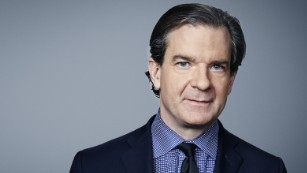
Peter Bergen
By Peter Bergen, CNN National Security Analyst, and David Sterman
Only a few of the small number who left to fight in Syria returned to U.S., Peter Bergen and David Sterman say
The more likely threat may be from ISIS-inspired fighters who haven’t gone to Syria, they say
“Peter Bergen is CNN’s national security analyst, a vice president at New America and a professor of practice at Arizona State University. He is the author of the new book “United States of Jihad: Investigating America’s Homegrown Terrorists.” David Sterman is a senior program associate at New America’s International Security Program and holds a master’s degree from Georgetown University’s Center for Security Studies. ”
(CNN)The ISIS attacks in Brussels and Paris have raised concerns about the threat posed by returning Western “foreign fighters” from the conflicts in Syria and Iraq who have been trained by ISIS or other jihadist groups there.
One of the Brussels bombers, Ibrahim El Bakraoui, had been detained in Turkey and sent back to Belgium. He was believed to be planning to join ISIS in Syria.
Belgium: Jihadists and the 'failed state'
Is Belgium a failed state?
Seven of the attackers in Paris were European nationals who had trained with ISIS in Syria.
Yet in the United States, the threat from returning foreign fighters remains quite limited. According to FBI Director James Comey, 250 Americans have gone or attempted to go to Syria. This figure is far fewer than the estimated 6,900 who have traveled or attempted to travel to Syria from Western nations as a whole — mostly from Europe.
As many as 1,900 of those militants have returned, according to an estimate by the U.S. House Committee on Homeland Security.
Key clue in Brussels attacks: The explosives
Explosives will be key clue in Brussels investigation
In a report released Friday, New America identified 94 American militants who have traveled to Syria, attempted to travel to Syria or provided support for those who did. Of those, 71% were arrested before reaching Syria. Twenty-seven managed to reach Syria and join a militant group.
For example, Shannon Conley, a 19-year-old woman from Colorado, pleaded guilty in September 2014 to attempting to provide material support to ISIS. She never set foot in Syria, as she was arrested at the Denver International Airport.
Of the 27 who joined militant groups in Syria, 12 are dead. Douglas McAuthur McCain, for instance, a Muslim convert from California, was killed fighting for ISIS in a battle against the Free Syrian Army.
Hornet's nest at center of Brussels terror threat
Terrorist hornet’s nest at center of Brussels threat
Six Americans returning from Syria have been arrested. Among them was Mohamad Saeed Kodaimati of California, who pleaded guilty in October to claiming falsely he had not joined al Nusra Front, the Syrian al Qaeda affiliate, after he traveled to Syria in 2012.
Of the six known American returnees from Syria who are in U.S. custody, only one is alleged to have plotted an attack inside the United States.
Court documents allege that Abdirahman Sheik Mohamud, a 23-year-old from Ohio, left to fight in Syria in April 2014 before returning to the United States two months later. After his return to the United States, he was monitored by an informant, leading to his arrest. Mohamud has pleaded not guilty to plotting an attack on a U.S. military base.
Floridian Moner Abu Salha managed to travel to Syria and train with al Nusra before returning undetected to the United States in 2013. Rather than preparing a U.S. attack, Abu Salha returned to Syria after unsuccessfully trying to recruit a few friends to join him, and died conducting a suicide bombing against the troops of Syrian leader Bashar al-Assad.
Interestingly, several of the cases of American militants training in Syria and returning do not involve ISIS. Instead a number of the American returnees such as Abu Salha were affiliated with al-Qaeda affiliate al Nusra.
How big is U.S. terror threat?
How big is U.S. terror threat? (Opinion)
So far, the cases of Americans returning from Syria also do not indicate a threat anywhere near as severe to that in Europe.
Meanwhile, the United States wrestles with the far more likely threat from extremists inspired by ISIS but not trained by them. In San Bernardino, California, in December, a married couple attacked office workers attending a holiday party, killing 14. It was the most deadly terrorist attack in the States since 9/11. Syed Rizwan Farook, a U.S. citizen, and his wife, Tashfeen Malik, a legal resident, carried out the attacks. Malik pledged allegiance to ISIS on a Facebook account shortly after they had carried out their massacre.
The United States will have to continue to be vigilant regarding the potential threat from American returnees, but the most lethal threat is not from ISIS-trained militants launching attacks in the States but rather ISIS-inspired attacks. Such ISIS-inspired attacks rarely attain the lethality of the attacks by ISIS in Brussels and Paris.
How big is U.S. terror threat?, CNN.com
How big is U.S. terror threat?
Peter Bergen
By Peter Bergen, CNN National Security Analyst
Updated 1:12 PM ET, Wed March 23, 2016
Dozens were killed in Brussels in attacks on airport, subway station
Peter Bergen: Americans no longer have to travel to an overseas training camp to be indoctrinated by ISIS
“Peter Bergen is CNN’s national security analyst, a vice president at New America and a professor of practice at Arizona State University. He is the author of the new book “United States of Jihad: Investigating America’s Homegrown Terrorists.” ”
(CNN)For many Americans, the big question after attacks of the magnitude we have seen in Brussels on Tuesday is: Could it happen here?
Certainly, the numbers of Islamic State in Iraq and Syria terrorist investigations in the United States today are quite sobering. According to U.S. Assistant Attorney General John Carlin, who is responsible for all federal terrorist investigations in the country, there were 60 cases prosecuted in the U.S. in 2015. That is more terrorist cases than in any year since September 11, 2001.
Fears of these potential threats have prompted a number of the presidential candidates to weigh in with their ideas on how to prevent such attacks in the United States. More on their “solutions” later, but they remind one of the great H. L. Mencken aphorism, “There is always an easy solution to every human problem — neat, plausible, and wrong.”
Peter Bergen
Peter Bergen
And the challenge of keeping the United States safe is a complex problem indeed. I interviewed Carlin at a major technology conference in San Francisco earlier this month, and asked him how many of these cases were precipitated by ISIS’ adept use of social media. He said that almost all of them were.
ISIS, in other words, is radicalizing American citizens who are on their computers sitting in their bedrooms or downloading ISIS propaganda on their smartphones. And these Americans no longer have to travel to some overseas training camp to be indoctrinated by ISIS — the group is also specifically catering to English-speaking militants and encouraging them to carry out attacks in countries such as the United States.
Early in 2015, ISIS released a booklet in English that was supposed to act as a guide on how to “be a secret agent” in a non-Muslim country.
How the Brussels attacks challenge democracies
Terrorism: The challenge Brussels poses to democracies (Opinion)
The booklet offered militants tips about making bombs, hiding weapons, evading police surveillance and suggested recruits pick a Western sounding nickname so as to attract less attention. The group even suggested that recruits watch the Jason Bourne films for tips on employing evasion tactics.
In addition, ISIS publishes, in English, advice about how its followers can best communicate in encrypted fashion, telling recruits to use the Tor browser, which disguises the IP address of those who use it.
Unfortunately, ISIS’ English-language propaganda is finding a number of takers in the United States. The FBI says that there are ISIS terrorist investigations in all 50 states, and that there are about 900 terrorism investigations in progress, the majority of which are ISIS-related.
In fact, over the past year and half, there have been five ISIS-inspired attacks in the United States. The most lethal was in San Bernardino, California, in December, when a married couple attacked office workers attending a holiday party killing 14. It was the most deadly terrorist attack in the States since 9/11. But there have been others.
In the fall of 2014, Zale Thompson allegedly attacked police officers with a hatchet in New York. He is believed to have been inspired by ISIS.
Last May, gunmen inspired by ISIS and also in direct contact with members of the terrorist group, opened fire at a cartoon contest of the Prophet Mohammed held in Garland, Texas. The gunmen, Elton Simpson and Nadir Soofi, were killed by police. And in November, a student at the University of California, Merced stabbed four people on campus, after visiting ISIS websites. In January, Edward Archer allegedly shot Philadelphia police officer Jesse Hartnett. Archer allegedly told police, “I pledge my allegiance to the Islamic State, and that’s why I did what I did.”
Why keeping us safe from terrorism is so hard
Why keeping us safe from terrorism is so hard (Opinion)
That’s the bad news.
The good news, though, is that we are not so far seeing Americans trained by ISIS in Syria in paramilitary tactics then returning to the United States as we have seen with the multiple French and Belgian recruits to ISIS, including those who carried out the Paris attacks that killed 130 in November.
Last month, the U.S. director of National Intelligence noted that at least 6,900 militants from Western countries have traveled to Syria since 2012. But relatively few of these are Americans, and only seven* have been publicly identified as having returned to the United States.
Of these, one returned to Syria to carry out a suicide attack in 2014, and one has been charged with attempting an attack on the United States. Abdirahman Sheik Mohamud of Columbus, Ohio is believed to have left for Syria in mid-April 2014 and fought there before returning to the United States around two months later. The government alleges that before he was arrested he discussed some kind of plan (with an informant) to kill American soldiers at a military base in Texas. Mohamud has pleaded not guilty.
All this suggests that while ISIS-inspired attacks are certainly a strong possibility in the United States, they would likely be “lone wolf” attacks in which the perpetrator has no formal links to ISIS and has had no training from the terrorist group. The lack of ISIS training generally makes these lone wolfs far less lethal than the trained killers we saw in Paris and now in Brussels.
What U.S. counterterrorism officials are particularly concerned about is what they term a “blended” attack in the States, which is both inspired by ISIS but also directed by the terrorist organization. Under this scenario, an American recruit inspired by ISIS might reach out directly to members of ISIS in Syria over an encrypted social media platform, seeking some kind of specific directions for an attack.
We already saw a harbinger of this last May, when the FBI says one of the two ISIS-inspired militants who attacked the Prophet Mohammed cartoon contest in Texas sent more than 100 encrypted messages to a terrorist overseas, according to the FBI.
So, what can and should be done?
On Tuesday, Hillary Clinton called for more “surveillance.” But the U.S. actually has quite a lot of surveillance already, and increasing surveillance is unlikely to have stopped the married couple from San Bernardino, who were not in touch with overseas conspirators and appeared to confine their attack planning to pillow talk of the type that can’t be intercepted by the National Security Agency.
Also Tuesday, Republican presidential candidate Ted Cruz called for more police patrols in Muslim neighborhoods. Apart from the serious constitutional problems of targeting a particular religious persuasion in the United States, this would have the effect of alienating the very community that law enforcement depends on to provide useful information about who may be radicalizing in their midst.
And finally, Donald Trump, also running for the Republication nomination, advocated again for a temporary ban on Muslim immigration. Yet this would not work, either — every single lethal jihadist terrorist attack in the United States since 9/11 has been carried out by an American citizen or a legal resident of the United States.
What is needed instead are more credible voices pointing out that ISIS is not creating an Islamist utopia here on Earth, as so much of its English language propaganda claims, but rather a living hell.
And who better to deliver that message in the United States than an American who deserted from ISIS for exactly this reason?
Key clue in Brussels attacks: The explosives
Explosives will be key clue in Brussels investigation
Muhammad Jamal Khweis, 26, of Alexandria, Virginia, was held by Kurdish fighters after allegedly deserting from ISIS earlier this month. Khweis gave an interview to a Kurdish TV station in which he said: “My message to the American people is: the life in Mosul [the Iraqi capital of ISIS] it’s really, really bad. The people [that] were controlling Mosul don’t represent the religion. Daesh, ISIS, ISIL, they don’t represent the religion, I don’t see them as good Muslims.”
Should he return to the United States, U.S. prosecutors could throw the book at Khweis for joining ISIS, and he could get 20 years or more.
But they also could try something more creative — a deal in which he tells prosecutors what he knows about ISIS in return for a reduced prison sentence. And one more thing: He would also have to appear before the American public explaining that ISIS is creating hell in the areas it controls.
*This number has been updated to reflect new data being released Thursday from New America.
Key clue in Brussels attacks: The explosives, CNN.com
Airport, subway in Brussels hit in deadly terror attacks
Peter Bergen: Type of explosives used will be key to finding link to last year’s Paris attacks
Peter Bergen is CNN’s national security analyst, a vice president at New America and a professor of practice at Arizona State University. He is the author of the new book “United States of Jihad: Investigating America’s Homegrown Terrorists.” This article is adapted from parts of a previously published op-ed.
(CNN)On Tuesday morning, Brussels was hit by terrorist attacks at transportation hubs — at the airport and at a subway station. Sadly, we have seen such multiple, deadly assaults on transportation targets in Europe before.
In London on July 7, 2005, four al Qaeda-trained British citizens bombed commuters traveling on three trains on the city’s Underground and on a bus, killing 52. In Madrid the previous year, a group of largely first generation North African immigrants to Spain detonated bombs on commuter trains, killing 191.
Peter Bergen
A key to understanding to such attacks — including Tuesday’s in Brussels — are the explosives used in the bombings. French prosecutors say the bombs ISIS used in its November attacks in Paris that killed 130 were made from triacetone triperoxide, or TATP. On Wednesday, Belgian officials said they had discovered 33 pounds of TATP explosives at the house allegedly used by the suspected attackers at the airport in Brussels.
TATP-based bombs are built using the common household ingredient hydrogen peroxide, which is used to bleach hair. Such bombs have been a signature of jihadist terrorists in the West for more than a decade because the materials are so easy to acquire, unlike military-grade explosives, which are tightly controlled in much of the West.
Their use in the Paris and Brussels attacks, as well as in terrorist plots in London and in the United States over the past decade, should remind law enforcement in the West that these TATP bombs are what jihadist terrorists will continue to deploy.
What is tricky for those hoping to utilize such weapons is that TATP bombs are quite difficult to make because their ingredients, when combined, are highly unstable and can explode easily if mishandled. To make an effective TATP bomb requires real training, which suggests a relatively skilled bomb-maker was involved in the Paris plot, since the terrorists detonated several bombs.
The dangers of TATP bombs can be seen in the case of Matthew Rugo and Curtis Jetton, 21-year-old roommates in Texas City, Texas. They didn’t have any bomb-making training and were manufacturing explosives in 2006 from concentrated bleach when their concoction blew up, killing Rugo and injuring Jetton. The pair had no political motives: They had just wanted to blow up a vehicle for fun.
Others in the United States have built TATP bombs with far more malevolent intent. Najibullah Zazi, who grew up in New York, wanted to blow up as many commuters as possible on the subway system in Manhattan.
Al Qaeda trained Zazi to make a TATP bomb in Pakistan, and during the summer of 2009, he made bulk purchases of hair bleach in suburban Denver and set up his bomb factory in a nearby motel room.
He mixed and cooked batches of hair bleach in the kitchenette of the motel. On the night of September 6, 2009, as he labored over the stove, Zazi sent several emails to an al Qaeda operative “Ahmad.” The emails contained a well-known al Qaeda code for a terrorist operation being imminent — “the marriage is ready” — and also asked for specific instructions “right away, please” about the other ingredients needed for the explosive.
Zazi had mastered the manufacture of the hair bleach-based bombs, but he had forgotten the precise proportions of those ingredients needed to ignite the mixture.
If Zazi had sent these emails to an ordinary email account in Pakistan, anyone monitoring it would have assumed the query was about making a wedding cake. But the email address Zazi used to touch base with “Ahmad” was sana_pakhtana@yahoo.com, an account that British intelligence was monitoring because someone using it had also been in touch with al Qaeda recruits in the United Kingdom.
British authorities tipped off American officials that the email account belonged to an al Qaeda operative in Pakistan, and the U.S. National Security Agency began monitoring it.
Once the FBI realized there was an al Qaeda recruit living in Denver making TATP bombs, it intensively monitored Zazi. He traveled from Denver to New York to carry out his plan around the eighth anniversary of 9/11 and was soon arrested, as were two of his co-conspirators, all of whom were given long prison sentences.
More successful for al Qaeda was the cell of British suicide bombers who carried out the “7/7” London bombings. They used their training to heat up and distill ordinary hair bleach, combining it with other ingredients to make effective bombs. Making these bleach-based bombs was a complex process, not something that could be picked up by reading bomb-making recipes on the Internet. The ringleader had received bomb-making training from al Qaeda in Pakistan.
In an apartment the London plotters had rented to serve as their bomb factory, they mixed the chemicals. As they brewed up batches, they wore disposable masks because of the high toxicity of the materials, which bleached their dark hair a noticeably lighter color. They installed a commercial-grade refrigerator in the apartment to keep the highly unstable bomb ingredients cold. They built four devices.
Hydrogen peroxide-based bombs would again be the signature of a cell of British Pakistanis who plotted to bring down seven passenger jets flying to the United States and Canada from the United Kingdom during the summer of 2006. The plotters were intent on committing suicide during the attacks on the passenger jets. Six of them made “martyrdom” videotapes recovered by British investigators.
British authorities were tracking the ringleader intensively in the summer of 2006. When he was arrested in east London in August 2006, he was carrying a memory stick storing flight plans for United Airlines, American Airlines and Air Canada jets flying from the United Kingdom to destinations such as Chicago, Washington, Los Angeles, San Francisco, Montreal and Toronto.
Investigators later found several large bottles containing concentrated hydrogen peroxide that one of the conspirators had dumped in a London park. The plotters were planning to bring the liquid explosives disguised as soft drinks in hand luggage onto the flights they had targeted, together with other innocuous-looking items that could act as triggers. They had planned to assemble their bombs on the planes.
It was this plot that triggered airlines to ban almost all liquids being taken on flights.
As investigators try to piece together what happened in Brussels, they will surely be looking for where the bombs were assembled. They will also be trying to determine who built the bombs. Were they built by the terrorists themselves, as was the case with the London plotters, or did someone else build them? And where did the training to build the bombs happen? Was it in France, Belgium or in Syria, or in some other location? These are some of the questions that, hopefully, the investigation will eventually unearth.
After 9/11, the New York Police Department initiated Operation Nexus, in which officers visited thousands of stores in the city and the wider Northeast region that sold or distributed materials that could be used in a terrorist operation. It could be anything from pipes useful for pipe bombs to the explosive “black powder” that can be found in fireworks. Each store owner would be told, “If you see in an anomaly in a purchase, let us know.”
Zazi was just such an anomaly, as he was a dark-haired, bearded Afghan-American man in his 20s who bought six bottles of Clairoxide hair bleach during one shopping trip at a store in a Denver suburb. Zazi returned to the store a month later and purchased another dozen bottles of Ms. Kay Liquid, which is also a peroxide-based hair bleach.
It’s that kind of bulk purchase of hydrogen peroxide that should trigger a suspicious activity report in the United States and other Western countries.
This article has been updated with the latest information from Brussels, including details of alleged explosives found by officials.
“United States of Jihad” Loyola Law School, Chicago
Peter Bergen Book Talk
Wednesday, March 16, 2016, from 12:00 PM – 1:00 PM
Description
United States Of Jihad
Loyola’s National Security & Civil Rights Program
and the National Security Law Association
present
United States Of Jihad
Investigating America’s Homegrown Terrorists
By Peter Bergen
Wednesday, March 16
12 – 1 PM*
Philip H. Corboy Law Center
25 E. Pearson Street, Room 1403
Peter Bergen is a journalist, documentary producer, director, and New York Times best-selling author. His book Manhunt, about the pursuit and killing of Osama bin Laden, is now an HBO documentary. Bergen will discuss his new book, United States of Jihad, which provides a riveting panoramic look at *homegrown* Islamic terrorism from 9/11 to present.
UNITED STATES OF JIHAD
Since 9/11, more than three hundred Americans have been indicted or convicted of terrorism charges. Some have taken the fight abroad: an American was among those who planned the attacks in Mumbai, and more than eighty US citizens have been charged with ISIS-related crimes. Others have acted on American soil, as with the attacks at Fort Hood, the Boston Marathon, and in San Bernardino. What motivates them, how are they trained, and what do we sacrifice in our efforts to track them? Paced like a detective story, United States of Jihad tells the entwined stories of the key actors on the American front. Bergen also draws upon his extensive network of intelligence contacts, from the National Counterterrorism Center and the FBI to the NYPD, and offers an inside look at the controversial tactics of the agencies tracking potential terrorists. United States of Jihad is an essential new analysis of the Americans who have embraced militant Islam both here and abroad.
Pizza will be served.
*Books will be available for purchase and signing
following the discussion.
RSVP
NationalSecurityLaw@luc.edu
Location
Philip H. Corboy Law Center (click for map)
Room 1403
Faculty, Staff and Students
This event has been marked as open to the public.
Sponsor
National Security Law and Civil Rights Program
Reflection on 15 Years of the War on Terror, Fordham University
New York, NY
Hindsight: Reflection on 15 Years of the War on Terror
– New York, NY
Event Information
Event Description
This conference will examine the changing understanding of national security in the 21st century. What has been accomplished? What has been lost? How has the threat of terrorism changed? What lessons have we learned?
Panel Topics will include:
Best Practices: Reconciling Liberty and Security
The New Foreign Policy Matrix
The Evolution of Domestic Jihadist Terrorism
Featuring:
Richard A. Clarke, Former National Coordinator for Security and Counterterrorism Gideon Rose, Editor, Foreign Affairs
Ali Soufan, Chairman & CEO, The Soufan Group J.M. Berger, Fellow, Program on Extremism, George Washington University Matt Olsen, Former Director of the National Counterterrorism Center Emma Sky, Senior Fellow, Jackson Institute for Global Affairs, Yale University David Cole, Professor in Law and Public Policy, Georgetown Law School Michael A. Sheehan, Distinguished Chair, U.S. Military Academy, West Point Peter Bergen, National Security Analyst, CNN Steve Simon, Visiting Lecturer, Dartmouth College Jameel Jaffer, Deputy Legal Director, American Civil Liberties Union Doug Ollivant, Senior National Security Studies Fellow, New America General Charles Jacoby, Retired U.S. Army General
Matt Waxman, Professor, Columbia Law School Hina Shamsi, Director, National Security Project, American Civil Liberties Union
Joshua Dratel, President, Law Offices of Joshua L. Dratel, P.C. Adam Shatz, Contributing Editor, London Review of Books Michel Paradis, Attorney, Office of the Chief Defense Counsel, U.S. Department of Defense Karen J. Greenberg, Director, Center on National Security
and others
When
Where
Fordham University School of Law – 150 West 62nd Street, New York, NY 10023 – View Map
BYLINE: By Peter Bergen, CNN National Security Analyst
LENGTH: 1131 words
DATELINE: (CNN)
Editor’s note: Peter Bergen is CNN’s national security analyst, a vice president at New America and a professor of practice at Arizona State University. He is the author of the new book “United States of Jihad: Investigating America’s Homegrown Terrorists.”
(CNN) — In the last months of his life, an isolated Osama bin Laden was in a serious dispute with the two brothers who had been pretty much his only connection to the outside world for the previous eight years.
The brothers — two longtime members of al Qaeda whose family hailed from northern Pakistan, not far from where bin Laden was hiding in the city of Abbottabad — did everything for bin Laden.
Worried about the CIA hunting for him, bin Laden was confined to one building inside the large compound in Abbottabad, which the brothers had moved him to in 2005.
The two brothers shopped for produce from local markets for bin Laden as well as for the dozen members of his family who were living with him.
Crucially, it was one of the brothers who was the courier who delivered messages to and from al Qaeda’s leader to senior members of al Qaeda living in other parts of Pakistan.
Bin Laden was completely reliant on the two brothers both to maintain any semblance of control over al Qaeda and its far-flung affiliates and also for the daily necessities of life.
But by January 2011, just four months before U.S. Navy SEALs killed bin Laden, he and the two brothers were having a serious dispute.
According to letters released Tuesday by the U.S. Office of the Director of National Intelligence that were recovered during the SEAL raid, by early 2011 the brothers were fed up with all the pressure that came from protecting and serving the world’s most wanted man.
A fallen leader
Indeed, the documents portray bin Laden, a man who once had commanded training camps in Afghanistan that had churned out thousands of recruits and had also overseen the single most deadly assault on American civilians in the history of the United States, as entirely dependent on his two bodyguards, running out of money and paranoid that even his family members might have concealed tracking devices to home in on him.
Bin Laden confided to one of his wives that the brothers who protected him were “exhausted” by all the pressures on them and were planning to quit.
Things got so bad with his two protectors that on January 14, 2011, bin Laden took the unusual step of writing the brothers a formal letter, despite the fact that they lived only yards away from him on the Abbottabad compound.
In the letter bin Laden said the brothers had been so “irritated” in a recent meeting with him that he was resorting to writing them a letter to clarify matters. He asked the brothers to give him adequate time to find substitute protectors.
Bin Laden then wrote a letter to one of his confidantes asking if he knew of any Pakistanis who could be trusted with “complete confidence” who might replace the two brothers as his liaisons to the outside world.
Relations between bin Laden and the two brothers deteriorated to the point that they entered into a written agreement that they would separate sometime in 2011 or early 2012 and that bin Laden and his family would move away from the compound in Abbottabad.
Of course, that didn’t happen and on the night of May 2, 2011, bin Laden and his two bodyguards were killed in the SEAL raid.
But the new documents underline the fact that if the CIA had learned of the compound in Abbottabad later than it did, or if President Obama had not ordered the SEAL raid when he did, it’s quite possible that bin Laden could have left for another location and the trail that led the CIA to his Abbottabad compound might have gone cold.
Feeling the pressure
In addition to the conflict that bin Laden was having with his two key protectors, the newly released documents underline some themes that had emerged in documents recovered from the SEAL raid that had been previously released by the U.S. intelligence community.
Al Qaeda was an organization that felt increasingly under pressure. Bin Laden fretted about the CIA drone program, which was picking off so many key members of al Qaeda in the Pakistani tribal region of Waziristan bordering Afghanistan. Bin Laden instructed his organization to “leave Waziristan.”
Bin Laden was also keenly aware that as the 10th anniversary of 9/11 approached he hadn’t pulled off another attack in the States and he pushed al-Qaeda’s affiliates to not get distracted by local issues, but to attack Americans and the United States. He advised the leader of al Qaeda in Yemen to recruit Yemenis with U.S. visas or American citizenship to carry out attacks in the States.
Al Qaeda leaders were worried about financing for the group, and despite the fact that bin Laden had drafted a will mentioning a supposed $29 million stashed in Sudan from his sojourn there in the mid-1990s, that money had long disappeared. Bin Laden was the scion of a wealthy Saudi family but there is no indication he had access to that fortune by the time of the raid that killed him.
Bin Laden also drafted a number of speeches he planned to videotape about the “Arab Spring” revolutions that began in early 2011 and were roiling the Arab world. He never delivered those speeches, but he clearly believed these revolutions to be momentous.
Despite the pressures he was under, while he was in hiding, bin Laden tried to maintain control of al Qaeda affiliates around the Muslim world. He conducted correspondence with the leader of al Qaeda in Yemen, a supporter in Saudi Arabia, a fellow militant in Egypt, members of al Qaeda in Iraq, the leadership of al Qaeda in North Africa, and with the Somali terrorist group al-Shabaab.
Bin Laden also remained in touch with the leader of the Taliban, Mullah Omar, as late as 2010, sending him a letter intended to be a pep talk about how NATO was tiring of the occupation of Afghanistan. It cited the scheduled pullout of Canadian troops and Obama’s decision to eventually pull U.S. troops out as well. In a separate letter in September 2010, bin Laden graciously thanked Mullah Omar for a letter he had sent him.
Despite the well-publicized claims of American journalist Sy Hersh, who wrote a piece in the London Review of Books in May that bin Laden was being guarded by the Pakistani military and that he was simply handed over to the SEALS the night of May 2, 2011, there is no evidence for that in the documents released Tuesday, which run to thousands of pages.
In fact quite the reverse: The documents describe the Pakistani army as “infidels,” as well as “the intense Pakistani pressure on us” and they include lengthy plans for attacks to be carried out on Pakistani military targets.
This is a ticketed event. Click here to jump to the ticket form.
Peter Bergen will discuss his new book “United States of Jihad: Investigating America’s Homegrown Terrorists” on April 1st at 6:30 p.m. in the Conference Rooms.
Since 9/11, more than three hundred Americans—born and raised in Minnesota, Alabama, New Jersey, and elsewhere—have been indicted or convicted of terrorism charges. Some have taken the fight abroad: an American was among those who planned the attacks in Mumbai, and more than eighty U.S. citizens have been charged with ISIS-related crimes. Others have acted on American soil, as with the attacks at Fort Hood, the Boston Marathon, and in San Bernardino. What motivates them, how are they trained, and what do we sacrifice in our efforts to track them?
In authoritative books including Manhunt, Holy War, Inc., and The Longest War, Bergen, a CNN security analyst and New America vice president, has explored terrorism throughout the Middle East, including profiles of many key figures. In his fifth book on radical Islam, Bergen looks closer to home, investigating the motivations of some of the more than 300 U.S. citizens who have been indicted for or convicted of terrorist acts—some carried out in this country. Focusing in detail on New Mexico-born Anwar al-Awlaki, the Tsarnaev brothers’ mentor; and Alabama-native Omar Hammami, among others, Bergen draws on his deep familiarity with counterterrorism agencies, and asks how we can preserve both security and freedom while staying alert to radical threats.
The event includes an author discussion, Q&A from the audience, and book signing. Tickets are $5 for NPC members; $10 public. This event is a fundraiser for the nonprofit NPC Journalism Institute.
No outside books or memorabilia permitted. Books must be purchased through the National Press Club. All sales are final; no refunds will be issued.
Could a Paris-style attack happen in the United States? CNN.com
Could a Paris-style attack happen in the United States?
By Peter Bergen, CNN National Security Analyst
Peter Bergen notes that U.S. officials expect ISIS to try to stage attacks, but the terrorist group will face greater obstacles in U.S. than in Europe
Many more militant fighters have returned to Europe, posing the kind of threat seen in the Paris attacks, Bergen says
“Peter Bergen is CNN’s national security analyst, a vice president at New America and a professor of practice at Arizona State University. He is the author of the new book “United States of Jihad: Investigating America’s Homegrown Terrorists” from which this article is in part adapted.”
(CNN)CIA Director John Brennan, appearing on the CBS show “60 Minutes” on Sunday, said of ISIS’ plans to stage attacks in the United States: “I’m expecting them to try to put in place the operatives, the material or whatever else that they need to do or to incite people to carry out these attacks, clearly. So I believe that their attempts are inevitable. I don’t think their successes necessarily are.”
Could a large-scale ISIS terrorist attack happen in the United States?
After all, a group of eight gunmen from France and Belgium, all of whom were trained by ISIS in Syria, launched a series of attacks in Paris that killed 130 people on November 13.
Last week, the office of the U.S. Director of National Intelligence released its “Worldwide Threat Assessment,” in which it noted that at least 6,900 militants from Western countries have traveled to Syria since 2012.
It was such veterans of the Syrian jihad that launched the Paris attacks.
But the likelihood of a large-scale attack by ISIS in the States is quite small because the number of Americans trained by the terrorist army is in the dozens, and none of them appears to have returned to the States.
This compares quite favorably to the thousands of Europeans who have been trained by ISIS, many of who have returned to their home countries.
Indeed, for the small number of Americans who have traveled to Syria to fight with militant groups. it has largely been a one-way ticket. Of the 23 individuals who have been publicly identified as having reached Syria, nine have died while fighting for ISIS or other militant organizations.
Source: ISIS plotted attacks on 5 European cities
Source: ISIS plotted attacks on 5 European cities 02:56
The Americans who died often lacked combat savvy — such as Nicole Mansfield, 33, from Flint, Michigan, who was killed in 2013 — or they died in a suicide attack as Floridian Moner Mohammad Abusalha did in a 2014 operation directed by al Qaeda’s Syrian affiliate.
In the United States, there has been only one case of such a fighter trained in Syria returning and allegedly plotting an attack.
Twenty-two-year-old Abdirahman Sheik Mohamud of Columbus, Ohio, left for Syria in mid-April 2014 and fought there before returning home around two months later.
The government alleges that a cleric in al Qaeda’s Syrian affiliate told Mohamud that he should return to the United States to conduct an act of terrorism and that he discussed some kind of plan (with an informant) to kill American soldiers at a military base in Texas. Mohamud has pleaded not guilty.
The threat in the States is almost entirely in the form “homegrown” self-radicalizing “lone wolves” who may find ISIS inspirational but have not been trained by the group. Indeed, the perpetrators of none of the deadly attacks conducted in the United States since 9/11 has received training from terrorist organizations abroad.
Terror attack survivors speak out
Carlos Bledsoe, who killed a U.S. soldier in Little Rock, Arkansas, in 2009; Maj. Nidal Hasan, who killed 13 at Fort Hood, Texas, the same year; the 2013 Boston Marathon bombers and the married couple who killed 14 in San Bernardino in December — and who were inspired by ISIS — were all so-called lone wolves, none of whom had training or direction from a terrorist organization.
Such lone-wolf jihadists have killed a total of 45 Americans in the United States in the past decade and a half; each of these deaths is a tragedy, but this is nothing remotely on the scale of the national catastrophe that unfolded on the morning of 9/11. Nor are these attacks of the magnitude of what unfolded in Paris in November.
The United States is protected first by geography. You can drive from Damascus to Paris. You cannot, of course, drive from Damascus to New York.
Second, it is protected because only a relatively small number of Muslim-Americans have signed up for the ISIS ideology and an even smaller number have actually made it to Syria to join ISIS.
All of this makes the chance of an attack organized by ISIS in the United States to be unlikely.
What is more plausible is that an American recruit inspired by ISIS might reach out directly to members of ISIS in Syria over an encrypted social media platform seeking some kind of specific directions for an attack. This would create a blended plot that was both inspired and directed by ISIS, incorporating elements of the San Bernadino attack and the Paris massacres.
We already saw a harbinger of this in May when one of the two ISIS-inspired American militants who attacked a Prophet Mohammed cartoon contest in Garland, Texas, sent more than 100 encrypted messages to a terrorist overseas, according to the FBI.
Still, there is a natural ceiling to what kind of mayhem these individual American militants can accomplish without actual training from a terrorist organization.
The attack launched by the two militants in Garland was a spectacular flop. Police killed them both before they could harm anyone.
Billions at stake in Apple encryption case, CNN.com
Billions at stake in Apple encryption case
Peter Bergen
By Peter Bergen, CNN National Security Analyst
Updated 9:43 PM ET, Sat February 20, 2016 | Video Source: CNN
Story highlights
Two important principles are clashing in Apple vs. FBI dispute, Peter Bergen says
But the tech companies have the winning argument, he says
Bergen: If tech firms leave room for government to snoop, others can exploit that “back door”
“Peter Bergen is CNN’s national security analyst, a vice president at New America and a professor of practice at Arizona State University. He is the author of the new book “United States of Jihad: Investigating America’s Homegrown Terrorists.””
(CNN)It’s a dispute that pits two important principles against each other. It’s about the right of the U.S. government to investigate thoroughly the most deadly terrorist attack on American soil since 9/11 versus the right of the most valuable (and iconic) American company to go about its business without the same U.S. government undercutting the key promise it makes consumers — that their most private communications are kept safely under lock and key.
It’s also a dispute that sets the stage for what promises to be one of the great commercial battles of the next years, between the U.S. government and the tech companies that are the most important engine of the booming American economy.
The FBI has argued for years that it faces a “going dark” problem, that its investigations of everything from child pornographers to terrorists are hampered, or even completely undercut, by the fact that so much Internet communication is now encrypted to a level that the U.S. government can’t break.
As a result, the FBI wants a “backdoor” into the encrypted communications platforms engineered by American tech companies.
The tech companies reject this demand on the basis that such a backdoor defeats the whole purpose of encrypted communications since if a backdoor exists, not only can the FBI use it, but also so can others.
The companies argue — quite properly — that when you build a fence around your house to keep out intruders you don’t leave a big hole in the fence for the easy access of police in the event that a crime might take place inside the house, because others can also exploit that big hole.
In addition, the firms argue that if it is known they have given the U.S. government such a backdoor, then consumers around the world will be leery of using Apple and Google and other U.S. technology products. Many tens of billions of dollars are therefore at stake.
The new occasion of this long-simmering dispute is Apple’s rejection Wednesday of a federal judge’s order to help the FBI hack into the encrypted iPhone of Syed Rizwan Farook, who in December, together with his wife, killed 14 of his co-workers at a holiday party in San Bernardino, California.
The couple carried out the attack on behalf of ISIS, although there is no evidence they did so at the direction of the group.
On the face of it, Apple’s rejection of the judge’s order seems quite wrongheaded. After all, the San Bernardino attack was the most lethal since 9/11.
Apple’s position, however, is that helping the FBI to decrypt Farook’s iPhone would give the government access to all other similar iPhones and would also lead to an unfortunate precedent in which the government could eventually access encrypted communications on any American tech platform. Google has publicly supported Apple’s position.
So who is right here? The revelations by National Security Agency leaker Edward Snowden in 2013 about just how much U.S. tech companies had been playing footsie with the U.S. government had an effect on the firms’ bottom lines around the globe.
A 2014 paper by my colleagues at the New America think tank estimated that the Snowden revelations cost U.S. tech companies billions of dollars.
Since Snowden went public, companies such as Apple and Google — two of the world’s most valuable companies — have incorporated much greater encryption into their products and have also been at pains to show that they will not go along with U.S. government demands to access their encrypted products.
What might be learned from Farook’s iPhone? Of course, we don’t know, but it’s likely that it wouldn’t be much beyond what we already know from the couple’s Facebook postings, their Verizon phone account, their computers seized by police, the evidence found at their apartment complex and the fulsome confession of their friend Enrique Marquez, who allegedly provided them with the rifles used in their massacre and also allegedly knew of their plans to commit a terrorist attack as early as 2012.
Mozilla chief: FBI snooping at Apple 'back door' makes you less safe
FBI snooping at Apple ‘backdoor’ makes you less safe
No evidence has emerged that Farook and his wife had any formal connection to a terrorist organization, and the plot involved only the couple and the alleged connivance of Marquez. What might be found on Farook’s iPhone therefore is more than likely simply only some additional details to buttress the overall account of what we know already.
Balanced against that is what the tech companies lose if they are seen to be doing the bidding of the FBI — tens of billions of dollars and also the strong possibility of losing market share to other non-American tech companies, particularly software and cloud computing firms, around the world.
A further wrinkle in the story is provided by Daily Beast reporter (and my New America colleague) Shane Harris who reported that Apple has decrypted iPhones for U.S. law enforcement authorities 70 times in the past several years and as recently as 2015. At the same time, Harris reports the government has successfully decrypted at least one version of the iPhone.
These revelations suggest the possibility that the facts of this particular case aren’t as important as the larger principles at stake and that both Apple and the U.S. government are using the San Bernardino case as something of a test of the question: Should tech companies give the FBI any kind of permanent backdoor?
The San Bernardino test case will likely set up a legal fight that could go to the Supreme Court. It also may prompt Congress to intervene to pass legislation on the matter.
Although the fight between American tech companies and the FBI hunting terrorists is undeniably important, to some degree it may also be increasingly moot.
ISIS’ key social media-encrypted platform is Telegram, which is engineered by a Berlin-based tech company that can simply ignore the rulings of American federal judges as well as legislation passed by the U.S. Congress.
ISIS also advocates to its followers to use the “dark Web” Tor browser, which disguises users’ IP addresses and is not controlled by any American tech company.
In other words, once again, technology is outrunning the ability of both law enforcement and legislation to keep pace with it.