Military leaders who served under Trump sound the alarm about him winning a second presidency, CNN.com
Analysis by Peter Bergen, CNN
4 minute read
Published 9:00 AM EDT, Sat October 19, 2024
—
Former President Donald Trump’s suggestion that the US military should be used to deal with “the enemy from within” on Election Day has reignited concerns about what he might ask US forces to do if he wins a second term as commander in chief.
And it is senior military leaders who served under him that have most clearly sounded the alarm about Trump.
The former chairman of the Joint Chiefs of Staff, Gen. Mark Milley, told Bob Woodward in his new book “War” that the former president “is the most dangerous person to this country … A fascist to the core.”
And on Thursday on The Bulwark podcast, Woodward said Gen. Jim Mattis, who served as Trump’s defense secretary, had emailed him to say that he agreed with the assessment that Milley had provided Woodward. On the podcast, Woodward said the thrust of Mattis’ email about Trump was “Let’s make sure we don’t try to downplay the threat, because the threat is high.”
Trump has long had a boyish fascination with the military, idolizing World War II generals George Patton and Douglas MacArthur. As a teenager, he reveled in his stint at a military-style boarding school in New York.
Despite that fascination, Trump took multiple deferments to avoid service in the Vietnam War.
When he became president, Trump staffed his cabinet with senior generals. He appointed Mattis, a retired four-star general to head the Pentagon; his chief of staff John Kelly was another retired four-star general, and two of his national security advisers were three-star generals, Michael Flynn and H. R. McMaster.
Trump loves the pomp and ceremony of the military and lobbied for a massive Kremlin-style parade in Washington, DC while, he was in office. In the end, the parade never happened.
Despite Trump’s bromance with the military, senior retired generals and admirals haven’t loved him back. Some even seem to think that it is the former president who is the real “enemy within.”
Going back as far as four years ago, Mattis, provided a statement to The Atlantic magazine that “Donald Trump is the first president in my lifetime who does not try to unite the American people—does not even pretend to try. Instead, he tries to divide us.”
Similarly, Kelly told CNN’s Jake Tapper last year that Trump is “a person that has nothing but contempt for our democratic institutions, our Constitution, and the rule of law.”
In McMaster’s book, “At War with Ourselves,” a memoir of his time working at the Trump White House, McMaster wrote that in the aftermath of Trump’s 2020 electoral defeat, Trump’s “ego and love of self… drove him to abandon his oath to ‘support and defend the Constitution,’ a president’s highest obligation.”
Gen. Stanley McChrystal, who revolutionized Joint Special Operations Command, the unit responsible for killing Osama bin Laden in 2011, wrote an op-ed in The New York Times three weeks ago saying he is voting for Vice President Kamala Harris because of her “character.” Unstated in his op-ed was McChrystal’s assessment of Trump, though in the past, McChrystal has said Trump is “immoral” and “dishonest.”
The leader of the bin Laden operation was Adm. Bill McRaven, who in 2020 wrote an op-ed in the Washington Post about Trump, saying, “when presidential ego and self-preservation are more important than national security — then there is nothing left to stop the triumph of evil.”
In early June 2020, former Chairman of the Joint Chiefs Admiral Mike Mullen wrote in The Atlantic that he was “sickened” to see peaceful protestors who were protesting the recent murder by police of George Floyd “forcibly and violently” removed from around the White House.
It’s hard to think of any American president who has earned the opprobrium of so many senior officers.
That isn’t to say that Trump doesn’t have some fans among “his” generals. While Trump was in office, New America, a research institution where I work, compiled public statements for and against Trump by retired and active-duty flag officers. We found that five times more flag officers, 255, were critical of Trump, while 54 supported the Trump administration.
One of Trump’s fans is Lt. Gen. Keith Kellogg, who served as national security advisor to Vice President Mike Pence. Kellogg appears in Woodward’s new book “secretly” meeting with Israeli Prime Minister Benjamin Netanyahu earlier this year. After the trip, Kellogg told Trump, “They are not going to go along with a cease-fire.”
Kellogg is one of the few senior advisers in the Trump White House who didn’t resign or get fired during Trump’s term in office. Given his longstanding loyalty to Trump, Kellogg will likely return to some senior role if Trump wins in November.
If Trump won the election, he wouldn’t be commander in chief until January 20, so he couldn’t order the US military to do anything on Election Day, as he suggested to Fox News. But if Trump were to win the White House – which is a coin flip right now given the close race – as commander in chief and with a pliable secretary of defense, he could order the Pentagon to do pretty much anything he wanted. According to senior officers who served under him, that would be a troubling prospect.
Bob Woodward issues a stark warning on Trump weeks from Election Day, CNN.com
Analysis by Peter Bergen, CNN
11 minute read
Published 2:00 AM EDT, Tue October 15, 2024
Editor’s Note: The story below contains explicit language.
CNN
—
The arrival of a new Bob Woodward book has a well-established choreography; enterprising reporters get hold of copies of the heavily embargoed volume a week or so ahead of its publication date and mine it for the news it contains.
Both CNN and The Washington Post, where Woodward retains the honorific title of associate editor, covered the news in the latest book, “War,” last week. And news there was: At the height of the pandemic, President Donald Trump sent Russian President Vladimir Putin a secret shipment of Covid-19 testing equipment, and since he has left office, Trump has called Putin as many as seven times.
Ahead of Putin’s invasion of Ukraine, President Joe Biden blamed former President Barack Obama for not doing more to counter the Russian leader when he invaded Crimea in 2014, telling a friend, “That’s why we are here. We fucked it up. Barack never took Putin seriously.”
Putin had a heated call with Biden in the run-up to Russia’s February 2022 invasion of Ukraine, in which the Russian president threatened a nuclear war. Later, Biden’s national security team assessed there was a 50% chance Putin might use a tactical nuclear weapon during the Ukraine conflict. It is worth noting that back in March, CNN’s Jim Sciutto had similar detailed reporting about Putin’s possible use of a tactical nuclear weapon in Ukraine in late 2022.
As has been the case for previous Woodward books, those who don’t come out well from his reporting publicly dismiss it. The Trump campaign said: “None of these made-up stories by Bob Woodward are true.”
The deluge of publicity that precedes the publication of Woodward’s book ensures that the book shoots to the top of the bestseller lists before Woodward does any media himself. Even before “War” goes on sale Tuesday, it’s already No. 5 on Amazon’s bestseller list, so it could also be on the way to being Woodward’s 16th No. 1 New York Times bestseller, an astonishing record of success.
Woodward has a penchant for one-word titles for his books about Trump: “Peril,” “Rage” and “Fear.” He has also written extensively about the post-9/11 wars in books such as “Bush at War” and “Obama’s Wars.” So how does “War” stack up against those books, and what are its big themes?
At the heart of “War,” Woodward reports about how Biden’s national security team handled three wars: in Afghanistan, the Ukraine conflict, and the war in Gaza, now in its second year, which has embroiled the Middle East in a widening conflict.
Like Woodward’s several other books about war, the front lines of the conflicts he covers are not on the battlefields but in the Oval Office and the White House Situation Room. I reviewed White House visitor logs showing that Robert Woodward (his legal name) visited the White House more than two dozen times from December 2022 to April 2024, a period that “War” covers in detail.
Woodward rarely strays far from this apex of American power. As a result, “War” is not suffused with the sound of gunfire, but the ringing of cell phones as senior Biden officials get on secure conference calls.
Woodward notes that neither Biden nor Trump spoke to him for this book, but he still got great access. It’s clear from a close reading of “War” that almost every top national security official in the Biden administration spoke with him. Those officials did so surely because they understood that if they didn’t talk to Woodward, their peers certainly would. So, if they wanted to get their version of history told, it only made sense to cooperate with the legendary reporter, who, at age 81, has more energy and puts in more shoe leather than reporters half his age.
Typically, in Woodward’s books, he lets his reporting speak for itself and doesn’t make sweeping pronouncements that tell the reader about his own conclusions, but “War” is different. Woodward, who has covered every president since Nixon, writes that Trump is “not only the wrong man for the presidency, he is also unfit to lead the country. Trump was far worse than Richard Nixon, the provably criminal president. … Trump was the most reckless and impulsive president in American history.” Ouch!
By contrast, the final sentence of “War” asserts, “Based on the evidence available now, I believe President Biden and this team will be largely studied in history as an example of steady and purposeful leadership.”
Biden’s Afghan withdrawal fiasco
Yet, that conclusion of steady and purposeful leadership is quite at odds with the fiasco of the chaotic US withdrawal from Afghanistan in the summer of 2021, which handed the country back to the Taliban, and during which a suicide bomber killed 13 American service members and some 170 Afghans. This was an own goal scored by Biden’s decision to go against the advice of his top generals, who told him the withdrawal of the small contingent of 2,500 US troops then in Afghanistan would lead to the collapse of the Afghan military.
Collapse it did, and now the Taliban rule over Afghanistan with an iron, misogynistic fist enabled by many billions of dollars of military equipment that the US left behind. The Taliban are also accommodating some 20 terrorist organizations, according to the United Nations.
The Afghanistan withdrawal also signaled to Putin that the US was withdrawing from the world in general, which seems to have accelerated his plans to invade Ukraine. Woodward’s reporting underlines this point. He writes that top generals at the Pentagon learned that a few weeks after the Afghanistan withdrawal, “new pieces of intelligence were coming in that suggested Russia was planning a large-scale military attack on Ukraine.”
Biden then dispatched CIA Director Bill Burns, who had dealt with Putin during his stint as US ambassador to Russia, to warn the Russian leader that the US knew he was planning an invasion of Ukraine and to try to dissuade him. Along with Burns on the trip to Russia was the National Security Council director for Russia, Eric Green. According to Woodward, Green “picked up a sense that the Russians were feeling kind of full of themselves after the US withdrawal from Afghanistan.” Green told Woodward, “I think it reinforced Putin’s conception about how easy it would be. … Here’s a military force that has been supported by the US for decades at that stage. They just collapsed. The Americans didn’t back them up.”
Biden gets it right on Ukraine
By contrast, the Biden team did show real leadership when it tried to warn the world of Putin’s impending invasion of Ukraine and then, when it happened, steadily supplied the Ukrainians with weapons and substantial aid so that they have held off the Russians for more than two and a half years. This has all been achieved without any American boots on the ground, a key Biden goal for the war.
In the lead-up to the invasion of Ukraine, Biden and his team warned in private discussions with the Ukrainians and NATO allies that, based on their intelligence, Putin was close to invading. They also innovated by making this intelligence public. Not surprisingly, this was met with some initial resistance from the US intelligence community, yet it was smart policy. After all, secrecy serves policy; it is not a policy goal in and of itself.
On December 3, 2021, The Washington Post ran a story headlined, “Russia planning a massive military offensive against Ukraine involving 175,000 troops, U.S. intelligence warns.” Although this declassification of intelligence didn’t, in the end, stop Putin from invading Ukraine, it likely made NATO allies and the Ukrainians better prepared for how to respond once the invasion began.
]
If the Afghanistan withdrawal was a spectacular own goal scored by Biden himself since he was the leading proponent of the policy, the Biden administration’s response to the Ukraine invasion was about as good as it gets. Biden wanted to support the Ukrainians substantially but did not want to trigger World War III inadvertently. That policy has largely been a success. When US intelligence found that Putin was seriously contemplating using a tactical nuclear weapon, the Biden administration “mobilized every communication line, calling the Chinese, the Indians, the Israelis, the Turks — countries friendly with Russia” to get them to tell Putin to stand down. He did.
One of Putin’s key goals when he invaded Ukraine was to ensure the country never joined NATO. Instead, because of the invasion, Putin made NATO Great Again. Multiple NATO countries started ramping up their own spending on defense, and the alliance added two new members, the formerly neutral states of Sweden and Finland, Russia’s neighbor.
While the war has stalemated now with a slight advantage to the Russians, who are advancing slowly in eastern Ukraine, in August, the Ukrainians seized hundreds of square miles of territory in the Kursk region of Russia itself, which they have retained. No matter how much Putin’s propagandists proclaim that victory is close, the Russians are estimated to have already suffered 600,000 dead and wounded, according to a Pentagon briefing last week.
The Middle East regional war Biden tried to avoid
A year after Hamas attacked Israel, killing some 1,200 Israelis, the Biden team has not prevented an escalating regional conflict. Instead of showing purposeful leadership, the Biden administration has repeatedly handed Israeli Prime Minister Benjamin Netanyahu a blank check, which he has used to carry out large-scale attacks not only in Gaza but also in the West Bank and Lebanon, as well as more targeted operations in Syria and Yemen.
The war is Gaza has claimed the lives of 42,000 people, according to the Gaza Health Ministry, while the death toll in Lebanon is more than 1,500 since Israel launched a ground operation there in recent weeks, and a million Lebanese have fled their homes, according to the UN.
Meanwhile, the Houthis in Yemen have effectively shut down shipping through the key Red Sea global trade route using Iran-supplied missiles and drones and have also fired them at Israel. In the past six months, Iran has launched two massive attacks on Israel using ballistic missiles and drones, widening the war to the regional conflict that the Biden administration was strenuously seeking to avoid when Hamas launched its attacks in Israel on October 7, 2023.
The possibility of a ceasefire with Hamas and the return of the hostages held by the terrorist group seems quite remote at this point since the leader of Hamas in Gaza, Yahya Sinwar, and Netanyahu are unwilling to compromise, and both seem to believe that the continuation of the war benefits their interests.
On Sunday, the Israeli Cabinet met to decide how to respond to the most recent Iranian missile strike on Israel two weeks ago. Biden has urged the Israelis not to strike Iranian nuclear sites. Let’s see whether they listen. The record so far has not been encouraging.
Biden’s unwavering support for Netanyahu even has a name — “the bear hug”— and while the president has occasionally protested publicly about the level of casualties in Gaza, the de facto policy is strong support for Israel; for instance, the Biden administration is going forward with the sale of $18 billion of F-15 fighter jets to the country.
Earlier this year, the Biden administration tried without success to get Netanyahu not to attack the densely populated Gazan city of Rafah, where an estimated 1.5 million Palestinians were sheltering, many of them evicted from their homes earlier in the conflict.
Biden called Netanyahu on February 15, 2024, telling him, “We already said we are not going to support an operation absent a plan to get civilians out of harm’s way.” Netanyahu ignored this warning and went ahead with the attack on Rafah. Woodward’s assessment of US Secretary of State Antony Blinken’s efforts to rein in Netanyahu during this period is damning and direct: “It was obvious Blinken had no influence.”
It’s mystifying why the Biden administration hasn’t used more of its considerable leverage over Netanyahu; after all, in the past year, the US has approved $17.9 billion for security assistance to Israel, according to a report by Brown University released last week; the most aid in any year that the US has ever sent to Israel. The Biden administration has halted the shipment of massive 2,000-pound bombs to Israel, but otherwise, the large flow of American weapons to the Jewish state continues.
Vice President Kamala Harris
Though Vice President Kamala Harris adorns the cover of “War” — likely a marketing decision given her presidential run — she does not play a prominent role in the book compared with Blinken, Secretary of Defense Lloyd Austin and national security adviser Jake Sullivan.
Yet, when Harris appears in the book, she does give sound advice. When Biden asked her what her view was in mid-April after Iran had fired some 300 missiles and drones at Israel, almost all of which were then shot down by Israel, the US and other allies, Harris said simply, “Tell Bibi to take the win.”
Harris also has one of the funnier lines in the book, saying Biden likes her company because “he knows that I’m the only person around who knows how to properly pronounce the word motherfucker.” Indeed, we learn from Woodward that “Joe from Scranton” sure does use the F-word a lot, particularly when it comes to Netanyahu, who Biden variously describes as one of “the biggest fucking assholes in the world,” “a bad fucking guy” and “a fucking liar.” And for good measure, Biden yells at Netanyahu, “Bibi, what the fuck?” after the Israelis assassinated a Hezbollah leader living in a densely populated area of the capital of Lebanon, also killing at least three civilians.
“War” is a deeply reported account of the wars on the Biden administration’s watch. At the same time, its overall assessment that the Biden team showed purposeful leadership regarding these conflicts isn’t supported by the facts of the Afghan withdrawal, the present conflagration in the Middle East, and even Woodward’s own reporting. However, regarding Ukraine, the Biden administration has operated very deftly, keeping NATO together and expanding the alliance while avoiding any direct American involvement in the war that might have triggered an escalatory response from the Russians. Certainly, this is a real achievement that Biden can savor when he enjoys his well-earned retirement back in Delaware.
It is anyone’s guess what Trump might do about Ukraine if he were to win the presidency, given the former president’s odd bromance with Putin, which even top aides such as Trump’s director of national Intelligence, Dan Coats, cannot explain. Coats told Woodward, “It’s still a mystery to me how he deals with Putin and what he says to Putin. … It’s an enigma, and it hasn’t been broken yet.”
Trump has claimed he could quickly settle the Ukraine conflict, but since the Russians and Ukrainians have been at war for a decade since Putin first seized Crimea in 2014, this seems like wishful thinking.
Can Exposing American Secrets Make You Safer?
By: Peter L. Bergen
Oct 15 2024
Length: 38 mins
Podcast
For almost 40 years, Tom Blanton and the National Security Archive have used the Freedom of Information Act to dislodge and declassify U.S. government secrets, from Cold War backchannels to intelligence failures in the Middle East. Blanton’s “archival activism” is about seeing the full picture, in hopes that policy makers — and the American public — can learn from past blunders. Oh, and they unearthed the backstory behind that famous picture of President Nixon and Elvis Presley in the Oval Office.
Monster storms Milton and Helene prove climate change is a national security issue, CNN.com
Analysis by Peter Bergen, CNN
3 minute read
Updated 6:54 AM EDT, Fri October 11, 2024
The impact of two catastrophic hurricanes in the last two weeks has underlined that rapid climate change is a threat that can do far more damage to American lives than traditional antagonists such as terrorists and authoritarian states.
The monster Hurricane Milton has left parts of Florida reeling and climate scientists are in no doubt that the strength of such storms is increased by rapidly warming oceans.
This comes two weeks after Hurricane Helene significantly damaged communities like Asheville, North Carolina, hundreds of miles inland, that were seemingly immunized from the worst effects of climate change. Helene killed at least 232 people.
Treating climate change as a national security problem is not a liberal position but a hardheaded realist one. Indeed, the Pentagon has explicitly said it is and “elevated” it up the lists of threats facing the US. Three years ago, US Secretary of Defense Lloyd Austin could not have been clearer, “We face all kinds of threats in our line of work, but few of them truly deserve to be called existential. The climate crisis does.”
Key US Navy bases in low-lying areas like Norfolk and Virginia Beach in Virginia are threatened by the rising waters caused by climate change, and the Pentagon is working to mitigate its impact.
It’s also triggering an exodus of climate refugees who add to the chaos of conflicts around the world, for instance, in Sudan, where one of the most lethal wars on the planet today is taking place.
President Franklin Delano Roosevelt had a broader conception of American national security than its present, more narrow conception of freedom from attack from outside forces, according to a recent book by the historian Peter Roady, titled “The Contest Over National Security.”
Roosevelt saw national security as securing the lives of all American citizens, which is why Social Security — a program that Roosevelt signed into law in 1935 — is called Social Security rather than, say, Social Welfare. Today, Social Security is one of the most popular US government programs.
As the Nazis were conquering great swaths of Europe on January 6, 1941, Roosevelt spoke about his broad view of national security during his State of the Union address, emphasizing the need for “freedom from want–which, translated into world terms, means economic understandings which will secure to every nation a healthy peacetime life for its inhabitants-everywhere in the world.”
It was the Cold War and competition with the Soviet Union that produced a change in how national security was conceptualized, and it took on its present narrower meaning of freedom from an attack by a competitor, according to Roady.
This framing of national security also endured after the 9/11 attacks. The George W. Bush administration’s 2002 national security strategy said, “We will defend the peace by fighting terrorists and tyrants … Defending our Nation against its enemies is the first and fundamental commitment of the Federal Government.”
Now, reframing what constitutes national security should be a top priority and it’s not just climate change that represents an existential threat. Consider that the Covid-19 pandemic killed around the same number of Americans — 1.2 million — that had died in every war since the American Revolution.
Politicians are under pressure to get serious about planning for the next pandemic enabled by the ease of global travel. According to the non-partisan COVID Crisis Group, which released a detailed report last year, the US remains quite unprepared for the next pandemic.
The devastating impacts of this fall’s hurricanes may also cause American politicians to start seriously planning to mitigate the risks from climate change by, for instance, restricting new construction in flood zones.
After Hurricane Milton, Americans should ask themselves: Are they safer now from threats like climate change and pandemics? And if not, isn’t it time for a real discussion of what truly constitutes national security to begin?
There’s a Conspiracy Theory for Just About Everything, So Should You Be Worried?
Oct 8 2024
The moon landing was faked; 9/11 was an inside job — conspiracy theories like these seem to surround most major events now, even when the facts have been well-established for years. These beliefs make plenty of headlines. There have also been some high-profile cases of violence being committed by people espousing conspiracy theories. So why do people believe in conspiracy theories and when do they actually pose a threat?
Go to audible.com/news where you’ll find Peter Bergen’s recommendations for other news, journalism and nonfiction listening.
Analysis: Sen. Vance’s nonsensical claims on Iran’s nuclear program, CNN.com
10:40 p.m. EDT, October 1, 2024
Analysis: Sen. Vance’s nonsensical claims on Iran’s nuclear program
From CNN’s Peter Bergen
During the debate, Sen. JD Vance and Gov. Tim Waltz clashed on the issue of Iran.
Vance claimed that former President Donald Trump had made the world “more secure” by taking the United States out of the Iranian nuclear deal in 2018 that had been negotiated by the Obama administration three years earlier, which kept the Iranians from enriching uranium above around 4%.
To make nuclear weapons you need around 90% enriched uranium.
Just hours after Iran had sent missiles against Israeli targets, Vance claimed that the Trump administration’s decision to pull out of the Iran nuclear deal had made the world more secure.
This is simply nonsense, and that’s according to Trump’s own top intelligence official, the Director of National Intelligence, Dan Coats, a former Republican senator, who testified before a Congressional committee in 2019 that the Obama-negotiated nuclear deal was working.
Trump soon punched back, tweeting “The Intelligence people seem to be extremely passive and naive when it comes to the dangers of Iran. They are wrong!”
In fact, because the Trump administration pulled out of the Iranian nuclear deal, the United Nations says that Iran today has enough fissile material to make several nuclear weapons.
US Secretary of State Antony Blinken said publicly in July that Iran is now probably “one or two weeks” from being able to make a nuclear weapon.
The Middle East is now a more volatile place than in decades and the fact that Iran is just weeks away from having nuclear weapons is a very dangerous place to be. And that is at least in part on Trump whatever Vance claimed in Tuesday’s debate.
Our Nation at Risk: Election Integrity as a National Security Issue, New America/ASU ONLINE
Our Nation at Risk: Election Integrity as a National Security Issue
Event
In recent years, the sight of gun-wielding citizens patrolling ballot boxes and voting sites has become increasingly familiar. Major news corporations parroting false claims of election fraud, ballot stuffing, and faulty voting systems is the new normal. In an era of global anti-democratic movements, the sanctity of democratic electoral processes has become a major national security concern, and the need to protect elections from foreign interference, disinformation, voter intimidation, and the danger of election results being overturned, are now front and center. How did we get here? And more importantly, how will this affect the future of democracy? In Our Nation at Risk: Election Integrity as a National Security Issue, award-winning authors Julian E. Zelizer and Karen J. Greenberg bring together the nation’s top political scientists, historians, and legal scholars to examine how the lack of stability and integrity of the electoral process has become a threat to national security.
Join New America’s Future Security Program as they welcome Karen Greenberg to discuss her new edited volume Our Nation at Risk: Election Integrity as a National Security Issue. Greenberg is the Director of the Center on National Security at Fordham Law and a fellow with New America’s Future Security program and a research fellow with ASU’s Future Security Initiative. She is the author and editor of many books, including The Torture Papers: The Road to Abu Ghraib, Subtle Tools: The Dismantling of American Democracy from the War on Terror to Donald Trump, Rogue Justice: The Making of the Security State, and The Least Worst Place: Guantanamo’s First One Hundred Days. The conversation will be moderated by New America Vice President and Arizona State University Professor of Practice Peter Bergen.
Join the conversation online using #ElectionIntegrity and following @NewAmericaISP.
PARTICIPANTS
Karen Greenberg
Editor, Our Nation at Risk
Director, Center on National Security at Fordham Law
Fellow, New America Future Security program
Research Fellow, Future Security Initiative, Arizona State University
MODERATOR
Peter Bergen
Vice President, New America
Co-Director, Future Security
Professor of Practice, Arizona State University
Revisiting the First MAGA President
Oct 1 2024
Ronald Reagan campaigned on a slogan to “Make America Great Again” and ushered in a new era of conservatism in America. That was more than forty years ago, and his Republican Party today looks very different with Donald Trump at its helm. Does the Reagan legend — a tax cutting, government shrinking, Cold War winning optimist — stand up to close scrutiny? And how did Reaganism pave the way for Trumpism? This week’s guest is Max Boot, who’s just written an authoritative, wide-ranging biography of the 40th President of the United States.
Killing of Nasrallah is a key prize for Israel, but it’s too early to write off Hezbollah, CNN.com
Killing of Nasrallah is a key prize for Israel, but it’s too early to write off Hezbollah
Analysis by Peter Bergen, CNN
4 minute read
Published 12:00 AM EDT, Sun September 29, 2024
On Saturday, Hezbollah confirmed that its leader, Hassan Nasrallah, is dead after Israel announced he was killed in an airstrike in Beirut on Friday.
His death marks a major moment in recent Middle East history, but the long-term consequences are uncertain. It raises a key question: Do “decapitation strikes” killing the leaders of terrorist groups cripple them? The short answer is not really.
Israel should know from its own history that such strikes don’t always succeed in crippling a militant group. In 2008, Israel killed Hezbollah’s military leader, Imad Mughniyeh, in Damascus, Syria, yet the group only gathered strength in the years that followed.
Four years earlier, Israel killed a founder of Hamas, Sheikh Ahmed Yassin, in an airstrike. Yet, the group did not collapse, and almost two decades later it still carried out the October 7 attacks in Israel, killing some 1,200 Israelis in a single day.
More recently, in July, Israel said it killed one of the October 7 masterminds, Mohammed Deif, a key Hamas military commander, yet the militant group fights on in Gaza.
The US has its own history of killing terrorist leaders in the hope that it will cripple its foes. When Abu Musab al-Zarqawi, the leader of al Qaeda in Iraq, was killed in a US bombing raid in 2006, it was treated as a major breakthrough because al Qaeda in Iraq was significantly contributing to the civil war that was then tearing the country apart.
Yet eight years later, al Qaeda in Iraq eventually morphed into ISIS, which took over territory the size of Portugal and presided over a population of some eight million people in Iraq and Syria. ISIS also carried out devastating terrorist attacks in the West, for instance, in Paris in 2015 that killed 130 people.
What actually ended ISIS’s geographical “caliphate” was not a strike on its leadership but a ground campaign against the terrorist army from 2014 to 2019 waged by the Iraqi military and Syrian Kurdish forces backed by thousands of US troops and significant American airpower. ISIS’s base, the second largest city in Iraq, Mosul, was largely destroyed during this war.
In May 2016, then-President Barack Obama authorized a drone strike in Pakistan that killed the overall leader of the Taliban, Mullah Akhtar Mohammad Mansour. Yet, today, the Taliban control all of Afghanistan.
Then-President Donald Trump ordered a strike in Baghdad, Iraq, in early January 2020 that killed Qasem Soleimani, the commander of Iran’s Islamic Revolutionary Guards Quds Force who was crucial to Iran’s relationships with its proxy forces in the region such as Hezbollah, Hamas, the Houthis in Yemen and Shia militias in Iraq.
After Soleimani was killed, Trump said, “Soleimani was plotting imminent and sinister attacks on American diplomats and military personnel, but we caught him in the act and terminated him.”
Yet, his death had no lasting impact on Iran’s regional power and ambitions, and Hezbollah, Hamas, and the Houthis in Yemen have continued their attacks on Israeli targets and Shia militias continued their attacks on American targets in Iraq.
The United States has designated the Taliban, the Houthis, Hamas, ISIS and Hezbollah as terrorist groups.
What can disable a terrorist group?
What can cripple a terrorist group is a sustained campaign to take out as many of its leaders and middle managers as possible. A CIA drone campaign that was ramped up in 2008 in Pakistan’s tribal regions bordering Afghanistan killed many of al Qaeda’s leaders, according to New America, a research institution (where I am a vice president).
Documents recovered by the US Navy SEALs who killed Osama bin Laden in his compound in Abbottabad, Pakistan, in 2011 show that al Qaeda’s leader regularly wrote to his followers living in the country’s tribal regions, urging them to move around only on cloudy days when the drones were less effective. As a result, bin Laden was planning to pull all his followers out of the tribal region and resettle them in other parts of Pakistan.
Bin Laden’s death certainly significantly contributed to undercutting al Qaeda’s appeal to terrorists and its abilities to carry out attacks since it was bin Laden who had founded the group, had directed its most lethal operations, and members of the group had sworn a personal oath of allegiance to him.
Bin Laden’s successor, Ayman al-Zawahiri, didn’t have the charisma or the organizational skills to resuscitate al Qaeda, and Zawahiri himself was killed in a US drone strike in Afghanistan two years ago. The UN estimates there are about four hundred members of al Qaeda living in Afghanistan today.
While al Qaeda is a relatively small terrorist group, Hezbollah has been in existence for four decades and is backed by Iran, which is a key player in the region and has an army of some 30,000 soldiers armed with an extensive arsenal, including some 150,000 rockets and missiles.
The killing of Nasrallah is a key prize for Israel as part of its larger wave of attacks on Hezbollah that intensified earlier this month with its covert action exploding thousands of pagers and walkie-talkies followed by massive airstrikes that have taken out infrastructure and other senior leaders.
But it’s too early to write the militant group off, though it’s clearly in disarray. History suggests it will reorganize and appoint other leaders to continue its long fight against Israel.
How Modern Autocrats Keep Each Other in Power
Journalist and historian Anne Applebaum has been observing and writing about the rise of authoritarianism for years. And she’s sounding the alarm about a growing trend: how strongmen from Russia to Venezuela are collaborating with one another in an effort to maintain their power and undermine the influence of democratic countries like the United States. So, is there anything democratic nations can do about it?
FEATURED BOOK
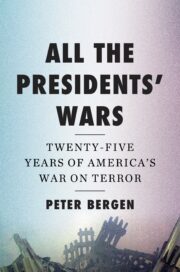
All the Presidents’ Wars:
RECENT ARTICLES

UPCOMING EVENTS
Wednesday, September, 09, 2026
GLOBAL SUMMIT ON TERRORISM AND POLITICAL VIOLENCE, NYC
Thursday, September, 10, 2026
Denver, CELL
Friday, September, 11, 2026
Duke University
Tuesday, September, 15, 2026
Lessons Learned: America’s Post-9/11 Wars, New America DC
Thursday, September, 17, 2026
Georgetown University
Tuesday, September, 22, 2026
International Spy Museum, DC. All the Presidents’ Wars, book event
Thursday, September, 24, 2026
Monterey World Affairs Council, Monterey, CA
Sunday, September, 27, 2026
ALL THE PRESIDENTS’ WARS: TWENTY-FIVE YEARS OF AMERICA’S WAR ON TERROR — AT CONN AVE, Politics & Prose, DC
Wednesday, September, 30, 2026
Gerald Ford School of Public Policy, “25 Years After 9/11: Reflections on the US War on Terror”, U. Michigan, Ann Arbor, MI
Thursday, October, 01, 2026
Arizona State Univ. , Tempe AZ
Monday, October, 05, 2026
Opal Group, DC
Thursday, October, 08, 2026
World Affairs Council of Connecticut, online 7p ET
Tuesday, October, 13, 2026
Arms Control book event, Amy Nelson, New America, DC
Monday, October, 19, 2026
Doha Security Forum, Qatar
Friday, November, 06, 2026
“American Valor,” Omni Shoreham, DC
RECENT FILM AND TV SERIES
GHOSTS OF BEIRUT: SHOWTIME
The Fall of Osama bin Laden, National Geographic
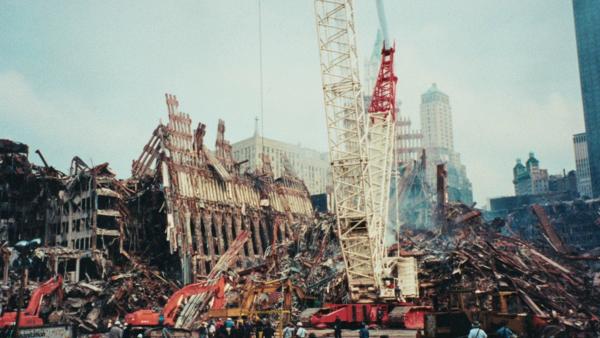
BIN LADEN'S HARD DRIVE, NATIONAL GEOGRAPHIC

