How to defeat ISIS: 10 ideas, CNN.com

How to defeat ISIS: 10 ideas

By Peter Bergen, CNN National Security Analyst


Updated 12:14 PM ET, Mon September 28, 2015

Story highlights

  • Peter Bergen says there are many ways to make progress in the fight against ISIS and a number of those aren’t military in nature
  • The anti-ISIS effort seems to be at a stalemate, he says

Peter Bergen is CNN’s national security analyst, vice president at New America and a professor of practice at Arizona State University. He is the author of “Manhunt: The Ten-Year Search for bin Laden — From 9/11 to Abbottabad.”

(CNN) On Tuesday, President Obama meets in New York with world leaders to discuss how the campaign against ISIS is going and how it might be improved.

Earlier this month, the outgoing chairman of the Joint Chiefs of Staff, Gen. Martin Dempsey, said that the war is “tactically stalemated” and there are no “dramatic gains on either side.”

Here are some ideas about how to move forward:

1. Enlist defectors from ISIS to tell their stories publicly. Nothing is more powerful than hearing from former members of the group that ISIS is not creating an Islamist utopia in the areas it controls, but a hell on earth. The flow of “foreign fighters” to ISIS from around the Muslim world is estimated to be about 1,000 a month. Reducing that flow is a key to reducing ISIS’ manpower.

2. Amplify voices such as that of the ISIS opposition group Raqqa is Being Slaughtered Silently, which routinely posts photos online of bread lines in Raqqa, the de facto capital of ISIS in northern Syria, and writes about electricity shortages in the city. This will help to undercut ISIS propaganda that it is a truly functioning state.

3. Amplify the work of former jihadists like the Canadian Mubin Shaikh, who intervenes directly with young people online who he sees are being recruited virtually by ISIS.

4. Support the work of clerics such as Imam Mohamed Magid of northern Virginia, who has personally convinced a number of American Muslims seduced by ISIS that what the group is doing is against Islam.

5. Keep up pressure on social media companies such as Twitter to enforce their own Terms of Use to take down any ISIS material that encourages violence. Earlier this year, Twitter quietly took down 2,000 accounts used by ISIS supporters, but the group continues to use Twitter and other social media platforms to propagate its message.

6. Keep up the military campaign against ISIS. The less the ISIS “caliphate” exists as a physical entity, the less the group can claim it is the “Islamic State” that it purports to be.

7. Applaud the work that the Turks have already done to tamp down the foreign fighter flow through their country to ISIS in neighboring Syria, and get them to do more.

8. Provide “off ramps” to young ISIS recruits with no history of violence, so that instead of serving long prison terms for attempting to join ISIS — as they presently do in the United States — they would instead serve long periods of supervised probation.

This will help families that presently face a hard choice: If they suspect a young family member is radicalizing and they go to the FBI, that person can end up in prison for up to 15 years on charges of attempting to support ISIS; but if they don’t go to the authorities and their child ends up traveling to Syria, he or she may well end up being killed there. Providing off ramps would offer families a way out of this almost impossible choice.

Three of Shafi and Zarine Khan’s teenaged children were arrested by the FBI last year at Chicago’s O’Hare Airport as they attempted to join ISIS. The Khans say they would have intervened effectively with their children if they had known they were radicalizing, but now their oldest son, Hamzah, faces 15 years in prison, despite the fact he has no history of violence nor does the government allege he was a planning a violent act.

9. Educate Muslim parents about the seductive messages that ISIS is propagating online.

10. Relentlessly hammer home the message that ISIS positions itself as the defender of Muslims, but its victims are overwhelmingly fellow Muslims.

Obama vs. ISIS = stalemate? CNN.com

Obama vs. ISIS = stalemate?

By Peter Bergen, CNN National Security Analyst


Updated 8:15 AM ET, Mon September 28, 2015


Story highlights
  • President Barack Obama will meet with key leader of nations involved in effort against ISIS
  • Top administration officials paint a mixed picture of how the fight against ISIS has gone so far

Peter Bergen is CNN’s national security analyst, vice president at New America and a professor of practice at Arizona State University. He is the author of “Manhunt: The Ten-Year Search for bin Laden — From 9/11 to Abbottabad.”

(CNN)On Tuesday, President Barack Obama will meet in New York with the leaders of dozens of countries who are involved in the fight against ISIS in some manner to assess how that campaign is going.

So what is the state of play more than a year into the campaign against the terrorist army?

Earlier this month, Gen. Martin Dempsey, outoing chairman of the Joint Chiefs of Staff, said that the war is “tactically stalemated” and there are no “dramatic gains on either side.”

France launches its first airstrikes against ISIS in Syria

Indeed, in early 2015, ISIS retreated from the town of Kobani on the Syrian-Turkish border and in March the group lost the Iraqi city of Tikrit. But a month later, ISIS seized the city of Ramadi in western Iraq as well as the town of Palmyra in Syria.

ISIS, in short, isn’t winning, nor is it really losing. This is despite the more than 7,000 airstrikes aimed at the terrorist army in the past year or so.


How top officials see the situation


Ahead of the ISIS summit in New York, four senior administration officials spoke with half a dozen reporters, including myself, to give their views of the campaign.

Deputy Secretary of State Tony Blinken conceded, with some understatement, that the train- and-equip program of Syrian fighters to fight ISIS is “not where we want it to be.”

The $500 million program to train more than 5,000 rebel fighters has trained only 125 fighters in the past year, and some of those fighters have given up their weapons to al Qaeda’s Syrian affiliate.

Blinken, however, compared how ISIS is faring today with where it was a year ago when the Iraqi cities of Erbil and Kirkuk were threatened by the group as well as Baghdad. Blinken asserted that as a result of the US-led campaign against ISIS, its cadre have lost “freedom of movement” in around a third of the territory that they control in Iraq.

Blinken also pointed to ISIS losses in Syria, asserting that the terrorist army had lost large amounts of territory in northern Syria, so that it now controls only some 60 miles of the Syrian-Turkish border, down from the 600 miles of border that the group had previously controlled.

U.S. support for Kurdish and Turkmen groups fighting ISIS has contributed to those losses and “some of these elements are within 20 miles of Raqqa,” ISIS’ de faction capital in northern Syria, Blinken said.

Blinken explained that these intelligence estimates did not originate from U.S. Central Command, which is in charge of the war against ISIS, but from other U.S. intelligence agencies. The Pentagon is investigating claims by intelligence analysts that senior officials at Centcom distorted their analytical product to make it appear that the war against ISIS is going better than the facts on the ground.

The gains against ISIS have significantly hurt the ability of the group to move foreign fighters from around the Muslim world through Turkey into Syria, Blinken said. Transiting Turkey is how most foreign fighters, who are some of the most brutal of ISIS’ cadre, travel to reach the group.


A tougher stance along the border


Turkey, which had long been criticized by several Western countries for its lackadaisical policy about foreign fighters moving through its territory, has “significantly increased” efforts to detain and arrest those fighters, Blinken said.

Those efforts by the Turks are clearly working according to ISIS’ own propaganda. In early 2015, ISIS posted online a 50-page booklet, “Hijrah to the Islamic State.” Hijrah is an Arabic word that means emigrating for religious reasons. The booklet’s subtitle explained, “What to Packup. Who to Contact. Where to Go. Stories & More!”

It is clear from the 50-page booklet that by earlier this year, ISIS had begun to feel pressure from the Turkish government. ISIS explained, “It is important to know that the Turkish intelligence agencies are in no way friends of the Islamic State [ISIS].”

In 2014, ISIS advised that, as long as its recruits did their best not look too “religious,” they would simply pass through the best-known Turkish-Syrian border crossings, but over time that route had became more challenging.

ISIS now instructed its recruits to run across the border at an unguarded spot where a car and driver would take them on to Raqqa.

Obama’s top counterterrorism adviser, Lisa Monaco, noted that in the past year, some 40 countries had introduced new laws to prevent the recruitment of these fighters to ISIS or had launched criminal investigations of militants who had joined the group.

U.S. Assistant Attorney General John Carlin, who oversees the prosecutions of ISIS recruits in the States, said that one of the fruits of these efforts is that Interpol now has some 4,000 profiles of foreign fighters.

Carlin added that the United States has charged 60 militants with traveling or attempting to travel to Syria to join jihadist groups and a further 10 militants had been arrested in 2015 for plots to attack inside the States that were either inspired or directed by ISIS. Carlin said 250 Americans have traveled or attempted to travel to the conflicts in Syria and Iraq.

The United States has had relatively small numbers of its citizens join or attempt to join ISIS or other jihadist groups compared with other Western countries that have seen far larger numbers. About 1,500, for instance, have traveled from France to Syria and 700 from the United Kingdom, as have many hundreds of others from other European countries. There have also been smaller numbers from Canada and Australia.


Tightening up on ‘visa waivers’


These are all “visa waiver” countries whose citizens can travel easily to the United States. Recognizing that Western veterans of the Syrian conflict might pose a threat to the United States, the Department of Homeland Security has tightened up on the reporting requirements of those traveling from visa waiver countries asking for more information about each individual visitor, according to Deputy Secretary of Homeland Security Alejandro Mayorkas.

The U.S. government has estimated that the flow of foreign fighters to ISIS is around 1,000 a month, which is also around the number of fighters that the Centcom-led air campaign is estimated to be killing every month.

Taken together, the four senior administration officials outlined a campaign that has had some success in constraining, though not reducing, the flow of foreign fighters to ISIS as well as restricting the ability of the group to move freely in large portions of Syria and Iraq where it had once enjoyed freedom of movement.

That said, the overall strategic picture remains, for the moment, something of a draw because ISIS retains its centers of power in Raqqa in Syria as well as in Mosul, Iraq’s second-largest city, as well as Anbar province in western Iraq, the largely Sunni region where Ramadi is located.

In the long term, which could be many years, the US-led coalition against ISIS is likely to wear the group down, but for the moment there is an overall strategic stalemate.


United States of Jihad, Walter Cronkite School of Journalism, ASU, Phoenix AZ

ASU Lecture: United States of Jihad: Investigating America’s Homegrown Terrorists

The ASU Center on the Future of War explores the social, political, economic, and cultural implications of the changing nature of war and conflict, this spring they present a Spring Speaker Series which includes:

“United States of Jihad: Investigating America’s Homegrown Terrorists”

Presented by Peter L Bergen

Vice President, New America; Co-Director, Center on the Future of War; Professor of Practice, School of Politics and Global Studies, ASU; author of  mulitple best-selling and award-winning books

Search Facebook

Our speaker series continues next Tues, Feb. 16, with CNN National Security Analyst and Vice President at New America Peter Bergen.

ASU Center on the Future of War's photo.

Pulitzer prize-winning journalist and Senior Future of War Fellow Thomas Ricks will be speaking tonight at the downtown campus about why he fears we will lose our next bitg war.

ASU Center on the Future of War's photo.
Comments
Peter Bergen
Write a comment…

Don’t forget our speaker event with Georgetown law professor Rosa Brooks is starting soon. We hope to see you all there!

Join us Wednesday at noon with Georgetown law professor and senior Future of War Fellow Rosa Brooks to discuss “How War Became Everything”

Join us Wednesday at noon with Georgetown law professor and senior Future of War Fellow Rosa Brooks to discuss “How War Became Everything”

ASU Center on the Future of War's photo.
Comments
Peter Bergen
Write a comment…

Joe Sterling
Would like to hear her take on a one-state solution, what is a…
John Akouri
heart emoticon LOVE, exciting and new…
Scott Horton and JW Lawson are now friends.
Fatima Ali Khan shared PTV Sports’s photo.
Roddy Goryance likes Florida Conservation Voters.

Chat with friends

  • 2h
    John Nagl
  • 2h
    Piers Thompson
  • 1h
    Coralie Muller
  • 3h
    Ivana Lowell
  • 1h
    Ihsan Dawar
  • 1m
    Farid Nouri
  • Sacha Baveystock
  • 1m
    Charlotte Kennedy
  • 54m
    Mark Bowden
  • 7h
    Rina Amiri
  • 2m
    Rita Leistner
  • 6h
    Nina Schultz Terner
GROUP CONVERSATIONS
  • Josh, Cyril, Hussain, 145 others
  • Catie, Ben, David, 172 others

Turn on chat to see who’s available.


Our speaker series continues next Tues, Feb. 16, with CNN National Security Analyst and Vice President at New America Peter Bergen.

Comments
Peter Bergen
Write a comment…


Time and Location TBD

Phoenix Ctte on Foreign Relations, Phoenix AZ

From the Death of Mao to the Birth of ISIS: How have America’s Strategic Priorities Changed?

WHEN: 22-Mar-2016

WHO: Peter Bergen and Ambassador J. Stapleton Roy

TIME: 5:30pm – 8:30pm

PROGRAM: Dinner

SCHEDULE: Cocktails: 5:30PM 40th Anniversary Celebration: 6PM Dinner: 6:30PM Keynote: 7:15PM Panel Discussion: 7:45PM

LOCATION: ASU Old Main Building 400 E Tyler Mall, Tempe, AZ 85281


Keynote Speaker and Panel Moderator
Peter Bergen
Peter Bergen is a print and television journalist, author, documentary producer and vice president at New America where he directs the International Security and Fellows programs; a professor of practice at Arizona State University; a fellow at Fordham University’s Center on National Security and CNN’s national security analyst. He has held teaching positions at the Kennedy School of Government at Harvard University and at the School of Advanced International Studies at Johns Hopkins University.

Recent Article by Peter Bergen

Homegrown Terrorist http://www.wsj.com/articles/can-we-stop-homegrown-terrorists-1453491850

Featuring Panelists
 Ambassador J. Stapleton Roy
Ambassador J. Stapleton (Stape) Roy is a Distinguished Scholar and Founding Director Emeritus of the Kissinger Institute on China and the United States at the Woodrow Wilson International Center for Scholars in Washington, DC. Stape Roy was born in China and spent much of his youth there during the upheavals of World War II and the communist revolution, where he watched the battle for Shanghai from the roof of the Shanghai American School. He joined the US Foreign Service immediately after graduating from Princeton in 1956, retiring 45 years later with the rank of Career Ambassador, the highest in the service. In 1978 he participated in the secret negotiations that led to the establishment of US-PRC diplomatic relations. During a career focused on East Asia and the Soviet Union, Stape’s ambassadorial assignments included Singapore, China, and Indonesia. His final post with the State Department was as Assistant Secretary for Intelligence and Research. On retirement he joined Kissinger Associates, Inc., a strategic consulting firm, before joining the Woodrow Wilson International Center for Scholars in September 2008 to head the newly created Kissinger Institute. In 2001 he received Princeton University’s Woodrow Wilson Award for Distinguished Public Service.
Marco Vicenzino
  Marco Vicenzino represents a new generation of independent foreign policy thinkers that combines successful international private sector experience with profound insight into contemporary geo-politics to produce an informed global strategic perspective on issues, events and developments that drive world affairs in the 21st century. As a graduate of Oxford University and Georgetown University Law Center, Vicenzino has constantly distinguished himself through his ability to master and inter-connect a wide range of international topics and speak authoritatively on diverse media outlets around the world. As a global affairs expert, Vicenzino has provided commentary / analysis to leading international media outlets including CNN, BBC, New York Times, Financial Times, Guardian and many others. Vicenzino has also serviced a wide array of private / public sector entities operating globally. These include Shell, HSBC, Barclays Capital, Credit Agricole, Mitsubishi International, World Bank, U.S. State Department, NATO, Organization of American States, YPO and many others.Recent TV Interviews by Marco Vicenzino on Terrorism / Global Security Threats:

– BBC TV Interview, Paris Terror Attacks, analysis by Marco Vicenzino, https://youtu.be/xP3m9jqN8Hw

– CNBC TV Interview, Why Paris Was Targeted?, analysis by Marco Vicenzino, http://video.cnbc.com/gallery/?video=3000454029 


Gayle Tzemach Lemmon
  Gayle Tzemach Lemmon is a senior fellow at the Council on Foreign Relations and the author of Ashley’s War and The Dressmaker of Khair Khana, both New York Times best sellers. Lemmon is a contributor to the Atlantic’s Defense One site, writing on national security and foreign policy issues, and a former contributing editor at Newsweek Daily Beast. She also writes regularly on Afghanistan’s politics and economy, entrepreneurship in fragile states, the fight to end child marriage, and issues affecting women and girls for publications including the New York Times, Financial Times, Fast Company, Christian Science Monitor, and CNN.com.Lemmon regularly appears on a number of broadcast networks, including PBS, MSNBC, CNN, and National Public Radio, to discuss foreign policy issues.

In December 2011, she gave the opening talk at TEDxWomen, which focused on why investing in women can make the difference for the global economy. Her presentation was named a “TED Talk of the Day.”From 1997 to 2004, Lemmon covered presidential politics and public policy issues for the ABC News Political Unit and served as an editorial producer during the first year of “This Week with George Stephanopoulos.” In 2004, she left ABC News to pursue her interest in international development and began MBA study at Harvard.  After business school, she served as a vice president at the global investment firm PIMCO, where she worked in the executive office and in emerging markets.Lemmon graduated summa cum laude from the University of Missouri with a bachelor’s degree in journalism. She received an MBA from Harvard, as well as the 2006 Dean’s Award for her work on women’s entrepreneurship. She served as a Fulbright scholar in Spain and a Robert Bosch Foundation fellow in Germany. She speaks Spanish, German, and French, and is conversant in Dari.  She serves on the boards of Mercy Corps and the International Center for Research on Women.

The New York Times triples down on bizarre bin Laden story, CNN.com

By Peter Bergen, CNN National Security Analyst


Updated 3:15 PM ET, Sat October 24, 2015

Fact checking Joe Biden's new retelling of the Osama Bin Laden raid

Fact checking Joe Biden’s new retelling of the Osama Bin Laden raid 02:21

Story highlights

  • Bergen: The Times tries to defend piece offering an unsupported account of Osama bin Laden’s killing
  • He says history is about trying to get at the truth, not about treating all narratives equally

Peter Bergen is CNN’s national security analyst, a vice president at New America and a professor of practice at Arizona State University. He is the author of “Manhunt: The Ten-Year Search for bin Laden — From 9/11 to Abbottabad.”

(CNN)Last week the New York Times Magazine ran a cover story headlined, “What Do We Really Know about Osama bin Laden’s Death?”

In the story, Times reporter Jonathan Mahler asserted that it was “impossible to know what was true and what wasn’t” about the saga of the hunt for bin Laden and his death in Pakistan, a story that he asserted is now “floating somewhere between fact and mythology.”

Mahler wrote at length about investigative reporter Seymour Hersh, who authored a piece in May in the London Review of Books asserting that every element of the story of the hunt for bin Laden and his death that has been widely and exhaustively reported was false. Hersh maintained that the 2011 raid on the compound where bin Laden was hiding in Pakistan was not a firefight involving U.S. Navy SEALs, but instead was a piece of theater in which Pakistani officials gave bin Laden to the SEALs so that he could be executed.

Peter Bergen

Peter Bergen

In Hersh’s account, Obama and many of his senior advisers have for the past four years been spinning a dense web of lies about the hunt for bin Laden. Those advisers included then-Secretary of State Hillary Clinton, who may well be the next president of the United States.

If that were true, wouldn’t the Times’ own reporters who have been covering Clinton aggressively about her private computer server be all over this? And wouldn’t her Republican critics in Congress, who have for the past year and half been examining the attack in Benghazi ad nauseam, also be all over it? But, strangely, this hasn’t happened.

Veteran Washington Post national security reporter Greg Miller tore Mahler’s story apart. So too did Mark Bowden, who is the dean of American reporters covering U.S. special operations forces. So too did this reporter, who has written four books about bin Laden and al-Qaeda.

In a piece headlined, “What do we know about Osama bin Laden’s death? Quite a lot, actually,” Miller nicely summarized the case against both Mahler and Hersh:

“There is remarkable agreement across antagonistic governments, credit-hungry security agencies and fiercely competitive news organizations on the most salient facts: that bin Laden was killed in a raid by U.S. Special Operations forces conducted without the cooperation or awareness of the Pakistani government after a decade-long CIA manhunt.”

Reporters at the Times who cover national security and foreign affairs protested Mahler’s story as damaging the credibility of the newspaper, as it contradicts many thousands of words of the Times’ own reporting about the hunt for bin Laden.

Eric Schmitt, a national security reporter in the Times’ Washington bureau who shared in a 2009 Pulitzer for his coverage of Pakistan, told the Times’ public editor, Margaret Sullivan, that he agreed with the three articles that criticized Mahler’s story. Schmitt also told her: “This article has struck a nerve among national security and foreign policy reporters at The New York Times, and elsewhere, like few I’ve seen in my three-plus decades at the paper.”

In a conference call with aggrieved reporters and editors on Monday, the executive editor of the Times, Dean Baquet, said that critics of Mahler’s story were wrong because it wasn’t a national security story per se, but rather “it was a media story … a very good one.”

Baquet also told the Times’ public editor, “This is a story that’s been told from so many perspectives that it’s hard for Americans to get straight what happened.” The perspectives Baquet went on to cite were Hersh’s reporting and the film “Zero Dark Thirty,” which he said was “full off inaccuracies.”

“Zero Dark Thirty” is a movie, which is, yes, replete with inaccuracies, not least that a young CIA analyst played by Jessica Chastain is portrayed as the only U.S. government employee who really wanted to find bin Laden.

Next Baquet will be gravely informing Times’ readers that “The Sound of Music” isn’t an accurate account of Hitler’s seizure of Austria, or that “Mary Poppins” isn’t an accurate portrayal of how domestic servants lived in early-20th-century London.

Baquet’s defense of Mahler’s story — that it is a “very good” piece of media criticism — is baloney. And surely Baquet — who has had a well-regarded career as the editor of both the Los Angeles Times and the New York Times — knows it deep down. A serious piece of media criticism would have taken Hersh’s piece apart; the many holes in his narrative are contradicted by dozens of on-the-record accounts of key players, from the SEALs on the ground in Pakistan to the Cabinet officers in the Situation Room. Hersh instead relied on a single unnamed source for his alternative narrative.

Imagine for a minute that Mahler’s 7,500-word cover story about the hunt for bin Laden was about the media coverage of climate change, and that it featured mostly the work of a climate-change denialist. Imagine also that the piece asserted that the evidence that human actions are causing climate change lay somewhere “between fact and mythology.” That is hardly a piece that would be published by the Columbia Journalism Review, is it?

Mahler rose to his own defense with a slight rebuttal that made no mention of Hersh and his theories, but it noted that Vice President Joe Biden earlier this week had amended his story about the advice he gave Obama about whether to authorize the bin Laden raid, and this purportedly showed how much was still unsettled about the history of the hunt for al-Qaeda’s leader.

Biden and Obama have both previously publicly said that Biden advised against the bin Laden raid. In Biden’s new account, he said he told Obama “I thought he should go but to follow his own instincts.”

This would be, as Mahler himself concedes, a “minor” change in the overall history of the raid. But even so, for someone who supposedly is bringing a critical lens to the bin Laden story, Mahler is as credulous about Biden’s new account as he was about Hersh’s.

Biden’s new account came before he announced that he wasn’t running for president. The vice president also claimed that no one other than CIA director Leon Panetta advised Obama to do the raid. In fact, Clinton also gave a green light to the raid, and surely Biden was aware that his bad advice, against her good advice, put him at a disadvantage in a potential run for president.

According to multiple officials who were present at the final National Security Council meeting to determine whether to authorize the raid, Biden said, “We need greater certainty that bin Laden is there … Mr. President, my suggestion is: Don’t go.” By contrast, Clinton said, “It’s a very close call, but I would say: Do the raid.”

History can, of course, be revised based on new accounts that emerge (which happens all the time) but those changes need to be based on credible evidence, which Hersh hasn’t provided.

Mahler and his editors at the New York Times Magazine seem to have embraced the postmodern view that instead of practicing journalism or history in which you do the best to ferret out the truth, you only have competing “narratives” like Hersh’s, each of which is worthy of serious attention. This is the kind of thing you might be taught in an undergrad course in literary theory, but is hardly what you expect from the “newspaper of record.”


The Republicans’ Muslim ‘problem’, CNN.com

The Republicans’ Muslim ‘problem’

Peter Bergen

By Peter Bergen, CNN National Security Analyst


Updated 2:25 PM ET, Mon September 21, 2015 | Video Source: CNN

Story highlights

  • Despite America’s long history of religious tolerance, two of leading GOP candidates stigmatize Muslims
  • Bergen: Candidates are appealing to a minority who believe in conspiracy theories

Peter Bergen is CNN’s national security analyst, vice president at New America and a professor of practice at Arizona State University. He is the author of “Manhunt: The Ten-Year Search for bin Laden — From 9/11 to Abbottabad.”

(CNN)Two of the leading Republican candidates for the party’s nomination to be president seem unaware that the republic they seek to lead is, at its very core, a nation founded on the principle of religious tolerance.

Peter Bergen

Peter Bergen

On Sunday, Dr. Ben Carson said on “Meet the Press” that he would not support a Muslim as U.S. president, saying, “I would not advocate that we put a Muslim in charge of this nation. I absolutely would not agree with that.” He also opined that Islam is not compatible with the Constitution.

This would have come as a surprise to Thomas Jefferson.

There have been Muslims in the United States since the Colonial era, and their right to practice their faith has been enshrined since 1786, with the passage of the Virginia Act for Establishing Religious Freedom. Jefferson, the law’s principal author, wrote that it was “meant to comprehend, within the mantle of its protection, the Jew, the Gentile, the Christian and the Mahometan (Muslim), the Hindoo and Infidel of every denomination.”

This act became the basis for the First Amendment protections of freedom of religion.

Carson’s comments came after Donald Trump did not push back when a questioner at a town hall meeting in New Hampshire last week called Muslims in the United States a “problem.”


Not a surprise


The fact that two of the leading Republican candidates are comfortable with such views should not be surprising.

In a 2012 poll by the Arab American Institute, about 60% of Republicans had negative views of Muslim Americans. (Indeed, Muslim Americans polled less favorably than Americans of every other faith, among respondents of all political persuasions.)

These negative views about Muslims have been fueled by a virulent minority on the right that has been pushing the claim for the past several years that President Obama is seeking to populate his administration with members of the Muslim Brotherhood as part of a secret plan to bring Sharia law to the United States.

Former Reagan administration official Frank Gaffney published a pamphlet titled “The Muslim Brotherhood in the Obama Administration”; former federal prosecutor Andrew McCarthy offered “How Obama Embraces Islam’s Sharia Agenda”; the author Robert Spencer wrote the book “Stealth Jihad: How Radical Islam is Subverting America Without Guns or Bombs” and journalist Paul Sperry added “Infiltration: How Muslim Spies and Subversives have Penetrated Washington.”

These views are ironic given that, as commander in chief, Obama presided over or launched more military operations in Muslim countries — Afghanistan, Iraq, Libya, Pakistan, Somalia, Syria and Yemen — than any president who had preceded him.

The most conservative estimate of drone strike fatalities under Obama comes to more than 3,000, and includes much of the leadership of al Qaeda. This is not the record of a president with any secret proclivities for Sharia law.


The ‘Islamization’ myth


Pamela Geller is the most visible of the activists claiming that the United States is threatened by creeping “Islamization.”

She began an organization called “Stop the Islamization of America” and wrote a book with the same name. Geller organized the protests against the establishment of the so-called “Ground Zero mosque” in Manhattan in 2011. (The planned building was in fact two blocks from the World Trade Center site and wasn’t a mosque but an Islamic community center.)

The protests turned Geller into a national figure with the imprimatur of a “60 Minutes” profile. Two years later she was denied entry to the UK after British authorities classified her books and speeches as criminal “incitements to racial hatred.”

To claim that nationwide Sharia law is imminent is to ignore simple facts. Muslims make up around 2% of the population. There isn’t a jurisdiction in the U.S. where Sharia is the law, nor is any community demanding its imposition, including areas with substantial Muslim populations, such as Dearborn, Michigan.

Short of a mass conversion of hundreds of millions of American citizens to Islam, the chances of One Nation Under Sharia seem slight.

The arguments of the radical right Muslim-bashers, however, have seeped into mainstream political life. The former speaker of the House, Newt Gingrich, asserted in July 2010, “Sharia is a mortal threat to the survival of freedom and the United States as we know it.”

Also in 2010, former CIA Director James Woolsey was one of the authors of a report by the Center for Security Policy that made similar claims.

By 2014, 32 state legislatures had introduced bills to forbid judges from considering foreign laws, including Sharia, in their decisions, USA Today reported. In seven states, they passed. In other words, seven states have passed laws to defend against a threat that doesn’t exist and won’t happen!


America’s far right tradition


This fits well in the long tradition of what Richard Hofstadter had termed in 1964 “the paranoid style in American politics,” his analysis in Harper’s Magazine of the vocal conspiracy theorist element of the American far right.

More than half a century later, Hofstadter’s observations about how the paranoid right interpreted the world still rang true: “The central image is that of a vast and sinister conspiracy, a gigantic and yet subtle machinery of influence set in motion to undermine and destroy a way of life. …The paranoid spokesman sees the fate of this conspiracy in apocalyptic terms. He traffics in the birth and death of whole worlds, whole political orders, whole systems of human values. He is always manning the barricades of civilization. He constantly lives at a turning point: it is now or never in organizing resistance to the conspiracy. Time is forever running out.”

The Muslim-bashers of today have updated the paranoid right for the post-9/11 era. Instead of a communist plot to take over America, the 1950s conspiracy du jour, the threat is now Muslims. (Earlier waves of paranoia were directed at Catholics and Freemasons; such fears have been an integral part of American history since the inception of the republic.)

That Carson and Trump are willing to either trumpet anti-Muslim views or to entertain them without contradiction is, in part, the result of the campaign led by a small subset of right-wingers to paint American Muslims as some kind of fifth column. Instead of “reds under the bed” what we supposedly need to fear today is “greens under the bed.”

It’s nonsense, of course, and if the Republican party wants to catch up with — forget the 21st century, at least catch up to the 20th century, it should abjure the views that American Muslims are a “problem” and their religion is not compatible with the Constitution.

Indeed, to his great credit, six days after 9/11 President George W. Bush visited the Islamic Center of Washington and said, “The face of terror is not the true faith of Islam. That’s not what Islam is all about. Islam is peace. These terrorists don’t represent peace. They represent evil and war.”

Amen to that.


Sanity prevails on U.S. troops in Afghanistan, CNN.com

Sanity prevails on U.S. troops in Afghanistan

Peter Bergen

By Peter Bergen, CNN National Security Analyst


Updated 12:36 PM ET, Thu October 15, 2015

Obama: U.S. to delay troop withdrawal from Afghanistan

Obama: U.S. to delay troop withdrawal from Afghanistan 03:24

Story highlights

  • Peter Bergen: There are 8 good reasons for U.S. to maintain limited troop presence for the long term in Afghanistan.

Peter Bergen is CNN’s national security analyst, vice president at New America and a professor of practice at Arizona State University. He is the author of “Manhunt: The Ten-Year Search for bin Laden — From 9/11 to Abbottabad.”

(CNN)Congratulations to the Obama administration for making a reality-based decision on Afghanistan; the decision announced Thursday to keep some 10,000 troops there until the end of 2016 is exactly the right one. The Obama administration then plans to drop that number to 5,500 by early 2017 as it leaves office.

Peter Bergen

Peter Bergen

Earlier this year the administration had announced plans to draw down to a skeleton force of around 1,000 troops in Afghanistan by the end of its term. That decision would have tied the hands of the next president as it is much easier to maintain an existing troop presence — both from a logistical point of view as well as politically — than it is to ramp one up substantially.

The decision to keep many thousands of troops in Afghanistan will help to enable the next president to make a longer-term decision about what to do going forward there. And that decision should be a no-brainer: Stay!

Why so? Here are eight reasons.

First, this is no exercise in American imperialism, as some have claimed. Rather, the Afghan government and people want the United States to remain engaged for the long haul.

In a poll conducted earlier this year, two-thirds of Afghans favored a long-term role for U.S. and other international forces, while the Afghan government, led by President Ashraf Ghana and CEO Abdullah Abdullah, have been imploring U.S. officials to maintain a substantial troop presence.

Indeed, eight out of 10 Afghans support the presence of U.S. forces in their country.

Second, for those who have fantasized about the Taliban being just a bunch of misunderstood Pashtun backwoodsmen whose return to power in some shape or form would be no big deal, an examination of Amnesty International’s recent report about what the Taliban did when late last month they took over the northern Afghan city of Kunduz is instructive.

Amnesty writes: “Mass murder, gang rapes and house-to-house searches by Taliban death squads are just some of the harrowing civilian testimonies emerging from Kunduz. …Women human rights defenders from Kunduz spoke of a ‘hit list’ being used by the Taliban to track down activists and others, and described how fighters had raped and killed numerous civilians.”

Third, an overwhelming 92% of Afghans prefer the current government to the Taliban, according to a poll taken earlier this year. In other words, not only is the United States on the right side of history in supporting the Afghan government against the Taliban, the Afghan people also overwhelmingly support this.

Fourth, ISIS is establishing something of a foothold in areas of Afghanistan. ISIS has taken over portions of the eastern province of Nangarhar. ISIS executions there involve piling men alive into a mass grave and then using explosives to blow them up. ISIS fighters also torture their victims by thrusting their hands into boiling oil. ISIS’ reign of terror even has ordinary Afghans pining for the Taliban!

Fifth, we have seen how the ISIS movie played out in Iraq in 2014 when the group seized major Iraqi cities such as Mosul enabled by the divisive Iraqi government; the incompetent Iraqi military forces and the absence of an American presence in the country. No one in his or her right mind would want to see anything remotely similar play out in Afghanistan.

Sixth, Afghanistan is not Iraq. Afghanistan does have a somewhat functioning multiethnic government as well as widespread approval for its armed forces. An astonishing almost 90% of Afghans gave a thumbs-up to the Afghan army in a major nationwide poll by the Asia Foundation last year.

In Iraq, by contrast, a poll also taken last year found only 40% of Iraqis who thought the Iraqi army was doing a good job of providing security.

Seventh, a long-term U.S. troop presence in Afghanistan is not extending the war as some have claimed. Since the beginning of 2015, when the U.S. started winding down its combat role, five American soldiers have been killed by enemy fire, which is certainly five too many, but a far cry from what we seen in the past during the wars in both Iraq and Afghanistan. This makes clear that the current U.S. military role in Afghanistan more akin to a peacekeeping mission than to a shooting war.

Eighth, the United States has seen that long-term American military presences overseas can pay off well. U.S. soldiers are still in South Korea in significant numbers — more than a half-century since the end of the Korean War. That proved to be a wise choice as Korea went from one of the world’s poorest countries to one of its richest during this period and is today a key U.S. trading partner.

Insurgencies like the one mounted by the Taliban can go on for decades. Just look at the FARC insurgency in Colombia, which only now is ending with a peace deal after fighting that has gone on for a half-century.

Instead of constantly announcing new U.S. drawdowns from Afghanistan as the Obama administration has done repeatedly over the past few years, which has the unintended consequence of sapping Afghans’ confidence, Americans should get used to the fact that the U.S. commitment to Afghanistan should be for the long term and U.S. politicians should say so publicly.

The fact is that a relatively small U.S. military presence will go a long way to stabilizing Afghanistan with a very low risk to the United States and a big upside — which is ensuring Afghanistan doesn’t revert in any shape or form to a failed state amenable to exploitation by either al Qaeda or ISIS.

The New York Times’ bizarre story on Osama bin Laden’s death, CNN.com

The New York Times’ bizarre story on Osama bin Laden’s death

Peter Bergen

By Peter Bergen, CNN National Security Analyst


Updated 9:14 AM ET, Mon October 19, 2015

Story highlights

  • Peter Bergen: Times magazine cover story says incorrectly that we don’t know truth about the bin Laden killing
  • Participants in raid and U.S. officials would have had to agree on massive cover up if story they told is false, Bergen said

Peter Bergen is CNN’s national security analyst, a vice president at New America and a professor of practice at Arizona State University. He is the author of “Manhunt: The Ten-Year Search for bin Laden — From 9/11 to Abbottabad.” This piece draws on a story from May 20, 2015.

(CNN)The New York Times is the greatest newspaper in the world, so when the current cover story in the Times magazine is headlined, “What Do We Really Know about Osama bin Laden‘s Death?,” readers are surely going to pay attention.

The story was of particular interest because we actually know a great deal about bin Laden’s death, not only from three books written by participants in the operation — one of the U.S. Navy SEALs who was on the raid and the two top CIA officials who led the hunt for al Qaeda’s leader — but also from many news articles about the operation written by reporters working for The New York Times.

Anything that might add to the hundreds of thousands of words that are already on the public record about bin Laden’s death would, of course, be of great interest to the American public and, indeed, to people around the world.

Timeline: Osama bin Laden, over the years

My interest was particularly piqued because I have written a book about the long search for al Qaeda’s leader and his death at the hands of U.S. Navy SEALs, so I was anxious to find out more from the newspaper of record which is, after all, based in the city where the terrible 9/11 attacks had killed so many Americans in an operation that was, of course, ordered by bin Laden.

So it was an unpleasant surprise to find that Times reporter Jonathan Mahler, in his more than 7,000 word piece, had discovered little new about the hunt for bin Laden and the raid that killed him, but also made the following claim: “It’s not that the truth about bin Laden’s death is unknowable; it’s that we don’t know it.”

Mahler also asserted that it was “impossible to know what was true and what wasn’t” about the story of bin Laden’s death, which is now “floating somewhere between fact and mythology.”

Really? That is only if you accept at face value the work of the investigative reporter Seymour Hersh, who wrote a lengthy piece in the London Review of Books in May that set out to challenge the “official” story of bin Laden’s death.


Seymour Hersh’s story


Let’s recap the principal claims that Hersh’s article made, which largely relied on the assertions of an unnamed, retired senior U.S. intelligence official:

— That the 2011 raid on the Abbottabad compound where bin Laden was hiding in Pakistan was not an intense firefight involving 23 SEALs, but a Hollywood-like set up in which Pakistani officials simply handed over bin Laden to the SEALs for execution.

— The only shots fired the night of the bin Laden raid were the ones that the SEALs fired to kill bin Laden.

— Pakistan’s military had been holding bin Laden prisoner for many years and a “walk in” informant to the U.S. Embassy in Islamabad tipped off the CIA that bin Laden was living in the Abbottabad compound.

— It was false, despite the statements of multiple U.S. officials after the raid, that the CIA had traced back one of bin Laden’s couriers to the Abbottabad compound and built a circumstantial case that bin Laden was living there.

— A Pakistani army doctor obtained DNA from bin Laden that proved he was in Abbottabad, proof that was provided to the States so that all the supposed uncertainty — cited by Obama administration officials after the raid — about whether bin Laden was actually living in the compound was a lie.

— The “most blatant lie,” according to Hersh, was that, “Pakistan’s two most senior military leaders — General Ashfaq Parvez Kayani, chief of the army staff, and General Ahmed Shuja Pasha, director general of the ISI — were never informed” in advance of the U.S. raid on the bin Laden compound.

In short, according to Hersh’s account, President Barack Obama and many of his top advisers lied about pretty much everything concerning what is considered one of the President’s signal accomplishments: authorizing the raid in which bin Laden was killed.

If Hersh’s account were true, it would be an outrageous betrayal of the public trust by Obama and his most senior advisers on the scale of Watergate.

Secret documents provide portrait of Osama bin Laden

Secret documents provide portrait of Osama bin Laden 02:44

During the course of reporting for my book about the hunt for bin Laden I spoke on the record to, among many others, then-CIA Director Leon Panetta; John Brennan, now the CIA director and then President Obama’s top counterterrorism adviser; then-Chairman of the Joint Chiefs, Adm. Mike Mullen; then-Vice Chairman of the Joint Chiefs, Gen. James Cartwright; then-Secretary of State Hillary Clinton; Michael Vickers, who was then the civilian overseer of Special Operations at the Pentagon; Tony Blinken, who is now the deputy secretary of state, and Denis McDonough, who is now Obama’s chief of staff.

I also spoke off the record to some dozen other officials from many different agencies across the U.S. government and to multiple officials in the Pakistani government and military. The story told by all those officials was remarkably consistent: that the Pakistanis did not know where bin Laden was hiding; that the case that bin Laden was hiding in Abbottabad was built up thorough circumstantial evidence; and that the SEALs went in to a dangerous situation at the compound and fought their way past two bodyguards to get to bin Laden, killing a total of five people, including an unarmed female.

Either all these many dozens of officials were all lying in great detail and have kept up this pretense collectively for the past four years, or they were telling the truth.


Give Hillary an Oscar


One of those supposed liars would also be the woman who may well be the next president of the United States, Hillary Clinton. By the way, give her an Oscar for acting for her performance when the iconic photograph was taken at the White House as the bin Laden raid went down, the one in which Clinton has her hand over her mouth in disbelief and anxiety so uncertain was the outcome of the raid.

While the story about the hunt for bin Laden has been exhaustively reported and the key sources and witnesses are in agreement about the main points of the narrative, of course, it’s still possible that we could learn new details about the story that would add to the narrative.

Still, as I wrote in May when Hersh’s story first appeared, his account of the bin Laden raid is a farrago of nonsense that is contravened by a multitude of eyewitness accounts, inconvenient facts and simple common sense.

Let’s start with the claim that the only shots fired at the Abbottabad compound were the ones that killed bin Laden. That ignores the fact that two SEALs on the mission, Matt Bissonnette, author of “No Easy Day,” and Robert O’Neill have publicly said that there were a number of other people killed that night, including bin Laden’s two bodyguards, one of his sons and one of the bodyguard’s wives.

Axelrod: Bin Laden report 'just plain wrong'

Axelrod: Bin Laden report ‘just plain wrong’ 01:28

Their account is supplemented by many other U.S. officials who have spoken on the record to myself or to other journalists, including Mark Bowden, who also wrote a book about the bin Laden raid and whose book “Black Hawk Down” is the definitive account of the fiasco that unfolded in Somalia in 1993 when a U.S. Special Forces mission to capture a Somali warlord ended up with 18 American servicemen dead.

I was the only outsider to visit the Abbottabad compound where bin Laden lived before the Pakistani military demolished it.

The compound was trashed, littered almost everywhere with broken glass and several areas of it were sprayed with bullet holes where the SEALs had fired at members of bin Laden’s entourage and family, or in one case exchanged fire with one of his bodyguards. The evidence at the compound showed that many bullets were fired the night of bin Laden’s death.


U.S.-Pakistani relations


Common sense would also tell you that if the Pakistanis were holding bin Laden and the U.S. government had found out this fact, the easiest path for both countries would not be to launch a U.S. military raid into Pakistan but would have been to hand bin Laden over quietly to the Americans.

Indeed, the Pakistanis have done this on several occasions with a number of other al Qaeda leaders such as Khalid Sheikh Mohammed, the operational commander of 9/11, who was handed over to U.S. custody after a raid in the Pakistani city of Rawalpindi in 2003. So too was Abu Faraj al-Libi, another key al Qaeda leader who was similarly handed over by the Pakistanis to U.S. custody two years later.

Hersh defends bin Laden report

Hersh defends bin Laden report 13:46

Common sense would also tell you that if U.S. officials had found out that the Pakistani officials were hiding bin Laden, there is no reason the Americans would have covered this up.

After all, around the time of the bin Laden raid, relations between the United States and Pakistan were at an all-time low because the Pakistanis had recently imprisoned Raymond Davis, a CIA contractor who had killed two Pakistanis. What did U.S. officials have to lose by saying that bin Laden was being protected by the Pakistanis, if it were true?

The fact is that the senior Pakistani officials who Hersh alleges were harboring bin Laden were as surprised as the rest of the world that al Qaeda’s leader was living in Abbottabad.

The night of the bin Laden raid, U.S. officials were monitoring the communications of Pakistan’s top military officials such as Kayani and Pasha, and their bewildered reactions confirmed that the Pakistanis had not had a clue about bin Laden’s presence there, according to a number of U.S. officials.

In his article, Hersh correctly pointed out that in the immediate aftermath of the bin Laden raid, White House officials initially made some false statements about the raid — for instance, that bin Laden was using his wives as human shields during the raid — but these were quickly corrected.


Little support for Hersh


The only source Hersh referred to by name in his 10,000-word piece was Asad Durrani, who was the head of Pakistan’s military intelligence agency, ISI, during the early 1990s, around two decades before the bin Laden raid occurred. Hersh portrayed Durrani as generally supportive of Hersh’s various conclusions.

When I emailed Durrani after the Hersh piece appeared, Durrani said he had “no evidence of any kind” that the ISI knew that bin Laden was hiding in Abbottabad, but he still could “make an assessment that this could be plausible.” This was hardly a strong endorsement of one of the principal claims of Hersh’s piece by his only named source.

Bergen rebuts claims that Obama lied about bin Laden

Bergen rebuts claims that Obama lied about bin Laden 02:58

Durrani added that he believed that the bin Laden “operation could not have been carried out without our cooperation.”

This glossed over the fact that the SEALs were flying in stealth helicopters through blind spots in Pakistan’s radar defense and the Pakistani air force had virtually no capacity to fly at night when the raid took place, so in fact the bin Laden raid was relatively easily accomplished without Pakistani cooperation, according to multiple U.S. officials with knowledge of the bin Laden operation.

One of the only journalists who has “stood up” any element of Hersh’s story is Carlotta Gall, a reporter for the Times whose 2014 book, “The Wrong Enemy: America in Afghanistan 2001-2014,” was excerpted in the Times magazine.

Gall wrote that she had been told by a Pakistani source that “the ISI actually ran a special desk assigned to handle bin Laden. It was operated independently, led by an officer who made his own decisions and did not report to a superior. He handled only one person: bin Laden … the top military bosses knew about it.”

This would be big news, if true, but strangely the aggressive reporters at the Times who cover Pakistan and also the U.S. intelligence community, including Pulitzer prize winners such as Mark Mazzetti and Eric Schmitt, have not substantiated an iota of Gall’s reporting, nor any of Hersh’s.


Times’ reporters ‘patsies’?


Are Times reporters such as Mazzetti and Schmitt patsies for the American and Pakistani governments and militaries? Hardly. Mazzetti co-authored a massive Times investigation earlier this year that was quite critical of U.S. Navy SEAL Team 6, which carried out the bin Laden raid, while he and Schmitt shared in the 2009 Pulitzer Prize for their aggressive Times coverage of Pakistan.

The only kernel of new and interesting reporting done by Mahler in his Times magazine cover story was to find Aamir Latif, a 41-year-old Pakistani journalist who went to Abbottabad, the day after bin Laden was killed, where he reported for a couple of days. Latif said he had spoken to half-dozen neighbors living near bin Laden’s compound, and they had told him that Pakistani security personnel a couple of hours before the raid had told them to turn off their lights and remain indoors.

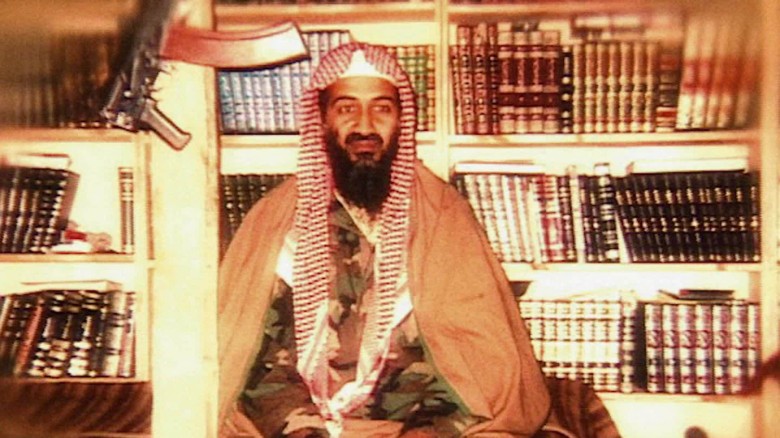
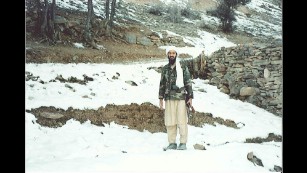
Osama bin Laden holds a Kalashnikov rifle in Tora Bora, a mountainous area of Afghanistan, in November 1996. This remarkable set of photos -- the first showing bin Laden in the remote hideout where he would seek refuge after 9/11 -- came to light only last month in the terrorism conspiracy trial of bin Laden lieutenant Khaled al-Fawwaz. Al-Fawwaz was a communications conduit for al Qaeda in London during the mid-1990s.

31 photos: Osama bin Laden’s Afghan hideout

Certainly very interesting, if true, but Latif is the only journalist who has reported this story, while the many dozens of Pakistani reporters and reporters from around the world who were in Abbottabad after the raid did not find this.

It has been established that U.S. Navy SEALs took a translator with them to Abbottabad, and during the raid, he spoke to curious neighbors in the local language and told them to go back inside their houses because a security operation was under way.

I spent several days in Abbottabad and interviewed Ihsan Khan, the local journalist who first broke the story of the mysterious helicopter crash in Abbottabad, which was the one of the stealth helicopters carrying the SEALs crashing inside bin Laden’s compound. Khan was one of the first at the scene and spoke to multiple eyewitnesses. Khan made no mention that any of them had told him that Pakistani security personnel had been going door to door before the raid warning neighbors to stay inside.

The newspaper of record is now in the curious and uncomfortable position in which its own magazine is fanning the flames of conspiracy theories about the bin Laden raid. This is a very strange place for the Times to be.
Join us on Facebook.com/CNNOpinion.

Is Trump right about 9/11? CNN.com

Is Trump right about 9/11?
Peter Bergen

By Peter Bergen, CNN National Security Analyst


Updated 7:55 PM ET, Mon October 19, 2015

Story highlights

  • Bergen says Bush administration did not keep U.S. safe before 9/11
  • He says Bush, aides paid little attention to the threat posed by bin Laden and al Qaeda

Peter Bergen is CNN’s national security analyst, a vice president at New America and a professor of practice at Arizona State University. He is the author of “The Longest War: The Enduring Conflict Between America and al-Qaeda,” which this piece draws upon.

(CNN)It’s not often that one gets the chance to write the following: Donald Trump is right.

Trump, of course, has been very wrong in the past about important issues such as President Barack Obama’s place of birth and Mexican immigrants, but the Republican frontrunner is correct in saying that former Republican President George W. Bush did not keep the country safe during the 9/11 terrorist attacks.

On Monday Trump told Fox News, “The fact is we had the worst attack in the history of our country during his reign. Jeb (Bush) said we were safe during his reign. That wasn’t true.”

The historical record bears this out.

9/11 tributes across the nation

16 photos: 9/11 tributes across the nation

Before 9/11 senior Bush administration officials did not see al Qaeda as the serious threat it was, despite the fact that the group had blown up two American embassies in Africa in 1998, killing more than 200 people, and had also bombed the USS Cole warship two years later. Also, they ignored multiple, clear warnings from the CIA during the summer of 2001 about a likely al Qaeda attack, although those warnings did not specify where that attack might happen.

A Nexis database search of all newspapers, magazines, and TV transcripts for anything that President Bush or Vice President Dick Cheney might have written or said about the threat posed by al Qaeda and bin Laden comes up completely empty before 9/11.

Of the 33 “principals” meetings of cabinet members held by the Bush administration before the attacks, only one was about terrorism, although almost immediately after assuming office on February 5, 2001, Bush convened his cabinet to discuss the supposedly pressing issue of Saddam Hussein’s regime in Iraq.

The first cabinet-level meeting about the threat posed by al Qaeda took place only a week before 9/11, on September 4, 2001.


Al Qaeda threat barely registered


Bush administration officials, of course, deny that they didn’t take the threat urgently enough, but there is no debating that in their public utterances, private meetings, and actions, the al Qaeda threat barely registered.

Part of the explanation for this is that key members of the Bush national security team team had cut their teeth during the Cold War. Bush’s top national security adviser, Condoleezza Rice, was a Soviet specialist at the National Security Council under President George H.W. Bush, while Cheney had served as White House chief of staff during the Ford administration. Their views about the importance of state-based threats remained frozen in a Cold War mindset.

To admit that non-state terrorists were a real danger to the nation, it then became harder to argue, as many in the administration did, that a rogue state, Iraq, was the number-one overriding danger.

The inattention of the Bush administration to the threat from al Qaeda had results. Shortly before 9/11, Bush’s attorney general, John Ashcroft, turned down FBI requests for some 400 additional counterterrorism personnel. Ashcroft also told Justice Department officials in early 2001 that his top priorities included tamping down gun violence and curtailing teen drug use.Terrorism wasn’t one of them.

On October 12, 2000, the USS Cole was attacked in the Yemeni port city of Aden by al Qaeda suicide bombers, an operation that killed 17 American sailors and threatened to sink the billion-dollar destroyer.

Sen. Paul: Bush admin. overlooked 20th hijacker

Sen. Paul: Bush admin. overlooked 20th hijacker 03:30

Following the Cole attack the Clinton administration, in office for only three more months, did nothing to respond. This was despite the fact that according to the Ali Soufan, the lead FBI agent on the Cole case, within three weeks, “We knew one hundred percent that it was bin Laden.”

On December 21 the CIA made a presentation to the key national security officials in the Clinton cabinet that there was a “preliminary judgment” that al Qaeda aided the Cole attack.

By the time the Bush administration was sworn into office in January 2001, it was obvious that al Qaeda was responsible for the Cole bombing. On February 9 Vice President Cheney was briefed that the attack was the work of bin Laden’s men.

In June 2001 al Qaeda released a propaganda videotape strongly implying its responsibility for the Cole operation and calling for more anti-American attacks. If the Bush administration needed a casus belli, here it was broadcast around the world. The attack on the Cole was an act of war, plain and simple, and it merited an American military response.

The feckless response to the Cole attack was a bipartisan failure.


‘Blinking red’


During the summer of 2001 CIA Director George Tenet told the 9/11 Commission that the American intelligence “system was blinking red” because of a series of credible intelligence reports about al Qaeda’s plans for attacks on American targets.

Below is a representative sampling of the threat reporting that was distributed to Bush officials, which gathered intensity during the spring and reached a crescendo during that summer.

• CIA: “Bin Ladin Planning Multiple Operations,” April 20

• CIA: “Bin Ladin Attacks May Be Imminent,” June 23

• CIA: “Planning for Bin Ladin Attacks Continues, Despite Delays,” July 2

• CIA: “Threat of Impending al Qaeda Attack to Continue Indefinitely,” August 3

On July 10 Tenet took the unusual step of calling Rice and asking her with some urgency for a meeting that same day to discuss the al Qaeda threats. Barely 15 minutes later, Tenet and two of his deputies were in Rice’s White House office. One of Tenet’s staff got everyone’s attention when he predicted, “There will be a significant terrorist attack in the next weeks or months … Multiple and simultaneous attacks are possible and they will occur with little or no warning.”

Jeb Bush slams Donald Trump for 9/11 remarks

Jeb Bush slams Donald Trump for 9/11 remarks 03:18

Rice asked her counterterrorism adviser Richard Clarke if he shared this assessment and he gave an exasperated “Yes.”

Rice would later publicly testify before the 9/11 Commission that the Bush administration was at “battle stations” during this period. The historical record does not reflect this.


The ‘determined to strike’ briefing


During August, Bush was at his vacation ranch in Crawford, Texas. On August 6 he was given an intelligence briefing titled “Bin Ladin Determined to Strike in U.S.” The brief began by noting, “Clandestine, foreign government, and media reports indicate Bin Laden since 1997 has wanted to conduct terrorist attacks in the US.”

The brief had been prepared, in part, by the veteran CIA analyst ‘Barbara S.’ an agency official who had tracked al Qaeda for years. Bush later said the contents of the brief were only “historical” and told him nothing new about the danger from al Qaeda.

Barbara S., now revealed to be Barbara Sude, says the President did not understand the intention of the briefing, which was to warn of a possible attack in America, not to rehash past history. Sude told me, “Was the piece historical? No … So did the analysts think that something would happen in the United States? We did assess there was a major attack coming. We couldn’t say definitively where. We had threats all year about various locations.”

Sude says that the CIA briefing was particularly influenced by the fact that just two month earlier, Ahmed Ressam, an Algerian on the fringes of al Qaeda, had pled guilty to charges that he had planned to detonate a bomb at Los Angeles International Airport in the middle of the Christmas season of 1999.

Following the August 6 briefing, President Bush never publicly discussed the threat posed by al Qaeda until after 9/11, and chose not to interrupt what the Washington Post described as being the longest presidential vacation in more than three decades.

The 9/11 Commission also found no evidence that he had any further discussions with his advisers about possible al Qaeda attacks on the United States until after they had happened.


Al Qaeda intentions were no secret


Despite Rice’s testimony before the 9/11 Commission that the Bush administration was at battle stations during the summer of 2001, in a wide-ranging and emblematic interview with Fox News the night of August 6 — the same day that President Bush had been briefed that bin Laden might attack the States — Rice chose to discuss the troubled situation in Israel, the administration’s missile defense plans, and its relations with Russia. The threat from al Qaeda, bin Laden and terrorism went unmentioned.

There is also no evidence that Rice did anything to “pulse” the national security system for additional information about the presence of jihadist militants in the United States. Might that have caused the information about Zacarias Moussaoui, an al Qaeda recruit then in FBI custody in Minnesota who was keen on practicing flying a 747, to have been more widely distributed? Might that have caused the wider dissemination of the names of al Qaeda’s soon-to be-hijackers Nawaf al Hazmi and Khalid al Mihdhar, who were known by the CIA to be in the United States?

It is worth contrasting Rice’s lackadaisical approach with that of Clinton’s national security adviser, Sandy Berger, who held almost daily meetings of the National Security Council from mid-December 1999 as the new millennium approached and similar fears of a terrorist attack gripped the national security establishment.

The fact that al Qaeda and its allies intended to attack the United States, and indeed had already done so before 9/11, was hardly a secret. The CIA briefing to President Bush headlined “Bin Ladin Determined to Strike in the U.S.” was simply stating the blindingly obvious.

Donald Trump: U.S. wasn't safe on 9/11

Donald Trump: U.S. wasn’t safe on 9/11 03:24

Al Qaeda’s leader had repeatedly said he was going to attack the United States, starting in 1997 in an interview with CNN, and he reiterated this threat over the next two years in interviews with ABC News and Time.

Rarely have the enemies of the United States publicly warned so often of their plans. Imagine for a moment that starting in 1937, Japanese government officials had repeatedly told American radio and newspaper correspondents that they were planning to strike the United States. Might not the events of Pearl Harbor have played out rather differently than they did on the morning of December 7, 1941?

The problem, then, was not a lack of information about al Qaeda’s intentions and capabilities, but the Bush administration’s inability to comprehend that an attack by al Qaeda on the United States was a real possibility, much more so than attacks by traditional state antagonists such as China or Iraq.

This was a policy failure by the Bush administration, not, as many Americans believed in the years after 9/11, an intelligence failure. Indeed the CIA did an excellent job during the summer of 2001 of repeatedly warning senior Bush officials that al Qaeda was planning a major attack. Where and when that attack was going to happen was, of course, not known.

After Paris: The Refugee Crisis, New America DC