Cartoon shooting in U.S. was inevitable, CNN.com

Cartoon shooting in U.S. was inevitable

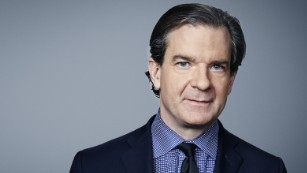
By Peter Bergen, CNN National Security Analyst

  • Two gunmen at a Mohammed cartoon event in Garland, Texas, were killed by police
  • Violence aimed at those who draw cartoons of the Prophet Mohammed occurred in Europe
  • Peter Bergen: It was only a matter of time before it happened in America

Peter Bergen is CNN’s national security analyst, a vice president at New America and professor of practice at Arizona State University. He is the author of “Manhunt: The Ten-Year Search for bin Laden – from 9/11 to Abbottabad.” This is an updated version of an article that appeared in February.

(CNN)It was only a matter of time before this would happen in the United States.

Violence in the West aimed at those who draw cartoons of the Prophet Mohammed has become increasingly common.

In January, 12 people were killed by two gunmen at the Charlie Hebdo satirical magazine in Paris, which had run a number of cartoons of the Prophet Mohammed.

Peter Bergen

Peter Bergen

A month later in Copenhagen, Denmark, at an event featuring Swedish cartoonist Lars Vilks, who had also drawn cartoons of the Prophet Mohammed, one of the attendees was killed by a gunman who had pledged allegiance to ISIS.

On Sunday, two men opened fire outside the “Muhammad Art Exhibit and Cartoon Contest” in Garland, Texas. Both gunmen were killed by police. Dutch politician Geert Wilders was the keynote speaker at the event in the Dallas suburb. Wilders released a 2008 film that showed terrorist acts superimposed over verses from the Quran.

One of the gunmen was identified as Elton Simpson, a federal law enforcement told CNN. Simpson lived in Phoenix and had been the subject of an FBI investigation into whether he had planned to go and fight with Islamist militants in Somalia in 2009, according to court documents.

Up until Sunday night Americans might have taken some comfort in the idea that this sort of attack wouldn’t likely involve a U.S. citizen or happen in the States.

Think again.

Gunmen opened fire at Mohammed cartoon event

Gunmen opened fire at Mohammed cartoon event 02:07
PLAY VIDEO

Pennsylvania resident Colleen LaRose, a 46-year-old high school dropout who called herself “Jihad Jane” when she was surfing jihadi websites, pleaded guilty in 2011 to being part of a plot to kill Lars Vilks, the same Swedish cartoonist whose support group was targeted in Copenhagen.

LaRose traveled to Europe and also followed Vilks online “in an effort to complete her task,” according to federal prosecutors. In 2007, Vilks had drawn a cartoon of Mohammed with the body of a dog.

According to the indictment against her, LaRose emailed the Swedish Embassy in Washington asking for instructions about how to become a permanent resident of Sweden.

LaRose also sent emails to another American citizen, former Colorado resident Jamie Paulin Ramirez, during the summer of 2009 inviting her to Europe and asking her to attend a “training camp.”

Ramirez traveled to Ireland in September 2009 with “the intent to live and train with the jihadists,” according to prosecutors.

Ramirez pleaded guilty in 2011 to charges of conspiring to provide material support to a terrorist organization and was sentenced to eight years in prison. LaRose was sentenced last year to 10 years in prison.

Over the past four years, three American citizens have been convicted in plots to murder Scandinavian cartoonists and journalists who they believed had insulted Islam. And two other Americans have also been convicted of inciting violent attacks against cartoonists in the States who they felt had insulted the Prophet Mohammed.

Chicagoan David Headley — who played a critical planning role in the attacks in Mumbai, India, in November 2008 by the Pakistani terrorist group Lashkar-e-Taiba that killed 166 people — also hatched a plan to attack the leading Danish newspaper Jyllands-Posten, which had published cartoons in 2005 of the Prophet Mohammed that were considered offensive by many Muslims.

In January 2009, Headley traveled to Copenhagen, where he reconnoitered Jyllands-Posten on the pretext that he ran an immigration business that was looking to place some advertising in the paper.

Controversial cartoonist on al Qaeda 'Most Wanted' list

Controversial cartoonist on al Qaeda ‘Most Wanted’ list 03:03
PLAY VIDEO

In coded correspondence with his Lashkar controllers in Pakistan, Headley referred to his plot to take revenge for the offensive cartoons as the “Mickey Mouse project.”

Headley hatched a plan to take over the Jyllands-Posten building with multiple attackers using similar tactics to those that Lashkar’s gunmen had used in Mumbai. The plan involved beheading employees working at the newspaper and throwing their heads out the windows of the building, in an act guaranteed to get worldwide media coverage.

While he was in Denmark, Headley picked up some hats with the word “Copenhagen” emblazoned on them, a grimly ironic souvenir that he gave to some of his Lashkar handlers when he was back in Pakistan.

But Lashkar officials suddenly put the Copenhagen attack on hold because of the pressure the group was feeling as a result of the Mumbai attacks, which had led to more carnage than even they had anticipated, causing them to worry that there might be a major crackdown on the group.

Resolved to defend the honor of the prophet from what he believed were the blasphemous Danish cartoons, Headley was determined to go ahead with the Copenhagen operation, so he made contact with Ilyas Kashmiri, who ran his own jihadist group in Pakistan and also had close ties to al Qaeda.

Lawmaker: Paris gunmen were 'very well trained'

Lawmaker: Paris gunmen were ‘very well trained’ 04:45
PLAY VIDEO


Al Qaeda’s obsession with cartoons


The cartoons of the prophet had become a particular obsession of al Qaeda. In March 2008, Osama bin Laden denounced the publication of the cartoons as a “catastrophe” for which punishment would soon be meted out. Three months later, an al Qaeda suicide attacker bombed the Danish Embassy in Islamabad, Pakistan, killing six. For al Qaeda, the Danish cartoon controversy assumed some of the same importance that Salman Rushdie’s fictional writings about the prophet had had for the Ayatollah Khomeini’s Iran two decades earlier.

Headley met with Kashmiri in the Pakistani tribal regions along the border with Afghanistan to brief him on the findings of his surveillance of the Jyllands-Posten building. Kashmiri congratulated Headley on the Mumbai attacks and told Headley that “the elders,” al Qaeda’s leaders, wanted the Copenhagen attack to “be carried out soon as possible.”

Kashmiri suggested deploying a truck bomb to destroy the Jyllands-Posten building. Headley said that wouldn’t work because the building was designed in such a manner that a truck bomb wouldn’t be particularly effective; far more likely to succeed was a Mumbai-style assault on the building with multiple gunmen. This plan was similar to what unfolded at the Paris office of Charlie Hebdo in January.

French magazine known for outrageous satire

French magazine known for outrageous satire 02:34
PLAY VIDEO

Kashmiri told Headley that he had men in his group who were living in the United Kingdom who might be interested in taking part in such an operation. Headley traveled to meet them in the city of Derby in northern England and talked to two of the men who Kashmiri had said would be good recruits. These men were being monitored by British intelligence, which tipped off the FBI in July 2009 after someone named “David” had called them from a Chicago pay phone.

Headley was arrested at Chicago’s O’Hare Airport on October 3, 2009. He soon told investigators that he was planning to kill the Jyllands-Posten’s cultural editor, Flemming Rose, who had first commissioned the Danish cartoons, as well as the cartoonist Kurt Westergaard, who had drawn the cartoon he found most offensive: the Prophet Mohammed with a bomb concealed in his turban. Headley later pleaded guilty to the conspiracy and was sentenced to 35 years in prison.

Paris attack: 12 dead, massive manhunt continues

Paris attack: 12 dead, massive manhunt continues 02:43
PLAY VIDEO

Also, American Muslims have incited fellow Muslims to kill cartoonists in the United States who they believed had insulted the Prophet Mohammed.

On the occasion of the 200th episode of the Comedy Central show “South Park,” Trey Parker and Matt Stone, the creators of the show, decided to have some fun with the notion that Islamist militants had deemed that depictions of the Prophet Mohammed should be met with violence.

The 200th episode aired on April 14, 2011, and to avoid showing the Prophet Mohammed’s face, the animated character playing the prophet was dressed in a bear costume. A character in the show pointed out, “If Mohammed is seen we could get bombed.”


A warning


Virginia resident Zachary Chesser, a recent convert to a militant form of Islam, saw the “South Park” episode as something of an opportunity, telling a fellow militant, New York-based Jesse Morton, that the fatwa by Ayatollah Khomeini demanding the death of Rushdie after the publication of his novel “Satanic Verses” in 1989 “was a tremendous help in radicalizing Muslims.” Could there be a similar opportunity in the United States with the “South Park” episode?

Who was behind Paris terror attack?

Who was behind Paris terror attack? 02:10
PLAY VIDEO

The day after the “South Park” episode, Chesser wrote that the episode “outright insulted” the prophet by showing him in a bear suit. Chesser went on to say, menacingly, “We have to warn Matt and Trey that what they are doing is stupid, and they will probably wind up like Theo van Gogh for airing this show. This is not a threat, but a warning of the reality of what will likely happen to them.”

Van Gogh, a Dutch filmmaker, was killed by an Islamist militant in Amsterdam in 2004 after he made a provocative film that showed naked women with verses of the Quran projected onto them. Chesser posted a photograph showing van Gogh lying dead in the street in Amsterdam with two knives stuck into his body.

Chesser also posted the address of Comedy Central in New York and linked to an article about a residence in the western United States belonging to Trey Parker and Matt Stone. He suggested to his readers that they should “pay them a visit.”

Given the fact that the readers of Chesser’s blog were mostly a group of Islamist militants who might actually retaliate against someone they believed had defamed the prophet, this was a serious threat.

To underline the threat, Chesser posted photos of Parker and Stone along with photographs of others who had been publicly targeted for death for purportedly insulting the prophet, including British author Rushdie and Danish cartoonist Westergaard.


‘It’s just the reality’


Chesser blogged that “South Park” creators Parker and Stone would likely be attacked in the future, explaining, “They’re going to be basically on a list in the back of the minds of a large number of Muslims. It’s just the reality.”

In the next episode of “South Park,” Parker and Stone continued the story line about the Prophet Mohammed, but his character was hidden under a “CENSORED” graphic and an audio bleep was heard when his name was said. Comedy Central then made further changes to the show, placing numerous additional bleeps throughout the episode.

Comedy Central was now bending over backward not to give any offense — an unusual position for a channel whose stock in trade was the giving of offense.

As far as Chesser was concerned, his campaign against the show “worked phenomenally,” because Comedy Central chose to censor this episode.

Molly Norris, a cartoonist based in Seattle, was offended by Comedy Central’s response to Chesser’s blog. “I think it just set a precedent for a slippery slope in censorship. … If artists have to be afraid of what they draw, then what’s the point of even living here?”

In response, Norris urged that the public treat May 20, 2010, as “Everybody Draw Mohammed Day.” To launch the effort she drew a poster featuring the prophet variously as a teacup, a box of pasta and a domino.

Norris’ notion was that if a lot of Americans drew the prophet on that day it would help dilute the pool of potential targets for enraged Islamist militants.

Norris’ initiative succeeded beyond any expectation. The poster drawn by Norris went viral and Facebook groups sprang up with tens of thousands of members supporting Everybody Draw Mohammed Day.

Chesser identified some of the American supporters of Everybody Draw Mohammed Day on a militant website, including a teenager in Mississippi and a man from Texas, along with the address of his “possible church/school,” noting that this was “just a place to start.”

Norris soon got spooked by the deluge of publicity surrounding Everybody Draw Mohammed Day and started distancing herself from the effort, writing on her website, “I am a coward. I have backed off of being associated with any group. … I am so freaked out that I am not drinking my regular four cups of coffee per day.”

Much of the “South Park” episode had played out as some kind of farce, but there was also real tragedy for Norris. Al Qaeda in the Arabian Peninsula’s Inspire magazine drew up a “hit list” of al Qaeda’s enemies that included Norris for her role in instigating Everybody Draw Mohammed Day.

The Seattle Weekly, where Norris worked, announced that she had had to go underground permanently after the threats from Chesser’s blog and al Qaeda. The announcement by the newspaper explained: “You may have noticed that Molly Norris’ comic is not in the paper this week. That’s because there is no more Molly. The gifted artist is alive and well, thankfully. But on the insistence of top security specialists at the FBI, she is, as they put it, “going ghost”: moving, changing her name and essentially wiping away her identity.”


What’s at stake


Neil MacBride, the U.S. attorney for the Eastern District of Virginia, where many key national security cases are tried, prosecuted Chesser. In his sentencing memorandum for Chesser, MacBride nicely summarized what was at stake in the case for American society:

“Chesser not only endangered the lives of innocent people, but he also contributed to the destruction of the very freedoms on which our society is based. The natural consequence of Chesser’s actions is for people throughout the country to fear speaking out — even in jest — lest they also be labeled as enemies who deserve to be killed.”

Chesser was sentenced to 25 years in prison. His co-conspirator, Jesse Morton, was sentenced to more than 11 years in prison for conspiring to solicit murder.

In the sentencing memorandum that he submitted for the sentencing of Morton, MacBride also explained, “As philosopher Karl Popper wrote in ‘The Open Society and Its Enemies,’ ‘If we are not prepared to defend a tolerant society against the onslaught of the intolerant, then the tolerant will be destroyed, and tolerance with them. … We should therefore claim, in the name of tolerance, the right not to tolerate the intolerant.'”

This is precisely correct. A core tenet of the modern era, which was sparked by the Enlightenment of the 18th century — much of which took place among the Parisian intellectuals who were the forebears of the fearless cartoonists of Charlie Hebdo — was well expressed by a quote often attributed to the French philosopher Voltaire: “I disapprove of what you say, but I will defend to the death your right to say it.”

The killers in Paris and Copenhagen and the gunmen in Texas reversed this key formula of the modern world: I disapprove of what you say and I will kill you for it.

No one has heard anything from the Seattle-based cartoonist Molly Norris since she went into hiding more than four years ago. For Norris that must have been a very difficult decision, but the violence in Copenhagen and Paris and now in Texas reinforces the notion that it was likely a sensible choice.
The mystery of the Tsarnaev brothers, CNN.com

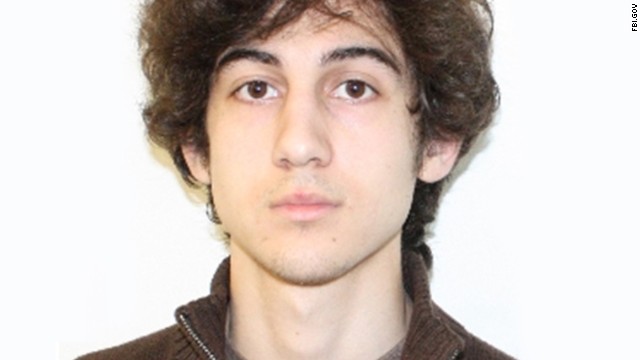
Bergen: The mystery of the Tsarnaev brothers
By Peter Bergen, CNN National Security Analyst
img
UPDATED: 10:54 PM EDT 05.16.15
The death sentence for Boston Marathon bomber Dzhokhar Tsarnaev may provide some kind of justice for the families of the four people that he and his older brother Tamerlan murdered, as well as the 16 victims who lost limbs in the bombings. But the decision gets us no closer to the big question: Why do this? Why set off a bomb that kills Martin Richard, an angelic 8-year-old boy? Or Lingzi Lu, 23, a graduate student in mathematics from China?
According to Tsarnaev’s own writing as the police closed in on his final hiding place, a boat dry-docked in a backyard in the Boston suburb of Watertown, it was about U.S. foreign policy in the Muslim world.
Losing blood rapidly as he lay wounded from multiple police bullets, Dzhokhar wrote on the inside of the boat with a pen: “The U.S. government is killing our innocent civilians, but most of you already know that. As a M[uslim] I can’t stand to see such evil go unpunished. We Muslims are one body, you hurt one you hurt us all…Know you are fighting men who look into the barrel of your gun and see heaven. Now how can you compete with that? We are promised victory and we will surely get it.”
This was an efficient rendering of Osama bin Laden’s essential message that Islam is under attack by the United States and true Muslim believers who “love death” must take revenge.
So part of the “why” for Tsarnaev was the ideology of “Binladenism” that has been widely disseminated around the globe since the 9/11 attacks.
What’s puzzling is that Tsarnaev was hardly an observant Muslim. As a sophomore at UMass-Dartmouth he was an easygoing, skateboarder dude, and had a reputation for partying. Twitter and Facebook accounts document Dzhokhar hanging out at a wide range of parties.
He was also a prolific tweeter. His tweets generally had almost nothing to say about the practice of Islam or American foreign policy in the Muslim world, which are the preoccupations of many militant Islamists.
Instead, they were the typical musings of an indifferent 19-year-old American college student: Homework that was late, sleeping in, sex, girls, marijuana and alcohol.
A not untypical tweet from Dzhokhar six months before the Boston bombing said: “This night deserves Hennessy a bad bitch and an o [ounce] of weed the holy trinity.”
Hennessy, “bitches” and weed are not, of course, the preoccupations of the typical Islamist zealot. In fact, it’s hard to find any evidence that Dzhokhar believed in much of anything.
Coming under Tamerlan’s influence
His involvement in the world of anti-American jihadism seems to have been precipitated largely by his older brother Tamerlan’s deepening Islamist beliefs, although the argument he was overly influenced by his brother clearly did not stop the jury finding him guilty of the murders he was charged with and sentencing him to death.
Still, Tamerlan was the star of the tight-knit Tsarnaev family. He was the big and strong son. His mother adored him and his father, a onetime boxer, encouraged his interest in the sport. But for someone who dreamed that one day he would become a world-class boxer or musician, who drove around town in a white Mercedes (a perk from his father Aznor’s car repair business) and dressed in the style of a small-time Russian pimp, favoring skin-tight leather pants, pointy shoes and billowing white shirts open to the navel, Tamerlan’s actual life was somewhat less glamorous — he dropped out of community college and then worked as a pizza delivery guy.
And, as he began to explore the Islam native to his family’s homeland in the former Soviet Union, Tamerlan became increasingly disenchanted with life in his adopted country.
In a photo essay about Tamerlan’s boxing career that was published in 2009 on a site that helped photographers promote their work, Tamerlan volunteered that he felt alienated from his adopted country, saying, “I don’t have a single American friend. I don’t understand them.” Tamerlan also said he was “very religious” and that he had quit drinking because “God said no alcohol.” In the photo essay, entitled “Will Box for Passport,” Tamerlan explained that he wanted to get on the U.S. Olympic boxing team and also become an American citizen.
In 2010, Tamerlan won the Rocky Marciano Trophy, which made him the Golden Gloves heavyweight champion of New England. He was now one of the top amateur boxers in the States, but Tamerlan was blocked from advancing to the national championship of the Golden Gloves because of a recent rule change that prohibited non-U.S. citizens from competing. And Tamerlan’s penchant for violence outside of the boxing ring was going to make it hard for him to obtain an American passport.
At the same time that his boxing career was blossoming, Tamerlan for the first time began attracting the attention of law enforcement. On July 28, 2009, Tamerlan hit his live-in girlfriend. “Yes I slapped her,” Tamerlan told the police when they interviewed him about the incident. The case wasn’t prosecuted, but it likely held up his later application for U.S. citizenship,
Around the same time, the family patriarch, Aznor, got in an altercation at a Boston restaurant and was struck in the head with a steel pole, an injury he never quite recovered from. Then Aznor’s car repair business took a dive.
The family now subsisted on food stamps and welfare payments. The parents divorced and Aznor went back to Dagestan, while his wife, who had once dressed in high heels and tight skirts, adopted a veil and found a new identity in fundamentalist Islam. In 2012, she was accused of shoplifting $1,600 worth of dresses from Lord & Taylor. She fled to Russia and records suggest she remains wanted on a felony charge.
Bella and Ailina, the couple’s daughters, moved out of the family home in Cambridge, settling in New Jersey where Bella was subsequently arrested on a charge of distributing marijuana and she entered a pretrial intervention program.
The Tsarnaev family was fracturing.
Going nowhere
In June 2010 Tamerlan married Katherine Russell, his on-and-off girlfriend. They had met by chance in a downtown nightclub. Russell converted to Islam and took a new Muslim name, Karima, and started wearing the body-enveloping burqa. The couple soon had a baby girl.
Tamerlan and Russell lived on welfare payments for a while, but those ran out. Russell started working as many as 80 hours weeks as a home health aide, while Tamerlan was unemployed.
Once a possible contender for the Olympics, Tamerlan was now jobless and dependent on his wife for any income. As he drew deeper into the world of Islam, Tamerlan quit boxing entirely and stopped wearing flashy clothes, occasionally wearing a bathrobe over his habitual uniform of sweatpants and T-shirts.
A schlub going nowhere, Tamerlan was now a very long way from his conception of himself as a larger-than life hero.
At a Boston mosque Tamerlan stuck up an unlikely friendship with Donald Larking, an elderly invalid who had recently converted from Catholicism to Islam. Larking and Tamerlan were fellow conspiracy theorists. Tamerlan believed that 9/11 was an inside job and that the government had pulled it off.
Tamerlan’s mother, Zubeidat, reportedly also believed that 9/11 was engineered by the U.S. government to create mass hatred for Muslims. Her views of the “real” causes of 9/11 were shared by both of her sons.
In addition to his fringe beliefs about 9/11, Tamerlan also started recommending to acquaintances “The Protocols of the Elders of Zion,” which purports to be the secret plan by the Jews to take over the world. It was long ago debunked as a century-old Russian hoax.
The YouTube account maintained by Tamerlan took on an increasingly militant tone. He posted a well-produced video about the prophesy that an Islamic army carrying black banners would appear from Khorasan — an ancient name for a region that encompasses Afghanistan — to bring true Islam to the Muslim world. The prophecy is a key part of al Qaeda’s self-image as the black-banner-carrying army emerging from Afghanistan that is destined to bring back the caliphate. The video that Tamerlan posted to YouTube showed al Qaeda fighters training in Afghanistan.
Like many other jihadi militants in the West, the Tsarnaevs downloaded Inspire, the webzine put out by al Qaeda in the Arabian Peninsula.
The first edition of Inspire, which appeared in the summer of 2010, featured an article about making bombs from pressure cookers and gunpowder from fireworks, a bomb-making recipe that appears to have influenced the Tsarnaevs.
Dzhokhar Tsarnaev couldn’t resist telegraphing his forthcoming role in the Boston bombings. For the first time in his young life he was going to be someone other than the slacker barely-getting-through college student and small-time drug dealer that he really was. In the weeks before the attacks, Dzhokhar tweeted to his followers: “If you have the knowledge and the inspiration all that’s left is to take action.”
The action Dzhokhar took at the Boston Marathon seems to have emerged from the lethal combination of the ideology of Binladenism, which has taken on a new life with the proliferation of English-language jihadi propaganda such as Inspire; his brother’s disappointments in life; his deepening Islamist beliefs; and the collapse of the Tsarnaev’s family life.
But this still doesn’t really answer question “Why?” After all, plenty of people object to American foreign policy in the Muslim world and many people have disappointments in life, and many families fall apart, but few turn to violence for these reasons.
Two books have been written about the Tsarnaevs; hundreds of news articles have been written about them, including an excellent series by the Boston Globe; the trial of Dzhokhar Tsarnaev produced many thousands of pages of testimony, yet we are still no closer to having a totally convincing explanation of why the Tsarnaev brothers from Cambridge murdered their fellow citizens.
Perhaps this says something about the fundamental nature of evil acts; you can point to why a convicted mass murderer might have disappointments in life or be swayed by bin Laden’s ideology, but the Tsarnaevs’ acts are ultimately inexplicable.
Follow us on Twitter @CNNOpinion.
Join us on Facebook/CNNOpinion.
Read CNNOpinion’s Flipboard magazine.

Was there a cover-up in bin Laden killing? CNN.com

Was there a cover-up in bin Laden killing?

By Peter Bergen, CNN National Security Analyst


Updated 9:06 PM ET, Mon May 11, 2015

Bergen: Hersh's account of bin Laden raid is nonsense

 Story highlights

  • Investigative journalist Seymour Hersh contends that White House concealed real story of Osama bin Laden raid
  • Peter Bergen: The evidence strongly suggests that Hersh’s account is false

Peter Bergen is CNN’s national security analyst, a vice president at New America and a professor of practice at Arizona State University. He is the author of “Manhunt: The Ten-Year Search for bin Laden — From 9/11 to Abbottabad.” Watch Bergen and Seymour Hersh discuss the Osama bin Laden killing at 8 p.m. ET Monday on CNN’s “AC360°.”

(CNN)Seymour Hersh is one of the giants of investigative journalism. Early in his career he broke the story of the My Lai massacre during which hundreds of unarmed civilians were killed by U.S. soldiers in Vietnam in 1968.

Hersh was still going strong after 9/11, breaking (along with “60 Minutes”) the story of the prisoner abuses by U.S. soldiers at the Abu Ghraib prison in Iraq for The New Yorker in 2004.

Now comes another blockbuster from Hersh in which he asserts, “The White House’s story (about the 2011 U.S. Navy SEAL raid in Pakistan that killed Osama bin Laden) might have been written by Lewis Carroll.”

Peter Bergen

Peter Bergen

Hersh’s article appeared in the London Review of Books, not in The New Yorker where he has been a contributor since 1993.

Because of Hersh’s stature his article about the bin Laden raid attracted so much attention Sunday when it first appeared that the London Review of Books’ website crashed.

Journalist says White House concealed truth in bin Laden killing


Allegations of massive cover-up


Hersh’s major argument in his new report is that quite contrary to what Obama administration officials claimed in the wake of the bin Laden raid, U.S. and Pakistani officials were fully conversant about bin Laden’s whereabouts in the northern city of Abbottabad, cooperated in his capture and then engaged in a massive cover-up of all this, involving officials at many different levels of government in both nations.

The principal claims that Hersh’s article makes, which largely rely on the assertions of a single, unnamed, retired senior U.S. intelligence official, are:

• That the 2011 U.S. Navy SEAL raid on the Abbottabad compound where bin Laden was hiding in northern Pakistan was not a firefight in which SEALs went into a dangerous and unknown situation, but a setup in which Pakistan’s military had been holding bin Laden prisoner in Abbottabad for five years and simply made him available to the SEALs who flew in helicopters to the compound on the night of the raid.

• An officer from Pakistan’s powerful military intelligence agency ISI accompanied the SEALs on the raid and showed them around the Abbottabad compound, and the only shots fired that night were the ones that the SEALs fired to kill bin Laden.

• A “walk in” to the U.S. Embassy in Islamabad tipped off the CIA that bin Laden was living in the Abbottabad compound, and it was not true — despite the statements of multiple U.S. officials after the raid — that the CIA had traced back one of bin Laden’s couriers to the Abbottabad compound and built a circumstantial case that bin Laden was living there.

• Saudi Arabia was financing bin Laden’s upkeep in his Abbottabad compound.

• A Pakistani army doctor obtained DNA from bin Laden that proved he was in Abbottabad, proof that was provided to the States so that all the supposed uncertainty — cited by Obama administration officials after the raid — about whether bin Laden was actually living in the compound was a lie.

• The “most blatant lie,” according to Hersh, was that “Pakistan’s two most senior military leaders — General Ashfaq Parvez Kayani, chief of the army staff, and General Ahmed Shuja Pasha, director general of the ISI — were never informed” in advance of the U.S. raid on the bin Laden compound.

In short, according to Hersh’s account, President Barack Obama and many of his top advisers lied about pretty much everything concerning what is considered one of the President’s signal accomplishments: authorizing the raid in which bin Laden was killed.


The evidence


Hersh’s account of the bin Laden raid is a farrago of nonsense that is contravened by a multitude of eyewitness accounts, inconvenient facts and simple common sense.

Let’s start with the claim that the only shots fired at the Abbottabad compound were the ones that killed bin Laden. That ignores the fact that two SEALs on the mission, Matt Bissonnette, author of “No Easy Day,” and Robert O’Neill have publicly said that there were a number of other people killed that night, including bin Laden’s two bodyguards, one of his sons and one of the bodyguard’s wives. Their account is supplemented by many other U.S. officials who have spoken on the record to myself or to other journalists.

I was the only outsider to visit the Abbottabad compound where bin Laden lived before the Pakistani military demolished it. The compound was trashed, littered almost everywhere with broken glass and several areas of it were sprayed with bullet holes where the SEALS had fired at members of bin Laden’s entourage and family, or in one case exchanged fire with one of his bodyguards. The evidence at the compound showed that many bullets were fired the night of bin Laden’s death.

Common sense would tell you that the idea that Saudi Arabia was paying for bin Laden’s expenses while he was living in Abbottabad is simply risible. Bin Laden’s principal goal was the overthrow of the Saudi royal family as a result of which his Saudi citizenship was revoked as far back as 1994.

Why would the Saudis pay for the upkeep of their most mortal enemy? Indeed, why wouldn’t they get their close allies, the Pakistanis, to look the other way as they sent their assassins into Pakistan to finish him off?

Common sense would also tell you that if the Pakistanis were holding bin Laden and the U.S. government had found out this fact, the easiest path for both countries would not be to launch a U.S. military raid into Pakistan but would have been to hand bin Laden over quietly to the Americans.

Indeed, the Pakistanis have done this on several occasions with a number of other al Qaeda leaders such as Khalid Sheikh Mohammed, the operational commander of 9/11, who was handed over to U.S. custody after a raid in the Pakistani city of Rawalpindi in 2003. So too was Abu Faraj al-Libi, another key al Qaeda leader who was similarly handed over by the Pakistanis to U.S. custody two years later.


Why cover it up?


Common sense would also tell you that if U.S. officials had found out that the Pakistani officials were hiding bin Laden there is no reason the Americans would have covered this up. After all, around the time of the bin Laden raid, relations between the United States and Pakistan were at an all-time low because the Pakistanis had recently imprisoned Raymond Davis, a CIA contractor who had killed two Pakistanis. What did U.S. officials have to lose by saying that bin Laden was being protected by the Pakistanis, if it were true?

The fact is that the senior Pakistani officials Hersh alleges were harboring bin Laden were as surprised as the rest of the world that al Qaeda’s leader was living in Abbottabad. The night of the bin Laden raid, U.S. officials were monitoring the communications of Pakistan’s top military officials such as Kayani and Pasha and their bewildered reactions confirmed that the Pakistanis had not had a clue about bin Laden’s presence there, according to a number of U.S. officials I spoke to in the course of reporting “Manhunt,” a book about the hunt for bin Laden.

In his article, Hersh correctly points out that in the immediate aftermath of the bin Laden raid, White House officials initially made some false statements about the raid — for instance, that bin Laden was using his wives as human shields during the raid — but these were quickly corrected.

The only source Hersh refers to by name in his 10,000-word piece is Assad Durrani, who was the head of ISI during the early 1990s, around two decades before the bin Laden raid occurred. Hersh portrays Durrani as generally supportive of Hersh’s various conclusions.

When I emailed Durrani after the Hersh piece appeared, Durrani said he had “no evidence of any kind” that the ISI knew that bin Laden was hiding in Abbottabad but he still could “make an assessment that this could be plausible.” This is hardly a strong endorsement of one of the principal claims of Hersh’s piece.

Durrani added that he believed that the bin Laden “operation could not have been carried out without our cooperation.” This glosses over the fact that the SEALs were flying in stealth helicopters through blind spots in Pakistan’s radar defense and the Pakistani air force had virtually no capacity to fly at night when the raid took place, so in fact the bin Laden raid was relatively easily accomplished without Pakistani cooperation, according to multiple U.S. officials with knowledge of the bin Laden operation.

All sorts of things are, of course, plausible, but in both journalism and in the writing of history one looks for evidence, not plausibility.

Hersh has had a storied career. One hopes that he won’t end it with a story about the Obama administration and the bin Laden raid that reads like Frank Underwood from “House of Cards” has made an unholy alliance with Carrie Mathison from “Homeland” to produce a Pakistani version of Watergate.

Note: An earlier version of this article said Assad Durani maintained there was no evidence of any kind that the ISI knew that bin Laden was hiding in Abbottabad. Durani says that he personally had “no evidence of any kind” that the ISI knew.

Follow us on Twitter @CNNOpinion.

Join us on Facebook/CNNOpinion.

Read CNNOpinion’s Flipboard magazine.

Could Warren Weinstein have been saved? CNN.com

Could Warren Weinstein have been saved?

By Peter Bergen, CNN National Security Analyst


Updated 2:56 PM ET, Sun April 26, 2015

Story highlights

  • U.S. hostage Warren Weinstein is believed to have been accidentally killed in counter-terrorism strike
  • Peter Bergen: U.S. should rethink hostage policy to increase chances of freeing those held

Peter Bergen is CNN’s national security analyst, a vice president at New America and professor of practice at Arizona State University. He is the co-editor of “Drone Wars: Transforming Conflict, Law, and Policy.”

(CNN)Warren Weinstein, who appears to have been the only American citizen held hostage by al Qaeda, was accidentally killed in a U.S. drone strike in January. But it didn’t have to be that way.

A senior U.S. official familiar with the handling of the issue told CNN that the U.S. government made no serious effort to negotiate for the 73-year-old development expert’s release, either directly to al Qaeda or through proxies in Pakistan.

Another senior U.S. official told CNN that Weinstein’s capture by al Qaeda made it hard for the United States to negotiate, even though proxies such as the Pakistani government have links to intermediaries who might have helped.

A senior Pakistani official told CNN that after Weinstein was kidnapped, the Pakistani government put out feelers to members of the militant Haqqani Network and to the Pakistani Taliban, which are both allied to al Qaeda, to see if these groups might be able to initiate some kind of negotiation about Weinstein. According to the official, nothing came of those feelers.

The senior Pakistani official says that during the past year Pakistani soldiers, who were part of a military offensive in the tribal area of North Waziristan near the Afghan-Pakistan border where Weinstein was believed to be being held, went door-to-door looking for the American. Nothing came of this search either.

On Thursday, the U.S. government announced that Weinstein had been killed in a “counterterrorism operation” in January, which is how the government often describes CIA drone strikes.

According to New America, which tracks drone strikes in Pakistan, CIA drone attacks happened in Shawal, North Waziristan, on January 19 in which at least four militants were killed; also on January 15 in Tehsil Ladha, South Waziristan, in which at least five militants were killed; and on January 4 in Datta Khel, South Waziristan, in which at least eight militants were killed.

It is in one of these strikes that Weinstein was almost certainly killed.

A plan to secure Weinstein’s release?


Lt. Col. Jason Amerine, a planner on the U.S. Army staff, is under investigation over a purported unauthorized disclosure to U.S. Rep. Duncan Hunter’s office, which has demonstrated a strong interest in the fate of American hostages held by al Qaeda and the Taliban. A plan was developed in the Pentagon to secure the release of Weinstein, according to a staff member on Hunter’s committee.

That plan was to release Haji Bashir Noorzai, a prominent and influential member of the Taliban who is in prison in the States on drug trafficking charges, in exchange for U.S. Army Sgt. Bowe Berghdal, who was held by the Taliban until last year; Taliban hostages Caitlin Coleman, a U.S. citizen, and her husband, Canadian Joshua Boyle; and Dr. Shakil Afridi, who spied for the CIA in Pakistan and was being held in a Pakistani prison, as well as Weinstein. It’s not clear how far this plan of action went.

Amerine is invoking whistleblower protection and denies making an unauthorized disclosure.

Hunter, a California Republican, released a statement Thursday, saying, “The only government organization seriously developing options to recover Weinstein and others in the Afghanistan/Pakistan region was within the Pentagon — led by war hero Jason Amerine.”

As an Army captain, Amerine led a small detachment of U.S. Special Forces into Afghanistan in November 2001 in the wake of the September 11 attacks on the United States. The operation was instrumental in helping to topple the Taliban and to install Hamid Karzai as the new leader of Afghanistan.


Who kidnapped Weinstein?


Who exactly carried out Weinstein’s kidnapping from his house 3½ years ago in the Pakistani megacity of Lahore has until now not been clear.

A senior Pakistani counterterrorism official told CNN that members of the Islamic Movement of Uzbekistan, or IMU, kidnapped Weinstein at his Lahore home on August 13, 2011.

IMU is an Uzbek terrorist group headquartered in the tribal regions of Pakistan along its border with Afghanistan.

According to the Pakistani official, the leader of the Weinstein kidnapping cell was a relative of Tahir Yuldashev, the former IMU leader killed in a CIA drone strike in the Pakistani tribal regions in 2009.

The initial lead that traced the Weinstein kidnapping to the IMU came from another high-profile kidnapping in Pakistan two weeks after Weinstein’s abduction.

Shahbaz Taseer, the son of a leading Pakistani liberal politician Salman Taseer — who was killed by a Pakistani militant eight months earlier — was kidnapped in Lahore on August 26, 2011.

At the scene of Taseer’s kidnapping one of the kidnappers dropped a cell phone and SIM card that eventually led Pakistani officials to focus on the IMU group in Lahore, according to the senior Pakistani counterterrorism official.

The police subsequently arrested three Uzbeks and four Pakistanis who were part of the IMU cell that had carried out the Weinstein kidnapping.

Members of the IMU cell told Pakistani interrogators that after they had kidnapped Weinstein they moved him while he was tranquilized and semi-conscious among three safe houses in Lahore.

IMU members then took Weinstein to the Federally Administered Tribal Areas in Pakistan, a semi-autonomous region along the border with Afghanistan where al Qaeda and other militant groups are headquartered.

There Weinstein was given or, more likely, sold to al Qaeda, according to the senior Pakistani official.

Who was Warren Weinstein?


A lifetime helping others


Weinstein had spent his life helping others, working in the fields of aid and development. He held a doctorate in international law and economics from Columbia University and spoke more than half a dozen languages.

After his capture, the leader of al Qaeda, Ayman al-Zawahiri, demanded the end of CIA drone strikes in Pakistan and the release of terrorists held in U.S. custody in exchange for Weinstein’s freedom.

On September 12, 2012, Weinstein appeared in a video produced by al Qaeda’s production arm in which he said that the Obama administration had shown “no interest in my case.” He then appealed to Israeli Prime Minister Benjamin Netanyahu from “one Jew to another” to intervene.


Hostage policy review


The Obama administration is in the midst of a review of its hostage policy, which has been criticized by some families whose loved ones have been taken hostage by ISIS, al Qaeda or the Taliban.

The key problems these families point to are lack of communication by the U.S. government about their loved ones and a lack of coordination within the government about how best to free them.

The CIA, for instance, is focused on drone strikes and counterterrorism operations, while the FBI has responsibility for retrieving American hostages. Often these goals are not in alignment — as was clearly the case with Weinstein. The CIA could have exercised more due diligence knowing that Weinstein was almost certainly being held in North Waziristan.

There are some solutions for these problems. First, families should be granted security clearances by the U.S. government for the purpose of having classified information disclosed to them only about their captive loved ones. Right now, the U.S. government won’t communicate much with the families about their loved ones because the relatives don’t have the requisite security clearances.

Should families abuse their clearances, they would no longer receive classified information about their loved ones, which is a strong incentive not to abuse them.

Second, President Barack Obama should appoint a senior-level person, perhaps working in the White House on the National Security Council, to oversee the work of the CIA, FBI, State Department and the Joint Special Operations Command, which implements hostage rescues. All these organizations have key roles to play in getting American hostages home. That person must be sufficiently senior so he or she can make all the relevant agencies play well together and “de-conflict” any potential issues, such as the ones that surfaced in the Weinstein case.

Third, while the U.S. government position is that it will not make concessions to terrorist groups, there is nothing in American policy to prevent another government from negotiating with terrorists to secure the release of U.S. citizens, and this should be encouraged, even if there is some quid pro quo involved.

This is what happened in the case of the American journalist Peter Theo Curtis, who was captured by al Qaeda’s affiliate in Syria in 2012, but was released last year after the Qatari government intervened in his case.

The Qataris have had longstanding ties to the militant groups in Syria, including the al Qaeda affiliate holding Curtis, and while Qatari officials have denied paying ransom to free Curtis, it’s unlikely that the journalist was freed just because the members of al Qaeda holding him were suddenly feeling like good guys.

Curtis’ successful release could provide a ray of hope for U.S. citizen Caitlin Coleman and her husband, Canadian Joshua Boyle, who were captured by the Taliban in 2012 when they were traveling on a trip through Afghanistan.

A senior American official told CNN they are being held by the Haqqani Network. The Pakistani government has contacts with the Haqqani Network, and the U.S. government should ratchet up the pressure on the Pakistani government to secure the couple’s release.

In captivity, Coleman, who was pregnant at the time she was taken hostage, had a child.

The name of the child is unknown.

High Hopes and Missed Opportunities in Iraq : A Conversation with Author Emma Sky, New America DC

Monday, May 04, 2015

12:15 PM – 01:45 PM

1899 L Street NW, Suite 400

Washington, DC 20036

RSVP


When Emma Sky, a British civilian, volunteered to help rebuild Iraq after the overthrow of Saddam Hussein in 2003, her assignment was only supposed to last three months. She went on to serve there longer than any other senior military or diplomatic figure, giving her an unrivaled perspective of the entire conflict. Ms. Sky became a tireless witness to American efforts to transform a country traumatized by decades of war, sanctions, and brutal dictatorship; to insurgencies and civil war; to the corrupt political elites who used sectarianism to mobilize support.

In her book, The Unraveling: High Hopes and Missed Opportunities in Iraq, Ms. Sky details how and why the Iraq adventure failed. Highlighting how nothing that happened in Iraq after 2003 was inevitable, Ms. Sky exposes the failures of the policies of both Republicans and Democrats, and the lessons that must be learned about the limitations of power. Ms. Sky, who was made an Officer of the Order British Empire for services in Iraq, is currently a Senior Fellow at Yale University’s Jackson Institute.

New America is pleased to welcome Ms. Sky for a discussion on America’s quest for peace in Iraq and the failure of U.S. strategy there.

Join the conversation online using #UnravelingIraq and following @NatSecNAF.

Copies of Sky’s book will be available for purchase by cash, check, or credit card.

Participants

Emmy Sky
Senior Fellow, Yale University, Jackson Institute
Author, The Unraveling: High Hopes and Missed Opportunities in Iraq

Moderator: Peter Bergen
Director, International Security Program, New America

RSVP

Sudden Justice : America’s Secret Drone Wars, New America DC

  Sudden Justice : America’s Secret Drone Wars

Friday, May 01, 2015

12:15 PM – 01:45 PM

1899 L Street NW, Suite 400

Washington, DC, 20035

RSVP


Drone warfare has quickly become the norm. Since taking office, President Obama has carried out 300 more covert strikes than President Bush did in Pakistan alone, and he has opened new fronts in Yemen and Somalia. Meanwhile armed drones are taking on Islamic State in both Iraq and Syria, alongside manned aircraft. These new campaigns present importation questions about the way governments are using drones, where they are using them, and who is being affected. For instance, are drone strikes truly ‘risk free’? And are they lowering the threshold for war?

Chris Woods, a widely-published journalist focused on conflict and national security issues, attempts to answer these and other questions in his book, Sudden Justice: America’s Secret Drone Wars. A former senior BBC producer, he has authored some of the key investigations into covert US drone wars. His work for this book and other projects has taken him to the terrorist-infested hills of Waziristan; to the urban battlefields of Iraq; and to the conflict zones of Israel and Palestine. He was recently awarded the prestigious Martha Gellhorn Prize for Journalism for his investigative work on drones.

In his book, Woods has gathered unique insights from drone operators, intelligence officials and analysts, former Special Forces operatives, and Pentagon commanders to uncover the secretive history of the United States’s drone campaigns both on and of the hot battlefield. They are campaigns which have killed thousands, and have helped degrade Al Qaeda and other terrorist groups – but have they made us safer?

New America is pleased to welcome Mr. Woods for a discussion on the secret history of armed drone use in the United States and the use of drones in today’s covert targeted killing project.

Join the conversation online using #SuddenJustice and following @NatSecNAF.

Copies of Woods’s book will be available for purchase by cash, check, or credit card.


Participants

Chris Woods
Former senior BBC producer
Author, Sudden Justice: America’s Secret Drone Wars

Moderator: Peter Bergen
Director, International Security Program, New America

RSVP

U.S. Senate Committee on Homeland Security “Jihad 2.0: Social Media in the Next Evolution of Terrorist Recruitment.”

U.S. Senate Committee on Homeland Security and Governmental Affairs

Thursday, May 7, 2015, at 10 a.m. at a hearing titled “Jihad 2.0: Social Media in the Next Evolution of Terrorist Recruitment.”   

Al Qaeda’s bench of leaders dwindles, CNN.com

Al Qaeda’s bench of leaders dwindles

By Peter Bergen, CNN National Security Analyst


Updated 2:28 PM ET, Tue April 14, 2015

Story highlights

  • Al Qaeda confirms that two of its leaders were killed in January drone strikes
  • Other leaders have been killed or captured recently
  • The terrorist group’s capacity to carry out attacks in the West has been greatly diminished

(CNN)While the fight against ISIS in Syria and Iraq holds the world’s gaze, a simultaneous transformation is getting less attention: the deterioration of al Qaeda.

In an audio message released Sunday, al Qaeda confirmed that two of its leaders, known as Ustad Ahmad Farooq and Qari Abdullah Mansur, were killed in CIA drone strikes in January in North Waziristan, near the Afghan-Pakistan border.

Farooq’s real name was Raja Mohammad Suleman, al Qaeda said. He was a Pakistani who acted as the group’s liaison to the Pakistan Taliban and was the deputy commander of al Qaeda’s South Asia branch. (Mansur’s real name was Qari Ubaidullah, a Pakistani who oversaw suicide missions against U.S. and NATO troops in Afghanistan).

Al Qaeda’s South Asia branch is relatively new, announced with some fanfare back in September by al Qaeda’s top leader, Ayman al-Zawahiri.

The creation of the terror group’s South Asia branch was seen by some terrorism analysts as an attempt to steal some of the limelight from ISIS, which is embroiled in a public dispute with al Qaeda for leadership of the global jihad movement.

The deaths of the two men continue the decimation of al Qaeda’s bench of leaders.

On Monday, in the southern Pakistani city of Karachi, local al Qaeda commander Nurul Hassan was killed in a raid, said Arif Hanif, district inspector general of police.

Florida-raised Adnan Shukrijumah, 39, who was in charge of al Qaeda’s operations to attack the West, was killed in December in a Pakistani military operation.

Texas-born Mohanad Mahmoud Al Farekh, who also played a planning role for al Qaeda’s operations, was arrested in Pakistan last year.

The deaths of Ubaidullah and Suleman underline the fact that there are almost no top leaders of al Qaeda left except al-Zawahiri.

Both Ubaidullah and Suleman were Pakistani. This is an indicator of how al Qaeda has become a largely Pakistan-focused group, increasingly able to do nothing of any significance outside of Pakistan or Afghanistan.

Indeed, al Qaeda has virtually no capacity to carry out attacks in the West. The last successful al Qaeda attack in the West was the London transportation system bombings a decade ago.

Al Qaeda is now reduced only to holding American hostages such as 73-year-old aid worker Warren Weinstein, who was kidnapped from his home in the Pakistani city of Lahore on August 13, 2011.

To be sure, al Qaeda’s Yemen-based affiliate, al Qaeda in the Arabian Peninsula, or AQAP, continues to pose a threat to American aviation. The group has built hard-to-detect bombs, which it has placed on U.S.-bound flights. Luckily, those bombs were faulty or were detected. The group also trained one of the gunmen who attacked the offices of the satirical magazine Charlie Hebdo in Paris in January, killing 12, but it’s not clear if AQAP had any direct role in planning this attack.

Meanwhile, ISIS continues to attract Western recruits and also inspire “homegrown” terrorists in the West, but the core al Qaeda organization that killed almost 3,000 men, women and children on 9/11 is on life support.

Al Qaeda’s confirmation of the deaths of Ubaidullah and Suleman is just one of the latest pieces of evidence for this assessment.


University of Virginia, Miller Center, American Forum on ISIS

May
6
11:00AM
Peter Bergen

Part of a new American Forum special series in Spring 2015

The Aftermath of the Endless War

Television Broadcast: May 31, 2015

PETER BERGEN is a journalist, documentary producer, and the author of four books about al-Qaeda, three of which were New York Times best sellers. Bergen is the co-editor of Drone Wars: Transforming Conflict, Law, and Policy, a series of essays by legal scholars, journalists, government officials, military analysts, social scientists, and foreign policy experts. The book addresses drones’ impact on the ground, how their use adheres to and challenges the laws of war, their relationship to complex policy challenges, and the ways they help us understand the future of war. Bergen serves as the director of the national security program at the New America Foundation in Washington, D.C., and as CNN’s national security analyst. A book signing will follow his Forum.

This event is part of…The Aftermath of the Endless War

Thunderbird Graduation, Phoenix, Arizona


Thunderbird Graduation Events

Our next Thunderbird convocation takes place Friday, May 8. Join us for this convocation event and other graduation activities.

Graduates’ Reception

Date: Thursday, May 7, 2015
Time: 4:30 – 6 p.m.
Location: The Roy and Pam Herberger Administration Building, Thunderbird School of Global Management
Attire: Business
Guests: Open to all students, friends, family and Thunderbird Community, Tickets are not required.

Convocation Ceremony

Thunderbird Graduation - Graduate Date: Friday, May 8, 2015
Time: 10:00 a.m. (doors open at 9:00 a.m)
Location: Thunderbird Events Center, Thunderbird School of Global Management
Programs graduating:
 Full-time MBA, Dual Degrees, Post MBA, Global MBA Online, MA, MS, Online Dual Degree with Indiana University
Guests: Open to all students, friends, family and Thunderbird Community with a valid ticket. 

Global Gala

Date: Friday, May 8, 2015
Time: 7 p.m. – 2 a.m.
Location: monOrchid, 214 E Roosevelt St., Phoenix, AZ 85004 
Food & Drinks:
 Buffet Dinner 7pm-9pm, Open Bar 7pm-12am, Cash Bar 12am-2am
Transpotation: Continuous Busing from 6:00pm-2:00am
Tickets: collinshepherd@global.t-bird.edu

Prices Early Bird Regular At the Door
Alcohol Ticket $45 $60 $80
Non-Alcohol Ticket $30 $45