‘Jihadi John’: The bourgeois terrorist, CNN.com

Publication Logo
CNN.com

February 19, 2015 Thursday 3:29 PM EST

‘Jihadi John’: The bourgeois terrorist

BYLINE: By By Peter Bergen, CNN National Security Analyst

SECTION: OPINION

LENGTH: 2024 words

This is how top national security reporters Souad Mekhennet and Adam Goldman of the Washington Post, who broke the story that Mohammed Emwazi has been identified as the notorious ISIS terrorist known as “Jihadi John,” describe him: “a Briton from a well-to-do family who grew up in West London and graduated from college with a degree in computer programming.”
They go on to say that Emwazi “was raised in a middle-class neighborhood in London” and attended the University of Westminster, which is a university in London that was founded in the early 19th century.
Emwazi poses something of a problem for the Obama administration’s narrative about who becomes a terrorist and why. Last week, the administration hosted a three-day conference on “Countering Violent Extremism,” which is a government euphemism for how best to deal with Islamist terrorism.
We heard from Obama administration officials and even the President himself that terrorism has something to do with lack of opportunities and poverty. Obama said that “we have to address grievances terrorists exploit, including economic grievances.”
He said, “when millions of people — especially youth — are impoverished and have no hope for the future, when corruption inflicts daily humiliations on people, when there are no outlets by which people can express their concerns, resentments fester. The risk of instability and extremism grow. Where young people have no education, they are more vulnerable to conspiracy theories and radical ideas…”
The President did acknowledge that terrorists can be rich like Osama bin Laden, who was the son of a Saudi construction magnate and attended the top high school and the best university in Saudi Arabia. It’s hard to imagine someone with more opportunities. Think the Trump family Saudi-style, minus the bling, and throw in a deep admiration for the Taliban.
But, in fact, Osama bin Laden is more the rule than the exception. Take not only Emwazi/Jihadi John, but also the notorious British terrorist, Omar Sheikh, who attended the London School of Economics and who kidnapped American journalist Daniel Pearl in Pakistan in 2002.
Pearl was the first of al Qaeda’s victims to be beheaded. The terrorist who beheaded him was Khalid Sheikh Mohammed, who attended North Carolina A&T State University in Greensboro and studied mechanical engineering.
Take Mohamed Atta, the son of an Egyptian lawyer, who had worked on a doctorate in, of all things, urban preservation at a German university and who led the 9/11 attacks. Or the present leader of al Qaeda, Ayman al Zawahiri, a surgeon who comes from a leading Egyptian family that counts ambassadors, politicians and prominent clerics amongst its ranks.
Nearer to home we can also point to the Fort Hood shooter, Maj. Nidal Hasan, who was not only an officer in the U.S. Army and a psychiatrist, but is also from a comfortably middle-class family in Virginia.
Let’s also add to the mix Faisal Shahzad, who tried to blow up a bomb-laden SUV in Times Square on May 1, 2010. He had obtained an MBA in the United States and had worked as a financial analyst for the Elizabeth Arden cosmetics company. His father was one of the top officers in the Pakistani military.
These are not the dispossessed. They are the empowered.
“Who becomes a terrorist?” turns out, in many cases, to be much like asking, “Who owns a Volvo?”
Indeed, New America has studied the backgrounds of some 250 U.S.-based militants since 9/11 who have been indicted in or convicted of some kind of jihadist terrorist crime. They are on average middle class, reasonably well-educated family men with kids. They are, in short, ordinary Americans.
Similarly, in his important 2004 book “Understanding Terror Networks,” psychiatrist Marc Sageman, a former CIA case officer, examined the backgrounds of 172 militants who were part of al Qaeda or a similar group. Just under half were professionals; two-thirds were either middle or upper class and had gone to college; indeed, several had doctorates.
In a 2006 study, Swati Pandey and this author examined the educational background of 79 terrorists responsible for five of the worst anti-Western terrorist attacks of the modern era — the World Trade Center bombing in 1993, the bombings of two U.S. embassies in Africa in 1998, the 9/11 attacks, the Bali nightclub bombings in 2002, and the London bombings on July 7, 2005.
We found that more than half of the terrorists had attended college, making them as well-educated as the average American. Two of our sample had doctoral degrees, and two others had begun working toward their doctorates.
None of them had attended a madrassa.
Significantly, we found that, of those who did attend college and/or graduate school, 58% attained scientific or technical degrees. Emwazi/Jihadi John reportedly studied computer programming, which makes him typical of the anti-Western jihadist terrorists we examined.
Of course, large-scale insurgent groups such as ISIS and the Taliban recruit foot soldiers who join the cause to get a paycheck. But the people running these organizations are in it for ideological reasons.
An optimistic view
The diagnosis that poverty, lack of education or lack of opportunities have much to do with terrorism requires a fundamentally optimistic view of human nature. This diagnosis leads to the prognosis that all we need to do to solve the terrorism problem is to create societies that are less poor, better educated and have more opportunities.
The fact is, working stiffs with few opportunities and scant education are generally too busy getting by to engage in revolutionary projects to remake society. And history, in fact, shows us that terrorism is generally a bourgeois endeavor. This was just as true of the Russian anarchists of the late 19th century as it was of the German Marxists of the Baader-Meinhof gang of the 1970s and of the Japanese terrorist group Aum Shinrikyo in the 1990s.
Post-9/11 research demonstrating that Islamist terrorism is mostly a pursuit of the middle class echoed an important study about Egyptian militants that was undertaken by the French academic Gilles Kepel during the mid-1980s.
Kepel researched the 300 Islamist militants who were tried in the wake of the 1981 assassination of Egyptian President Anwar Sadat. Around one in five were professionals such as engineers, a quarter worked as government employees, just under half were artisans or merchants, one in 10 were in the military or police, and only one in 10 were farmers or were unemployed. Of those who were students, around a third were studying in the elite fields of medicine and engineering.
Similarly, the Library of Congress issued a study two years before the 9/11 attacks that asked the question: “Who Becomes a Terrorist and Why?” The conclusion, based on a survey of all the published literature, was that there were only a few “major exceptions to the middle- and upper-class origins of terrorist groups.”
There are, of course any number of exceptions to the prototypical middle-class terrorist. The terrorists who attacked Charlie Hebdo magazine in Paris last month and the Copenhagen café that was hosting the Swedish cartoonist Lars Vilks earlier this month were from the margins of society.
But for every example of poverty or lack of opportunities as a purported rationale for terrorism, it’s easy to supply important counterexamples. The “underwear bomber” Umar Abdulmuttalab, who tried to set off a bomb on a U.S. passenger jet flying over Detroit on Christmas Day 2009, is the son of one of the richest men in Africa and attended University College London, which routinely rates among the best universities in the world.
Anwar al-Awlaki, the late leader of al Qaeda in the Arabian Peninsula, who tasked the underwear bomber to blow up an American plane over an American city, was studying for his Ph.D. at George Washington University before he took up arms with al Qaeda. Awlaki’s father was a Cabinet minister in Yemen.
What drives terrorism?
So if it’s clearly not deprivation that is driving much Islamist terrorism, what is?
For that we must turn to ideology, specifically religious ideology. And this is where the Obama administration has to perform some pretzel logic. It is careful to explain that the war on ISIS is not a war on Islam and that ISIS’ ideology is a perversion of the religion. Fair enough. But the administration seems uncomfortable with making the connection between Islamist terrorism and ultra-fundamentalist forms of Islam that are intolerant of other religions and of other Muslims who don’t share their views to the letter.
ISIS may be a perversion of Islam, but Islamic it is, just as Christian beliefs about the sanctity of the unborn child explain why some Christian fundamentalists attack abortion clinics and doctors. But, of course, murderous Christian fundamentalists are not killing many thousands of civilians a year. More than 80% of the world’s terrorist attacks take place in five Muslim-majority countries — Afghanistan, Iraq, Nigeria, Pakistan and Syria — and are largely carried out by groups with Islamist beliefs.
This week the United Nations released a report showing that civilian casualties in Afghanistan were at the highest level since the organization started counting them six years ago. The Taliban were responsible for three-quarters of these deaths.
The Taliban and other Islamist terrorist groups are not, of course, secular organizations. To treat them as if they were springs from some combination of wishful thinking, PC gone crazy and a failure to accept, in an increasingly secularized era, that some will kill in the name of their god, an all-too-common phenomenon across human history.
Indeed, while ISIS and like-minded groups and their fellow travelers are not representative of the vast majority of the world’s Muslims, their ideology is rooted in Salafist ultra-fundamentalist interpretations of Islam, and indeed they can point to verses in the Quran that can be interpreted to support their worldview.
A well-known verse in the Quran commands Muslims to “fight and slay the nonbelievers wherever you find them, seize them, beleaguer them, and lie in wait for them in every stratagem [of war].” When bin Laden made a formal declaration of war against “the Jews and the Crusaders” in 1998, he cited this Quranic verse at the beginning of his declaration.
ISIS’ distinctive black flags are a reference to a supposed saying of the Prophet Mohammed that “If you see the black banners coming from the direction of Khorasan then go to them, even if you have to crawl, because among them will be Allah’s Caliph the Mahdi.”
In other words, coming out of Khorasan, an area that now encompasses Afghanistan, will come an army that includes the Mahdi, the Islamic savior of the world. The parent organization of ISIS was al Qaeda, which, of course, was headquartered in Afghanistan at the time of the 9/11 attacks.
Last year, ISIS leader Abu Bakr al-Baghdadi named himself caliph, which means that in his own mind and in the eyes of his followers he is not only the leader of ISIS but the overall leader of Muslims everywhere.
These beliefs may seem like a crazy delusion to most of us, but it’s important to understand that they are theological in nature, and this theology is rooted in ultra-fundamentalist Islam.
ISIS sees itself as the vanguard army that is bringing back true Islam to the world. This project is of such cosmic importance that they will break any number of eggs to make this omelet, which accounts for their murderous campaign against every ethnic group, religious group and nationality that they perceive as standing in their way. ISIS recruits also believe that we are in the end times, and they are best understood as members of an Islamist apocalyptic death cult.
What does that mean for policy makers? It means that the only truly effective challenges to this reasoning must come from Islamic leaders and scholars who can make the theological case that ISIS is an aberration. This, too, is an Islamic project; it is not a jobs project.

LANGUAGE: ENGLISH

PUBLICATION-TYPE: Web Publication

Find Documents with Similar Topics    Help

Below are concepts discussed in this document. Select terms of interest and either modify your search or search within the current results set

Subject

TERRORISM
EDITORIALS & OPINIONS
ISLAMIC STATE IN IRAQ & THE LEVANT
US PRESIDENTS
AL-QAEDA
TERRORIST ORGANIZATIONS
Geography

SAUDI ARABIA
UNITED STATES
LONDON, ENGLAND
People

BARACK OBAMA

Inactive Modify Search with Selections buttonorInactive Narrow Search with Index Terms button

Show Major and Minor Index Terms    |    Show Relevancy Scores    |Clear Selections

SUBJECT: TERRORISM (93%); ISLAMIC STATE IN IRAQ & THE LEVANT (90%); US PRESIDENTS (90%); EDITORIALS & OPINIONS (90%); TERRORIST ORGANIZATIONS (89%); AL-QAEDA (89%); SEPTEMBER 11 ATTACK (78%); MUSLIMS & ISLAM (78%); ARMIES (78%); NATIONAL SECURITY (78%); JOURNALISM (78%); KIDNAPPING & ABDUCTION (77%); CONSPIRACY (77%); TALIBAN (77%); COLLEGES & UNIVERSITIES (76%); HIGH SCHOOLS (76%); WRITERS (73%); CHILD POVERTY (72%); BUSINESS EDUCATION (71%); HISTORICALLY BLACK COLLEGES (71%); CONFERENCES & CONVENTIONS (69%); TALKS & MEETINGS (68%); POVERTY & HOMELESSNESS (67%); CORRUPTION (65%); ENGINEERING (63%); FORT HOOD SHOOTINGS (60%) bergen-terrorism-root-causes

COMPANY: UNIVERSITY OF WESTMINSTER (57%)

PERSON: BARACK OBAMA (90%); OSAMA BIN LADEN (77%)

CITY: LONDON, ENGLAND (90%); GREENSBORO, NC, USA (79%)

STATE: NORTH CAROLINA, USA (79%)

COUNTRY: SAUDI ARABIA (93%); UNITED STATES (92%); PAKISTAN (79%)

LOAD-DATE: February 28, 2015

Copyright 2015 Cable News Network
All Rights Reserved


“Periphery: Israel’s Search for Middle East Allies.” New America DC


The New America Foundation (NAF) holds a book discussion on “Periphery: Israel’s Search for Middle East Allies.”


TIME: 12:15 p.m.


LOCATION: NAF, 1899 L Street NW, Suite 400, Washington, D.C.


CONTACT: Jenny Lu Mallamo, 202-596-3368, mallamo@newamerica.net [Note: RSVP at http://www.newamerica.org/international-security/israels-search-for-middle-east-allies ]


PARTICIPANTS: author Yossi Alpher, former director of the Jaffee Center for Strategic Studies at Tel Aviv University; and Peter Bergen, director of the International Security Program at NAF

Anonymous Soldiers : The Struggle for Israel, 1917-1947, New America DC

Anonymous Soldiers : The Struggle for Israel, 1917-1947

Tuesday, March 03, 2015

12:15 PM – 01:45 PM

1899 L Street NW, Suite 400

Washington, DC 20036

RSVP


In his newest book, Anonymous Soldiers: The Struggle for Israel, 1917 – 1947, Bruce Hoffman, the director of the Center for Peace and Security Studies at Georgetown University’s Edmund A. Walsh School of Foreign Service, provides a landmark history of the battles that led to the creation of Israel. Based on newly available documents from Britain’s National Archives, Anonymous Soldiers brilliantly re-creates a crucial period in the establishment of Israel, chronicling three decades of growing anti-colonial unrest that culminated in the end of British rule and the U.N. resolution to create two separate states.

This groundbreaking book tells in riveting detail the story of how Britain, in the twilight of empire, struggled and ultimately failed to reconcile competing Arab and Jewish demands. Above all, Hoffman shows how the “anonymous soldiers” of Irgun and Lehi beat the British and set in motion the chain of events that resulted in Israel’s creation. It is one of the most detailed and sustained accounts of a terrorist and counterterrorist campaign ever written, and will be the definitive account of the struggle for Israel for years to come.

New America is pleased to welcome Mr. Hoffman for a discussion about his new book and how the details surrounding Israel’s creation can inform its future.

Follow the discussion online using #AnonSoldiers and by following @NatSecNAF.

Copies of the book will be available for sale at the event. 

Participants

Bruce Hoffman @Hoffman_Bruce
Director, Center for Peace and Security Studies; Director, Security Studies Program Edmund A. Walsh School of Foreign Service, Georgetown University
Senior Fellow, U.S. Military Academy’s Combating Terrorism Center
Author, Anonymous Soldiers: The Struggle for Israel, 1917 – 1947

Moderator: Peter Bergen
Director, International Security Program, New America


How big of a threat is Al-Shabaab to the United States? CNN.com

How big of a threat is Al-Shabaab to the United States?

By Peter Bergen, CNN National Security Analyst


Updated 7:32 PM ET, Sun February 22, 2015

Al-Shabaab calls for attacks on Western shopping malls 03:17

Story highlights

  • Al-Shabaab has released a video calling for attacks on shopping malls in West
  • Peter Bergen: Group has succeeded in recruiting a number of Americans

Peter Bergen is CNN’s national security analyst, a professor of practice at Arizona State University and a vice president at the New America Foundation. He is the author of “Manhunt: The Ten-Year Search for bin Laden — From 9/11 to Abbottabad.“

(CNN)How big a threat is Al-Shabaab to the United States? Despite the Somali terrorist group’s calls over the weekend for attacks on malls in the West, including the vast Mall of America in Minnesota, the group isn’t much of a threat at all to Americans.

The reality is that Al-Shabaab has shown scant abilities to conduct operations outside of Somalia or neighboring countries such as Kenya. Indeed, the only operation anyone associated with the group has attempted in the West is when a Somali man armed with an ax in 2010 forced himself into the home of Kurt Westergaard — a Danish cartoonist who had depicted the Prophet Mohammed with a bomb in his turban — and tried unsuccessfully to break into the fortified safe room where Westergaard was hiding.

Danish intelligence officials said the suspect had links with Al-Shabaab.

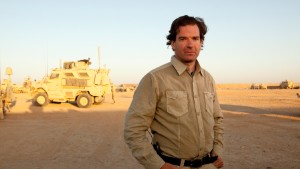
Peter Bergen on location in Afghanistan.

Peter Bergen on location in Afghanistan.

That said, the group has succeeded in recruiting a number of Americans to fight in Somalia, most of whom are from Minnesota. Seven Somali-American men traveled from Minnesota to Somalia to fight for Al-Shabaab in late 2007, including Shirwa Ahmed, who graduated from high school in Minneapolis and then worked at the Minneapolis airport pushing passengers in wheelchairs. During this period, he became increasingly religious, and in his spare time, he would counsel drunken Somali kids in the impoverished area of Minneapolis known as “Little Mogadishu,” after the Somali capital, to embrace their own culture.

Ahmed left Minneapolis for good on December 4, 2007, on a flight that took him to Saudi Arabia, from where he eventually made his way to Somalia. In Somalia, he was trained by Al-Shabaab on the use of a wide variety of guns and weapons. On October 29, 2008, he drove a truck loaded with explosives toward a government compound in Puntland, northern Somalia, blowing himself up and killing 20 other people, becoming what then-FBI director Robert Mueller described as the first U.S. citizen to conduct a terrorist suicide bombing.

Ahmed’s suicide caused considerable consternation at the FBI. If an American citizen was willing to die in a suicide operation overseas, what might that say about the possibility of Americans conducting suicidal attacks in the States?

One only had to look at the British experience to understand how this could develop.

In 2003, a British citizen had conducted a suicide bombing at a jazz club frequented by Americans in Tel Aviv, Israel. This turned out to be something of a curtain-raiser for future terrorist attacks in the United Kingdom. Two years after the terrorist attack in Israel, four British citizens committed suicide in bombings on London’s transportation system on July 7, 2005. It was the most deadly terrorist attack ever on British soil, claiming 52 lives.

Alarmed by Al-Shabaab’s campaign of suicide attacks across Somalia and its recruitment of Americans, the State Department designated the group as a foreign terrorist organization in March 2008, making it illegal for a person in the United States to knowingly provide Al-Shabaab with money, communications equipment, weapons or explosives or to join the group.

By 2008, the Somali-Americans traveling to their homeland to join the al Qaeda aligned Al-Shabaab seemed like a particularly threatening cohort. Codenamed Operation Rhino, the FBI started a serious effort to crack down on anyone traveling to Somalia to support Al-Shabaab.

Adding to the alarm at the FBI, in early June 2011, the agency announced that Farah Mohamed Beledi, from Minneapolis, had detonated a bomb, becoming one of two suicide attackers responsible for killing two African Union soldiers in Somalia.

The third American to conduct a suicide attack was Abdisalan Hussein Ali, a 22-year-old from Minneapolis who took part in a strike on African Union troops in Mogadishu on October 29, 2011.

There may even have been a fourth American suicide attacker in Somalia. On September 17, 2009, two stolen U.N. vehicles loaded with bombs blew up at Mogadishu airport, killing more than a dozen peacekeepers of the African Union. The FBI suspected that 18-year-old Omar Mohamud of Seattle was one of the bombers.

But Al-Shabaab’s American support network has extended beyond Minnesota.

Ruben Shumpert, an African-American convert to Islam from Seattle, was killed in Somalia in 2008. And a former U.S. soldier from Maryland, Craig Baxam, was arrested by Kenyan authorities in 2011 as he tried to make his way to Somalia to join Al-Shabaab, which he told FBI agents he considered to be a religious duty.

Still, despite these developments, for the Americans who traveled to Somalia to fight for Al-Shabaab, it has typically been a one-way ticket. More than a dozen Americans have died while fighting for Al- Shabaab, according to a U.S. House Committee on Homeland Security report, while none of the Americans recruited by Al-Shabaab is known to have subsequently planned or conducted a terrorist attack inside the United States, according to a survey of more than 250 jihadist terrorism cases since the 9/11 attacks conducted by New America.

The possibility remains, of course, that Al-Shabaab’s calls for attack on malls in the West might inspire a lone wolf attack. But there is no sign so far that Al-Shabaab’s recruits have actually plotted to launch an attack in the United States.

For now, at least, the group has also not shown that it is capable of carrying out attacks in the West.


Nonsense about terrorism’s ‘root causes’, CNN.com

Nonsense about terrorism’s ‘root causes’

By Peter Bergen, CNN National Security Analyst


Updated 6:58 PM ET, Thu February 19, 2015

47 of 47
A woman looks at her destroyed home after returning to the village of Al-Mansuriya, Iraq, on Saturday, February 14.

The ISIS terror threat 47 photos
A woman looks at her destroyed home after returning to the village of Al-Mansuriya, Iraq, on Saturday, February 14.
Hide CaptionStory highlights
  • White House conference on extremism has emphasized poverty as a root cause of terrorism
  • Bergen: Terrorists spring out of all backgrounds, but in many cases are middle class or wealthy, and educated
  • The ideology of ISIS and like-minded groups is rooted in Salafist ultra-fundamentalist interpretations of Islam

Peter Bergen is CNN’s national security analyst, a professor of practice at Arizona State University and a vice president at the New America Foundation. He is the author of “Manhunt: The Ten-Year Search for bin Laden — From 9/11 to Abbottabad.“

(CNN)The Obama administration this week hosted a three-day conference on “Countering Violent Extremism,” which is a government euphemism for how best to deal with Islamist terrorism.

Already a predictable tsunami of nonsense has washed over us about the “root causes” of terrorism. We have heard from Obama administration officials and even the President himself that terrorism has something to do with lack of opportunities and poverty. Obama said on Wednesday that “we have to address grievances terrorists exploit, including economic grievances.”

He said, “when millions of people — especially youth — are impoverished and have no hope for the future, when corruption inflicts daily humiliations on people, when there are no outlets by which people can express their concerns, resentments fester. The risk of instability and extremism grow. Where young people have no education, they are more vulnerable to conspiracy theories and radical ideas…”

Peter Bergen

Peter Bergen

The President did acknowledge that terrorists can be rich like Osama bin Laden, who was the son of a Saudi construction magnate who attended the top high school and the best university in Saudi Arabia. It’s hard to imagine someone with more opportunities. Think the Trump family Saudi-style, minus the bling, and throw in a deep admiration for the Taliban.

But in fact Osama bin Laden is more the rule than the exception. Take Mohamed Atta, the son of an Egyptian lawyer, who had worked on a doctorate in, of all things, urban preservation at a German university and who led the 9/11 attacks. Or the present leader of al Qaeda, Ayman al Zawahiri, a surgeon who comes from a leading Egyptian family that counts ambassadors, politicians and prominent clerics amongst its ranks.

Report: Injustice, not unemployment, leads to extremism

Report: Injustice, not unemployment, leads to extremism 02:50
PLAY VIDEO

Nearer to home we can also point to the Fort Hood shooter, Maj. Nidal Hasan, who was not only an officer in the U.S. Army and a psychiatrist, but is also from a comfortably middle-class family in Virginia.

Let’s also add to the mix Faisal Shahzad, who tried to blow up a bomb-laden SUV in Times Square on May 1, 2010. He had obtained an MBA in the United States and had worked as a financial analyst for the Elizabeth Arden cosmetics company. His father was one of the top officers in the Pakistani military.

These are not the dispossessed. They are the empowered.

“Who becomes a terrorist?” turns out, in many cases, to be much like asking, “Who owns a Volvo?”

Indeed, New America has studied the backgrounds of some 250 U.S.-based militants since 9/11 who have been indicted in or convicted of some kind of jihadist terrorist crime. They are on average middle class, reasonably well-educated family men with kids. They are, in short, ordinary Americans.

Similarly, in his important 2004 book “Understanding Terror Networks,” psychiatrist Marc Sageman, a former CIA case officer, examined the backgrounds of 172 militants who were part of al Qaeda or a similar group. Just under half were professionals; two-thirds were either middle or upper class and had gone to college; indeed, several had doctorates.

In a 2006 study, Swati Pandey and this author examined the educational background of 79 terrorists responsible for five of the worst anti-Western terrorist attacks of the modern era — the World Trade Center bombing in 1993, the bombings of two U.S. embassies in Africa in 1998, the 9/11 attacks, the Bali nightclub bombings in 2002, and the London bombings on July 7, 2005.

We found that more than half of the terrorists had attended college, making them as well-educated as the average American. Two of our sample had doctoral degrees, and two others had begun working toward their doctorates.

None of them had attended a madrassa.

Of course, large-scale insurgent groups such as ISIS and the Taliban recruit foot soldiers who join the cause to get a paycheck. But the people running these organizations are in it for ideological reasons.


An optimistic view


The diagnosis that poverty, lack of education or lack of opportunities have much to do with terrorism requires a fundamentally optimistic view of human nature. This diagnosis leads to the prognosis that all we need to do to solve the terrorism problem is to create societies that are less poor, better educated and have more opportunities.

The fact is, working stiffs with few opportunities and scant education are generally too busy getting by to engage in revolutionary projects to remake society. And history, in fact, shows us that terrorism is generally a bourgeois endeavor. This was just as true of the Russian anarchists of the late 19th century as it was of the German Marxists of the Baader-Meinhof gang of the 1970s and of the Japanese terrorist group Aum Shinrikyo in the 1990s.

Post-9/11 research demonstrating that Islamist terrorism is mostly a pursuit of the middle class echoed an important study about Egyptian militants that was undertaken by the French academic Gilles Kepel during the mid-1980s.

Kepel researched the 300 Islamist militants who were tried in the wake of the 1981 assassination of Egyptian President Anwar Sadat. Around one in five were professionals such as engineers, a quarter worked as government employees, just under half were artisans or merchants, one in 10 were in the military or police, and only one in 10 were farmers or were unemployed. Of those who were students, around a third were studying in the elite fields of medicine and engineering.

Similarly, the Library of Congress issued a study two years before the 9/11 attacks that asked the question: “Who Becomes a Terrorist and Why?” The conclusion, based on a survey of all the published literature, was that therewere only a few “major exceptions to the middle- and upper-class origins of terrorist groups.”

There are, of course any number of exceptions to the prototypical middle-class terrorist. The terrorists who attacked Charlie Hebdo magazine in Paris last month and the Copenhagen café that was hosting the Swedish cartoonist Lars Vilks this past weekend were from the margins of society.

But for every example of poverty or lack of opportunities as a purported rationale for terrorism, it’s easy to supply important counterexamples. The “underwear bomber” Umar Abdulmuttalab, who tried to set off a bomb on a U.S. passenger jet flying over Detroit on Christmas Day 2009, is the son of one of the richest men in Africa and attended University College London, which routinely rates among the best universities in the world.

Anwar al-Awlaki, the late leader of al Qaeda in the Arabian Peninsula, who tasked the underwear bomber to blow up an American plane over an American city, was studying for his Ph.D. at George Washington University before he took up arms with al Qaeda. Awlaki’s father was a Cabinet minister in Yemen.


What drives terrorism?


So if it’s clearly not deprivation that is driving much Islamist terrorism, what is?

For that we must turn to ideology, specifically religious ideology. And this is where the Obama administration has to perform some pretzel logic. It is careful to explain that the war on ISIS is not a war on Islam and that ISIS’ ideology is a perversion of the religion. Fair enough. But the administration seems uncomfortable with making the connection between Islamist terrorism and ultra-fundamentalist forms of Islam that are intolerant of other religions and of other Muslims who don’t share their views to the letter.

ISIS may be a perversion of Islam, but Islamic it is, just as Christian beliefs about the sanctity of the unborn child explain why some Christian fundamentalists attack abortion clinics and doctors. But, of course, murderous Christian fundamentalists are not killing many thousands of civilians a year. More than 80% of the world’s terrorist attacks take place in five Muslim-majority countries — Afghanistan, Iraq, Nigeria, Pakistan and Syria — and are largely carried out by groups with Islamist beliefs.

This week the United Nations released a report showing that civilian casualtiesin Afghanistan were at the highest level since the organization started counting them six years ago. The Taliban were responsible for three-quarters of these deaths.

The Taliban and other Islamist terrorist groups are not, of course, secular organizations. To treat them as if they were springs from some combination of wishful thinking, PC gone crazy and a failure to accept, in an increasingly secularized era, that some will kill in the name of their god, an all-too-common phenomenon across human history.

Indeed, while ISIS and like-minded groups and their fellow travelers are not representative of the vast majority of the world’s Muslims, their ideology is rooted in Salafist ultra-fundamentalist interpretations of Islam, and indeed they can point to verses in the Quran that can be interpreted to support their worldview.

A well-known verse in the Quran commands Muslims to “fight and slay the nonbelievers wherever you find them, seize them, beleaguer them, and lie in wait for them in every stratagem [of war].” When bin Laden made a formal declaration of war against “the Jews and the Crusaders” in 1998, he cited this Quranic verse at the beginning of his declaration.

ISIS’ distinctive black flags are a reference to a supposed saying of the Prophet Mohammed that “If you see the black banners coming from the direction of Khorasan then go to them, even if you have to crawl, because among them will be Allah’s Caliph the Mahdi.” In other words, coming out of Khorasan, an area that now encompasses Afghanistan, will come an army that includes the Mahdi, the Islamic savior of the world. The parent organization of ISIS was al Qaeda, which, of course, was headquartered in Afghanistan at the time of the 9/11 attacks.

Last year, ISIS leader Abu Bakr al-Baghdadi named himself caliph, which means that in his own mind and in the eyes of his followers he is not only the leader of ISIS but the overall leader of Muslims everywhere. These beliefs may seem like a crazy delusion to most of us, but it’s important to understand that they are theological in nature, and this theology is rooted in ultra-fundamentalist Islam.

ISIS sees itself as the vanguard army that is bringing back true Islam to the world. This project is of such cosmic importance that they will break any number of eggs to make this omelet, which accounts for their murderous campaign against every ethnic group, religious group and nationality that they perceive as standing in their way. ISIS recruits also believe that we are in the end times, and they are best understood as members of an Islamist apocalyptic death cult.

What does that mean for policy makers? It means that the only truly effective challenges to this reasoning must come from Islamic leaders and scholars who can make the theological case that ISIS is an aberration. This, too, is an Islamic project; it is not a jobs project.

Read CNNOpinion’s new Flipboard magazine.

Why does ISIS keep making enemies? CNN.com

Why does ISIS keep making enemies?

By Peter Bergen, CNN National Security Analyst


Updated 2:53 PM ET, Mon February 16, 2015

Story highlights

  • The group’s atrocities have angered Americans, Jordanians and Egyptians
  • Bergen: ISIS actions only make sense if you realize that its aim is the apocalypse.

Peter Bergen is CNN’s national security analyst, a vice president at the New America Foundationand the author of “Manhunt: The Ten-Year Search for bin Laden — From 9/11 to Abbottabad.“

(CNN)Whenever ISIS carries out a new atrocity, whether it’s beheading a group of Egyptian Christians or enslaving Yazidi women in Iraq or burning its victims alive, the big question most people have is: Why on Earth is ISIS doing this? What could possibly be the point?

Adding to your list of enemies is never a sound strategy, yet ISIS’ ferocious campaign against the Shia, Kurds, Yazidis, Christians, and Muslims who don’t precisely share its views has united every ethnic and religious group in Syria and Iraq against them.

ISIS is even at war with its most natural ally, al Qaeda in Syria.

The Nazis and the Khmer Rouge went to great lengths to hide their crimes against humanity. Instead, ISIS posts its many crimes on social media for global distribution with seemingly no thoughts for the consequences.

ISIS’ beheading of the American journalist James Foley in mid-August galvanized much of the Western world against the group and led to an intensified U.S.-led air campaign against ISIS, which, according to U.S. military officials, has killed at least 6,000 of its fighters.

The burning to death by ISIS of the Jordanian pilot, Muath al-Kaseasbeh, galvanized much of the Arab world against the group and has brought Jordan into the U.S.-led campaign against ISIS in a much more aggressive manner.

The beheading of 21 Egyptian Coptic Christians in Libya by an ISIS affiliate led Egypt’s air force on Monday todrop bombs on ISIS positions in eastern Libya.

Former CIA director Robert Gates is reported to have kept a maxim on his desk that read, “As a general rule, the way to achieve complete strategic surprise is to commit an act that makes no sense or is even self-destructive.”

ISIS keeps surprising the world and its actions do indeed seem to make no sense or are self-destructive.

So what is going on here?

A key window into understanding ISIS is its English language “in-flight magazine” Dabiq. Last week the seventh issue of Dabiq was released, and a close reading of it helps explains ISIS’ world view.

The mistake some make when viewing ISIS is to see it as a rational actor. Instead, as the magazine documents, its ideology is that of an apocalyptic cult that believes that we are living in the end times and that ISIS’ actions are hastening the moment when this will happen.

The name of the Dabiq magazine itself helps us understand ISIS’ worldview. The Syrian town of Dabiq is where the Prophet Mohammed is supposed to have predicted that the armies of Islam and “Rome” would meet for the final battle that will precede the end of time and the triumph of true Islam.

In the recent issue of Dabiq it states: “As the world progresses towards al-Malhamah al-Kubrā, (‘the Great Battle’ to be held at Dabiq) the option to stand on the sidelines as a mere observer is being lost.” In other words, in its logic, you are either on the side of ISIS or you are on the side of the Crusaders and infidels.

When American aid worker Peter Kassig was murdered by ISIS in November, “Jihadi John” — the masked British murderer who has appeared in so many ISIS videos — said of Kassig: “We bury the first crusader in Dabiq, eagerly waiting for the rest of your armies to arrive.”

In other words, ISIS wants a Western ground force to invade Syria, as that will confirm the prophecy about Dabiq.

We live in an increasingly secularized world, so it’s sometimes difficult to take seriously the deeply held religious beliefs of others. For many of us the idea that the end of times will come with a battle between “Rome” and Islam at the obscure Syrian town of Dabiq is as absurd as the belief that the Mayans had that their human sacrifices could influence future events.

But for ISIS, the Dabiq prophecy is deadly serious. Members of ISIS believe that they are the vanguard fighting a religious war, which Allah has determined will be won by the forces of true Islam.

This is the conclusion of an important forthcoming new book about ISIS by terrorism experts J.M. Berger and Jessica Stern who write that ISIS, like many other “violent apocalyptic groups, tend to see themselves as participating in a cosmic war between good and evil, in which moral rules do not apply.”

This also similar to the conclusion of an excellent new cover story about ISIS in the Atlantic magazine by Graeme Wood who writes, “Virtually every major decision and law promulgated by the Islamic State (another name for ISIS) adheres to what it calls, in its press and pronouncements, and on its billboards, license plates, stationery, and coins, ‘the Prophetic methodology,’ which means following the prophecy and example of Muhammad, in punctilious detail. Muslims can reject the Islamic State; nearly all do. But pretending that it isn’t actually a religious, millenarian group, with theology that must be understood to be combated, has already led the United States to underestimate it.” Amen to that.

ISIS members devoutly believe that they are fighting in a cosmic war in which they are on the side of good, which allows them to kill anyone they perceive to be standing in their way with no compunction. This is, of course, a serious delusion, but serious it is.

Americans have plotted to kill cartoonists who lampooned Islam, CNN.com

Americans have plotted to kill cartoonists who lampooned Islam

By Peter Bergen, CNN National Security Analyst

Story highlights

  • Peter Bergen cites parallels to the attacks in Copenhagen and Paris
  • Authorities have disrupted such plots involving Americans

Peter Bergen is CNN’s national security analyst, a vice president at New America and professor of practice at Arizona State University. He is the author of “Manhunt: The Ten-Year Search for bin Laden – from 9/11 to Abbottabad.” This is an updated version of an article that orginally appeared last month.

(CNN)Watching the tragedies unfold in Copenhagen on Saturday and in Paris at the Charlie Hebdo magazine last month in which terrorists attacked cartoonists and journalists deemed to have insulted the Prophet Mohammed, Americans might take some comfort in the idea that this is the sort of attack that wouldn’t likely involve a U.S. citizen or happen in the U.S.

Think again. Pennsylvania resident Colleen LaRose, a 46-year-old high school dropout who called herself “Jihad Jane” when she was surfing jihadi websites, pleaded guilty in 2011 to being part of a plot to kill Lars Vilks, the same Swedish cartoonist whose support group was targeted in Copenhagen on Saturday.

LaRose traveled to Europe and also followed Vilks online “in an effort to complete her task,” according to federal prosecutors. In 2007, Vilks had drawn a cartoon of Mohammed with the body of a dog.
Peter Bergen

Peter Bergen

According to the indictment against her, LaRose emailed the Swedish embassy in Washington asking for instructions about how to become a permanent resident of Sweden.

LaRose also sent emails to another American citizen, former Colorado resident Jamie Paulin Ramirez, during the summer of 2009 inviting her to Europe and asking her to attend a “training camp.”

Ramirez traveled to Ireland in September 2009 with “the intent to live and train with the jihadists,” according to prosecutors.

Ramirez pled guilty in 2011 on charges of conspiring to provide material support to a terrorist organization and was sentenced to eight years in prison. LaRose was sentenced last year to 10 years in prison.

Over the past four years three American citizens have been convicted in plots to murder Scandinavian cartoonists and journalists who they believed had insulted Islam. And two other Americans have also been convicted of inciting violent attacks against cartoonists in the States who they felt had insulted the Prophet Mohammed.


Plot aimed at Danish newspaper


Chicagoan David Headley, who played a critical planning role in the attacks in Mumbai, India, in late November 2008 by the Pakistani terrorist group Lashkar-e-Taiba that killed 166 people, also hatched a plan to attack the leading Danish newspaper Jyllands-Posten, which had published cartoons in 2005 of the Prophet Mohammed that were deemed to be offensive by many Muslims.

In January 2009, Headley traveled to Copenhagen, Denmark, where he reconnoitered the Jyllands-Posten newspaper on the pretext that he ran an immigration business that was looking to place some advertising in the paper.

In coded correspondence with his Lashkar controllers in Pakistan, Headley referred to his plot to take revenge for the offensive cartoons as the “Mickey Mouse project.”

Headley hatched a plan to take over the Jyllands-Posten building with multiple attackers using similar tactics to those that Lashkar’s gunmen had used in Mumbai. The plan involved beheading employees working at the newspaper and throwing their heads out the windows of the building, in an act guaranteed to get worldwide media coverage.

While he was in Denmark, Headley picked up some hats with the word “Copenhagen” emblazoned on them, a grimly ironic souvenir that he gave to some of his Lashkar handlers when he was back in Pakistan.

But Lashkar officials suddenly put the Copenhagen attack on hold because of the pressure the group was feeling as a result of the Mumbai attacks, which had caused more carnage than even they had anticipated and was causing them to worry that a major crackdown on the group might happen.

Resolved to defend the honor of the prophet from what he believed were the blasphemous Danish cartoons, Headley was determined to go ahead with the Copenhagen operation and so he made contact with Ilyas Kashmiri, who ran his own jihadist group in Pakistan and also had close ties to al Qaeda.

Al Qaeda’s obsession with cartoons

The cartoons of the prophet had become a particular obsession of al Qaeda. In March 2008, Osama bin Ladendenounced the publication of the cartoons as a “catastrophe” for which punishment would soon be meted out. Three months later, an al Qaeda suicide attacker bombed the Danish embassy in Islamabad, killing six. For al Qaeda, the Danish cartoon controversy assumed some of the same importance that Salman Rushdie’s fictional writings about the prophet had had for the Ayatollah Khomeini’s Iran two decades earlier.

Headley met with Kashmiri in the Pakistani tribal regions along the border with Afghanistan to brief him on the findings of his surveillance of the Jyllands-Posten building in Copenhagen. Kashmiri congratulated Headley on the Mumbai attacks and told Headley that “the elders,” al Qaeda’s leaders, wanted the Copenhagen attack to “be carried out soon as possible.”

Kashmiri suggested deploying a truck bomb to destroy the Jyllands-Posten building. Headley said that wouldn’t work because the building was designed in such a manner that a truck bomb wouldn’t be particularly effective; far more likely to succeed was a Mumbai-style assault on the building with multiple gunmen. This plan is similar to what unfolded at the Paris office of Charlie Hebdo last month.

Kashmiri told Headley that he had men in his group who were living in the United Kingdom who might be interested in taking part in such an operation. Headley traveled to meet them in the city of Derby in northern England and talked to two of the men Kashmiri had said would be good recruits. These men were being monitored by British intelligence, which tipped off the FBI in July 2009 after someone named “David” had called them from a Chicago pay phone.

Headley was arrested at Chicago’s O’Hare Airport on October 3, 2009. Headley soon told investigators that he was planning to kill the Jyllands-Posten’s cultural editor, Flemming Rose, who had first commissioned the Danish cartoons, as well as the cartoonist, Kurt Westergaard, who had drawn the cartoon he found most offensive: the Prophet Mohammed with a bomb concealed in his turban. He later pleaded guilty to the conspiracy and was sentenced to 35 years in prison.

Also, American Muslims have incited fellow Muslims to kill cartoonists in the United States who they believed had insulted the Prophet Mohammed.

On the occasion of the 200th episode of the Comedy Central show “South Park,” Trey Parker and Matt Stone, the creators of the show, decided to have some fun with the notion that Islamist militants had deemed that depictions of the Prophet Mohammed should be met with violence.

The 200th episode aired on April 14, 2011, and to avoid showing the Prophet Mohammed’s face, the animated character playing the prophet was dressed in a bear costume. A character in the show pointed out, “If Mohammed is seen we could get bombed.”

 Virginia resident Zachary Chesser, a recent convert to a militant form of Islam, saw the “South Park” episode as something of an opportunity, telling a fellow militant, New York-based Jesse Morton, that the fatwa by Ayatollah Khomeini demanding the death of Rushdie after the publication of his novel “Satanic Verses” in 1989 “was a tremendous help in radicalizing Muslims.” Could there be a similar opportunity in the States with the “South Park” episod

The day after the “South Park” episode, Chesser wrote that the episode “outright insulted” the prophet, “by showing him in a bear suit.” Chesser went on to say, menacingly, “We have to warn Matt and Trey that what they are doing is stupid, and they will probably wind up like Theo van Gogh for airing this show. This is not a threat, but a warning of the reality of what will likely happen to them.”

Van Gogh, a Dutch filmmaker, was killed by an Islamist militant in Amsterdam in 2004 after he made a provocative film that showed naked women with verses of the Quran projected onto them. Chesser posted a photograph showing van Gogh lying dead in the street in Amsterdam with two knives stuck into his body.

Chesser also posted the address of Comedy Central in New York and linked to an article about a residence in the Western United States belonging to Trey Parker and Matt Stone. He suggested to his readers that they should “pay them a visit.”

Given the fact that the readers of Chesser’s blog were mostly a group of Islamist militants who might actually act against someone they believed had defamed the prophet, this was a serious threat.

To underline the threat, Chesser posted photos of Parker and Stone along with photographs of others who had been publicly targeted for death for purportedly insulting the prophet, including British author Rushdie and Danish cartoonist Westergaard.


‘It’s just the reality’


Chesser blogged that “South Park” creators Parker and Stone would likely be attacked in the future, explaining, “They’re going to be basically on a list in the back of the minds of a large number of Muslims. It’s just the reality.”

In the next episode of “South Park,” Parker and Stone continued the story line about the Prophet Mohammed, but his character was hidden under a “CENSORED” graphic and an audio bleep was heard when his name was said. Comedy Central then made further changes to the show, placing numerous additional bleeps throughout the episode.

Comedy Central was now bending over backward not to give any offense; an unusual position for a channel whose stock in trade was the giving of offense.

As far as Chesser was concerned, his campaign against “South Park” “worked phenomenally,” because Comedy Central chose to censor this episode.

Molly Norris, a cartoonist based in Seattle, was offended by Comedy Central’s response to Chesser’s blog. “I think it just set a precedent for a slippery slope in censorship. … If artists have to be afraid of what they draw, then what’s the point of even living here?”

In response, Norris urged that the public treat May 20, 2010, as “Everyone Draw Muhammad Day.” To launch the effort she drew a poster featuring the prophet variously as a teacup, a box of pasta and a domino.

Norris’ notion was that if a lot of Americans drew the prophet on that day it would help dilute the pool of potential targets for enraged Islamist militants.

Norris’ initiative succeeded beyond any expectation. The poster drawn by Norris went viral and Facebook groups sprang up with tens of thousands of members supporting Everyone Draw Muhammad Day.

Chesser identified some of the American supporters of Everyone Draw Muhammad Day on a militant website, including a teenager in Mississippi and a man from Texas, along with the address of his “possible church/school,” noting that this was “just a place to start.”

Norris soon got spooked by the deluge of publicity surrounding Everyone Draw Muhammad Day and started distancing herself from the effort, writing on her website, “I am a coward. I have backed off of being associated with any group. … I am so freaked out that I am not drinking my regular four cups of coffee per day.”

Much of the “South Park” episode had played out as some kind of farce, but there was also real tragedy for Norris. Al Qaeda in the Arabian Peninsula’s Inspire magazine drew up a “hit list” of al Qaeda’s enemies that included Norris for her role in instigating Everybody Draw Muhammad Day.

The Seattle Weekly where Norris worked announced that she had had to go underground permanently after the threats from Chesser’s blog and al Qaeda. The announcement by the newspaper explained: “You may have noticed that Molly Norris’ comic is not in the paper this week. That’s because there is no more Molly. The gifted artist is alive and well, thankfully. But on the insistence of top security specialists at the FBI, she is, as they put it, “going ghost“: moving, changing her name and essentially wiping away her identity.”


What’s at stake


Neil MacBride, the U.S. attorney for the Eastern District of Virginia, where many key national security cases are prosecuted, prosecuted Chesser. In his sentencing memorandum for Chesser, MacBride nicely summarized what was at stake in the case for American society:

“Chesser not only endangered the lives of innocent people, but he also contributed to the destruction of the very freedoms on which our society is based. The natural consequence of Chesser’s actions is for people throughout the country to fear speaking out — even in jest — lest they also be labeled as enemies who deserve to be killed.”

Chesser was sentenced to 25 years in prison. His co-conspirator, Jesse Morton, was sentenced to more than 11 years in prison for conspiring to solicit murder.

In the sentencing memorandum that he submitted for the sentencing of Morton, MacBride also explained, “As philosopher Karl Popper wrote in ‘The Open Society and Its Enemies,’ ‘If we are not prepared to defend a tolerant society against the onslaught of the intolerant, then the tolerant will be destroyed, and tolerance with them. … We should therefore claim, in the name of tolerance, the right not to tolerate the intolerant.’ ”

This is precisely correct. A core tenet of the modern era, which was sparked by the Enlightenment of the 18th century — much of which took place among the Parisian intellectuals who were the forebears of the fearless cartoonists of Charlie Hebdo — was well expressed by a quote often attributed to the French philosopher Voltaire “I disapprove of what you say, but I will defend to the death your right to say it.”

The killers in Paris and Copenhagen reversed this key formula of the modern world: I disapprove of what you say and I will kill you for it.

No one has heard anything from the Seattle-based cartoonist Molly Norris since she went into hiding more than four years ago. For Norris that must have been a very difficult decision, but the attacks in Copenhagen and in Paris reinforce the notion that it was likely a sensible choice.


Did Brian Williams embed with SEAL Team 6? CNN.com

Did Brian Williams embed with SEAL Team 6?

By Peter Bergen, CNN National Security Analyst


Story highlights

  • Brian Williams said he traveled with SEAL Team 6, got memento from Osama bin Laden raid
  • Peter Bergen says claims may require review since SEALs took great pains to be covert

Peter Bergen is CNN’s national security analyst, a vice president at the New America Foundation and the author of “Manhunt: The Ten-Year Search for bin Laden — From 9/11 to Abbottabad.“

(CNN)Embattled NBC News anchor Brian Williams may have some more explaining to do.

On May 3, 2011, just two days after the daring U.S. Navy SEAL Team 6 raid that killed Osama bin Laden in Pakistan, Williams said on his NBC News show, “Now, people might be hearing about SEAL Team 6. I happen to have the great honor of flying into Baghdad with them at the start of the war.”

With this statement Williams asserted that he was embedded with one of the most covert units in the U.S. military and flew with the SEALs into Iraq in March 2003 as the war there began.

When asked about this claim, a Special Operations Command spokesman Ken McGraw told CNN: “We do not embed journalists with that unit or any other unit that conducts counterterrorism missions. Bottom line — no.”

Could Williams have simply hitched a ride into Iraq with SEAL Team 6 outside of the formal embedding process? This seems quite unlikely. A SEAL officer told CNN, “That early in the conflict, there were only missions taking place, not bouncing between outstations.”

Williams was suspended this week for six months without pay as anchor of “NBC Nightly News” after it emerged that he had embellished the tale of a helicopter ride in Iraq, claiming incorrectly to have been on a chopper that was hit by rocket fire. NBC is conducting a fact-checking investigation of Williams’ statements.

The Huffington Post first reported that there were questions about Williams’ statements about the SEALs.

William has made further claims about his purportedly tight relationship with the men of SEAL Team 6, saying on the “Late Show With David Letterman” in January 2013, “About six weeks after the Bin Laden raid, I got a white envelope and in it was a thank-you note, unsigned. And in it was a piece of the fuselage of the blown-up Black Hawk in that courtyard. Sent to me by one of my friends.”

The SEAL officer says this seems unlikely given that “there’s no connection between the guys that went in early (’03) and the guys at A-bad,” an abbreviation for the city of Abbottabad, Pakistan, where the bin Laden raid was carried out.

Also, why SEAL Team 6 would want to thank Williams after the bin Laden raid is inexplicable as he had nothing to do with any element of it.

In the course of reporting the book “Manhunt: The Ten-Year Search for bin Laden — From 9/11 to Abbottabad,” I interviewed dozens of the key officials who played a role in finding bin Laden or planned or executed the raid that killed him. None of them mentioned Williams as having any role in any of this.

Two of the key players I interviewed for the book had been given mementos by SEAL Team 6. One was Leon Panetta, the CIA director who oversaw the successful hunt for bin Laden. And the other was Gen. Stanley McChrystal, the former commander of Joint Special Operations Command that oversees SEAL Team 6, who was presented with an American flag that members of the unit had taken on the bin Laden mission.

But what makes Williams claim that he was given a piece of the helicopter that went down at the compound in Abbottabad where bin Laden was living even more implausible is what happened the night of the raid.

Members of SEAL Team 6 were flying in “stealth” helicopters that radar can’t detect. One of those helicopters crashed at bin Laden’s compound in the first minute or so of the raid.

After the helicopter crashed, the SEALs killed both of bin Laden’s bodyguards, his son and bin Laden. They then went around the compound picking up bin Laden’s computer hard drives and documents.

What else has NBC News dug up on Williams?

All of this took about 30 minutes. By now there was great anxiety that Pakistani army units or others unknown would arrive at the scene, and there might be a firefight. The SEALs decided to leave as soon as possible.

The SEALs set explosives on the downed helicopter to blow it up so that its stealth technology would not fall into the wrong hands.

They detonated a massive charge inside the downed helicopter and immediately departed the scene. If Williams’ story is true, then during all this intense drama one of the SEALs took the time to pick up a piece of the damaged helicopter fuselage that he would later send to his favorite news anchor.

Three weeks after the raid, the helicopter tail, which had survived the crash, was returned to the United States by Pakistan. It’s also implausible that a SEAL Team 6 member would have then acquired a piece of this tail fuselage to send to Williams.

How Williams’ Iraq story changed

CNN asked NBC News to comment on Williams and the SEALs, but the network is not publicly discussing the issue while it conducts its investigation of a number of claims he has made that also relate to his coverage of the Iraq War as well as of Hurricane Katrina. Williams also has not been commenting.

In the news business there is a sardonic phrase about stories that don’t quite pass the smell test. They are called “a story too good to check.”

Unfortunately, for Williams his SEAL Team 6 stories, among others, that may have been “too good to check,” are now being checked.

​Read CNNOpinion’s new Flipboard magazine.

Follow us on Twitter @CNNOpinion.


University of Pennsylvania

Syracuse University, Maxwell School

