An Afghan miracle, CNN.com
An Afghan miracle
By Peter Bergen
updated 2:12 PM EDT, Thu October 2, 2014
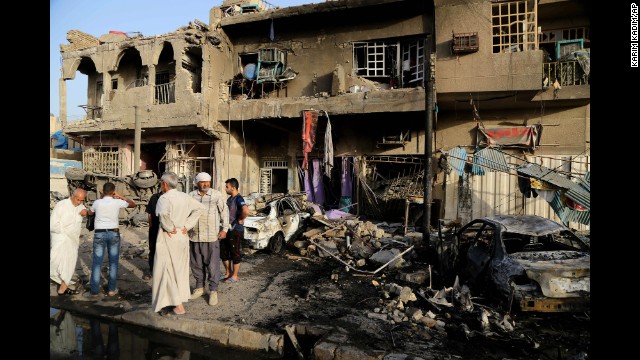 People inspect the site of a double car bombing in Baghdad on Wednesday, October 1. The United Nations said Wednesday that at least 1,119 Iraqis were killed in September in acts of terrorism and violence.
STORY HIGHLIGHTS
- Amid all the bad news, there’s a sign of progress in Afghanistan, says Peter Bergen
- Bergen: A national unity government has agreed to a continuing U.S. presence
- He says Afghan leaders are making calls opposite to what Iraq’s al-Maliki did
- Bergen: Afghanistan’s economy could benefit from signs of greater stability
Editor’s note: Peter Bergen is CNN’s national security analyst, a director at New America and Professor of Practice at Arizona State University. He is the author of “Manhunt: The Ten-Year Search for bin Laden — From 9/11 to Abbottabad.”
(CNN) — Yep. You read the headline right.
We are so used to the constant flow of bad news from much of the Muslim world that it’s hard to get your head around the good news when things go right somewhere like Afghanistan.
Consider that the Afghans have done exactly what the feckless and irresponsible Iraqi government failed to do during the past several years.
On Monday Afghans formed a “national unity government” with the once-bitter rivals Dr. Ashraf Ghani, taking the role of president and Dr. Adullah Abdullah taking the role of chief executive officer; similar, it is envisioned, to a prime ministerial role.
The Afghans have done exactly what the feckless and irresponsible Iraqi government failed to do during the past several years.
Peter Bergen
What makes this all the more important is that Ghani is identified with the Pashtuns, the largest ethnic group in Afghanistan, while Abdullah is identified with the sizable Tajik ethnic group.
This is precisely the opposite of what the government of Nuri al-Maliki did in Iraq, which ruled as a Shia chauvinist party and excluded Sunnis from positions of any power or influence.
Tuesday, the day after Ghani and Abdullah were inaugurated, they signed the Bilateral Security Agreement, which allows 9,800 American troops to remain in Afghanistan after NATO combat operations cease at the end of December.
Again, this is exactly the opposite of what happened in Iraq where the Iraqis would not sign a similar basing agreement with the United States. As a result, almost all American troops left the country in December 2011.
The result of Maliki’s decision to exclude the Sunnis from any form of power meant that many Sunnis passively or actively supported ISIS, which is now almost at the gates of Baghdad. And, largely as a result of the rise of ISIS, more than 5,500 Iraqi civilians have been killed in the renewed Iraqi civil war between January and June, according to the U.N.
By contrast, 3,000 civilians were killed in the Afghan War in 2013.
Afghanistan and Iraq have roughly the same size populations, which therefore makes Iraq today about four times more violent than Afghanistan.
The signing of the Bilateral Security Agreement (BSA) is important not only because it allows thousands of American soldiers to remain in Afghanistan as well as a smaller number of troops from other NATO countries, but also because it will restore the confidence of the business community in Afghanistan.
Former Afghan President Hamid Karzai’s stubborn refusal to sign the BSA for many months had contributed to an atmosphere of uncertainty in the country, which had damaged the Afghan economy significantly. That will change now.
What would make the situation in Afghanistan change even more for the better is if the leading contenders in the American presidential race added into their platforms a pledge to extend the U.S. military presence in Afghanistan past December 2016.
President Obama’s decision to pull out all American troops from Afghanistan two years from now does not bind whoever wins the 2016 presidential campaign. After all, at considerable U.S. and Afghan government effort, a Strategic Partnership Agreement has already been negotiated between the two countries that runs until at least 2024 and that would easily provide the basis for a longer term troop commitment.
Many Afghans wants some kind of long-term American military presence in their country as a guarantor of their stability. They only need to look at the carnage in Iraq to remind themselves that the model they want to emulate is South Korea with its decades-long U.S. military presence, not Iraq.
At the end of the Korean war in 1953 South Korea was one of the poorest countries in the world; now, under an American security umbrella, it is one of the richest.
And the appearance of ISIS-like Taliban militias in Afghanistan over the past week who have beheaded 15 Afghan civilians is a reminder to Afghan and Americans and alike that they have a long-term strategic interest in preventing Afghanistan from becoming a safe haven for terrorists again.
“American War Generals” Airing September 2014 National Geographic
Media Coverage and Reviews for “American War Generals”
September 11, 2014
“War Generals of Today”: Blunt Talk from the Battlefield
USA Today
“American War Generals…. differs from what we normally read or see about the current wars. Today’s generation of generals talk candidly about prosecuting ambiguous wars with often-flawed strategies.”
September 10, 2014
‘Generals’ dissects Iraq and Afghanistan wars
New York Daily News
“American War Generals” is, for all practical purposes, an autopsy of the Afghanistan and Iraq wars, narrated almost entirely by the generals who led the American military in the years before and during those wars.”
“At the same time, almost none of “American War Generals” feels like bashing, finger-pointing or partisan blame-casting. It’s more like an academic dissection, something you might hear in a class at West Point.”
“No future leader should be allowed to start a war without seeing this special.”
September 11, 2014
‘American War Generals’ a sobering reflection on U.S. failures in Iraq
Militarytimes.com; Armytimes.com; Airforcetimes.com
“As the U.S. escalates its campaign against jihadists in Iraq and Syria, a new documentary offers a cautionary tale about putting too much faith in technology and forgetting hard-fought lessons from the past.”
September 13, 2014
This Weekend’s “American War Generals” is a Must-Watch
Dailycaller.com
“The National Geographic Channel’s “American War Generals” is ambitious. And it is also fantastic.”
“And despite covering 50 years of military history, “War Generals” tells their stories, not just as generals, but as humans.”
“The film doesn’t merely entertain, though. It also educates.”
September 9, 2014
The Washington Premiere of “American War Generals”
Washingtonian
“It plays like a mixtape of the greatest hits, failures, and disputes of the past half century of American wars, but the sobering part of a new documentary, American War Generals, is its undeniable relevance to right now.”
September 16, 2014
Small Wars Continue to Drain America of its Power
Yahoo News
“A most astonishing and brilliant documentary.”
Jihadist threat not as big as you think, CNN.com
Jihadist threat not as big as you think
By Peter Bergen and Emily Schneider
updated 12:31 PM EDT, Fri September 26, 2014
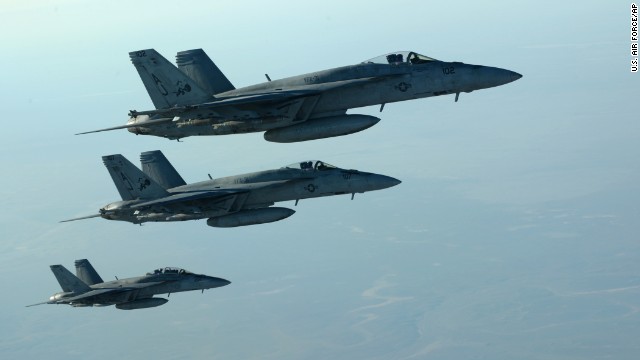 In this photo released by the U.S. Air Force, fighter jets fly over northern Iraq as part of coalition airstrikes in Syria on Tuesday, September 23. The United States and several Arab nations have started bombing ISIS targets in Syria to take out the militant group’s ability to command, train and resupply its fighters.
U.S., Arab nations attack ISIS in Syria
<<
<
1
2
3
4
5
6
7
8
9
10
11
12
13
>
>>
STORY HIGHLIGHTS
- Peter Bergen, Emily Schneider: Khorason shows jihad groups metastasizing. But growing?
- They say new report they try to count these forces that fight without uniforms, often in secret
- They say between 85,000 and 106,000 militant jihadists fighting worldwide
- Writers: To compare, In Cold War USSR could muster around 6 million to fight the West
Editor’s note: Peter Bergen is CNN’s national security analyst, a director at the New America Foundation and the author of “Manhunt: The Ten-Year Search for bin Laden — From 9/11 to Abbottabad.” Emily Schneider is a research associate at the New America Foundation.
(CNN) — Most Americans had never heard of the Khorasan group until this week, when President Barack Obama announced that U.S. airstrikes in Syria had targeted the “seasoned al-Qaeda operatives.” U.S. officials said that the Khorasan group was actively plotting to conduct an attack in the United States or Europe.
“We can’t say that we definitely disrupted their plots” against the West with the U.S. airstrikes, a senior Obama administration official told one of us, but “there is a decent chance we have” because “their communications are interrupted” and members of the group were killed in the strikes.

Peter Bergen

Emily Schneider
The sudden public emergence of the Khorasan group as a threat underlines the fact that the global jihadist movement, which at the time of the 9/11 attacks was largely concentrated in Afghanistan, has morphed and metastasized a great deal since then.
Which raises the question: What are the dimensions of the overall global jihadist threat today?
During the Cold War the U.S. intelligence community knew in detail the size of the Soviet military and the disposition of its forces across Eastern Europe and Russia.
In the long, twilight struggle against al Qaeda, its affiliates, splinter groups, and like-minded organizations — armed forces that fight without uniforms and often in secret — such an accounting is harder to do.
A good example of this is the shifting estimates of ISIS’s strength. ISIS, which split off from al Qaeda earlier this year, “can muster between 20,000 and 31,500 fighters across Iraq and Syria,” a CIA spokesman told CNN last week.
This is as much as three times previous estimate of ISIS’s strength; U.S. officials initially estimated ISIS had around 10,000 fighters.
To see if we could come up with some kind of estimate for the total number of militants fighting with jihadist groups around the world, we asked a range of experts to estimate the number of fighters belonging to various al Qaeda-affiliated or like-minded groups. These estimates appear in a report, which we helped to author, that wasreleased this week by the Bipartisan Policy Center’s Homeland Security Project, a successor to the 9/11 Commission.
If we tally up the low and high estimates for all these groups, we can begin to have a sense of the total number of jihadist militants that are part of formal organizations around the globe. We found that on the low end, an estimated 85,000 men are fighting in jihadist groups around the world; on the high end, 106,000.
How did we arrive at those numbers?
— We assess that core al Qaeda, whose members are largely located in the Pakistani tribal regions along the Pakistan-Afghanistan border, has been devastated in recent years by CIA drone strikes and now numbers only in the low hundreds of militants.
— Al Qaeda in the Arabian Peninsula (AQAP), which operates out of Yemen, poses perhaps the most immediate threat to the U.S. homeland. AQAP had 300 original members in 2010, expanding to around 1,000 by 2012, and membership has remained steady since then, according to Gregory Johnsen, whose book “The Last Refuge: Yemen, al-Qaeda, and America’s War in Arabia,” is the authoritative history of AQAP.
— Jabhat al Nusra, the al Qaeda affiliate operating in Syria and northern Iraq, is estimated to be smaller than ISIS, with which it is presently at war. Aaron Zelin, who tracks Nusra for the Washington Institute for Near East Policy, estimates that Nusra has 5,000 to 10,000 fighters. (The Khorasan group is only a small subset of Nusra).
— Al-Shabaab, al-Qaeda’s Somalia affiliate, once controlled much of that country, but it has suffered a number of battlefield losses over the past three years. Ken Munkaus, a professor of political science at Davidson College and a specialist on Somalia, believes that the most reliable estimates for the group put the number of fighters between 3,000 and 5,000.
— French military intervention in Mali in 2013 largely defeated the forces of al Qaeda in the Islamic Maghreb (AQIM) and its splinter groups, which had taken over half of the country, but AQIM countinues to operate in Algeria, Mali, Mauritania and Niger. AQIM’s main appeal is its wealth, as its focus on kidnappings for ransom has brought in an estimated $90 million. Hannah Armstrong, who studies North African militant groups for New America’s International Security Program, estimates the total number of AQIM-associated fighters in the Sahel region of North Africa at about 3,000.
 New round of airstrikes targeting ISIS
 New threats of ISIS attacks in West
 UK Parliament debates action on ISIS
 Kirby: ‘This is just the beginning’
— Counterterrorism operations in 2009 and 2010 have reduced Jemaah Islamiya (JI), al Qaeda’s Southeast Asian affiliate. In the period after 2010, “JI was severely crippled and could only stage small-scale attacks” according toZachary Abuza, a leading JI expert at the National Defense University. The U.S. National Counterterrorism Center (NCTC) assesses: “Southeast Asian governments since 2002 have arrested more than 300 suspected terrorists, significantly degrading JI’s network.” About 100 Southeast Asians have reportedly traveled to fight with ISIS, which could reinvigorate Southeast Asian extremist networks.
The threat to Western interests, of course, doesn’t just come from those groups that are formally affiliated with al Qaeda.
— Though the Pakistani Taliban is predominantly focused on fighting in Pakistan, the group has repeatedly threatened the United States. The group was responsible for Faisal Shahzad’s failed car bomb attack in Times Square on May 1, 2010. According to National Defense University Professor Hassan Abbas, who has written extensively on the Taliban, the Pakistani Taliban have anywhere from 17,000 to 22,000 foot soldiers.
–The influx of Pakistani Taliban militants into Afghanistan –under the leadership of Pakistani Taliban commander Mullah Maulana Fazullah, who currently resides in Afghanistan –adds more fighters to an already robust Taliban force: U.S. government officials estimate the number of Afghan Taliban members at around 35,000.
— Since 2011, the Islamic Movement of Uzbekistan (IMU) has lost several senior leaders, yet the group continues to pose a threat to Afghanistan and Pakistan. The IMU claimed responsibility for the June 2014 attack on Karachi’s Jinnah International Airport, which killed 28 people. The U.S. State Department estimated that as of April 2014, the IMU had about 200 to 300 members and that itssplinter, the Islamic Jihad Union, has 100 to 200 members.
— Since its creation in 2002, Boko Haram has only attacked Western interests once, when it bombed the U.N. office in Abuja, Nigeria, in August 2011. The group has consistently shown little inclination for attacking Western targets and is principally interested in putting Nigeria under its version of Sharia law. Dr. Peter Lewis, the director of African Studies at Johns Hopkins School of Advanced International Studies has estimated that Boko Haram had several thousand supporters and at least 300 armed men.
(We excluded from our overall account the armed forces of Hezbollah and Hamas, because these organizations also engage in conventional politics and governing and also do not attack American targets — all facts that make them at odds with al Qaeda and its affiliates and splinter groups).
The vast majority of the estimated 85,000 to 106,000 militants fighting with militant jihadist groups around the world are fighting for purely local reasons, for instance, trying to install Sharia law in northern Nigeria or trying to impose Taliban rule on Pakistan and Afghanistan, while only a small number of these militants are focused on attacking the West.
By historical standards this is hardly a major threat. At the end of the Cold War, Soviet and other Warsaw Pact countries could muster around 6 million men to fight in a war against the West, a number that is some 60 times greater than the total number of militants estimated to be fighting for jihadist organizations today.
And, of course, the Soviets had a vast supply of nuclear-armed, land-based missiles, nuclear-armed submarines and nuclear-armed bombers and many other highly sophisticated weapons systems that jihadist organizations have never acquired and are quite unlikely to.
The only reasonable conclusion to draw is that the threat posed by jihadist organizations around the globe is quite inconsequential when compared with what the West faced in the past century.
America’s wartime president, CNN.com
America’s wartime president
By Peter Bergen
September 23, 2014 — Updated 2255 GMT (0655 HKT)
STORY HIGHLIGHTS
- Peter Bergen: President Obama has authorized wars in seven Muslim countries
- Although he opposed Iraq war, Obama hasn’t been at all shy about using force, Bergen says
- Obama’s outreach to Muslim world, Nobel Prize may have given wrong idea, he says
- Bergen: Latest war in Syria launched without support from U.N. or Arab League
Editor’s note: Peter Bergen is CNN’s national security analyst, a director at New America and the author of “Manhunt: The Ten-Year Search for bin Laden — From 9/11 to Abbottabad.”
(CNN) — Quick: Which U.S. president has authorized wars of various kinds in seven Muslim countries?
If you guessed Barack Hussein Obama, you are correct.
Many did not think it would turn out this way. Early on in his presidency, on June 4, 2009, Obama delivered a widely anticipated speech in the Egyptian capital, Cairo, which was billed as the start of a “reset” with the Islamic world.
Peter Bergen
President George W. Bush was, of course, widely reviled among Muslims for his invasion of Iraq and the prisons at Guantanamo and Abu Ghraib.
Many Muslims hoped that the first African-American president, who had opposed the Iraq War as a candidate, would be quite different than his predecessor.
In Cairo, Obama declared, “I have come here to seek a new beginning between the United States and Muslims around the world; one based upon mutual interest and mutual respect; and one based upon the truth that America and Islam are not exclusive, and need not be in competition.”
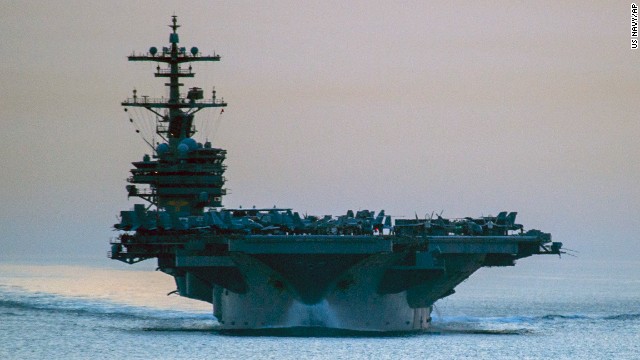 Military assets used against ISIS and Khorasan in Syria
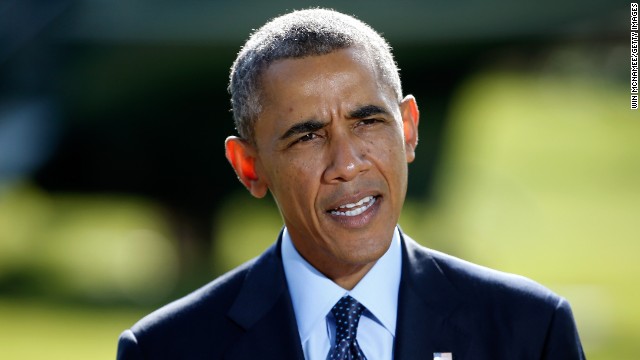 U.S., Arab nations attack ISIS in Syria
 Obama: This is not America’s fight alone
Crucially, Obama also said in the Cairo speech: “We will, however, relentlessly confront violent extremists who pose a grave threat to our security. Because we reject the same thing that people of all faiths reject: the killing of innocent men, women and children. And it is my first duty as President to protect the American people.”
Those who listened to the President’s speech mostly heard that he was extending an olive branch to the Muslim world and largely ignored the fact that during the same speech he had also made a rather robust defense of the American war on al Qaeda and its allies.
A similar dissonance happened a few months later when the President went to Norway to accept the Nobel Peace Prize. The jurors who awarded the prize (and many who voted for him in 2008) seemed to have conflated Obama’s opposition to the Iraq war with his presumed opposition to war in general.
The President was surely the first recipient of the Nobel Peace Prize to use the opportunity provided by his acceptance speech in Oslo to explain his philosophy of just and necessary wars.
At Oslo, Obama said, “I face the world as it is, and cannot stand idle in the face of threats to the American people. For make no mistake: Evil does exist in the world. A nonviolent movement could not have halted Hitler’s armies. Negotiations cannot convince al Qaeda’s leaders to lay down their arms. To say that force is sometimes necessary is not a call to cynicism; it is recognition of history, the imperfections of man, and the limits of reason.”
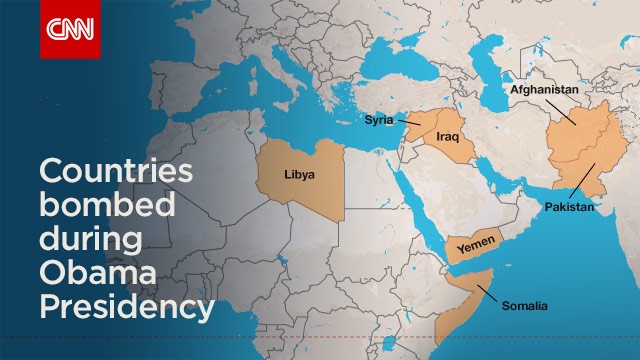
As it turned out, Obama was one of the most militarily aggressive American presidents in decades, authorizing military operations of various kinds in seven Muslim countries: Afghanistan, Iraq, Libya, Pakistan, Somalia, Yemen and, now, Syria.
The bombing of Syria is the first time the United States has mounted a full-scale war since World War II without any one of the following
— A U.N. resolution authorizing force.
— As part of a NATO operation.
— An Arab League resolution in favor of military action.
— A specific U.S. congressional authorization for war in another country.
— The invitation of the host country to conduct military operations as we have recently seen in Iraq, where the Iraqi government has been begging for U.S. military intervention.
Do the thought experiment where George W. Bush had gone to war in another Middle Eastern country without the cover of a U.N. resolution, or of a NATO operation, or of Arab League approval, or of a specific congressional authorization. The howls of protest from American liberals and the Muslim world would surely have been deafening.
Instead there have been no protests. That’s partly because of the adept manner with which the Obama administration assembled a Sunni coalition of the willing — Saudi Arabia, Qatar, Jordan, the UAE and Bahrain — to help with the airstrikes.
How Obama came to launch strikes in Syria
But it partly must be something to do with the fact that so many of his critics, and even his supporters, regard Obama as some kind of peacenik.
In fact his record shows him to be anything but:
Consider that he mandated a threefold increase in the number of American troops in Afghanistan, from 30,000 soldiers at the end of the Bush administration to 90,000, a surge of troops that played a critical role in blunting the Taliban’s momentum, which had gathered strength in the final years of Bush’s second term.
This is not the record of someone who is afraid to use American power as his critics would have it…
Peter Bergen
Consider that under Bush there were 48 CIA drone strikes in Pakistan. Under Obama there have been 328, which have killed some two-dozen al Qaeda commanders, according to a count by New America.
Consider that under Bush there was only one CIA drone strike in Yemen. Under Obama there have been 99 drone strikes and 15 airstrikes, which have killed more than three-dozen of the group’s senior operatives there.
Obama is also the first American president to authorize the assassination of a United States citizen, the New Mexico-born al Qaeda operational commander Anwar al-Awlaki, who was killed in Yemen in a drone strike in 2011.
The same year Obama initiated the alliance that overthrew the Libyan dictator, Moammar Gadhafi.
Obama has also waged an effective covert war in Somalia against the al Qaeda affiliate based there, Al-Shabaab, whose leader, Ahmed Godane, was killed in a U.S. airstrike earlier this month.
And Obama, of course, also authorized the risky U.S. Navy SEAL mission that killed al Qaeda’s founder, Osama bin Laden, in 2011 in Abbottabad, a city deep inside Pakistan.
This is not the record of someone who is afraid to use American power, as his critics would have it, but rather a president who is comfortable exercising American hard power even in a country like Syria, where he has launched a war without the kinds of specific international or congressional authorizations other presidents have sought since World War II.
Hezbollah armed drone? Militants’ new weapon, CNN.com
Hezbollah armed drone? Militants’ new weapon
By Peter Bergen and Emily Schneider
September 22, 2014 — Updated 1958 GMT (0358 HKT)
<<
STORY HIGHLIGHTS
Iranian news agency reports Hezbollah used an armed drone
Bergen: If confirmed, it represents a milestone that raises serious concerns
Militant groups are gaining access to tools that once were only available to states, he says
Editor’s note: Peter Bergen is CNN’s national security analyst, a director at the New America Foundation and the author of “Manhunt: The Ten-Year Search for bin Laden — From 9/11 to Abbottabad.” Emily Schneider is a research associate at the New America Foundation.
(CNN) — Over this past weekend, Hezbollah, the militant Shiite group that is headquartered in Lebanon, reportedly used drones to bomb a building used by the al Qaeda affiliated Nusra Front, along Lebanon’s border with Syria.
The armed drones, combined with fire from Hezbollah ground troops, killed 23 Nusra Front militants and wounded some 10 others, according to a report by an Iranian news agency.
Iran is the key sponsor for Hezbollah and has plausibly claimed for the past several years to have succeeded in manufacturing armed drones.
Hezbollah’s use of drones marks a milestone for terrorist groups worldwide: It would be the first time a group other than a nation state used armed drones successfully to carry out an attack, marking an important step towards closing the gap between the technological capabilities of countries such as the United States and militant groups such as Hezbollah.
After all, it was only in the months immediately after 9/11 that the United States mastered the technology of arming drones and began to use them in combat.
Now, 13 years later a militant organization appears to have reached the same milestone.
Previously, drones were known to have been used by militant groups only for surveillance purposes. Last month, ISIS uploaded a video to YouTube that showed aerial views of Syrian Army Military Base 93 in Raqqa province in northern Syria that had purportedly been shot by a drone.
Libyan opposition fighters targeting Libyan dictator Moammar Gadhafi used sophisticated drones for surveillance in the summer of 2011.
Hezbollah had used drones for surveillance before, but the drones were used on Lebanon’s border with Israel. In April, the Israeli military said it had shot down a drone off the coast of Haifa and that Hezbollah operated it. Although Hezbollah denied responsibility for that drone, it did claim that it had operated another drone that flew 35 miles into Israel in October.
If Hezbollah does indeed have armed drones, it joins an elite group of nations: Only the United States, United Kingdom, and Israel and are known to have deployed armed drones in combat.
According to a count by New America, some 80 countries have some kind of drone capability — but few of them have succeeded in arming their drones.
Russia, China, and Iran possess armed drones but have yet to use them in combat.
Hezbollah’s use of drones to target another militant group shows how warfare is changing: The monopoly of states on the use of military force is eroding, and new technology is leveling the playing field between states and militant groups.
So what can the United States and other nations do to protect themselves from this dawning threat? It’s a subject, of course, of great interest in Israel where accounts of Hezbollah’s drone strike on the Nusra target over the weekend were all over Israeli media during the past 24 hours.
Most armed drones are relatively easy to shoot down if you have a sophisticated air defenses or a fleet of jet fighter aircraft. Western countries generally have these, but one can imagine a dystopian future where terrorist groups are able to deploy armed drones against less well defended targets.
Indeed, that future may have already arrived.
Jihadist Terrorism: A New Threat Assessment Report Release, Bipartisan Policy Center
|
|
|
Jihadist Terrorism: A New Threat Assessment Report Release
|
|
|
|
|
|
|
Bipartisan Policy Center
1225 Eye Street NW
Suite 1000, 10th floor
Washington, DC 20005
|
|
|
|
|
|
Professorial Lecturer of Strategic Studies, John Hopkins School of Advanced International Studies
Visiting Scholar, American Enterprise Institute
Peter Bergen
National Security Analyst, CNN
Panel Member, BPC Homeland Security Project
Director, U.S. Relations with the Islamic World Project, Brookings Institution
Chief Intelligence correspondent, Fox News Channel
|
|
|
|
|
With ISIS and international extremists dominating news coverage, the threat of terrorism is at the forefront of Americans’ minds. In the midst of these developments, the Bipartisan Policy Center’s (BPC) Homeland Security Project will release a new threat assessment, authored by Peter Bergen, a member of BPC’s Homeland Security Project.
The report will examine threats from ISIS, Al-Qaeda and other Jihadist groups, cybersecurity concerns, and drone strikes and drone proliferation. It is the second report in an annual series by BPC’s Homeland Security Project, which is led by former 9/11 Commission co-chairs Tom Kean and Lee Hamilton.
The event will feature a discussion about the contents of the new assessment with the author and terrorism experts.
|
|
|
The British connection to ISIS beheadings, CNN.com
The British connection to ISIS beheadings
By Peter Bergen
updated 2:17 PM EDT, Sun September 14, 2014
STORY HIGHLIGHTS
- ISIS executioner, tall man with London accent, has beheaded a third man, a UK aid worker
- Peter Bergen says British officials believe they know the identity of the killer
- A UK estimate puts the number of Westerners fighting in Syria at more than 2,600
- Bergen: UK officials not releasing the name of the killer “for operational reasons”
Editor’s note: Peter Bergen is CNN’s national security analyst, a vice president at the New America Foundation and the author of “Manhunt: The Ten-Year Search for bin Laden.”
(CNN) — He has beheaded again. The tall, masked British man with the London accent, working with ISIS.
His first two victims were American journalists. His third was a fellow citizen, British aid worker David Haines.
British Prime Minister David Cameron hastily assembled a meeting of his top national security advisers in the early hours of Sunday morning to discuss what can be done.
According to British officials, Cameron knows the identity of the British executioner.
Peter Bergen
He also knows that the executioner has already killed two citizens of his country’s closest ally and he knows that the executioner holds at least two other American citizens.
Cameron knows that the executioner holds other hostages from additional Western countries and that he is part of a larger group of British hostage-takers working for ISIS, nicknamed “the Beatles” by their captives. And he knows that the lives of the remaining hostages are in grave danger.
It is a real crisis for Cameron, and it underlines a sobering fact: British citizens have volunteered to go to Syria to fight at 25 times the rate that Americans have done so, when adjusted for population size.
Some 500 British citizens have traveled to Syria to fight, as have 100 Americans. The population of the United Kingdom is about a fifth of that of the States.
A British government assessment by the Office of Security and Counter-Terrorism provided to CNN shows that the British have already arrested 69 people this year for “Syria related terrorist offences” that include terrorist financing, preparing an act of terrorism, and attending a terrorist training camp.
In 2013, 25 people were arrested in the UK on similar charges, bringing the total number of arrests to 94, according to the British government assessment. By contrast, only eight have been
arrested for similar Syria-related terrorist crimes in the States.
The war in Syria is attracting British fighters from all kinds of ethnic backgrounds, not just those of Syrian descent. A British official told CNN that the vast majority of British fighters going to Syria do not have any real links to the country other than a desire to fight in a holy war against the Bashar al-Assad regime.
Alarmed by the threat posed by its citizens fighting in Syria, the British government has already refused to issue or has cancelled 23 passports and has also revoked the citizenship of eight British citizens, according to the Office of Security and Counter-Terrorism.
The British agency also underlines the threat posed by other European citizens who have traveled to Syria, who can freely travel around the European Union, including the UK, and who can also travel to the States without visas as they are from so-called “visa waiver” countries.
According to the British government, 700 fighters have traveled to Syria from France; 400 from Germany; between 300 and 500 from Belgium; 130 from the Netherlands; over 100 from Denmark; 100 from Austria; 80 from Sweden; and between 50 and 100 from Spain.
The British government also estimates that 100 Canadians have left Canada to “support or train with terrorist movements abroad. The majority of these are likely to be in Syria.” And it estimates that there are 60 Australians fighting in Syria and Iraq and about 100 Australian “facilitators” helping to make this possible in Australia.
This brings the total number of Westerners who have fought in Syria to between 2,620 and 2,870, according to the British Office of Security and Counter-Terrorism assessment obtained by CNN, which is likely the most authoritative estimate.
Despite the fact that the British government has identified the executioner of the two American journalists and of David Haines, it is not making his name public “for operational reasons.”
That’s because the only likely hope for the remaining hostages is some kind of rescue operation similar to the one that the U.S. Joint Special Operations Command mounted on July 4, which didn’t achieve its purpose because the prisoners had been recently moved from the location where they were being held in Syria.
A rescue operation is a long shot, but at this point it may be the only real chance of saving the lives of the remaining hostages. David Cameron knows this — and so does President Barack Obama.
Iraq After America with Col. Joel Rayburn at New America, Washington
Iraq After America
Strongmen, Sectarians, Resistance
event |
September 24, 2014
Iraq After America : Strongmen, Sectarians, Resistance
Wednesday, September 24, 2014
12:15 pm – 01:45 pm
RSVP
Map it

More than a decade after the U.S.-led invasion of Iraq, most studies of the conflict focus on the twin questions of whether the United States should have entered the country in 2003 and whether it should have exited in 2011, but few have examined the new Iraqi state and society on its own merits. This is especially disconcerting in light of the recent crisis with the Islamic State.
In his book, Iraq After America: Strongmen, Sectarians, Resistance, U.S. Army Col. Joel Rayburn notes that the authoritarianism, sectarianism, and Islamist resistance that dominate Iraq’s post-U.S. political order have created a toxic political and social brew, preventing Iraq’s political elite from resolving the fundamental roots of conflict that have wracked that country before and since 2003. Rayburn also examines key aspects of the U.S. legacy in Iraq, analyzing what it means for the United States and others that, after more than a decade of conflict, Iraq’s communities—and its political class in particular—have not yet found a way to live together in peace.
New America is pleased to welcome Col. Rayburn for a discussion of his book, the political trends that have emerged in Iraq since 2003, and what they means for the country, the region, and the United States.
Copies of the book will be available for sale at the event.
Join the conversation online using #IraqAfterAmerica and following @NewAmerica.
Featured Speakers
Col. Joel Rayburn Author, Iraq After America: Strongmen, Sectarians, Resistance Senior Military Fellow, Institute for National Strategic Studies, National Defense University
Peter Bergen Director, International Security Program, New America
ISIS threat to U.S. mostly hype, CNN.com
ISIS threat to U.S. mostly hype
By Peter Bergen and David Sterman
updated 11:02 AM EDT, Fri September 5, 2014
Watch this video
STORY HIGHLIGHTS
Two-thirds of Americans say ISIS “major threat” to U.S.
U.S. officials have inflated numbers of Americans fighting for ISIS, says Peter Bergen
Claims that over 100 U.S. citizens fighting with ISIS are probably overestimate
Somalia example suggests those fighting in Syria won’t pose U.S. threat, Bergen says
Editor’s note: Peter Bergen is CNN’s national security analyst, a vice president at the New America Foundation and the author of “Manhunt: The Ten-Year Search for bin Laden — From 9/11 to Abbottabad.” David Sterman is a research associate at the New America Foundation.
(CNN) — ISIS has Americans worried. Two-thirds of those surveyed in a recent Pew Research poll said they consider the Islamic State in Iraq and Syria to be a “major threat” to this country. But are such fears really justified?
Despite the impression you may have had from listening to U.S. officials in recent weeks, the answer is probably not really.
For a start, U.S. officials have been inflating the numbers of Americans fighting for ISIS, which has muddied the issue for the public. U.S. Secretary of Defense Chuck Hagel, for example, told CNN’s Jim Sciutto on Wednesday, “We are aware of over 100 U.S. citizens who have U.S. passports who are fighting in the Middle East with ISIL forces.” (ISIS is sometimes referred to as ISIL and now calls itself the Islamic State).
Peter Bergen
Peter Bergen
But the Pentagon soon corrected Hagel’s comment, saying the 100 count is the total number of Americans fighting for any of the various groups fighting in Syria, some of which are more militant than others — and some of which are even allied with the U.S. Indeed, Matthew Olsen, the director of the National Counterterrorism Center — the government office tasked with assessing terrorist threats — also confirmed that 100 is the total count of the various Americans fighting in Syria and not a count of those fighting for ISIS.
David Sterman
David Sterman
Hagel’s comment is only the latest inflated claim regarding the number of Americans fighting with ISIS. Last week, the Washington Times cited anonymous official sources who said there are 300 Americans fighting with ISIS, despite the Pentagon estimating the figure to be more like a dozen.
Who is the ISIS?
True, a dozen is still too many. But it is important to remember that just because these Americans are fighting with ISIS, it doesn’t necessarily translate into a significant threat to the American homeland.
Obama: NATO united in defeating ISIS State Dept. releases anti-ISIS video Regional reactions to ISIS brutality
One need only look at the example of Somalia to see why.
Bergen: When Americans leave for jihad
The last sizeable group of Americans who went overseas to fight with an al Qaeda-aligned group are the 29 Americans known to have traveled to fight with the Somali terrorist group Al-Shabaab after the 2006 invasion of Somalia by the Ethiopian army. However, none of those 29 subsequently planned or conducted a terrorist attack inside the United States, according to a survey of more than 240 jihadist terrorism cases since September 11 conducted by the New America Foundation.
What can the U.S. do against ISIS and could it work?
U.K’s Anti-ISIS Strategy
Indeed, for more than a third of the American militants who fought with Al-Shabaab, going to Somalia was a one-way ticket. In 2008, a missile strike in Somalia killed Ruben Shumpert, a resident of Seattle. A year later, Burhan Hassan, a 17-year-old from Minneapolis, was killed in the Somali capital, Mogadishu. Abdirizak Bihi, Hassan’s uncle, reportedly said at the time, “We believe he was killed because he would have been a key person in the investigation into the recruitment (of young Somali men) here in Minneapolis.”
Al-Shabaab militants also are said to have killed Alabama native Omar Hammami, who joined the group in 2006 and took a high-profile position in its media operations before his death last year.
At least two Americans fighting for Al-Shabaab died while conducting suicide attacks in Somalia.
Shirwa Ahmed, a 26-year-old from Minnesota, became the first known American to conduct a suicide bombing for an al Qaeda-associated group when he drove a car packed with bombs into a government compound on October 28, 2008.
In 2011, meanwhile, the FBI confirmed that Farah Mohamed Beledi, a 27-year-old Minnesota man who was born in Somalia and moved to the United States at age 12, was killed while attempting to detonate a suicide bomb in Somalia.
Bergen: An American’s gateway to jihad
In addition to the American militants who died in Somalia, six were arrested, four when they returned to the West and two in East Africa. Kamal Said Hassan, a 28-year-old Minneapolis man who traveled to Somalia and attended an Al-Shabaab training camp before returning to the United States, was arrested and in 2009 pleaded guilty to supporting Al-Shabaab.
In another case, Mahamud Said Omar, an American resident who helped organize Al-Shabaab’s recruitment pipeline and visited a training camp, was arrested in the Netherlands in 2009. Omar was extradited to the United States and in 2012 was convicted on terrorism charges.
Of course, the fact that 13 of the 29 American militants who fought in Somalia remain at large is a reminder that the CIA and FBI also need to pay attention to the potential threat posed by American foreign fighters in Syria. But this is no reason for U.S. officials to overhype the threat posed by ISIS to the United States.
Yes, Americans should always be mindful of the threats posed by extremists. But as the case of U.S. citizens in Somalia suggests, Syria could very well end up being a graveyard for Americans fighting there rather than a launch pad for attacks on the United States.
Read CNNOpinion’s new Flipboard magazine.
Follow us on Twitter @CNNOpinion.
Join us on Facebook/CNNOpinion.
When Americans leave for jihad. CNN.com
When Americans leave for jihad
By Peter Bergen and David Sterman
updated 2:49 PM EDT, Fri August 29, 2014
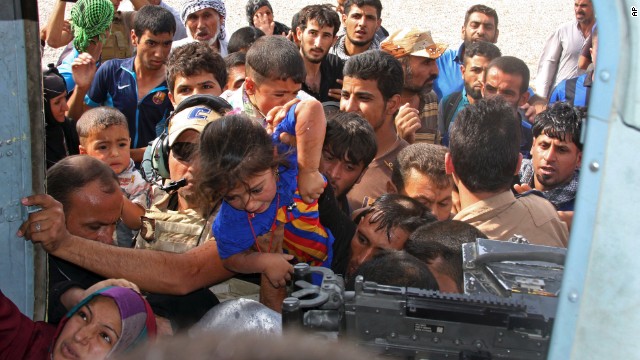 Iraqi Shiite Turkmens, mostly women and children, try to board an Iraqi Army helicopter aid flight bringing in supplies to the town of Amerli, Iraq, on Saturday, August 30. Amerli had been surrounded by fighters from the terror group ISIS since mid-June, but on Sunday the siege was broken by Iraqi security and volunteer forces, according to retired Gen. Khaled al-Amerli, an Amerli resident and member of its self-defense force.
STORY HIGHLIGHTS
- Peter Bergen, David Sterman: First American known killed while fighting for ISIS
- Writers: Other Americans drawn to ISIS, al-Nusra in Syria; 100 have fought or tried to
- No American involved with ISIS or Nusra charged with plotting attack inside U.S., they say
- Writers: Tracking the foreign fighters is a key priority for counterterrorism efforts
Editor’s note: Peter Bergen is CNN’s national security analyst, a vice president at the New America Foundation and the author of “Manhunt: The Ten-Year Search for bin Laden — From 9/11 to Abbottabad.” David Sterman is a research associate at the New America Foundation. This article is adapted from a commentary that appeared earlier this month.
(CNN) — Douglas McAuthur McCain grew up in the Minneapolis area. Aged 33, he died more than 6,000 miles to the east of his birthplace, fighting in Syria for ISIS, the group that calls itself the “Islamic State.”
ISIS is a group that even al Qaeda has rejected, in part, for its reprehensible tactics, which run to public crucifixions.
McCain’s transformation to a militant jihadist left his family “devastated,” his uncle, Ken McCain, told CNN.
Peter Bergen

David Sterman
McCain is the first American known to have been killed while fighting for ISIS. But he is not the only American drawn to the group or to al Qaeda’s affiliate in Syria, the al-Nusra Front.
In May 2014, Moner Abu-Salha, a 22-year-old American citizen from Florida, conducted a suicide bombing on behalf of Nusra. Abu-Salha had reportedly re-entered the United States after he received training from the group in Syria and before returning to the conflict.
 New video of U.S. suicide bomber
 American Jihadis’ Minneapolis connection
Abu-Salha is the first American suicide bomber known to have died in Syria.
Some 100 other Americans are believed to have either fought in Syria since 2011 or been arrested before they could get there.
According to a count by the New America Foundation, eight of these individuals have been indicted for traveling, attempting to travel, or facilitating the travel of others to fight with ISIS or the al-Nusra Front.
Some of these cases involved those who tried to join ISIS or Nusra, but were arrested before they could leave the States:
• Abdella Tounisi, an 18-year-old American citizen from Aurora, Illinois, was arrested and charged with attempting to provide material support to Nusra. On April 19, 2013, he was caught in a sting operation and said that he had no combat skills to speak of: “Concerning my fighting skills, to be honest, I do not have any.” Tounisi pleaded not guilty and awaits trial.
• Basit Sheikh, a North Carolina man, was arrested in November 2013 at Raleigh-Durham International Airport in North Carolina while allegedly trying to fly to Lebanon in order to join Nusra. He awaits trial.
• Nicholas Teausant, a 20-year-old from California, was arrested in March 2014 while allegedly traveling to join ISIS. Teausant pleaded not guilty and awaits trial.
• Shannon Conley, a 19-year-old Denver woman, was arrested in April 2014 and charged with attempting to provide material support to ISIS. She awaits trial.
• Adam Dandach, a 20-year-old Orange County man, was arrested at John Wayne Airport while allegedly attempting to travel to join ISIS. Dandach was charged with lying about needing a passport replacement to conceal that the real reason he needed to replace his passport was that his mother had hidden his original passport to prevent his travel. He awaits trial.
• In December, Sinh Vinh Ngo Nguyen, an American citizen from southern California, pleaded guilty to a charge of attempting to provide material support to al Qaeda. Between December 2012 and April 2013, Nguyen had traveled to Syria, where, he stated, he fought alongside Nusra. On his return, Nguyen discussed with an informant his intent to participate further in jihad.
• In August 2013, Gufran Mohammed, a naturalized American citizen living in Saudi Arabia, was charged with attempting to provide material support to Nusra in Syria by facilitating the recruitment of experienced fighters from al Qaeda’s Somali affiliate to travel to Syria.
• Michael Todd Wolfe, a 23-year-old Texas man, pleaded guilty to attempting to provide material support to a foreign terrorist organization by traveling to Syria to fight with ISIS.
Because of the murky nature of the Syrian conflict, it is sometimes a challenge to identify the groups that Americans traveling to Syria are involved with.
Two cases — those of Nicole Mansfield and Eric Harroun — illustrate this difficulty. Mansfield, a Michigan woman, was killed in Syria in 2013, reportedly during a military clash. However, details on whether she was fighting in Syria and, if so, which group she fought for remain under investigation.
Harroun was indicted upon his return to the States in 2013 for fighting with Nusra, but it was later discovered that the FBI had mistranslated the name of the group he fought with and he had actually fought with a group that was not aligned with al Qaeda.
So far, no U.S. citizen involved in fighting or supporting Nusra or ISIS has been charged with plotting to conduct an attack inside the United States.
Further, ISIS’ predecessor, al Qaeda in Iraq, never tried to conduct an attack on the American homeland, although it did bomb three American hotels in Jordan in 2005.
And it’s also worth noting that in none of the successful terrorist attacks in the States since 9/11 — such as the Boston Marathon bombings last year or Maj. Nidal Hasan’s massacre at Fort Hood, Texas, in 2009 — did any of the convicted or alleged perpetrators receive training overseas.
Returning foreign fighters from the Syrian conflict pose a far greater threat to Europe, which has contributed a much larger number of foreign fighters to the conflict than the United States, including an estimated 700 from France, 450 from the United Kingdom and 270 from Germany.
Unlike in the United States, European countries have reported specific terrorist plots tied to returning Syrian fighters. Mehdi Nemmouche, a suspect in the May 24 shootings at a Jewish museum in Brussels, Belgium, that killed four people, spent about a year with jihadist fighters in Syria, according to the Paris prosecutor in the case. But Nemmouche’s case is the only instance of lethal violence by a returning Syrian fighter in the West.
What can be done? Western governments are keenly aware of the problem of Syrian veterans coming home both radicalized and trained. The problem is that in some European countries with hundreds of returnees, it is just not possible to monitor all of them. That was vividly illustrated by the case of Nemmouche.
Information-sharing between Western governments about the identities of those who have traveled to Syria and have received militant training is the key to preventing more incidents such as the one at the Jewish Museum in Brussels.