Why the Saudis unfriended the U.S., CNN.com
Why the Saudis unfriended the U.S.

Allies at odds: U.S., Saudi leaders meet
- U.S. has had alliance with Saudi Arabia since 1945; Obama met King Abudullah Friday
- Peter Bergen says the relationship is now at its lowest point
- Saudis are upset that Obama didn’t stand by the “red line” he drew on Syria
- Bergen: Two nations share common ground in opposing al Qaeda’s rise in Syria
Editor’s note: Peter Bergen is CNN’s national security analyst, a director at the New America Foundation and the author of “Manhunt: The Ten-Year Search for bin Laden — From 9/11 to Abbottabad.”
(CNN) — The world’s most powerful democracy and the world’s most absolute monarchy have long been close, if unlikely, allies.
They are bound together by common interests — the free flow of oil and, more recently, fighting al Qaeda.
That alliance was first sealed between President Franklin Delano Roosevelt and Saudi King Adul Aziz on February 14, 1945, when they met on the deck of the USS Quincy as the American warship cruised in the Suez Canal.
FDR and his advisors knew that oil, of which Saudi Arabia was well endowed, was a key component of America’s economy. Indeed, Standard Oil of California had signed a farsighted deal a decade earlier giving it exclusive production rights in Saudi Arabia.
Thomas Lippman, who has written authoritatively on U.S.-Saudi relations, writes that as result of the meeting on the Quincy, the American president gave the Saudi king a DC-3 airplane that was specially outfitted with a rotating throne that allowed the king always to face the holy site of Mecca while he was in the air.
For his part, King Abdul Aziz so enjoyed his meals as the president’s guest on board the Quincy that he surprised his host with an unusual demand: he wanted to take the Quincy’s cook for himself. FDR was able to diplomatically ward off this request. (The concept that human beings are not personal property came to the Saudi kingdom relatively late; slavery was only abolished there in 1962.)
For more than six decades after that important meeting on the Quincy the Saudi-American relationship has largely worked well for both countries. Saudi Arabia is the world’s largest oil producer and sits on around a fifth of the world’s proven oil reserves and therefore it can set oil prices by increasing or lowering oil production. Generally it has done so in ways that respect American interests
When the Saudis really needed the States following Saddam Hussein’s 1990 invasion of their neighbor Kuwait, the United States sent a half a million troops to the Gulf to expel Saddam’s forces.
The news that 15 of the 19 9/11 hijackers were Saudis certainly put something of a dent in the U.S.-Saudi alliance, but the George W. Bush administration had close ties to the Saudis and matters were soon smoothed over, particularly after 2003 when al Qaeda began staging attacks on Westerners and oil facilities in the Saudi kingdom, at which point the Saudis launched an effective crackdown on the group.
Controversy stirs anew over Saudi textbooks with Obama set to visit
Yet today, the Saudi-American alliance has never been in worse shape.
That is why on Friday President Barack Obama met with Saudi King Abdullah, one of the sons of King Abdul Aziz, in an attempt to patch things up.
What went wrong? In recent months the normally hyper-discreet Saudis have gone on the record about their dissatisfactions with the Obama administration.
In December, Prince Turki al-Faisal, the former Saudi intelligence chief and ambassador to Washington, took the highly unusual step of publicly criticizing the administration, “We’ve seen several red lines put forward by the president, which went along and became pinkish as time grew, and eventually ended up completely white…When that kind of assurance comes from a leader of a country like the United States, we expect him to stand by it.”
It’s inconceivable that Prince Turki, whose brother is the Saudi foreign minister, would make these public comments without approval from the highest levels of the Saudi government.
Why are the Saudis going public with their dissatisfaction with the Obama administration? The laundry list of Saudi complaints most recently is that the United States didn’t make good on its “red line” threat to take action against the Bashar al Assad regime in Syria following its use of chemical weapons against its own population.
Syria is a close ally of Saudi Arabia’s archrival, Iran, and the Saudis are also growing apprehensive that the United States will not take a firm line on Iran’s nuclear program — which the Saudis see as an almost-existential threat — now that the U.S.-Iranian relations have recently thawed.
The Saudi were also puzzled by the fact that the Obama administration seemed willing to let a longtime U.S. ally, Egyptian dictator Hosni Mubarak, be thrown overboard during the “Arab Spring” of early 2011. What did that say about other longtime U.S. allies in the region?
(Interestingly, these list of gripes look quite similar to those of another powerful player in the Middle East — Israel.)
Prince Mohammed bin Nayef, the powerful Saudi Minister of Interior, was in Washington last month. According to a senior Saudi official his discussions in Washington ahead of Obama’s trip were all about Syria.
Here Washington and Riyadh have a real common interest; preventing the rise of al Qaeda in Syria.
Saudi Arabia made it a crime last month for its citizens to travel to fight in overseas conflicts such as the Syrian civil war. Those Saudis who have gone to fight in Syria often join al-Qaeda-aligned groups.
Some 1,200 Saudis have traveled to Syria, of whom 220 have returned to the kingdom, according to the senior Saudi official. There is great concern in the kingdom about potential “blowback” caused by such militants who have obtained battlefield experience in Syria.
Both the United States and Saudi Arabia have an interest in blocking al Qaeda’s growth in Syria.
Obama and King Abdullah met on Friday outside Riyadh. After the meeting, a senior US official said that the United States and Saudi Arabia remain “very much aligned” despite recent policy differences over issues like Iran.
Afghanistan 2014: Dispatches from the Presidential Campaign Trail, New America, Washington
Afghanistan 2014: Dispatches from the Presidential Campaign Trail
Monday, March 31, 2014
12:15 p.m. – 1:45 p.m.
New America Foundation
1899 L Street NW, Suite 400
Washington, DC 20036
RSVP
On Saturday, April 5, Afghans will head to the polls and vote in Afghanistan’s 2014 presidential election. With current President Hamid Karzai constitutionally barred from running for a third term, the election could mark Afghanistan’s first peaceful transfer of power between two democratically elected governments. No single frontrunner has emerged from the pack of nine presidential contenders, making the possibility of a run-off between the two candidates who receive the most votes – though shy of the necessary 50 percent – more likely.
Faiysal AliKhan, a Carnegie Fellow with the New America Foundation’s International Security Program, spent the last month traveling around Afghanistan, speaking to provincial governors, tribal leaders, government ministers, and several of the candidates about the election, the transition from Karzai to his successor, and the withdrawal of foreign troops at the end of December.
Please join New America as AliKhan shares what he learned on the campaign trail, and other experts discuss what the 2014 election will mean for Afghanistan’s future.
Join the conversation online using #Afghanistan2014 and following @NatSecNAF.
If you are unable to join us in person, please tune in to our live webcast of the event. No sign up is required to view the streaming video.
Participants:
Faiysal AliKhan
Carnegie Fellow, International Security Program, New America Foundation
CEO, Foundation for Integrated Development Action
Clare Lockhart
Co-founder and Director, Institute for State Effectiveness
Omar Samad
Senior Central Asia Fellow, New America Foundation
Former Afghan Ambassador to Canada and France
Moderator:
Peter Bergen
Director, International Security Program, New America Foundation
Plane takeovers a dangerous reality, CNN.com
Plane takeovers a dangerous reality
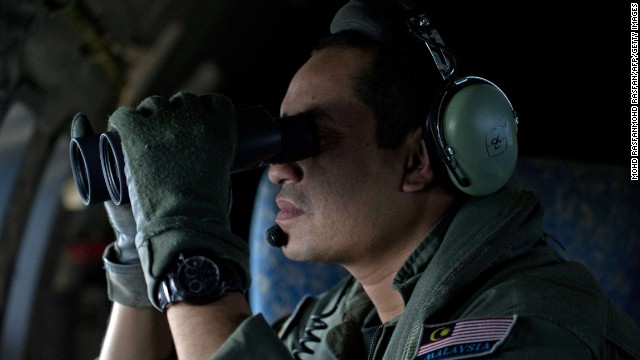
- Peter Bergen: Emerging consensus suggests Malaysian airliner changed course
- Bergen: This suggests there was a human intervention, rather than a mechanical failure
- He says it’s likely a person or persons with non-political motives commandeered the plane
Editor’s note: Peter Bergen is CNN’s national security analyst, a director at the New America Foundation and the author of “Manhunt: The Ten-Year Search for bin Laden — From 9/11 to Abbottabad.” Judd Smith attends Syracuse University School of Law.
(CNN) — There is still much that is mysterious about the fate of Malaysia Air Flight 370, but there is emerging consensus that the passenger jet bound for Beijing changed course, flying west over the Indian Ocean and flew for at least four hours. This tends to suggest that there was a human intervention, rather than a mechanical failure.
Typically such a human intervention would be a hijacking for political purposes, as was the case with the 9/11 flights or any number of other hijackings.
But no credible terrorist group has asserted responsibility for this operation and whoever diverted Malaysia Air Flight 370 issued no demands, which would be typical in the case of most hijackings.
There is always the possibility of pilot suicide, as was the case with EgyptAir 990, which plunged into the Atlantic shortly after leaving JFK Airport on October 31, 1999. The National Transportation Safety Board determined that the co-pilot intentionally caused the crash, although Egyptian authorities questioned that judgment.
But if Malaysia Air Flight 370 was a case of pilot suicide, why fly for so many hours and go through the trouble of switching off the transponder?
This leaves open the possibility that a person or persons with non-political or idiosyncratic motives commandeered the plane.
This is more common that one might presume. In the pre-9/11 era, before the introduction of reinforced cockpit doors, there were quite a number of such case
Air Safety Week, an aviation industry magazine, ran a story in January 2001 observing that, “the number of cases where the sanctity of the cockpit is threatened seems to be on the increase. In the last three years, there were at least 14 known attempts to enter the cockpit.”
Air Safety Week pointed to a case from December 29, 2000, when a Kenyan man burst into the cockpit of a British Airways flight from London to Nairobi. The airplane plummeted more than 10,000 feet before the captain could regain control of the airplane.
Air Safety Week also pointed to two disturbing cases in the United States. On August 11, 2000, a 19-year-old Southwest Airlines passenger tried to get into the cockpit shortly before the plane was going to land in Salt Lake City. Six passengers restrained the man, who later died of a heart attack once he was taken off the plane.
On an Alaska Airlines flight on March 16, 2000, passenger Peter Bradley started taking his clothes off and ran up and down the aisle of the plane. The 39-year-old shouted at his fellow passengers “I am going to (expletive) kill you. I’m going to kill you all.”
Bradley charged the cockpit door and then lunged for the flight controls. The co-pilot reached for an ax that was meant for emergency situations and began wrestling with Bradley. The episode ended when several passengers jumped on Bradley.
Since 9/11, plane commandeerings have continued despite the wide introduction of reinforced cockpit doors. Often such commandeerings are motivated by someone trying to claim asylum.
On January 24, 2007, there was a hijacking aboard Air West, a commercial airline flight in Sudan, which took off from the Sudanese capital, Khartoum. The hijacker Mohamed Abdu Altif entered the cockpit armed with a pistol around half an hour after takeoff and put the pistol to the captain’s head. He demanded to go to London, but was told by the captain that there was not enough fuel, so he agreed to go to Chad. Altif apparently wanted asylum in the United Kingdom. The plane diverged to Chad where Altif surrendered to authorities.
Of course, if it’s the pilot himself commandeering the plane in order to claim asylum, getting through the cockpit door is not an issue. A recent example of this occurred on February 17, when the co-pilot of an Ethiopian Airlines commercial flight between Addis Ababa, Ethiopia, and Rome took over the plane when the lead pilot went to the bathroom. The co-pilot flew the plane to Geneva, Switzerland, where he landed and asked for asylum.
Sometimes such a commandeering happens for reasons that are quite idiosyncratic. On October 4, 2006, Hakan Ekinci, slipped into the cockpit of a Turkish Airlines passenger airline flight between Tirana, Albania, and Istanbul, Turkey, after a stewardess had opened the cockpit door.
Ekinci claimed to have a bomb and that he would detonate it unless the plane was diverted to Italy so that he could speak to the Pope. Two Italian fighter jets scrambled and forced the plane to land in Brindisi, Italy.
Ekinci was a deserter from the Turkish military. He had written to Pope Benedict XVI during the summer of 2006 a letter asking for his help to avoid military service. He was arrested when the plane landed in Italy.
If Malaysia Air Flight 370 was indeed commandeered, the person or people responsible for it knew enough about civil aviation to know how to turn off the transponder. Of course, this is exactly what happened with three out of the four planes that were hijacked on 9/11 so it’s a technique that is not unknown.
For the moment, the fate of Malaysia Air Flight 370 remains an enigma, but with the few facts that we now know about the flight, a commandeering of the passenger jet is the most plausible explanation.
Did terrorists take control of Flight 370? CNN.com
Did terrorists take control of Flight 370?
 Ground crew members wave to a Japanese Maritime Defense Force P3C patrol plane as it leaves the Royal Malaysian Air Force base in Subang, Malaysia, on Sunday, March 23, heading for Australia to join a search and rescue operation for missing Malaysia Airlines Flight 370. The search is entering its third week with no indication of the fate of the aircraft.
- Officials say Flight 370 was diverted, but how likely is it that terrorists were responsible?
- Peter Bergen says known terrorist groups seem unlikely to be involved
- Jemaah Islamiyah has a presence in Malaysia, but it has been on the decline, he says
- Bergen: If a terrorist group was responsible, it hasn’t acted to achieve any political aims
Editor’s note: Peter Bergen is CNN’s national security analyst, a director at the New America Foundation and the author of “Manhunt: The Ten-Year Search for bin Laden — From 9/11 to Abbottabad.”
(CNN) — Malaysian Prime Minister Najib Razak told reporters over the weekend that “deliberate” action by somebody on board accounted for Malaysia Airlines Flight 370 veering off course.
Could the mystery of Malaysia Airlines 370 then be explained as an act of terrorism?
To answer that you have to assess both the capabilities and the intentions of the known terrorist groups that might want to hijack such a plane. And you have to ask the question: Cui bono? For whose benefit?
The al Qaeda-affiliated group, Jemaah Islamiyah, has a presence in Malaysia as well as in the Philippines and Indonesia. But the group has been under sustained law enforcement pressure for more than a decade after it bombed nightclubs on the Indonesian island of Bali in 2002, killing more than 200 people, mostly Western tourists. The group has also carried out bombings at the Australian Embassy in Indonesia and the JW Marriott and Ritz-Carlton Hotels in the Indonesian capital, Jakarta.
However, the capabilities of the once-potent Jemaah Islamiyah have eroded over time. And would Jemaah Islamiyah, an Islamist militant group, target for attack the air carrier of a majority Muslim country on which quite a number of Muslims were likely traveling? It is more plausible that the group would select a Western airline because Western embassies and Western brand-name hotels have been the focus of their previous attacks and plots.
A terrorist group that might have a motive is the East Turkestan Islamic Movement, a separatist group in China founded by Uyghurs that has had some historical ties to al Qaeda and the Taliban. The Uyghurs are an ethnic group in western China who are Muslim. The group has conducted a number of terrorist attacks in China.
Uyghur terrorists might have a motive to hijack the Malaysia Airlines flight as it was bound for Beijing and most of the passengers were Chinese. But Uyghur militants have operated almost exclusively inside China. And when they have tried to mount hijackings in the past they have been complete flops. On March 9, 2008, a 19-year old Uyghur woman attempted to set off some kind of explosive device on a flight from the Xinjiang Uyghur region en route to Beijing. The flight crew detained the woman before she could detonate the device.
Four year later, on June 29, 2012, half a dozen Uyghur men attempted to take control of an aircraft flying in the Xinjiang Uyghur region using pieces of a metal crutch that had been sharpened to make crude weapons. This plot was also foiled.
Bolstering the view that Uyghur terrorists did not hijack the Malaysia Airlines flight, on Tuesday a Chinese official said that background checks on the passengers on the plane produced no evidence that any of the Chinese citizens on board were involved in terrorism.
Beyond Uyghur militants or operatives of Jemaah Islamiyah, might there be other terrorist groups with the motivation and capability of pulling off the hijacking of the Malaysia Airlines flight?
It doesn’t seem so. If this were a hijacking for political purposes, the hijacking would have been followed by an act designed to send a political message, such as the planes hijacked on 9/11 that were then flown into the World Trade Center and Pentagon.
Or there would be set of demands, as was the case with the Indian Airlines flight that was hijacked to Kandahar, Afghanistan, by militant Kashmiri separatists in December 1999. They demanded the release of leading militants in Indian jails, a demand to which the Indian government acceded.
Or there would be a credible claim of responsibility. The one claim of responsibility so far is from an outfit calling itself the Chinese Martyrs’ Brigade. This claim is not deemed to be credible. Malaysian Transport Minister Datuk Seri Hishammuddin Hussein told reporters last week: “There is no sound or credible grounds to justify their claims.'”
If the diversion of Malaysia Airlines 370 was not an act of terrorism, the other likely scenarios are a pilot suicide attempt, the piracy of the plane for some kind of economic reason or the commandeering of the aircraft by someone with an idiosyncratic motive that will only become clear over time.
Pakistan sheltered Bin Laden? Prove it, CNN.com
Pakistan sheltered Bin Laden? Prove it
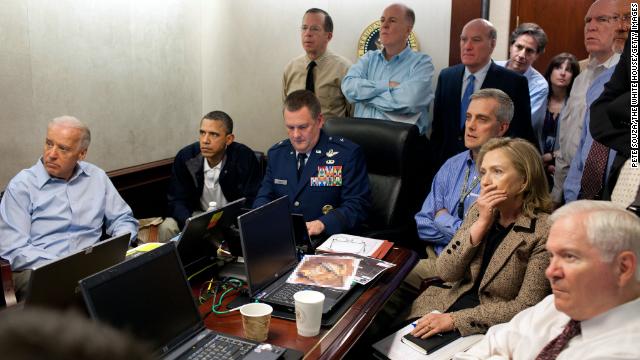 Vice President Joe Biden, left, President Barack Obama, and Secretary of State Hillary Clinton, second from right, watch the mission to capture Osama bin Laden from the Situation Room in the White House on May 1, 2011. Click through to see reactions from around the world following the death of the al Qaeda leader.
- Peter Bergen: NYT article says Pakistan knew bin Laden was hiding in Abbottabad
- He says reporter Carlotta Gall is a respected authority, but there’s no evidence
- Bergen: Why would many high-level U.S. intelligence officials deny Pakistan’s knowledge?
- Bergen: If Obama administration has information showing Pakistan knew, it must release it
Editor’s note: Peter Bergen is CNN’s national security analyst, a director at the New America Foundation and the author of “Manhunt: The Ten-Year Search for bin Laden — From 9/11 to Abbottabad.”
(CNN) — The New York Times magazine is running a bombshell story alleging that the Pakistanis knew all along that Osama bin Laden was living for years in his longtime hiding place in the northern Pakistan city of Abbottabad, where he was killed by a U.S. Navy SEAL team on May 2, 2011.
The Times story, titled “What Pakistan Knew About bin Laden,” will carry weight: It was written by Carlotta Gall, the dean of the correspondents who have covered Afghanistan and Pakistan since that fateful day in 2001, when al Qaeda’s four hijacked planes crashed through America’s comfortable sense that vast oceans insulated it from its enemies.
At great personal risk Gall has authoritatively covered the war in Afghanistan for the past 12 years. Indeed, I first met her during the civil war in Afghanistan during the mid-1990s when she was an aid worker, and I have met her many times since. I encouraged her (along with, I’m sure, many others) to write a book about her reporting in Afghanistan, as no Western reporter has more to say about what has transpired there since the fall of the Taliban.
The bin Laden story in the New York Times magazine is an extract from Gall’s forthcoming book, “The Wrong Enemy: America in Afghanistan, 2001-2014.”
Gall makes two astonishing claims in her Times magazine piece.
The first claim: An unnamed Pakistani official told her, based on what he had in turn heard from an unnamed senior U.S. official that “the United States had direct evidence that the ISI chief, Lt. Gen. Ahmed Shuja Pasha, knew of bin Laden’s presence in Abbottabad.” ISI is Pakistan’s powerful military intelligence agency.
The second claim: “The ISI actually ran a special desk assigned to handle bin Laden. It was operated independently, led by an officer who made his own decisions and did not report to a superior. He handled only one person: bin Laden…the top military bosses knew about it, I was told.”
It is, of course, hard to prove negatives, but having spent around a year reporting intensively on the hunt for al Qaeda’s leader for my 2012 book “Manhunt: The Ten-Year Search for bin Laden From 9/11 to Abbottabad,” I am convinced that there is no evidence that anyone in the Pakistani government, military or intelligence agencies knowingly sheltered bin Laden.
How did I arrive at this conclusion?
On three reporting trips to Pakistan I spoke to senior officials in Pakistan’s military and intelligence service. They all denied that they had secretly harbored bin Laden. OK, you are thinking: “But they would say that, wouldn’t they?”
Well, what about the dozens of officials I spoke to in the U.S. intelligence community, Pentagon, State Department and the White House who also told me versions of “the Pakistanis had no idea that bin Laden was hiding in Abbottabad”?
During the course of reporting for my book I spoke on the record to, among others, John Brennan, now the CIA director and then President Obama’s top counterterrorism adviser; then CIA Director Leon Panetta and his chief of staff, Jeremy Bash; then Secretary of State Hillary Clinton; then Chairman of the Joint Chiefs, Adm. Mike Mullen; then Vice Chairman of the Joint Chiefs, Gen. James Cartwright; then director of the National Counterterrorism Center, Michael Leiter; then senior director for counterterrorism at the National Security Council, Nick Rasmussen; then head of policy at the Pentagon, Michele Flournoy; Michael Vickers, who was then the civilian overseer of Special Operations at the Pentagon; Tony Blinken, who is now the deputy national security adviser; and Denis McDonough, who held that position before Blinken.
These officials have collectively spent many decades working to destroy al Qaeda, and many are deeply suspicious of Pakistan for its continuing support for elements of the Taliban. But all of them told me in one form or another that Pakistani officials had no clue that bin Laden was living in Abbottabad.
Indeed, an early debate between senior national security officials at the White House, once CIA intelligence established that bin Laden could be hiding in Abbottabad, was whether to mount a joint U.S.-Pakistani raid on bin Laden’s suspected hideout.
This plan was rejected because the officials were concerned that such a joint operation carried the risk that word would leak out about the bin Laden intelligence. This debate would have been moot if the Pakistanis already knew bin Laden was living in Abbottabad.
And, by the way, if the U.S. government had any evidence that the Pakistanis were knowingly sheltering bin Laden, as Gall claims, why cover this up?
In 2011, the relationship between the United States and Pakistan was at its lowest point ever. Early that year a CIA contractor killed two Pakistanis in broad daylight in the city of Lahore, and both countries were trading accusations about each other’s perfidy. The tension was compounded by the fact that the CIA drone program in Pakistan was then at its height, which was deeply unpopular among Pakistanis. What did U.S. officials have to lose by saying that bin Laden was being protected by the Pakistanis if it were true?
The fact is that the senior Pakistani officials Gall alleges were harboring bin Laden were utterly surprised that al Qaeda’s leader was living in Abbottabad. Based on the bewildered reactions of top Pakistani officials to the events on the night that bin Laden was killed, it was obvious to U.S. Ambassador to Pakistan Cameron Munter and to U.S. officials monitoring communications in Pakistan that the Pakistanis had not had a clue about bin Laden’s presence there.
Finally, in the course of reporting my book I discovered that bin Laden was even hiding from some of the people living in his own compound; forget about letting officials in the Pakistani government in on the secret. One of the wives of the bodyguards protecting bin Laden didn’t know that the tall stranger hiding on the compound was al Qaeda’s leader.
In fairness to Gall, I have heard from four current and former U.S. intelligence and military officials that some of the thousands of documents that U.S. Navy SEALs picked up at bin Laden’s Abbottabad compound that haven’t been publicly released could point to some kind of official Pakistani collusion.
If that is the case, the Obama White House should release any documents that are relevant so that the American public can be the judge if one of our allies was knowingly harboring bin Laden all along. So far there is no evidence that that is the case.
The War in Syria, New America Foundation, Washington
The War in Syria
With the Syrian crisis entering its fourth year, the New America Foundation’s International Security Program is taking stock of current developments in and projected scenarios for ending the crisis. Headlines about Syria have been overwhelmed with details of the battlefield and the more than 9 million people who have been affected by the fighting. The fight between President Bashar Assad’s forces and opposition groups has long been stalemated, yet recent battles suggest that Assad is winning the war. But is this really the case? And what do these battlefield successes mean for the future of the country in the absence of a fully functional national government? What about the 2.5 million refugees currently seeking shelter in neighboring countries? How have Syrian citizens responded to the fighting and diplomatic response, or lack thereof? How does the presence of foreign fighters and radical jihadist groups factor into the crisis? And is a reset of U.S. foreign policy towards the crisis in order?
To address these issues and more, including the increasing scale of human suffering, New America has gathered a number of leading analysts with intimate knowledge of the military, political, and civilian dynamics inside the country.
Join the conversation online using #syria4years and following @NatSecNAF.
If you are unable to join us in person, please tune in to our live webcast of the event. No signup is required to view the streaming video.
PARTICIPANTS
Will McCants
Fellow, Saban Center for Middle East Policy, Brookings Institution
Director of the Project on U.S.-Islamic Relations, Brookings Institution
Nathaniel Rosenblatt
Senior Analyst, Middle East and North Africa, Caerus Associates
Co-Author, Zooming in on Syria: Adapting U.S. Policy to Local Realities
Oubai Shahbandar
Senior Adviser, Syrian National Coalition
Leila Hilal
Director, Middle East Task Force, New America Foundation
Moderator:
Peter Bergen
Director, International Security Program, New America Foundation
Dianne Feinstein is no bomb thrower, CNN.com
Dianne Feinstein is no bomb thrower

Senate: CIA evidence suddenly disappeared
- Sen. Feinstein accuses CIA of covertly removing documents from her staff’s computers
- Bergen: Feinstein longtime CIA supporter, so her statements aren’t easily dismissed
- Her staff’s report disputes CIA claims that coercive interrogations yielded useful info
- Bergen: White House should step up and get summary of 6,000-page report released
Editor’s note: Peter Bergen is CNN’s national security analyst, a director at the New America Foundation and the author of “Manhunt: The Ten-Year Search for bin Laden — From 9/11 to Abbottabad.”
(CNN) — Sen. Dianne Feinstein is not a bomb thrower.
As the head of the Senate Intelligence Committee she has, for instance, been a stalwart public defender of the National Security Agency’s controversial bulk collection of phone data in the United States.
That is why the verbal hand grenade she threw on the Senate floor on Tuesday is a device sufficiently explosive that it may represent the largest rupture between Congress and the CIA since the Church committee hearings of the mid-1970s, in which CIA officials were summoned to testify publicly about the agency’s dirty tricks, such as its plan to assassinate Cuban dictator Fidel Castro.
In an angry speech, Feinstein asserted that the CIA has violated federal laws by covertly removing classified documents from her committee’s computers as it pursued a multiyear investigation of the CIA’s interrogation and detention programs .
Feinstein said that four years ago the CIA removed hundreds of pages of documents that were being reviewed by her staff on computers at a CIA facility set up for the Senate staff’s use in Virginia.
Feinstein says CIA spied on Senate computers
In 2009, Feinstein, a Democrat from California, assumed chairmanship of the Senate Intelligence Committee, which provides oversight on all 16 of the U.S. intelligence agencies, including the CIA. From that position Feinstein has often sided with the CIA on issues that are important to the agency, for instance, defending the CIA’s use of armed drones to kill suspected terrorists in Pakistan and Yemen.
If Feinstein’s allegation about the CIA search of her committee’s computers is correct, such an intrusion would likely violate laws that prevent the CIA from conducting domestic surveillance, not to mention that it would constitute a potential violation of the separation of powers.
Walking with the help of a cane after a recent fall on black ice, CIA Director John Brennan made a rare public speech Tuesday at the Council on Foreign Relations in which he denied the charge. “As far as the allegations of CIA hacking into Senate computers — nothing could be further from the truth. We wouldn’t do that.”
This dispute between the Senate Intelligence Committee and the CIA is, in fact, part of a much larger dispute about the Intelligence Committee’s investigation of the agency’s post-9/11 secret overseas prisons housing al Qaeda detainees and the CIA interrogation program for those prisoners, some of whom were subjected to coercive techniques such as waterboarding.
The yet-to-be released 6,300-page report by the Senate Intelligence Committee pours cold water on CIA claims that coercive interrogations yielded a great deal of useful information about al Qaeda plots and saved lives.
In fact, according to one U.S. official familiar with the report, when so-called “enhanced interrogation techniques” were used on one of Osama bin Laden’s captured couriers, Hassan Ghul, they were actually counterproductive. Ghul was cooperative before these techniques were used, but he stopped talking after he was subjected to coercive interrogations.
The official said the CIA also misled President George W. Bush and Vice President Dick Cheney about the efficacy of these coercive techniques.
The CIA has prepared its own secret 122-page rebuttal of the Senate report.
The Senate report also undercuts the claim that the hunt for bin Laden was helped by detainees in CIA custody who were subjected to coercive interrogations and that led the agency to focus on one of bin Laden’s couriers, a notion that was popularized in the Oscar-nominated film “Zero Dark Thirty.”
Feinstein released a statement in 2012 saying, “The CIA did not first learn about the existence of the Osama bin Laden courier from CIA detainees subjected to coercive interrogation techniques. Nor did the CIA discover the courier’s identity from detainees subjected to coercive techniques. … Instead, the CIA learned of the existence of the courier, his true name and location through means unrelated to the CIA detention and interrogation program.”
If any good can come of this dispute one can only hope that a 300-page summary of the Senate Intelligence Committee report is released in some declassified form so the American public and the world can finally get a better sense of how useful the CIA detention and interrogation programs really were.
To get this longstanding controversy resolved, the Obama White House should show some real leadership on the issue and step in to push all sides for the release — at the very least — of a declassified version of the 300-page summary of the Senate report as well as a similarly declassified version of the CIA’s rebuttal.
Follow us on Twitter @CNNOpinion.
Join us on Facebook/CNNOpinion.
When passenger jets mysteriously disappear, CNN.com
When passenger jets mysteriously disappear
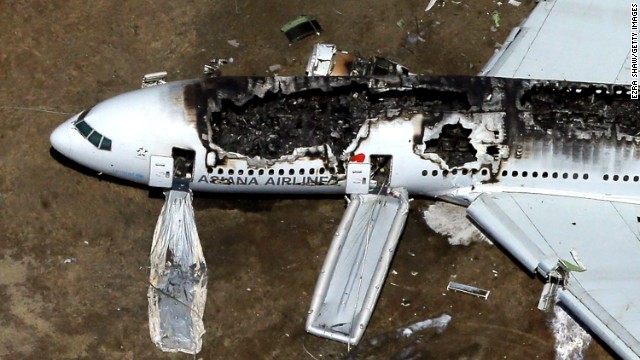 Asiana Airlines Flight 214 crashed at San Francisco International Airport on July 6, 2013. The South Korean airline’s Boeing 777 fell short of its approach and crash-landed on the runway. Three people were killed and more than 180 were injured.
- Malaysia Airlines Flight 370 disappeared early Saturday with more than 200 aboard
- Peter Bergen says passenger jet disasters lead often to conspiracy theories
- He notes that people questioned government findings on TWA Flight 800 and Pan Am 103
- Bergen: The truth will come out after a careful and lengthy investigation
Editor’s note: Peter Bergen is CNN’s national security analyst, a director at the New America Foundation and the author of “Manhunt: The Ten-Year Search for bin Laden — From 9/11 to Abbottabad.”
(CNN) — Nothing gets conspiracy theorists going more than a passenger plane crashing under mysterious circumstances.
In the absence of hard information to explain such disasters, people look for answers, and the disappearance of Malaysia Airlines Flight 370 early Saturday could prompt the same response.
TWA Flight 800 fell out of the sky on July 17, 1996, shortly after leaving JFK International Airport, killing all 230 people on board.
Recovery and investigative efforts were hampered because TWA 800 went down in the Atlantic.
Some soon posited that terrorists armed with surface-to-air missiles had brought down the plane.
This theory seemed to be bolstered by eyewitness accounts such as that provided by Naneen Levine, who said she saw something streaking up toward the doomed plane. “I thought it was something on the beach going straight up.
Three months after the TWA crash, former ABC News correspondent Pierre Salinger, who had once been President John Kennedy’s press secretary, weighed in at a news conference that a U.S. Navy ship had brought down TWA 800 with a missile. Salinger came to this conclusion because of a document on the Internet making this claim.
Bob Francis, the former vice chairman of the National Transportation Safety Board, said of Salinger, “He was an idiot. … He didn’t know what he was talking about, and he was totally irresponsible.”
After a four-year investigation, the NTSB ruled that the TWA 800 crash was caused by “an explosion of the center wing fuel tank, resulting from ignition of the flammable fuel/air mixture in the tank.”
Three years after TWA 800 went down, EgyptAir Flight 990 left JFK International and soon plunged into the Atlantic, killing more than 200 people on board.
Two competing theories about what happened emerged. The NTSB, widely regarded around the world as the most authoritative investigator of plane crashes, concluded after a three-year investigation that one of the Egyptian pilots, Gameel al-Batouti, had intentionally downed the plane.
NTSB pointed to the fact that the downward trajectory of the plane was inconsistent with mechanical failure. Based on the recovered cockpit voice recorder, NTSB also underlined al-Batouti’s constant use of the phrase, “I rely on God,” and his lack of surprise when the passenger jet suddenly began descending.
In Egypt, this was not a popular view, and Egyptian officials pointed to supposed mechanical failure as the cause of the crash.
The conspiracy theories that developed around TWA 800 were caused by unreliable eyewitness accounts and Internet rumor-mongering. In the case of EgyptAir 900, Egyptian officials would not accept that an Egyptian pilot would commit suicide, killing many others, and came up with an alternative explanation for which there was scant evidence.
In the case of the downing of Pan Am Flight 103, there was a deliberate effort to inject a conspiracy theory into the narrative of the events.
Pan Am 103 blew up over Scotland on December 21, 1988, because of a bomb in the hold, which killed 270 on board and others on the ground.
Juval Aviv, who presented himself as a former Israeli counterterrorism official, was hired by Pan Am to investigate what happened.
In his report, Aviv claimed to have proof that the murder of the passengers on Pan Am 103 was the result of a CIA sting operation that went awry, an assertion for which there was not a shred of evidence.
Yet a piece partly based on Aviv’s fairy tale then ended up as a cover story in TIME magazine. The U.S. government later concluded that the attack was ordered by the Libyan government, something the Libyans would eventually concede was, in fact, true.
The TWA 800, EgyptAir 990 and Pan Am 103 cases represent the likely range of reasons that brought down Malaysia Airlines Flight 370: mechanical failure, pilot actions or terrorism.
Based on these past cases, we should be careful not to allow conspiracy theories about what happened to get too much play. The truth will come out only after a careful and lengthy investigation.
Cyberwar hits Ukraine, CNN.com
Cyberwar hits Ukraine
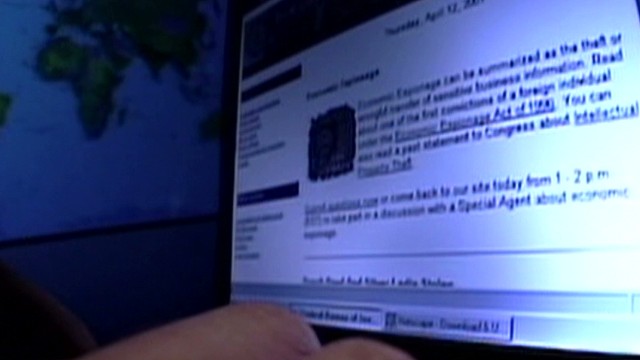
Is Iran behind new cyberwar threats?
- Ukrainian officials say phone services of members of parliament were targeted
- Authors: Cyberattack was also reported before Russian invasion of Georgia in 2008
- They say attacks are easier than conventional warfare but can provoke counterattacks
- Bergen, Maurer: U.S. had a lead in cyberwarfare but that is likely to ebb
Editor’s note: Peter Bergen is CNN’s national security analyst, a director at the New America Foundation and the author of “Manhunt: The Ten-Year Search for bin Laden — From 9/11 to Abbottabad.” Tim Maurer is a research fellow at New America focusing on cyberspace and international affairs.
(CNN) — Ukrainian security officials are complaining that unknown attackers are interfering with the mobile phone services of members of Ukraine’s parliament, making difficult political decisions about what to do about Russia’s incursion last week into Crimea that much harder.
The head of Ukraine’s security service said on Tuesday, “I confirm that an IP-telephonic attack is underway on mobile phones of members of Ukrainian parliament for the second day in row.”
This is reminiscent of the Distributed Denial of Service (DDoS) attacks on Georgia that preceded Russia’s invasion of the country in August 2008. The attacks shut down several websites of Georgia’s government including the president’s.
While the Kremlin denied any involvement, Georgian officials accused Russia of being behind the attacks.
Of course, just as some states have exploited offensive cyber capabilities for their own purposes, so too has the United States.
Cyberattacks are double-edged swords. Compared to mounting a conventional war they cost little in terms of blood and treasure. However, in the long run they may have larger unintended consequences if more and more nation states and even private groups use cyberwarfare capabilities.
The Stuxnet malware that was discovered in 2010 showed the potential of cyberattacks. The joint U.S.-Israeli operation demonstrated how the nuclear enrichment facility of Natanz in Iran could be effectively disrupted using a cyberattack that interfered with Iranian centrifuges’ capacity to enrich uranium.
Last month came the news that Obama national security officials have debated since 2011 whether to target Bashar al-Assad’s regime in Syria with cyberattacks.
The upside: No American boots on the ground and some potentially significant harm could be done to al-Assad’s military capabilities.
The downside: What about unknown risks? Might such attacks embolden Syrian allies like Iran and Russia to launch cyber-counterattacks against targets in the U.S.?
The Stuxnet attack on Iran was not an isolated event. A January report by the Center for Strategic and International Studies points out that Iran “is the likely source of a recent series of incidents aimed at Gulf energy companies, American banks, and Israel. The most important involved a major disruption involving the destruction of data on computers used by (oil giant) Saudi Aramco….”
The Syrian Electronic Army, a group that supports the al-Assad regime, showed the potential to undermine trust in the financial system when it hacked The Associated Press’s Twitter account last year to falsely report an attack on the White House, which caused the Dow Jones to drop by 150 points.
While technically not comparable to Stuxnet and its effect was only temporary — the White House quickly refuted the reporting — it nevertheless demonstrates the existence of a tool for shadowy organizations to influence events that did not exist before.
These recent incidents underscore both the scope and the significant differences among cyberthreats:
— The actions by the Syrian Electronic Army did not cause a physical effect; they changed data and the content of The Associated Press’s reporting.
— The disruption at Saudi Aramco was due to the destruction of computer data, but it did not cause a physical effect either.
–Stuxnet, on the other hand, had a physical impact making Iranian uranium enrichment centrifuges spin at a rate they were not supposed to.
The DDoS attacks that appear to be happening in Ukraine right now, and the type of cyberattack that the U.S. launched against Iran that could at some point happen in some other form against Syria, raise significant moral and legal issues.
In many ways the cyberwarfare issue is akin to the issue of the use of armed drones, which greatly reduce the number of deaths that would result from a conventional armed conflict.
Whoever launches a drone attack or a cyberattack pays no costs of the kind that would typically take place on a conventional battlefield. You can’t shoot down a drone pilot or kill a computer technician launching some kind of cyberattack thousands of miles from the intended target.
For this reason drones and cyber capabilities can also make conflict more likely as the barriers to entry to engage in either drone warfare or cyberconflict are so low. Moreover, there is a risk that the use of drones or cyber capabilities can escalate into a conventional armed conflict.
Similarly to the case of armed drones, the United States has had a large lead in its ability to mount effective offensive cyberattacks, but that advantage is unlikely to last. And since the United States is the only superpower and among the most technologically advanced (as well as most vulnerable), it must lead by example and harden cybersecurity at home and contribute to international agreements to govern the use of these powerful new tools.
These tools that will only get more powerful as the world becomes more connected and ever-more dependent on computers.
Forecasts of terrorist apocalypse? Never mind. CNN.com
Forecasts of terrorist apocalypse? Never mind
By Peter Bergen, CNN National Security Analyst
updated 12:15 PM EST, Wed February 26, 2014
>>
STORY HIGHLIGHTS
Before Sochi Olympics, predictions of terrorist action were rampant
Peter Bergen says the Games were unaffected and predictions turned out to be wrong
He says such forecasts fit into a long history of “sky is falling” warnings
Bergen: Statements that al Qaeda represents big threat to U.S. now are off base
Editor’s note: Peter Bergen is CNN’s national security analyst, a director at the New America Foundation and the author of “Manhunt: The Ten-Year Search for bin Laden — From 9/11 to Abbottabad.”
(CNN) — “It’s tough to make predictions, especially about the future” is an aphorism attributed to the great baseball player Yogi Berra.
But one topic where pundits, politicians and prognosticators of every persuasion don’t have any problem about making pessimistic predictions is terrorism.
The Winter Olympics in Sochi, Russia, was an Olympic-level example of this. In the lead-up to the Games, the airwaves were filled with glum predictions that Sochi would be the 1972 Munich Olympics on steroids.
Rep. Michael McCaul, R-Texas, chairman of the U.S. House Homeland Security Committee, told Fox News, “There’s a high degree of probability that something will detonate, something will go off. … But I do think it’s probably, most likely going to happen outside the ‘ring of steel’ at the Olympic Village.”
Similarly, Michael G. Grimm, co-chair of the House Russian Caucus, issued a press release headlined, “Sochi Olympics Cannot Become a Benghazi Nightmare.” The New York Republican warned, “We cannot sweep these threats under the rug, like we did with Benghazi or the warnings from Russia on the Tsarnaev brother behind the Boston Marathon bombing. Each time we fail to recognize these threats, we not only risk the lives of innocent Americans, but appear weaker and vulnerable in the eyes of the enemy.”
Bill Rathburn, who directed security for the 1996 Summer Olympics in Atlanta, in an interview with Yahoo News predicted of Sochi, “It’s not a matter of whether there will be some incident, it’s just a matter of how bad it’s going to be
No wonder that two days before the Sochi Olympics, more than half of Americans believed a terrorist attack on the Games was likely, according to a CNN/ORC poll.
Now cue up the swarms of “black widows” descending on Sochi to kill themselves along with many Olympic spectators.
And then the Games were held and … nothing happened
It turned out that the most terrifying image from Sochi was the look of disgust on the face of American figure skater Ashley Wagner when she learned of her lower-than-expected score.
Sochi is only the most recent example of the hyperventilating hyperbole of the doomsday terrorism prognosticators. Because so many folks were caught flat-footed by 9/11, some seem to overcompensate by keeping up a steady drumbeat of dire terror warnings.
In November, House Intelligence Committee Chairman Mike Rogers, R-Michigan, told CNN that al Qaeda “poses a bigger threat to attack inside the U.S. right now than it did before 9/11.”
Rogers’ statement defies common sense.
Before 9/11, al Qaeda had an entire county, Afghanistan, as a safe haven; its training camps there churned out thousands of militants every year; it had access to funding substantial enough so that it could spend several hundred thousand dollars on the 9/11 plot. It was a formidable enemy.
Now al Qaeda’s safe haven is long gone; the group hasn’t mounted any successful attack in the States since 9/11 or, for that matter, anywhere in the West since the London transportation system bombings in 2005.
On 9/11, the United States had never used armed drones in combat. Since then, the CIA has launched 370 drone strikes at suspected militant targets in Pakistan. During President Barack Obama’s tenure alone, those drone strikes have killed more than 30 of al Qaeda’s leaders in Pakistan.
Not only that: The United States is a much harder target than it was on 9/11. Then there were 16 people on the U.S. “no fly” list.
Today there are more than 20,000. In 2001, there were 32 Joint Terrorism Task Force “fusion centers,” where multiple law enforcement agencies worked together to chase down leads and build terrorism cases. Now there are 103.
The U.S. intelligence budget also grew dramatically after 9/11. In 2010, the United States spent more than $80 billion on intelligence collection and other covert activities, much of it directed at terrorist groups — more than three times what the country spent in 1998.
At the time of the 9/11 attacks, the U.S. Department of Homeland Security, the National Counterterrorism Center and the Transportation Security Administration all didn’t exist. All these new post-9/11 institutions make it much harder for terrorists to operate in the United States.
The gloom and doom about terrorism becomes much worse when the specter of terrorists deploying chemical, biological, radiological or nuclear weapons is added to the mix.
Graham Allison, the respected political scientist and founding dean of Harvard’s Kennedy School of Government, published a book in 2004 titled “Nuclear Terrorism, which garnered considerable attention with its prediction that “on the current path, a nuclear terrorist attack on America in the decade ahead is more likely than not.”
Of course, now we are a decade later, and nothing of the sort has happened.
Indeed, a striking finding of a database of every jihadist terrorism case in the United States since 9/11 maintained by the New America Foundation is that not one of the more than 200 individuals who were indicted or convicted of a jihadist terrorism crime acquired, manufactured or deployed chemical, biological or radiological weapons, let alone a nuclear device.
It’s relatively easy to say the sky is always falling. Indeed, given the human capacity for evil, bad things are, indeed, going to happen. But when the sky doesn’t fall, which is much of the time when it comes to terrorism, the doomsday prognosticators are rarely held to account. In any event, they are too busy warning of the next catastrophe.
FEATURED BOOK

All the Presidents’ Wars:
RECENT ARTICLES

UPCOMING EVENTS
Tuesday, December, 08, 2026
USC DC, All the Presidents’ Wars, book event
Tuesday, January, 12, 2027
NY Historical, All the Presidents’ Wars: 25 Years of America’s War on Terror Featuring: Peter Bergen, David M. Rubenstein (moderator), NYC
Wednesday, February, 10, 2027
Metropolitan Club, DC, All the Presidents’ Wars event
RECENT FILM AND TV SERIES
GHOSTS OF BEIRUT: SHOWTIME
The Fall of Osama bin Laden, National Geographic

BIN LADEN'S HARD DRIVE, NATIONAL GEOGRAPHIC

